1984 Revisited — Doubleplusscary

orwell-1984-propaganda

Last year, I taught 1984 for the first time in decades, and when I finished, I slapped together a blog post to provide inexperienced teachers with an overarching plan to teach the novel.  I figured that this post would receive scant attention, given its small target audience: however, it has received 1,378 “views” since May.  Many more than far more brilliant posts like “Kafkaesque Security Questions,” (93) “Why I Ain’t Inviting Jesus to My Fantasy Dinner,” (101) and “What Kind of STD Are You?” (58)

How come?

Because, believe it or not, Orwell’s 68-year-old novel is now a very hot commodity.  It hit number #1 on the bestsellers’ list on January 25th, and today, April 4th, several art movie houses around the country are re-screening the 1985 film adaptation starring John Hurt and Richard Burton.[1]

Fake News Outlet CNN attributes the sudden spike in sales to Kellyanne Conway’s coinage of the phrase “alternative facts” when aiding and abetting Sean Spicer’s contention that the Trump Inauguration crowd was larger than Obama’s.  Indeed, both “alternative facts” and “fake news” embody the Orwellian concept of doublethink.

Doublethink is essentially paradox, a mental action in which inherent contradictions in a concept cast equal doubt on the antithetical alternatives that make up the concept. Here’s a description of the protagonist, Winston Smith, thinking about how to begin his diary.

His mind hovered for a moment round the doubtful date on the page, and then fetched up with a bump against the Newspeak word doublethink. For the first time the magnitude of what he had undertaken came home to him.  How could you communicate with the future?  It was of its nature impossible.  Either the future would resemble the present, in which case it would not listen to him, or it would be different from it, and his predicament would be meaningless.

Essentially doublethink results in confusion, if not paralysis.  Doubt is cast upon who and/or what to believe.

For example, the propagandist Trump organ Fox News, whose Orwellian tagline is “fair and balanced,” provides the President with “alternative facts” so that he declares any story with which he disagrees to be be “Fake News.”  Truth = lies, and lies = truth.

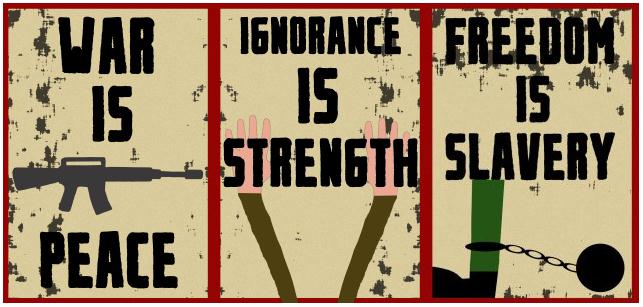
In other words, “Ignorance Is Strength.”

Meanwhile, Russian bots assume avatars on social media claiming to be Christian patriots who in turn disseminate “information” on Twitter and Facebook that Hillary Clinton is abducting, then cannibalizing, unvaccinated babies.

Vaccinations Are Doubly Deadly.

President Trump awards his Appalachian voters by allowing coal mining companies to dump slag in their streams.

Pollution Is Healthy.

An Intelligence Committee chair investigating the White House sneaks into the White House and receives classified information and returns to the White House the next day to share that information with the White House.

What Goes Around Comes Around/Treason Is Patriotic.

It’s doubleplusscary!


[1] Both, alas, now exiled to “that undiscovered country from whose bourn no traveler returns.”  By the way, 4 April 1984 is the day Wilson Smith begins his diary.

Wesley’s Inferno, Canto 4


Canto 4


Once we disembarked

and reached the summit of a barren ridge,

a vista of innumerable parked


cars lay below. We drove through clouds of midges

swarming and stinging,

the cars’ occupants, naked and wedged


so tightly they couldn’t move their arms or legs, facing

a gigantic movie screen on which dead-eyed

chancre riddled junkies were forever fucking.


“This is my home circle,” Catullus said, “where I reside

when not giving tours. These Monicas and Bills must eternally endure

the stab of insects and the touch of flesh they can’t abide.


“During my earth time, I too was sex-obsessed. Nothing could cure

my cravings for Lesbia, Nihil sit, satis.

So now with them for my sins I must endure


the punishment of these stabbing stings, this looping film.” Catullus

then emoted a theatrical B-movie sigh.

“These punishments seem ludicrous,


“way over the top for a loving God,” I cried.

He broke into a sardonic laugh.

“Haven’t you read Nietzsche? God ain’t alive!


Literalism ain’t where it’s at!

Think of this night as a soul engendered hallucination,

Not a product of a bearded God’s wrath;


Think of it as a sort of game; think Play Station.”

“But this contradicts what you said before about reprieve!”

“Think of this as a trip,” he said, “a psychedelic vacation.”


Trump Agonistes: (Or Let’s Gouge His Eyes Out for His Own Good)

trump-agonistes

Hubris has consumed Donald Trump, devoured him from the tips of his toes to the top of that bleached, brittle confection he considers hair.

It’s blatantly obvious that even if Trump’s minions and Putin’s lackeys didn’t directly collude in election manipulation, Trump’s close association with Paul Manafort and the host of mobsters, oligarchs, and convicted felons linked to him guarantees that Trump’s businesses are steeped in corruption.[1] If you think this mere conjecture, I suggest you check out Adam Khan on Twitter. He has been unraveling in great detail the byzantine entanglements of those connections and providing documents to support his arguments. For example, according to Khan, son-in-law Kushner’s is in hock “$4+ billion to foreign investors, pushing Russian expansion, Israeli settlements, [. . .].” No telling what secrets of the hoary deep Trump’s income taxes hold.

Allow me to don my dark glasses and engage in some Tiresias-like prophesizing: in the next four years, those returns are bound to surface, whether through investigation or IRS leakage — or some underling facing slammer time squealing — and Mr. Big Shot is going to find himself in a world of shit.

Why would anyone so compromised expose himself to the super scrutiny that comes with running for president?[2]

ύβρις – hubris.

I’ve spent the last 30 years studying its effects on such worthies as Antigone, Kreon, Oedipus, Macbeth, Caesar/Brutus, Milton’s Satan, the Mayor of Casterbridge among others.

Indeed, if Trump doesn’t get a presidential pardon from Pence, he will fit nicely into Aristotle’s tragic formula of the protagonist plummeting from Olympus high to hades low because of a fatal flaw, in Trump’s case, excessive pride.

And as far as Trump’s “soul” is concerned, karmic comeuppance would be the very best thing that could happen to him. Stripped bare of the false grandiosity in which he’s wrapped himself, he would have to face nakedly the existential truth of his true vulnerability.

At the end of Oedipus Rex, we stand in awe of the fallen king because he has gained insight by gouging out his eyes and exiling himself to the desert where he will come to terms with what it really means to be human. He is, in Coleridge’s phrase, “a sadder but wiser man.”

How sad – pathetic is the word — it must be to be Trump, to be addicted to the adulation of the blaring resentment-filled rubes who attend his rallies, to take such deep umbrage at the slightest of slights, to be so utterly benighted.

Of course, it’s doubtful that Trump will undergo an anagnorisis – the tragic recognition of his guilt – but how cool would it be if he could.

It would truly make him great, a true hero. I can see him now, humbled, his head shaved, a real man instead of a manikin, tapping a stick on the hard ground of reality.


[1] Trump’s empire isn’t centralized but consists of several disparate LLCs.

[2] I think Trump ran as a publicity stunt and never really believed he could win. Hence the total lack of planning for his transition.

That Time I Got Called into the Principal’s Office for Teaching Filth

ourheritagemedia-fullsize-b9080514cad6767ac04d4137741bebac

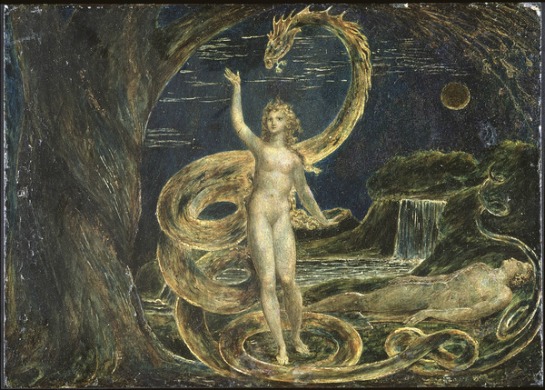
Okay, the Prince of Lies wings his way upward and on a cliff encounters a woman naked and beautiful from the genitals up, but horror-show-hideous below, where “[v]oluminous and vast,” a hydra-like reptilian whiplash “of scaly folds” slithers.

Satan can hear the muffled howling of dogs, the frenzied yelps coming from . . . from within her . . . “about her middle round.” These dogs “kennel” in her womb, exit and reenter periodically, and with “their wide Cerberian mouths full loud,” let out “a hideous peal.”

[Gross!]

Next to her sits a blob-like creature not “distinguishable in member, joint, or limb.” On what might be considered his head, he wears a “kingly crown.”

[What the Hell?]

Well, boys and girls, sin is ugly. Check out Hieronymus Bosch or Breughel the Elder.

farting-painting

This unholy trinity described above consists of Satan, Sin, and Death. You see, one day when he was strolling the gold-paved streets of Heaven, Lucifer had this chick split open his head and emerge, Athena-like, fully armed.  A rebellious thought had roiled his erstwhile Seraphic mind and presto Trouble!

So Beautiful was this feminine doppelganger of a daughter, he had sex with her, impregnated her, right up there in Heaven.

Her name is Sin.

[Tsk Tsk]

After the war and the expulsion of the rebel angels and their general Satan, Sin gives birth to a blob-like boy who rips open her womb and transforms her limbs into snakes. This offspring, son of Satan, immediately rapes her and impregnates her with the above-mentioned hellhounds.

His name is Death.

Satan + Sin = Death.. . .

* * *

One cloudy day in the early 90’s, I receive an email from our new principal. He’d like to see me in his office, which, because of some construction, is a trailer. I don’t put this encounter off. I stroll over as soon as I can.

Once inside, I sit down on the proffered sofa.

“Well, Wesley. I’ve had a mother call and complain about one of your sophomore English classes.”

“Really? What’s the beef?”

“She says you’re teaching obscenity. By the way, what are you teaching?”

“’The justification of the ways of God to men.’”

“Huh?”

Paradise Lost.”

He smiles, nods. “Okay, thanks.  I’ll explain it to her”

* * *

Believe it or not, sophomores dig Paradise Lost if you set it up right and read a fluidly truncated version. You teach it like it’s sci-fi. After all, Hell in Paradise Lost is a far distant planet; Satan flies through outer space to find Earth.

You got monsters, battles, video-game like scenery.

Add to that full frontal nudity and the gorgeous music of the poetry.


Eve separate he spies,

Veiled in a Cloud of Fragrance, where she stood

Half spied, so thick the Roses bushing round

About her glowed, oft stooping to support

Each Flower of slender stalk, whose head though gay

Carnation, Purple, Azure, or specked with Gold,

Hung drooping unsustained, them she upstands

Gently with Myrtle band, mindless the while,

Her self, though fairest unsupported Flower,

From her best prop so far and storm so nigh.


[I’ve modernized the spelling].


serpent

Literary Prototypes for Trump

joker

I’ve been rummaging through the dusty book-lined, cobweb-covered garret of my mind trying to find the literary character who most resembles Donald J Trump.

First, we need someone who is not particularly articulate.  Sure, Trump is quick-witted, capable of an occasional laser-guided zinger, but no one would ever mistake him for Macbeth (though the Thane of Glamis and Cawdor does share with the Emperor of Orange a lack of restraint and total unfitness for office).  What Angus said of Macbeth, Lindsey Graham could say of Trump, “Now does he feel his title/ Hang loose about him, like a giant’s robe/ Upon a dwarfish thief.” However, no way does Trump possess the depth and eloquence to mutter, “Life’s but a walking shadow, a poor player/ That struts and frets his hour upon the stage/ And then is heard no more.”  When Macbeth is out for revenge, he says, “I am in blood stepped in so far that should I wade no more,/ Returning were as tedious as go o’er.”  Instead, with Trump we get, “If I win-I am going to instruct my AG to get a special prosecutor to look into your situation bc there’s never been anything like your lies.”

There’s perhaps a closer cousin to be found in Dickens, but the sad truth of the matter is that my moth-ridden mind only houses three volumes — Great Expectations, The Tale of Two Cities, and Hard Times — and I can’t think of anyone from those tomes who really reminds me of the Donald – though when it comes to holding grudges, Mr. Trump could give Mrs. Havisham a run for her pound sterling.

The best I can come up with his Michael Henchard from Thomas Hardy’s The Mayor of Casterbridge.

the-mayor-of-casterbridge

Henchard, in the likely case you haven’t read the novel, gets drunk and sells his wife and daughter to a sailor, awakens the next day, suffers remorse (a very un-Trumpian emotion), swears off hooch, builds a thriving business, goes into politics, and is elected mayor of Casterbridge.

Here’s Wikipedia’s patched together character analysis:

Henchard has a very impulsive temperament, although he also has a tendency to depression. He tends to take a sudden liking, or a sudden dislike, to other people and can be verbally aggressive even when sober. Henchard is respected in Casterbridge, having built up a strong business almost from nothing, but he is not well liked, and when he drinks, he can be abusive. Indeed, one of the reasons he does so well in business is because, after he sells his wife and child, he swears an oath not to touch alcohol for twenty-one years. When he decides Farfrae [a former business partner] is his enemy, he wages an economic war that, at first, is extremely one-sided. A risk-taker, Henchard eventually lets his personal grudge against Farfrae get in the way of his reasoning abilities. He takes too many risks, gambles too aggressively, and loses his credit, his business, and most of his fortune.

Nevertheless, although Henchard is exasperating, you somehow can identify with him.  You – or at least I – was terribly moved when I read Henchard’s last will and testament:

“That Elizabeth-Jane Farfrae be not told of my death, or made to grieve on account of me.

“& that I be not bury’d in consecrated ground.

“& that no sexton be asked to toll the bell.

“& that nobody is wished to see my dead body.

“& that no murners walk behind me at my funeral.

“& that no flours be planted on my grave,

“& that no man remember me.

“To this I put my name.

MICHAEL HENCHARD

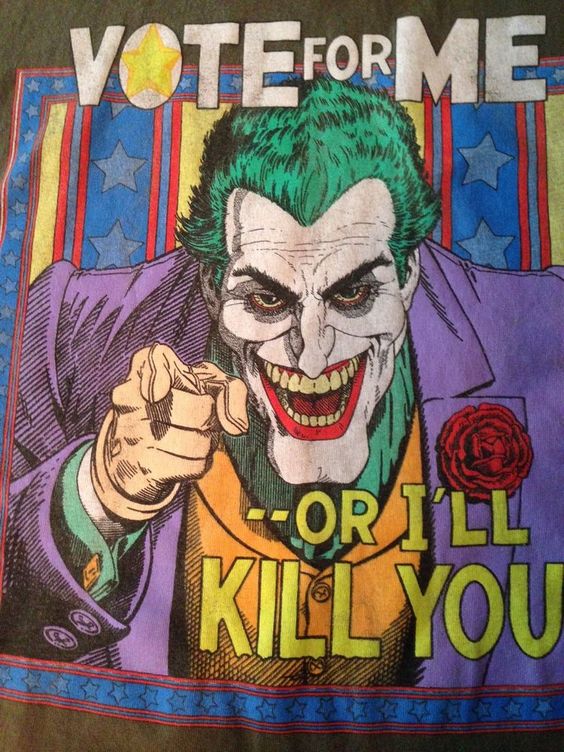
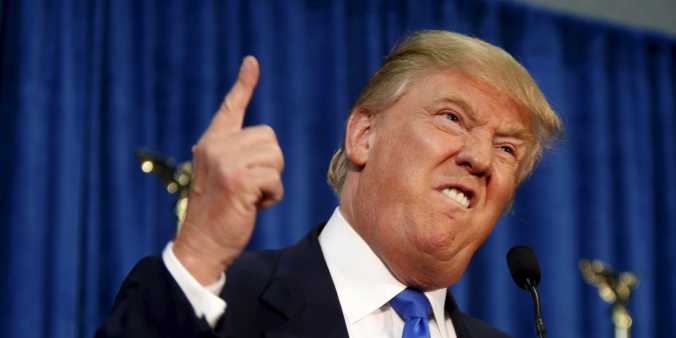
To cut to the chase, Trump lacks the stature to be tragic and is too dangerous and mean-spirited to be truly comic.  Perhaps if we’re looking for a literary doppelganger, we’re better off searching comic books.  In fact, with his outrageous hair, orange complexion, and out-sized ego, Trump would make a fairly cool Batman villain.  The terrifying thing, of course, is just how close this Joker has come to being elected President of the United States.

trump_angry

The Trump Campaign: A Tragical Farce or Farcical Tragedy?

Mr Trump

“Life is a comedy to those who think and a tragedy for those who feel.” – Horace Walpole

When taken to extremes, melodramas and farces turn topsy-turvy and elicit the opposite effect of their original intent – overdone melodramas provoke laughter instead of tears; overdone farces can provoke palatable discomfort and sometimes fear.

For example, check out the trailer for the overly melodramatic movie Reefer Madness. Although it conforms to Laurence Perrine’s description of melodrama as attempting “to arouse feelings of fear and pity,” it does so through “cruder means” by employing “oversimplified plots” and “flat characterization.” In other words, everything is overdone, suspension of disbelief shattered, so the audience ends up laughing instead of trembling.

Farces are by definition exaggerated comedy, and given the inherent cruelty in comedy, it’s not surprising that when taken to the extreme, farces can create discomfort.   Take, David Lynch’s 1977 movie Eraserhead, for example. Here’s an excerpt from Dennis Lim’s David Lynch: A Man from Another Place in which he describes a few scenes from the movie:

The first section of the movie with extended dialogue is also when most audiences realize they are watching a comedy of sorts. Lynch turns a staple of sitcom humor — the meet-the-parents dinner – into an ominous minefield of absurdist non sequiters, a deadpan farce [my emphasis] of misbehaving bodies. On the couch next to Henry [the protagonist], Mary [Henry’s consort] suffers an epileptic fit, which Mrs. X assuages by grabbing her daughter’s jaw and brushing her hair. Meanwhile, a litter of puppies nurse hungrily on their mother. Mr. X rants about the woes of being a plumber (“People think pipes grow in their homes!”), standing before an enormous duct that could have sprung from the ground. In the kitchen, Mrs. X tosses the salad with the help of catatonic Grandma X’s lifeless limbs. When Henry cuts into the squab-like creature that Mr. X has roasted for dinner, viscous blood spills from its cavity and its thighs wag up and down, sending Mrs. X into a drooling erotic trance. Then comes the bombshell, “there’s a baby,” at which point Henry gets a nosebleed.

Here’s a clip from the dinner in which someone has spliced in brief scenes of Robert De Niro, which, obviously, weren’t in the original. I don’t think they’re too distracting, though.

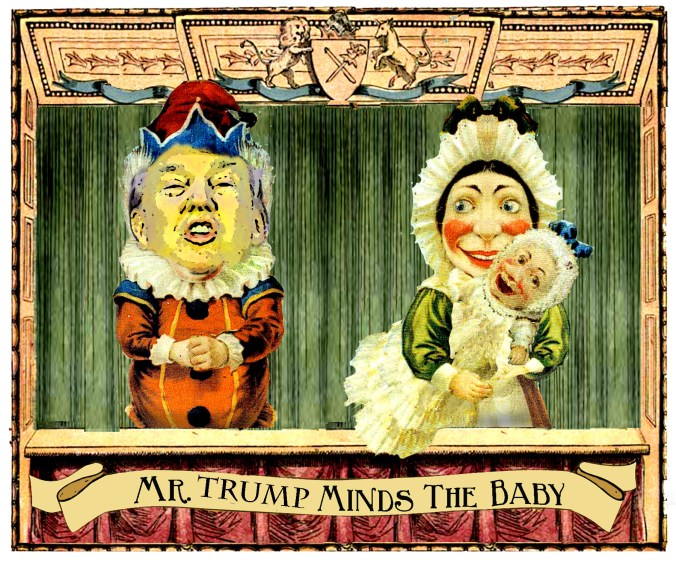
Compare the tone of that scene to this description of the English granddaddy of all farces, the puppet show Punch and Judy, The quote comes from a paper written by Ian Horswill of Northwestern University entitled “Punch and Judy AI Playset: A Generative Farce Manifesto Or: The Tragical Comedy or Comical Tragedy of Predicate Calculus.”

In Collier’s historical script (Collier and Cruikshank 2006), Mr. Punch successively beats to death his friend’s dog, his own baby, his own wife, his horse, the doctor who tries to treat him after he’s injured by the horse, a policeman (beaten but not killed), and the Devil himself. When his wife confronts him over the murder of his own child, Mr. Punch, who wants to have sex with her, replies that she’ll soon have another one.

Thus, extreme farce shares with tragedy irrationality and darkness but lacks any positive cathartic effects.

I think most would agree that Donald Trump’s campaign has denigrated into a farce.   I’ll spare you an encyclopedic rehash of voluminous blunders that have characterized the campaign and merely offer that yesterday morning Emily Nussbaum wondered on Twitter what outrage Trump might come up during the day.  She posited his assaulting a baby or biting a bat’s head off.  After the incident in Virginia when Trump had a baby removed from his rally, Nussbaum tweeted this:

Perhaps I’m getting soft in my old age, but I’m starting to feel pity for Trump – pathos in the old Greek sense of the term.  Sure, he’s a terrible human being with skin as thin as Zig Zag Ultra Thin Cigarette Rolling Papers, but imagine the insecurities he must harbor. Imagine being such a hemophiliac of rage, every little nick resulting in arterial spurting; imagine being your own worst enemy. Imagine how unhappy he must be. Think Michael Henchard of The Mayor of Casterbridge or Dostoyevsky’s Underground Man – but without the self-awareness.

Let’s hope for his own sake – and for our own — that he loses the election.


The Age Old Anvil of Sorrow

broken

When things get bad for me, I tend to turn to literature in the paradoxical quest to both temporarily forget my personal troubles and to delve deeply into someone else’s. Obviously, great literature universalizes the human condition and reminds us that violence, disease, and sorrow have always been with us and will always be with us.

“Blood will have blood,”[1] like Macbeth says, as if commenting on this morning’s headlines.

His Russian cousin, Ivan Ilyich comes to realize that disease preys on the undeserving just as often as on the righteous (even on the exerciser, the non-smoker).

Meanwhile, despairing Manley Hopkins’ anguished “cries heave, herds-long; huddle in a main, a chief/Woe wórld-sorrow; on an áge-old anvil wince and sing.”

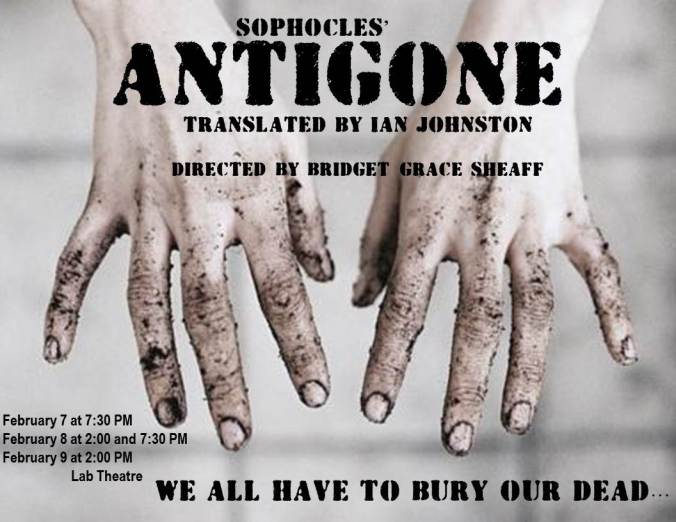
No, to cop out with a cliché – I am not sorrow’s first rodeo. Antigone, Isolde, Hamlet, Emma Bovary, and Alyosha Karamazov have all been there (in despair), done that (grieved) – as have their creators.
antigone4

* * *

The Brothers Karamazov, which I finished yesterday, was June’s project, and Joseph Franks’ 5-volume biography of Dostoyevsky is July’s. The Brothers K offers all the vicarious sorrow anyone could ever desire – childhood abandonment, sexual exploitation, sexual betrayal, filial betrayal, insanity, alcoholism, adolescent angst, dark nights of the soul, and, of course, buckets of blood.

Dostoyevsky

Dostoyevsky

So far, Fyodor Mikhailovich Dostoyevsky’s life hasn’t been much happier. I’m only on page 70 (of 932), and already Fyodor’s mother has died of a lingering mysterious illness, he’s been sent off to a military academy he detests, and now his father has died, most likely murdered by his serfs, and Fyodor has a number of younger siblings who are now orphaned.

Dostoyevsky was a man of his convictions and held to them even when they were unpopular. Throughout his life, from coming to the aid of bullied cadets at the military academy, to reaching out and aiding the peasantry, he practiced what he preached. Or as David Foster Wallace puts it in his essay “Joseph Frank’s Dostoyevsky”:

For me, the really striking, inspiring thing about Dostoyevsky isn’t just he was a genius; he was also brave. He never stopped worrying about his literary reputation, but he also never stopped promulgating unfashionable stuff in which he believed. And he did this not by ignoring (now, a.k.a.” transcending” or “subverting”) the unfriendly cultural circumstances in which he was writing, but by confronting them, engaging them, specifically and by name.

This, DFW maintains, certainly isn’t the case nowadays:

But Frank’s Dostoyevsky would point out (or more like hop up and down and shake his fist and fly at us and shout) that if this is so [i.e., our intelligentsia abjures ideological passion], it’s at least partly because we have abandoned the field. That we’ve abandoned it to fundamentalists whose pitiless rigidity and eagerness to judge show that they’re clueless about the “Christian values” they would impose on others. To rightist militias and conspiracy theorists whose paranoia about the government supposes the government to be just way more organized and efficient than it really is. And, in academia and the arts, to the increasingly absurd and dogmatic Political Correctness movement, whose obsession with the mere forms of utterance and discourse show too well how effete and aestheticized our best liberal instincts have become, how removed from what’s really important – motive, feeling, belief.

In other words, our current condition is one of fragmentation. Both major national political parties are splintering, and the gulf between them ideologically is like light years. Congressional districts twist and turn across maps like wakes from drunken boats. Although you might think that our digital interconnectivity might bring us closer together, it seems to me it isolates us, as we sit at the bar ignoring our friend as we stare down at the screen cultivating some personal obsession. In other words, we suffer from what Dostoyevsky might call radical individuality: I perceive the universe from my perspective; therefore, I must be the center of the universe. Other lives don’t matter as much – white, black, Muslim, Christian, Jew, infidel.

nc12

This attitude of isolation, of course, is a recipe for unhappiness; just ask the diva who demands eleven red roses in a blue vase every time she books a suite facing east in a luxury hotel where some tiny little infraction is going to throw her into a tizzy.

She suffers from disconnection, different but in some ways not unlike the radicalized homegrown terrorist or the arsenal-amassing militiaman or the divorced, underemployed middle-ager attaching the hose to his exhaust pipe.

[cue Barbra Streisand’s “People”]

Here is Alyosha Karamazov after the funeral of little Ilusha addressing Ilyusha’s friends at the end of the novel:

And whatever happens to us later in life, if we don’t meet for twenty years afterwards, let us always remember how we buried the poor boy at whom we once threw stones, do you remember, by the bridge? and afterwards we all grew so fond of him. He was a fine boy, a kindhearted, brave boy, he felt for his father’s honour and resented the cruel insult to him and stood up for him. And so in the first place, we will remember him, boys, all our lives. And even if we are occupied with most important things, if we attain to honour or fall into great misfortune — still let us remember how good it was once here, when we were all together, united by a good and kind feeling which made us, for the time we were loving that poor boy, better perhaps than we are. My little doves let me call you so, for you are very like them, those pretty blue birds, at this minute as I look at your good dear faces.

[. . .]

I say this in case we become bad,” Alyosha went on, “but there’s no reason why we should become bad, is there, boys? Let us be, first and above all, kind, then honest and then let us never forget each other! I say that again. I give you my word for my part that I’ll never forget one of you. Every face looking at me now I shall remember even for thirty years. Just now Kolya said to Kartashov that we did not care to know whether he exists or not. But I cannot forget that Kartashov exists and that he is not blushing now as he did when he discovered the founders of Troy, but is looking at me with his jolly, kind, dear little eyes. Boys, my dear boys, let us all be generous and brave like Ilusha, clever, brave and generous like Kolya (though he will be ever so much cleverer when he is grown up), and let us all be as modest, as clever and sweet as Kartashov. But why am I talking about those two? You are all dear to me, boys; from this day forth, I have a place in my heart for you all, and I beg you to keep a place in your hearts for me! Well, and who has united us in this kind, good feeling which we shall remember and intend to remember all our lives? Who, if not Ilusha, the good boy, the dear boy, precious to us for ever! Let us never forget him. May his memory live for ever in our hearts from this time forth!”

Love.
Unknown


[1] Especially when purchasing an assault rifle is easier than buying a tube of cortisone cream.

The Podiatrist of Avon Quote Challenge


The Podiatrist of Stratford

The Podiatrist of Stratford

Okay, literary scholars, let’s see first if you can identify the play from which these misquotations appear and then rewrite them correctly:


A chiropractor, a chiropractor, my real estate for a chiropractor!


Alas, poor Sheldon. I knew him, Lenny. His stand-up slayed.


Because you’re such a goody-goody, does that mean they’ll be no more cannabis and cocktails? (A piece of cake!)


I ain’t used to getting bitch slapped. (Very obscure)


It is a plot narrated by a mentally challenged person, full of blaring leaf blowers and road rage, adding up to jack shit.


Reciting inaudible paeans to a godless, barren universe. (Fairly obscure)


What’s in a brand? Chanel No. 5 by any other brand name, would still be aromatically effective.


The bad shit you do sticks post-mortem, the good disappears in the crematorium.

Peeking Inside of Famous Writers’ Bedrooms

opening bedroom

I’ve only visited three famous writers’ domiciles – Yeats’ Tower, Thor Ballylee, in County Galway (1979); Shakespeare’s birth house in Warwickshire (1995); and a home Frost lived in on a side of a road somewhere in New Hampshire (2007).

It felt like calling on the dead – the houses restored, sort of Disneyesque, way too un-lived in.

A while back, a friend posted on her FaceBook page a photograph of Walt Whitman’s bedroom back in the day. Alas, the image somehow conjured the Muse of PhotoShopping, Plagiaria. Alas, I say, because no way I have the artistic talent to pull off the idea Plagiaria whispered in my ear.

Anyway, let’s take a peek into the Barbaric Yapper’s bedroom.

Whitman's bedroom

Whitman’s bedroom

(More about the bedroom later)

My idea, which I am bestowing to any 3-D artist out there, is to use the concept of a bedroom as a representation of an author’s interior life, his or her unconscious as it were, each installation with a window looking out (hence not an attic) onto the world the artist perceived – dingy Dublin brownstones for Mr. James Joyce/Lucy-in-the-Sky butterflies flitting just outside the window of Miss Emily Dickinson.

Ernest-Hemingway-9334498-1-402-2

Take Ernesto Hemingway, par example.

ernest-hemingway21

His mother called him Ernestine and dressed him like a girl.

dress

Here’s a crude approximation of Hemingway’s unconscious installed in EA Poe’s dorm room at UVA:

hemingway collage

Obviously, an actual artist could do better, perhaps creating a doll-house, each room devoted to a different writer from a different era, vestiges of influence sprinkled about, La Commedia on Eliot’s bedside table next to an overloaded ashtray of unfiltered Pall Malls.

Art On Pall Mall

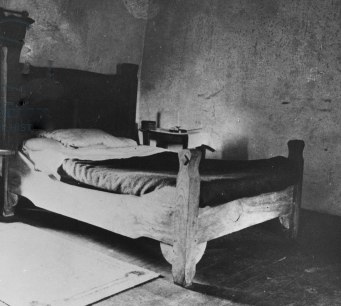
At any rate, what strikes me about the actual bedrooms of these writers, except for Whitman’s, is how spartan they are. For example, here’s where Yeats slept at Thor Ballylee:

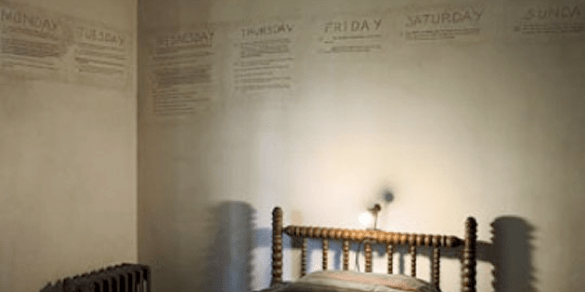
TPG392639 Bedroom with the bed of W. B. Yeats (b/w photo) by .; Thoor Ballylee, County Galway, Ireland; (add.info.: William Butler Yeats (1865-1938) Irish poet and dramatist; bed made by a local carpenter;);  out of copyright

Barely a step up from Thoreau’s:

Thoreau's Walden Pond bedroom

Thoreau’s Walden Pond bedroom

Of course, there are exceptions. Truman Capote lay him down to sleep here:

03truman_capote_rect540

And Virginia Woolf in this swanky boudoir:

The interior of Virginia Woolf's bedroom at Monks House, East Sussex

Flannery O’Connor’s bedroom looks like just what you would expect:

tumblr_m1wsflYTvV1qzh8wko1_500

And, finally, the bedroom where this barely published poet/fiction writer/blogger tosses and turns:

bedroom 3-2

At any rate, we all can be thankful that we’re not the inhabitant of this bedroom:

Marcel Proust on his death bed

Marcel Proust on his death-bed

Good night, sweet Marcel, and Happy 4th of July to the rest of you!

Shakespeare’s 2016 Election Endorsement

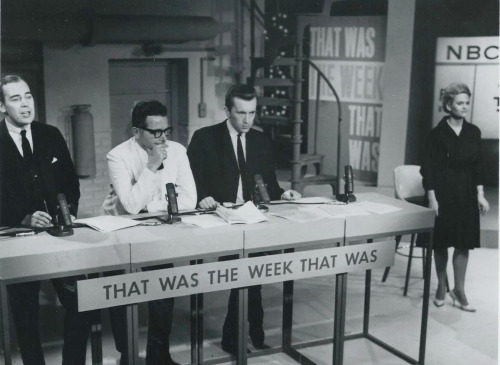
tumblr_nthmbnnhJR1r9xd1wo1_500I remember the 400th anniversary of Shakespeare’s birth back in 1964. I was 12 and wouldn’t have made the connection, but someone mentioned the anniversary of the Bard’s birthday on a TV program I was watching.   I can’t swear to it, but I think the show might have been That Was the Week that Was, which was broadcast live on Friday nights and satirized the week’s news, a sort of prototypical cross between The Daily Show and Onion TV, only with lots of musical skits.

Unfortunately, the show has essentially been lost – only the pilot survives along with some amateur audio recordings, one of which you can listen to on YouTube if you’re a nostalgia junkie or history freak.

Interestingly enough, the episode on YouTube from 12 June 1964 mentions a stop-Goldwater movement within the Republican Party and features a skit lampooning unsophisticated Goldwater supporters.

8baae185de80f51c0b9df60316bdc5f8I’d forgotten what cigarette ads sounded like – Raleighs came with coupons —  and also forgotten about Twist-O-Flex watchbands that were so flexible you could tie them in a knot.

Ultimately, for me, though, in 2016 the skits fall flat. Topical humor has a short shelf life, especially if you’re blindly listening to a visual medium — unlike Master Will’s humor, which can still provoke laughs from high school sophomores who don’t need to see it performed to find it funny.

April 23 marks the 400th anniversary of Shakespeare’s death, and so, obviously, the 52-year span of his life fits within mine. If he had been born in 1964, he would have arrived in an election year when Barry Goldwater, much to the chagrin of the Republican establishment, became the nominee, and if he had died in 2016, he would have survived just long enough to see Trump’s triumph in the New York primary, much to the chagrin of the Republican establishment.

In fact, at least according to the very dated AL Rowse book I just finished, Shakespeare was a very political writer himself, which a quick google search readily reinforces. In fact, the greatthinkers.org website offers UVA professor Paul Cantor’s series of 25 lectures on “Shakespeare and Politics.”

So the question arises – whom would Shakespeare have supported for President this cycle.

Will was, after all, a monarchist, a conservative in the old form of the word – one who valued tradition, order, and obedience, so no way he’s feeling the Bern or could suffer a buffoonish upstart like Trump.  Cruz?  That modern day Malvolio? Forget it.  Hillary?  I doubt it.

I say Jeb!

shakespeare for jeb