Time is the school in which we learn — John Didion, The Year of Magical Thinking
Yesterday before class, a petite, clear-eyed fifteen year-old announced that she has decided that she doesn’t want to grow old, that she wants to make great contributions to the world, and then die at 60. She added, “Mr. Moore, that means that if that happens, then 25% of my life is over!”
This is what we call in the my business[1] a “teachable” moment, and I botched it. I should have called on Alexander Pope, that four-foot, six-inch[2] colossus:
In fearless Youth we tempt the Heights of Arts,
While from the bounded Level of our Mind,
Short Views we take, nor see the lengths behind,
But more advanc’d, behold with strange Surprize
New, distant Scenes of endless Science rise!
So pleas’d at first, the towring Alps we try,
Mount o’er the Vales, and seem to tread the Sky;
Th’ Eternal Snows appear already past,
And the first Clouds and Mountains seem the last:
But those attain’d, we tremble to survey
The growing Labours of the lengthen’d Way,
Th’ increasing Prospect tires our wandering Eyes,
Hills peep o’er Hills, and Alps on Alps arise!
Although our flowers fade (I too had pretty plumage once!), the world becomes increasingly more interesting as we gain perspective, and as the social preoccupations of adolescence dissipate, the “cool people,” if given the choice, would rather hang with Charles Bukowski than Wink Martindale, with Joan Didion rather than Kim Kardashian.
Kim Kardashian
Joan Didion
But, like I said, I botched it. I turned to of all people Marcus Aurelius and paraphrased the following:
Were you to live a thousand years, or even thirty thousand, remember that the sole life which a man can lose is that which he is living at the moment; and furthermore, that he can have no other life except the one he loses. This means that the longest life and the shortest life amount to the same thing. For the passing minute is every man’s equal possession, but what has gone by is not ours. Our loss, therefore, is limited to that one fleeting instant, since no one can lose what is already past, not yet what is still to come — for how can he be deprived of what he does not possess?
Like, I said, I botched it. I told her and the rest of the students to think lineally only so far ahead that they can salvage more of the present for their enjoyment, in other words, to get that rough draft out of the way early Saturday morning so it won’t be squeaking like a wobbling wheel in the back of your mind all day. But I told them not to think too far into the future, not to dream about their freshman year at Duke or their wedding day or their future contributions to humanity.
I write this as my beloved is receiving a blood transfusion and have come myself to live the advice I gave those students yesterday. It’s always now. The future is not ours. The past is kaput. I hear a bird’s staccato chirp outside my open window on this gorgeous Saturday and wish him or her the best.
[1] Schools, alas, have taken on the corporate model, though they still give lip service to the “family” metaphor.
To say that Americans tend to overreact in times of stress is like saying Spaniards roll their Rs, New Yorkers honk their horns, and drivers with Confederate flags decals on their pick-ups support the 2nd Amendment.
Overreaction Exhibit A: The Salem Witch Trials
Okay, a couple of tweens, Elizabeth Parris and Ann Putnum, throw conniption fits.
Next thing you know, 200 hundred people have been accused of witchcraft and 20 executed — hanged by descendents of freedom lovers who fled England and the horrors of the “Anglican Inquisition” so they could practice religion in “their own way.”
Overreaction Exhibit B: McCarthyism, aka The Red Scare:
Okay, a couple of Jews leak atomic secrets to the USSR; therefore, artists/Jews = witches, and the color red becomes anathema.
Thank God Jesus wasn’t working in Hollywood. They would have crucified black-listed his commie Jewish robe-wearing ass for sure.
Overreaction Exhibit C: The 2003 Iraqi War
Thanks to the brilliant choreography of the attacks themselves, images from Ground Zero bewitched us (in a way the collapse of the Murrah Building in Kansas City didn’t)[1], but scapegoating Saddam because he happened to be Muslim and prone to gassing Kurds hasn’t worked all that great. Just ask the Iraqis, the Syrians, the Turks, and ironically, the Kurds.
Overreaction Exhibit D: ISIS or ISIL (or whatever you wanna call those benighted medieval mother-daughter-and cousin fuckers).
Once again, theatrics. Beheadings appall civilized people, the way that Texas blithely executes minorities appalls Scandinavians. Executions are barbaric. On the other hand, you reap what you sow (see above). But let’s look beyond theatrics and do some serious assessments before we blunder into yet another[whatever the desert equivalent of a quagmire is].
Overreaction Exhibit E: Ebola
By my anecdotal reckoning, Ebola has led every single newscast I’ve encountered in the last 3 weeks – NPR, the CBS news, MSNBC, etc. I don’t know if this over attention is mere fear-mongering for ratings or yet another instance of American overreaction. I suspect that the odds of my dying from stray pellets from a shotgun while I paddle my kayak in the Folly River are much greater than my contracting and dying from Ebola. I read recently that it’s not even all that contagious, that measles, for example, is 9 times as contagious.
C’mon, America, get a grip. Let’s go apeshit about something real, like the disappearance of bees, the drying up of our aquifers, the return of the Chicken Curse.
[1] No rounding up of survivalists for internment in Japanese-like WW2 camps.
I’ve decided to devote the scant few years left of my teaching career attempting to get readers to sound out the music of language.
I hate that multi-taskers register words as mere mute visual signs while some MP3 drowns out the onomatopoetic echoes that very well might make what they’re reading magical. Like, for example, the auditory drop you physically feel when you read Hardy’s lines, “Down their carved names/The rain drop plows.”
Say it outloud. Feel the drop drop from your palette into the empty air.
Or this from “The Waste Land”: “Drip drop drip drop drop drop drop.”
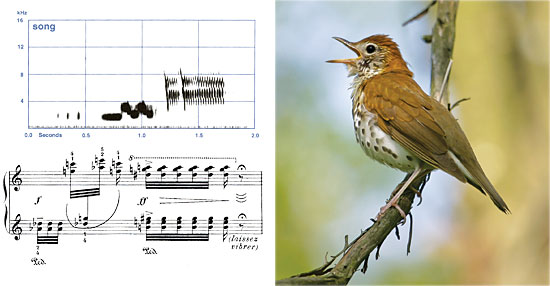
Say it outloud. Eliot’s mimicking the song of the wood thrush.
I hate the idea of a student sitting on a Green somewhere reading Ishmael’s killer opening riff of Moby Dick, his ears plugged with ear buds streaming Nick Drake into a brain that cognitive scientists claim hasn’t fully formed.
On Fridays untethered from chemo tubes and free to flush whenever she likes, Judy Birdsong leaves Roper Hospital. Although she’s happy to get back to Folly, she isn’t up for a night of doing the wa-wa-tusi at the Sand Dollar Social Club, so we sit together on the sofa, she surfing the Web, me searching for something to watch on TV.
As far as television goes, the Birdsong-Moores watch on average fewer hours per week than the typical American does in a day (five to seven depending on what site you check to get the data). If we think of it, on Tuesdays we turn on Making It Grow, but outside of college football, the occasional Turner Classic movie, or a kickass series like True Detective, watching the tube just ain’t our thing. In fact, the last major network series I member watching on a regular basis was the first season of 24.
Last night, though, was one of those Fridays, and in search of something to distract me, I left the small orbit of choices in “Rusty’s” designated Dish Network guide and ventured into the vast realm of viewing choices that lie beyond — programming that targets every conceivable viewing niche imaginable — from sci-fi to Japanese animation to Gerbil Week on the Small Caged Pets Network, or SCPN.
For a while, I hung out at [cue amused trombones] the Hang Out festival, an outdoor concert somewhere near a beach in Alabama featuring Edward Star and the Magnetic Zeroes, Gary Clark, Jr., Wilco (by far the most interesting), and Dave Matthews, but, alas, I grew bored with the redundant camera cuts from frenetic jamming musicians on stage to clichéd crowd shots of swaying hippie chicks, Frat boys, and if my eyes weren’t playing tricks on me, a redneck or two.
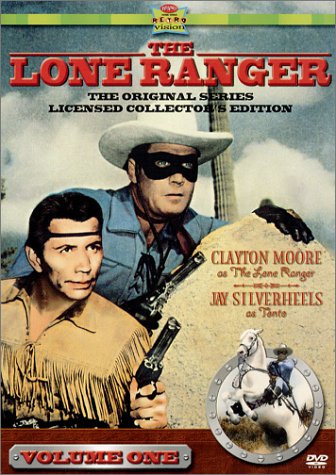
So I rapidly clicked through the scrolling choices of the guide until I ran across a Lone Ranger episode from 1952, the year of my birth. The Lone Ranger was one of the first TV shows I remember watching. (The only earlier one I remember is Howdy Doody. whose theme song I can still sing).[1] Anyway, as a kid, I really dug the Lone Ranger, Tonto, the black mask, the silver bullets, the horse-hoof-like theme song from William Tell’s Overture, and the repetitions of “Hi-Ho Silver, away!” and “Who just was that masked man?” Also, it didn’t hurt that the last name of the actor who played the Lone Ranger was Moore, but I think what I most liked about the Lone Ranger was his isolation, his alienation. Although I wouldn’t be able to conceptualize this as a child, the Lone Ranger has rejected what he considers a corrupt culture, not only Western Culture in general, but specifically, the lawless culture of the Old West itself, which in a way makes him a heroic antihero, a true man of mystery.
I entered the action about two-thirds through the episode. A Mexican grandfather and his grandson had been arrested by Gates, a corrupt tax-gatherer, who confiscated the haciendas of citizens who couldn’t pay. The Lone Ranger had lifted some damning documents and was galloping a breakneck speed through the dark night to show them to the governor. The image I first saw was the grandfather begging Gates to kill him, an old man, instead of his grandson, Don Rodrigo, a young man. Gates warns if they can’t retrieve the documents, both will be shot by a firing squad at dawn. Tonto tries to bust the two out of jail, but he himself is captured and thrown into the communal cell.
The Lone Ranger franchise began as a radio show, and this early episode seems oddly bound to the traditions of radio narratives. For instance, the episode features a narrator with a velvety radio baritone who intones “as Gates continues to interrogate the prisoners” [on screen actors mutely interact with each other], then segues into “the Lone Ranger pushes his mighty stallion Silver at top speed across the desert to the Governor’s” [on screen: the Ranger flailing away at a white horse galloping at breakneck speed].
Although, admittedly, the plot is lame, it has an unmistakable theme, which one of the characters on more than one occasion speaks outloud: American citizens must fight to insure that their way of life is not taken away by dictatorial assholes like Gates.
The episode ends in a predictable manner,[2] and what followed was a full-length in color movie from 1958, The Lone Ranger and The City of Lost Gold. The film begins with the creation legend of the Lone Ranger narrated by music-backed chorus of male singers[3] telling us what we’re seeing: an ambush, five dead Texas Rangers, one survivor discovered by an Indian on a painted horse, six graves (one for the survivor as well so the world will think he’s dead), a masked man loading silver bullets into a revolver, the masked man and his Indian savior galloping off in a cloud of dust.
I didn’t make it far into this movie, by far enough to notice the Lone Ranger seems opposed to taking human lives (he’s really good at shooting guns out of hands) and that the screen writers and director didn’t pull punches when depicting racial prejudice. Interestingly enough, given one of the current NFL controversies, a sheriff tells Tonto, who is seeking a doctor, “We don’t allow no redskins in here.” When Tonto refuses to leave, he has his ass kicked by the police.
In checking Wikipedia, I discovered, among other things, that the Lone Ranger speaks correct grammar and never uses slang. The silver bullets signify to him the preciousness of human life. I also learned that one of the writers copped the word” Kemosabe,” the term Tonto uses when he addresses the Lone Ranger, from “the name of a summer camp in upper Michigan.” By the way, in Spanish, tonto means foolish, so in Mexico he is known as toro.
Also, and this is really weird: The Green Hornet is a radio spinoff from The Lone Ranger. The Green Hornet character, according to Wikipedia, is “the son of the Lone Ranger’s nephew Dan [Reid]” and that “[i]n the Green Hornet comic book series [. . .] the Lone Ranger makes a cameo appearance by being in a portrait in the Reid home.” However, “[c]ontrary to most visual media depictions ,[. . . ] his mask covers all of his face.” It seems as if the Lone Ranger franchise really keeps close reins on its property rights.
After being exposed briefly again to this boyhood hero of mine, I recognize the Lone Ranger’s affinity to both Natty Bumppo and Ishmael, alienated, like them, from his culture and seeking, like them, only male companionship with a native Other.
No, it’s not the Green Hornet the Lone Ranger reminds me of, but Caine from Kung Fu. The Lone Ranger’s reluctance to kill people seems more Eastern than Western, if not downright un-American.
[1] Actually, the lyrics aren’t that difficult: “It’s Howdy Doody time/It’s Howdy Doody time/It’s Howdy Doody time/It’s Howdy Doody time . . .
[2] Actually, the episodes of the episode are broken into odd segments that are sandwiched between seemingly interminable commercials aimed at octogenarians, the catalogue of potential side effects seeming to take as long as the episodes themselves. My favorite side effects of the night, both appearing in the same sentence, “If you get an erection that last more than three hours or your breasts starting making milk, stop taking [can’t remember the product] and see a doctor.” I swear I’m not making that up.
[3] Think of the narrative chorus in The South Park episode on Mormonism.
This morning’s edition of The Post and Courier features clashing “conservative” columns by Senator Mike Fair and assistant editor Frank Wooten on natural selection’s being taught in public schools. David Brooks versus Paul Krugman this ain’t. Think, rather, The Emperor of Lilliput debating Bottom the Weaver.
Since Mr. Wooten’s column is a response to Senator Fair’s, I’ll begin with his, which poses some syntactical challenges for the reader .
He begins by announcing his world view is Christian and he has “that perspective on issues when it applies.” He complains that some who perpetrate subtle attacks “on some issues promoted by Christians” like evolution ignore the Christian bias in other issues, for example, legislation Fair has promoted to help “inmates, women, children, etc” — as if Christianity held a patent on human kindness, as if compassion could not manifest from other religions or mere humanism. By the way, in my travels I have run across ragged beggar children, but I’ve never thought to myself, “Hey, I’m not a Christian, so I’m not going to give that grimy by-product of a random series of accidents and mutations any of my tourist dollars.”
Fair then goes on to claim that “the courts have placed a stranglehold on the search for truth in science.” What in the hell does this mean? Are anti-evolutionary scientists being arrested, convicted, and imprisoned Galileo-like so they can’t continue their quest to prove evolution fallacious? He then goes on to write, “The ‘truth’ must conform to Darwinism, or it is not allowed. I don’t suppose it matters what your eyes see or your mind tells you.”
What he means by that last sentence I can only guess. Do his eyes see a cloud floating above, and does his mind tell him there’s a white bearded, golden robed masculine God sitting on a throne up on that cloud who created our solar system in 6 days 6,000 years ago?
Then Fair careens off on a tangent and argues that “Noah, Webster, a Founding Father (Webster, by the way, spent the Revolution as an undergraduate at Yale), was considered the Father of Education” (ah, the obscuring cloak of the passive voice), and Founding Father Webster declared, “The Christian New Testament is the Moral Law for the United States,” which certainly should be news to the Navaho, Cherokee, and Sioux tribes.
This rhetorical path leads Fair to the Supreme Court, which in essence has embraced “atheism, a religious belief,” to be “allowed to be a factor in driving Darwinism in public schools.” So, a religion, after all, is driving public policy, and that religion is atheism.
He then writes
The Big Bang Theory confirming the truth of a beginner, judged to be a conclusion or debate that is not allowed; many facts are excluded from science and astronomy because of their non-atheistic implications that point directly to intelligence.
I have no idea what he means by the string of phrases masquerading as a sentence that begins the quote, but I wish he’d offered an example or two of scientific facts that have been banned from textbooks because those facts “point directly to intelligence.”
He asks rhetorically, “Why should a young person care about character if he is just a random conglomeration of particles” and ends with “we are all here for a purpose, and random causes do not fit with the facts.”
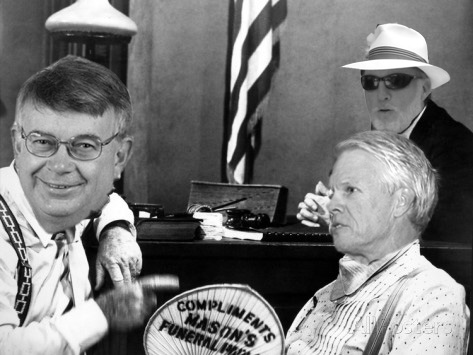
From the film version of “Inherit the Hot Air” starring from left to right Frank Wooten, Sen. Mike Fair, and Wesley Moore
Mr. Wooten begs to disagree with Senator Fair. He wonders if these “South Carolina folks who still see perceive evolution as a threat to Christianity” have seen Inherit the Wind.”
My guess is probably not, but if they had, they no doubt would identify with William Jennings Bryan, not Clarence Darrow.
Although Wooten blithely ignores some of the problems evolution poses for Christianity, he makes a credible case for the separation of religious belief and scientific education.
He fears that op-ed pieces like Fair’s that reject “basic science” undermine “true conservatives who fairly object to anti-American slants in textbooks,” slanted stuff that mentions the massacre at Wounded Knee and questions the detonation of atomic bombs on civilian populations, acts that suggest that maybe the Christian New Testament is not the Moral Law for the United States after all.
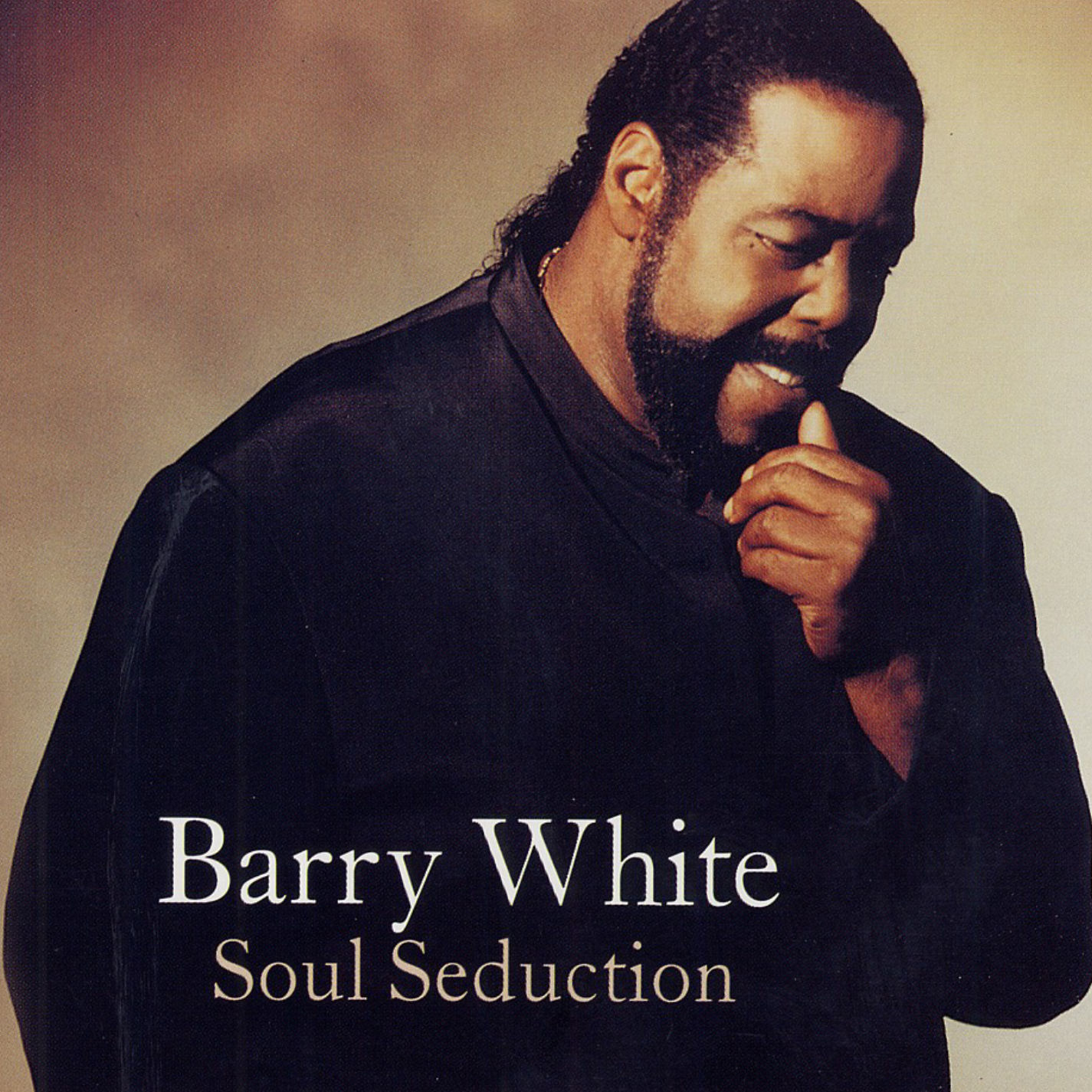
A while back, I posted a piece called “First Impressions,” which celebrated killer opening sentences from various novels like [cue Barry White] this here delicious, obsessive echo chamber of a love songfrom MrBaddass himself, Влади́мир Влади́мирович Набо́ков:
Lolita, light of my life, fire of my loins. My sin, my soul. Lo-lee-ta: the tip of the tongue taking a trip of three steps down the palate to tap, at three, on the teeth. Lo. Lee. Ta.
However, as Franz Kafka once told me, “Starten eines Roman ist eine verdammt viel einfacher, als Abschluss einer“* so I decided to lay 5 of my favorite closing lines on you, lines that rat-a-tat-tat the novels’ themes in sound and sense. (BTW, the actual quotes themselves should be read aloud).
*Starting a novel is a helluva lot easier than finishing one.
1. The Sound and the Fury: “The broken flower drooped over Ben’s fist and his eyes were empty and blue and serene again as cornice and façade flowed smoothly once more from left to right, post and tree, window and doorway and signboard each in its ordered place.”
If Mr. Faulkner were employed by SparkNotes, he might “summarize” that last sentence like this: A description of Benjy — christened Maury — Compson, idiot grandson of the Confederate General patriarch of that fallen family, the drooping and broken flower an emblem of Ben’s beloved lost sister’s honor, Maury/Benjamin just having gone apeshit because the black tween servant Luster had swung the wagon bearing the family on their ritualistic visit to the grave of General Compson’s alcoholic son Jason Sr. to the left of the monument, provoking sounds of ”horror; shock; agony eyeless, tongueless, just sound,” from the that thirty-three-year-old with the mind-of-a-three-year-old, bellowing until the “only sane” Compson brother, Jason Jr., catches the reins to swing the horse Queenie in the opposite direction, calming Benjy, the sentence itself capsuling the fall of the House of Compson, the disappearance of the Old South, its doomed fetish for tradition.
Ulysses: O and the sea the sea crimson sometimes like fire and the glorious sunsets and the figtrees in the Alameda gardens yes and all the queer little streets and pink and blue and yellow houses and the rosegardens and the jessamine and geraniums and cactuses and Gibraltar as a girl where I was a Flower of the mountain yes when I put the rose in my hair like the Andalusian girls used or shall I wear a red yes and how he kissed me under the Moorish wall and I thought well as well him as another and then I asked him with my eyes to ask again yes and then he asked me would I yes to say yes my mountain flower and first I put my arms around him yes and drew him down Jo me so he could feel my breasts all perfume yes and his heart was going like mad and yes I said yes I will Yes.
Riding the rapids of Mrs. Molly Bloom’s stream of consciousness as she contemplates her hubby Leopold, heroic cuckold, who has come home again, home again, jiggedy jig, and who lies in bed next to her, his feet facing the headboard and his head facing the footboard, and what can you say to the life-affirming ending of that concluding sentence but yes sir ree bob tail– Yes!
Y’all ready now for a slow dance?
The portrait of Abert Camus by Haeree Choi
3. The Stranger: For everything to be consummated, for me to feel less alone, I had only to wish that there be a large crowd of spectators the day of my execution and that they greet me with cries of hate.
Mon Dieu, is smoking a cigarette during the absurd ritual of sitting up all night with your mother’s corpse or having casual sex the night after her funeral so wrong? How absurd! These acts by our narrator Meursault seem to shock his all-white Algerian jury more than the offing of a mere native (which in Colonial Africa is tantamount to jaywalking). You might say that Meursault’s jail sentence has been a Godsend – i.e., you might say that if he didn’t exist in an arid, godless abyss of a universe — but the good news is that in the fleeting ever disappearing now in which he types the concluding paragraph, he has discovered that he and the indifferent universe are one. OM.
4. The Sun Also Rises: A taxi came up the street, the waiter hanging out at the side. I tipped him and told the driver where to drive, and got in beside Brett. The driver started up the street. I settled back. Brett moved close to me. We sat close against each other. I put my arm around her and she rested against me comfortably. It was very hot and bright, and the houses looked sharply white. We turned out onto the Gran Via.
“Oh, Jake,” Brett said, “we could have had such a damned good time together.”
Ahead was a mounted policeman in khaki directing traffic. He raised his baton. The car slowed suddenly pressing Brett against me.
“Yes,” I said. “Isn’t it pretty to think so?”
Who knows if Viagra would have worked on narrator Jake Barnes. Did his war injury render him a gelding or sever his penis? No crisp declarative sentences answer those questions. Certainly, as a man Jake is the opposite of what the vulgar call “dickless.” Whatever, all I really care about is that mounted policeman raising his baton is an invaluable tool in convincing skeptical students that phallic symbols aren’t perverse illusions engendered by English teachers’ diseased minds .
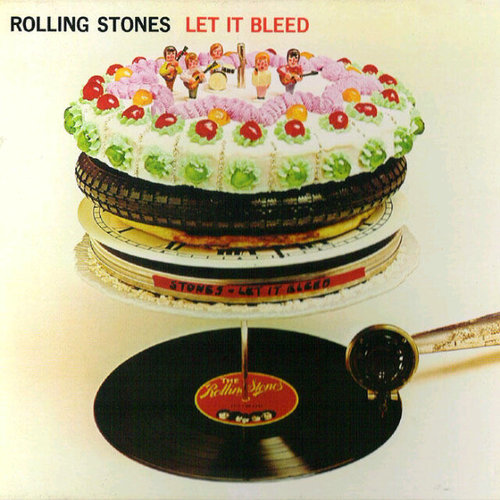
5. “Midnight Rambler”: I’ll stick my knife right down your throat, baby, and it hurts!
Okay, as Condoleezza Rice’s and Colonel Kurtz’s lovechild might say, “Strictly speaking, ‘Midnight Rambler’ isn’t exactly a novel, but it is a narrative, sort of, and this post is getting too long, and goddammit, that last line of the Stones’ classic absolutely nails the sound and sense of the sort of narrative, and it‘s literally “killer”, so fuck you and your rigid mind-forged manacles.”
My mother’s side of the family — the Baptist side – considered alcohol an abomination, Satanic spittle concocted to rob the imbiber of his or her moral wits, or to shift to a perhaps more accurate metaphor, concocted to de-magnetize the self-polluter’s moral compass.
My father’s people, on the other hand, despite their Protestant names – Luther and Wesley – didn’t much adhere to Holy Writ. My mother – praise be — was a non-judgmental, fun-loving redhead with a heightened, countercultural aversion to self-righteousness, so she didn’t consider drinking sinful and enjoyed a Crown Royal and Coke on occasion.
Mama’s childhood residence
Nevertheless, her father when he drank could be a belligerent drunk, and my own father reacted to alcohol in Jekyll/Hyde fashion — either he had you on the carpet rolling in laughter or cowering as he hurled some odd or end across the room. So I suspect that early in their marriage, Mama might have followed in her own mother’s footsteps and attempted to discourage my father from drinking.
Perhaps Mama’s antipathy to Daddy’s drinking explains how I ended up hanging out at bars at a very early age — even before I acquired language and therefore memory. These bar excursions must have occurred when we lived on Wentworth Street or when my parents lived at Clemson. The story goes (and my parents shared it together on numerous occasions to numerous audiences) that sometimes when Mama left me in Daddy’s care, he absconded with me in tow to the most obscure bar he could think of, only to have the phone ring there and the barman to ask if there were a Wesley Moore present. Daddy, according to this legend, awed by Mama’s preternatural ability to track him down, would come straight home to face the wrath of his red-headed Scotch-Irish wife.
No telling the impact the conviviality of taverns — the blinking pinball machines, the raucous laughter, the seductive perfumes, the voice of Nat King Cole on the jukebox — had on my tiny developing cerebral cortex. Some studies claim that exposing infants with their rapidly developing brains to classical music enhances math skills, so perhaps my exposure to cigarette smoke, vulgar jokes, and male camaraderie helped to develop my Dionysian social skills, my ability to strike up an amiable conversation to the occupant of my adjacent bar stool, whether he be a vacationing Wall Street bigshot at Rue de Jean or a bushy bearded homeless rummy at Chico Feo.
Truth be told, I like hanging out solo at what my ancestors called public houses.
The Pool Room
My first post-toddler bar/tavern/pub hangout was the S&S Sporting Center (aka the Pool Room) located on Main Street in my hometown Summerville. Although it wasn’t literally a tavern, Mr. George, his wife Monkey, and son Boise served draft and canned beers in an establishment that featured a long bar with at least twenty swivelable bar stools. I sat at that bar many a Saturday afternoon or summer day slurping down delicious chilidogs, sipping Cokes, eavesdropping on beer swilling rustics or wayward Episcopalians.
Scrupulously honest, the Pool Room proprietors demanded proof of age, and when you turned 18, handing your license to Boise as you ordered a draft was a rite of passage. You could go there by yourself and be sure to know someone — if even if were only Boise, who not only had a degree from Brevard College but who had also served his county in the arm forces. He was our hometown Hemingway, a stoic who had seen the world.
Once I hit college and my hair had reached my shoulders, I quit hanging at the Pool Room in the summers. The last time I remember being there, some white stranger with a Hendrix-sized jew-fro and tie-dyed tee shirt strolled in, and I overheard a native son say, “Let’s kick his ass before he puts one of them psycheee-DEL-ic records on the jukebox.”
Morris Knight’s
I don’t know how exactly to characterize Morris Knight’s. Because it was within walking distance from my house, and not far at all if you cut through the woods and later people’s yards, we would go there in the daytime to buy firecrackers. There was a bar with floor-attached stools and a coin-operated pool table. This was back in the days before pop tops, and I remember the bartender, a fat woman, opening the cans with a church key, puncturing two triangular openings across from one another. I’m pretty sure they didn’t serve draft.
I only went there at night once on a camping out excursion when I was in junior high, and the joint was rocking, as Chuck Berry might say. The odor of beer mixed with cigarette smoke was heavy in the air, and I saw a man staggeringly drunk try to traverse the narrow front room. Whoever ran the joint immediately ran us off when we tried to cop some firecrackers.
Later there was a place on the north side of town called the Teepee Lounge when I was in college, but I only patronized it a couple of times.
By then, we had started driving to Charleston to hang out at College of Charleston bars like Hogpenny’s or to the Isle of Palms to destinations now long gone.
USC Bars
Let’s see, the Campus Club, the Opus, the Second Level, Don’s, the Senate Plaza, Capitol Coal, Oliver’s Pub — and, of course, the Golden Spur where my late wife Judy Birdsong and I met as bartenders.
Located in the back of the student union building, what the Spur lacked in style — it felt sort of like a cafeteria — it made up in convenience and prices. Happy Hour beers cost 15 cents and a pitcher a dollar. Also, sometimes the Spur featured musical and comedy acts. Steve Martin performed there before anyone had ever heard of him, and I saw Sonny Terry and Brownie McGhee play there for free.
Being a bartender at the Spur made you sort of a minor celebrity around campus in that seeming strangers recognized you and called you by name, but I tended not to dig lots of the regulars, a few of who seemed to be nascent alcoholics. We had this irritating promotion where you’d by your own Golden Spur mug and carry with you to the bar and receive your first draft free.
In the dead summer time, when I was the only non-managerial bartender, some kids would come in at 11 and stay virtually all day and night. You could set your watch by their coming and going. Then in the high season during Monday Night Football or Columbia’s big party night Thursday, the place would be packed wall-to-wall, and occasionally you’d have to deal with belligerent drunks or puke-bespattered restrooms.
Nevertheless, I enjoyed my time there. It might be the best job I ever had.
Charleston Bars
Rue de Jean is my downtown hangout, and back before the pandemic, I’d show up there around 9:30 on the second Tuesday of each month after my book club dispersed. Although he no longer works there, what distinguished the Rue from any of the other bars was Mr. Steve Smoak, a world-class bartender who on a busy night moved with the grace of Nureyev as he glided over to grab a bottle and in one fluid motion scooped ice and poured while seeking eye contact with the next customer. When things weren’t busy, he was a witty raconteur, a cat who knew his way around, a latter-day Bosie, if you will.
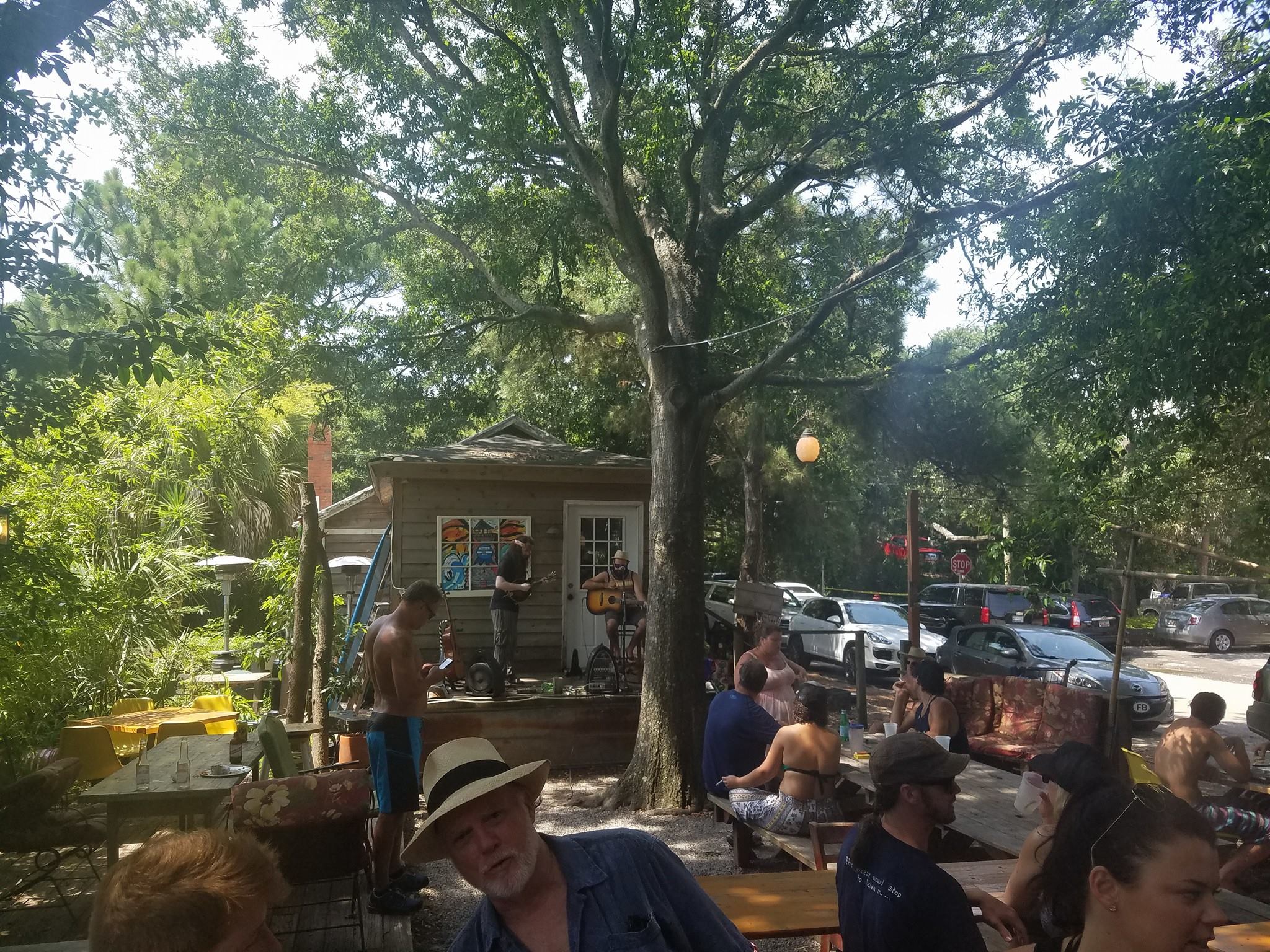
Of course, the so-called City of Folly Beach probably has more bars per capita than any other municipality in the Palmetto State. I suggest the Surf Bar for visitors and the Jack of Cups for beer connoisseurs, the Sand Dollar for Saturday Night dancing, the eponymous Sunset Cay for marsh vistas, but, by far, my major hangout is Chico Feo, an outdoor Caribbean bohemian confab of the homeless, the homely, and the hip. The superb bartenders reach for an All Day IPA, which costs a mere 3 bucks, when they see me at a distance parking my bike.
Some of the clientele are down and out but seem happy, like characters from a Jerry Jeff Walker song. When I was teaching, I’d grade essays there on fair-weather Saturdays and Sundays. Once, my friend Greg, who was at the time homeless, chided me for grading my essays at the Jack of Cups when the temperatures were what I’d call uncomfortable. “You should grade them outdoors,” he said. “I don’t think I’ll ever sleep indoors ever again.” He said it as if sleeping under a roof was somehow inhibiting.
“What about the winter,” I asked. “Don’t you get cold in the winter?”
“I have a sleeping bag,” he said and smiled and ordered another PBR.












 You Do Hoodoo