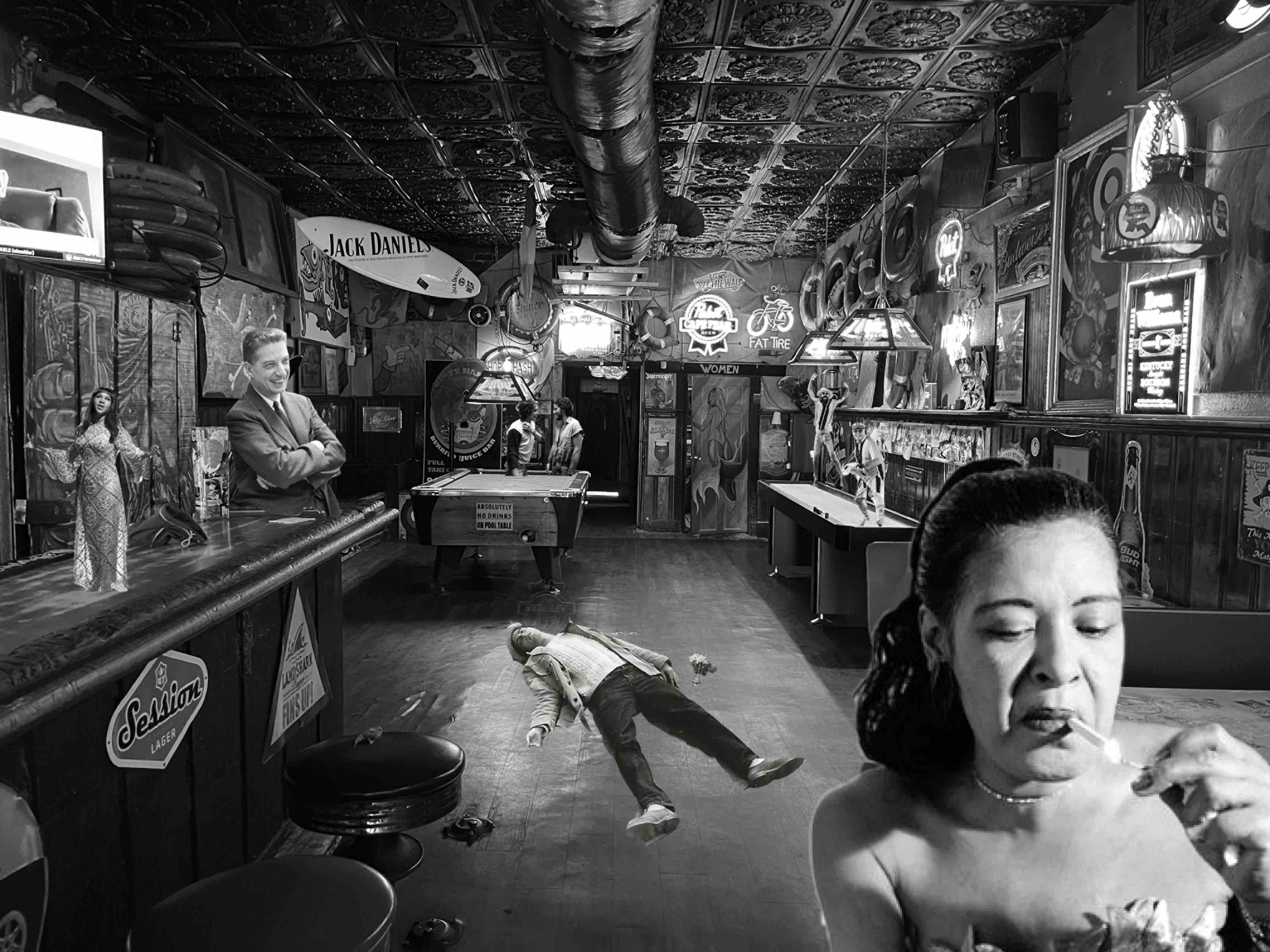
From left to right Aretha Franklin, John Hammond, Bob Dylan, Bruce Springsteen, Rusty Moore, Kip Vino, Erich Huber, Billie Holiday
Thanks to my pal Erich Hubner, the guitarist of the killer cover band Pleasure Chest, I’m getting schooled by the ridiculously erudite musicologist Andrew Hickey, whose podcast The History of Rock Music in 500 Songs traces the evolution of rock-n-roll from its earliest influences up until 1990.
Sometimes the best things in life are free, if you have access to a computer, that is.
Recently, Erich and Pleasure Chest’s front man Kip Veno and I-and-I wandered uptown to Leon’s to slurp down some oysters, and Erich asked me if I were familiar with the Hickey’s podcast, and since I’ve only listened to one podcast ever, the answer was, um, no. Erich convinced me that I’d find it interesting, and man oh man was he ever right.
BTW, if you wanna see Pleasure Chest in action, click HERE.
I’m only two episodes in, but already I’ve learned so so much. I thought I was hip when it came to John Hammond minutia. John Hammond, a scion of the Vanderbilt clan, went rogue, became a 20th century champion of civil rights and the most influential record producer in history.[1] He’s also the father of John Hammond, Jr, a bluesman whose cover album of Tom Waits tunes is to my mind a classic. Waits actually plays on the album.
Oh where was I? Oh yeah, here’s one thing I didn’t know about Hammond: he introduced Fletcher Henderson to Benny Goodman, Hammond’s brother-in-law, and Henderson integrated Goodman’s band, along with the great vibraphonist Lionel Hampton, who wittily observed that you needed both black and white keys to play a piano. The Goodman band was the first band to feature both black and white musicians, and Hammond was the catalyst.
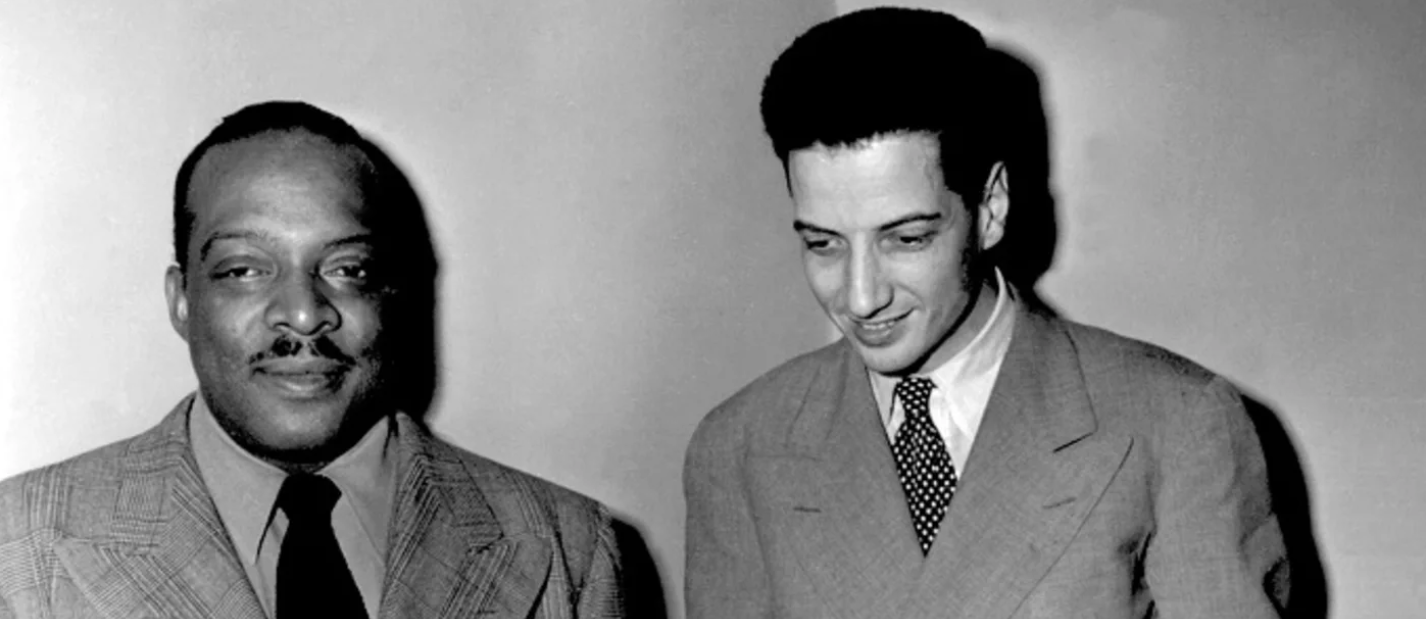
Count Basie and John Hammond
Henderson went on to lead his own big band that featured the likes of Louis Armstrong, Red Allen, and Coleman Hawkins. Excuse me for all this tangentification.[2]
Anyway, Andrew Hickey is not only encyclopedic in his knowledge of popular music, but he’s also a trained musician who can demonstrate sonically the differences among the big band’s swing beat, boogie woogie, and rock-n-roll’s backbeat. He does this with vocalizations along with clips from recordings.
He begins “Episode 1” by exploring early influences on rock, starting with Benny Goodman’s sextet that featured Charlie Christian, an early electric guitarist who way back in the 30s was playing proto rock-a-billy riffs, which Hinckley illustrates in the featured song of the episode “Flying Home.” Anyway, I’m nerding out on y’all, zigzagging all over the place. My main purpose here is to have you check out the podcast and Hickey. If you’re into popular American music, it’s more than worth your while.
Here’s a link to his website: https://500songs.com

Andrew Hickey
[1] Here’s a partial catalogue of musicians he discovered and recorded: Bennie Goodman, Count Basie, Billie Holiday, Bessie Smith Aretha Franklin, Bob Dylan, Leonard Cohen, Bruce Springsteen, and Stevie Ray Vaughan.
[2] Fedora tip to Dr. John.
 You Do Hoodoo
Thanks! Fascinating stuff, to me. I will check out this website. I grew up with a Boogie-Woogie playing Mom, plenty of old jazz records, worked on a black gospel TV show, and saw it all spill into Southern rock. I find pioneers like Hammond to be amazing, as they span all the elements that form our popular music.
Glad you dug it, Hank! Thanks for reading and commentating. And congratulations on your marriage!