
Where to Begin
How about with invasion: muskets versus bows and arrows? Wind-borne lamentations. Later, clinking chains, songs of woeful repetition. The worst kind of karma, evil spreading out in concentric circles, dispersing like an oil spill, sullying every man, woman, and child.
This degradation is Faulkner’s great theme: the darkness of terrible wrongs blighting the Southern landscape, passing from generation to generation, destroying both the rich and the poor, Joe Christmas and Quentin Compson.
These shadows—genocide, slavery, the War—incubate the monsters of Southern Gothic literature: incestuous aristocrats, necrophiliac halfwits, sadistic Alabama sheriffs—not to mention the supernatural, hoodoo and haints.
When I was eleven or twelve, I asked our housekeeper Alice who was part Cherokee and part African if she believed in ghosts, and she told me that she had seen her father standing in her backyard the night after his death. We were sitting in my mother’s 1960 Ford Fairlane in the parking lot of the Piggly Wiggly in Summerville, South Carolina. I could see wonder and dread on Alice’s face when she told me about that visitation. She was tall, slender, graceful, light- skinned with high cheekbones, but always wore a somewhat sad expression. I have no idea how old she was.
The dog was howling, she said. The dog had seen her papa’s ghost as well.
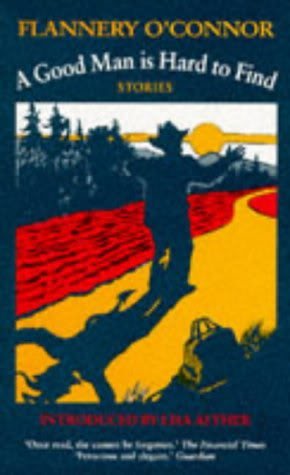
The supernatural is one strain of Southern Gothicism; however, the suicide hanging in the attic, the alcoholic great aunt who gave birth to the idiot child buried in the backyard is another. These more mundane instances of Southern Gothicism are even more terrifying because they’re not merely figments of superstitious imaginations, but flesh-and-blood monstrosities. William Faulkner’s Miss Emily Grierson and Flannery O’Connor’s Misfit did not materialize out of thin air; their prototypes, walking and talking lost causes, traveled the streets of Oxford and Milledgeville.
***
Over the course of her long life, Shirley Gibson, a Charleston institution, has amassed an enormous number of friends from every social strata, from countesses to street musicians. Also, she has mentored dozens of young people including the artist Shephard Fairy and the novelists Katie Crouch and Grady Hendrix. Having taught art at Porter-Gaud School for four decades, her house on Trumbo Street features an array of colorful ceramics she has crafted in an Italian style. A somber portrait of her great grandmother hangs in the downstairs parlor, but the house, despite its age, projects a youthful vibe. Associating with young people keeps you young, they say, and Shirley remains young at eighty-something.
Some of Shirley’s people come from Mississippi, the birthplace of the blues and the former stomping grounds of William Faulkner himself, whose novels take place in the imaginary county of Yoknapatawpha, modeled on Lafayette County and its county seat Oxford, Faulkner’s hometown. He spent the majority of his life populating Yoknapatawpha with characters who span the entire history of Mississippi, starting with native inhabitants of the early 19th Century, through the antebellum period, the War itself, and its awful aftermath — characters like Chief Issetibbeha, the planter Thomas Sutpen, Bayard Sartoris, Sam Fathers, Ike McCaslin, Joe Christmas, Benji Compson, Flem Snopes, Dilsey Gibson . . .
Mississippi is also where the novelist Walker Percy and his brothers LeRoy and Phinizy moved after they were orphaned in the 1930s. Their adopted town Greenville calls itself “the heart and soul of the Delta,” and it was there that Walker Percy became lifelong friends with Shelby Foote, the novelist and chronicler of the Civil War. As young men, they embarked on a pilgrimage to Oxford to meet Faulkner. Although Foote and Faulkner engaged in a spirited conversation, Percy was so awestruck that he was unable to utter more than a couple of words.
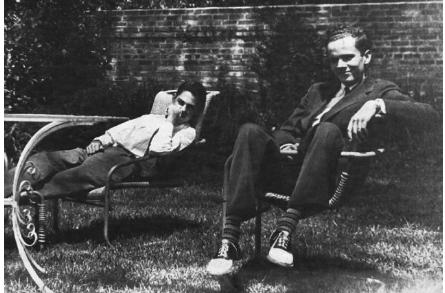
Shelby Foote and Walker Percy
A few years ago at one of Shirley Gibson’s dinner parties, I sat at the dining room table next to Walker Percy’s niece Melissa. Although Melissa didn’t delve into her family’s “ancient history,” her great grandfather, John Walker Percy, committed suicide in 1917 when Uncle Walker was one, and Walker’s father, LeRoy Hope Percy, took his own life when Walker was thirteen. After her husband’s death, Walker’s mother, Martha Susan Phinizy, moved to Athens, Georgia, with her three sons to live with her mother.
At the dinner table on Trumbo Street, Melissa told the story of her grandmother’s death, how she drove her car off a county bridge into a creek with Melissa’s father in the front seat. Her father Phin, only nine years old at the time (six years younger than his brother Walker), somehow managed to extricate himself from the sinking automobile, but his mother would or could not escape. Uncle Walker, she told us, regarded the death as a suicide.
After crawling his way up the bank, her father Phin waited on the side of a desolate Georgia dirt road in the middle of nowhere, his mother by now a corpse in the submerged car. He sat there alone for twenty minutes. Melissa said that the next car that came by was Uncle Walker’s. They, along with brother LeRoy, were now the orphans of suicides, fortunate to find a good home with their first cousin once removed, William Alexander Percy, a bachelor lawyer and a poet, but the orphans of suicides, nevertheless. At the time of this telling, her father was still alive—though not alive—in a nursing home, one of the living dead. In the Percys’ case, Southern Gothicism was not merely a literary genre, but a way of life.
Long Ago Last Summer, a collection, short fiction, poetry, and essays, forms a sort of a mosaic of my life. It’s a guided tour, if you will, of the haunted houses and cobwebbed attics of my youth. You will encounter a collection of characters: village idiots, spinster aunts, hard core alcoholics, and at least one mass murderer, Pee Wee Gaskins, who picked me up hitchhiking in 1971. Each piece can stand alone, so you can skip around. However, if you read the chapters in chronological order, you will grow up and grow old with me, as it were. For example, the first two stories in the collection, “Those Who Think, Those Who Feel” and “Airwaves,” are highly fictionalized accounts of portions of my parents’ lives. The last entries deal with my wife Judy’s death and my finding new late life love.
Although coming of age in the South in the post-World-War-II era could be very unpleasant—not to mention dangerous—it wasn’t all bleakness and mayhem. We had more than our share of laughs, and despite the ignorance and bigotry and anger manifest throughout our history, including the present with the MAGA movement, I’m nevertheless proud to claim the South as my homeland.
After all, if it weren’t for Blacks and Scotch Irish rustics, American culture would be dull indeed.












 You Do Hoodoo