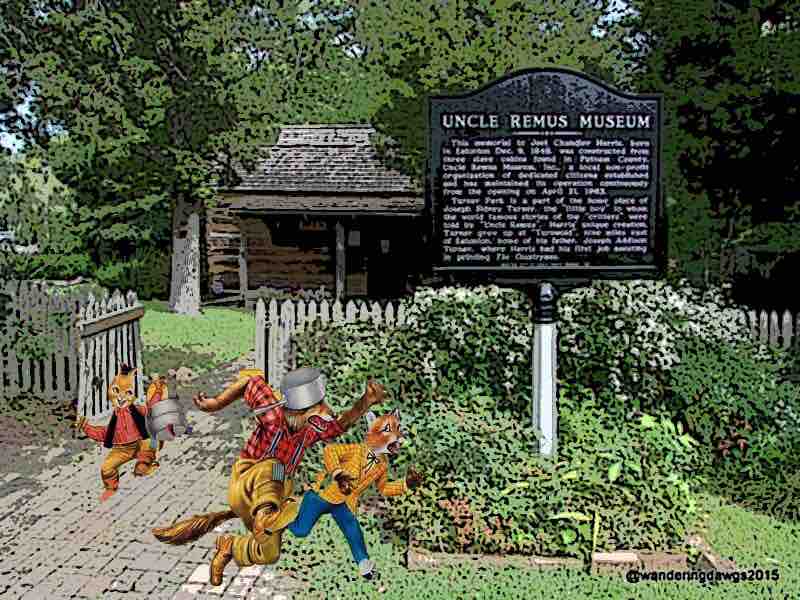
Episode 3 of “My Boys Were Back in Town, Backroads Edition Featuring Joel Chandler Harris

Episode 3 – Eatonton’s Rural Literary Legacy

[In episode 2, My ex-pat son Ned and I wended our way through backroads headed to Reynolds, formally known as Reynolds Plantation, just outside of Greensboro, Georgia, to reunite with his Aunt Becky at Uncle Dave].

Around four-thirty on Thursday, Ned and I arrived at Reynolds where we negotiated the security gate rigamarole. At the house, Becky and Dave greeted us warmly, plied us with drinks after our long (well, six hour) journey, and we did some catching up. It turns out that Becky and Dave had recently suffered a hair-raising flight from New Jersey to Atlanta, the inside of the plane perpetually rocked by turbulence for the entire time they were airborne. As she was exiting the plane, Becky found it especially disconcerting to see the pilot and copilot exchanging high fives. She informed Ned if she were going to visit him in Nuremberg, she was likely to take an ocean liner.

On Friday, Dave, who is overseeing the construction of one of the houses his son Scott is building in Reynolds, headed off to work, and Becky drove Ned and me to Eatonton so we could check out the Georgia Writer’s Museum, home of the Georgia Writer’s Hall of Fame. 

Eatonton is a lovely, sleepy verdant town that reminds me of the Summerville of my youth. It seems like a pleasant place to retire, that is, if you’re not a Folly Beach hedonist hellbent on cha-cha-cha-ing yourself to death.

The museum itself, located in a coffeeshop, struck me as the literary equivalent of a science fair, consisted of tables lined up with poster board information. Eatonton and its environs have produced a remarkable number of noteworthy writers including Alice Walker, Jean Toomer of Harlem Renaissance fame, and Joel Chandler Harris, who adapted African folk tales in book form, creating the Uncle Remus stories. Milledgeville, the home of Flannery O’Connor, is a mere twenty miles south.

The museum houses both Joel Chandler Harris’s and Flannery O’Connor’s typewriters, plus an exhibit delineating the evolution of machines of writing, starting with primitive typewriters and ending with a progression of computers getting smaller and sleeker through the decades.

As I slowly strolled along the exhibits, The fact that Joel Chandler Harris had been born in the Barnes Inn and Tavern caught my eye. Being born in a tavern seemed odd, colorful, so I read on. 

Here’s a short version of his life:

The year of his birth is uncertain, either 1845 or 1848. His mother Mary, an Irish immigrant who worked at the inn, was impregnated by a cad who abandoned his infant son and Mary.  She named the baby Joel Chandler Harris after her attending physician.

Of course, illegitimacy, as it was called in my youth, was especially problematic in the antebellum South.[1] In addition to that disadvantage, Joel was redheaded and stammered, which made him a target for bullies.[2]  The stigma of his “lowly” birth haunted him throughout his youth and early adulthood.

Fortunately, Dr. Andrew Reid, a prominent Eatonton physician, provided Mary and Joel with a small house behind his mansion. He also paid for Joel’s tuition (in those days public education didn’t exist in the South). Mother Mary fostered Joel’s future literary prowess by reading to him out loud, which helped him to develop the remarkable memory he would utilize in assembling the Uncle Remus tales. She read him Goldsmith’s The Vicar of Wakefield so often that he could recite lengthy passages by heart.

At fourteen, Harris dropped out of school and went to work for a newspaper, Joseph Addison Turner’s The Countrymanwith a circulation around 2,000. There Harris mastered the basics, including typesetting. Addison allowed Harris to publish his own stories and poems. Eventually, Harris moved into Turnwold Plantation, Addison’s home, located nine miles outside of Eatonton. Here Harris had access to a voluminous library and where he began devouring the classics and contemporary authors such as Dickens, Thackery, and Poe.

At Turnwold, Harris spent hundreds of hours in the slave quarters. Wikipedia claims that Harris’s “humble background as an illegitimate, red-headed son of an Irish immigrant helped foster an intimate connection with the slaves. He absorbed the stories, language, and inflections of people like Uncle George Terrell, Old Harbert, and Aunt Crissy,” who in amalgam became the narrator of the Brer Rabbit Tales, Uncle Remus.

I was unfamiliar with Harris’s biography, but what strikes me as truly remarkable is that he replicated these stories in dialect without any written sources. He essentially gave voice to and preserved these tales that had been stored in the brains of Africans, transported across the Atlantic in slave ships, and told and retold in slave cabins throughout dark nights of captivity.

Because of the Disney movie, Song of the South, Harris has been tarred (pun intended) as being a racist, which is unfortunate. What Harris did was preserve a rich trove of folklore featuring an African trickster who used his wiles to outfox foxes, tales where the underdog prevails. Of course, you can accuse Harris of cultural appropriation, but to my mind, the dialect enriches the tales, making them much more linguistically interesting. 

After the war, Harris moved up in the world of journalism, working at the Atlanta Constitution for nearly a quarter century, and addition to the Remus tales, he published novels, short stories, and humorous pieces. Luminaries such as Theodore Roosevelt and Mark Twain were among his admirers. Alas, he was an alcoholic, and died from complications from cirrhosis of the liver at 59.

After our visit to the museum, Becky gave us a driving tour of the area, which includes a dilapidated chapel where Alice Walker’s ancestors are buried. We arrived back at Reynolds in the early afternoon, looking forward to Cousin Scott’s arrival the next day. At the museum, Ned had bought me Jean Toomer’s Cane, a literary mosaic of poems and short stories that brings to life a subculture, which reminds me of my work-in-progress Long Ago Last Summer, an up close and personal exploration of real life Sothern Gothic.

In short, it was a very meaningful morning and afternoon for Ned and me. 

Alice Walker’s Childhood Home around 1910


[1] Of course, “bastard” was the preferred 19th Century nomenclature. 

[2] As a former redhead, I can emphasize. If interested, check this LINK out.
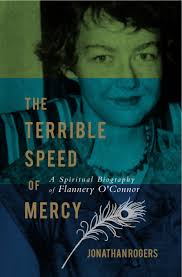
Why Paul Ryan Should Read Flannery O’Connor

book-cover

“As far as I am concerned,” she said and glared at him fiercely, Christ was just another D.P.”

Mrs. May to Father Flynn in Flannery O’Connor’s “The Displaced Person”


The most heartbreaking of all Flannery O’Connor’s stories, “The Displaced Person,” seems particularly poignant given the ban on Muslim refugees instated last weekend.[1] Set right after WW2, the story dramatizes the attempted assimilation of a Polish refugee into bigoted backwoods Georgia.

As David Griffith points out in his excellent essay on the story in The Paris Review:

O’Connor takes her title from the Displaced Persons Act, which, between 1948 and 1952, permitted the immigration of some four hundred thousand European refugees into the United States. President Truman signed the bill with “very great reluctance” for what he saw as its discriminatory policy toward Jews and Catholics: the Act stipulated that, in order to be eligible, one must have entered Germany, Italy, or Austria before December 22, 1945, which, according to Truman, ruled out 90 percent of the remaining Jewish people displaced by the war. Similarly excluded were the many Catholics who’d fled their largely Communist countries after the December 22 deadline.

“The bad points of the bill are numerous,” Truman wrote. “Together they form a pattern of discrimination and intolerance wholly inconsistent with the American sense of justice.” He called the decision to enforce the December 1945 deadline “inexplicable, except upon the abhorrent ground of intolerance.”

In the story, O’Connor’s displaced person’s work ethic so far exceeds that of the slothful, under-compensated blacks and whites who work on Mrs. May’s farm that he threatens their livelihoods. Worse than that, he violates Southern taboo of racial purity when tries to contract a marriage between a black field hand and his young Polish cousin languishing in a camp back home.

When an outraged Mrs. May confronts Mr. Guizac about the proposed interracial marriage — “You would bring [that] poor innocent child over here and try to marry her to a half-witted thieving black stinking nigger” — he says quite sensibly, “She no care black [. . .] She in camp three year.”

In the end, xenophobia and bigotry triumph over charity as the displaced person – the one good man to be found in that collection called A Good Man Is Hard to Find – is done away with.

She had felt her eyes and Mr. Shortley’s eyes and the Negro’s eyes come together in one look that froze in collusion forever, and she heard the little noise the Pole made as the tractor wheel broke his backbone.

* * *

Obviously, refugees rank as some of the planet’s most vulnerable souls, driven from their homelands — from their familiar cultures — into alien worlds of gibberish, incomprehensible mores, and worse.

The refugees turned away this weekend had undergone as much as 48 months of vetting from several agencies and pose virtually no terrorism threat whatsoever. No one from the banned countries has ever committed a terrorist attack on US soil – unlike citizens from Saudi Arabia, Lebanon, and Pakistan, who weren’t included in the ban, people from countries where Trump has business interests.

Imagine the refugees’ heartache after so much suffering, boarding a plane headed for their dreamed of destination, only to be turned away and sent on a long, long flight back to perdition.

Of course, it’s not surprising that the sadist Trump would shatter the hopes of the dispossessed to score political points. After all, as many have pointed out, he’s cruel, hosted a reality TV show in which he lovingly embraced the chance to humiliate people with the words “you’re fired.” No one would expect him to take refugees’ plights to heart.

On the other hand, you might think Paul Ryan, who embraces his Catholicism the way Steve Bannon does his booze, would take Jesus’s words more to heart. But Ryan has come out fully supporting the ban.

I’ll let Jesus – the ultimate Displaced Person – have the last say:

Blessed are the poor in spirit: for theirs is the kingdom of Heaven. (Matthew 5:3)
Blessed are those who mourn: for they will be comforted. (5:4)
Blessed are the meek: for they will inherit the earth. (5:5)
Blessed are those who hunger and thirst for righteousness: for they will be filled. (5:6)
Blessed are the merciful: for they will be shown mercy. (5:7)
Blessed are the pure in heart: for they will see God. (5:8)
Blessed are the peacemakers: for they will be called children of God. (5:9)
Blessed are those who are persecuted for righteousness sake: for theirs is the kingdom of heaven. (5:10)
Blessed are you when others revile you and persecute you and utter all kinds of evil against you falsely on my account. Rejoice and be glad, for your reward in heaven is great, for so they persecuted the prophets who were before you. .5:11-12

Oh, by the way, what was the percentage of evangelists’ votes Trump garnered?


[1] The Trump’s claim that it’s not a ban on Muslims rings hollow when the administration offers exemptions to Christians and Jews.

tissot-the-lords-prayer

Deserts of Vast Eternity

shapeimage_2

And yonder all before us lie
Deserts of vast eternity.
Thy beauty shall no more be found,
Nor, in thy marble vault, shall sound
My echoing song; . . .
Andrew Marvell

“Me, me, me me,” squeals the toddler, waving his arms.

“Watch me!” demands the nine-year-old wobbling off on his bike.

“Who me?” snarls the adolescent, feigning outrage.

“Will you marry me?” asks the suitor, dropping to one knee, reaching in his pocket for the diamond.

“I need some time and space for me,” says the wife frowning, her back turned, her arms folded across her chest.

‘Why me?” wonders the patient in the hospital gown as his oncologist points to the mass on the x-ray.

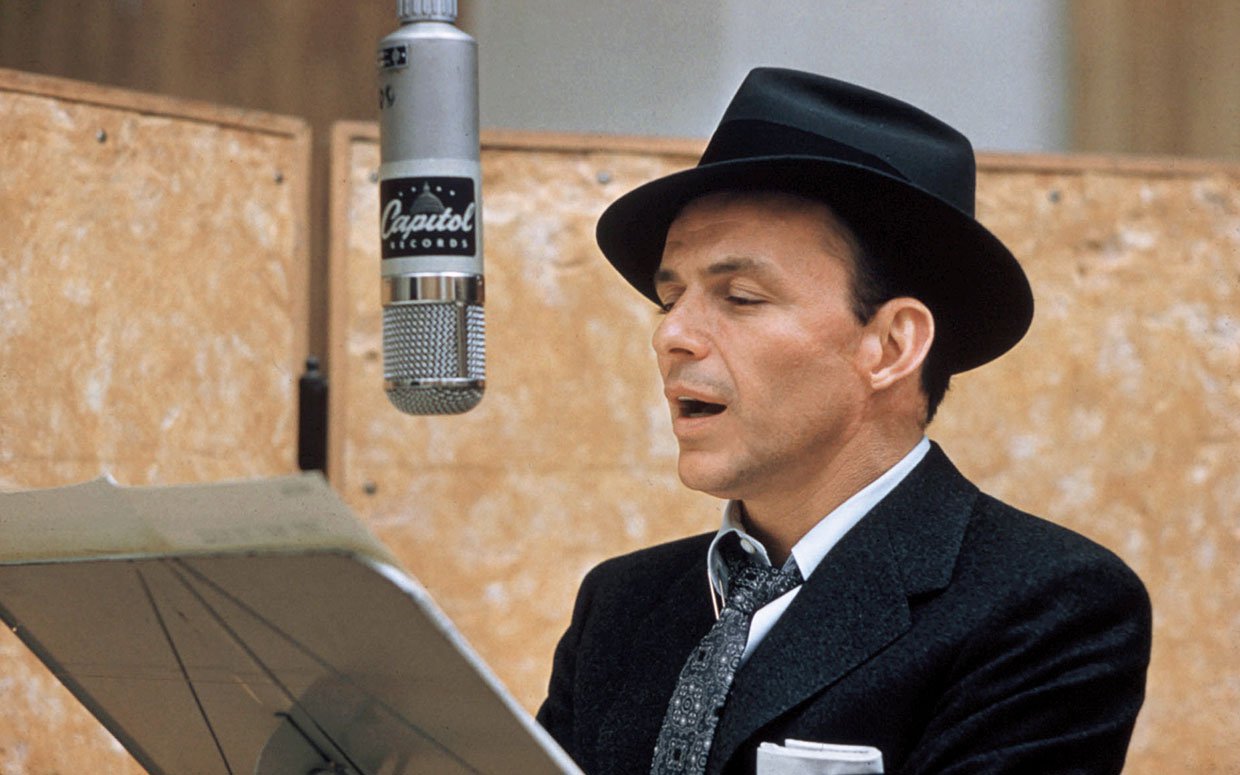
“I gotta be me,” croons fedora-sporting Sinatra, a fading memory, a voice very few living have heard live.

Frank-Sinatra-duets-ftr

Some argue rather narrowly that world only exists in perception, i.e., that if there were no you, there wouldn’t be a world. Well, yes and no. If I had been killed in that horrific wreck on Hilton Head in 1976, the Braves still would have lost the ’91 Series – though for my sons non-Harrison and non-Ned, there would be no world.

Nevertheless, given that wherever we are is the center of the circle of perception – despite the fact that we’re mere dots on a map of blurred dots – each dot forms the center of our universes, 7 billion centers of 7 billion universes projecting outward from Europe, Asia, the Pacific, South America, the circles intersecting, forming collectively what is, or, rather, what seems to be.

1292515425-nytimes-nashville-census-map-2010

As our world becomes more secular, the surety of eternal bliss dwindles among the populace. As in the pagan world of Beowulf, for many the only path to immortality is through fame, but which one of us would trade places with Frank Sinatra or Steve Jobs?

No, as one of Flannery O’Connor’s characters put it, “You can’t be any poorer than dead.”

Given that oblivion looms for so many of us, no wonder we seek attention, desire to be noticed. So we have our photograph taken next to the Mona Lisa. We publish blogs, post photographs of our evening meals on Facebook, purchase red Corvettes to counterbalance the drop in testosterone. We struggle to leave a mark, whether it be a novel of lasting value, a beautiful building, a cure, an estate.

All the while the invaluable moments dissipate unseen like heat waves from the floors of deserts.

Mike Theiss: Tumbleweed and Patterned, Cracked Desert Floor, and Nearby Mountains

Mike Theiss: Tumbleweed and Patterned, Cracked Desert Floor, and Nearby Mountains

The global village underscores our ultimate insignificance. Back in the mists of time, among the few of our tribal community, among the savannas or in the forests, we didn’t seek notoriety but subsumed ourselves in rituals. However, now, like the toddler, we seek attention to prove that we exist. Once we’ve been gone a hundred years most of us won’t leave a trace – except for whatever genetic tracings can be found in our descendants or any bones that might show up in an archeological dig or construction project.

The paradox is that despite endless silence that awaits us, what we really need here in time is silence. Time to think. Time to feel.

images-1

Southern Gothic Memories, Canine Edition

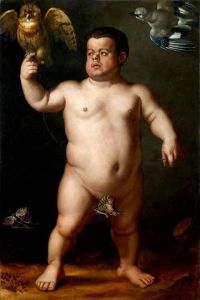
I’m not aAgnolo-Bronzino--1503-1572-----Portrait-of-the-dwarf--Morgante%0D%0AItalia people person. For example, although I’m a teacher, I don’t especially like young people. Don’t get me wrong — I don’t dislike children the way WC Fields disliked children; I wouldn’t conk one on the head for laughs — but I don’t like them any better than I like twenty-somethings, middle-aged people, seniors, etc. If anything, as demographics go, I like very old cognizant people the best, octogenarians and above, widows and widowers, withered folk who have seen it all, suffered irredeemable losses, but who have managed to maintain twinkles in their eyes.

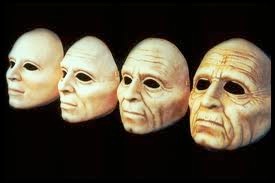
(By the way, these withered creatures both disgust and terrify high school students. For example, Chaucer’s “The Wife of Bath Tale,” which describes the wedding night of a young knight and a very aged crone, sends viewable shivers of disgust up sophomores’ spines. If you don’t want your teenager to smoke, don’t try to scare her with lung cancer — she can’t relate to a death that far in the future — instead show her a photograph of WH Auden or Keith Richards. Explain that cigarettes break down collagen and lead to wrinkles.)

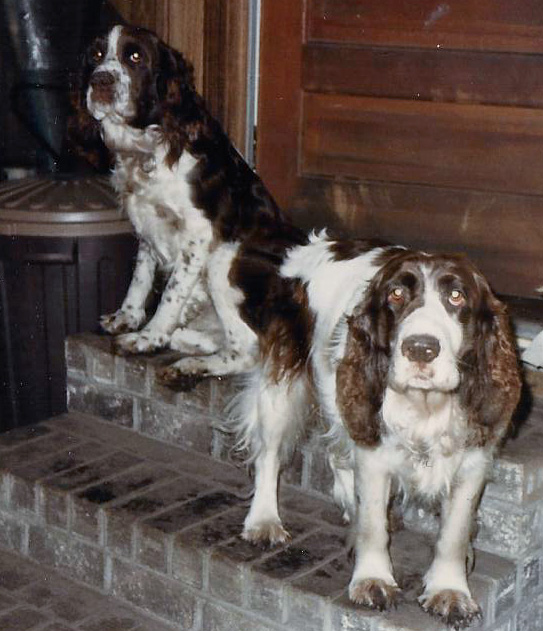
I feel the same way about dogs as I feel about people. I don’t like a dog just because it’s a dog, just because it’s a member of the species Canis familiaris, but I have loved certain individual dogs, especially ones that ended up living with me, even troubled ones, like psychopathic Jack (d. c.1990) and PTSD Saisy (d. 2014).

Jack and Sally  1986
Jack and Sally 1986

However, by far the best dog we ever owned was Bessie, an AKC-certified Golden retriever who was beautiful, loving, highly intelligent, and gentle.

To obtain Bessie, however, we had to venture into Flannery O’Connor territory, or if you prefer, a David Lynch movie, but before I start the narrative, I’d like to set a couple of things straight.

First, I’ve had the following account certified by fellow witness Judy Birdsong as basically accurate. In cases where our memories differ, I have deferred to her.

Second, I need also to stress that I have always sympathized with people with physical abnormalities. My father’s favorite work of literature was Cyrano de Bergerac, I identified with the protagonist of The Boy with Green Hair when I was a kid, and I consider Joseph Merrick, the Elephant Man, as one of the most admirable human beings who ever lived.

So don’t judge me goddamnit!

* * *

Once upon a time, our older ten-year-old son Harrison had been asking for a dog, so Judy decided to surprise him and younger brother Ned, seven, with a golden retriever puppy for Christmas. We were living in post-Hugo Isle of Palms, SC, in a patched-up Cap Cod house with a large dog-friendly fenced back yard, and unlike our previous dogs, the aforementioned blood-thirsty Jack and his severely overbred pin-headed mate Sally, Bessie was destined to be a house dog.

The only problem was that Judy couldn’t find any golden retrievers for sale. We’re talking pre-Internet 1994 when you had to blacken your hands flipping through newsprint to find pets for sale. And like in an old movie, the days of the calendar were fluttering in the winds of time, being ripped off one by one as Christmas approached. Each morning, Judy scoured the want-ads, but still, no golden retriever pups for sale.

Then almost right before it would be too late to have the puppy appear on Christmas Day – eureka – a well-written ad purporting expertise appeared. The ad stressed that these pups had not been overbred, a problem endemic to such a popular breed, as the ad writer put it. Six were left — but going fast — reddish-hued golden retriever pups for sale for 150 bucks a pop. The only negative was that you had to drive to rural Berkeley County somewhere in the vicinity of Macedonia, South Carolina, to check them out, and so on a Saturday, we dumped the boys off somewhere and made the trek.

Judy had, of course, called the breeder, who impressed her with his phone presence, his well-articulated knowledge of all things golden retriever. He offered details on ancestry, points of origin. She liked the idea of the pups being bred in the country. She envisioned the puppies’ mother running Lassie-like through fields of alfalfa beyond wooden-fences, a white-washed clapboard farmhouse way back from the rarely traveled road, an aproned June Lockhart in the kitchen flipping flapjacks.

* * *

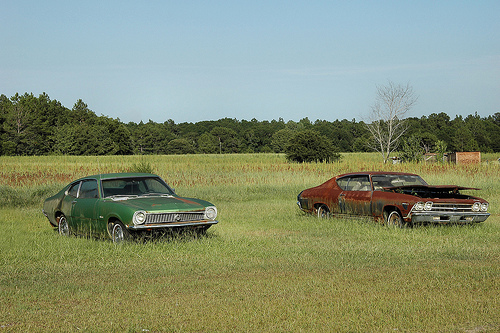
wilcox-county-ga-sibbie-road-abandoned-ford-mustang-chevrolet-chevy-chevelle-green-rusted-southern-gothic-americana-pictures-photo-copyright-brian-brown-vanishing-south-georgia-usa-2010The actual domicile was a largish non-mobile mobile home on a half-acre lot. I guess its owners would call it a manufactured house, but it didn’t look like a house but like a boxy trailer. In the weedy yard, two fossilized automobiles, one with yellowed newspapers inside stacked almost to the ceiling, the other leaning to its starboard side because of flat tires.

Happily, for me, I hadn’t envisioned what the homestead of our future puppy might look like, so I didn’t suffer the cognitive dissonance Judy had to endure. No, this wasn’t the set of Lassie; it was more like some David Lynch movie set in the rural South. Or, to wax literary, the homestead of the Lucynell Craters of Flannery O’Connor’s “The Life You Save May Be Your Own.” In other words, Judy’s would-be plantation had dysfunction written all over it.

After exchanging dubious glances, we clanged our way up the metal steps, and I knocked politely on the metal door, expecting a chorus of howling or barking or at least something.

Silence.

I knocked again, louder.

Not a peep.

I banged on the door, thinking of B drive-in movies featuring chainsaws.

And then I heard a sound a muffled voice, some clumping. Was someone coming or not? Finally the door opened.

Standing there to greet us, propped on one aluminum crutch, stood a one-legged midget* in a Billy Pilgrim tee-shirt and cut-off denim shorts. He hadn’t lost his leg, but something had gone awry in utero; it hadn’t fully formed. I remember another embryonic non-formation going on with one of his hands, but Judy nixes this memory. She assures me that his disabilities were limited to being a “little person” with half a leg.


*I realize that some consider “midget” a pejorative term, but to me it seems less patronizing than “little people.” Plus I’ve had it with the never ending process of euphemizing euphemisms. Trust me, one day “little people” will become pejorative and the politically correct term will be “differently scaled humans.”

When I think of midgets, I think of the wonderful Land of Oz and squeaky “we-are-the-lolly-pop-kids” voices; however, this cat possessed that deep regionless baritone I associate with commercial voiceovers. He sounded like a radio announcer, and the walls of the living area of his minimally furnished house were lined with banks of computers at a time when computers weren’t ubiquitous household possessions.

He was unusually articulate; no wonder Judy had been impressed. Plus, he possessed the self-confidence of Sean Connery playing James Bond. Why hide the phocomelic limb with long pants pinned over the appendage? Shame seemed alien to him. The only negative I’ll lay on him was that he a sort of know-it-all, the way certain mechanically gifted people can be know-it-alls.

Bessie the Pup
Bessie the Pup

With him were two boys in their early teens, hardy and hale. We followed dad and sons to another room where the puppies were skidding around in a waterless kiddy pool. I remember urine in the pool; Judy doesn’t. We both agree the puppies were adorable — maybe four were left — and we chose the cutest and made arrangements to return to pick her up.

Money exchanged hands, and we said our good-byes. I decided not to mention the oddness of the encounter to Judy. How small-minded it seemed to me to even mention the disability. So what if the fellow from whom we had purchased our puppy was short and malformed? So what if we had spent a half hour in Flannery O’Connor/David Lynchville?

We returned to the car, I started the ignition, and Judy said, “That guy seemed soooooo familiar. Where do we know him from?

My mind screamed “WTF? You gotta be kidding me!!! What in the hell are you talking about?” but I merely said, as calmly as I could, “I’m fairly certain that I’ve never laid eyes on him.”

“No, think,’ she said. “Didn’t we know him in Columbia? I know we know him.”

Now things were really getting surreal.

“I’m absolutely certain I don’t know him. I’m certain I would remember him. He is one of the most singular individuals I’ve ever laid eyes on. Indeed, he might be the only midget I’ve ever talked to. Plus, he had only one leg. Trust me. I’d remember that. He’s not a very forgettable fellow.”

Judy’s still not convinced. However, we did end up running into him again at an outdoor concert later that spring, and as it turned out, Bessie didn’t turn out to be exactly genetically sound herself. She was born without knee sockets and needed an operation, but you couldn’t have asked for a better dog.

And how remarkable that her breeder could be so confident, so self-possessed. In that regard he stands head and shoulders above me.

Bessie the Crone photograph by Jim Klein

Bessie the Crone photograph by Jim Klein

True Detective Revisited: The Fall of American Culture

Let’s talk about Pulp fiction — not the movie — but its namesake, those lurid narratives printed on cheap paper that, to cop the cliché of their heyday, explored the “seamy underside” of American culture, publications like True Detective, which enjoyed a 71-year existence from 1924-1995.

oRAxXq56vZyUSjcwrvanqDl72eJkfbmt4t8yenImKBVvK0kTmF0xjctABnaLJIm9

The HBO television series of the same name follows the magazine’s tradition of exposing lurid depravity, though it does so on a much higher artistic plane with shades of David Lynch and Flannery O’Connor, and the depravity depicted in the television series is like to 10th power of the seemingly quaint pistol whippings and murders of the magazine’s beginnings. Furthermore, the series seems to me to be an indictment of American culture, its spiritual poverty embodied in the corrupt Christianity of Southern Protestantism and in the rapacious capitalism of multinational corporations.

The director, Cary Joji Fukunaga, constantly underscores these two themes with the visual motifs of crosses and industrial wastelands, which bring to  mind landscapes depicted in the paintings of Hieronymus Bosh.

Check out the opening credits, for example:

Obviously David Lynch’s influence is profound here, not only in the arid, dispassionate images but also in the soundtrack, and this landscape is populated by characters right out of Flannery O’Connor — shiftless Southern scumbags, depraved criminals, corrupt preachers. The twin protagonists Marty and Rust offer an interesting contrast with Marty embodying the hollow hypocritical Protestantism that O’Connor despised and Rust the nihilism that O’Connor, though a devout Catholic, preferred to the mealy-mouthed ignorant insincerity of many of her nominally Christian characters, as we can see in her treatment of the Grandmother and the Misfit in “A Good Man’s Hard to Find.” In fact, in the sixth episode, a grown up child whore whom Marty tried to rescue from a trailer park brothel years ago calls him “a good man” in a restaurant, echoing the Grandmother’s comment to Red Sammy Butts in a restaurant in the O’Connor story. Of course, neither are good men, as Marty clearly demonstrates when he engages in extramarital sex with the woman.

(Here’s an earlier post dealing with Marty and Rust).

goodmanhardtofindThe complex characterization in the context of the cinematic images that create surreal beauty from ugliness makes the series both intellectually and aesthetically interesting, and there’s also a subplot dealing with public education money being funneled into Christian schools to overcome what one character calls “secular, global education.”  These Christian schools lie at the center of the ritualistic Satanic murders the two detectives have spent the better part of two decades trying to unravel.

Certainly, an anthropologist studying the magazine True Detective and the series would conclude that American culture, despite great inroads in civil rights, has declined precipitously since the decades the magazine flourished, and I can’t help but wonder if the creator Pizzolatto is himself a moralist, perhaps even a Catholic in the tradition of both Bosch and O’Connor.

At any rate, the same cultural anthropologist would also have to agree that television has gotten a whole hell of a lot better in the last fifty years.