Cotswold cottages with hollyhocks and roses at sunset, Mickleton near Chipping Campden, Gloucestershire, England.
You Can’t be Any More Out of It Than Dead
Nor dread nor hope attend A dying animal; A man awaits his end Dreading and hoping all.
WB Yeats
Perhaps the only people who die happy are James Dean types who, defying speed limits, enjoy an intense adrenaline rush right before a fiery crash instantaneously switches off the lights. Dean died young as did F Scott Fitzgerald, who legend has it, suffered a massive heart attack at 44 while making love to Sheilah Graham, a gossip columnist. Nevertheless, I doubt that he died happy. One of the symptoms of a heart attack is a feeling of impending doom.
Of course, the opposite of dying young is enjoying an extended lifespan, but you don’t want to overdo it. Chances are that if you succumb at the way overripe age of 97, you’ve outlived your spouse – maybe two – and perhaps one or two of your children. Chances are you’re sick and tired of wheelchairs, sick and tired of constant confusion, or simply sick and tired.
Even if you’re happy right before your death, after the event, you’re simply dead, so nothing matters to you anymore anyway. You don’t pick up on those Happy Heavenly Father’s Day Facebook posts, nor, on the plus side, does the Braves’ bullpen blowing a save bother you. Fact is that you can’t be any poorer than dead, or, as Flannery O’Connor’s Francis Marion Tarwater puts it, “The dead don’t bother about particulars.”
It would be nice, though, to die in a relatively serene era of history, puttering around a cottage in the Cotswolds’ in the 1870s, say, not fixating on the Franco-Russian war, but tending to your roses, having time enough to notice the lovely russet sunset beyond the hedgerows. Wouldn’t it be nice to die in a place of peace and quiet surrounded by loved ones who realize that death is the mother of beauty?
Bill ignored the early symptoms of the major coronary event that did him in. After all, he was only in his early 50s[1].
Yet, the googleable telltale signs were there, both in his body and on WebMD: cold night sweats, stentorian snoring, tightness in his chest, and then, on the day of his departure, a horrifying feeling of impending doom, like a star collapsing, sucking life’s light into a black hole of sudden despair.
He had hoped for the best, had ignored a week’s worth of symptoms, but as he pressed the button to engage the garage door opener on a clear, crisp late April Monday, two of his heart’s arteries slammed their doors, the pain Psycho-shower-scene stabbing horror show.
Clutching his chest, he thought of his children.[2]
Neither his biological offspring nor stepchild would mourn his death because he had been an aloof inconsiderate cigar-puffing malcontent who thought of his sons and daughters, which was rarely, only as abstract extensions of himself.
Jesus Christ!
The two last words screamed silently in his skull as he fell against the BMW and onto the concrete.
Interlude: A Short, Contrarian Meditation on Birth and Death
After it is all said and done, if atheism is correct, death is cessation from pain, both mental and physical, whereas birth is the commencement of suffering, of fardel bearing, of grunting and sweating, etc.
Unlike Bill, many decedents pass quietly, transitioning gently from a room of loved ones into that good night.[3]
On the other hand, no successfully born baby has ever come into being quietly, whether he or she was born in a hovel or a mahogany paneled birthing room.
Nestled in the uterus, lulled by a maternal heartbeat – bump-bump, bump-bump – a fetus enjoys womb-service, as it were, but with its mother’s water, all hell breaks loose. An excruciating passage through a way too tiny portal transpires. The fetus experiences pain for the first time as it is smushed through a fleshy wringer. Finally, when the head emerges, it encounters blinding light, sudden cold, unpleasant odors.[4]
Like a turd, the baby plops out, suffers a slap, and wails in abject horror.
The horror, the horror!
Post Death
For Bill, there was no tunnel of light with loved ones reaching down but a sudden transition, as if God had suddenly shut the venetian blinds, then immediately opened them.
Just like that he found himself alone on a cloudy plain dressed in his Tommy Bahama resort casual get-up: loud parrot-printed party shirt, cargo shorts, tasseled loafers without socks, in other words, what he had been wearing when he pressed the garage door opener and met his doom.
He looked down, and, as in a cartoon, he found himself standing on a cloud. He took a step on the soft mushy surface of what appeared to be congealed water vapor, and spritzy mist plumed upwards around his loafer. He took another step and then another.
Looking up, he saw twenty or so meters ahead a woman wearing nothing but a hospital gown, walking in the same direction, her plump exposed buttocks jiggling with each soft step. Back in the beforelife, this sight would have excited him, altered his metabolism, but here and now, here and now, here and now, it didn’t matter, and now, now, very now he could see up ahead a white walled edifice glowing beneath the blank azure of the deepest of skies, and now he could discern others walking ahead and behind, dressed in various guises, many in hospital gowns. He continued moving forward, his footprints disappearing after each step.
The Pearly Gates
It was like the heaven of a New Yorker cartoon, complete with a Northern European St. Peter with a Santa-like beard and white robe. He was running his index finger up and down a prodigious tome propped open on a golden, downright gaudy, rococo easel.
Avoiding direct eye contact, nodding quickly, St. Pete waved him through, and Bill sighed a sigh of profound relief. Despite his sloth, those hungover sabbaths in the hammock, despite his serial adulteries, his envy, greed, anger, and pride, he had somehow made it into heaven, had escaped the fiery furnace of pain everlasting.
Woo-hoo!
A Gospel Jamboree Meets O Henry Meets Jean-Paul Sartre (or Wasting Away in the Opposite of Margaritaville)
A native of Trenton New Jersey who had spent most of his adult life in central Florida, Bill had never acquired a taste for gospel music, especially hillbilly gospel, but now without transition he stood among a sea of hayseeds in white robes wearing crowns listening to a praise band plucking banjos and yodeling hallelujahs.
Good God, how long would he have to listen to this shit?[5]
[1]Although “coronary event” is effete, I thought I’d avoid triggering readers who may have lost a loved one via heartattack.
Oops, never mind.
[2]I.e., to the two sets of children from his first two failed marriages and the one stepchild from his third marriage.
[3] Or, to keep the motif going, “that undiscovered country from whose bourne no traveler returns.”
[4] My apologies to homeopathic midwives and Third World babies.
[5] A business major, Bill rarely read literature assignments, but instead opted for CliffsNotes summaries. He remembered nothing about No Exit, so had no clue of the concept of an existential hell, that his hell could be the hillbilly’s heaven whereas a never-ending Jimmy Buffett concert would be hell for these teetotaling worshipers who surrounded him.
Nor for the towering dead/ With their nightingales and psalms
Dylan Thomas, “In My Craft or Sullen Art”
Hamlet describes death as “the undiscovered country from whose bourne/ No traveler returns,” phrases that betoken death’s mystery, a subject so profound that you can almost get away with slipping in a moth-eaten word like “betoken.”
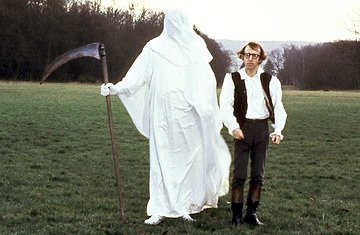
Woody Allen pigeonholes it as one of the two things that come only once in a lifetime.*
*The other is sex
***
My first 3-D encounter with a human’s death happened when I was around twelve or so on a rare Sunday when we’d all gone to church together, even Daddy. In those days TV consisted of a couple of channels, so we would occasionally drive for amusement, motoring around and through Summerville, circumnavigating the past – riding past clapboard houses where we used to live, past our former maid’s dilapidated cottage, past the crossroads where my grandfather’s gas station had stood before it burned down.
On this particular summer’s day, we encountered a cluster of hysterical people on the sidewalk right across the street from Dorchester County Hospital. The windows of our un-air-conditioned Ford Falcon were down, and as we rolled past, I witnessed a Mahalia-Jackson-sized woman throwing her hands back in the air while screaming over and over, “My Mama left me, My Mama left me!”
As our car crawled on, I caught sight of the outline of the body, already covered, the screams receding as Daddy sped up and drove straight home.
Later that day, we traveled to Lake Moultrie with our neighbors, another rarity, and I saw Mrs. Delasanti’s pubic hair peeking out of her bikini bottoms.
A first for me. Forbidden. Thrilling.
So, on that Sunday, I sort of got a peek at both sides of the coin, the tomb and womb, and, unfortunately, the tomb won out. Death had ruined my day.
“My Mama’s left me, My Mama’s left me!” rang out as I lay me down to sleep that night.
Horace Walpole has described life on this planet about as pithily as anybody: “This world is a comedy for those who think, a tragedy for those who feel.”
Mahalia Jackson
***
Over the years, I have become much more of a thinker than a feeler. I’d like to believe that education, fairly wide reading/traveling, my dabbling in Buddhism, and maturity have brought about my detachment (rather than a callousness acquired from the onslaught of horrific images I’ve been bombarded with in over a half-century of a media-saturated life: JFK’s shattering skull, Vietnamese monks immolating themselves, starving African toddlers with bloated bellies, Donald J Trump raising his hand to take the oath of office).
Of course, since that first encounter with death, I have witnessed others, loved ones, shuffling off their mortal coils. As I held my mother-in-law’s hand as she was in the thrall of dying, she looked up at the ceiling, gazing intently at whatever she saw up there, and said, squeezing my hand, “Rusty, this is overwhelming.”
My beloved Judy had a harder time, though mummified by morphine, her breathing labored, yet right before the end, she quieted down, and I recited to her over and over “may flights of angels sing thee to thy rest,” and I’m also almost positive she was at least dimly aware of my presence and words because she sort of smiled for awhile before she became still.
***
I have an oncologist friend who once told me that out there (wherever that is) lurks enormous amounts of anonymous funding for a dedicated (if not fanatical) group of scientists/physicians who believe that they can conquer aging and death-by-disease, a prospect that frankly gives me the heebie-jeebies. In that world, all deaths would be accidental, the afterlife a occupancy-challenged condo. I imagine suicide rates would skyrocket. How weary, stale, flat, and unprofitable would seem the never-ending daily routines in that Malthusian nightmare of a world!
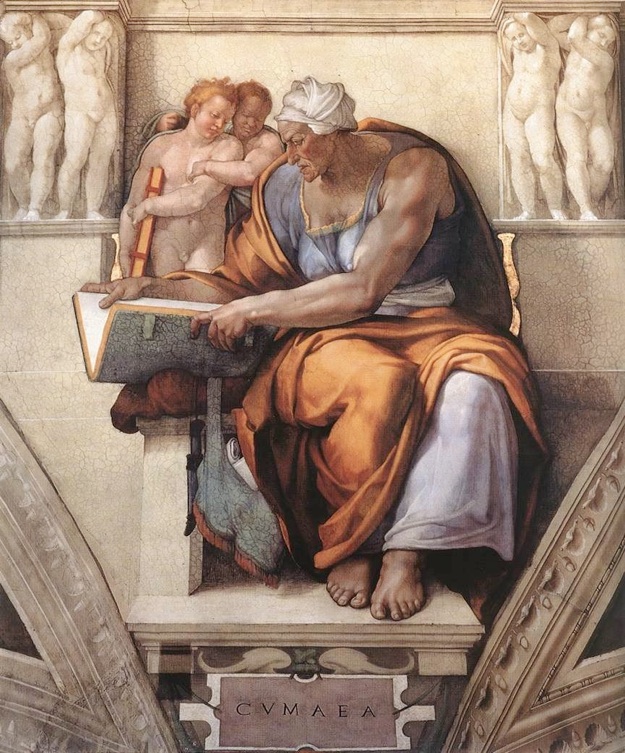
I told my friend, “They don’t know the story of the Sibyl.”
“No they don’t,” he concurred.
Translation: “I saw with my own eyes the Sibyl of Cumae hanging in a jar, and when the boys said to her, Sibyl, what do you want? she replied I want to die.”
***
No, I believe that Wallace Stevens got it right: Death is the mother of beauty.
Who would trade his or her short-lived ability to discern beauty for the undifferentiated undying existence of amoeba and paramecia, or prefer the perfect two-dimensional monotony of prelapsarian Eden to the depth and complexity of postlapsarian Babylon with its gardens full of fading flowers and kiss-stealing star-crossed lovers?
Biologically speaking, sex is what creates diversity, and its cost is death, the cessation of being, or, as Philip Larkin put it in “Aubade”:
[. . . ] no sight, no sound,
No touch or taste or smell, nothing to think with,
Nothing to love or link with,
The anesthetic from which none come round.
Death for sex, not a bad trade off by my reckoning.
Unlike Larkin, death holds no special dread for me. Although I don’t believe in an afterlife, the idea of having my short-leased indestructible matter recycled into another form appeals to me. I think a burial at sea sounds exquisite – a quick re-entry into the animal world via ingestion.
In this interim between womb and tomb – let us be thankful to have ended up here and now and agree with Dylan Thomas that wise men at their end know dark is right.
Though, rather than raving as Dylan Thomas suggests, I’d like to think of myself in those final instants as surrendering to the fitting inevitability of it all. To try to enjoy the fleeing images of my consciousness as they’re jettisoned into nothingness.
I saw with my own eyes the Sibyl at Cumae hanging in a cage, and when the boys said to her: “Sibyl, what do you want?” she answered: “I want to die.”
Petronius, The Satyricon.
From man’s blood-sodden heart are sprung Those branches of the night and day Where the gaudy moon is hung. What’s the meaning of all song? “Let all things pass away.”
Yeats “Vacillation”
Death is the mother of beauty, mystical, Within whose burning bosom we devise Our earthly mothers waiting, sleeplessly.
Wallace Stevens, “Sunday Morning”
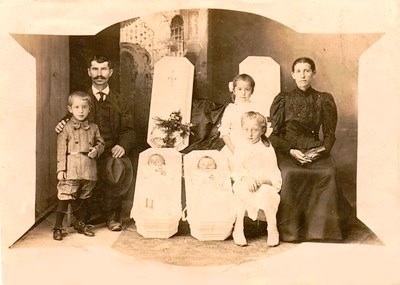
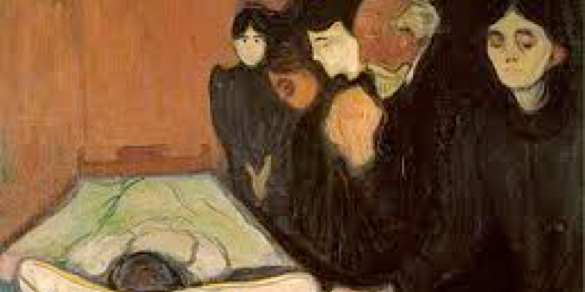
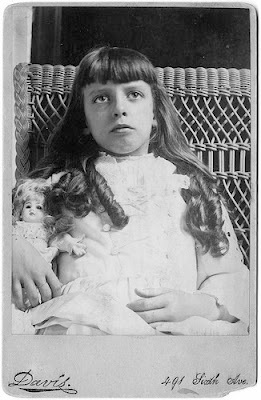
In the catalogue of alienations we Late Empire citizens suffer – estrangement from nature, God, our neighbors, ourselves – our estrangement from death is often omitted. We no longer encounter death on a daily basis. Most of us don’t raise chickens to wring their necks, pluck their feathers, excise their entrails. When our loved ones die, we no longer remove their clothes, wash their corpses, and dress them for one last family photo in the parlor.
Of course, our lack of exposure to death makes it much easier to lock it away deep in the cellar of our consciousness, which might not be such a bad thing given that nothing’s more life negating than death obsession. On the other hand, our isolation from the cold hard facts our ancestors dealt with – butchering animals, infant mortality, etc. – might have contributed to a delusion many seem to suffer, i.e death is unnatural.
A few years ago, an acquaintance’s father, a man approaching ninety, was lying comatose in a hospital. Each day, on Facebook this acquaintance updated his father’s situation, which, not surprisingly, was rather uneventful – the opening and closing of an eye, a sense from a nurse that the old man experienced discomfort when bathed. My acquaintance and visitors read the Bible to him aloud as they sat and prayed for a miracle. This acquaintance battled his father’s physicians who wanted to transfer him to hospice care while the son perceived opening an eye as a harbinger of “the complete recovery” for which he so ardently prayed.
Most of the Facebook commentators were essentially enablers writing messages like “Sounds very encouraging!!! The doctors could be totally wrong……the body can heal in ways that only God knows” or “That’s great. God is in controll” (sic) or “God is the ultimate physician:-).”
A contempt for science and doctors ran through those Facebook posts, and the commentary that followed. No wonder people don’t believe in evolution or global warming if they believe a comatose man dying of an infection brought on my the removal of a cancerous lung tumor could very well attain a complete recovery and enter robustly into his ninth decade.
On the other hand, when my wife Judy Birdsong was dying, some well-meaning soul told her that she was praying for a miracle, and Judy replied, “I’m sixty-three, don’t waste a miracle on me, pray for a child instead.”
This attitude, I submit, is a healthier attitude on dying.
dead doe in a frozen pond in North Carolina
To my mind, an ever aging husk of a body doomed to live for an eternity is a much more horrible fate than passing away in one’s sixth decade. Not only did the Sibyl at Cumae consider it a drag (see above), but we also have corroborating evidence from Chaucer’s “The Pardoner’s Tale.” When a trio of churls accost an ancient man and ask him why he still has the gall to remain alive, he replies,
Not even Death, alas! my life will take;
Thus restless I my wretched way must make,
And on the ground, which is my mother’s gate,
I knock with my staff early, aye, and late,
And cry: ‘O my dear mother, let me in!
Lo, how I’m wasted, flesh and blood and skin!
Alas! When shall my bones come to their rest?
Why, I wonder, would such devout Christians as my acquaintance want to forestall the eternity of bliss that awaited that good man? And his father was a good man, a great provider devoted to his family and his God.
The answer, of course, is love. Most of us love our parents. We don’t want them to go. I miss my own father’s sardonic witticisms, my mother’s hoarse cackle of a laugh, Judy Birdsong’s gentle movements. My acquaintance devotedly loved his father and didn’t want to think of living life without him.
Is that so wrong?
[cue Evangelical voice]: Let us turn to Ecclesiastes 3:1-4.
To everything there is a season
And a time to every purpose under heaven.
A time to be born and a time to die;
a time to plant and a time to pluck up what is planted . . .
Like I said, our aged loved ones’ passing is melancholy, and we miss them when they’re gone. I dream of Judy occasionally, and I awake missing her. Nevertheless, her time had come, and she was rather fortunate given that she didn’t have to suffer for long nor endure the feebleness that Larkin descries in “The Old Fools.”
What do they think has happened, the old fools,
To make them like this? Do they somehow suppose
It’s more grown up when your mouth hangs open and drools,
And you keep on pissing yourself, and can’t remember
Who called this morning? Or that, if they only chose,
They could alter things back to when they danced all night,
Or went to their wedding, or sloped arms some September?
Or do they fancy there’s really been no change,
And they’ve always behaved as if they were crippled or tight,
Or sat through days of thin continuous dreaming
Watching light move? If they don’t (and they can’t) it’s
strange: Why aren’t they screaming?








 You Do Hoodoo