It Ain’t Orwellian, You Patronizing, Hubris-Bloated Blatherskite

Sen. Josh Hawley (R-Mo.) gestures toward a crowd of supporters of President Donald Trump gathered outside the U.S. Capitol to protest the certification of President-elect Joe Biden’s electoral college victory Jan. 6, 2021 at the US Capitol in Washington, DC. Some demonstrators later breached security and stormed the Capitol. (Francis Chung/E&E News and Politico via AP Images)

Although by no means do I consider myself an Orwell scholar, I did teach 1984 for a number of years, so I can claim a fairly deep acquaintance with its text, so it irks me when I see or hear the adjective Orwellian employed as a sort of catchphrase to describe any situation that occurs when information brought to light results in negative political consequences.[1]  

For example, take Senator Josh Hawley (R MO) seen above co-opting the Black Power clenched fist from the 60s to show his solidarity with the soon-to-be rioters amassing outside the Capitol last week. Because Hawley spearheaded a Senate faction that challenged electors during the certification process and exacerbated the grievances of the mob that ransacked the Capitol, Simon and Schuster rescinded a contract to publish one of those PR tomes aspiring presidential candidates produce prior to launching their campaigns.  According to Hawley, a private for-profit corporation’s decision to back out of a book deal after its author had played a role in encouraging a violent takeover of the Capitol building “could not be more Orwellian.” He goes on the call the cancelled contract “a direct assault on the First Amendment” as “[t]he Left look[s] to cancel everyone they don’t approve of.”

Actually, there is nothing “Orwellian” about Simon and Schuster’s decision not to publish Hawley’s book. Now, it would have been Orwellian if Simon and Schuster had translated the text into Newspeak and manufactured a fake biography of Hawley’s life or had company spies record Hawley’s every move or had had him seized and transported to a reeducation facility. However, if my First Amendment right meant that a publishing company that earned 184 million dollars in sales last year was obligated to publish my novel Today Oh Boy, I would be one very happy fiction writer.[2]

In fact, the insurrectionists’ subsequent identification by the authorities as commissioners of crimes stemmed not from the omnipresent surveillance of Big Brother but from their own narcissistic need to record themselves in live streams and selfies and to capture their fellow rioters in action to demonstrate how important they all are. To echo William Blake’s phrase from his poem “London,” our “manacles” are “mind-forged” in that we ourselves choose to bind ourselves to devices that track our every movement, our purchases, our internet searches. We are, if not exactly Big Brother, Little Brother and Little Sister, documentarians of our own little lives, seeking fame thorough exposure, amassing “likes” to validate our existence in a culture that reckons worth by numbers.


[1] In fact, I’ve developed an overarching lesson plan in teaching the novel as a whole that you can find here.

[2] Here’s a free sample.

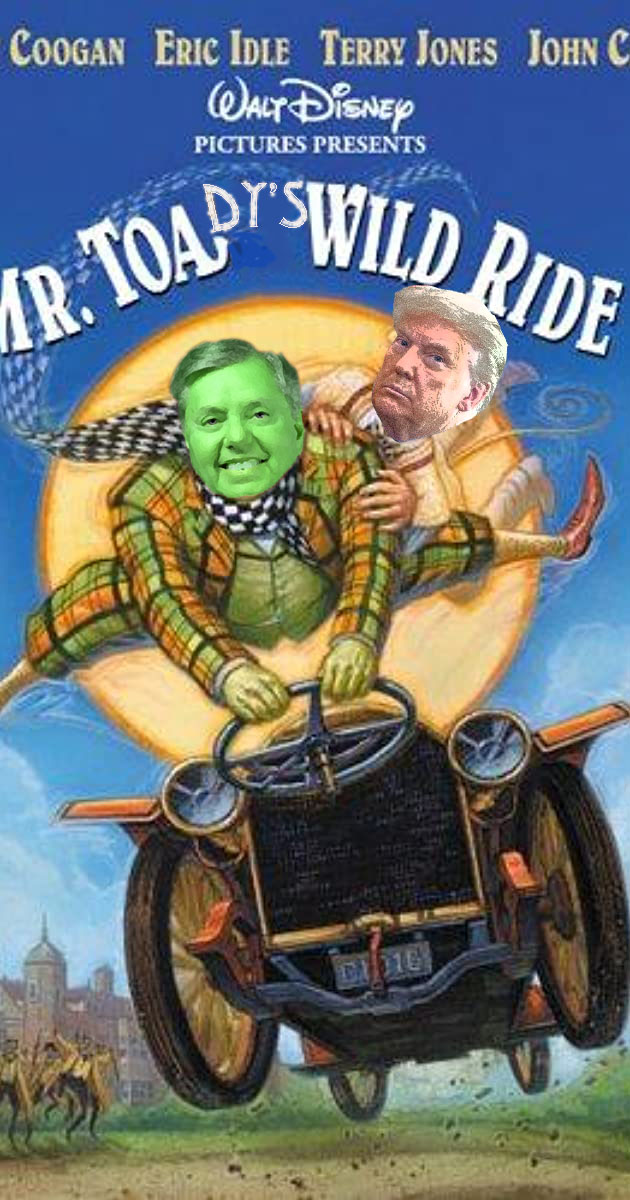
Lindsey Graham, Chameleon

When examining adult pathologies, the Freudian in me wants to hop into Mr. Peabody’s Way Back Machine and check out the childhoods of the damaged adults who have perked my curiosity. For example, I’ve read South Carolina’s most prolific mass murderer Donald “Pee Wee” Gaskins’s autobiography where he describes being hung upside down naked as a boy and walloped by a tag team of fucked-up parents.[1] This abuse obviously contributed the sadism that characterized the hundred or so murders he committed.

Another pathological Donald, the 45th President of the United States, also suffered a lovelorn childhood. His father Fred taught him, to quote Patrice Taddonio’s profile from Frontline, that “there were only two kinds of people in this world: winners — or ‘killers’ — and losers.” 

Mary Trump, the President’s niece, claims that Trump’s mother “essentially abandoned” him, so the parents shipped the 13-year-old off to a military school that became for the next 5 years a sort of bullying bootcamp. There, to quote Marc Fisher, a co-author of Trump Revealed, “ Donald Trump yelled at his classmates. He pushed them around [… ] He ruled dormitory life with an iron fist.”

Which brings me to Trump enabler Lindsey Graham, who last night attempted to pivot from Trump in a cringe-worthy post-insurrection speech from the Capitol, a speech that might be described as jocular in tone, and what better time to yuk it up than in the aftermath of an Animal House like coup, or if you prefer, a Beer Belly putsch.[2]

Graham’s devotion to John McCain while McCain was living is well-documented, as is Graham’s abandonment of his mentor’s maverick ethos once the senior Senator from South Carolina became Trump’s number-one toady. Now that Trump’s about to leave the White House, whether through a traditional exit or via the 25th Amendment or impeachment, it seems as if Graham is once again metamorphosizing.

If you recall, Georgia’s Republican Secretary of State Brad Raffensperger cited Graham’s pressuring him to adjust Georgia’s vote tallies as the reason he decided to record Trump’s recent call to, um, adjust Georgia’s vote tallies. However, suddenly now Lindsey’s flattering Hunter Biden’s dad.[3]

So what are we amateur psychologists to make of Lindsey Graham’s protean transformations from moderate McCain acolyte to fascistic Trump enabler, and now, it would seem, back into a more moderate political persona?

Is there something in his childhood to explain these permutations?

Graham, according to his 2015 memoir, grew up in a segregated establishment called the “Sanitary Café,” sleeping in a room behind the bar, “sharing a bathroom with patrons who worked down the street at a nearby mill plant [. . . ] [taking] baths with water heated up on the stove.”[4]  Despite the privation, he seems to have fond memories of his younger years, considering the regulars at the bar “his extended family.” In school he was a mediocre student and athlete but, according to the memoir, scored an 800 on the SAT.[5]

He seems, unlike the two Donalds, to have had a positive relationship with his parents, who died within a year of each other when he was 21 and 22, leaving Lindsey as the guardian of his 13-year-old sister, whom he looked after with love and attention.  Although he’s never successfully cultivated a long-term romantic relationship, Graham has imagined to achieve, at least resume-wise, a life of admirable achievement. 

Perhaps Graham, having lost his father at a relatively early age, has sought the friendship of powerful older men, first McCain 19 years Graham’s senior and then Trump, 9 years his senior, but I doubt it. 

Maybe he’s being blackmailed by Trump.

Or maybe he has only himself to blame. Like so many politicians, he seems to lack the ability to self-scrutinize, to apologize for shortcomings, to rein in his arrogance.

Whatever the case, “The evil that men do lives after them./ The good is oft interred with their bones.” What profit a man, etc.


[1] [TRIGGER WARNING! Don’t read this footnote if you possess a delicate sensibility] Peewee: “Next thing I knew, they [Pee Wee and Marsh’s stepfathers] was dragging Marsh and me to the barn. They stripped Marsh first — roped his ankles together and threw rope over a joist and strung him-up upside down, then his mama commenced to paddling him with a pine slat. Soon his ass was bleeding, and then she told his step daddy to whup him with his belt [. . .] Then it was my turn to be strung up naked. I felt the pine board splitting my butt; then my step-daddy (sic) stropped me with his belt like I hadn’t never been stropped before.

[2] Alas, I can’t claim these witticisms as my own. I copped the Animal House analogy from my friend Jake Williams and “Beer Belly Putsch” from my friend and former student Alex Werrell.

[3] If you recall, Graham, seeking Trumpian approval, called for Congressional investigations into Hunter Biden.

[4] Manu Raju “Graham’s memoir blunt about his upbringing.”

[5] Which, by the way, I consider to be in bad taste.
Election Fraud Madness in Poe and Way Beyond

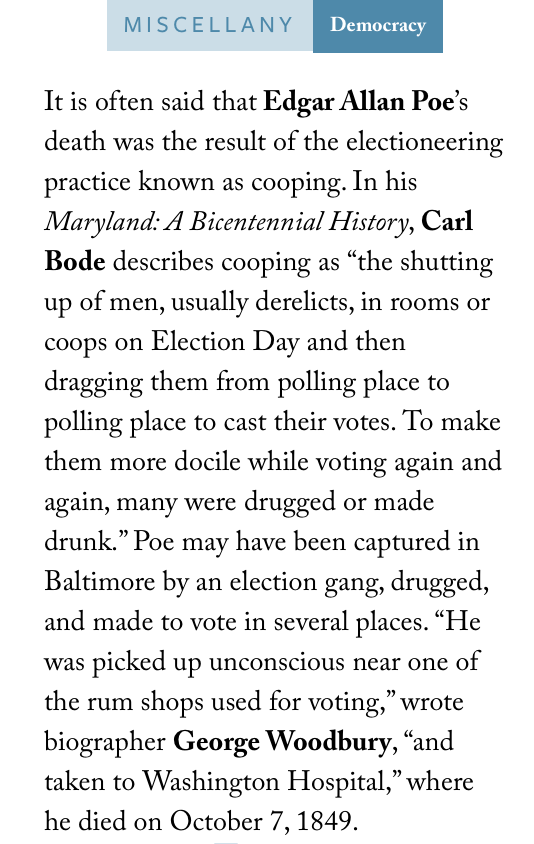
As I was joy scrolling through my Twitter feed this morning, basking in what I fear will be short-lived solace, I ran across this tweet from Lapham’s Quarterly regarding the death of Edgar Allan Poe, my first literary hero.

https://www.laphamsquarterly.org/democracy

Originally tweeted by Lapham’s Quarterly (@laphamsquart) on January 5, 2021.

I’ve written elsewhere about my discovery of Poe when I was a small boy trespassing in a sequestered library. A few years later, Mrs. Morgan, my seventh-grade teacher, read out loud “The Tell Tale Heart. ” As she mimicked the madman narrator’s voice, she began pounding her palm on her desk to approximate the sound of the beating heart the narrator imagines he hears beneath the floorboard where he has deposited the remains of his murder victim. It was out-of-character for Mrs. Morgan to read a complete story out loud, but it certainly held our attention.

The first paragraph of that story, which as a child astonished[1] me, now produces a wry smile: 

True! –nervous –very, very dreadfully nervous I had been and am; but why will you say that I am mad? The disease had sharpened my senses –not destroyed –not dulled them. Above all was the sense of hearing acute. I heard all things in the heaven and in the earth. I heard many things in hell. How, then, am I mad? Hearken! and observe how healthily –how calmly I can tell you the whole story.

Throughout the tale Poe cultivates dramatic irony through the raving narrator’s insistence that he’s perfectly sane, demonstrated in the special care he took in suffocating the old man (whom he claims he loved) and the rational steps he took in dealing with the corpse.

If still you think me mad, you will think so no longer when I describe the wise precautions I took for the concealment of the body. The night waned, and I worked hastily, but in silence. First of all I dismembered the corpse. I cut off the head and the arms and the legs. I then took up three planks from the flooring of the chamber, and deposited all between the scantlings.

Rereading it just now for the first time in a half-century produced a chuckle, not, I suspect, the effect Poe was seeking. 

Anyway, I became a Poe aficionado, devouring all of his short stories and most of his poems, reveling in the dead weight of distracting details that characterize his tales, his Latinate diction and erudite references, the creepy Freudian obsessions of tubercular lovers and diabolical murderers. 

In fact, when I began teaching Poe, I used his work to introduce students to psychoanalytical criticism, demonstrating how “The Fall of the House of Usher” could be read as an allegory of Freudian repression as Frederick Usher buries his sister (hints of incest) in the crypt beneath his house only to have her break from her casket with superhuman strength, crashing forth to clasp him in her deathly embrace. Also, we analyzed Poe’s story “William Wilson” through the lens of Jungian criticism, with the mysterious other William Wilson, the narrator’s nemesis, representing the doppelgänger archetype, a sort of superego that unconsciously undermines the narrator’s attempts at perpetrating crimes. In doing so, we looked at his biography to see how life events creep their way into his fictions.

illustration Of William Wilson by Ben Jones

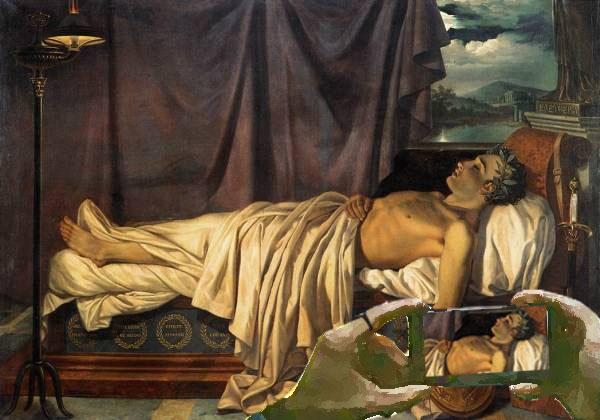
Alas, poor Poe, the victim of “coopering,” an unwitting pawn of election fraud in those halcyon days when you didn’t need doctored software or mail-in ballots or dead Venezuelan politicians to steal an election. You could just ply a toper with demon rum or laudanum, change his clothes, drag him from polling place to polling place, a sad end to a consistently sad existence: an orphan whose father flew the coop before his son’s mother became consumptive and died; an orphan adopted by a cruel – in this case –  stepfather who tried to mold the sensitive child into someone he wasn’t; an orphan whose child bride cousin, like his mother, also wasted away with tuberculosis; an orphan who was his own worst enemy, whose panning of an anthology edited by a friend led to a literary feud that resulted in the former friend’s writing a scurrilous biography that depicted Poe as an opium addled madman, a legacy that still lives on.

Meanwhile, 170 years later, we still have our madmen and women, confabulating about pedophiliac Democratic cabals devoted to Satan worship, evangelical in their quest to disseminate their fever dreams to the masses.

And today’s the day when what has been a pro forma constitutional rite will be transformed into a circus while Proud Boys and Lizard Squads and other fringe groups take to the streets, a slightly more sophisticated attempt at undermining an election than dragging an impoverished writer through the alleyways of Baltimore. Today’s madcap spectacle might make an entertaining action-packed novel or movie – or perhaps a cynical dark comedy like Dr. Strangelove.

This brand of madness and mayhem, however, doesn’t suit Poe’s talents as a storyteller. I’m thinking Dickens or Twain would be better able to do justice to the likes of Sidney Powell, Lin Wood, and Rudy Giuliani, or maybe a movie directed by Robert Altman or Quentin Tarantino might be the way to go..


Lin Wood Yippee-Ti-Oh

Anyway, fun ahoy. The let the games begin.


[1] I love the sound of astonished, which originally meant to turn to stone, an ear-pleasing blend of an Anglo-Saxon prefix, root, and suffix.

An Idle and Most False Imposition

The author

Cassio: “Reputation, reputation, reputation! Oh, I have lost my reputation! I have lost the immortal part of myself, and what remains is bestial.” Othello 2.3

When I was growing up, my mother often warned little ol’ red-headed I-and-I that a good reputation is an invaluable commodity and once lost virtually impossible to reestablish.

How discouraging then, to discover via an unsolicited email from MyLife that my reputation is three points lower on average than my neighbors’, and, of course, I can’t help but wonder what misdeed or combination of misdeeds have contributed to the sullying of my character in relation to, say, the fellow who lives on the corner, a year-round resident whose hurricane shutters have been securely latched for at least the last five years and who makes Howard Hughes seem gregarious in comparison.. 

Tom Waits, “What’s He Building in There?”

I mean, if I lived in the exclusive planned communities of Kiawah, Wild Dunes, I’on, or Daniel Island, it wouldn’t surprise me if my reputation lagged behind those of the fine families who have chosen to sequester themselves from the mere middling and who sleep secure knowing that architectural guidelines prevent the couple across the street from painting their house in any contraband pigment that might upset the soothing balance of sameness that surrounds them.[1]

But I live on Folly Beach, the so-called Edge of America, the notorious setting for the 4th of July riots of 2012 and the disastrous Follygras debacle of 2019. Fatal drug overdoses among residents, though not common, are not unheard of. Look, I can count the number of manicured lawns on one hand whereas the number of yards strewn with broken down lawnmowers and the rusted remnants of bicycles would require an abacus to calculate. To be deemed less reputable than the average Folly resident raises questions.

Folly Gras 2019 by Wesley Moore III

For example, how significant is three percentage points in reckoning of my reputation? How does my driving my MG Midget down steps leading to the University of South Carolina’s Campus Police headquarters in 1978 figure into the algorithm? Are there statutes of limitations on youthful indiscretions, like the time or two I was escorted from drinking establishments ? Do my occasionally outré fashion choices affect negatively my score as the tabulators of character scan the internet for images of me, and does the fact that most of those images feature me holding an alcoholic beverage and grinning a shit eating grin negatively affect my score?

Charley Neely and I-and-I

Who knows? The good news is that I boast a stellar credit score, am not looking for employment, and my sweet mother is none the wiser resting in peace in the churchyard of St. Paul’s Episcopal Church.


[1] I suspect that perpetually shut hurricane shutters would be frowned upon. 

Twitter, a Bastion of Un-Rugged American Non-Individualism

“But after I got them to leave and shut the door and turned off the light it wasn’t any good. It was like saying good-by to a statue. After a while I went out and left the hospital and walked back to the hotel in the rain.”


Frederick Henry after his wife’s death in Hemingway’s A Farewell to Arms


Although I enjoy Twitter as a medium through which I can follow intelligent journalists and receive breaking news faster than I can on cable news networks, it teems with self-pitying grandstanders, which I find off-putting. Desperate for sympathy in numbers, these popularity seekers bombard feeds with truncated accounts of their personal travails, as if a casual scroller clicking a heart or typing a phrase of consolation is meaningful in any significant way. 

Here’s a sample of o-woe-is-me tweets culled in the last two days:

My only child has a fever and chills. She is driving home alone, from a testing site. I am dying inside.

Talked at my dad earlier today, hoping he could hear me. Got the call tonight. My dad died from Covid. In a nursing home. Alone.

My dad got home from MON-GENERAL at 1:30 p.m. He died at around 1:55 Does anyone care?

It’s my birthday. I’m home alone. No one cares. 

No, as it turns out, lots of people care, given that these cri de couers rack up thousands of responses from sympathetic followers (their laments limited, however, to 280 characters), and I myself also care in the very limited way in that I’m sorry when anyone suffers, and certainly there’s more than enough of that going around on a planet where approximately 150,000 humans die on a typical day and many more than that on a day during a worldwide pandemic.[1]

On the other hand, it’s also depressing for me to note that the rugged individualism and stoicism that once defined the American character is as dead as Davy Crockett.[2]

Look, no one is a stranger to heartache. I was holding the hand of my wife of forty years when she died on Mother’s Day, of 2017,  but the last thing I can imagine doing is logging on to Twitter seeking sympathy before her corpse had been buried or cremated or come to think of it, even after that.

It was, of course, very moving to receive so many handwritten expressions of sympathy from our relatives and friends, and I also would have appreciated unsolicited sympathy from a total stranger who might have written, “I read your wife’s obituary in the paper, and she seemed like a wonderful person. I’m sorry for your loss.”  However, it would have been very less meaningful if I had solicited sympathy by posting on Facebook, “My darling Judy is dead. Does anybody care? How about flooding my mailbox with sympathy cards?”

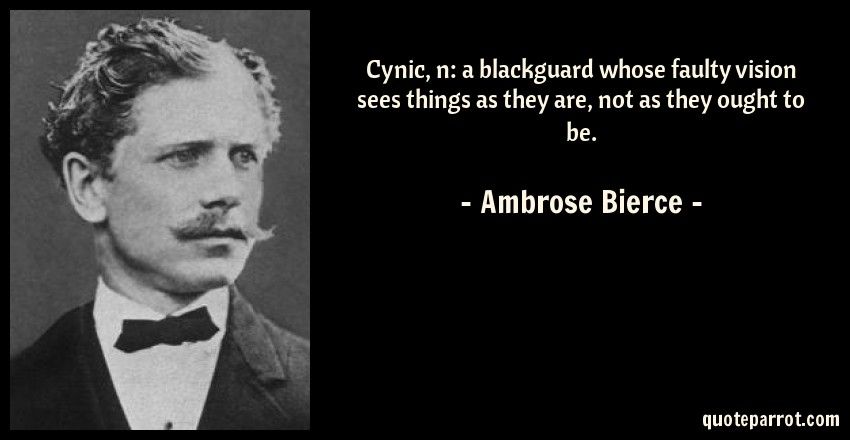
Sorry about this hard-hearted, cynical grousing, but my spiritual advisor, Mencken Bierce Twain, thought it would be a good idea to get it off my chest. 

Anyway, here’s to a happier 2021 when I hope fewer folks will have occasion to post about the trauma of COVID.


[1] Not to mention the death of pets, debilitating diseases, house fires, hurricanes, homelessness . . . 

[2] As exemplified by self-pitier-in-chief President Donald Trump, who is about as stoic as Blanche DuBois.

Live Reading of “Drunk Me Some Wine with Jesus”

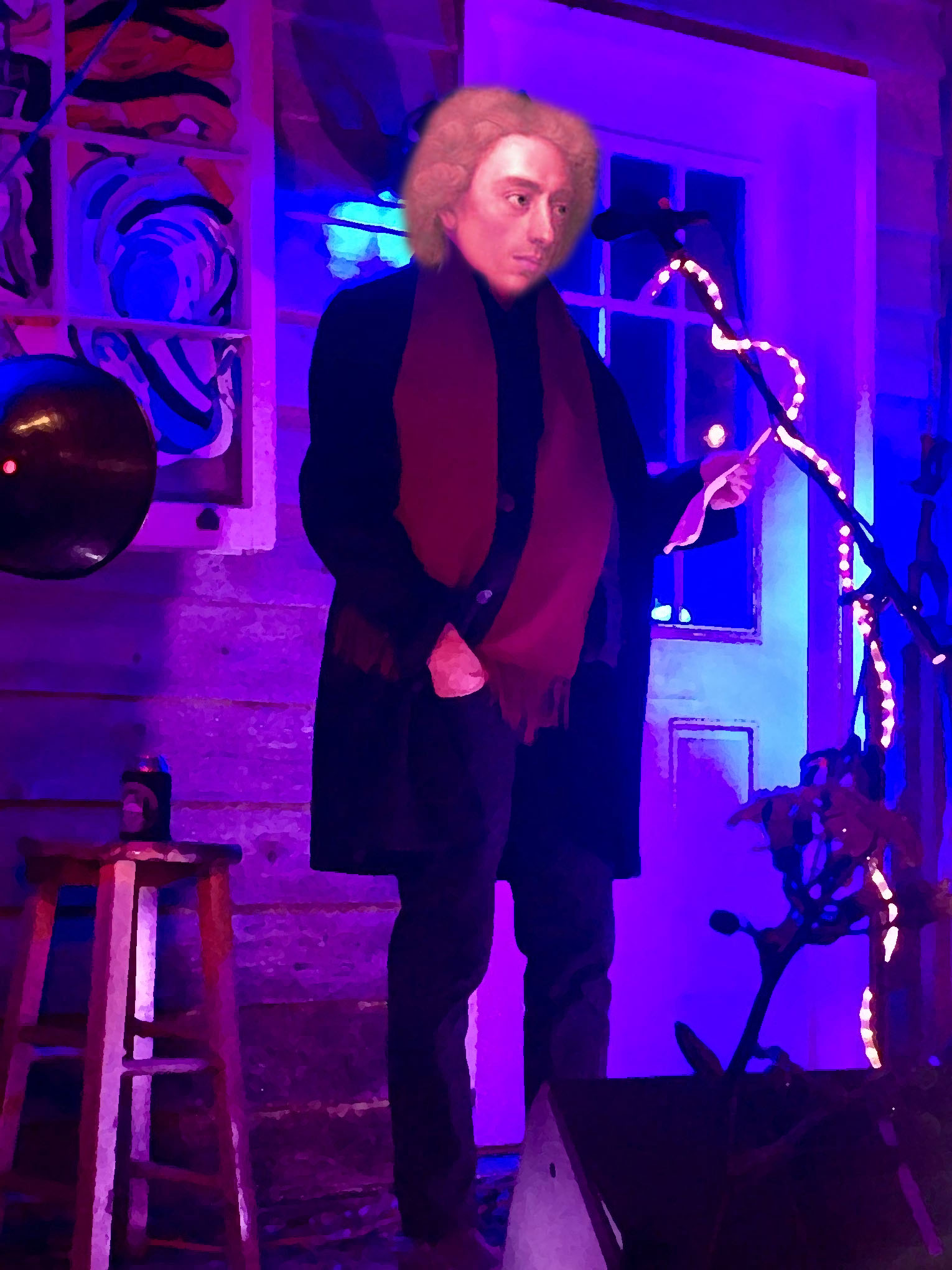
I hadn’t planned to read last night but was coaxed on stage where I belched my poem
“Drunk Me Some Wine with Jesus” to a somewhat inattentive audience who were [cue backwoods evangelical voice] more in-TENT on gluttony and idle chatter than they was in hearing that our Lord was a wine-bibber and a comm-U-nist.

And who could blame them?

Here’s the text of the poem:

Drunk me some wine with Jesus
At this here wedding in Galilee.
He saved the bestest for second
And provided it all for free.

So I quit my job on the shrimp boat
To follow him eternally,
No longer bound by then blue laws
enforced by the Pharisee.

And we had us some good times
Till then Pharisees done him in.
Ain't got no use for the religious right
After I seen what they done to him.

So when Paul Saul stole the show,
I sort of drifted away
Because he never quite understood
What Jesus was trying to say.

He was more like a Pharisee,
Dissing this, cussing that
Giving the womens a real hard time,
Gay-bashing and all like that.

So I drink at home most nights now
Trying to do some good,
offering the beggars a little snort
Whilst praying for a Robin Hood.

Drunk me some wine with Jesus.
I was the besets day I'd ever seen.
Drunk me some wine with Jesus,
Partying with the Nazarene.

By the way, the poem is sort of a riff on Ezra Pound's 
"Ballad of the Goodly Fere."

Ballad of the Goodly Fere

Simon Zelotes speaking after the Crucifixion

Ha’ we lost the goodliest fere o’ all
 For the priests and the gallows tree?
 Aye lover he was of brawny men,
 O’ ships and the open sea.

 When they came wi’ a host to take Our Man
 His smile was good to see,
 “First let these go!” quo’ our Goodly Fere,
 “Or I’ll see ye damned,” says he.

 Aye he sent us out through the crossed high spears
 And the scorn of his laugh rang free,
 “Why took ye not me when I walked about
 Alone in the town?” says he.

 Oh we drank his “Hale” in the good red wine
 When we last made company,
 No capon priest was the Goodly Fere
 But a man o’ men was he.

 I ha’ seen him drive a hundred men
 Wi’ a bundle o’ cords swung free,
 That they took the high and holy house
 For their pawn and treasury.

 They’ll no’ get him a’ in a book I think
 Though they write it cunningly;
 No mouse of the scrolls was the Goodly Fere
 But aye loved the open sea.

 If they think they ha’ snared our Goodly Fere
 They are fools to the last degree.
 “I’ll go to the feast,” quo’ our Goodly Fere,
 “Though I go to the gallows tree.”

 “Ye ha’ seen me heal the lame and blind,
 And wake the dead,” says he,
 “Ye shall see one thing to master all:
 ’Tis how a brave man dies on the tree.”

 A son of God was the Goodly Fere
 That bade us his brothers be.
 I ha’ seen him cow a thousand men.
 I have seen him upon the tree.

 He cried no cry when they drave the nails
 And the blood gushed hot and free,
 The hounds of the crimson sky gave tongue
 But never a cry cried he.

 I ha’ seen him cow a thousand men
 On the hills o’ Galilee,
 They whined as he walked out calm between,
 Wi’ his eyes like the grey o’ the sea,

 Like the sea that brooks no voyaging
 With the winds unleashed and free,
 Like the sea that he cowed at Genseret
 Wi’ twey words spoke’ suddently.

 A master of men was the Goodly Fere,
 A mate of the wind and sea,
 If they think they ha’ slain our Goodly Fere
 They are fools eternally.

 I ha’ seen him eat o’ the honey-comb
Sin' they nailed him to the tree.


2020, the Year in Review

Well, ladies and gents, despite this being a year of too many foul subtractions, too much self-isolation, and a cluster bombed political landscape about as verdant as a WWI battlefield, this blog has enjoyed significant success, if you count success in the number of visitors who peeked in and the total number of hits registered on the site.

A record shattering year with 37,840 hits and 22,969 visitors from 132 countries

Perhaps, we can attribute this growth in readership to the old adage misery loves company.

At any rate, here’s a look backward at some of what I consider the worthiest posts. To revisit the posts, hit the highlighted word, which will transport you to the piece in its entirety. In January I was ignorant that old man contagion was hiding behind a tree laying (sic) in wait to throw at brick.[1]Nevertheless, not realizing that many would turn to the solace of spirits (not to mention IPAs and spiked seltzers) in the coming months, prophetically I posted a pro-alcohol piece .

To counterbalance the somewhat positive with sort of negative, I also produced this piece on the great American songwriter Stephen Foster. 

February

On February 15th, Caroline and I visited Mosquito Beach’s Island Breeze for the last time, not knowing it was the last time. Alas and Alack!

By 29 February, the virus was flourishing, so I published this enlightening expose on vultures.

March

The Charleston community lost a richly talented English teacher, a learned Charleston historian, and lovely human being, Erica Lesesne.

Also, my pal the poet Jason Chambers allowed me to read and record on of his compositions.


April

April is, as Eliot, put it, is the cruelest month, so I brought this post up from the dead land, the first post directly dealing with the pandemic

I also wrote a poem dedicated to my friend Richard O’Prey, who is alive and well I’m happy to say. 

May

My wife Caroline wrote this brilliant villanelle in memory of my first wife Judy Birdsong who died on Mother’s Day of 2017. There’s an audio clip of Caroline reading that accompanies the text of the poem.

I also bid farewell to Porter-Gaud’s Class of 2020 who lost out on the springtime rituals of severance they so richly deserved. 

June

With the year half done, I came up with this pandemic parody of of William Ernest Henley’s “Invictus.” 

July

In July, I began a series dedicated to my native town of Summerville. Here’s the most popular one that brings together two rather antithetical citizens of that once quaint village. 

August

Not much going on in August. Here’s another one from the Summerville series chronicling my first night ever spent in a jail.

September

For some odd reason, I had death on my mind

October

Another pandemic poem, this one on the wearing of masks. 

November

With the election seemingly over, I posted this celebratory poem

Also, here are a handful of videos celebrating George Alan Fox and Chico Feo’s  Songwriters’ Soap Box Open Mike Extravaganza.


December

Ah, those lazy crazy deathly dangerous days of college.

Thanks to all of you who stop by and read the blog, especially my regulars, Rodney, Bill and Dana, Furman, Sue, Gary, and, of course, my siblings, and my loving, patient, and beautiful wife Caroline.


[1] With apologies to Ry Cooder

Live Reading of “Corky Cain, Washed-Up Surfer Sings of Dead-End Hedonism

The text of the poem appears below the video

Corky Cain, Washed-Up Surfer Sings of Dead-End Hedonism

sick with desire
And fastened to a dying animal

William Butler Yeats, “Sailing to Byzantium”

My bleached blonde hair has disappeared,
leaving a freckled scalp in its stead.
Two black bags bulge beneath my eyes,
All rheumy and rimmed with red.

They say sagacity is recompense.
(I’d settle for a dollop of common sense).
Hey, little lady, could you spare me a smile?
(Or at least a wink instead of a wince?)

No, when it comes to wisdom,
I’m an old lecher banging on a drum,
cruising the boulevards looking for love
in the suburban sprawl of Byzantium.

Playing the fool, the pantaloon,
howling for hours at the hollow moon,
waking in the morning with a broke down head,
knowing that never will be all too soon.

Old friend, Willy B, sing me a song
that will drown out the barbarous gong
of the death knell clanging in my brain
you, the king of love gone wrong.

Radio, Radio

“I was tuning in the shine on the light night dial.” Elvis Costello, “Radio, Radio”

I acquired my first radio when I was 14 or so, an antiquated amplitude modulation model.[1]  I’d listen to it for hours at a time until the radio’s vacuum tubes would overheat, which necessitated removing them with a damp wash cloth. I’d hold the terry-cloth-shrouded tube in my hand until it cooled and I could reinsert its delicate prongs into the semi-circular holes from which they’d been extracted. Although I possess the fine motor skills of an untrained seal, by necessity I became adept at removing and reasserting the tubes, sometimes having to adjust slightly a prong that had been bent in the operation. Usually, the radio was tuned to the Mighty WTMA – Tiger Radio – whose premiere DJ, the late great Booby Nash, entertained the Charleston area with his repertoire of monologues, skits, fictitious call-ins, and playlists.

Nash in the 60s (image via WTMA Pictures)

In fact, Booby Nash was the first person I heard employ the phrase “late great.” 

“And here’s an oldie but goldy,” he’d say in his easy-on-the-ears baritone, “the late great Sam Cooke’s ‘Chain Gang.’”

Click for a snippet of Sam singing “Chain Gang.”

Ignorant, I didn’t like most of the oldies; they were unfamiliar. I’d much rather hear Marvin Gaye’s contemporary 1967 cover of “I Heard It Through the Grapevine” than the Shirelles’s 1961 rendition of “Tonight’s the Night.” In my estimation, WTMA played too many oldies. I wanted to hear the Beach Boy’s “Sloop John B” or Bobby Fuller’s cover of “I Fought the Law,” not Elvis’s or Chuck Berry’s antediluvian 1950s tunes.

Like I said, I was ignorant.

Milo Hamilton with Henry Aaron

In the summers, before there was such a thing as cable, I’d listen to the Atlanta Braves on that radio, the broadcasts fading in and out as competitive wavelengths waxed and waned, which could be, shall we say, a tad frustrating at times. The Braves’ play-by-play announcer Milo Hamilton might have Phil Niekro checking a runner at first when suddenly scratching static would avalanche over the play-by-play as some other station butted in with forty seconds of “In-A-Gadda-Da-Vida.”  By the time Milo’s voice reemerged from the deep, the runner at first had scored, and now runners stood at second and third. And, of course, the radio’s tubes could go on the fritz at the most inconvenient times during those Braves Baseball broadcasts.

Still, there were some stations like WNOX in Knoxville whose 50,000 watts provided better wavelength stability. That’s where I first heard “heavy” bands like Cream and Grand Funk Railroad.[2] In Chronicles, Dylan describes staying up in the wee hours listening to distant niche radio stations that provided him with an invaluable education in Americana music. By the way, I highly recommend Dylan’s Theme Time Radio Hour where he plays a DJ doing an old-time radio format. Although the program’s now defunct, you can still catch his whiskey-themed broadcast here. Dylan’s knowledge of the history of American music is encyclopedic, and listening to these broadcasts is highly educational if you’re into popular music.[3]

Eventually, alas, that old radio kicked the bucket, and I can’t remember if we replaced it or not. I think probably not. My father, though, rigged half a stereo system with an amp, turntable, and one speaker he encased in a fabric-façaded cabinet so I could listen to mono LPs. Thanks to my impatience and lack of fine motor skills, the mid-side songs I’d manually re-cue on the LPs would end up scratched and with their pop and crackle replicate the static of nighttime am radio listening.

I actually used to claim that a record doesn’t have character if it hasn’t been scratched. 


[1] Better known in its abbreviated form am.

[2] WTMA didn’t stray from standard Top 40 fare.

[3] Of course, he had a staff but still.