Once this pandemic is done, y’all, people gonna be hollering siss-boom-bah, packing the tattoo parlors, barbershops and bars, macro-dosing, doing the Hedonism like it’s wa-wa-tusi, dancing on tables, dancing in the streets, there’ll be swingin’ and swayin’ and records playin’, live bands blasting covers past curfew, PO-lice sirens wailing and blue lights swirling, sweatpants discarded, shimmering gowns flowin’, flasks flashin’ in the comet light of the apocalyptic party, alack and alas and all that jazz!
What do you think of when you think of Sweden? Viking ships? Ingmar Bergman? The Girl with the Dragon Tattoo? The blues?
The blues? What in the hell am I talking about?
I’m talking about Robert Lighthouse – nee Ivan R. Palinic[1], the Swedish blues guitarist who at the tender age of fourteen heard an Alan Lomax field recording of Muddy Waters – boom – Road to Damascus. Farewell, Nazareth, hail, Dr. Ross, John Lee Hooker, and Jimi Hendrix.
“Muddy ’67” photograph by David Gahr
I chatted with Robert in bright sunshine on our dock yesterday before his gig at the Singer/Songwriter’s Soapbox at Chico Feo, the best free music you’ll find in anywhere in what once was called Tri-County Area.[1]
Prompted by my questions, Robert related a CliffNote summary his life: moving to the States at eighteen, playing for tips on DC street corners, getting discovered by Charlie Sayles, the one-eyed harp master (who also got his start in music playing for tips on street corners).
Charlie Sayles
Robert toured Belgium and Holland with Charlie’s band and ended up landing a record deal of his own. His critically acclaimed first album, Drive-Thru Love, available on Smithsonian Folk Ways Recordings[2], includes both covers and originals. In addition to his second record, Deep Down in the Mud, Robert also appears on the Folkways compilation 1996 album, The Blues You Would Just Hate to Lose, Vol. II. He has shared a stage with Dr. John and opened for Taj Mahal and Johnny Winter, whom Robert describes as a man of few words but many bong hits.
The pianist/blues impresario Gary Erwin (aka Shrimp City Slim) recruited Robert to appear at blues festivals in Camden, Greenwood, and Charleston, and somehow, Robert and my brother Fleming met, and, the rest, as they say, is history.
If you ever get the chance, check him out.
Here’s a clip of his version of the Charlie Patton tune “Rattlesnake Blues.”
And him warming up at Chico Feo last night (8 March 2021)
photo credit I-and-I
[1] That be Charleston, Dorchester, and Berkeley Counties. The Soapbox runs on Mondays from 6 to 10. Be there are be square.
[2] How cool to share a label with Woody Guthrie, Pete Seeger Leadbelly, and Dave Van Ronk. I made the mistake of clicking on their website and see a Lord Lavender calypso record I can’t live without.
[1] Robert tells me that his surname, which is Croatian, means fire-starter, as in arsonist, so he anglicized it to “Lighthouse” in the sense of setting a house on fire, not in the sense of guiding sailors safely to shore.
During the 50s and 60s, my grandmother’s television, a small black-and-white model perched on a metal stand, played constantly, both day and night, commencing with Dave Garraway’s Today Show and ending with Jack Paar’s Tonight Show. [1]
When I spent the night with Mama Blanton, she allowed me stay up as long as I could keep my stinging eyes open. As a young child, I fought sleep as if it were an enemy, as if it were death itself. At home, I had to be in bed by 7:30 on weekdays and nine on weekends, so I always looked forward to staying over at Mama Blanton’s on Saturday nights and watching those old black-and-white movies, which seemed in my naivety ancient artifacts from a more glorious age.[2]
When I was five or six, I recall watching a Marx Brothers movie – probably Duck Soup – and making it past midnight. The Brothers’ antics enthralled me, especially horn-honking Harpo. I struggled mightily that night to stay awake but eventually succumbed to the Sandman’s strangle hold. Mama Blanton let me sleep on the couch until the movie ended, then led me, shuffling like a blind boy, to bed. I can’t recall if I realized then that the Groucho in the movie was the same Groucho (now twenty years older) who hosted the gameshow You Bet Your Life. However, I do I remember some time after the movie purchasing one of those Groucho masks featuring glasses, nose, eyebrows, and mustache.
I didn’t see another Marx Brothers’ film until college when my high school friend and Citadel cadet Gene Limehouse visited USC for a weekend. High on whatever, we decided to catch a matinee screening of A Night at the Opera at the Russell House theater in the student union building. Fifteen or so years had passed since that first taste of manic Marx Brothers madness at Mama Blanton’s, but once again, I was laughing out loud, though now appreciating more than the slapstick, taking note of the verbal cleverness and also the mockery of the upper classes, most deliciously, Groucho’s offering a tuxedoed opera attendee a tip for retrieving his top hat that had fallen from the balcony. “Go buy yourself a stogie,” Groucho says, leaning over the railing and offering the fuddy-duddy a coin, which he refuses in a huff.
Yet another fifteen years later when I taught AP English and we studied Marxian criticism, I’d show A Night at the Opera on the week of Porter-Gaud’s musical, offering exhausted students a reprieve of sorts. I’d explain how the promotion of the impoverished tenor, the rollicking fun the peasant passengers below deck enjoy on the trans-Atlantic voyage (as opposed to the stiff stiltedness of the first-class passengers), and the Marx Brothers’ revolutionary takeover of the performance of La Traviata conform to Karl Marx’s theories.
Although students back then – perhaps still do – balked at anything in black-and-white, the classes eventually got into it, sometimes applauding at the film’s conclusion.
A Night at the Opera, Marx Brothers’ movie with a Marxian message.
At any rate, I appreciate my grandmother’s liberality in allowing me to wander into her late-night adult world and watch movies not not necessarily suited for children, a benefit I passed along to my boys when they were growing up.
Despite the clucking of a few disapproving tongues at the time, I’d say we turned out okay.
[1] I remember the local NBC station’s signing off with the National Anthem, followed by a short film featuring the poem “High Flight,” and then an announcer’s canned spiel about kilowatts and licensing. That done, the Indian head test pattern appeared with its accompanying high-pitched whine. Finally, exactly at one a.m., a blizzard of static would obliterate the test patten. Time to go nighty-night.
[2] Ironically, many had been filmed during the Depression.
Captain Phil (You Can’t Keep a Maimed Man Down) Frandino
If you live within thirty miles of the Edge of America and can afford to party on Monday nights, you owe it to yourself to take in the Singer/Songwriter Soapbox held at Chico Feo from six to ten.
This event, hosted by the killer musician and songwriter George Alan Fox, showcases an eclectic array of music makers and poets, not only rockstar wannabes, but established entertainers like Danielle Howle and Robert Lighthouse.
The sessions have led to community building on Folly the likes I’ve never seen. Caroline and I I have met so many talented musicians – Pernell McDaniel, Jeff Lowry, and Captain Phil Frandino, for example. Plus, I’ve developed a greater appreciation for talents of people I already knew, like Charlie Stonecypher and his funky ukulele (complete with wha-wha pedal), and now I’ve developed an even greater appreciation of the deep and soulful poetry of my pal Jason Chambers. Not only have the performers grown closer with each other, but they have also formed friendships with the audience as well. The word family is overused, but it is sort of like that, like distant cousins at a family reunion.
Last night the guitarist David Sink sat in with the acts, and man, oh, man.
The first clip features George Fox performing a lovely original song “Books, Seeds, and Bullets” inspired by the Singer/Songwriter Soapbox.[1]
[1] And what an honor have my name mentioned in the lyrics.
video shot by Fleming Moore
Next some solo guitar work by David Sink at the end of Brother Fleming Moore’s paean to marital discord, “Busted Husband.”
Oh yeah, and Pernell McDaniel was in the house selling copies of his new CD. More about that later!
A loud electronic crackling. The red light of the intercom has flashed on. Never a good sign. Every class has one, a rectangular speaker box mounted somewhere on the wall. Another crackle.
Speakerbox: (crackle) Miss Turlock, Principal Pushcart. Is Alex Jensen in your class?
Miss Turlock: (looking up at the intercom, addressing it as if a person) No sir. It was my understanding that he was there with you.
Speakerbox: Who told you that?
Miss Turlock: Althea Anderson.
Speakerbox: By any chance is Rusty Boykin in your class?
Miss Turlock (still looking up, still addressing the intercom): Yes sir. He’s sitting right here working on a drawing.
Speakerbox: Send him to me. Stat!
Miss Turlock: Yes sir.
Speakerbox: (crackle)
All pencils, brushes, kneading hands have halted. Rusty’s on his feet, a look of panic stamped on his freckled face. James Hopper glances at Althea, who is frowning. Rusty casts a rueful glance at his crude rendering of the digestive tract lying next to his open Biology II notebook with its hurried, smudged, barely decipherable and misspelled anatomical terms. Then he looks up and encounters Miss Turlock’s sympathetic, blunt, open features.
“Run along, Rusty. You can leave your things here for now. “
“Okay,” he says, oblivious to the students’ staring faces, oblivious to the clay torsos, oblivious to the smell of paint, oblivious to the splattered tile, oblivious to the silence. He’s pushing open the door and stepping into the cool autumn air, oblivious to the yellow disc of morning sun suspended above distant loblolly pines. He’s deep, deep, deep inside the auditory darkness of a cave of dread where an echoing voice catalogs his various crimes and misdemeanors: smoking marijuana; drinking beer; mocking (though behind their backs) administrators, teachers, students, the Mighty Green Wave, Congressmen, Senators, Vice Presidents, Presidents, television shows, movies, Judeo-Christian Deities; purchasing and hiding Playboy magazines as visual aids in acts of self-pollution; masterminding a high stakes scheme to run away from home; receiving stolen goods in accordance with the above-mentioned scheme; not living up to his potential . . .
As an elementary student, if he had been called to the office, Rusty might have feared that someone in his family had died or that he was being summoned to receive an award, but his name in conjunction with the initials AJ can only mean trouble. He’s forgotten his signature walk, the freak flag flop, and leans forward, head down, oblivious to the pebbly paving beneath his high-top Converse All-Stars. In the thin cavity of his chest, his heart pounds like timpani as he reaches for the cold handle of the main building’s outer double doors. The hall is virtually void, the only sound clacking heels, out of sight, dopplering into the distance. His hand shaking, he grips the handle of the glass doors of the administrative offices, pulling outward.
In the bright florescent light of the outer administrative office, he recognizes immediately that the employees are in an everyday mode. No one has died. No uniformed policeman with badge, billyclub, and handcuffs glowers in a corner waiting for him. Rusty clears his dry throat and approaches Miss Cartwright sitting at a desk next to Principal Pushcart’s door. As he nears her desk, a tiny pink bubble puffs out from her lips, then pops.
“Mizz Cartwright,” he says, his voice unsteady, “I think Principal Pushcart wants to see me.”
“Now that’s an interesting shirt,” she says coyly, snapping the gum. “Where’d you get that?” She’s dressed in a yellow alpaca V-neck sweater and a kelly green skirt, the official school colors.
Rusty had forgotten all about his shirt, a new acquisition, part of a service station uniform with the name “Buddy” stitched in an oval on its breast. It’s sure to exacerbate whatever vitriol’s brewing in Pushcart. Rusty realizes he’s left his Mr. Zig Zag denim jacket back in the art room, which is probably a good thing.
“Uh, I got it from Buddy.”
“Good ol’ Buddy,” she says smiling. “Mr. Pushcart and Mrs. Laban are expecting you.”
She gets up and cracks open the door. “Mr. Boykin is here,” she says into the crack.
The muffled bark of a drill sergeant.
“Go on in,” she says.
The door creaks open squeakily like a coffin lid in a Christopher Lee movie. Sitting, leaning forward with his palms down on the surface of his desk, Principal Pushcart looks as if he might be on the verge of doing a hundred or so push-ups. Sitting across from him, looking over her shoulder, a frowning Mrs. Laban pumps her crossed leg like crazy.
“Yes, sir?”
“Have a seat, son.”
There is an empty chair next to Mrs. Laban, a wooden chair, upholstered in some sort of dark green leather-like synthetic something-or-other, the kind of fabric (maybe fabric) that sticks to the back of your thighs when you’re wearing shorts in the summer. Principal Pushcart removes his right palm from the desk like some gangster in an old movie and positions it palm-up, sweeping it in a downward motion towards the chair as he nods his head in mock gentility. Across his pink scalp strands of brownish gray flimsily stretch to feebly hide his encroaching baldness. Rusty, dropping into the chair, sighs audibly in tune with the upholstery, which also sighs.
“Now, Blanton,” he says, using Rusty’s baptismal nomenclature. “I want you to promise to tell me the truth.” The intonation isn’t all that unfriendly.
“You know,” Pushcart says, “that AJ was dismissed from homeroom to come to my office.”
This is an easy one. “Yes sir, I was in homeroom this morning.”
“Tell me. What did you think of the events of this morning?”
“Think, sir? I’m not sure I thought anything.”
“You didn’t think it was funny?”
“I wasn’t paying all that much attention. I was sort of preoccupied. I have this really big Anatomy test today.” He looks over at Mrs. Laban for encouragement, but her features have hardened into a Madame Tussaud’s mask of unalterable unhappiness: Lucretia Borgia displeased with the consistency of her soft-boiled egg.
“Did you know that AJ hadn’t come to the office?”
“No, sir. Not till the announcement over the intercom.”
“Any idea where he’s at?”
Rusty successfully stifles the impulse to say, “Behind the preposition.”
“I dunno,” he says instead. “Home, I’d guess. His daddy’s office maybe. I dunno.”
Pushcart can see the little son-of-a-bitch is telling the truth. “Son,” he says, “are you aware that you’re out of dress code?”
“It wouldn’t surprise me. I guess my hair might be.”
“Where’s your pride, son?”
Rusty doesn’t begin to know how to answer this. A trick question? Of course, he possesses pride, that doom-laden quality that they talk about in English class every year, the moral failing that forces Antigone to break the burial edict, Ahab to pursue the great white whale, Macbeth to go all Charlie Manson on his kinsman Duncan.
“I dunno, sir,” he says. “Yes and no. You know Alexander Pope called pride ‘the never-failing vice of fools.”’
As soon as the words are out of his mouth, he wants them back.
“What!?”
“Nothing.”
“What did you say?”
“I meant sometimes pride can be a bad thing, so I was hesitant to admit I had some.”
“Well, Mr. Philosopher, I’m sending you home to get a haircut and to change that shirt. The dress code is rules, son. Not suggestions. Rules. When you look presentable, you come back here to report to me before you resume your education here at Summerville High. Consider it a suspension. Zeroes on all work missed.”
“Yes, sir,” Rusty says.
“I suggest you hurry.”
“Yes sir.”
When he’s out the door, Paul looks over at Eula Lynne and asks, “What period is his anatomy test?”
“Fourth.”
“Well, then,” he chuckles. “I wish him God’s speed.”
“That secretary of yours is almost as bad as the kids. Out there chewing gum. I don’t know about that, Paul. It sets a bad example. . . ”
Three months before my wife died of Lymphoma, I began as a sort of mental escape exercise to write a parody of Dante’s Inferno in terza rima, a verse form very inimical to rhyme-starved English. In fact, even though Dante used terza rima in his Commedia, I know of no English translation of that great work that employs it.
My plan was to write nine cantos, each consisting of nine stanzas, to render an abbreviated trip through the nine circles of hell, having as my guide the Roman poet Catullus, rather than Virgil, who led Dante through the nether regions.
Alas, my poem, now two thirds completed with this latest canto, is a failure because – guess what – writing terza rima in English is nearly impossible unless you’re a master like Shelley (see his “Ode to the West Wind”). Some of it comes off as silly, for which I apologize.
Nevertheless, I’m determined to finish it, even though I myself don’t pretend to know what it means, and cast it out into the ones and zeroes of the Internet.
Canto 6
As the rutted road like a corkscrew twisted downward through darkness, the cries of lamentation abated, and a more martial clash we heard
as we entered the circle of anger, an infestation, of spiteful wretches screaming, biting, gouging, their wounds never-healing, a damnation
deserved, according to Catullus, slouching behind the wheel of the hell cab. “Violence is the bane of humanity. See that man crouching
behind the rock there, sliced and bleeding? That’s none other than Pee Wee Gaskins, podunk mass murderer, receiving
forevermore the very same tortures he wrought upon his brethren, and over there Joseph Goebbels, leper-like, oozing sores, with agony forever fraught.
We were in the small intestines of hell, as it were, the stench overpowering, the horrors too horrible to tell
with words, the previous circles towering above us, the worst still yet to come. I closed my stinging eyes, myself cowering
in the backseat of the cab. “Oh, for a drop of rum,” I sighed, and Catullus smiled, pulled out a flask, “Here,” he said, reaching back, “please have some.
It’s not much to ask after what you’ve been through, donning the sackcloth with a mouthful of ash.
Rush Limbaugh has succumbed to cancer, He who often spoke ill of the dead. Will our comedians do him justice Or bite their satiric tongues instead?
Deep in the heart of frigid Texas, the unregulated grid is on the fritz. So, Ted Cruz packed his bags for Mexico, And booked a suite at the Cancun Ritz.
In other news:
US Covid cases are on the wane, The Reaper taking a bit of a breather, Which, of course, is very good news For maskless frat boys and grizzled geezers.
So that’s it for this episode of the All News That’s Fit to Spit, brought to you, as always, in doggerel. See you next week, same time, same blog site. Have a wonderful weekend, y’all.
[1] The day after Kurt Cobain committed suicide, Limbaugh said, “Kurt Cobain was, ladies and gentleman, a worthless shred of human debris.” After Jerry Garcia’s death, Limbaugh called him, “just another dead doper. and a dirt bag”
Jack the Mighty Springer in Rantowles, SC, circa 1982
If dogs run free, why not me Across the swamp of time? – Bob Dylan
Several years ago, my late wife Judy Birdsong and I rented a car and crisscrossed Costa Rica on a combination surf safari and sight-seeing tour. Among my favorite spots was the surfing mecca Malpais located at the southeastern tip of the Nicoya Peninsula on the Pacific coast. The town itself hardly qualifies as a town, consisting of a handful of shops and small dwellings along an unpaved road running parallel to some of the most beautiful coastal scenery I’ve ever seen.
Malpais (photo credit Judy Birdsong)
What really struck me about Malpais, however, wasn’t the stellar surf or the intricate rock formations that studded the beach, but it was just how happy everything around there seemed to be – the school children in their colorful uniforms smiling and skipping along the muddy road, the shopkeepers beaming from the doors of their humble establishments, the birds trilling somewhere out-of-sight. Even the dogs seemed to be grinning as they trotted to and fro unencumbered by fencing or leashes. The only discouraging sound to be heard was the dragon-like bellowing of howler monkeys looking askance from treetops.
A Facebook post from my former student Elizabeth Rowell Griffiths has awakened my memory of the happy pooches of Malpais. In her post, Elizabeth reminiscences about a couple of canines that ran free on the Porter-Gaud campus in the previous century, a golden retriever named Chief and a basset hound named Rufus. Rufus belonged to Berkeley Grimball, the headmaster, whose house was part of the campus, so it makes sense that Rufus might wander among the students of the Lower, Middle, and Upper Schools; however, I don’t remember to whom Chief belonged – maybe he lived in the Crescent, an upper end neighborhood adjacent to the campus.
What a charmed life these dogs led, beloved by scores of children who knew them by name, cooed to them, petted and scratched their heads. Elizabeth’s post elicited happy responses like “We loved those dogs” and “Those were our dogs.” Some fellow I don’t know added, “I never went to PG but I remember those dogs! We lived in Wappoo Heights.” So it seemed these free-range dogs enjoyed a rather large territory.
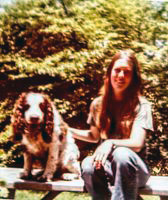
Of course, it comes as no surprise that my hometown of Summerville featured dogs that ran free in the less regulated ‘50s and ‘60s. My favorite was Ludie, a springer belonging to the Baldwin family who lived between South Main and Sumter Avenue. Ludie frequently visited James Spann Junior High and, like Chief and Rufus, enjoyed both fame and devotion. My friend Becky Baldwin tells me that Ludie was named after a bootlegger from Hell Hole Swamp. Even when Becky’s mama would lock him up to prevent him from following Becky to school, Ludie would head to Spann immediately after being let out later in the day. He was, I think, the first springer I’d ever seen and played a prominent role in Judy’s and my choosing springers as our first pets as a married couple. We eventually through carelessness bred Jack and Sally who produced two litters. In fact, we ended up selling one of the puppies to a family who lived in the Crescent. After the second litter, we had Sally fixed, which put an end to that. I have to say, though, those puppies sold like Chick-Filet sandwiches.
Ludie and Becky
My boyhood dog, a black cocker named Bozo, also enjoyed freedom but rarely wandered outside our half acre. Perhaps “Beetle” (as in Beetle Bailey) would have been a more appropriate moniker given Bozo’s propensity to spend the vast majority of his days asleep under a tree.
I recall sadly that day when Bozo did wander off and we couldn’t find him for a few hours until our neighbors the Foxes informed us that they had discovered Bozo dead in their backyard.
Alas, for me, it’s sad that dogs’ abbreviated life spans mean that we get to know them both as puppy toddlers and stiff-legged geriatrics. In my adulthood, I have gone through the springers Jack and Sally, a golden retriever Bessie, a short-lived German longhaired pointer named Saisy (you can read her elegy here), and now KitKat, a chihuahua rat terrier mix who is two and has a very good chance of outliving me.
Being shy and having been sequestered for three months by rheumatic fever, for me at first public school proved challenging. We lived on Laurel Street back then, across from the playground, and during my convalescence, I was confined to a wheelchair. If being in a wheelchair wasn’t bad enough, I also suffered the affliction of being red-headed, so in a town of only three-thousand or so residents, even children I didn’t know would approach me, once I was ambulatory again, and say, “Hey, aren’t you the crippled kid who was in the wheelchair?”
After my recovery, I attended Miss Marion’s kindergarten, whose students were all middle-class and, of course, white. I don’t remember anyone ever even misbehaving, though once when we were told to stay off the swings because of a previous rain storm, Bert Pearce fell backwards out of one and landed butt-first in a puddle of water. He had to spend an hour or so in the bathroom in his underwear while Miss Marion dried his pants, a fate to me that made confinement to a wheelchair seem like a ride in Flash Gordon’s rocket ship in comparison.[1]
In fact, the only negative experience I remember from kindergarten is pouring Coca-Cola in my Davy Crockett thermos, only to discover at lunch time that carbonation – or something having to do with the Coke – had broken the glass inlay of the thermos.[2]
This is the one I owned.
I entered Summerville Elementary in the fall of 1960, and my mother accompanied me to class on the first day where we met Mrs. Wiggins and the rest of my classmates, who were more economically diverse than my kindergarten peers.[3] I remember one boy whose single mother didn’t have a car and walked with him to school and back the first couple of days. They lived literally on the other side of the tracks, so it was quite a trek. My mother, a kind soul, somehow got wind – perhaps we passed them on the way to school – and started offering them transportation until the school bus situation was straightened out. I recall that his smallpox vaccination had gone spectacularly wrong – he suffered an enlarged stomach-turning eruption on his arm. I also remember they had a handmade sign in their dirt yard advertising fish bait worms for sale.
I may have the world’s worst sense of direction.[4] On the second day of school, I got lost among the swirling hordes of screechers and stood in line on the steps of the wrong entrance. Once I entered the hallway and couldn’t find my class, I was terrified, as if l’d entered a Twilight Zone episode. I don’t exactly remember how it got straightened out, but it did, but afterwards I emerged with a palpable dislike for school. I much preferred my shared bedroom at home to the light green concrete walls of Miss Wiggins’ classroom with our bubble-headed self-portraits displayed on bulletin boards. The boy who rode to school with us had scribbled slashes of purple crayon for his self-portrait, but it was displayed with all the rest with his name printed under it.
As it happened, in December, our family, which then only consisted of my younger brother David, my parents, and me, moved to Aurora, Colorado, where my father attended some sort of training program associated with his civil service job. We moved into a tiny three-room apartment in an establishment called The Big Bear Motel, located on Colfax, a busy four-lane highway. Although the school was only four or so blocks away, I would have had to cross on foot those lanes of heavy traffic headed to Lowry Air Force base, so Mama drove me to school in the mornings and picked me up in the afternoons.
My brother David (on the right) and I at the Big Bear Motel
The Big Bear, now known as the Aurora Motel
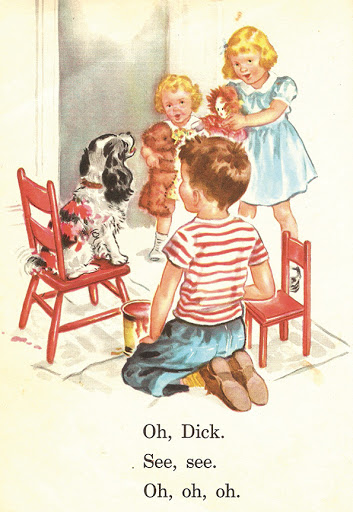
Unlike Summerville Elementary, Aurora’s primary school, Crawford Elementary, employed two first grade teachers per class. I remember on my first day being introduced to the students and placed into one of the reading groups that sat in a circle and read out loud while the other teacher drilled the rest of the students in some other activity. They had divided the class into three reading groups based on skills and named them after birds – the Eagles, the Blue Birds, and the Crows.[5] Perhaps because of my scruffy appearance (the only pair of shoes I owned were cowboy boots), my Southern accent, and that South Carolina ranked somewhere like 48th state-wise in education, they assigned me to the Crows. However, once it was my turn to read and I could fluidly decode the “oh-oh-ohs” and “look-look-looks” of the text, they immediately promoted me to the Eagles.
I loved living in Colorado in the winter with its mountains and snow. Unlike in Summerville, we ventured on family outings most weekends, visiting Buffalo Bill’s grave on top of Lookout Mountain and the mining town of Central City where we saw Face on the Barroom Floor, a painting rendered on the floor of the Teller House Bar. As the story goes, the artist, Hendron Davis, had been fired by the Central City Opera Association in 1936. He wanted to leave his mark on the town and asked permission of the bar owner to paint the portrait portrayed in the poem. They refused, but aided by an employee, he sneaked in after midnight and painted a woman’s face on the wooden floor of the saloon.
Another drink, and with chalk in hand, the vagabond began,
To sketch a face that well might buy the soul of any man.
Then, as he placed another lock upon that shapely head,
With a fearful shriek, he leaped and fell across the picture — dead!
The Face on the Barroom Floor
But I digress. School for me in Aurora was great, both socially and academically. I gained a great deal of confidence and was eager to return to Summerville, now considering myself, if not a man of the world, a first-grader of the world.
Only a couple of weeks remained in the school year when we made it back to Summerville, and Mrs. Muckenfuss, the principal, explained to my mother it didn’t make much sense for me to return to class, but my mother insisted, and I did, very full of myself until I realized that I was the only one who couldn’t do long addition. I had no idea what carrying numbers to the next column was all about. Summerville Elementary was more advanced than Aurora Elementary!
No doubt the excellence of Summerville’s public schools has played an important role in its exponential growth. Now according to Wikipedia, Summerville is the seventh largest city of South Carolin (though, after reading a couple of articles on my hometown and one article on one of its famous citizens, I wouldn’t bet my mortgage on it). At any rate, I’m thankful for the education I got at Summerville Elementary, for teachers like Mrs. Wiggins, Mrs. Jordon, Mrs. Montz, Miss McCue, and Mrs. Altman.
[1] By the way, the spacecraft spewed fiery combustion in the void of outer space.
[2] The Moore and Blanton families’ addiction to Coca-Cola is legendary. In her adulthood, my Aunt Virginia lugged a 2-liter bottle with her everywhere.
[3] Back then, there were no public kindergartens, so we who had attended private kindergartens enjoyed a great academic advantage because we already knew our ABCs and could perform single digit arithmetic.
[4] After my niece’s Hanahan High graduation ceremony held at the North Charleston Coliseum, it literally took me over an hour to find my car, and I was able to do only because the parking lot was virtually empty when I ran across it.
[5] Actually, I don’t remember what birds designated what level of accomplishment.
Dear Abby,
My girlfriend disses me
when I put “thee”
in my confessional poetry.
“So Seventeenth Century,”
she says, “the antithesis of hip, old-fashioned, out of time.”
which triggers
Bill Wyman’s bass line
in the juke box of my mind.
You’re out of touch my baby,My poor old-fashioned baby,I said baby, baby, baby, you’re out of time.
“No way you can publish this rubbish,”
she says, “too loosey goosey, sugar britches.
“Try not rhyming every other word.
The syllables should interlock
like a choo-choo train,
and go chug-chug-chug-chugging,
in a straight line,
not go staggering
all over the page,
like a sentimental drunk
smashed on Toostie Roll wine.”
Otherwise, she’s sweet as pie, my girlfriend,
and treats me nice.
Any advice?
Signed,
Stuck Inside of Peoria’s Suburbs with the Arden Forest Blues Again
Dear Stuck,
A wise man once wrote:
A poem should be palpable and mute As a globed fruit,DumbAs old medallions to the thumb,Silent as the sleeve-worn stoneOf casement ledges where the moss has grown—A poem should be wordless As the flight of birds.
So, yeah, your GF has a point.