When I was a child, before the completion of I-26, there were two routes that led from Summerville to Charleston, and the two couldn’t have been more different in character. The more pleasant passage my parents called “the River Road,” Highway 61, a tree tunnel of moss-draped oaks running parallel to the Ashley River and past the antebellum plantations of Middleton, Magnolia, and Drayton Hall, which had become tourist attractions.
The River Road
My parents referred to the other route, Highway 52, as the “Dual Lane” because it featured four lanes divided by a wide grassy median. It took you past the Navy Base through what we called the Charleston Neck, a narrow passage between the Cooper and Ashley Rivers, a forlorn industrial wasteland where fertilizer plants spewed thick orange smog and produced insufferable acrid odors that could make a six-year-old sick to his stomach.
If you were in a hurry, it made more sense to take Highway 52, which was faster and much safer, especially at night. I would hate to hazard a guess as to how many people lost their lives veering off 61 into one the majestic oaks that stood ever so close to the shoulder. Also, if you took the route at night, insects bombarded the windshield in non-stop splattering, making a mess, obscuring visibility. Of course, in those days, you couldn’t press a button to spray liquid and engage wipers.
Highway 52 featured a large, old, dilapidated house that my parents mistakenly thought was the Six Mile House, a notorious inn run by John and Lavinia Fisher.[1] Lavinia, who along with her husband John, was hanged 18 February 1820, became known as “the first female serial killer in the United States,” an epithet that doesn’t really trip off the tongue the way epithets should.[2] There was also a rumor that the skeleton at the Old Charleston Museum belonged to Lavinia, who had responded to her husband’s pleas that she make peace with the Lord with these memorable last words: “Cease! I will have none of it. Save your words for others that want them. But if you have a message you want sent to Hell, give it to me; I’ll carry it.”
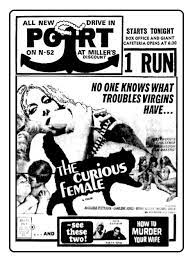
Also, the Dual Lane had drive-in movies whose screens were visible at night. Later, when I myself was driving, a triple X movie playing at the Port or North 52 could itself cause a traffic mishap.
Nevertheless, I preferred the River Road because my parents would sometimes sing duets when we took that route, and never did when we travelled the Dual Lane. Here’s one of their favorites:
I know a ditty nutty as a fruitcake Goofy as a goon and silly as a loon Some call it pretty, others call it crazy But they all sing this tune:
Mairzy doats and dozy doats and liddle lamzy divey A kiddley divey too, wouldn’t you? Yes! Mairzy doats and dozy doats and liddle lamzy divey A kiddley divey too, wouldn’t you?
If the words sound queer and funny to your ear, a little bit jumbled and jivey Sing “Mares eat oats and does eat oats and little lambs eat ivy.”
Oh! Mairzy doats and dozy doats and liddle lamzy divey A kiddley divey too, wouldn’t you-oo?
Maybe the smog or the faster traffic of the Dual Lane dissuaded them from singing. It would have been nice to own a car with a radio – or air-conditioning for that matter – but we didn’t until my friend, the late Gordon Wilson, totaled my parents’ Ford Falcon in the spring of 1971.
How did he total the car? We hit a mule that had escaped from Middleton Plantation right there on Highway 61 about ten miles north of Summerville. The mule didn’t make it, but we did, which is surprising given the Falcon didn’t have seatbelts.
Because my butt was sore from a penicillin shot, I let Gordon drive, a decision that didn’t delight my sometime-singing parents.
[1]The Six Mile House was burned to the ground in 1820.
[2] C.f., “the Butcher of Baghdad,” “the Teflon Don,” etc.
Prior to my sophomore year in high school, I had developed a robust crush on a social studies teacher named Mrs. Palmer. I can’t tell you how old she was – late twenties or early thirties would be my retrospective guess. She wasn’t the hot, mini-skirt-sporting bleached blonde that your typical adolescent boy might lust for but, rather, possessed a wholesome, girl-next-door prettiness, more Ingrid Bergman than Marilyn Monroe.
Ingrid Bergman
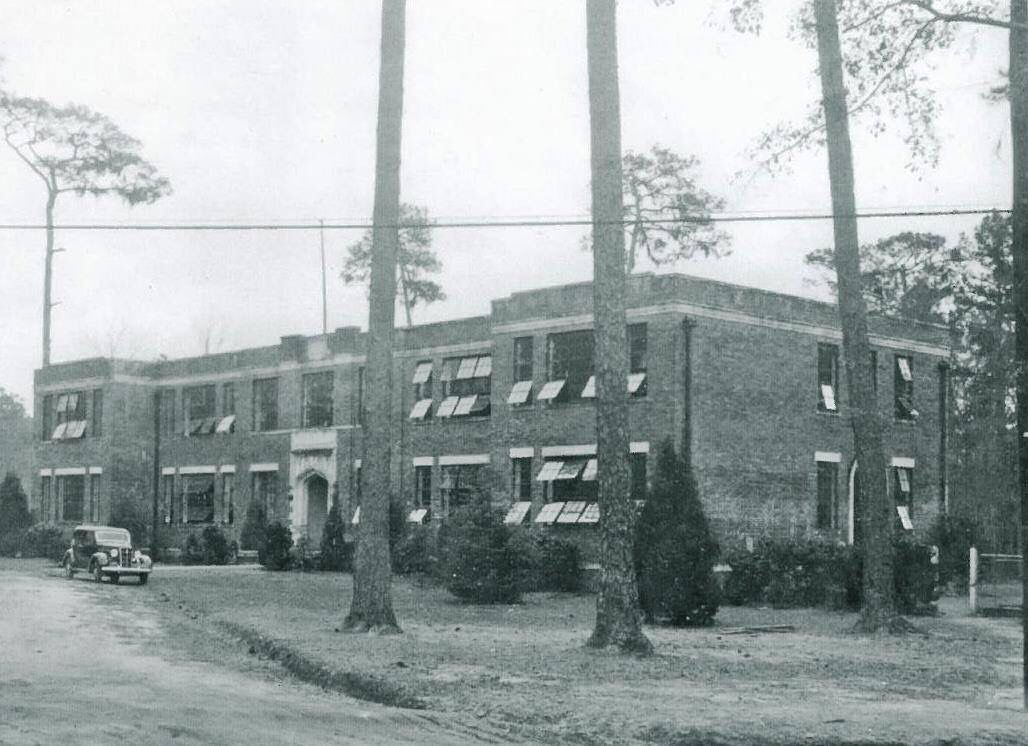
Anyway, you can’t imagine how excited I was when I received my class assignment for the academic year 1968-1969 and saw that I had Mrs. Palmer for World Cultures. This was the last year high school students attended classes in the old Rollins Building, and because of student overflow, she held class in what we called back in those days a trailer.
Old Summerville High
Not surprisingly, World Cultures was my favorite class. Mrs. Palmer was a demanding but even-keeled teacher who followed lesson plans that covered the gamut of whatever country we studied, and because I read my assignments, paid attention in class, and contributed to discussions, I did very well despite my chicken scratch handwriting and piss poor spelling.
Alas, no matter how witty, charming, and urbane I tried to be, somehow Mrs. Palmer managed not to succumb to the allure of a scrawny, pimply sixteen-year-old who reeked of secondhand smoke. And even if she had, it would have come to naught because, as luck would have it, after Christmas she followed her husband to a new job and was replaced by an older man I’m going to call Professor Plum.
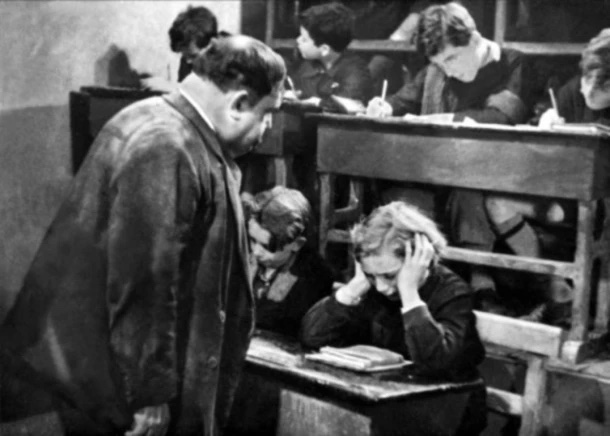
To say that Professor Plum was eccentric is like saying that Notre Dame is gothic, or Calcutta is crowded; in other words, his weirdness was apparent as soon as you laid eyes on him, thanks in good part to the fact that the right lens of his glasses was shattered. I can’t imagine what the world looked through that those glasses, how his brain compensated for the semi-fractured view of what lay before him, but at least he didn’t bump into things, though for anyone engaged in a one-on-one conversation with him, it was – at least for me – unnerving.
In his sixties, tall and handsome with slicked back grey hair, he wore only two suits to class, a grey one and a blue one, and he sported the same brown scuffed wingtips no matter which suit he had chosen for the week. I recall that he addressed us collectively as “young people,” and often pointed the calendar on the bulletin board featuring presidents with Richard Nixon in the center. He would point to the calendar and say, “This country is in grave danger, young people, but that man on the calendar may be our salvation.”
Rather than covering the origins, history, and geographic locations of the countries, he focused solely on their cultural contributions, cuckoo clocks and yodeling for Switzerland, Voltaire and Debussy for France. His tests were ridiculously easy. I remember that he assigned each of us a country in the Asian section and tested us orally by asking one question – one question! – during a class period.
I had been assigned the Philippines, and clever boy that I was, I studied only the last section of the chapter devoted to folkways and cultural contributions.
Here’s my test.
Professor Plum: Rusty, what is the national dish of the Philippines?
Me: Dogs!
Professor Plum: Roasted over what?
Me: Hot coals?
Professor Plum: Yes. You receive a one hundred.
Me: Thank you, sir.
As it turned out, every single person in the class exempted the exam except one, whom he informed in class publicly that under him she would have qualified for exemption but that her performance under Mrs. Palmer meant that she had to take the exam.
I can say one thing positive about Professor Plum: his classroom management was excellent. No one, as they say, horsed around during class. I felt a little sorry for him. He had been a teacher and perhaps an administrator in Charleston County, and it seemed to me that something in his life had gone awry, perhaps he was a widower, perhaps he had money problems. At any rate, from my own stint as a department chair, I know how difficult it is to find a suitable replacement teacher in the middle of a semester.
On the other hand, I don’t feel all that sorry for him. Having only one final exam to grade in the spring is pretty damned sweet.
Editor’s Note: Anthony Proveaux, a musician, photographer, and novelist based in Eugene, Oregon, has shared with me this coming-of-age essay about the social stresses of being a high school freshman in the small Southern town of Summerville, South Carolina, in a time of social upheaval. Enjoy!*
I’d suggest reading the text below the YouTube link as you listen to Anthony tell his story.
Change comes slow to small southern towns like Summerville South Carolina, where I was born and raised. But in the late 1960s, the times they were a-changin’ fast in our little slice of Mayberry. There, like in most places across America, we sat in front of our new color TVs and watched a world that was changing too fast for the times. The nightly news broadcast images of unrest across the nation, followed by stories of flower-power and love-ins, in faraway places like Haight Ashbury and not-so-far away places like Piedmont Park in Atlanta. It was hard to tell if the country was coming apart or coming together.
For young people, there was a definite sense of change in the air. Everywhere, hair was getting longer, and music was getting louder. Down at the local Tastee-Freez, the new sounds of Hendrix, Cream, and Creedence could be heard blasting from the 8-track players in the muscle-cars that cruised the loop. And in school, long hair was starting to challenge the dress-codes. Those were heady days for an impressionable young teen like myself, and like kids everywhere, I was totally swept up in the current of events.
Of course, the elephant in America’s living room at the time, and source of much of the nation’s angst, was the very real war going on in Vietnam. Our town, like so many other places across the country, had patriotically sent their sons “over there,” but sadly, an increasing number of them weren’t coming home. But I was too young to worry about the dreaded draft notice yet, and I couldn’t make much sense of it anyway.
In the late 60s I was in the thick of that awkward age of early teen hood and still learning to navigate the perils of post-puberty ‘boy’s life’. Over the course of a few short years, I’d evolved from science-fair kid with a crew cut, to a mop top teen, tie-dying t-shirts on the back porch. And the most challenging part of the teenage gauntlet lay just ahead, because I was about to partake in that great social experiment called high school.
In the fall of 1969, I was a fifteen-year-old freshman at the newly opened Summerville High. Walking those shiny hallways in the new modern buildings, passing the juniors and seniors that I had mostly only seen in my big sister’s yearbooks, was like entering a brave-new-world. It was also downright intimidating, but I was determined to fit in, and maybe even get my face above the crowd a little bit.
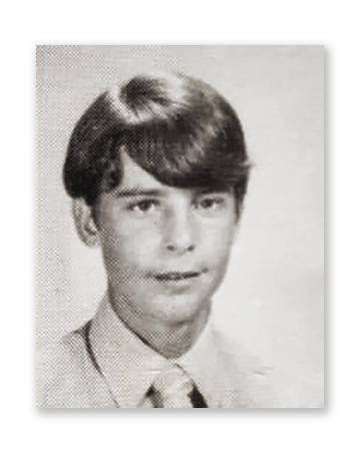
portrait of the artist as a 9th grader
I’d always been a good student with good grades, but by high school my studies had turned more towards girls, music, and teen trends (in that order). To get girls to notice you at that age, though, you had to be more than just a bright kid. You had to either be somebody, or be cool. Unfortunately, I was neither. Being a shy kid from a working-class family, I was three or four rungs down on the social ladder, and about as cool as a glass of day-old water. I definitely had some branding work to do.
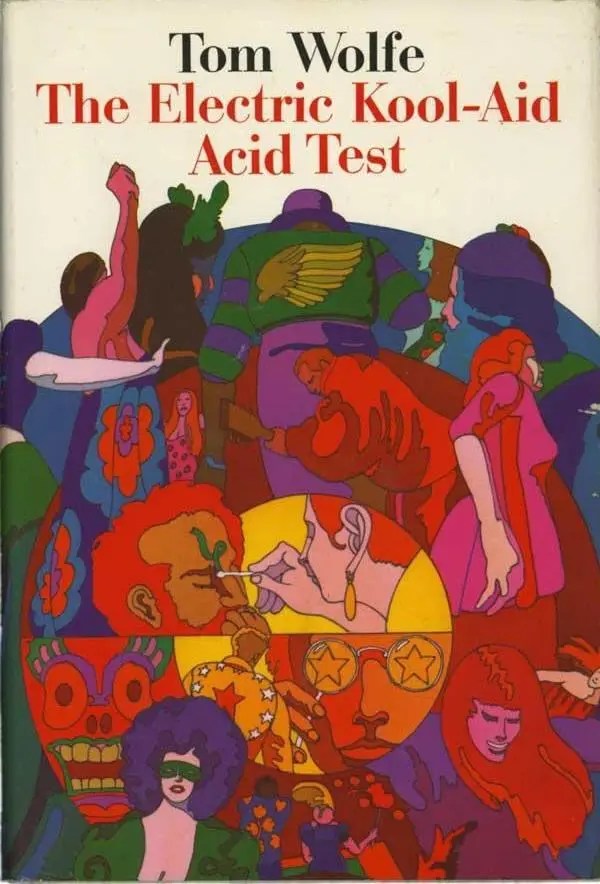
So, shortly after entering the ninth grade, I began walking around Summerville High with a copy of Tom Wolfe’s The Electric Kool-Aid Acid Test in my back pocket. Making sure the title was showing, of course. It was a book I could barely get through. The writing was way over my head, and I’d never even been properly buzzed on beer, much less done “drugs.” But the paperback sure had a cool cover, with that psychedelic sugar cube, in Peter Max wrapping paper. The K in cool really meant something back then.
That little stunt only succeeded in making me look even more nerdy than I was. I quickly realized that if I wanted to be cool, I needed to hang out with the cool kids. In Summerville that meant teens like the Folly Beach surfers, guys that played in bands, and the college-bound students from the sophisticated families around town. At the new high school, I noticed that during lunch time the “in-crowd” hung out in the breezeway down by the cafeteria. So, I gradually started lurking around on the fringes of the group, half-hoping I wouldn’t be noticed, but desperately hoping that I would.
Of course, that group of cool guys and classy young ladies had no use for a gangly ninth grader, hanging around trying to infiltrate their noontime social club. No one was particularly rude to me. Genteel Summerville had good manners, and those with social status were always graciously “stuck-up.” So, I was politely, but pretty much totally ignored, save for a few “get lost” looks from some of the jocksters.
However, there was one dude who noticed me lurking and actually tried to bring me into the conversation a few times. It was Rusty Moore, a quick witted red-headed junior whom almost everyone seemed to like, except perhaps a few of the local rednecks who took his wit the wrong way on occasion.
Rusty even gave me a comeback line once. After some snobby kid cut-me-down about this loud paisley shirt I was wearing, Rusty leaned over and whispered in my ear. “Tell him his belt looks like it’s made out of beer can pop-tops” (my antagonist was wearing one of those ‘60s belts made with metal rings). Unfortunately, I totally blew the delivery of the comeback line and just further embarrassed myself. It was a pretty pathetic stab at a touché, but I really appreciated the encouragement from Rusty.
I only lasted a week or so hanging with those hipsters. I was still a mighty-green teen, and way out of my class. And in Summerville class was still taken seriously. Our family was somewhere below the middle of the social line. So I was definitely bumping my head on the class-ceiling, trying to break into those trendy social circles.
Fortunately, cool came to our neighborhood, when a family with several rambunctious and attractive teenage daughters moved in right across the street. And as you can imagine, it wasn’t long before cool dudes were hanging around. My big sister and I soon found our own little tribe of early Summerville heads. She met a free-spirited guy, and a few years later, when I’d just turned seventeen, we followed him out to California, where we hitch-hiked, hopped trains, and bummed around for about a year. Now that was a real education. In the early 1970s, the highways were filled with on-the-road youths of every color and class, out to “Look for America.” I ended up staying on the west coast, went to college, and finally settled down in Oregon.
I never lived in Summerville again, but still have fond memories of growing up there. Navigating the perils of the teenage years and high school sticks with us all, and that early attempt at trying to climb my way up the social ladder, and falling off, always stayed with me for some reason.
During that time, I also never got to know Rusty Moore, the kid who threw me a lifeline when I tried to swim-with-the-sharks. He was a few grades above me, and I left Summerville early on. He’d certainly never remember that insignificant event anyway, but it made an impression on me. When you’re young, those little nudges along the way do make a difference. So a shout out to Rusty Moore for the nudge.
by Anthony Proveaux
*You can purchase Anthony’s historical novel Finding Charlie Patton: A Historical NovelHERE
Here’s a video modern-day Anthony (on harmonica) making music during the quarantine.
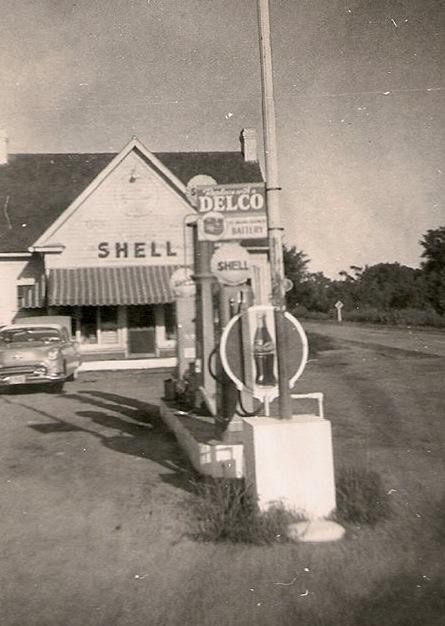
Back in the early 50s when I first became aware of sensations, diesel fuel was a predominant smell, and I grew to savor it. My grandfather owned a service station, and early in my life for a year or so our family lived there in a commercial building that doubled as a domicile. We called this abode “The Station.” Out front it was all concrete, though there was a grassless backyard with one lone sycamore tree standing on the edge of the property.
A Doberman pincher named Ace roamed the desert domain of the backyard, and he was about as friendly as Cerberus, the three-headed canine guardian of the Greek Underworld. So I spent my days inside safe from traffic and attack dog, a preschooler cut off from nature. There wasn’t that much nature to see at the Station anyway. The only wildlife I remember encountering were a black snake sunning on summer pavement and bats zigzagging overhead at dusk.
At night, eighteen wheelers rushed past in swooshes, sounding somewhat like waves breaking on a beach. In fact, the Station was sort of like a barren island standing in a sea of cement. We lived in isolation.
The Station in the 50s
What a contrast to the town of Summerville itself, “Flowertown in the Pines,” a garden of earthly delights where the sweet ephemeral smell of tea olive wafted in front and back yards among the other flowering shrubs, azaleas and gardenias.
We had moved from the Station to Laurel Street across from the Playground with its swings, sliding boards, a foot-propelled merry-go-ground, and a bell-shaped contraption we called the “ocean wave.” Unfortunately, I contracted rheumatic fever at Laurel Street and spent three months confined to bed after a weeklong stay in Dorchester County Hospital. Like Ace the Doberman and highway traffic, disease also kept me inside before I started kindergarten.
Did these early experiences of mandatory house arrest contribute to my becoming “an indoorsman?”[1]
Dunno. Maybe? Whatever the case, a prefer the not-so-great indoors. I’d much rather hunker down in a dark basement bar in Asheville than hike the Appalachian Trail.
ocean wave
Now, however, I live on the Folly River, and the windows that line the outer walls of our house look out over the marsh to uninhabited Long and Morris Islands. Now I can’t avoid nature; it’s been thrust upon me, even in our air-conditioned living room. Sitting on the sofa or out on the screened porch or deck, I have witnessed owls, wood storks, ospreys, painted buntings, egrets, bats, deer, bald eagles, river otters, and minks, not to mention the frogs that inhabit our water garden and fill the night with constant croaking. Also, I’ve seen my share of Wild Kingdom carnage, hawks swooping down to snatch birds, ospreys lumbering over the house with fish in their talons.
I still spend an inordinate time cooped up in my study, which I have dubbed “the drafty garret.” Cut off from the outside word, I spend way too much time staring into an iMac screen reading depressing news stories and fiddling around with words.
However, I still savor the evocative odor of diesel and the memory-producing aroma of tea olive and the flora and fauna of the backside of the Edge of America. In other words, I enjoy being, whether indoors or out, thanks in great part to my wife Caroline and her daughter Brooks. Oh yeah, and KitKat, whom I’ve grown very fond of, a chihuahua terrier mix that wouldn’t have been my first pick of dog crossifications. Unlike Ace, her bark is worse than her bite.
Anyway, It’s summertime, and at least for now, as the song says, “the living is easy.”
[1] I was, on the other hand, an avid surfer until my mid-60s when old age made me feel as if I’d been in a minor auto accident after each surf session.
I suspect that most small North American towns in the latter half of the previous century featured a commercial spot where teenagers gathered to be seen, to strut, to make asses of themselves, a spot like Mel’s Drive-In in American Graffiti.
At these gathering places cars and trucks crammed with hormonally imbalanced funseekers cruised the parking lots looking for love, or in the case of my hometown, Summerville, South Carolina, if you couldn’t “be with the one you loved,” you could start a fist fight “with the one you were with.”
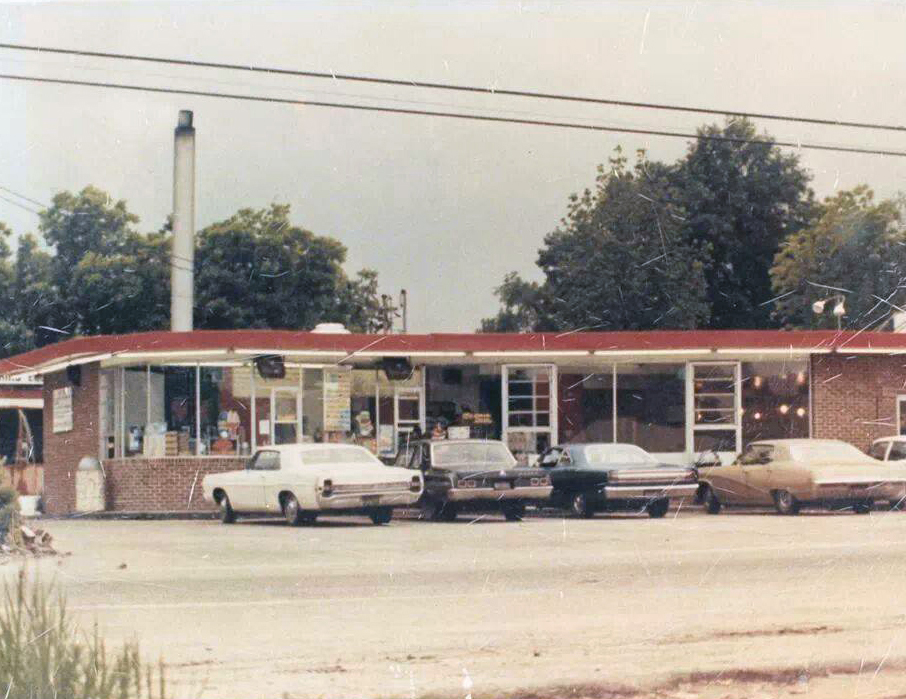
In Summerville, Tastee Freez was the place. There we gathered after football games or dances to keep the night alive. At Tastee Freez, I ordered my first cup of black coffee as an antidote for the two beers I had forced down like castor oil in those early days of intoxication. At Tastee Freez, I witnessed an acquaintance break his hand punching a brick wall after receiving his draft notice. At Tastee Freez, I received an apology from Bobby Bosheen[1] for punching me at the Curve-Inn Pool the previous weekend.
“Sorry Bubba,” he said, “beer and liquor just don’t mix.”
With its circular driveway that allowed vehicles to “round, round, get around,” Tastee Freez was the place to check out the scene and to be seen. The bigger and louder the engine the better – 440 magnum bush cam, 4-on-the-floor, Hedman Headers, dual exhaust, and all that jargony jazz.
Before the OPEC embargo, gas cost as little as 35 cents a gallon, about the same as a can of PBR, the brew of choice in Flowertown circa 1969. Commercial radio stations were more likely to play oldies like “Stand by Me” than Hendrix, though “Crosstown Traffic” would have been somewhat apropos – though, come to think of it, much more so now.
On a Friday or Saturday night, my parents might let me borrow our 1964 Ford Falcon station wagon, a white four-cylinder bland-mo-bile with 3-on-the-steering-column. After my friend Gordon Wilson plowed into a runaway mule from Middleton Gardens and totaled the Falcon, my father in an act of spontaneous irrationality replaced it with a Triumph Spitfire two-seater, a convertible, which jacked-up my cool quotient a couple of notches as I orbited the Freez with the top down.
Little did we know that Summerville would soon explode, not from napalm or an ICBM, but from a population influx. As Springsteen put it, “there’s just different people coming down here now, and they see things in different ways.” Even though “everything we’ve known [wasn’t] [completely] swept away,” crosstown traffic does makes it hard “to get to the other side of town.”
Inching along the Berlin G Meyers Parkway ain’t exactly my cup of tea. Folly Beach, where I now live, is supposed to be overrun with people, but Summerville isn’t. But, hey, c’est la vie; you can’t blame folks for wanting to live in a beautiful place.
The first car I learned to drive was a bottom-of-the-line four-cylinder 1964 Ford Falcon station wagon that lacked seatbelts and a radio and instead of carpet was equipped with some sort of plasticine flooring reminiscent of linoleum. Of course, given my parents’ frugality, it had a standard transmission, three gears and reverse on the steering column, the antithesis of sporty.
1964 Ford Falcon Stationwagon
In fact, I was responsible for this car’s demise. One afternoon, my friend Gordon Wilson, desperate to see his West Ashley girlfriend, cajoled me to ask my parents for the car on a school night, and, alas, they consented, Gordon was in a king-hell hurry, so I, not wanting to get a speeding ticket, handed him the keys. In a ridiculous short period of time, we made it to his girlfriend’s house, where I made myself scarce, and it was dark by the time we headed home on Highway 61, the so-called River Road that ran from my hometown Summerville, South Carolina, to Charleston past Middleton and Magnolia plantations and Drayton Hall.
Gordon also drove on the way back, and as we sped around a turn on 61, Gordon suddenly cursed, slammed on breaks, and I looked up to see something dark looming in the middle of the road. We skidded, an awful whoomph ensued, followed by the nauseating sound of crunching metal and shattering glass.
When I came to – I don’t know how long I was out – I saw radiator steam rising from the crumpled hood and realized that the roof had caved in on Gordon’s side. He was bleeding but essentially okay. When we got out of the car, we discovered a mule lying on its side, still breathing but with labored, wheezy respiration. Weeping, Gordon stood over the doomed animal saying over and over, “You poor thing. You poor thing. You poor thing.”
I, on the other hand, was lamenting, not so much the plight of the mule, but the death of my car. I dreaded relaying the news to my parents, who would chastise me for letting Gordon drive, a fear that came to be a reality.
As it turned out, however, the mule had escaped from the stables of Middleton Plantation and was not, as I had feared, the property of some impoverished farmer. Of course, Middleton was at fault – the mule wasn’t equipped with reflectors – but my parents, not being litigious, merely received insurance money equal to the Falcon’s worth, which wasn’t much.
Nevertheless, in a rash act perhaps prompted by a midlife crisis, my father replaced our family car with a brand-new chocolate brown 1971 Triumph Spitfire with four-on-the-floor and a radio, not exactly the most practical vehicle for a family of six.[1]
1917 Triumph Spitfire
This was a great boon for me, whose previous car, the now deceased Falcon, had been the butt of unkind ridicule from friends whose more prosperous parents tooled around in Buicks and Oldsmobiles.
Fastforward a couple of months to May. Gordon and I and two friends I’ll call Tom and Ron were participating in school sponsored parties celebrating the Class of ‘71’s graduation from Summerville High. The four of us were on the way to Givhans State Park for a party, the top of my Spitfire was down, and Tom and Ron were sitting up in the back compartment a la beauty queens or mayors in a parade.[2]
We passed a school bus, and either Tom or Ron said, “Wouldn’t it be funny if we mooned that bus.” I was so naïve I didn’t know what mooning meant, and before I realized what was happening, they had lowered their pants were displaying their skinny white butts to the bus behind us.
We thought better of going to Givhans, ending up at the poolroom the way we almost always did. I went home, took a nap, awoke, and started listening to records in my bedroom.
Around five or so, my brother David came in – maybe with my neighbor Paul Yost – besides themselves.
“Did you hear what happened?”
“No what?”
“Ron Roe and Tom Doe got arrested for indecent exposure!”
I thought to myself, “Wow, it must be addictive, twice in the same day,” not realizing that the arrest was the consequence of the earlier incident in which I had played a part. Although innocent – I hadn’t spurred them to expose themselves or even condoned it – I was terrified that I too would be arrested.
As it turned out, neither Gordon nor I were, though virtually everyone but my parents eventually learned we had been involved.
Rumors ran rampant – one woman asked me if I was the boy driving the car that had run the school bus off the road. Now that I think of it, I’m really amazed my mother never found out because she eventually heard of the incident and asked me if Tom and Ron were, as she put it, “homosexuals.”
I can’t recall how their legal liability played out, but both went on to enjoy prosperous careers, so the misadventure did not do them any lasting harm – though I can’t speak to what mental damage the children on the bus may have suffered.
[1] Going to church, my mother might drive with my brother David and I next to one another in the passenger seat and with my younger brother Fleming and sister Sue Ellen crammed in the back compartment. Believe it or not, we drove all the way to Holden Beach, North Carolina in this configuration, including luggage and a surfboard.
2] In fact, Glenn Farrar and I, armed with peashooters, drove Julie Simmons, a candidate for Homecoming Queen, in the Homecoming parade. Whenever miscreants pelting us with peas from their shooters, which was a parade tradition, Glenn and I returned fire, much to Julie’s chagrin.
Note: Despite the academic-sounding title, I’m no historian, so the following is merely a personal remembrance of events that happened a half-century ago. Here’s alinkto more legitimate article on Black history in Summerville.
Like virtually every community in the South in the ‘50s and ‘60s, my hometown Summerville, South Carolina, was segregated. Black people could not patronize the town’s movie theater (when it was intermittently open), the bowling alley, restaurants, or laundromats. Even doctors’ waiting rooms were divided into “white” and “colored” sections, the way vets separate cats and dogs.
Because the schools were “separate but equal,”[1] the only Black children I ever encountered socially were the children of domestics my mother and grandmother occasionally employed.[2] Racism was deeply embedded in my upbringing. Although my parents were kind to Black people – we actually once sheltered a Black boy in our house to protect him from abuse – my parents considered the African American race inferior.[3]
I remember one Saturday when our maid[4] Alice worked, she brought along her daughter Sallie who asked if she could watch Jump Time, a locally produced African American dance show modeled on American Bandstand. Jump Time wasn’t something we would have tuned into ourselves, but my brother David and I acquiesced, foregoing whatever Saturday TV fare we were accustomed to viewing at 1pm. After that visit, I made a point of watching Jump Time when I happened to be home watching TV at that hour. We’re talking the golden age of R&B, James Brown, Wilson Pickett, Aretha Franklin. And the dancers! They allowed the beat to lead the way, gracefully swaying and juking, turning what to me was a staid social convention into something primal and thrilling.
One small step.
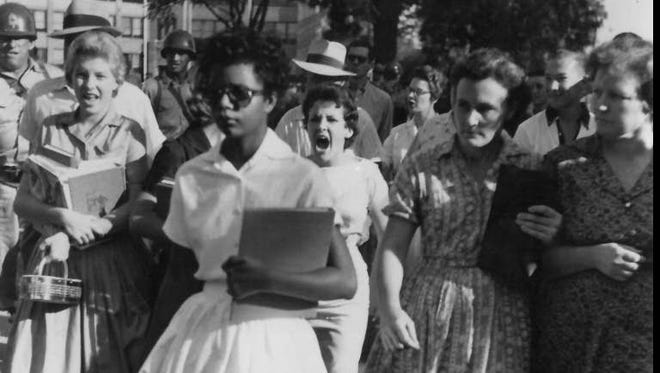
Of course, Brown versus Board of Education had come down years before in 1954, so Summerville Schools were not in compliance with the laws of the land in 1957 when I first placed my hand over my heart and recited the Pledge of Allegiance in Mrs. Wiggins’s first grade class. At some point – I can’t remember the year – as a sort of compromise, the powers-that-were selected a few African Americans to integrate Summerville Elementary School. I suspect these students were chosen not only for their academic talent, but also for their Jackie-Robinson-like ability to withstand a certain amount of bigoted abuse. From my immature perspective, the transition seemed to go smoothly, or at least there was not that public spectacle of abuse that had occurred in Little Rock where Whites stalked Black children, screaming at them as they were escorted to school on the first day of integration.
Little Rock Seven
After passage of the Civil Rights Act in 1965, our public parks became integrated, and my first co-equal social interactions with students from the Black high school, Alston High, began at the Laurel Street basketball courts. In the late ‘60s, a few of my friends and I joined the Blacks there playing on Saturdays and Sundays and sometimes after school. These Summerville High kids included Gordon Wilson, Tim Miskel, and a few transplants from the North whose names have faded from the fraying annals of my memory.
Players would choose a three-man team to challenge whoever had won the last game, and we played by African American rules. In my subdivision, Twin Oaks, you maneuvered the ball to back court after a defensive rebound, but here you could tip in an opponent’s missed basket and receive a point. We counted by ones, and eleven was the winning score, though you had to win by two. I don’t recall even an iota of racial tension.
One glorious sunny afternoon Richard Blalock, Gordon Wilson, and I won three straight games.
Unfortunately, after our third triumph, Carl Whetsell, a Black Summerville High student in my English class, asked me if I knew that two players on the other teams were starters for the Alston Tigers. I passed the info along to Richard and Gordon. The next time we faced them, we immediately choked, never to beat them again, which suggests, to flip the cliché, that what you do know can hurt you. Anyway, we became friendly with some of our Black competitors, especially with a couple of kids known as Mookie and Tubby.
Once the high school was fully integrated in the academic year 1969-1970, knowing the Laurel Street Alston crew made the transition meaningful for me, and Tubby and Mookie joined us once at a party at Adam Jacobs’s apartment Boone’s Farm from person to person. Our parents would not have been pleased.
A much bigger step.
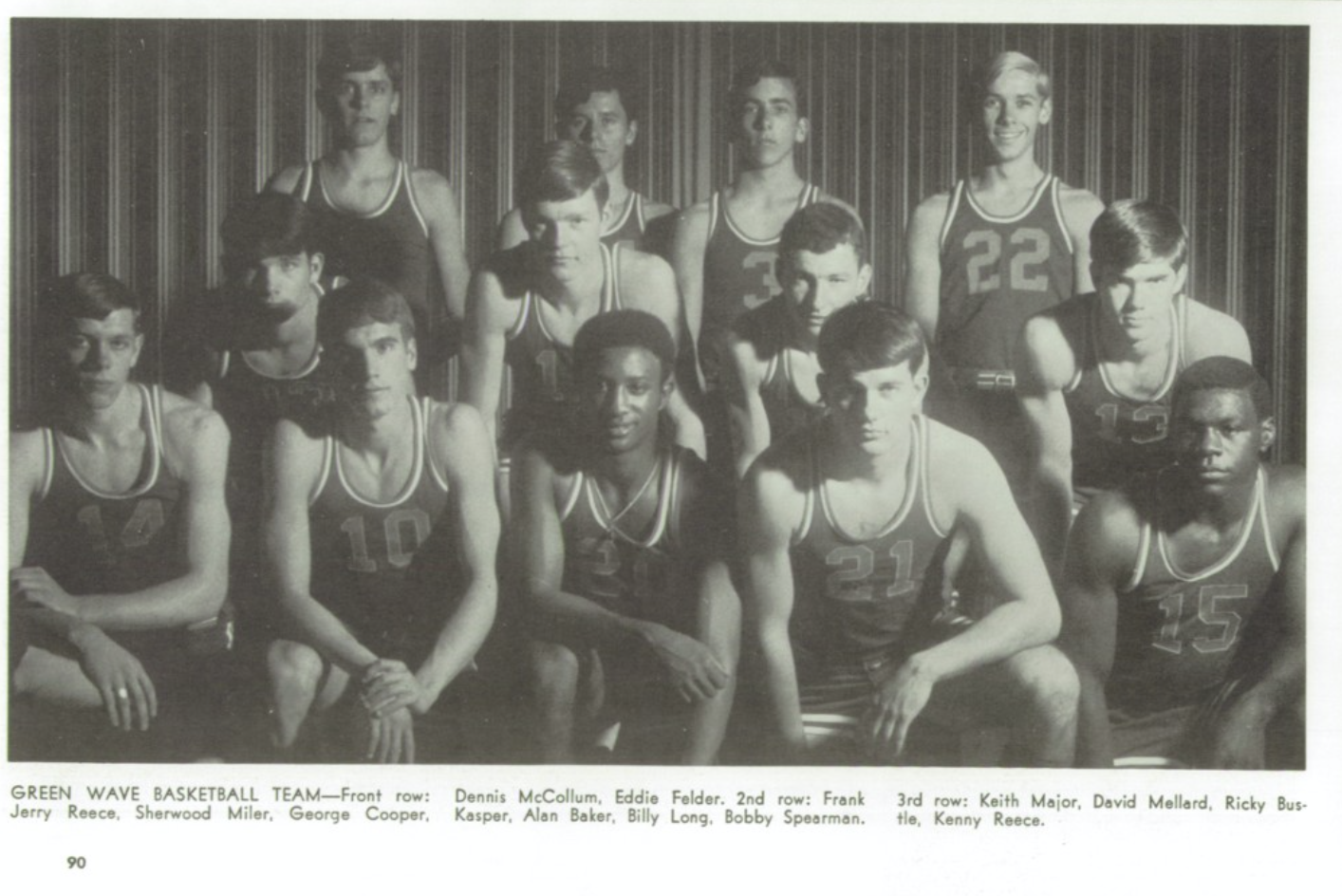
That year, the integrated basketball team, led by Summerville High’s Sherwood Miler and former Alston High’s George Cooper, made it to the State Finals. Although we lost that game, the very worst of the bad ol’ days of segregation were behind us. Athletics helped enormously in bringing the two races together in our sports-crazed town. People like to win, and when it comes to football, basketball, baseball, volleyball, and track, fielding an all-white team is a disadvantage.
Black athletes like Harry Blake and Eddie Felder became local heroes in those days, though that is not to say that even they escaped the racial bigotry so entrenched in society, in both the North and the South. Most people weren’t then – and aren’t now – colorblind. The original sin of slavery continues to darken our days as the events of the year 2020 have demonstrated. Nevertheless, compared to many other communities in across the country, Summerville’s integration was, thank goodness, relatively peaceful.
[1] As I typed that phrase, my tongue was lodged firmly in my cheek.
[2] The fact that we were lower middle class suggests how low wages must have been. Of course, no social security taxes were involved.
[3] This act of mercy was not popular with our neighbors. I was mocked at the bus stop for having a [racial expletive] as a brother.
[4] I realize the word “maid” has fallen into disfavor, but it doesn’t designate a race and actually sounds better to me than “female domestic servant” or the euphemistic “helper.” Imagine if Molly Maids changed its name to Dolly Domestic Servants or Molly Domestic Helpers.











 You Do Hoodoo