The Not So Advanced Training Institute

The Destruction of Sodom and Gomorrah The Golden Haggadah, c. 1320

The Destruction of Sodom and Gomorrah
The Golden Haggadah, c. 1320

Well, when it comes to stanching libidinal urges, in the case of Josh Duggar, the un-spared rod, limited access to secular entertainment, daily devotionals, and home-schooling were to no avail. Despite his family’s full literal embrace of five-thousand-year-old cultural dictates of nomadic sheepherders (no seed-spilling, frontal hugging, uppity females, e.g.), Josh succumbed to, depending on your point of view, Satan’s solicitations and/or the human hard-wired propensity to seek sexual contact.

As Dana Milbank[1] writes in this morning’s Washington Post, it’s somewhat troubling that such a weird ass family (all of the 19 children’s first names begin with J) would receive boot licks from virtually every Republican seeking their party’s nomination for the presidency. As Milbank points out,

A quarter of Americans are evangelical Christians, but only a small fraction of them are like the Duggars. Only 3 percent of American kids are home-schooled, as the Duggars are. Only 7 percent of Americans think using birth control is morally objectionable, as the Duggars do. As for the percentage of Americans who favor arranged-in-all-but-name marriages? The answer is so obvious there’s no need to ask the question.

Josh Duggar and Jeb Bush

Josh Duggar and Jeb Bush

So why the kowtowing?

Republican primary voters tend to be really conservative radical.

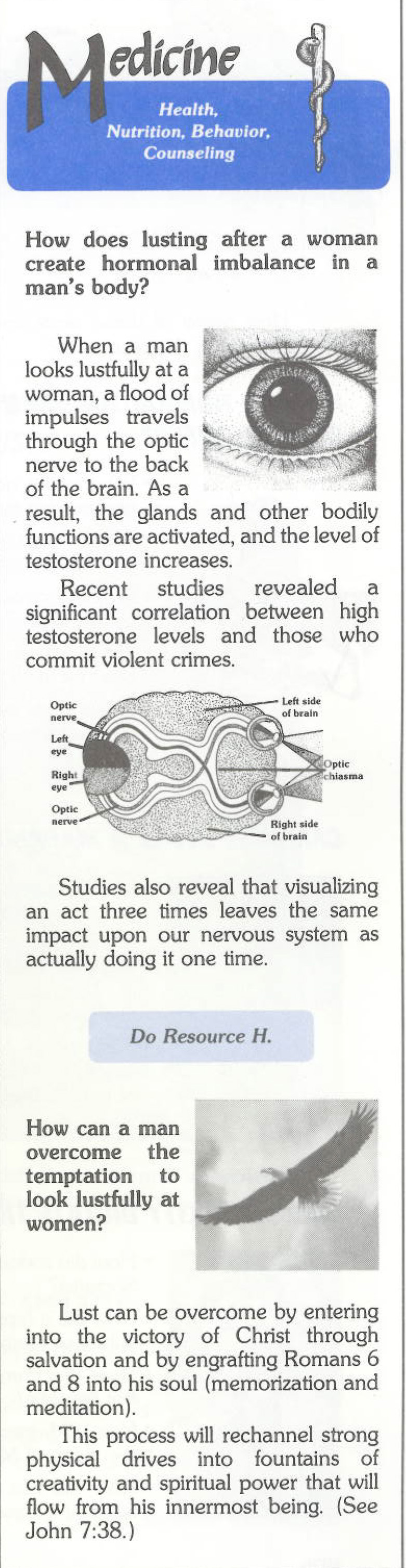
Now that I’ve answered Dana’s question, I thought I’d shift to what I find more interesting, the Duggar family’s homeschool curriculum, the Advanced Training Institute, founded by someone called Bill Gothard (not making up the name) who himself is currently on “indefinite administrative leave” because 34 women have accused him of sexual harassment. Be that as it may, thanks to the website Gawker, I have obtained a work sheet from the ATI, which I would like to share for your entertainment.

According to Gawker,

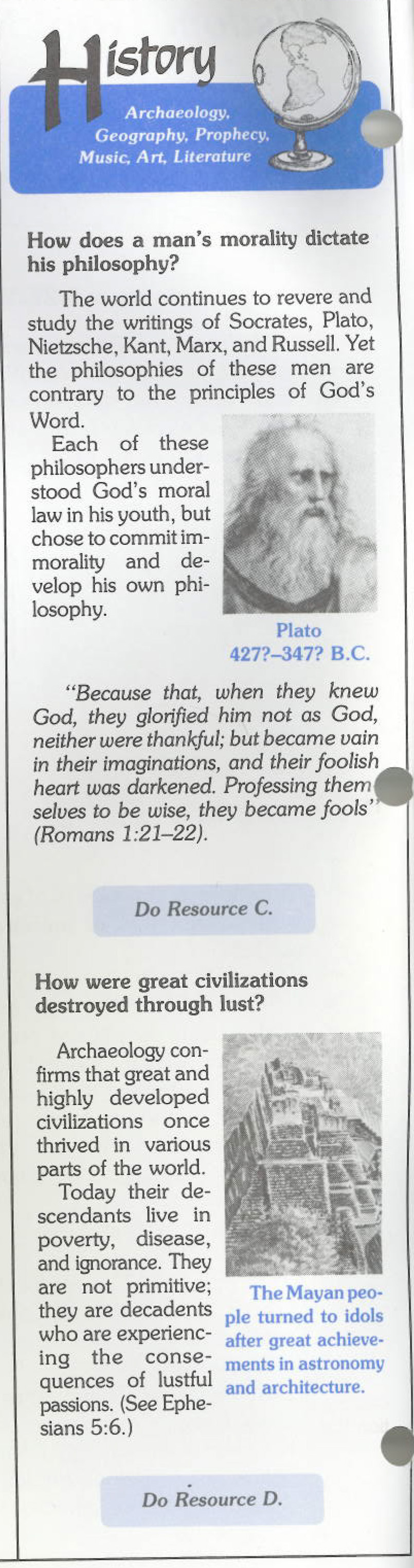
The lessons themselves consist of bizarre, forced attempts at inserting some type of traditional education into biblical passages. Which is where you get questions such as: “How did the ‘Socratic method’ of reasoning come from a sodomite manner of living?” “How can graphs help to visualize the consequences of lust?” And “How do prime numbers illustrate the principle of ‘one flesh’ in marriage?

For example, here are three examples from “Wisdom Worksheet” On Matthew 5:27-28. (Click on Images for larger viewing)

medicine history science

Obviously, photography is also a manifestation of modernism that the institute finds dangerous.

[1] Milbank claims not to “join in the schadenfreude on the left over the latest case of hypocrisy among family-value conservatives,” but I’d love to see the results of a polygraph strapped to him as he was typing that statement. But come to think of it, Denny Hastert has bumped the Duggars from “the latest case of hypocrisy among family-value conservatives.” Remember during Clinton’s impeachment when Hastert was railing against him?

A Lonely Impulse of Delight

reefer_boyI suspect that I’m approaching the Guinness World Record for the highest number of adolescent behavioral modification assemblies attended by a member of the species homo sapiens sapiens.   I saw my very first around 1970 when I was a high school student myself.  It was an anti recreational drug film with a plot about as believable as Plan 9 from Outer Space’s scenario of ETs resurrecting the Earth’s dead to prevent scientists from producing a doomsday weapon that would destroy the universe.

The high school film featured predatory pushers who give away cannabis so they can hook their victims on “harder stuff,” more lucrative drugs like LSD. They snare two victims, air-traffic controllers.   Of course, eventually in the control tower during the descent of two planes, our acid-addicted protagonists suffer flashbacks featuring vintage psychedelic special effects – woo-WOO-woo-WOO . . .

Note the year, 1970.   Some kids in my high school were not unfamiliar with cannabis when they were herded into the auditorium to watch the film. The idea of people giving it away would have been a fantasy-come-true for them. Not surprisingly, feeding students inaccurate information tends to make them dismiss the entire message, even aspects that are true.

Like that 1970 didactic school assembly, many of the school assemblies I’ve sat through in my 29 years as a high school teacher have been misguided. Over the years, I’ve been bombarded with slides of chancre-encrusted genitalia as the physician describing the abominations reminded us that he didn’t take Medicaid patients, I’ve squirmed in my seat as a highway patrolman walked us through horrific photographs of mangled corpses who would have been lucky to have been pulled over for a DUI, I’ve listened attentively as a paraplegic described the sickening feeling of realizing he had no feeling in his lower body, and perhaps worst of all, I’ve suffered through forty-five minutes of a one-armed woman in a tank top running up and down the aisles of the auditorium to show and tell us just how one “bad decision” had robbed her of not only an arm (thanks to the tank top we could see all too plainly the gnarled stumplet at her armpit) but of a promising volleyball career.

On the other hand, I have also witnessed a very effective anti-recreational drug assembly conducted by a neurologist from MUSC who leveled with the students and admitted that cannabis did not necessarily lead to harder drugs and the odds of their dying from smoking it were negligible. However, she did convincingly portray via x-ray images how recreational drugs can adversely affect the amygdala, that wonderful compact cluster of neurons “up there” that triggers pleasant feelings. She argued that prolonged use of drugs like marijuana essentially destroys a person’s ability to feel joy. In fact, mighty Keith Richards more or less says the same thing in his autobiography. He quit heroin, he says, because he spent almost all of his time figuring out how to score but didn’t even get off anymore. To get off, the abuser needs more frequent and stronger doses and eventually ends up incapable of experiencing pleasure, and even if the abuser were to quit, his ability to experience joy may be forever impaired.

Dean Potter 1972-2016

Dean Potter 1972-2016

I thought of that assembly when I learned Sunday of the death of Dean Potter, a dare devil extraordinaire who got his kicks free-climbing precipitous rock faces, often solo, using only his hands and feet, i.e., unaided by ropes, safety harnesses, etc. He did carry a parachute in case he fell. Once he reached a summit, he might leap off and parachute down or jump off in a suit equipped with Rocky-the Squirrel wings and glide through the air like a superhero until he had to yank the ripcord and parachute to safety. This very extreme sport is called “wingsuit-flying,” and if you’re unfamiliar with it, check out the video below of Potter in action and the next one of someone named Alexander Polli threading the needle so to speak.


Alas, with his friend, fellow wingsuit flyer, Graham Hunt, Mr. Potter died last Saturday trying to replicate a “flight” they had taken earlier. Like the video just above, they attempted to negotiate a notch, and according to news reports, Hunt hit the side of the wall while Potter cleared the notch, but then crashed.  A witness reports hearing “disconcerting, loud sounds in succession that suggested impact.”

I know very little about adrenaline rushes outside of the relatively safe experience of dropping down the face of an overhead wave in a hurricane swell, but to Potter that would be the drug equivalent of a cup of decaf.   Did each accomplished unbelievable feat with its requisite adrenaline rush spur Potter on to attempt even more audacious exploits? Was his thrill-seeking analogous to needing stronger and stronger fixes?

Maybe not. Potter had done the flight before, but whatever the case, he died doing what he loved, and how many of us can claim that?

An Irish Airman Foresees His Death

I know that I shall meet my fate
Somewhere among the clouds above;
Those that I fight I do not hate
Those that I guard I do not love;
My country is Kiltartan Cross,
My countrymen Kiltartan’s poor,
No likely end could bring them loss
Or leave them happier than before.
Nor law, nor duty bade me fight,
Nor public man, nor cheering crowds,
A lonely impulse of delight
Drove to this tumult in the clouds;
I balanced all, brought all to mind,
The years to come seemed waste of breath,
A waste of breath the years behind
In balance with this life, this death.

~WB Yeats


Celebrity Calvacade

Richard Avedon's 1972 photograph of Oscar Levant

Richard Avedon’s 1972 photograph of Oscar Levant

Back in the day, I prided myself on my prowess as a popular entertainment trivia master, both in the contemporary and vintage categories, though, admittedly, I’m talking way back in the day when there was no such thing as trivia nights at bars or reality tv — not to mention personal computers or the Internet.

We’re talking the Late Fifties, Sixties and Early Seventies when they were fewer bands, movie and television stars, and gameshow hosts. Back in the day when someone might be billed as “a comic sidekick.”

One of the reasons for my encyclopedic knowledge was my grandparents’ letting me at a wee age stay up to the wee hours to watch the Tonight Show — we’re talking before the mighty Johnny Carson, we’re talking Steve Allen and Jack Paar.

Back during the live era, celebrities sometimes came on “doped up” as my grandfather put it — people like Judy Garland and Oscar Levant, whose presence both troubled and fascinated me. The quaint phrase “all hepped up on goofballs” comes to mind. Note how cavalier Paar is about Levant’s condition.

On one of his appearances Oscar Levant’s hands were shaking so badly he couldn’t light his cigarette. I’ll never forget it as long as I live.

Back then, late night television wasn’t a constant corporate Hollywood movie marketing inside joke fest. Truman Capote would show up on Johnny Carson to impugn Brando’s intelligence or Sammy Davis, Jr’s singing chops.

Also, I watched a helluva lot of old movies on weekdays during the summer in the mornings and late at night on the weekends in those pre-cable days when movies constituted a goodly chunk of broadcast television’s abbreviated 6 am to 2 am day, movies that featured George Raft, Myrna Loy, William Powell, the Marx Brothers, Fred Astaire/Ginger Rogers, Micky Rooney, Humphrey Bogart — you know the TCM MGM line-up.

The game show What’s My Line was one of my favorites with its sophisticated panel that included Bennett Cerf, James Joyce’s American publisher. Each week they’d blindfold the panelists and bring out a celebrity whom the panelists would try to identify through a series of questions — celebrities like Salvador Dali or Carl Sandberg. Descendants of Oscar Wilde, these witty New York sophisticates on the panel were fun to hang out with, even for a nine-year-old.

Well, boys and girls, my days of trivia supremacy are over. When I flip through an issue of Vanity Fair, I’ve never heard of 80% of the swells captured in various parties. This morning, the imp of the perverse bade me hit the Red Carpet Met Gala LINK on the Times, and I realize that when it comes to celebrities, I don’t know a Ethan Hawke from a Shankshaw Redemption.

I recognized a few — I hadn’t realized that surfer Kelly Slater was a patron of the arts – but what really surprised me was how many of these celebrities go by just one name, like they’re walking brand names. Of course, I’ve heard of Beyonce, Rihanna, and Usher, but who in tarnation are Solange, Grimes, Common, and Miguel?

Call me a square, a crotchety old man (who else would use the word “tarnation” ) shaking his cane at these new celebrities, but something tells me I’d rather hang out with Judy Garland and Oscar Levant than Christopher Kane and FKA Twigs.

Gimme a D, Gimme a U, Gimme a H.  What does that spell?

Gimme a D, Gimme a U, Gimme a H. What does that spell?


1973 Versus 2015

large_v43ez7xKqqbM35phWHqlq27P1jwSunday, as I was [cue robotic voice] circuiting through satellite channel choices, I ran across Woody Allen’s Sleeper, a movie I found hilarious when I first saw it in 1973 at the Ultravision Theater. The Ultravision is now long gone but in those days was a part of a shopping center located on the corner of Ashley River Road and Highway 7, about five miles north of the downtown peninsula of Charleston, South Carolina.

In the forty-two years since, much has changed around Charleston. For example, Highway 7 in those days was still wooded in spots but now has been renamed Sam Rittenberg Boulevard. We’re talking five lanes of suburban sameness, what James Hillman aptly describes as “the nowhere that is everywhere,” that ubiquitous stretch of fast food franchises, retail outlets, and convenience stores leading into virtually every city in the USA.

The plot of Sleeper tracks Miles Monroe, a latter-day Rip Van Winkle who subjected unwillingly to cryopreservation in 1973 awakens 200 years later to confront the brave new world of the future. In case you haven’t seen it, the movie’s a sort of conflation of Huxley and Hemingway, sci-fi futurism meets the Spanish Civil War, at once a farce and homage to Buster Keaton, the Marx Brothers, and Charlie Chaplin — a dystopian comedy.

Seeing the film again got me thinking about the tricky business of trying to predict the future, an exercise fraught with potential failure. Brave New World missed the monorail at times; 1984, perhaps a more accurate prophecy, nevertheless got some aspects of the future wrong as well.

Watching Sleeper, I started wondering, “How different is a day in 1973 when the movie was released to a day in 2015?” We’re talking 42, not 200 years, but that’s almost half a century, and we’re in a new millennium.

Pretend you’re an anthropologist, detached from our culture. Remember, younger readers, that 1973 was pre-digital, the age of the 8-track cassette, the first non-radio music available for cars and trucks. No email, no personal computers, though some people did have touchtone phones.

What would it be like to have been in suspended animation for the last 42 years and suddenly to find yourself in the year 2015?

* * *

Awakening in 2015 versus 1973

Dick Tracy's Two-Way Radio Watch

Dick Tracy’s Two-Way Radio Watch

Rather than an ac/dc alarm clock radio chiming you into consciousness, chances are your wake-up mechanism is a small computer roughly the size of a pack of cigarettes but much thinner. This device also offers the ability for you to look at your friends while you communicate with them, whether they’re across the street or half a world away — it’s the “picture phone” futurists used to dream of as a earthshaking marvel — but the truth is that you virtually never use its visual capabilities to communicate with your friends or family, nor do you, in fact, use it to talk to people as you would on a more conventional phone. You prefer to “text” them, to type super-abbreviated messages, like “OMG, CSL!”

Dressing for Work

Surprisingly, dress hasn’t changed all that much at all. No unitard suits with rocket logos hang in the closet. In fact, half the young people you see at the college could be either Bob Dylan or Joan Baez circa ’65.

 

Dylan '65

Dylan ’65

2015 hipster

2015 hipster


Preparing Breakfast

Although invented in 1946 and marketed as Radarange, microwaves weren’t widely available for residential use until the late-70’s, so the unfrozen-you might be surprised that you can zap a bowl of oatmeal in a minute and a half, but chances are you’d rather pull into the drive-thru lane at Bojangles for some artery-clogging ham biscuits because retrieving the oatmeal from the cabinet, pulling the milk from the fridge, and punching in the cooking time of the oatmeal is way too much trouble.

In fact, one of the significant differences you might notice if you were to awaken after a 42-year nap is the epidemic in obesity that characterizes your 21st century community.

Commuting

Same ol’, same ol’ — no flying cars, no monorails, no individual jetpacks.

Mass transit hasn’t progressed at all. The T in Boston is even dingier than it was in ’73.

In fact, the coolest vehicles on the roads are the oldest, e.g. that 1973 VW microbus that you just passed driven by some old man with a ponytail.

Here in Charleston, you find routes have widened lane-wise and a skinny lane on the shoulder is reserved for bicycle traffic but that the traffic is terrible, Manhattan-like, bumper-to-[fiberglass]- bumper.

DUI non-licensed drivers still putt around on mopeds with cardboard license “plates” that read “Moped.”

The mini-computer we carry can give us directions while we drive, which truly seems futuristic. Road maps are obsolescent. You can choose either a male or female voice and actually speak into the mini-computer and ask the voice for information.

On the Job

Whether you’re an employee at Boeing, a Seven-Eleven, or a school district, cameras record your comings and goings. Your mini-computer is also equipped with a camera, so it’s not only Orwell’s Big Brother keeping tabs but also corporate brother and little brother — literally, your little brother might record a video of you committing some act of malfeasance.

Chances are, if you work indoors, you spend hours dealing with email, and if you don’t delete them on a daily basis, they proliferate like tapeworms, and even if you’re framing houses in the great outdoors, emails ping in your pocket like pinball machines as your mini-computer receives messages, from not only friends but also from corporations and even conmen.

TMI.

Writing

typewriterOh my God! No more retyping a page because you typed too close to the bottom, no more correction tape, no more spelling errors! You can cut passages and paste them into your document. Virtually any fact can be looked up on a computer, vital information like Lumpy Rutherford’s actual first name on the ’60’s sitcom Leave It to Beaver. It’s the information Age.


Happy Hour

After work, you still go to a bar, but chances are you can’t smoke in there, and the number of different beers is staggering. The 25 cent happy hour Bud has given way to the $8 “Avery, the Maharaja Imperial India Pale Ale.” Beer experts slosh malted beverages around their palates distinguishing piney aftertastes and assessing the wattage of the hops.

Evening Entertainment

Broadcast news has not changed one iota – a white male reads to you in between reports from far flung locales.

On the other hand, you can suck virtually any movie you want to see out of the sky instantaneously, even old flicks like the Marx Brothers’ A Night at the Opera, a film impossible to see in ’73 unless it miraculously appeared at an arthouse cinema or on the late late show on TV.

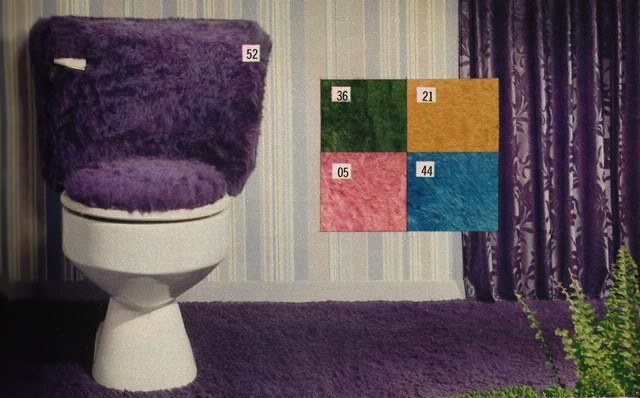
You can also record television programs and stop them to go to the toilet, which still looks essentially like it did in 1973.

1973 toilet

1973 toilet

2015 toilet

2015 toilet


Or you can groove to music you can purchase 24/7 and listen to immediately. Wanna hear “Working Class Hero” by John and Yoko? No problem. You can download it on your mini-computer for a dollar and a quarter.

A working class hero is something to be

(As far as entertainment goes you’re a king or queen).

Keep you doped with religion, and sex, and T.V.

Politics

Here’s something that might surprise you. The nation has lurched way way rightward. The Republicans running for president today would consider Richard Nixon a commie. He after he wrote this in 1973:

It is time to bring comprehensive, high quality health care within the reach of every American. [We should] assure comprehensive health insurance protection to millions who cannot now obtain it or afford it, with improved protection against catastrophic illnesses. This will be a plan that maintains the high standards of quality in America’s health care. And it will not require additional taxes.

The current president, although a centrist by European standards, is branded a socialist by his opponents.

Despite the rightward shift in the country, when it comes to social issues, people are much more open-minded. A majority believe gays should have the right to marry, a concept that was as alien in 1973 as the idea that many leading candidates running for the presidency in the 21st century would reject science, not only evolution but also objective data documenting rising temperatures.

Religion

Many have left traditional churches that conduct liturgical services and have also abandoned fire-and-brimstone preachers. Instead, they hang out in jeans at megachurches on Sundays and listen to Christian rock performed by live bands.

Many others have abandoned religion altogether.

Still fewer proclaim, as they have for the last 2,000 years, that the end time is near.

Overall

These changes have all occurred in my adulthood and therefore I take them for granted. What would seem like a miracle in ’73 – for example to freeze the live broadcast of a football game, back track, and watch a play again in slow motion — seems mundane.

We’re distracted, alienated, walk down the street with our earbuds booming as we stare into that ubiquitous device that we think we can’t live without while songbirds fly over us unheard and unseen.

Still, I can watch a Shakespearean performance virtually whenever I want to, which in a way makes me richer than Nebuchadnezzar.


Whispers of Schadenfreude, Mike Pence Edition

SwagKennedy

As the self-proclaimed Jimmy Swaggart of Buddhism, I openly admit where I fall short of the ideal established by the Enlightened One, and certainly the cultivation of compassion is an area in which I fall way —make that — abysmally short.

I do sincerely wish that through meditation I could relax the tight little angry fist of my heart and show some empathy for those I dislike when they stumble, rather than luxuriating in a warm, soothing, spiteful bath of schadenfreude.

For example, rather than empathizing with Governor Mike Pence of Indiana as he made a gargantuan ass out of himself on national television, I smirked derisively, enjoying every drop of perspiration forming on his quivering upper lip as if they were karmic pearls bestowed upon me by a benevolent universe. Certainly, I’m no stranger to making a complete ass out of myself, though, of course, I haven’t had the opportunity as yet to elevate my asshoodness to a level worthy of the adjective gargantuan, never having been interviewed by a local broadcast reporter much less by George Stephanopoulous. However, given the chance, I think I’m capable of it.

And certainly, Pence is worthy of compassion if we consider wretches worthy of compassion. I suspect that Pence hasn’t had a decent night’s sleep since deep into last week. Perhaps his problem lay in his admittedly not-exactly-heroic condition of not being able to lie well extemporaneously.  In case you’re just now emerging from a coma, Pence refused to answer Stephanopolous’s yes-or-no question as to whether under Pence’s new Indiana Restoration of Religious Freedom Act, a florist (i.e., a business) could refuse to provide flowers for the wedding of a gay couple. (If you haven’t seen it, you can watch an edited version here:

A more practiced liar would have hissed, “Of course, not,” but then again, I suspect that the bill’s raisin de etre is to have “the base” at least think fundamentalists can refuse to cater or provide flowers to gay weddings, coming as it does right after the SCOTUS nixed Indiana’s ban on gay marriage. So rather than telling a lie, he ineffectually tried to dodge the question, transforming himself from a possible presidential candidate to an international laughing stock, the plump bourgeoise target of many a comedian’s acid-laced arrows.

(Not to worry, he made up for his refusal to lie by providing a tractor trailer load in subsequent days)

And, of course, Indiana’s super-majority Republican government would have gotten away with it, as my native South Carolina did with its law, if it had not been for certain segments of corporate America, including NASCAR, deriding the law as bad for business, which just goes to show, as Bob Dylan pointed out lo so many years ago, “Money doesn’t talk; it screams.”

Well, perhaps this confession is a first, halting step from my detour from the golden 8th-fold path, or maybe not. I hear Pence made Letterman’s Top 10 list. Maybe I’ll check that out instead.


Let’s Get Real

A few years back, I contemplated moving to western or southern Ireland for retirement, maybe to the Beara Peninsula down in County Cork or up to County Mayo on the coast, perhaps purchasing a rustic cottage with a glimpse of distant mountains or of the sea.

3229244181_a516f6ab0d_zHave you ever witnessed a rainbow in Ireland? I don’t know if it’s the air up there or the angle of the sun, but the rainbow Judy Birdsong and I saw in ’79 mesmerized us. It was so misty-shimmering wonderful that it could almost make you believe in leprechauns, in magic, in Lir.

Beara’s and Mayo’s landscape is gorgeous, their people gregarious. The Irish and my kinsmen, folk from the South Carolina Lowcountry, share a love for the oral tradition of story-telling. We’d get along fine I think. The Irish love music and poetry and literature. For example, before the Euro, James Joyce himself appeared on Ireland’s ten-pound note, which would be like having Walt Whitman on a US fifty. We Americans might put our beloved authors on stamps, but they don’t rank high enough in our estimation to appear on legal tender. Of course, Irish currency doesn’t have “In God We Trust” printed on it, which would not go all that well thematically with Mr. Joyce’s bespectacled mug nor with Herman Melville’s otherwise presidential countenance.

IEP-banknote-10-irish-pounds-james-joyce

melville fifty


But I digress. When I mentioned this silly romantic notion to Judy, she reminded me that my three trips to the Emerald Isle occurred in May or June, not December or February, and she reckoned that in those dark and dreary months the odor of burning peat might very well lose its allure as building a fire transitioned from exoticism to drudgery.

Miss Birdsong knows all too well that dreary weather and Wesley don’t get along. In fact, a shrink back in the day suggested that I could very well suffer from Seasonal Affective Disorder (which I have immortalized in a poem you can listen to me read in my golden Lowcountry baritone HERE). No, day after day of leaden skies, the sun setting by three or four, would be bad for my state of mind.

Take this winter, for example. We might as well be in Ireland — or Ingmar Bergman’s Sweden. A glance at the five-day forecast, more often than not, has yielded a succession of cartoon clouds, dark, with resiquite raindrops slanting down.

Max Von Sydow

Max Von Sydow

My neighborhood “pub,” Chico Feo, roofless as it is, has been closed for days at a time, often for rain, less often for cold, but closed nonetheless. As I have driven to work morning after morning through fog, I have half expected to see Max Von Sydow and/or Liv Ullman trudging along the side of Folly Road.

But as PB Shelley famously put it, “If winter comes, can spring be far behind?” Sure enough, the sun peeped out on consecutive days this week, so I popped in at Chico Feo. On the first day, I got to witness a book burning and on the second some low wattage police brutality.

Perhaps I underestimate Folly as a retirement locale.

bookiburning 2But, before I go, let me assure you that the book burning wasn’t Fahrenheit 451.1.0 but part of a very indie film noir murder mystery starring the Chico crew, my hobo hero Greg, and prolific Chris, a graphic artist and novelist who works at Bert’s.

And the “police brutality” merely consisted of a very, very, very drunk man having his arms twisted behind his back and then being slammed rather roughly to the pavement of Second Street. Alas, I had absentmindedly left my phone at work, so I didn’t get to capture the disturbance, which was quite a spectacle taking place as it did in front of the mural of Bert done up like a smiling, squinting, dismembered pirate.

IMG_0004


Fat Tuesday

history1It’s Fat Tuesday in the Protestant State of South Carolina, so not much is going on carnivalwise except on Folly Beach, which celebrates Fat/Shrove Tuesday not in the context of the Christian calendar but as another excuse to lure consumers onto the island so they can get rip-roaring drunk. This lack of a Catholic context is underscored by Folly’s postponing its big celebration — Folly Gras — until the more pecuniarily advantageous weekend, this Saturday, the fourth day of Lent.*


*When this post was published in 2015, Follygras was still a thing.  It was banned in 2019 because, as they say, things for out-of-hand.

Folly Gras 2019 1.0

The origins of Carnival are obscure; some anthropologists tie the festivities to the ancient Italian tradition of Bacchanalia (see Livy for some hyper-ventilated descriptions of the festivities) while others dismiss the connection as spurious. Etymologically, most agree that carne — meat — comprises to the root for the celebration, which features feasting and in some cases nudity — chili con carne and carnal knowledge.

Queen Victoria

Queen Victoria

Sophie Tucker

Sophie Tucker

The ancient celebration of Bacchanalia embraced — if Livy can be believed — a leveling of the social playing field, allowing plebeians to run free through the streets mixing with their so-called social superiors, and Carnival’s tendency for disguise might be akin to this earlier democratization of social hierarchy. Who is that behind that elaborate mask, Rush Limbaugh or the Leatherman, Queen Victoria or Sophie Tucker?

Although I’m not Catholic nor have given up anything for Lent since the ’60’s, I like the counterbalancing of Carnival and Lent as mythic antitheses — each in its way helping us to come to terms with death and therefore life.

Between extremities

Man runs his course;

A brand, or flaming breath.

Comes to destroy

All those antinomies

Of day and night;

The body calls it death,

The heart remorse.

But if these be right

What is joy?

 Yeats “Vacillation”

So, on that bright note, I’m headed down to Center Street to see what’s going down.  Who knows, maybe the Leatherman will show up.

The Leatherman

The Leatherman

.


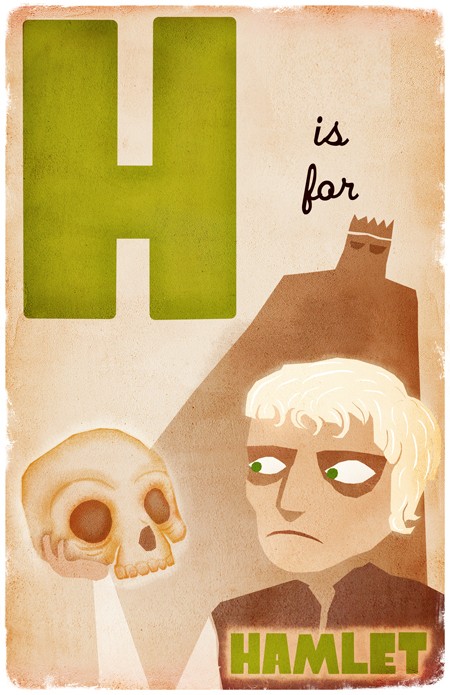
Copping Hamlet’s Rap

Art by DP Sullivan

Art by DP Sullivan

For the last 30 winters I have taught Hamlet to high school seniors. Obviously, this cat Hamlet has his issues — we all do — but I think the world of him, and unlike a lot of people, I don’t judge him, don’t consider him a coward or a misogynist.

Let’s face it: Professor Naysayer Ph.d. might not be so rational if he lost a beloved father, had his mother remarry of all people his uncle within the time frame of one menstrual cycle. Follow up that trauma with getting dumped by your girlfriend — and to escalate matters to the unbearable — receiving a visitation from your dead daddy who informs you your mama was fucking the above uncle before that uncle offed your daddy by pouring a leprous distillment into the porches of [his] ears.

Oh, yeah, and the ghost daddy guilt-trips poor Hamlet into promising to go all Beowulf on the uncle’s ass by revenging his murder, even though Hamlet, unlike Othello, has moved past all that Medieval shit into a more progressive, less-tribal sensibility.

But I’m not here to sparknote the play but to share with you some ways you can have fun with the text of Hamlet because what I love most about the poor boy is his way with words.

Not surprisingly, I have recorded in the book and volume of my brain many of the Prince’s quotable quotes, so much so that when I’m teaching the play I can recite in context line after line with my eyes fixed, not on the text, but on my students to determine who’s got a soul and who ain’t or who might be thinking about transmitting some surreptitious text neath the seminar table.

But here’s the thing; you can take Hamlet’s words out of context and slip them into your rap and nobody knows you’re echoing or alluding — they just think you’re incredibly articulate or incredibly weird.

Before I give you an example, I’ll go ahead point out something I reckon should be obvious: I express myself differently at school than I do at home, and I speak differently when I’m hanging with real cats like JT Williams, JT Crow, Keefus Sanders, Mr. Jim Klein, Ed Burrows, and Furman Hurry-Curry Langley than I do when I’m talking to my wife Judy Birdsong. In fact, this is the first post in the history of this blog where I’m indulging in my [warning: Un-PC terminology alert] redneck negro lowcountry gumbo patois.

PorterGaud-495x400Okay, here’s an example of co-opting lines from Hamlet to spice up (or obscure) your speech in everyday life. This morning I’m walking at a brisk pace from the faculty parking lot towards the vaguely Disneyesque facade of the school, walking briskly because it’s -5 degrees C. in Charleston, South Carolina, and we ain’t used to Arctic air.

I enter the double doors of the lobby and somebody says “good-morning, how ya’ doin’,” and I say, “Tis bitter cold, and I am sick at heart.”

They smile, I smile, and head to my room. Truth is, though, not only is it bitter cold but I am truly sick at heart. After school I’m driving straight to Summerville to visit my mother who’s lying in a hospice-supplied hospital bed and on a sort of bummer LSD death trip in which she thinks I’m her daddy, can hardly utter an intelligible word, and tries vainly time and time and time again to rise from bed to be somewhere else.

But back to the exchange of morning greetings. By copping Francisco’s lines to Bernardo from 1.1 in the play, I can comment on the weather in a more interesting way than my typical “damn it’s cold,” I can be completely honest in my answer about how I’m doing without being specific, and I can treat me and my greeter to metrical music:: tis BIT-ter COLD and I am SICK at HEART: bum-BUMP-bum-BUMP-bum-BUMP bum-BUMP bum-BUMP.

Or, you can use it as I did forty years before as a pick-up line in a university bar. Talking about an ice-breaker.

But you can also take quotes completely out of context and apply them to completely different situations. For example, dig this great prose speech when Hamlet’s explaining to his treacherous college acquaintances Rosencrantz and Guildenstern why he’s been out-of-sorts, the most eloquent description of clinical depression out there:
I have of late–but

wherefore I know not–lost all my mirth, forgone all

custom of exercises; and indeed it goes so heavily

with my disposition that this goodly frame, the

earth, seems to me a sterile promontory, this most

excellent canopy, the air, look you, this brave

o’erhanging firmament, this majestical roof fretted

with golden fire, why, it appears no other thing to

me than a foul and pestilent congregation of vapours.

Okay, let’s go with “a foul and pestilent congregation of vapors.”

Examples:

Colleague: You think this Congress might get something passed this term?

You: What? That foul and pestilent congregation of vapors?

Or somebody has farted and you demand to know who is responsible for the foul and pestilent congregation of vapors.

Ever been hunched over a book in an outside venue and some total stranger comes up and asks, “What you reading?”

Look up at him looking crazy and say, “Words, words, words.”

I could go on and on, but it’s been a rough day so I’m bidding adieu, but returning to my poor mother’s condition, no one has ever put it better than my princely pal:

If it be now,

’tis not to come; if it be not to come, it will be

now; if it be not now, yet it will come: the

readiness is all . . .

She’s headed, of course, to that undiscovered country where no traveller returns, and a helluva lot of people are going to miss her.

Mama

Mama

Cub Scout Psychic Scars

I was probably the most ineffectual Cub Scout in the history of that organization, the ineptitude of my tenure comparable to that of Samuel Taylor Coleridge’s career as a cavalryman in the Light Dragoons. The Norton Anthology of English Literature claims, and I quote, Coleridge was “probably the most inept cavalryman in the long history of the British Army.”  Of course, Shelley never joined the Light Dragoons, nor did Keith Richards. Come to think of it, I don’t think Keith Richards would make a very good Cub Scout either, an organization that promotes:

  • Character Development
  • Spiritual Growth
  • Good Citizenship
  • Sportsmanship and Fitness
  • Family Understanding
  • Respectful Relationships
  • Personal Achievement
  • Friendly Service
My Father and I

My Father and I

I did, I think, climb a rung from Bobcat to Bear, but only because my father signed documents claiming that I had completed steps I hadn’t, like planning a fire drill in the home. Daddy hated scouting because he had been, or so he claimed, chased around a tent by a  lascivious scoutmaster on a camping trip in his youth.

I do, though, remember successfully satisfying one requirement all by myself: going outside to watch the weather. When it came to carving a replica of the Statue Liberty out of soap (or tying my shoelaces for that matter), I was a complete – to use a quaint term from those days – spaz.  Whenever it came to father-and-son projects like the Pinewood Derby, the ol’ man performed about 99.8 of the work (he’d take the kit to work the day of the big race and construct the car on the government’s dime) and I about .02% (I’d apply decals after the paint had dried).

Mosey's car 2 web

The one aspect of Scouting I did enjoy, though, was receiving each month an issue of Boys’ Life where I could travel “[t]hrough the Himalayas with Lowell Thomas,” learn about fitness exercises that would transform me from a 40-pound weakling into a 75-pound he-boy, and read inspirational sports fiction.   However, what I really loved about Boys’ Life (and my Aunt Virginia’s Cosmopolitans) were the cheap ads in the back.

Even back then — perhaps I’m imagining this — I suffered a bit of cognitive dissonance in the clash between the high-minded goals catalogued above and the prurience and dishonesty of the ads. For example:

specs-300x203Of course, any Good Citizen, future radiologist who bought the glasses, would stare at the bone structure in his hand rather than directing his penetrating gaze leftward to check out the chick.

Or what could be more creepily Freudian than this family drama:

SeaMonkeysAd


The good news is that all bad things must end, and with the onset of puberty, I lost interest in scouting and Boys’ Life and the Hardy Boys.  David Johnson’s father had a copy of Terry Southern’s Candy in the drawer of his bedside table.

So it was “Farewell, Sea Monkeys; Hail Perverted Hunchback.”

5334316196_3c495f31aa_z

Are You Telling Me or Asking Me?

I’ve been digging around the internet trying to discover the linguistic answer to why so many females (and increasing numbers of males) end declarative sentences with an interrogative lilt. You know, no matter what they say, even when it’s a universally accepted fact, their voices rise at the end of sentences as if they’re asking a question.

kim-jong-un_416x416Kim Jong-un is a North Korean dictator?

Kim Jong-un has a bad haircut?

Kim Jong-un isn’t blessed with a self-deprecating sense-of-humor?

For whatever reason, this linguistic affectation bugs the hell out of me. I know, I certainly have more pressing concerns — shit like spousal cancer, maternal dementia, my dog Saisy’s insufferable halitosis — but goddamn it, I’m sick and tired of hearing far flung NPR correspondents say “the critical mass of a bare mass sphere of plutonium-239 is 8-10kg? as if they’re asking, “Do you think breast-feeding at a rodeo is tackier than breast-feeding at a Miss Utah beauty pageant?”

I started my quixotic linguistic NetQuest by typing into Google “interrogative lilt” and garnered lots of hits. My first stop was Answer.com, a website where you can pose a question and have site visitors provide possible answers. Whoever asked the question gets to choose what she considers the best answer and then some sort of arbiter at the site sifts through the received answers and selects what he/she/it deems worthy of mentioning. It’s sort of like Wikipedia except that the responders aren’t even knowledgeable amateurs but uninformed web addicts with way too much time on their hands, in other words, cranks like me. It’s about as scientific as a History Channel feature on Noah’s Ark, but, anyway, here’s Answers.com best guess:

[The interrogative lilt] is mildly irritating. I think it is an attention getting (sic) device. People do it who are used to being ignored. Asking a question often gets an answer; the listener’s ears perk up. That is why it is annoying because you perk your ears up for nothing.

transformations-identity-construction-in-contemporary-cultureSecond on the Interrogative Lilt hierarchy of Google search hits was endnote 221 on page 367 of Grant McCracken’s Transformations Identity Construction in Contemporary Culture. From what I can glean, McCracken writes about how consumers construct new identities through acquisitions, like newbie surfers peroxiding their hair and stocking up on Rusty tee shirts and Reef footwear (though he doesn’t use that example).

Anyway, I don’t know the context of the endnote, but it reads, “The Interrogative Lilt turns statements into questions, listeners into authorities, and it helps mark and construct power difference between two conversational partners.” This statement is not all that different from the Answer.com supposition – but the endnote also provides two other ways to describe the interrogative lilt – “uptalk” and High Rising Terminal (HRT), which is official linguistic terminology.

These two terms allowed me to expand my search, and I discovered that what I’m going to continue to call the interrogative lilt (IL) is a hot topic that spawns wide-ranging responses. Many people see the predominance of women ILers as a signal of insecurity. Linguist Robin Lakoff first noticed the phenomenon in 1975 in Australia and attributes the effect to the speaker’s seeking affirmation.

There’s a notable study by William and Mary sociologist Thomas Linneman that analyzes Jeopardy contestants’’ use of IL. According to Bloomberg Business Week’s Caroline Winter, “In total, [Linneman] found that contestants answered 37 percent of the 5,473 given questions using upstalk. In terms of gender, the findings, published in 2013, exposed an unexpected correlation: Successful women were more likely to use uptalk than less successful women, whereas the reverse was true for men.” Linneman dismisses the notion that IL’s only function is to indicate uncertainty but contends that it’s meant to compensate for success.

Mark Liberman who publishes the blog Language Log cites new studies that “show that people who use uptalk are not insecure wallflowers but powerful speakers who like getting their own way: teachers, talk-show hosts, politicians and facetious shop assistants.”

Of course, what do I know, but my theory is that people use IL because they think it sounds cool, or they unconsciously parrot it because people they consider cool talk that way.

spicoli-fast-times-ridgemont-high-surf-no-diceI ran across a couple of Brit sites (the Guardian and BBC) that claim the trend started in Australia. One theory is that it became the cool-speak of the Australian surf sub culture and migrated to California where it morphed into Valley Girl Speak and then spread via the media via Moon Zappa and Clueless. This theory resonates with me. I remember West Ashley surfers I hung with in the early ’70’s affecting this whiny faux-Californian cool-speak.

Anyway, it seems that every generation develops verbal ticks, the “you-knows” of my youth morphing into “likes” and now the interrogative lilt. Is “uptalk” here to stay or will it give way to some new, even more irritating affectation?