Old Man Trouble Laying Awaiting

old man trouble

Old Man Trouble by David Parkins

Trouble took my money, Cadillac’s gone
Best suit of clothes, all raised up in the closet, oh lord
But I’m so glad
Trouble don’t last, always

“Trouble You Can’t Fool Me” as performed by Ry Cooder


I was born on a rare snowy December afternoon in Summerville, South Carolina, during the waning weeks of the Truman Administration. It was the very same year that J. Fred Muggs, the chimp on NBC’s Today show, was born and the year the first issue of Mad Magazine appeared. Six months later, on June 19th, 1953, Julius and Ethel Rosenberg received 1700 volts of electricity in New York State’s Sing Sing Correctional Institute.

Hello, World; hello, Cold War.

Mama, look an H-Bomb (sung to the tune of “Shortening Bread”)

“Mama, look an H-bomb,” they all shout.

Mama say, “Watch out for the fallout.

See your daddy, he know.

Fallout make him ugly so.”

Hit the dirt, join the crowd.

“Mama, look a mushroom cloud!”[1]

Thanks, Mad Magazine.

mad castro


I remember standing in the weeds of the front yard of our two-bedroom rented house watching Sputnik travel across the night sky and recall squatting underneath a desk in the third grade during the Cuban Missile Crisis. Also, there was a sign hanging in the stairwell of Condon’s Department Store designating it as an official fallout shelter. I’ll admit the sign creeped me out whenever I saw it, but to say I grew up under the specter of nuclear annihilation would be inaccurate. The skies of my childhood were mostly sunny. I had escaped polio, my parents and pets lived long lives, though I did, come to think of it, suffer from an unrelenting series of unrequited crushes.
8771

John F Kennedy had the top of his head blown off when I was a fifth grader. I remember my teacher Miss McCue dabbing her eyes, but no tears were shed at my house. The following year our Ford Falcon station wagon sported a “Goldwater for President” bumper sticker, and I lamented when I woke up on 5 November 1964 to learn that ol’ AuH2O had been buried in a landslide. My first year of high school, James Earl Ray picked off Martin Luther King, and the following year Sirhan Sirhan shot Bobby Kennedy at point blank range after he had won the California Primary. Of course, all the while men and boys in body bags were flying in from Southeast Asia, and African Americans were being battered with billy clubs across the South.

Geopolitically speaking, it was a lousy time to grow up. You sort of winced when you picked up the paper each morning.


Well, I don’t know, but I’ve been told
The streets in heaven are lined with gold
I ask you how things could get much worse
If the Russians happen to get up there first
Wowee! pretty scary!

Now, I’m liberal, but to a degree
I want ev’rybody to be free
But if you think that I’ll let Barry Goldwater
Move in next door and marry my daughter
You must think I’m crazy!
I wouldn’t let him do it for all the farms in Cuba.

Bob Dylan, “I Shall Be Free No. 10”


The Seventies, Eighties, and Nineties seemed less traumatic. September 11th, of course, was horrible, but you have to be extraordinarily unlucky to be killed by an international terrorist. You’re more likely to be gunned down in a theater, school, night club, church or synagogue by a red-blooded American.

Whatever the case, Apocalypse was in the air. Stephen King and Cormac McCarthy wrote about it. Across both large and small screens zombies marched and pandemics raged.

Here’s a snippet from a post from 2014:

Horror is all the rage in Late Empire America. Walking your rescue dog past young Bentley’s house, you can hear heavy gunfire and explosions emanating from his manipulations of a video console. Hmm, sounds like he’s playing Mortal Kombat Armageddon, or is it World of WelfareLet’s Kill the Bloodsuckers?

All of this got me to wondering when the West quit writing utopias a la Thomas More and started portraying the future world as a nightmare. Of course, my go-to unscholarly source is Wikipedia, and it anoints Jonathan Swift’s Gulliver Travel’s as the first dystopian “literature” – though Oedipus Rex might lay some claim to being the first, with its plague-ridden Thebes ruled by a tainted king whose sexual misdeeds make the Clinton/Lewinski dalliance seem downright wholesome in comparison. But Oedipus Rex predates empire, and I suppose you must have an empire, a nation state, or a polluted planet to qualify as a dystopian society. My colleague Aaron Lipka tells me the civilization must be a fallen one in a dystopian society.

how-to-be-on-the-walking-dead

So what we have been dreading has arrived, a crippling pandemic; we have become actors ourselves in a historical drama. Nothing in my past can compare to what’s going on right now, and, of course, economically no one really knows what’s going to happen, but with all due respect to the President, we have seen something like this before.

In fact, Elizabeth Kolbert of the New Yorker provides a succinct history of pandemics in the 30 March issue.  Here’s a brief catalogue:

541-50 CE – the Bubonic plague known as the Justinianic plague spreads from Egypt to Britain, playing a significant role in the fall of the Roman Empire.

1400s through 1720: smallpox. “Parents would commonly wait to name their children until after they had survived smallpox.” Exported to the Americas, smallpox essentially wiped out indigenous populations.

1817 –  now – Cholera, a resurgent pandemic whose latest outbreak has killed approximately 10,000 Haitians in 2010.

20th century – influenza, polio, measles, typhus . . .

21st century – influenza, Ebola, Covid-19 [to be continued].

Forgive the cliché, but what goes around comes around. Here are Kolbert’s final three paragraphs:

Whenever disaster strikes, like right about now, it’s tempting to look to the past for guidance on what to do or, alternatively, what not to do. It has been almost fifteen hundred years since the Justinianic plague, and, what with plague, smallpox, cholera, influenza, polio, measles, malaria, and typhus, there are an epidemic number of epidemics to reflect on.

The trouble is that, for all the common patterns that emerge, there are at least as many confounding variations. During the cholera riots, people blamed not outsiders but insiders; it was doctors and government officials who were targeted. Smallpox helped the Spanish conquer the Aztec and Incan Empires, but other diseases helped defeat colonial powers. During the Haitian Revolution, for example, Napoleon tried to retake the French colony, in 1802, with some fifty thousand men. So many of his soldiers died from yellow fever that, after a year, he gave up on the attempt, and also decided to sell the Louisiana Territory to the Americans.

Even the mathematics of outbreaks varies dramatically from case to case. As Adam Kucharski, a professor at the London School of Hygiene & Tropical Medicine and the author of “The Rules of Contagion” (forthcoming in the U.S. from Basic Books), points out, the differences depend on such factors as the mode of transmission, the length of time an individual is contagious, and the social networks that each disease exploits. “There’s a saying in my field: ‘if you’ve seen one pandemic, you’ve seen . . . one pandemic,’ ” he writes. Among the few predictions about covid-19 that it seems safe to make at this point is that it will become the subject of many histories of its own.

The good news, however, is that at least as far as contagion goes, we non-medical personnel are the masters of our fate. We can distance ourselves, wash our hands if we go out, and train ourselves not to touch our faces.  In the catalogue of pandemics, Covid-19, to quote a physician I saw online, “is a wimpy virus,” done in by a simple soap.  Perhaps, if you allow me to wax all Panglossian, some good will come out of all of this, greater respect for science maybe, a reconfiguring of our medical insurance situation, a change of political leadership, a more equitable distribution of wealth.

Hang in there, y’all. Who knows?

Thinking of Noah, childheart, try to forget
How for so many bedlam hours his saw
Soured the song of birds with its wheezy gnaw,
And the slam of his hammer all the day beset

The people’s ears. Forget that he could bear
To see the towns like coral under the keel,
And the fields so dismal deep. Try rather to feel
How high and weary it was, on the waters where

He rocked his only world, and everyone’s.
Forgive the hero, you who would have died
Gladly with all you knew; he rode that tide
To Ararat; all men are Noah’s sons.

Richard Wilbur, “Still, Citizen Sparrow”


[1] I’ve scoured the Internet in vain seeking the issue in which this ditty appeared. However, I’m confident the lyrics are accurate because it’s one of the myriad of selections recorded in the juke box of my brain.


Dagnannit!

hiccuppia

the author being visited by Hiccuppia

I think I’ve mentioned before that the use of vulgar language has grown apace (as they used say) in recent years. At least Richard Nixon spewed his vulgarity and profanity[1] behind closed doors (though the tapes were running). I can’t imagine Jimmy Carter or Ronald Regan saying BULLSHIT when addressing the nation as Trump did in a tweet last October.

https://twitter.com/realDonaldTrump/status/1179422987684077568

I heard in person Beto O’Rourke say “shit” in a stump speech last summer, and on Twitter, oh do Lawd, even such staid conservatives as Bill Kristol and Jennifer Rubin will occasional tweet an obscenity.  Don’t get me wrong: I’m not squeamish. Vulgar language doesn’t offend me.  I’m only pointing out a Late Empire anthropological trend.

For some reason, twenty or so years ago, the Muse of Light Verse, Hiccuppia, descended upon me and whispered the following in my tiny little ears:


A Meditation on the Sounds of Indecorous Words

                                                            By Gorgons with long whips pursued

                                                            How naked go the sometime nude!

                                                                                                            Robert Graves

Fellatio is a lovely word,

Operatic in a way:

“The role of Fellatio will be played

By Mr. Richard Cabot Clay.”


Sodomy, on the other hand,

Lacks that light Italian ring.

Biblical, confessional.

A cry of pain!  A serpent’s sting.


Cunnilingus could be a caliph

Thundering across desert sands,

Seeking long lost treasure troves

Guarded by jinn in distant lands.


Fuck, of course, isn’t exotic.

Its harsh cough can cause vexation,

But when a car door smashes your fingers,

it sure beats fornication.


jerry lee (original)

The idea, obviously, it that vulgar words can be beneficial in certain situations.  I used to encourage my students to use them sparingly, or those Anglo-Saxon monosyllables would lose their magic, wouldn’t be there for them when they need them to express rage or alleviate pain.

I can recall my late wife Miss Birdsong using the f-word only once, and it certainly got my attention. If I recall correctly (and I do), a second person pronoun followed the present tense verb.

On the other extreme, dig this cat who is featured in Sean Dunne’s documentary film American Juggalo.

cusser

Here he is ruminating on his adventures at a Juggalo gathering and how being a Juggalo has made him a better person.  You should hit the link and fast-forward to 5:09 and hear him for yourself because I can’t begin to do justice to his intonations, rhythms, phrasing.

Juggalo: The only way I got that vomit off me was to get to the fuckin raid.

Interviewer: What happened?

Juggalo:  I got fucked up.  I was drinking Caribou Lou on the fuckin carnival rides and fuckin got fucked up. Apparently, I fuckin passed out and then my fuckin homeboy fuckin comes, shows up out of nowhere, and gets me to the fuckin tent, and man, I fuckin fell out in the middle of the fuckin road. I had motherfuckers come ask me how I am. That how bad it was. I was a fuckin spectacle, and shit, I don’t give a fuck because it was fuckin righteous.

I’ll tell you for real about being a Juggalo, man. That shit made me the motherfucker I am today.  Honest to God, man.  If it wasn’t for Jay and [inaudible] that shit wouldn’t be on. I don’t wanna fuckin think about the kind of motherfucker I would be. I grew up a fuckin decent, fuckin good-hearted motherfucker. I’m a fuckin nice person. I can cook like a motherfucker who makes some straight up motherfuckin grub.  Fuckin  chicken fried steak, fuckin collard greens, fuckin mashed potatoes and all that. Fuckin sausage gravy biscuits, fuckin everything, man. I fuckin cook like a motherfucker.

I wanna find me a skinny ass little bitch and make her fat, and then we’ll lose weight together, and then we’ll bond.

[amiable maniac laughter]

But, o my brother, my dear Juggalo, what you gonna scream when you’re entangled in the metal mess of your wrecked car waiting on the Jaws of Life to extricate you?

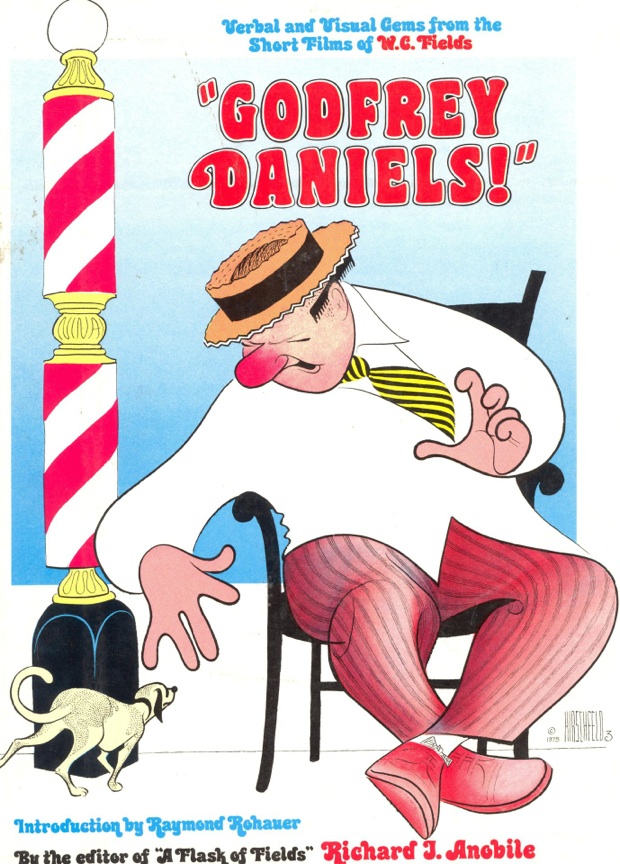
O gee golly willikers – dagnabbit – ouch – Godfrey Daniels, muthafuckin muthafuckers!

Then again, an vulgarity can be sometimes effective when one is on the verge of a massive cerebral hemorrhage.  Take it away Jeff Tiedrich:

And on that discordant note, I bid you, dear readers, a fond fuckin’ adieu.


3103304267_9d27085e77_o


[1] Profanity refers to words that offend religion; vulgarity deals with excrement and genitalia.

Whatchacallit? Angst, Ennui, Weltschmerz, or Something Else?

Lewis chamberlain

Lewis Chamberlain

I admire those people in this period of suspended animation who have their chins up and memes cued-up. After all, there’s little else a non-billionaire can substantially do as the economy itself is rolled into ICU, except to try to make the best of a bad situation.[1]

It’s not bad to channel ol’ Norman Vincent and to tell yourself positive thinking is, well, positive. Look at all the time you have on your hands to start that herb garden, learn French or German or Sanskrit, read those classics you claimed you’d tackle after retirement.

After all, the sky flashes, the great sea yearns.

berryman

John Berryman

Me, on the other hand, I’m spending this gorgeous spring morning trying to pinpoint the perfect word to describe my present misery.

Let’s go alphabetically.

Angst. This word, of course, German, a language especially suited to embody dread in sound, and in, fact, can make pleasant situations sound somewhat dreadful with its “harsh discords and unpleasing sharps.”

For example, “Schlaf in himmlischer Ruh!” is usually translated as “Sleep in heavenly peace.”


But I digress. Angst means fear in German, but in English that fear is more generalized.  It’s not as if you’re afraid of that night shriek outside your pup tent but fear that life is merely a tale told by an idiot, full of sound and fury, signifying nothing. Angst is stronger than anxiety, which for most people is a temporary discomfort rather than an entrenched world view.

So, no, it’s not angst I suffer from, nor anxiety either, now that my son Ned has almost fully recovered from his bout with the novel coronavirus or the Covid-19 virus or the Coriolanus virus or whatever you call it.

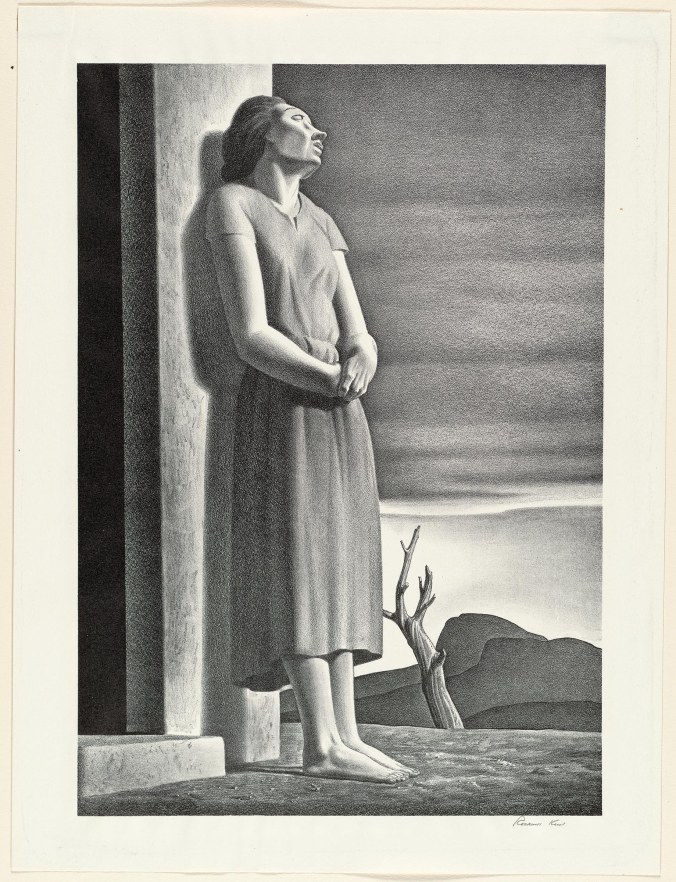
weltschmerz

Rockwell Kent

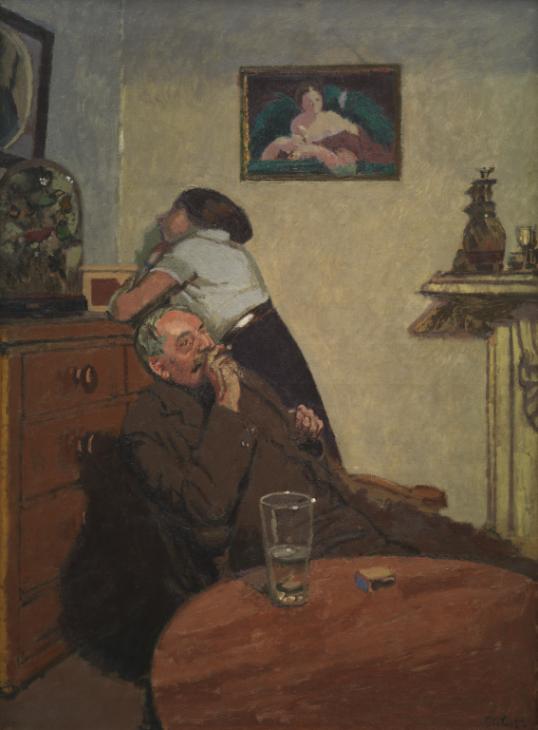
Ennui.  When I taught English, “ennui” appeared in three of the four high school editions of our Wordly Wise workbook. The editors defined it as “boredom,” but once again, it’s more generalized than mere tedium. It connotes a world weariness rather than a momentary I-wish-I-were-somewhere-else, expressed so well by soon-to-be suicide John Berryman’s “Dream Song 14”:

Peoples (sic) bore me,

literature bores me, especially great literature,

Henry bores me, with his plights & gripes

as bad as achilles,

who loves people and valiant art, which bores me.

So, no, I’m not suffering from ennui.

Ennui c.1914 by Walter Richard Sickert 1860-1942

Walter Richard Sickert


Weltschmerz.  This German world means “world pain” and so correlates with ennui but connotes more pain and sadness.  So, no, that’s not it.

Well, what is it then?  Coopedinsocialestrangement.  That’s what I’m suffering from. Coopedinsocialestrangement.

I’m enjoying my bike rides with Caroline and Brooks, the uncrowded beach a quarter of a mile away, the movies we’ve seen, but I also miss my drinking buddies, Ellis and Bob, my beloved bartenders Jen and Rochelle and Solly and Sydney, my man Jeremy down at Lowlife Bar.

So instead I’ve been hanging out with Elmore Leonard and his crowd of criminals, cops, and cool black dudes. Still, it’s not the same.  I guess the good news is that unlike angst, ennui, or weltschmerz, you can eventually get over Coopedinsocialestrangement without undergoing a religious conversion.

985084._SY475_


[1] Pro writing tip: avoid rhyming prose.

Coronavirus Hits Home in Germany

18703944-3f8c-4f89-aeb4-23e7fc008301

My son Ned (second from left) and his housemates. Two of the four have Coronavirus

In Germany, where my younger son Ned has been suffering from the coronavirus for nine days, Chancellor Angela Merkel has “barred groups of more than two people from gathering” and has herself gone into isolation after learning her doctor had tested positive. Ned, who is fluent in German, listened intently to a speech she gave a few days ago on how her government planned to combat the contagion.

He described her as calm, straightforward —  a well-educated, unemotional, yet empathetic grandmother telling her brood that matters were serious, the greatest challenge the country had faced since reunification, but that by coming together and following her advice that they would overcome the disease.

Ned said that he felt fortunate to be living, as he put it, “in a first world country.” He might have added in a country not so horribly polarized by political divisions. Although I voted against Ronald Regan twice, I think he’d be an excellent spokesman in a time like this because he possessed a sort of serene confidence. He did not require a coterie of toadies to preface their technical expertise with praise for his unmatched leadership. He would not have lied in ways that could be so easily refuted, nor make statements like “the world has never seen anything like this before.”[1]  He would have projected a calming presence and have reassured the populace.

I’m not going into what might have been done differently to mitigate the virus’s rapid spread here in the States. I’m pleased to see a sort of a sort of un-self-pitying camaraderie developing, virtual get togethers, musicians performing virtual concerts. We’re all in the same boat, more or less, stuck at home with worries galore, but it’s not like we’re in London during the Blitz.  Nevertheless, war is an apt metaphor, and we all certainly owe much gratitude to the men and women on the front lines, the health care workers who are battling this pernicious disease.

Today, Ned says he feels much better, that his breathing is almost back to normal. He and his housemates are making the best of a bad situation.  Here’s a photo of a Corona Cake they made for a birthday party they couldn’t go to, and it ended up that the birthday boy or girl only had three rolls left.

56ce0bdb-5d35-4d63-b5f6-0d78625c1f6d

I’m not much of a silver-lining sort of person, but at the very least, this experience should remind us not to take life for granted, and while forced to forego televised sports, we now have a chance to notice the “birds in the trees/ —  those dying generations — at their song.”

merlin_170836479_362a8ef3-904f-45c0-bdc7-7fd12416cfb0-superJumbo

A park in Munich (Laetitia Vancon for The New York Times)


[1] In the mid-14th century, the bubonic plague killed ~20 million people, roughly a third of Europe’s population.

Partying During the Pandemic: Hubba, Hubba, Hubba, Hack, Hack


red death

Of course, whenever there’s a celebration on Folly Beach, I shed the fedora and don my pith helmet to study the folkways of the island’s men and women, whether they be our ancient, reptilian residents who seem to make up the majority of the population[1]; the younger year-round renters who often work in the food and beverage industry; the bourgeois house-renting vacationers; or the daytrippers, which include surfer dudes and dudettes, but mostly consist of young people eager to ditch their sobriety.  The question arose: what type of person (besides intrepid anthropologists) seeks out crowds during a pandemic?

I began my foray early, keeping at least six feet away from those as foolhardy to brave the great outdoors as I walked to Center Street via the beach. The strand itself was wind-swept, and the few cloud-bathers who braved the beach had placed their chairs and blankets on the leeward side of the concrete groins where they huddled and shivered. Most of the other beach strollers consisted of dog worshipers, who barely outnumber the host of young females who have chosen The Edge of America as the destination for their bachelorette parties.

Over the course of the day, I counted six different groups engaged in celebrating the waning days of some betrothed female’s status as a single. Depending on the socio-economic situation, the attire of the ladies ranges from civvies to tee-shirts printed for the occasion. Although anthropologists are not supposed to let ethnocentric emotions like pity come into play, I felt sorry for these chilly, less-than-festive seeming young women in short sleeves hugging themselves.  Who can blame them, having planned the events months ago not knowing it was going to be a Masque-of-the-Red Death weekend?

IMG_9850-1

Indeed, the numbers of revelers who decided to come out was scant. It was like, as my fellow anthropologist Caroline noted, living in Charleston thirty years ago when parking spaces were plentiful and sidewalks easily traversed. I began and ended my fieldwork at Chico Feo with brief stops at the rooftop of Snapper Jack’s, St. James Irish Pub, and the Sand Dollar Social Club (cash only).  Here’s a virtual visit for my social-distancing readers.

On a typical St Patrick’s Saturday on Folly, these venues would have been packed to, as they say, the gills.


[1] The overall median age of Folly residents is 49.7 years, 43.7 years for males, and 58.4 years for females.


Old Habits Die Hard

Triumph-of-Death-1024x844

Triumph of Death Wall Painting, ca. 1448, Palazzo Abatellis, Palermo (Photo Rob Cook, 2012)


“Thus each of us had to be content to live only for the day, alone under the vast indifference of the sky.”
― Albert Camus, The Plague

Although avoiding skin-to-skin human contact makes a lot of sense during a pandemic, old habits die hard. Yesterday, for example, I attended a funeral. An old, dear friend invited me to share her pew, and as I leaned over to kiss her, she shied away — a not-infrequent occurrence of my youth, but one I hadn’t experienced in a while. After the service, as we entered the reception hall, two bottles of hand-sanitizer stood next to the guest register. Although I had never used a hand-sanitizer outside a cancer ward, I confess I did a couple of dollops.[1]

UnknownAt a funeral reception, you don’t want repulse people who need a hug. As we embraced, one of my former students said, “Corona Virus be damned.”  For a young person who most likely will face what amounts to a bad cold if infected, this attitude seems reasonable to me. For a woman in her eighties, not so much so. Anyway, at the reception, I let whoever was making eye contact make the first move, whether it be the awkward fumbling of an elbow bump, a handshake, or hug.

Of course, on the way out, I forgot to reapply the hand sanitizer, scratched my beard, tugged at my ear, covered my mouth as I burped, and headed straight to Chico Feo for a couple of beers.  Earlier in the day, I had checked out a bit of Defoe’s A Journal of the Plague Year and ran across this horror-inducing sentence:

‘That disorderly tippling in taverns, ale-houses, coffee-houses, and cellars be severely looked unto, as the common sin of this time and greatest occasion of dispersing the plague. And that no company or person be suffered to remain or come into any tavern, ale-house, or coffee-house to drink after nine of the clock in the evening, according to the ancient law and custom of this city, upon the penalties ordained in that behalf.

Being of an advanced age, I would rather hazard death than be reduced to drinking at home alone. My sparkling wit might very well wither and die. “Rage, rage, against the dying of the light,” Dylan Thomas wrote sometime prior to bragging about having downed eighteen straight whiskeys, lapsing into a comma, and going ungently into that good night.[2]

_78960954_dylan_thomas_18_poems

As far as sporting events go, the timing couldn’t be worse. Spring training and the NBA have been suspended, March Madness cancelled outright, and the Masters golf tournament postponed, which echoes precautions enacted in Defoe’s day:

‘That all plays, bear-baitings, games, singing of ballads, buckler-play, or such-like causes of assemblies of people be utterly prohibited, and the parties offending severely punished by every alderman in his ward.

Even Donald Trump, a Corona-Virus optimist, “out of an abundance of caution” has postponed “the Catholics for Trump” event scheduled for 19 March in Milwaukee.  Sources say that Trump has shaken hands with a Brazilian who has tested positive for the virus, but the President himself doesn’t plan to be tested. On the other hand, Court Jester/sycophant Lindsay Graham is in self-quarantine, no doubt binge-watching Lady Di’s wedding while enjoying a hot toddy or two or four or eighteen.

Me, I’m sequestered in my drafty garret skimming Camus’s The Plague and Boccaccio’s The Decameron for quotable quotes, puzzling about how bear-baitings and Macbeth could attract the same audiences, and touching my forehead every five minutes to see if I’m running a fever.

So far, so good.


[1] Thirty-four years of classroom teaching has produced in me a robust immune system. The last time I took a sick day was in 2003.

[2] According to eyewitnesses, he only had, alas, four straight whiskeys. If you’re going to die, you might as well go whole hog, as they say in Wales.

In Memory of Erica Lesesne

Erica

Erica Lesesne 1945-2020

I first met Erica in August of 1985 at a school leadership conference; she immediately impressed me with her eloquence and presence. Although “from off,” Erica came to Charleston as a pilgrim, embracing the city’s Otherness rather than criticizing its eccentricity. I dare say that few scholars anywhere know as much about Charleston writers such as Beatrice Ravenel, Josephine Pinckney, and DuBose Heyward as Erica did. A few years ago, we collaborated on creating a course for adults on the literary movement known as “The Charleston Renaissance,” and although our efforts came to naught, I learned so much about Charleston’s literary legacy from working with her on the project. She was forever a teacher.

Although it’s sometimes easier for a teacher to pretend that she just doesn’t see, whenever Erica encountered bullying, student backbiting, or the twisting of truth for personal advantage, she directly confronted the offender, expressing her displeasure rationally, calmly (and with serious eye contact). On the other hand, Erica championed talented students who had acquired the reputation of being troublemakers. As I put it in the speech I delivered upon her retirement, “Erica possesses that admirable talent of being able to discern whatever diamonds may be lurking somewhere beneath the layers of mud adolescents sometimes coat themselves with. She inspired these rebels to consider the world at large as she cultivated their creativity, channeling their anger and angst into art.”  How life affirming to have a wise woman as an advocate, someone who understands your youthful dissatisfaction with a wounded world. It can be life-changing.

Drama was Erica’s favorite genre, and over the years she orchestrated a number of superb student-directed productions, plays in which actors performed without microphones, having to project their voices throughout the acoustically challenged spaces of Gwenette Auditorium.  She carefully chose each play according to the abilities of the senior class who performed them, on one occasion writing a script herself. More often, however, she selected plays of high literary merit, exposing students and adults to the joys of commedia de arte or the absurdities of Pirandello. I remember Jeannie Faircloth Green, the superb math teacher, leaning over to me during an intermission and remarking that “after five minutes, you forget it’s a student production.”

Erica play

Ultimately, however, teachers earn their pay in the classroom. As our mentor Sue Chanson has said, an excellent English teacher can teach at any level. Throughout her career, Erica taught sixth graders, and seniors, and grades in between, introducing them to Pip and Estella via Dickens, touring the Lake District with Wordsworth and Coleridge, guiding well-to-do eighteen-year-olds through the impoverished, labyrinthian streets of Dostoyevsky’s St. Petersburg. She taught impressionable souls how language functions, how it can sing  — or screech — and how to manipulate words to convey melody or cacophony according to the writer’s purpose. Being able to string sweet sounds together to embody devotion is a valuable skill, but being able to rat-a-tat Anglo-Saxon plosives that spit like machine gun fire can also come in handy. Porter-Gaud’s reputation as a school that produces superb writers owes an enormous debt to Erica Lesesne, who had a hand in creating the English Department’s curriculum. And, oh, the hours she spent carefully assessing writing, circling misplaced modifiers, bracketing fragments, praising deft phraseology and clear thinking. Each student, handled with care. Taken seriously.

Erica Lesesne lived a good life and has left a legacy that will live on, not only in the memory of her devoted family —  Dan, Emma, and Daniel, their spouses, and their children —  but also in the memories of a generation of students who were so very lucky to have her as a teacher. For the sake of our own children, let’s hope the cliché  “they don’t make ‘em like that anymore” isn’t true.

Good night, sweet Erica.


Questions Concerning Vultures


Mars Ethel

Mars Ethel: Vultures

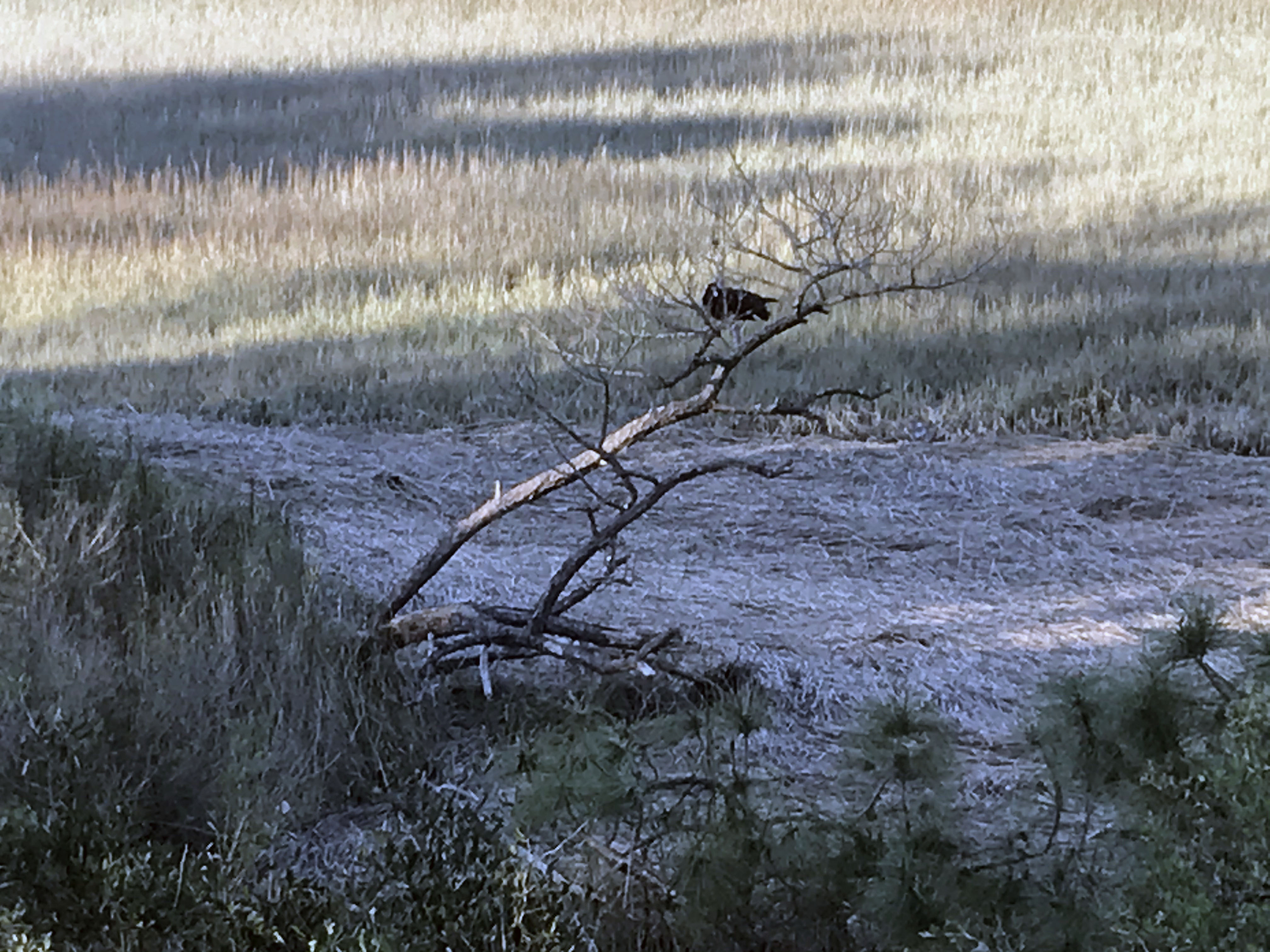
In the midst of a burgeoning global pandemic, on the eve of South Carolina ‘s Democratic Primary, and in the aftermath of the stock market’s 3500-point one-week freefall, it appears that the turkey vulture perched on a dying tree outside our living room window is ill and also dying. He or she – I think of it as a she – has been there all day long hunkered into herself.

IMG_2811


Natural deaths of animals in the wild I’ve managed not to think about all that often.[1]

Exceptions: Once I saw a Nature episode about the deathly decline of a disease-ridden chimpanzee and his ultimate abandonment by his troop, the unfortunate creature left to shuffle off his mortal coil all alone, though one of his companions did linger a while before abandoning him.

Also, about a decade ago, the marsh behind our house was littered with bloated carcasses of raccoons felled by some parvo virus that had the parents of our diseased vulture circling overhead in narrowing gyres.

Thirty years before that, yet another ill vulture stood forlornly on a path in the woods near our house in Rantowles. We saw him so many times we gave him a name, Nigel. He lasted almost a week.[2]

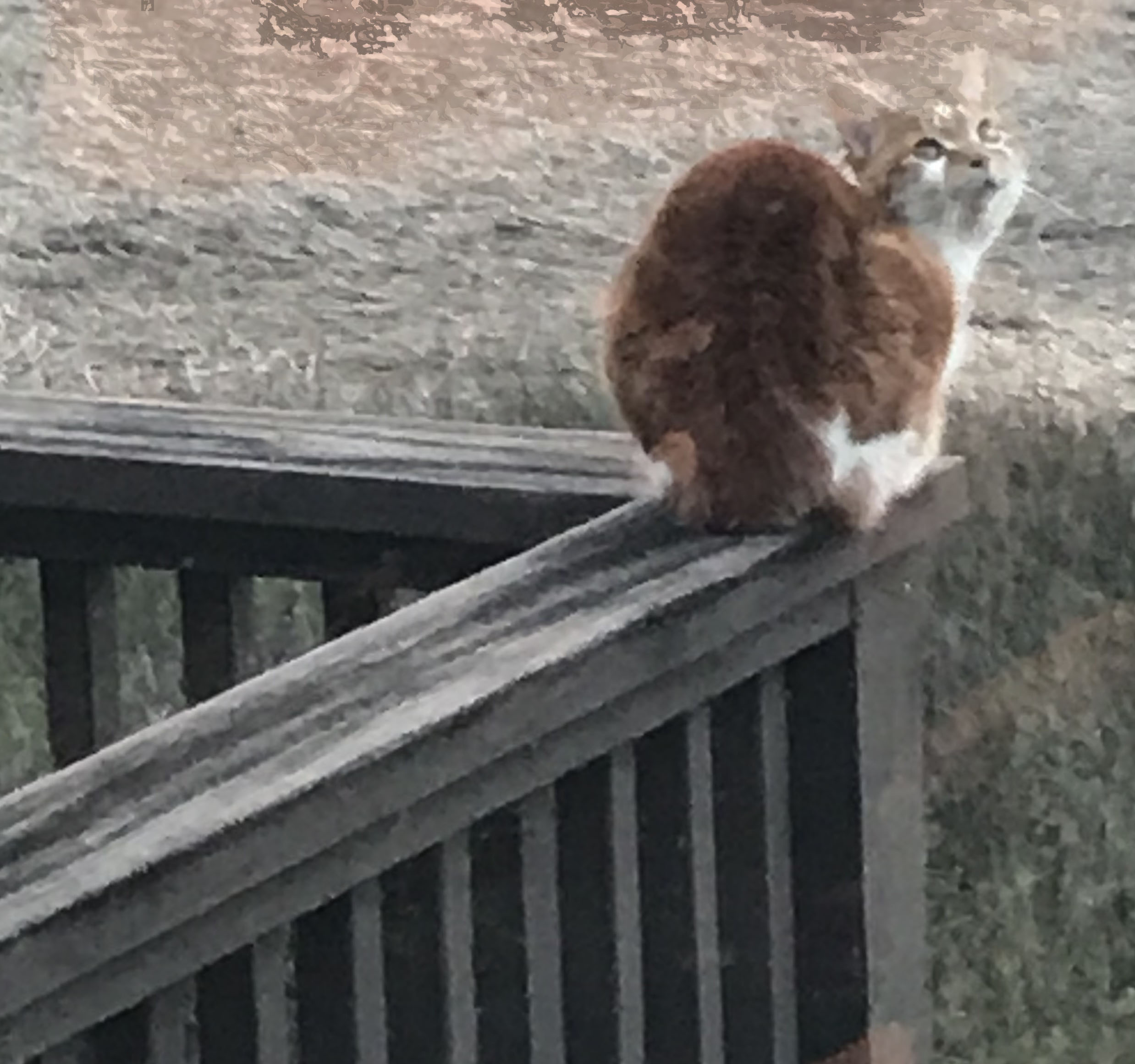
Our cat, Dusty, after insistently clawing at the glass door leading to the porch, has been let out, has pawed open the screen door, and her outdoor presence has prompted the vulture to flee the limb of the dying tree and perch on our roof.  Dusty crouches on the railing of the deck, hunched into herself, staring up and over un-benignly at what now I’m convinced is an unwell scavenger.

dusty predator

Questions arise: Do vultures eat the carcasses of their own kind?

The consensus is not often, only during food scarcity.

Do other animals eat vultures?

No, an eagle will occasionally snatch an infant vulture from a nest, but vultures [understatement alert] smell bad, have ingested perhaps diseased organisms, so they have very few natural predators.

By the way, they’re family oriented. They feed their young for as long as eight months, though via regurgitation, which I guess is good training for the life ahead. If something is harassing them, they’ll vomit on the offending party as a defense mechanism.[3]

They’re gregarious, hang in large groups, and can live to be twenty-five.

Nevertheless, would Dusty kill a sick vulture for sport?

“You betcha,” as people from Utah are prone to say.

Do vultures help prevent the spread of diseases?

Yes.

Does the company called Bird Busters think highly of vultures?

No. From their website:

Turkey Vultures cause problems by attacking rooftops, caulking and other exterior surfaces. The bird droppings from turkey vultures are large as well, creating extra cleanup costs and concern over slip and fall liability from turkey vulture dropping buildup, plus an unclean, dirty company image. The bacteria, fungal agents and parasites found in turkey vulture droppings and nests can carry a host of serious diseases, including histoplasmosis, encephalitis, salmonella, meningitis, toxoplasmosis, and more. As an unpleasant bonus, turkey vultures often leave bones and carcasses to feed on around their roosting areas. They’re also known to be noisy problem birds, especially in a large group fighting over food.

What does the poet Richard Wilbur have to say in response to Bird Busters’ negativity concerning turkey vultures?

Still, citizen sparrow, this vulture which you call

Unnatural, let him but lumber again to air

Over the rotten office, let him bear

The carrion ballast up, and at the tall


Tip of the sky lie cruising. Then you’ll see

That no more beautiful bird is in heaven’s height,

No wider more placid wings, no watchfuller flight;

He shoulders nature there, the frightfully free,


The naked-headed one. Pardon him, you

Who dart in the orchard aisles, for it is he

Devours death, mocks mutability,

Has heart to make an end, keeps nature new.


Vultures, no doubt, give almost everyone outside ornithology the heebie-jeebies. No one likes to be reminded of his or her own mortality, especially in the midst of a burgeoning global pandemic, on the eve of South Carolina ‘s Democratic Primary, and in the aftermath of the stock market’s 3500-point one-week freefall. However, we need vultures. Without them, those dead raccoons in the marsh a decade ago would have been appreciably more horrible.

So I’m with Richard Wilbur.  Here’s the rest of the poem quoted above:

Thinking of Noah, childheart, try to forget

How for so many bedlam hours his saw

Soured the song of birds with its wheezy gnaw,

And the slam of his hammer all the day beset


The people’s ears. Forget that he could bear

To see the towns like coral under the keel,

And the fields so dismal deep. Try rather to feel

How high and weary it was, on the waters where


He rocked his only world, and everyone’s.

Forgive the hero, you who would have died

Gladly with all you knew; he rode that tide

To Ararat; all men are Noah’s sons.


[1] Most editors would disapprove of syntax here, but I like the way it stumbles into a confession of repression.

[2] I was in full hospice mode. Nursing him back to life didn’t seem like a good idea.

[3] Until I did that bit of research, I had very successfully avoided wondering what being puked on by a vulture would be like.

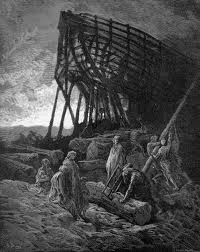
noah's ark

Gustave Dore


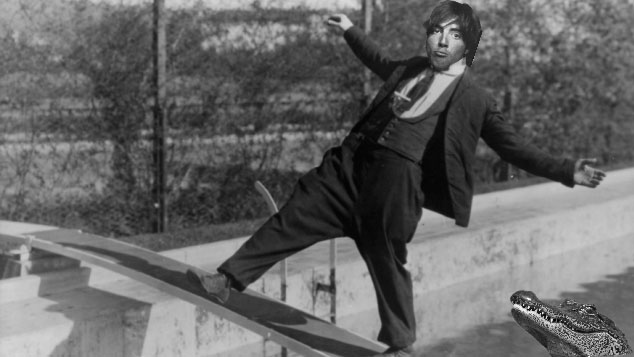
Buster Keaton Meets Kafka

rusty_keaton

Me in 1973 (or at least my head in 1973)

Back, in ’73, it still got cold in early October.

In August of that year, I had on a whim enrolled in a tennis course mistakenly thinking it would count as an elective. Given my busy schedule of sometimes going to class, washing dishes at Capstone Cafeteria, and making the rounds of various pubs each evening, I had put off to the afternoon of the last day to drop a course without penalty to go through the rigamarole necessary to avoid further tarnishing my transcript.   To successfully do so, I needed to accumulate certain signatures.

After visiting the registrar’s office and securing the drop form, I trekked over to the far distant PE department and copped the john henry of the so-called instructor, the most difficult task in what seemed to me at the time as a Herculean quest – I had never been to class; I didn’t know his or her name.

After a bit of a runaround, somebody signed the form, so now all I had to do is to get my advisor to sign on the dotted line – something she no doubt would be delighted to do – but this rather severe woman gave me the heebie-jeebies. I sensed she held me in contempt -maybe because I was red-headed? or betrayed a contemptuous smirk when I dealt with her? or perhaps because I reeked of cannabis?  – I had no idea why she disapproved of me, but I imagined her animus was as palatable as dandruff-sprinkled wool.

Of course, she signed it – probably not even really knowing exactly who I was.

With the two signatures secured, I rode the elevator down to the lobby of the Humanities Building with a half-hour to spare before the Registrar’s Office closed.  As the elevator door opened and as I stepped out, the form somehow fluttered from my hand – and I swear I’m not making this up – it disappeared cartwheeling through the gap between elevator and lobby into the dark underworld of that hideous structure.

I could have tried a thousand times to flip the form through that gap and probably not been successful even once.  I stood there astonished, frozen, unbelieving.

elevator gap

I literally ran back to the registrar’s office, grabbed another form.  With the clock reading ten till five, my only recourse was to forge signatures, and in the case of my tennis instructor, to make up a name because I had already forgotten it.*


*Although I doubted it at the time, this strategy of forging and making up names worked.  In a pre-digital university with 20,000 students, what functionary is going to check to see if the the signatures are legit?


I shared that year an apartment with a bassist named Stan Gibbons who worked at the Record Bar at Richland Mall and who possessed a record collection extraordinare.  It was an upstairs apartment in a ramshackle house built in the Twenties on Henderson Street, a house long ago purchased by USC and transformed into a parking lot.

After the traumatic experience of having some malevolent spirit snatch the form from my hand and deposit it sideways through the one inch slot of the elevator shaft, I trudged up the steep hill to my house and up the steep stairs to the shithole I called home (my bed was in the kitchen) to watch the NL playoff game between the Mets and Reds on Stan’s black and white portable TV.

As the sun set and a cold front passed through, it started getting very chilly in the apartment. Need I mention that the apartment was unairconditioned and every window frozen into an open position? I managed to ram two windows down, but a third, one of two facing the front of the house, wouldn’t budge.  However, summoning every ounce of my 140 or so pounds, in a Samsonlike shouting concentration of force, I slammed the window down with such violence that the glass shattered.

What else, I inwardly whined, could go wrong today?  Now ice cold wind was streaming through the broken glass. I had no recourse but to light the heater, a gas fueled relic from the 1950’s.  This action required igniting a pilot light, something, again, I had never attempted, yet after maybe twenty or so attempts, whoosh, success.  I turned up the heat to a nice toasty temperature.

So I leaned back in a threadbare chair to watch the game.  In a minute or two, however, I smelled something burning, and turned around to see flames leaping from the stove upon which Stan’s record collection rested.  How could I have not noticed them sitting there in their cardboard boxes?  After all, I played them all the time.

I snatched the records off the stove, sickened by the stench of melted vinyl.  Every single LP was severely warped, unplayable.  Desperate ideas darkened my mind.  Hitchhiking to Nome, Alaska, never to return.  Telling Stan an outrageous lie: “Hey, Stan, someone must really hate you.  They broke in to the apartment through that window and set your records on fire.”

But I did neither.  When I heard his dreaded tread upon the stairs, I confronted him there and told him I had accidentally ruined his record collection.

He smiled broadly.  “Ha ha! you’re kidding,” he said.

feature181_confusion

Dan Scott:  Increasing Confusion

It didn’t take long for the truth to register with the smell and my unchanging woebegone expression. He said he might have to move out but stuck with me until the end of our lease; then on amiable terms we went our separate ways.