When I taught high school English and attempted to explain to students how karma works, I employed the analogy of dropping a pebble into a still pond. If the pebble was positive, a pearl, let’s say, the expanding concentric circles spreading outward would promote positivity.
There’s a Liberty Mutual commercial that effectively illustrates this phenomenon:
A man notices a young girl’s doll has fallen out of her stroller and retrieves it for her.
The girl’s mother, seeing him rescue the doll, later moves a man’s coffee from the edge of a table where it is in danger of falling off.
A customer who witnesses the mother’s benevolence is inspired to carry an elderly woman’s groceries . .
Of course, if it’s not a pearl but a turd you drop into a still pond, the expanding karmic circles are going to be negative:
You cut someone off in traffic.
The driver tries to run you off the road, shoots you the bird, screams inaudibly from his pick-up.
You get home to discover your dog has gotten into the trash, having strewn garbage everywhere, so you yell at her, then bop her on her nose with a rolled up magazine . . .
For whatever reason, very early in his young adulthood, Charlie Kirk decided to drop out of college and become a culture warrior, to redress what he feared was a takeover of white culture by brown people, third world immigrants, and lovers who did not share his sexual orientation. To wage this battle, he became a provocateur, a master of manipulating social media platforms like TikTok, and therefore, he became rich and famous and influential because disaffected white males could identify.
Alas, unseasoned young people, like his followers, like his assassin, are susceptible to hyperbolic messaging, are easily influenced.
Not surprisingly, he created enemies, essentially because he broadcast outrageous, often racist and misogynistic statements like “Joy Reid, Michelle Obama, Sheila Jackson Lee [i.e., Black women] do not have brain processing power to be taken seriously. You have to go steal a white person’s slot.”
If you’re a public figure and are dropping asteroid-sized turds like that into the karmic ocean of public discourse, you’re going to make enemies. Being provocative is dangerous, especially when your message reaches millions in a country where assault weapons are as easy to purchase as Sudafed.
Of course, I wish Charlie Kirk were still alive, and I’m thankful that his murderer, a Mormon gone bad, has been apprehended. I pity Charlie Kirk’s wife and children. To celebrate his death is ghoulish.
On the other hand, I find it chilling that in the United States of America that by merely quoting postmortem a political operative’s views you find objectionable can get you fired from a public university.
That is – to coin a phrase – un-American, the antithesis of conservative, a word, unmoored from its etymology, that is now for all intents and purposes a synonym for reactionary.
And, by the way, wouldn’t it be nice to have a president who rather than stoking anger would try to bring us together as a nation?
I hesitate to admit it, but searching for telltale signs of Donald Trump’s imminent demise, I squandered way too much time last weekend following threads on X as I obsessively pored over grainy telephoto shots and videos of that shambling wreck of a human being.
Oh, yay, his mouth is drooping, look his foot’s dragging, that’s hand’s bruised, his eyes unfocused, his speech slurred––unmistakable signs of life’s impending cessation! C’mon, Grim Reaper, get it on! Deport the bastard to that undiscovered country from whose bourne no traveler returns!
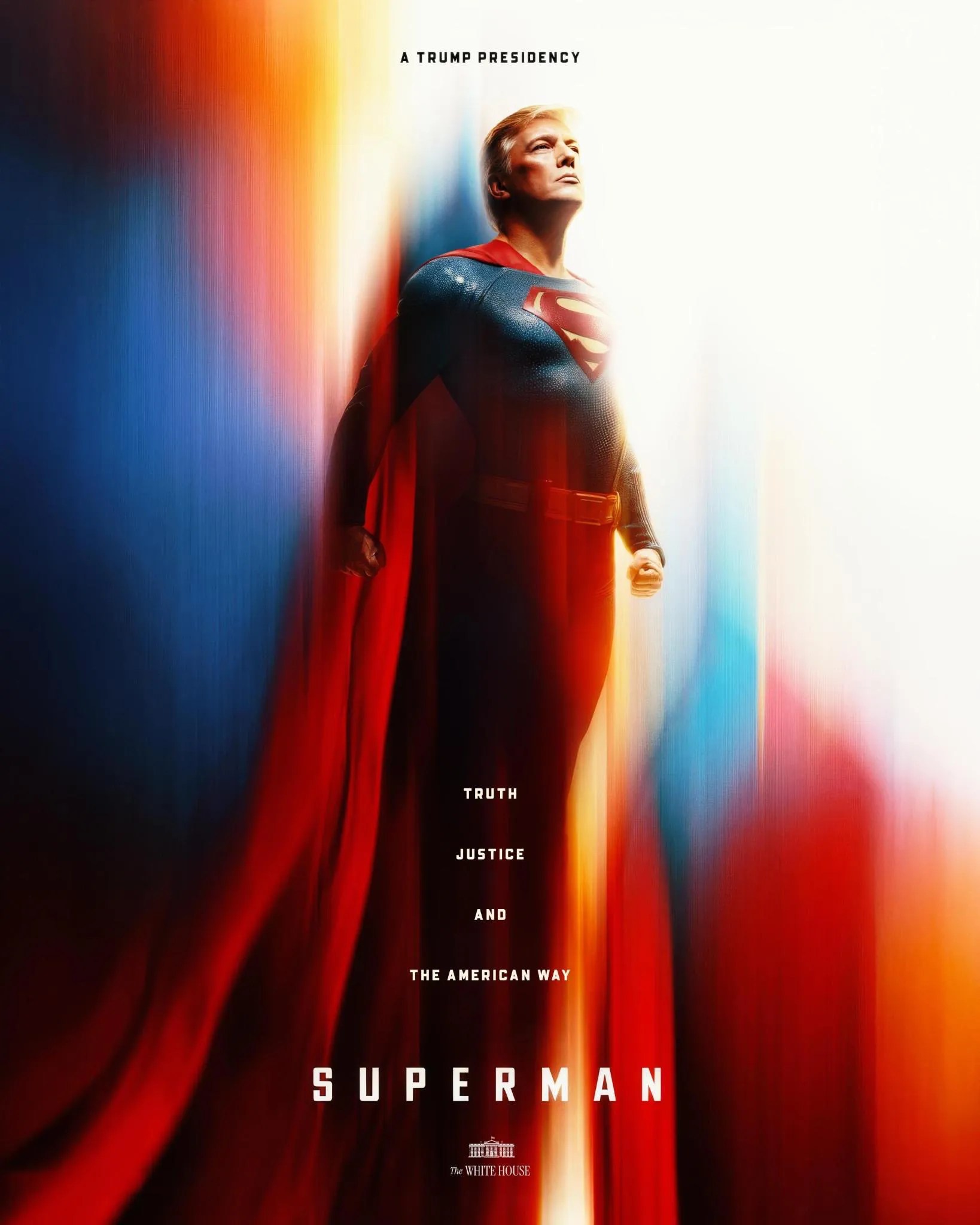
But alas and alack, on Tuesday Trump reappeared in his cartoon character’s red, white, and blue outfit flanked by toadies to announce that he’s transferring his sci-fi-ish Space Command from Colorado to Alabama because Colorado allows mail-in voting.
Why, you may wonder, would a lapsed Buddhist like I-and-I misdirect his karmic energy in wishing that a fellow human would cast off his mortal coil?
My answer is “duh.” Wouldn’t it have been peachy keen if Hitler had croaked before he implemented the Holocaust?[1]
Trump is evil. Yesterday, for example, wasting tax payer money and Defense Department jet fuel, he ordered a flyover to drown out the voices of ten of Epstein’s victims as they pleaded for Congress to expose the names of pedophiles to help appease the horrible wrongs they have suffered.
Trump’s flyover demonstrated peak bully behavior. Here’s an adjudicated rapist who has bragged that his celebrity status allows him to “grab pussies” and to enter beauty pageant dressing rooms to ogle teenaged contestants, etc., etc., etc. to lord his testosteronic power over the powerless.
Then immediately, after the press conference, he called the Epstein affair “a Democratic hoax.”
Oh, and the cowardice of the Republican Congress who have jilted the Founding Fathers for this putrid attention whore so they can cling to their power and its accompanying perks.
Perhaps these self-proclaimed Christians, these hollow men, like Mike Johnson, should pause for a moment from thumping their Bibles and open them to Mark 8:36:
For what shall it profit a man, if he shall gain the whole world, and lose his own soul?
Again, alas and alack.
[1] By the way, the Smithsonian has now closed an exhibit that showed how the US turned away Jewish refugees during WW2.
Obviously, I’m a huge fan of the novel as a literary genre. Just the other day, I was explaining to someone at Chico Feo how literary novels can be treasure troves of vicarious experience because they feature lifelike characters who behave like real people. These novels aren’t didactic, but by co-experiencing Emma Bovary’s tragic vanity, you might glean that fabricating a persona through conspicuous consumption is not the way to go.
In other words, rather than discovering through personal experience that purchasing a vintage Rolls Royce Silver Shadow will likely destroy your credit and leave you destitute, you can witness rabid Emma’s spending sprees, yet not personally suffer the consequences of her foolhardiness.
Of course, part of Emma’s problem is that she mistook the romance novels she misread as real life, the way I misperceived the Long Ranger as real life when as a five year old in Biloxi, Mississippi, I leapt from the top of my chest of drawers onto a rocking horse that catapulted me face first on a wooden floor, a hard lesson (literally) in appreciating the difference between illusion and reality. If I had read about a fool boy doing that in a book, I never would have tried it myself.
As Laurence Perrine states in his wonderful textbook Literature, Sound, Structure, and Sense, “inexperienced readers” [of commercial fiction] want their stories to be mainly pleasant. Evil, danger, and misery may appear in them, but not in such a way that they need be taken really seriously or are felt to be oppressive or permanent.” A steady diet of happy endings could inculcate in an unsophisticated reader (or movie goer) the misperception that things always work out.
In other words, evil, danger, and misery need to be taken very seriously.[1]
Of course, the puritans, those “vice crusaders farting through silk,” who have taken over the schoolboards in our budding authoritarian state are aware of the potential for fiction to alter attitudes. For example, reading a novel that portrays a gay teenager as a decent, sincere person doing her best to navigate the perilous journey of adolescence might suggest to a homophobic sixteen-year-old that gay people are worthy of respect and empathy.
The vice crusaders certainly don’t want that.
Just for the hell of it, after rereading Jo Humphrey’s brilliant but under-appreciated novel Fireman’s Fair –set in the disorienting wreckage of post Hurricane Hugo Charleston – I switched to escapist fiction, and for the first time since I read it out loud to my sons, ripped through the Hardy Boys series’ first title The Tower Treasure.
Whereas Jo’s book featured an array of well-rounded characters, The Tower Treasure trots out a series of underdeveloped static, one-dimensional mouthpieces: the indulgent dad, ace detective Fenton Hardy, his wife, a homemaker who doesn’t merit a first name because all she does is make sandwiches, and the boys themselves, Joe and Frank, and their various “chums” and female friends.
(A sidenote to budding fiction writers: avoid elaborate dialogue tags like “‘You’re elected,’ the others chorused.'”[2])
Truth be told, I actually enjoyed The Tower Treasure, which, despite its flaws, boasts a fast-moving plot that creates temporary suspense, but I never feared that the one of the two helmetless boy detectives would crash his motorcycle and end up a paraplegic.
And, of course, the novel also offers sociological insights into the attitudes of White people in the early 20th century and how those attitudes changed as the series progressed through the decades, e.g., Mrs. Hardy’s earning a first name –– Laura –– and eventually working outside the home as research librarian.
Someone (but not me) should do a scholarly paper on how the Hardy Boys novels reflect the social mores of their times and how those changing mores are reflected in changes in the novels’ depiction of the white enclave of Bayport, a city in New York in some novels and New Jersey in others.
After all, the ways things are going here in the dumb-downed US, the Hardy Boys may replace Animal Farm as required reading.
[1] Just last week a cook a Chico Feo, Jorge, who had a valid visa and a green card, was apprehended by ICE as he played by the rules by visiting his immigration office. ICE handcuffed him and swept him away to god knows where. I don’t foresee a series of hairbreadth escapes in his future but, rather, disorienting displacement, maltreatment, in sum, a horrible existence. A novel dramatizing his sad journey could offer insights into the human condition; however, although an action novel depicting his escaping might be fun to read, it would literally be escapism, a means to avoid our everyday humdrum.
[2] That the six “youths” in the scene all “chorus” the exact phrase “you’re elected” is distracting and Hindenburgs my suspension of disbelief.
I left for college as a journalism major, but I quit before ever taking even one introductory journalism class. All of the journalism professors I met at the freshman orientation were chain-smokers who seemed to have a mild case of the heebie-jeebies. Also, you had to pass a typing test, and not only didn’t I know how to type, but I also possessed –– and still do –– the fine motor skills of a platypus.[1]
So I gave up on being a newspaper scribe, and without declaring a major, took whatever classes seemed interesting –– German Expressionism in the Weimar Republic, Film Studies, Shakespeare’s comedies, etc.
Because I was dream-ridden, impractical and enjoyed reading, when forced in my junior year to choose a major, I opted for English without giving future employment a nanosecond’s consideration. No way did I ever envision myself as a future high or middle school teacher. I recalled my highschool days, not with nostalgia, but with a feeling of good riddance, like Japanese Californians might look back on their internment during WW2.
Yet somehow I ended up teaching highschool for 34 years, and how I got that job is not unlike that Popeye cartoon where Olive Oyl sleepwalks her way across crane-hoisted girders swaying several stories above sidewalks far below during the construction of a skyscraper.
She’s unconscious but amazingly lucky as she blindly makes her way
[1] In fact, believe it or not, I’m still a hunter and pecker.
In 1977, I was engaged to be married but unemployed. I had only taken one education course as an undergraduate, so teaching high or middle school was out of the question. Not only that, but I had dropped out of graduate school after earning the requisite 30 hours.
In late August or early September of that year, I ran across an ad in the Post and Courier seeking an adjunct instructor at Trident Technical College. The ad directed the applicant contact the Dean of English, Ed Bush.
So the next day, I drove to the North Charleston campus seeking Dr. Bush, although I was supposed to apply at the central office, a detail that I had somehow overlooked. After asking around, someone directed me to Dr. Bush’s office. Obviously, I didn’t have an appointment, but there was a line outside his office, so I got in the queue and awaited my turn. When I approached his desk, he asked what class I wanted to drop or add. I informed him I was there to apply for the job advertised in the paper. After asking a few questions –– did I have a Master’s –– “no but I have the hours.”
“But you do have experience teaching, right?
“Um, yes” (after all, I had occasionally presented papers to fellow grad students in classes).
So he hired me on the spot without checking any of my credentials. After all, classes were about to begin, and they needed someone to teach English 102, Technical Report Writing, and Business Communications.
So at 24, I became a podunk adjunct professor who grew to really enjoy teaching, even continuing to teach at night when I had a full time job keeping books and training for management of a company that sold safety equipment.
Professor Rusty
My wife Judy ended up also teaching at Trident as well, but full time, and she eventually became the head of the psychology department. After being one of 12 writers selected to study under Blanche McCrary Boyd in a SC Arts Commission workshop, I quit my daytime job, wrote short fiction by day, and taught by night.[2]
However, once we had our first child, Harrison Moore, Ruler of the Third Planet, Judy wanted to be a stay-at-home mom. I took care of Harrison in the day, then drove him and handed him off to Judy before teaching my night classes. It was the worst of both worlds, sort of like being two single parents living under the same roof.
In that first autumn of being a father, I received a call from the chair of Porter-Gaud’s English Department, George Whitaker. Ed Bush, my former boss at Trident, had given George my name. Some teacher had been fired mid-year, and Porter-Gaud needed someone ASAP. I told him I couldn’t, given my child-rearing responsibilities, but that I would love to teach at Porter in the following year.
As it turned out, the fellow they hired midyear also had to be fired that spring. In addition, an older teacher, Mr. Hubbard, was retiring, and George himself was leaving to pursue writing.
So I interviewed for the job, and despite my not stellar credentials, the new chair, Sue Chanson, the greatest high school English teacher I’ve ever known, hired me, because she later told me, Ed Bush had given me such a stellar recommendation.
So perhaps there is some truth in the old adage “It’s better to be lucky than good.”
Right Olive?
[2] Other writers selected included Josephine Humphreys, Billy Baldwin, Lee Robinson, Harland Greene, Steve Hoffius, Rebecca Parke, and Greg Williams, to name a few.
I’ve resigned myself to the reality that I can’t always distinguish an AI-altered video from what might be an actual recording of people or animals or vehicles moving in real time in three dimensional space. Hence, I’m not confident of the validity of some of what I see online. For example, a couple of weeks ago, I saw a reel on X where Donald Trump was allegedly cheating at golf, whiffing a drive, surreptitiously picking up the ball and tee, as if the ball were arcing over the middle of the fairway. Other X viewers asserted that what I had seen was AI fabricated and substituted it with what they claimed to be the unaltered original where Trump legitimately smacks the ball and picks up the tee. Then a couple of days ago, there he is at the FIFA Club World Cup keeping for himself a gold medal designated for one of the players, pocketing the medal as he had the golf ball.
I have no idea which videos are real.
A young friend of mine, a musician who this fall will be touring the country from coast to coast with a band I’ve never heard of, told me this afternoon that there’s an AI “band” being promoted by Spotify that cranks out catchy pop tunes that are racking up big time numbers.
Hey, AI, conjure me some light pop grooves. like the Monkees meet BTS.
Is it a real band or is it AI? Did she filter that photo? This has gotta be a parody account?
All anyone seems to care about on this broiling planet is attention and megabucks, amassing followers, becoming an influencer, wielding power, casting illusions.
Meanwhile, the government of the United States of America, an erstwhile beacon of hope, has slapped together a concentration camp in Florida and sadistically christened it “Alligator Alcatraz.” [1] Although supposedly a temporary hell for violent, criminal immigrants before they’re shipped off to God-knows-where, some parties claim that the incompetent Trump regime has rounded up any number of law abiding house framers and farm workers and dumped them there, which I bet is true. Rather than tapping experts to run the government, Trump has selected an array of television personalities, mostly Fox News shills, who look good on TV but, in the case of the head of FEMA, wasn’t aware there was something called a hurricane season. Holograms as opposed to seasoned professionals are running the country.
The citizenry’s response –– and I include myself in this censure –– seems more or less “meh.”
I’m powerless, busy, can’t really influence domestic or geo-political events, an attitude that brings to mind Richard Wilbur’s sardonic elegy for Delmore Schwartz, “To An American Poet Just Dead:
In the Boston Sunday Herald, just three lines
Of no point type for you who used to sing
The praises of imaginary wines,
And died, I am told, of the real thing.
*
Also gone, but a lot less forgotten
Are an eminent cut-rate druggist, a lover of Giving,
A lender, and various brokers: gone from this rotten
Taxable world to a higher standard of living.
*
And the soupy summer is settling, full of yarns
Of Sunday fathers loitering late in bed,
And the sshhh of sprays on all the little lawns.
*
Will the sprays weep wide for you your chaplet tears?
For you will the deep-freeze units melt and mourn?
For you will Studebakers shred their gears
And sound from each garage a muted horn?
*
They won’t. In summer sunk and stupefied
The suburbs deepen in their sleep of death.
And though they sleep sounder since you died
It’s just as well that now you save your breath.
Well, at least I know that Wilbur’s poem was written on a typewriter or in longhand. Of that I can be assured. It’s not ersatz.
Delmore Schwartz
[1] Congresswoman Debbie Wasserman visited the camp and reports that detainees are kept in cages, 32 per cage, served substandard food, and get their drinking water from, as she puts it, “the unit” where they defecate.
In 1983, before we had children, Judy Birdsong and I spent two months galivanting around Europe. We prebooked only three hotels – one in London, one in Paris, and one in Athens. In between these destinations, we idly roamed. We climbed white cliffs in Dover, spent a week in Arles as a base camp for excursions to Nice and Cannes, rode a sea-tossed vomit-splashed boat to Mykonos, etc.
On the trip back to Hamburg, where we departed for home, we hung out in Munich for a couple of days and made a day trip to Dachau where we toured the infamous concentration camp. It was an appropriately gray day with leaden clouds misting rain. On the train, a recording disconcertingly announced, “Next stop, concentration camp.”
I remember that the outdoor spaces of the barbed-wire enclosure featured gravel that crunched beneath our shoes. We walked through the sleeping quarters with their raw claustrophobic wooden bunks. I also remember an American soldier yanking his four year old son by the arm and swatting him on his butt for some misdeed.
I thought to myself, “Man, I can’t believe he did that here in all places – a concentration camp.”
Of course, back then I never dreamed that my native country forty years later would be constructing concentration camps to imprison minorities.
We too had many pretty toys when young: A law indifferent to blame or praise, To bribe or threat; habits that made old wrong Melt down, as it were wax in the sun’s rays; Public opinion ripening for so long We thought it would outlive all future days. O what fine thought we had because we thought That the worst rogues and rascals had died out.
WB Yeats “Nineteen-Hundred-and-Nineteen”
Not only are we building concentration camps, but the President and his lackies are touting them, paying official visits, sadistically branding them. This one’s called Alligator Alcatraz.
The Republican Party of Florida is obscenely selling Alligator Alcatraz merch.
No doubt the Evangelicals are ecstatic, babbling in tongues praises to the Almighty.
Again, Yeats:
Come let us mock at the great That had such burdens on the mind And toiled so hard and late To leave some monument behind, Nor thought of the levelling wind.
Come let us mock at the wise; With all those calendars whereon They fixed old aching eyes, They never saw how seasons run, And now but gape at the sun.
Come let us mock at the good That fancied goodness might be gay, And sick of solitude Might proclaim a holiday: Wind shrieked—and where are they?
Mock mockers after that That would not lift a hand maybe To help good, wise or great To bar that foul storm out, for we Traffic in mockery.
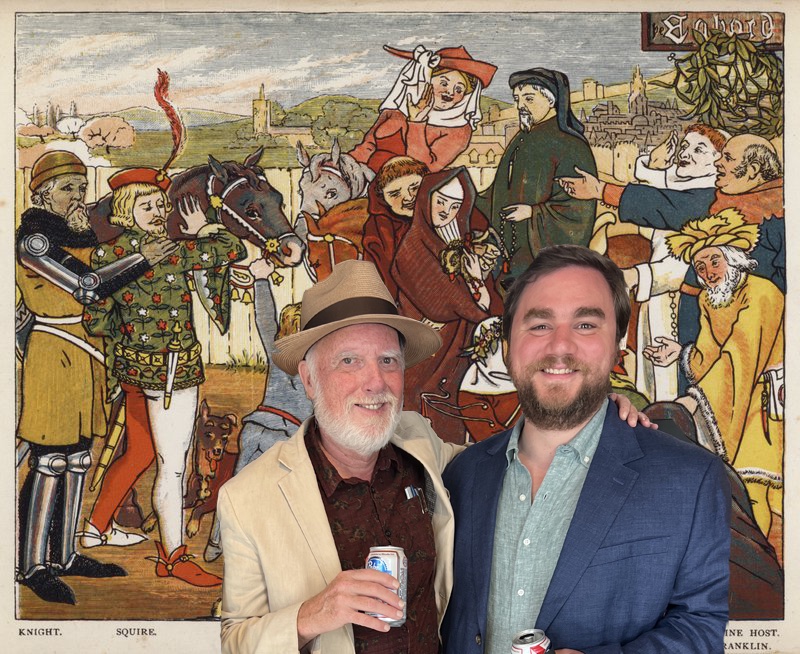
My former student and forever friend Alex Werrell has, as my mother used to say, “a way with words.” I discovered that talent when I taught him in an honors Brit Lit survey several years ago at Porter-Gaud School. When we were reading Chaucer’s Canterbury Prologue, Alex, an opera buff, turned me on Alessandro Moreschi, “the last castrato.” Chaucer hints that the Pardoner has been, as we callous pet owners say, “fixed.”
I explained to the horrified students that boys with beautiful voices were sometimes disencumbered of their testosterone-producing testicles to preserve the youthful timbre of their angelic voices, “a small price to pay for art’s sake,” I’d joke.
Playing Moreschi’s recording of “Ave Maria” became a tradition in my British Lit course. Forgive the cliche, but talons raking a blackboard would be a more pleasant sound. What a pleasure to watch the students squirm!
Alex ended up at Yale where he earned a BA and MA in English and became the mentee of the great literary critic Harold Bloom. After Yale, Alex remained in New Haven, published essays in Salon, and taught, first at the Hopkins School, and now at Taft.
After I heard Alex deliver a masterful eulogy for his grandfather, I selfishly thought that, hey, I could tap him for my memorial service, but fortunately, by having him introduce me at the book launch for Long Ago Last Summer, I was able to hear him sing my praises while among the quick.
Forgive my vainglory in posting Alex’s speech below, but once a jackass, forever, a jackass (me, not Alex).
After all, it’s not every day that you can applaud being called a “motherfucker.”
Take it away, Alex:
Bearing in mind my grandmother’s suggestion for any speech — all great orators should study Shakespeare, she said, and learn his most important lesson: “All’s Well That Ends” — I won’t catalogue all that Wesley Moore has written, taught, and done.
You’d need a TI-84 to add up the lives he molded, shaped, and changed — and if he were to receive royalties for every lesson plan of his that I’ve copied, this book launch would be in Mallorca. It is a gargantuan and daunting task to try to introduce this Renaissance raconteur, writer, poet, teacher, and philosopher king, so I’ll outsource the job responsibly and sustainably to Cecil Franklin, who was once asked by a reporter to describe his little sister: “Call Aretha a great blues singer and you’re telling the truth. Call her a great gospel singer and no one will argue. Call her a great jazz singer and the greatest jazz artists will agree. Bottom line—she’s all three at once. And in the language of the jazzman, that’s what’s called a motherfucker.”
Wesley Moore is all that and more.
His latest work is a testament to that LongAgo Last Summer transports and transforms, synthesizes and sympathizes; short fiction gives way to essays which inspire poetry and deep, graceful swan dives into memory.
Like a casserole in the Donner Pass, this “Southern Gothic gumbo” has a lot of himself mixed in. Given that, one of the many reasons why Long Ago Last Summer is brilliant is that it is precisely the opposite of that scourge of modern texts, generative AI. And while talking about generative AI at a book launch feels a bit like reading “The Ballad of Hollis Brown” at a baby shower, that menacing technology walks among us now. Like one of the foundational sins coursing through the Southern Gothic, AI perverts creation and devalues the human; the fullness of what it means to be a human does not matter half as much as mere production, production, production. In dramatic contrast, Long Ago Last Summer is a thrillingly human book because Wesley Moore stands for what matters: connection, imagination, integrity.
Searching for the book on Amazon — (And, please, gracious hosts: this was for research purposes only; the only destination wedding I want for Jeff Bezos is at the bottom of the ocean.) — I wanted to see what the heartless algorithm might suggest as “related books.” One was Walter Isaacson’s biography of Einstein which, given Mr. Moore’s excellent lessons on relativity and cultural Modernism, seemed fitting. Then there was Rhinestone Cowboy, Glen Campbell’s autobiography. I don’t have an explanation for that one.
What might the algorithm consider when determining whether to recommend Long Ago Last Summer to a prospective reader? It could be something as simple as geolocation: did this person grow up within twenty miles of a filling station that offers both diesel and barbecue? Or maybe it’s that stray google search for city ordinances concerning the accidental murder of a domestic cat. Maybe it’s looking up sterling silver hallmarks of the Confederacy and then looking up statutes of limitations for stolen Confederate silver. Or maybe it’s trying to find higher resolution images of Pee Wee Gaskins.
While the algorithm is good at pushing polyester blends off of Temu, I have a feeling it would struggle with Wesley Moore’s newest book. In no small part that’s because it’s hard to categorize. As Wesley himself said on television, “It’s really not a novel.”
In 1925, as she was struggling to write To the Lighthouse, Virginia Woolf found herself frustrated. Writing in her diary that she needed “a new name” for her books “to supplant ‘novel,’” Woolf floundered about trying to find the right word: “A new — — by Virginia Woolf. But what?” she writes.
The word Woolf ends up on is “elegy” — a word that feels fitting for this book. To be clear, this is not because, as Mr. Moore says, he’s retired and living on a fixed income, nor is it even because of biplane rotors and headless fathers and tubercular aunts.
Instead, it feels so fitting to me because Mr. Moore spent so many classes in English 10 on such poems, insisting that we memorize Blackburn Hughes’s list of the four “greatest English elegies.” To help us in that endeavor, Mr. Moore demonstrated the rhythmic swish-swish of Gray’s heroic quatrains with an epee. Doing his best impression of Stevie Wonder’s star role in the John Milton biopic, Mr. Moore recited bits of Lycidas. And, in his Lowcountry baritone, he intoned Tennyson’s In Memoriam.
Elegy is no stranger to anyone who has grown up in the South. An elegy has but one requirement: it must defy the laws of linear temporality, enabling the past to persist. Time becomes fluid; what for Tennessee Williams was Suddenly, Last Summer, unbearably close, is, for Mr. Moore, Long Ago Last Summer, unbearably distant. The reversal that so haunts Flannery O’Connor’s Misfit — Jesus’s setting the world off balance, taking dead Lazarus and making him walk like a natural man — is the foundation of elegy: a reversible alternation between presence and absence. Reflecting on Mrs. Ramsay in To the Lighthouse, Vanessa Bell writes to her sister Virginia how “it is almost painful to have [Mother] so raised from the dead.” Milton ends Lycidas with talk not of yesterday and of death, but of “To-morrow” and “pastures new.” Reading through the night the letters Arthur Henry Hallam wrote him, Tennyson finds himself surprised by dawn — and, in a flash, understands that “East and West” had “mixt their dim lights, like life and death, / to broaden into boundless day.”
The fourth great elegy is “Adonaïs, “written by Percy Shelley for John Keats, who died in an apartment overlooking the Spanish Steps in Rome, hemorrhaging up what little remained of his lungs at only 25.
Mr. Moore’s voice always took on a different timbre when he read to us Keats and Shelley. I cannot read their poems without feeling as if I’m back in his classroom — wind-up nuns, Rashaan, paleological timeline and all. His humanity and his teaching have become grafted to the Young Romantics in my mind’s eye. Throughout their poetry are traces of birdsong, so precious and so vital to both short-lived poets — and so like the traces of Judy Birdsong, so precious and so vital, in this work in front of us.
Shelley, mourning Keats, likens life to a “dome of many-colored glass” that “stains the white radiance of Eternity.” The many pieces of colored glass lovingly assembled here — with Caroline’s steady hand, keen eye, and beautiful verse — are aptly described by the author as a “mosaic” of his life.
The glue that binds these pieces — the guide for navigating the disparate stories, poems, and essays — is memory. “Memory…ties it all together.”
In the spirit of elegy and memory, I’ll close with some words from Mr. Moore’s former colleague Erica Lesesne, who once defined what it meant to be a hero: “Ethical, competent, non-judgmental, yet communicating high ideals and expectations, thereby influencing others to risk their own best sides in a seethingly adolescent environment.”
It is a pleasure to introduce one of my heroes, Mr. Moore. As he writes, “Let’s crank up the old Victrola.”
Wednesday, Buxton Books, Charleston’s premier bookstore, hosted the launch of my new book Long Ago Last Summer.
What follows is an abridged version of the festivities. Thanks to my wife Caroline Tigner Moore for providing these videos.
Julian Buxton got the show rolling with by reading a passage from the book on James Dickey.
Next, Alex Werrell delivered his introduction.
The first bit wasn’t recorded. Here it is
Bearing in mind my grandmother’s suggestion for any speech — all great orators should study Shakespeare, she said, and learn his most important lesson: “All’s Well That Ends” — I won’t catalogue all that Wesley Moore has written, taught, and done.
You’d need a TI-84 to add up the lives he molded, shaped, and changed — and if he were to receive royalties for every lesson plan of his that I’ve copied, this book launch would be in Mallorca. It is a gargantuan and daunting task to try to introduce this Renaissance raconteur, writer, poet, teacher, and philosopher king, so I’ll outsource the job responsibly and sustainably to Cecil Franklin, who was once asked by a reporter to describe his little sister: “Call Aretha a great blues singer and you’re telling the truth. Call her a great gospel singer and no one will argue. Call her a great jazz singer and the greatest jazz artists will agree. Bottom line—she’s all three at once. And in the language of the jazzman, that’s what’s called a motherfucker.”
Wesley Moore is all that and more.
The video picks up from there:
I followed with a reading of my short story “Their Own Little Worlds.”
Unfortunately, “The Bluegrass Blues,” the poem I read was cut short in the video, so here’s the text:
The last piece was a short essay “The Art of Not Thinking” that I wrote a couple of weeks after Judy’s cancer returned.
After a Q and A session, it was book signing time.
I really appreciate all who came out on such an unbearably hot day, and it was especially gratifying to see my fellow authors Eugene Platt, Layle Chambers, Bill Thompson, and Josephine Humphreys.
Cheers!
[1] The English poet Percy Bysshe Shelley 1792-1822















 You Do Hoodoo