Hold That Thought, Better Yet, Deep Six That Thought

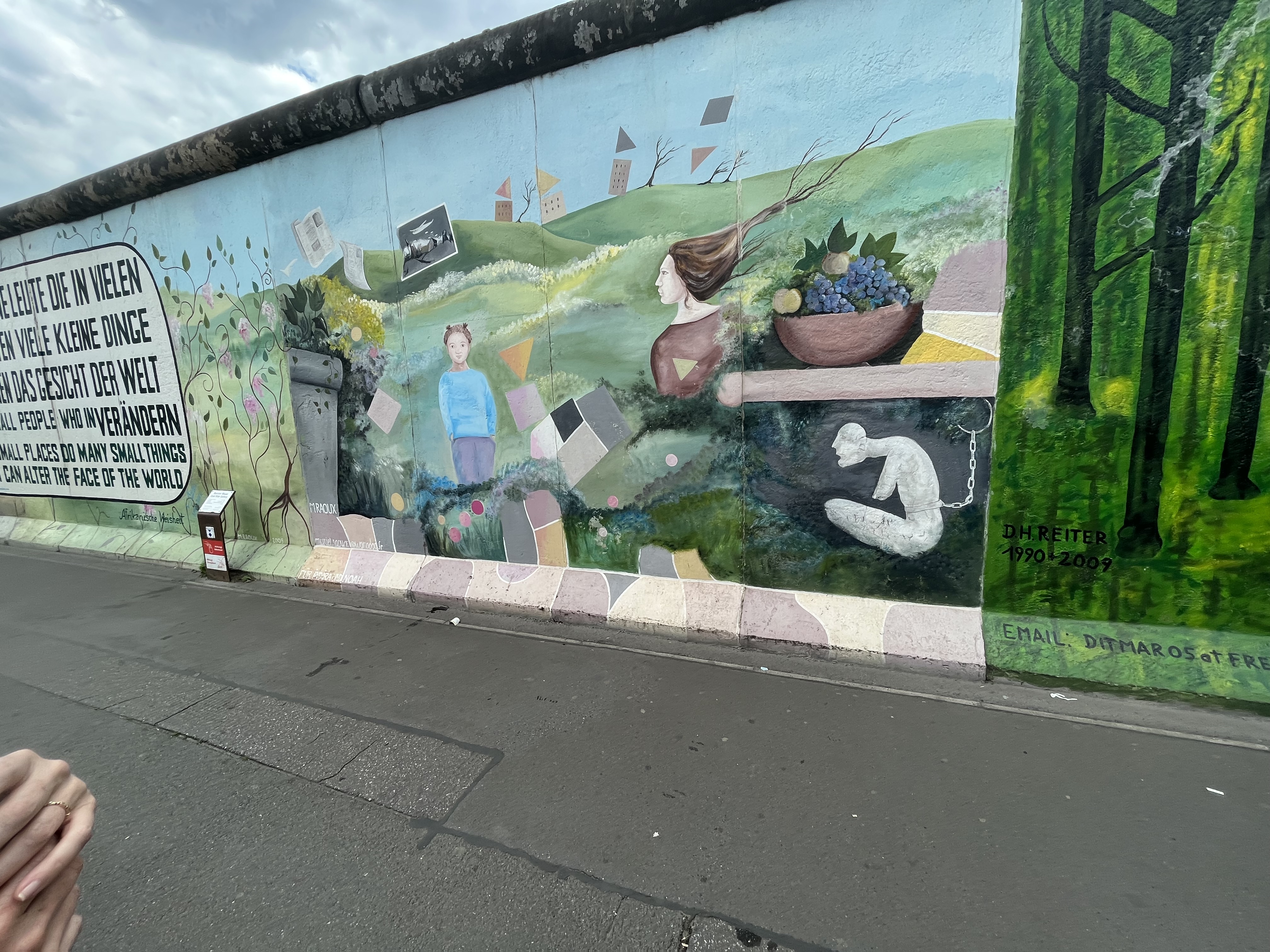
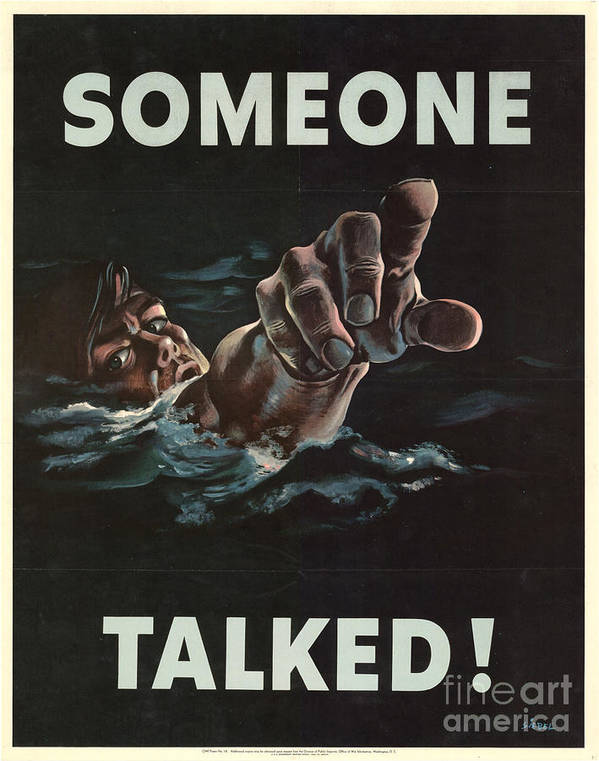
It strikes me as strange that when so many restrictions of Late Empire American morality have been softened– the acceptance of premarital cohabitation comes to mind – that speech has become less free, especially corporate speech, academic speech, speech addressed to a crowd, whether it be a cache of Facebook acquaintances or a classroom of high school sophomores.

How many chastened blurters in recent years wish they’d followed Polonius’s advice to his son Laertes: “[g]ive thy thoughts no tongue […], give every man thy ear but few thy voice.”[1]  

Unfortunately, throughout my life, I have not followed that advice; indeed, I seem incapable of holding my tongue. When what I consider a clever thoughts pops into my mind, it immediately pops right out of my mouth.

[cue gameshow wrong answer blaring sound effect]

In today’s academic environment, I’m fairly certain I’d be dismissed from my teaching position for any number of less-than-judicious[2] announcements I issued over the decades.

The first time I realized that I should be more circumspect in my audible musings occurred way back in the late 80s when future journalist Ballard Lesemann published in our literary magazine interesting statements by his teachers, all of which, if I remember correctly, were off topic.

Here’s mine: “REM sounds like the Byrds on bad acid.”

The statement, unfortunately, implies that I had had some familiarity with LSD, which indeed was the case, but also, that some types of LSD could be deemed good, as opposed to “bad acid.” Perhaps someone complained to one of my superiors, but I personally never heard about it.[3]  Back then, I was striving to cultivate a favorable impression.

Another less=than-judicious injudicious comment came when I was chaperoning a 6th grade trip to St. Augustine, a horrific seventy-two hours that has taken god knows how many years off my life.

Anyway, nothing irritated me more as a teacher than an arrogant child telling me how I should be doing my job. I especially took offense when little Bennington or Eliza dispensed with decorum and haughtily demanded something from their betters, i.e., I-and-I.

This was the case on the fieldtrip when at a motel the chaperones sat outside and allowed the children to run around the rooms, the stipulation being that the curtains had to be open. I was so miserable I was half-contemplating sneaking away and hitch-hiking back home when this imperious little twit came up and demanded to know why they had to have the curtains open.

Out of my mouth came this admonition: “Because we’re sick and tired every year when . . . [4]

I’ll leave you with this last lack of discernment. I don’t know how the topic of pornography came up in my honors Brit Lit survey, but it did, and I said, “Pornography is for the unimaginative,” and my best student enthusiastically informed me she was going to use that as her senior quote in the Yearbook.

She didn’t, thank goodness, but it just goes to show how difficult it is to overcome bad habits.

On the other hand, a certain frankness can hold a teacher in good stead. One thing that most adolescents excel at is perceiving hypocrisy. They possess finely tuned bullshit meters, and if they like you, they don’t want you to get in trouble.

So cheers, Ballard, cheers Courtney!

.

Ciao.


[1] Although “full of high sentence,” Polonius is more than “a bit obtuse,” a hypocrite, a fool, and no audience member rues his death. I love it when Hamlet, after stabbing eavesdropping Polonius through the curtain behind which he hid, informs his mother that he’ll “lug the guts in the neighbor room,” In the Derek Jacobi PBS production, as Hamlet’s dragging Polonius’s corpse out backwards by his legs, he chirps “Goodnight, Mother.” It’s very funny.

[2] Surprised my word processing built-in editor didn’t suggest “injudicious” given the pompous prose I’m producing in this post.

[3] I know my mentor Sue Chanson, whom I adore, shielded me from a lot of flak over the years. She herself was known for her frank appraisals, earning her the appellation, “the high priestess of the painful truth.”

[4] Redacted. Look, an old dog can learn a new trick.

Concrete and Barbed Wire

Stone walls do not a prison make

Nor iron bars a cage;

Minds innocent and quiet take

That for an hermitage.[1]

                                Richard Lovelace

It’s very easy to take our freedoms for granted, especially given the irrationality of a substantial number of our citizenry who see freedom as merely a license to do whatever they damn well please, as if American soldiers sacrificed their lives so these vulgarians can rev their unmuffled engines outside your condo at 2 AM, amass an arsenal’s worth of munitions in their basements, keep Bengal tigers as pets, burn barnfuls of autumn leaves during the windiest day of a four-month drought.  However, try stepping across the street from these freedom lovers’ houses and burning a Walmart-purchased-with-your-own-hard-earned-money-made-in-China American flag, and even though well within your rights as a US citizen, you’re likely to find yourself, run over, shot, devoured by an exotic pet, and/or torched because, if there’s anything that lovers of freedom detest, it’s “blame-America-first liberals like I-and–I.”

Nevertheless, even though, as Dr. Johnson said, “Patriotism is the last refuge of a scoundrel,” we should not take our freedoms for granted – as anyone who has spent a night in jail can attest.  Imagine being arrested for expressing an unsanctioned opinion, or worse, being imprisoned 6 years for making a fictional motion picture about your country’s controversial election and then being barred from making another film for 20 years.  Well, meet Iranian director Jafar Panahi who ended up doing a year plus and then a lifetime of house arrest, banned from leaving the country except for medical treatment or visiting Mecca for the Hadj.

One year, a mere instant in the life of the free, an eternity for someone sitting in a cell, the epic equivalent of that insufferable class or professional development seminar where you glance up at the clock every hour to discover to your horror only five minutes have elapsed.

In Panache’s case six years! Then being barred from doing what you love to do – that you feel compelled to do – for twenty years! – because your homeland has been confiscated by a bevy of Medieval paranoids who see the human body as somehow evil, who see women as temptresses, who respect not one iota the concept of individual freedom.

I find the jingoistic poster below offensive. “Taking America back” suggests taking America back from some usurper – minorities, immigrants, college professors, etc. However, it’s the right of whoever concocted the poster to create and publish menacing jingoistic images, and we wouldn’t have it any other way, so on this Memorial Day weekend, we should take time from boating, barbecuing, golfing, or vegetating to honor the men and women who sacrificed their lives – whether in vain or not – so we can be ourselves, say what we please, and create what we will.


[1] Unless, of course, you’re being sodomized by a fellow inmate

Hold That Sentence, Embrace That Sentence

Mark Leyner

I probably shouldn’t express such an obviously shallow sentiment, but I sometimes prefer style to substance. I’d rather read cleverly constructed sentences in fluff pieces than pedestrian prose dedicated to grand subjects.

For example, I just finished Mark Leyner’s novel (if you want to call it that) Et Tu, Babe[1].  This narrative is not for the huddling masses, not for the conventional book club.  Its discontinuity can get tiresome; however, to quote the Village Voice, “it begs to be read out loud to friend and strangers alike – if only you could figure out where to stop.”

So, friend, or stranger, allow me to share just a couple of passages with you:

The movie hinges on the question of whether he should be considered a suicide – thereby making his wife ineligible to collect his death benefits – or whether he should be considered a moron who has accidently rid future generations of his genetic toxicity in the self-cleaning oven of Darwinian evolution.

OMG, as the young people say/text, what a phrase, “the self-cleaning oven of Darwinian evolution.”

One more.

–Do you believe in God?

–Yes, sir.

–Do you believe in an anthropomorphic, vengeful, capricious god who can look down on one man and give him fabulous riches and look down on another and say you’re history” and give him a cerebral hemorrhage?

–Yes, sir.

–You may take the stand.

So, anyway, if you prefer the Sex Pistols to the Doobie Brothers, you might want to check Leyner out.

Ciao.


[1] Although it’s a narrative that can’t be read in one sitting, possesses recurring characters, Et Tu, Babe is more or less a loosely structured series of gag pieces, many of which produce out-loud laughter. Or as Jay McInerney puts it in his cover blurb: Leyner is a twisted wizard, a genre-busting virtuoso, working at the outer edge of narrative convention.”  

Hearts

Jason and Juliet

Jason Chambers is a truly remarkable poet. When he reads at Chico Feo, the crowd automatically hushes and hangs on every breath.

I appreciate his granting me the privilege to share this recent poem and to recite it in my gorgeous Lowcountry baritone.[1]


[1] My former students will recognize that italicized well-worn phrase, a tongue-in-cheek self-tribute.

The dirt’s gone to powder

and with the first hard rain

it’ll all wash to nothing.

But now it’s soft and cool,

and lying there curled on a pillow

of her own fluff is the feral

from the woods next door.

I back the truck beside her

and sit idling

and begging her with my eyes

to only be sleeping.

And just as they start to wet

she opens one of her own,

and yawns.

That’s a good girl-

you go back to sleep.

It’s jerky for breakfast

and drink for dinner

and less and less

of me remains that isn’t

absolutely necessary.

Last year’s suit don’t fit.

Who even wore it?

Do I know him?

I’m a drunk of yearning love.

I have no resume,

save this:

One summer day,

with kids not mine,

I did swim and slide my

way through a creek salted

with the tears of god

and lined in oystershell

and we covered ourselves in mud

and dove from boats not ours

and laughed at the rain

and we all three come home

unscarred,

and forever wild.

We are held absolutely.

The hearts on my shirt protect me-

I’d die for the hands

that drew them.

Number 5 of the Stupidest Stunts


Royal Caribbean Hotel Beach 1982

When cataloguing the top ten stupidest stunts I’ve pulled, smuggling marijuana into Jamaica probably ranks in the top 5 behind leaping off the top of a chest-of-drawers onto a rocking horse that catapulted me face first onto a Biloxi Beach cottage’s wooden floor, driving my MG down steps of a parking garage that housed the USC’s campus police, totaling Joey Brown’s car in Hilton Head, and mistakenly thinking the stitches I received in that crash were dissolvable.[1] 

So, yeah, smuggling weed into JA comes in at five.

Why, curious reader, would someone smuggle ganja into Ganjaland you wonder?

It was the summer of ’81. My late wife Judy Birdsong and I had booked a flight to Montego Bay and a rental car so we could explore the north coast of the island. I had a problem, though. I didn’t know anyone in Jamaica, had no contacts, and approaching strangers seemed like a bad idea. After all, wouldn’t undercover cops be sporting dreads and t-shirts festooned with cannabis leaves?

So, I removed the ball from my roll-on deodorant, stuffed a nickel bag into the hollow cylinder, replaced the ball [cue Mission Impossible theme].

Once we arrived, it didn’t take me long to realize I had made a mistake. The Hertz Rent-a-Car attendant at the airport asked me if I needed some ganja, the house band asked me if I needed some ganja, every trinket seller on the beach asked me if I needed some ganja.

So, I trashed my USA stash and bought some local and had a blast.

Oh yeah, packing a suit for Jamaica may also seem stupid, but a restaurant we read about required a coat and tie.

Ya, Mon!


[1] The stitches were pulled months later by my brother Fleming with a pair of pliers, a scene reminiscent of the tooth extraction in Marathon Man.

Song Lyrics as Opposed to Poetry, George Fox Edition

George Fox, photo by Caroline Tigner Moore

Generally, when I first listen to a song, I don’t pay much attention to lyrics. If I dig the melody and beat – as the boppers used to say on Bandstand – I’ll start paying closer attention to the words, and if the diction is clever or thought-provoking, all the better.

After all, it’s really rare to encounter lyrics that possess the compression and structural integrity of poetry, i.e., to find songs with words that can stand alone on a page and engage sans musical accompaniment.

My friend George Fox’s latest song – so new that it’s still untitled – comes close to accomplishing this rare feat. The song, which consists of three verses followed by a chorus, distills a lifetime in four-and-a-half minutes and does so employing diction, imagery, and structure that reinforce and embody the song’s central theme, what Andrew Marvell famously dubbed “time’s wingèd chariot.” George wrestles with the metaphysics of time, the illusive nature of past, present, and future, and how a lifetime passes [cliché alert] in the blink of an eye.

The song begins with a callous youth speeding through life in rural Orangeburg County, South Carolina:

Just eighteen, driving an old pickup truck,
Joint in the ashtray and a bed full of luck.
Running nowhere as fast as I can
Down an Orangeburg County washboard road
Not enough sense to take it slow.
Rolling Stones singing “Street Fighting Man.”

Here, the theme of speed is introduced, and we have our first bit of compression in the allusion to the Stones’ “Street Fighting Man,” which melds the attitude of the the speaker in the Stones’ song with George’s narrator, both young men fueled by the fire of youthful exuberance.

What’s a poor boy to do but “run nowhere as fast as [he] can?”

The chorus shifts to the present, and again, we have speed, the idea of chasing “the dying light,” or as Marvell puts it in “To His Coy Mistress,” although “we cannot make our sun /Stand still, yet we will make him run.” Yet, in the last line, the speaker comes to the realization it’s always now, that the past and future only exist in the present and meaning lies in perspective, depending on where “you’re standing.”

Right outside of your window, just outside your door,
Everything is waiting for you
To fall into the night and chase the dying light.
There’s no need to be gentle.
Sometimes it’s heaven, sometimes it’s hell.
Sometimes it’s hard to tell.
All depends on where you’re standing.
I stand before you now, and I see it written in in the clouds,
All that was and is and could be is now.

In the video below you can check out the first verse and chorus from a live performance at Chico Feo’s Monday Night Singer/Songwriter Soapbox, which George emcees. The song is a work-in-progress, and for me, it’s thrilling to see it evolve on stage, as George experiments with phrasing and gestures.

In the second verse, the middle verse, the narrator finds himself suddenly middle aged, “thirty-three/With two little boys sitting on my knee” and has come to know “how love is made,” but swoosh, suddenly, with the days having flown by “like a midnight train,” he looks down to see, not his sons, but his granddaughter Eliza Jade.

Turned around and I was thirty-three
With two little boys sitting on my knee,
And I realized how love is made.
The days flew by like a midnight train.
The years fell on me like the pouring rain.
Now I look down and see Eliza Jade.

The last stanza arrives like a melancholy last act, with “second guesses, another last chance, and one more shot.” Once again, the radio is playing, not “Street Fighting Man,” but “a brand new song” saying “the same old thing” but “still get[ting] it wrong.”

Second guesses are all I’ve got,
Another last chance and one more shot.
And how I got here I don’t even know.
The radio plays a brand new song.
It says the same old thing they still get wrong
Oh man, and so it goes.

And so it goes – a lifetime distilled into a handful of words.

I could go on about structure, how the number three is central to the architectonics – three six-line stanzas, three nine-line choruses, the narrator citing at one point his age is thirty-three, but you’d think I was overdoing it, and you’d be wrong. If it’s there, it’s there, whether the artist planned it or not. Making art is like dreaming, it comes from below, often surprising the artist him or herself.

By the way, George’s band Big Stoner Creek has a new album out. You can check it out HERE.

PS. Here’s an earlier rendition of stanza three and the concluding chorus:

Excuse Me, Sir

Street Huckster – Charleston by James Augustus McLean, Greenville County Museum of Art

I recall as a boy my daddy complaining about how television news stereotyped Southerners, the correspondents constantly trotting out before the cameras a series of Bull Connor belligerents, grammatically challenged podunk politicians, and/or dentally deficient racists whose lack of front teeth made pronouncing the n-word problematic. 

I didn’t know enough back then to explain that they were the ones making the most noise, the ones cracking Blacks with baseball bats, unleashing snarling German shepherds, that they were newsworthy, that his own nuanced, quiet racism wouldn’t be all that interesting to viewers.[1]

And if you were born and raised in the South in the first or middle portion of the 20th Century, you were bound to be racist because bigotry was inculcated, abundant in the air you breathed: segregation included not only movie theaters, restrooms, and water fountains, but even doctors’ offices.  Even if your parents didn’t explain to you as a child that Blacks were inferior, you would sense that they were because of their forced separation. It went without saying, though of course, lots of people were saying it, repeating racist jokes and addressing grandfathers as boy. The Blacks’ poverty was proof of their lowness, as if conquering systemic racism and overcoming a substandard education should not be a hinderance from rising from rags to riches. Look at the Greek immigrants, the Italians, etc.[2]

Last Tuesday, my friend Warren Moise presented his excellent memoir The Class of ’71: A Tale of Desegregation in Gamecock City to the Thomas Street Book Club. This was our first in-person meeting since the pandemic, so attendance was sparse. In fact, all the participants were white male Southerners of the boomer generation, so we all had stories to tell of race relations back in the day, of “maids” entering through back doors and yardmen eating their lunches on back stoops.

However, to my mind, the most poignant narrative came from Ed, a physician who grew up in Little River, South Carolina.

In high school Ed worked at an A&P supermarket bagging groceries. Like many establishments, the store had an in-door and an out-door. After working a month or two, Ed discovered he could save time exiting the store through the in-door as he carted customers’ groceries to their vehicles in the parking lot. 

One of the stores’ produce suppliers was an elderly Black man who brought in his vegetables on a cart composed of wood and cardboard, a sort of oversized wheelbarrow he pushed along the highway to the store. 

One day, Ed rocketed out through the in-door and collided with the old man, overturning the cart, knocking the man to the pavement. The cement was strewn with vegetables, with smashed tomatoes, the cart destroyed.

Clearly in the wrong, Ed was mortified, worried that the old man was hurt, that he’d have to pay for the ruined produce, that he might be fired.

Slowly, Ed said, the old man tottered to his feet, placed his cap back in his head, looked Ed in the eye, and said, “Excuse me, sir.”


[1] C.f. Atticus Finch and Bob Ewell in To Kill a Mockingbird.

[2] It just occurred to me that what I’m writing is exactly what opponents of critical race theory want to, pardon the term, whitewash. 

Idle Thoughts at 9:50 a.m. on a Wednesday

Wouldn’t it be nice if the pleasant moments of our lives passed as slowly as Mac system updates? For example, for the last hour or so, my update bar has been stuck on “about 15 minutes remaining.”

You glide into a warm bath.  Rather than cooling, the water remains at a constant soothing temperature, pleasure’s non-existent blue bar stuck, as it were, frozen in time, as you sing on key a melancholy air like “Danny Boy.”

. . .  And I will know, though soft you tread above me,

And all my grave will warmer sweeter be,

And you will bend and tell me that you love me

And I rest in peace until you come to me!”

Once, “Danny Boy’s” in its grave, so to speak, you launch into “The Streets of Laredo.”

“Go fetch me a cup, a cup of cold water.
To cool my parched lips”, the cowboy then said.
Before I returned, his spirit had departed,
And gone to the round up – the cowboy was dead.

We beat the drum slowly and played the fife lowly,
And bitterly wept as we bore him along.
For we loved our comrade, so brave, young and handsome,
We all loved our comrade, although he’d done wrong.
 
The water’s still warm, life affirming.
 
There’s time for another, “Jeanie With the Light brown Hair.”

I long for Jeanie with a day-dawn smile,
Radiant in gladness, warm with winning guile;
I hear her melodies, like joys gone by,
Sighing round my heart over the fond hopes that die:—
Sighing like the night wind and sobbing like the rain,—
Wailing for the lost one that comes not again:
Oh, I long for Jeanie, and my heart bows low,
Never more to find her where the bright waters flow.[1]

OMG, as the young people say, as I typed the above, the bar inched forward to “10 minutes remaining.” 

At this rate, the update will be completed by Doomsday!


[1] My father rocked me to sleep while singing these songs, among others. It explains a lot. You can read more about that HERE.

Being of Two Minds: Dionysian Edition


Molenaer, Jan Miense – Battle Between Carnival and Lent

One of the recompenses of old age – and believe me they are few – is that getting rip-roaring, intestine-unloading, word-slurring, sidewalk-reeling drunk has lost its allure.[1]

Oh, Lawd, my geriatric muse, Erratatata has descended:

Dionysius, boon companion of my youth,

has grown so very long in the tooth

that he looks like Nosferatu,

like, like bad, bad juju.

Before
After

Nevertheless, even though my days of dancing-on-tables, driving-MGs-down-parking-garage-steps have long passed, I still enjoy checking out Folly Beach’s party scene, to engage tiara sporting brides-to-be and their uniformed entourages in conversation.[2] I also enjoy making small talk with the young men at Chico Feo or Low Life who share adjacent barstools.  I relish shooting the shit, as my father might put it, with many of the bartenders whom I consider more than acquaintances.

But only for an hour or two. Too many Founders Day IPAs makes Wesley a dyspeptic codger.

Nevertheless, I tip my fedora to those old sybarites who never forsake the temporary comforts of strong drink, the Sir Toby Belches and T. Frothingill Bellows of the world, who belly up to the bar and have at it until the day they started to drink becomes the morrow or until their livers eventually give out.[3]

the great WC Fields

Yet, ultimately, forgive the cliché, but home is where the heart is. There’s nothing I’d rather do than sit on the deck with Caroline on a gnat-less late afternoon and look out over the river at the light maturing, going golden, and ultimately dying, then sitting down to dinner with Brooks and rehashing the day’s trivial events, which all and all make up most of our lives.

Now, as some of us used to say in the 60s, that is where it’s at.


[1] Of course, the cliché “with age comes wisdom” is somewhat true. I say “somewhat” because the wisdom of perspective, of the long view, i.e., the road map that experience provides, is merely two-dimensional. For example, I’ve learned in my old age that acute intoxication comes at a cost not worth paying, but that revelation isn’t exactly profound – it’s not as if I’ve embraced the Four Noble Truths and eliminated desire from my mental makeup, not as if I have achieved the serenity that a life of virtue provides. I still occasionally slip up and get drunk, though that’s never my goal.

Anyway, if old age provides wisdom, how come so many of my senescent brethren wear scowls instead of sport beatific smiles? I’ll tell you why, because their joints ache, they’re lonely, the world is going to hell in a handbasket as it has been since time immemorial, i.e., since the discovery of agriculture, Eden’s end.

[2] In which I offer sage advice like “monogamy is the cornerstone of a non-violent marriage” and “if you get caught in undertow, swim parallel to the shore.”

[3] Sir Toby of Twelfth Night and T. Frothingill Bellows, the protagonist of WC Fields’s The Big Broadcast of 1938.

The ABZs of Auto-Obituary Writing

Look, I’m vain, love attention.[1] Therefore, there’s no way I’m going to let anyone get in the last word after I have checked out of this Motel 6 of Life. 

No, I’m writing my own obituary before I expire, and you should as well. After I succumb, I certainly don’t want my cousin Zilla to compose my obituary. Rather than merely “dying” or “passing away” or “entering eternal rest,” I might have “left the world to be with the Lord,” or worse, “entered the loving embrace of [my] Lord and Savior Jesus Christ.”  Though I wouldn’t mind getting a hug from Jesus, I’m agnostic, so I want my obituary to be an accurate reflection of my life. 

Don’t trust others to do right by you. Do it yourself!

So, what follows is an easy guide for composing your very own obituary.[2]

Okay, let’s get started.

Rule #1. Know your audience. Chances are the readers of the obit are friends, family, or acquaintances. Most people don’t read strangers’ obits (yours truly being a notable exception), and if they do, you can bet they’re retired, likely former English teachers, and/or grammar Nazis. Therefore, make sure to proofread carefully but address the audience in a familiar fashion.

Rule #2. Sentence one should state the sad fact that Wesley is dead and when and where that regrettable transition took place. Although it’s not necessary to state the cause of death, inquiring minds want to know. In the following I have bracketed words that can be omitted according to your own predilections. 

Wesley “Rusty” Moore died Monday [at his home/at a sterile assisted living facility/on the side of the road] [after a short/long illness[3]//months of neglect// stumbling in front of a car outside of Chico Feo].

Rule #3. It’s best to get the bio out of the way first. Make sure to include the occasional introductory subordinate clause; otherwise, these lists of facts are deadly tiresome enough without your bludgeoning the reader with an unrelenting barrage of declarative sentences.

Wesley, the first son of Wesley E Moore, Jr and Sue Blanton Moore, began life on 14 December 1952 in Summerville, South Carolina. After graduating from Summerville High, Wesley attended the University of South Carolina and received a BA in English in 1975.[4] [Because of the post-OPEC oil embargo recession of 1975 and the fact that he didn’t own a car and couldn’t score a job], Wesley immediately entered the English graduate program the fall after his graduation.

Tending bar as a graduate student, Wesley met his first wife, fellow bartender Judy Birdsong. After they decided to marry, Wesley [weary of scaling the mountainous molehills that characterize literary criticism] left the university without a Master’s. After [somehow] getting an adjunct gig at Trident Technical College, Wesley and Judy wed on 4 February 1978 [in Decatur, Georgia.]

[After a short stint of collecting rejection slips,] in 1985, Wesley started teaching at Porter-Gaud. By then, Wesley and Judy had two sons, Harrison and Ned, [who eventually attended Porter-Gaud and rode to school with their father, providing the boys the opportunity to amass quite a quantity of profane and vulgar words as their father battled traffic from the Isle of Palms and later Folly Beach on their way to West Ashley.]

After Judy’s death from lymphoma [on Mother’s Day] in 2017, Wesley fell in love and married Caroline Tigner.  Caroline, her daughter Brooks, and Wesley made their home in Folly Beach, a community they treasured [until it was overrun by Airbnb short term rentals that transformed the once funky residential island into a virtual Sodom and Gomorrah/ Myrtle Beach].

Bored yet? 

Rule #4. You should follow the bio with a paragraph that humanizes the deceased. I don’t know how many obits I’ve read that have short-changed the not-seemingly-so-dearly departed by expending a scant sentence or two. 

For example, Harold enjoyed fishing. That’s it; that’s all it says. Or Mabel enjoying playing with her grandsons.

In mine, I would mention my writing, particularly the novel Today, Oh Boy! and the handful of writing awards I’ve received. I would also mention my collage-making and blog and perhaps my four decades of surfing.

Papa Hemingway, Joyce, and Tom Waits in Wilmington, a collage by Wesley Moore

Rule #5. You should then list survivors and pre-decedents. By the way, if you’re old like me, there’s no need to specify that your parents preceded you in death.

NOT: The great-great-great-great-great grandson of Adam and Eve, Methuselah was predeceased by his parents . . . 

Rule #5. Although the time and place of the memorial service/funeral/burial at sea, can be stated at the beginning of the obituary, I prefer it at the end, though it’s completely up to you.

Now, all you have left is to designate where memorial donations should go and perhaps to thank anyone who was especially helpful in the dying process.

So that’s it, have at it, don’t put off until tomorrow because, well, you know why.

Fin.


[1] Hence this blog.

[2] I realize that most people (Prince Hamlet being a notable exception), don’t cotton to contemplating their own demise. However, look upon the exercise of auto obituary composition as a fond look back on a life well lived. On the other hand, if you consider your life a tale told by an idiot, full of sound and fury, signifying nothing, you can lash out at your enemies in your obit. It’s up to you! [insert smiley emoji].

[3] For me, the more specific the better. If possible, I’d like to precisely name the illness, for example, “after an acute case of cirrhosis of the liver.” BTW, I hate the trite trope of illness as a martial encounter. Waging heroic battles with Goliath-like adversaries such as inoperable brain cancer is yawn-producing. Certainly, there must be people out there who whined their way to the grave.

[4] Why are red-blooded Americans omitting the “from” in sentences pertaining to graduation, as in “graduated high school or graduated university?”