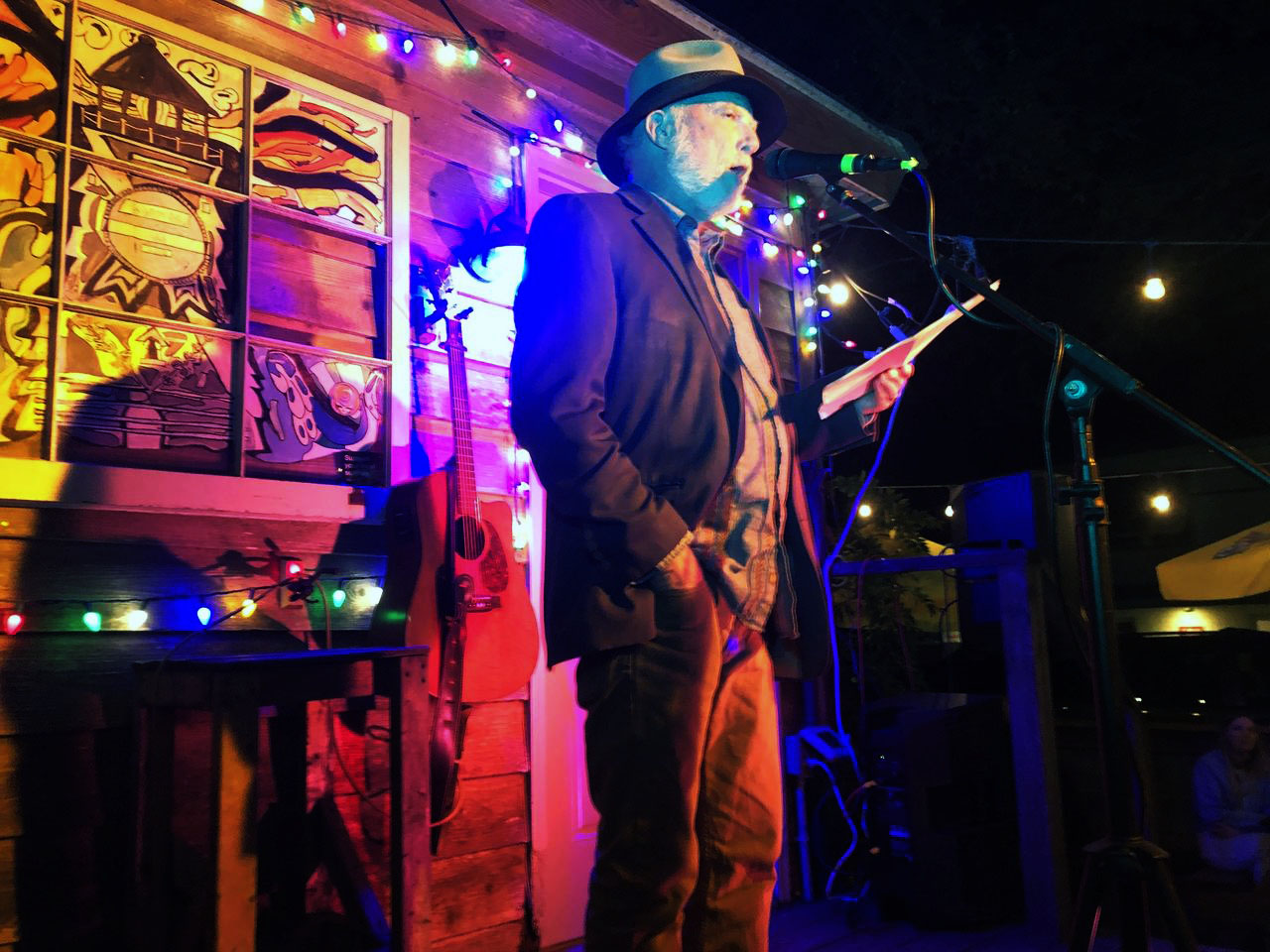
Here I am reading a poem written during the pandemic. Put on your dancing shoes.
Here I am reading a poem written during the pandemic. Put on your dancing shoes.
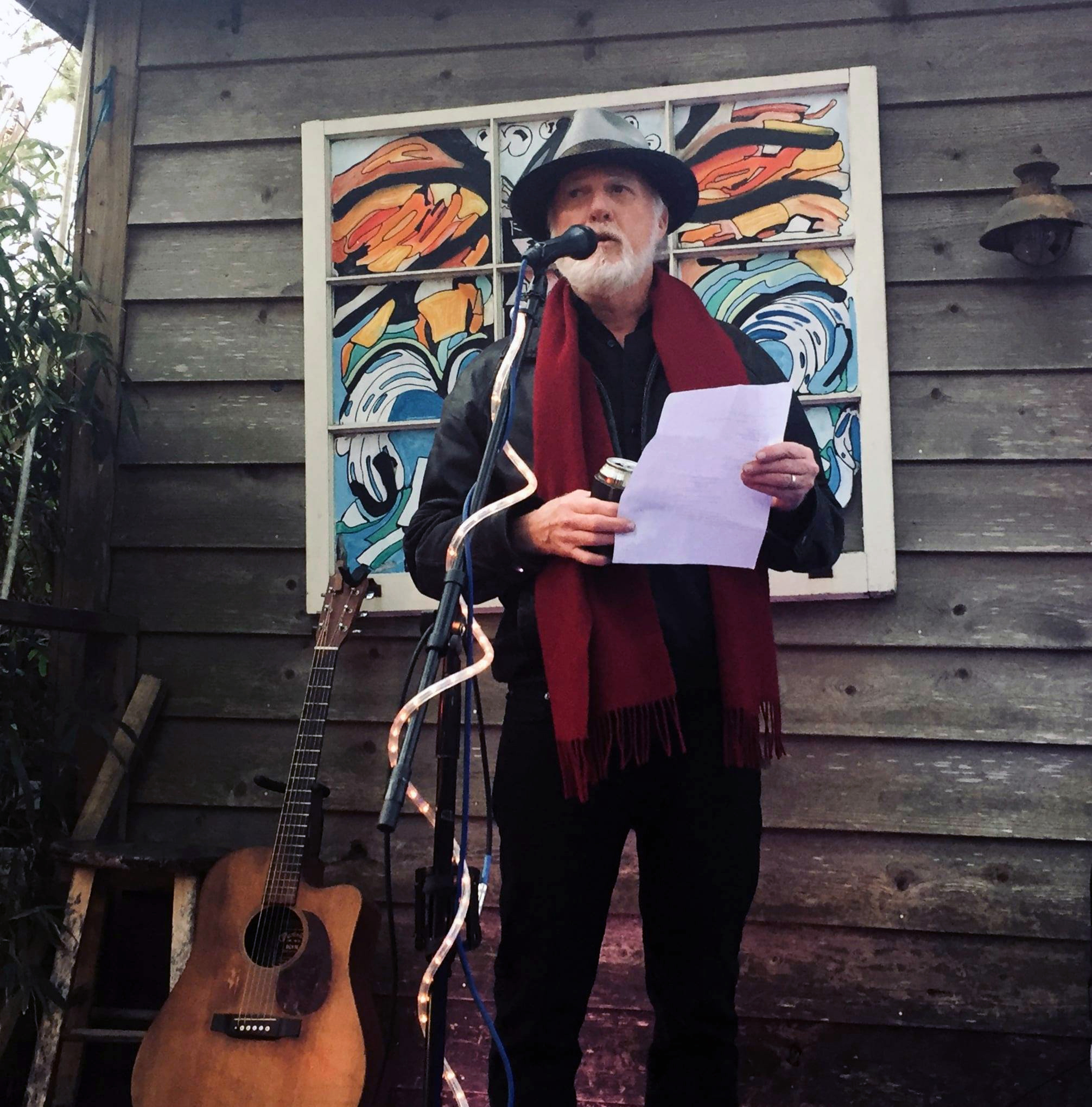
Here’s a video of my reading my original poem “St. James Infirmary iPhone Blues” on February 6 2023.
St James Infirmary iPhone Blues
Tapping a cane,
Mr. Andre Beaujolais,
with some hoodoo magic
in his front pants pocket
bopped down St. Charles
on his way to see
Miss Hattie Dupree,
the one-time lover
of McKinley Morganfield,
better known as Muddy Waters,
King of the Chicago Blues.
Those who got bad mojo
go see Miss Hattie Dupree
for the inside dope
in the hope of counteracting
shenanigans ¬– hexes,
curses, drywet nurses,
vexations, permutations,
marital relations.
genetic mutations,
Haitian sensations,
and genital truncations.
Mr. Andre Beaujolais
was on his way
to deliver a batch
of John the Conkeroo juice
to help some dude
whose private
conversations had
been swiped by
advertisers, enterprisers,
franchisers, monopolizers,
and merchandizers.
He’d been telling his gal
about Blind Willie McTell,
how the Dylan song
by the same name
was sung to the same tune
as St James Infirmary Blues.
Their moment of intimacy
the next day mysteriously
appeared in an ad
for a book being peddled
on the dude’s Facebook page.
“I Went Down to the
St, James Infirmary:
Investigations in the shadowy
world of early jazz-blues
in the company
of Blind Willie McTell, Louie Armstrong . . .
where did this dang song
come from anyway?
“That title don’t trip off the tongue,”
Mr. Beaujolais said when
he heard the dude explain.
“Hand me your phone,” Andre said,
then took off its cover,
whupped out the Conkeroo juice,
poured it all over the device,
mumbled some mumbo jumbo.
“Ta da! problem solved!”
“Wait a minute, “the dude complained.
My phone’s not working!”
“No shit,” Mr. Andre replied.
“That’ll be fifty dollars.
I’ll accept ten fives.”

Yesterday my cousin Pamela Moore Allen posted the above photo of my father (on the right) and his brother David fighting on a street in Charleston, South Carolina, during the Great Depression.
Here’s another photo standing outside their grandfather’s pharmacy where they worked as curb boys.
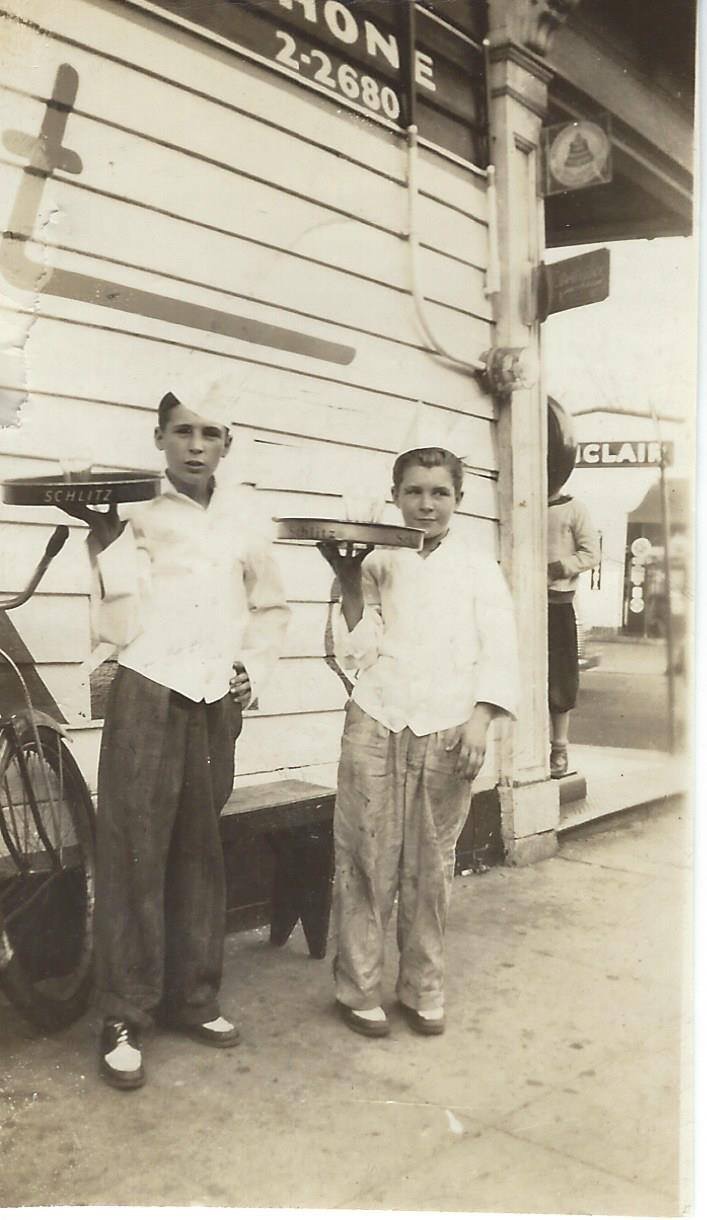
I posted the street-fight photo on the Facebook site “Charleston History Before 1945” and misidentified the location as Spring Street, where the pharmacy was located.[1]
A few sharp-eyed history buffs weren’t so sure about the location and began sleuthing.
Ray Benton, a Charleston lawyer, posted that in the early 60s he worked at a corner pharmacy that had an apartment upstairs. Lester Dempsey, another old-time Charlestonian, suggested the fight took place near Cannon Street and Rutledge.
Mary Thiedke Grady weighed in:
Look at the intersection of Spring and Rutledge looking west toward the bridge. The building currently occupied by Xiao Bao Biscuit was once upon a time a gas station and had a canopy. (The supports changed, but the canopy is still there.) Also look beyond to the other corner (northwest of Rutledge.) That building is tall enough, though the architecture isn’t quite the same. Given the proximity to the road, that first house could have been torn down and a second where the current house is located. (Ok, this part I think I’m fishing around with, and the argument doesn’t hold water.”)
Lester Dempsey provided an aerial view:
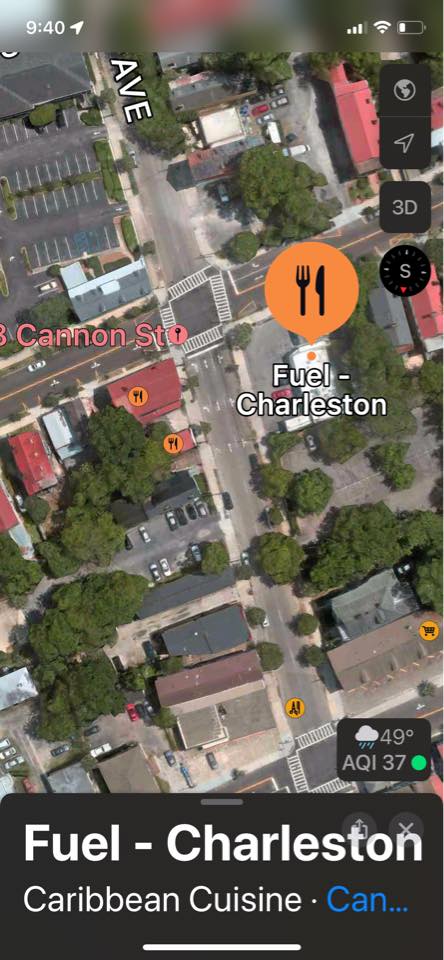
And dig this, Rutledge Rivers Webb, Jr. took two photos after dropping off his kids at school this morning. He took them on Rutledge near Spring looking towards Cannon. The Texaco service station on the right in the original photo is now the restaurant Fuel.


Mystery solved.
Thanks to all who weighed in.
[1] They lived above the pharmacy on the second floor.
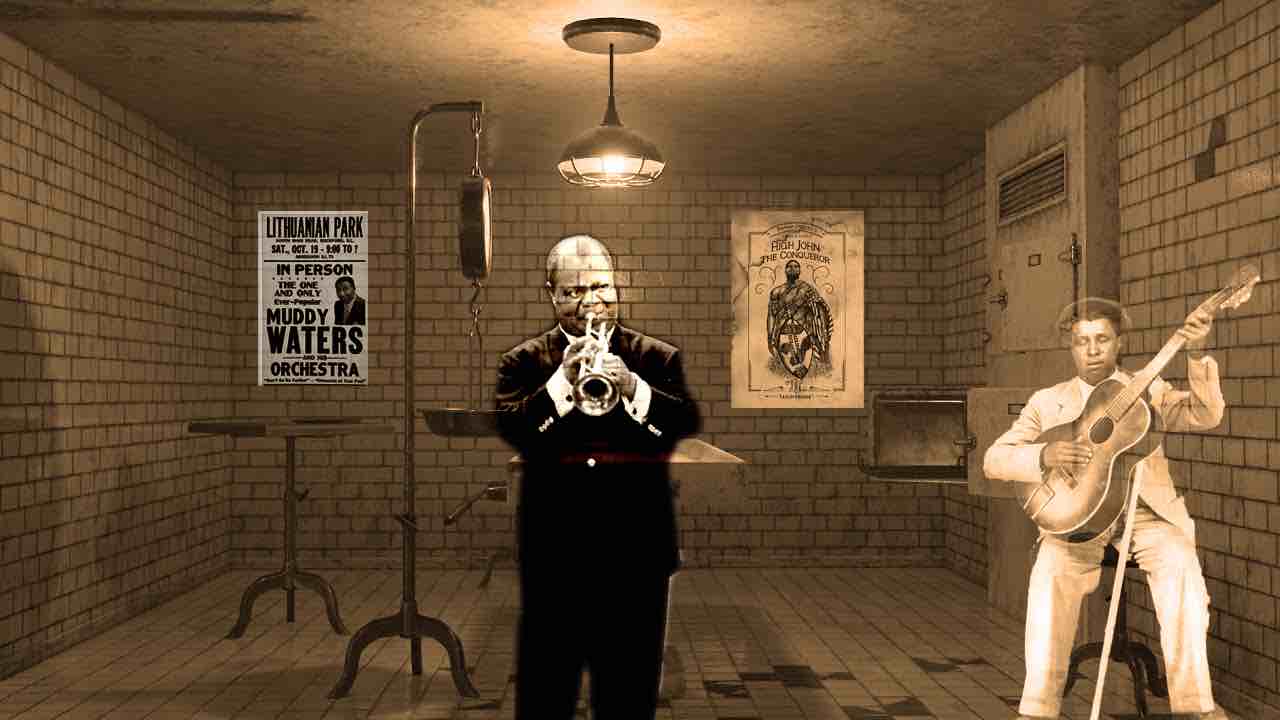
I first heard “St. James Infirmary Blues” covered by Eric Burdon and the Animals, and the song really moved me, the horror of it, having to encounter the corpse of your lover “stretched out on a long white table/ So cold, so stiff/ She was dead.” Throughout the years, the song really stuck with me.[1]

The other night, Caroline and I were at the Lowfife Bar on Folly, and somehow the topic of public domain tunes came up. I mentioned that Dylan had borrowed the melody of “St. James Infirmary Blues” for his masterpiece “Blind Willie McTell.” In fact, I sang two verses of the Burdon cover right there at the bar.
Well, the very next day, an ad showed up on my Facebook feed for this book, which I’m eager to read.

Anyway, we can probably chalk up the ad’s appearance to coincidence, but, man, could it be some bot was listening to us via our phone?
Then last night at the Soapbox open mic at Chico a banjo player covered the song. WTF?
So, this morning, during one of my undelightful stints of insomnia, I composed this piece of doggerel in my head, which I consider a more productive use of my time in the wee hours than contemplating politics, my health, the past, or the future.
(BTW, occasionally, a reader accuses me of cultural appropriation one of these paeans to Black culture, but my conscience is clear on that score.)
St James Infirmary iPhone Blues
Tapping a cane,
Mr. Andre Beaujolais,
with some hoodoo magic
in his front pants pocket
bopped down St. Charles
on his way to see
Miss Hattie Dupree,
the one-time lover
of McKinley Morganfield,
better known as Muddy Waters,
King of the Chicago Blues.
Those who got bad mojo
go see Miss Hattie Dupree
for the inside dope
in the hope of counteracting
shenanigans ¬– hexes,
curses, wet nurses,
vexations, permutations,
marital relations.
genetic mutations,
Haitian sensations,
and genital truncations.
Mr. Andre Beaujolais
was on his way
to deliver a batch
of John the Conkeroo juice
to help some dude
whose private
conversations had
been swiped by
advertisers, enterprisers,
franchisers, monopolizers,
and merchandizers.
He’d been telling his gal
about Blind Willie McTell,
how the Dylan song
by the same name
was sung to the same tune
as St James Infirmary Blues.
Their moment of intimacy
the next day mysteriously
appeared in an ad
for a book being peddled
on the dude’s Facebook page.
“I Went Down to the
St, James Infirmary:
Investigations in the shadowy
world of early jazz-blues
in the company
of Bling Willie McTell, Louis Armstrong . . .
where did this dang song
come from anyway?
“That title don’t trip off the tongue,”
Mr. Beaujolais said when
he heard the dude explain.
“Hand me your phone,” Andre say,
then took off its cover,
whupped out the Conkeroo juice,
poured it over the device,
mumbled some discrete mumbo jumbo.
“Ta da! problem solved!”
“Wait a minute, “the dude hollered.
My phone’s quit working!”
“No shit,” Mr. Andre replied.
“That’ll be fifty dollars.
I’ll accept ten fives.”
[1] In fact, I asked Gary Erwin to play it at Judy Birdsong’s memorial service, which he graciously did. BTW, Gary is an underappreciated Charleston treasure.
Folly Beach is in the throes of a political battle that wages real estate interests versus residents who would prefer Folly remain a community rather than become a resort destination.
Two competing collectives have formed, Saving Folly’s Future and the Folly United, which employs the shaka “hang loose” hand signal as its logo.[1]
I certainly understand real estate investors wanting to expand their net worth and protect their investments. However, I wish they’d make their case without resorting to misinformation.
My friend Chris Bizzell has taken the time to analyze some of the erroneous information from the flyer that Folly United recently distributed and from the Folly United web site.
First, Folly United argues that Folly Beach residences have grown 2% per year since 2015; however, even though the number of houses, i.e., residences have grown, the number of full-time residents has fallen, as shown in the chart below.

Chris provides the following analysis:
Based on the latest 2022 data from the US census, the current population of Folly Beach is 2,056.
What was the peak population of Folly Beach?
The peak population of Folly Beach was in 2010, when its population was 2,617.
Folly Beach’s population is currently 21.4% smaller than it was in 2010 and 6.0% smaller since the year 2000.
In fact, Folly Beach’s growth is below average. 63% of similarly sized cities are growing faster since 2000. If the STR market is not capped, we can easily expect Folly’s full-time population to decrease further.
The flyer also contends that fewer short-term rentals will lead to higher crime rates because the properties are left empty.
Again Chris:
While studies do show that empty properties can lead to higher crime rates, this has nothing to do with STR levels. In fact, a new study shows that a proliferation of Airbnbs, or similar short-term rentals, in a neighborhood contributes to higher rates of crime in the area.
The study compiled 911 data from 2011-2018 determined that higher STR properties in a community does in fact lead to higher crime rates. A major finding in the report was that certain violent crimes, including fights, robberies, and reports of someone wielding a knife, tended to increase in a neighborhood a year or more after the number of Airbnbs increased. “What seems to be the problem is that Airbnb is taking households off the social network of the neighborhood and eroding its natural capacity to manage crime,” says O’Brien, who also studies criminology and criminal justice at Northeastern.
“What we’re seeing is evidence of a slower process, one that becomes significant over the years,” Babak Heydari (associate professor at Northeastern and author of the study) says. “It’s another support that changing the social fabric of the neighborhood is what’s undergirding these results.”
Folly United’s web site has a page entitled “Did You Know,” that ends with incredible bit of so-called information:
The STR commission discovered that STR had NO impact on the number of Long term rentals and no impact on population growth. INCONVENIENT FACTS that have repeatedly ignored.
C’mon, commonsense tells us that this couldn’t be true. As off-island owners transform their properties from long term to short term rentals the renters who called Folly home are replaced by vacationers.
Chris Bizzell:
As more properties are converted to STR’s, the supply of available housing open for long-term renters and homeowners shrinks. With housing in short supply, everyone ends up competing for the same tiny pool of rental properties and rents increase.
Researchers at Carnegie Mellon University found that Airbnb “mildly cannibalizes” the long-term rental supply. And in the cities they studied where Airbnb was popular, residents faced a more severe reduction in housing stock.
Research at the University of Arizona and University of Denver found that Airbnb is indeed making the real estate market more expensive. By enriching its hosts while making housing less affordable for others, Airbnb and other home-sharing platforms may be compromising public affordability for private wealth, the research suggests. “It’s going to increase the gap between the rich and the poor,” Wei says. “It’s going to make inequality a little worse.”
The study concluded: “STR’s have become a major alternative for real estate investment and have had a significant impact on housing affordability.”
We can learn by looking at what has happened in other vacation destinations.
In Colorado ski towns, the demand for short term rentals and the increase in supply of STR’s are growing at such a rate that it is displacing local residents of the towns they are supposed to serve.
Margaret Bowes, Colorado Association of Ski Towns executive director, says that the perfect solution to the crisis is still not within reach. “The trajectory of the number of properties becoming (short-term rentals) is not sustainable,” according to Bowes. She adds that at the current rate, no one working in the said communities will be able to live in them.
Look, like I said earlier, I understand that property owners, especially those who don’t live on the island, want to increase their wealth, and certainly, if you live in your Folly residence nine months out if the year, you should be able to rent it short term and that goes for adjacent properties. However, we’re not talking about eliminating short term rentals but capping them, creating a happy symbiosis between full time residents and vacationers.
But, please, don’t resort to cherry picking data and resorting to misinformation to make arguments.
Aloha.
[1] Cue George Orwell: “Yes, war is peace!” If Folly were united, there would be no issue, and nothing screams “hang loose” and the aloha spirit like frenetically placing signs in the yards of short-term rentals that read “Don’t Cap Folly’s Future,” as if Folly is sentient being that would prefer to have its few remaining lots clear cut for the construction of McMansions than maintain a verdant residential vibe.
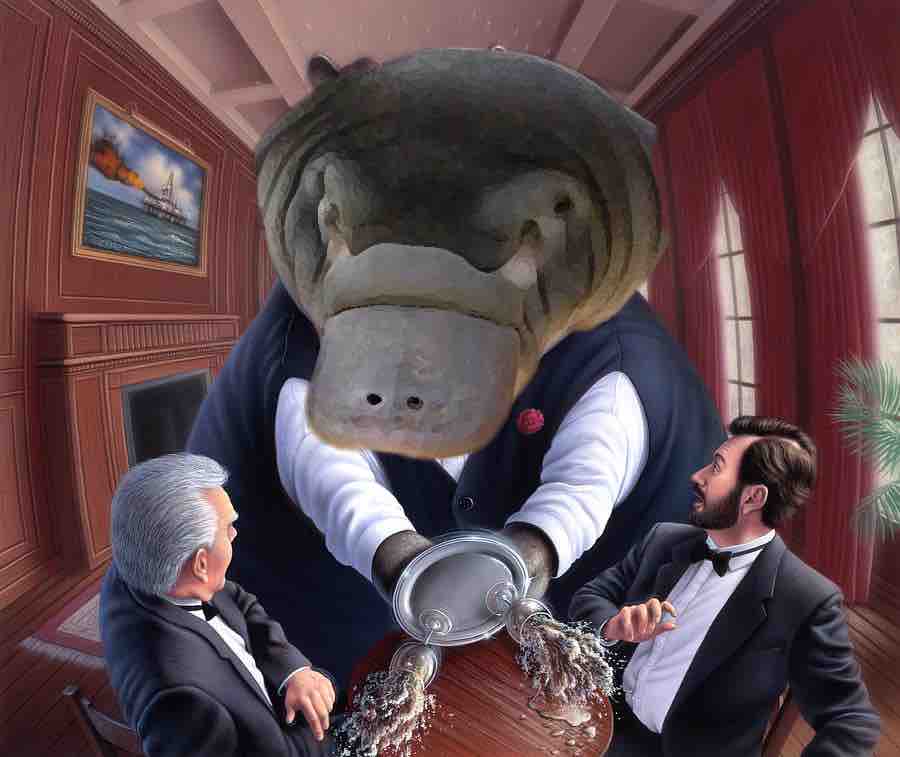
Photoshopped from Jerry LoFro’s Clumsy Painting
In pains me to admit I have the fine motor skills of a duck-billed platypus. I’d hate to add up the total time I’ve squandered in supermarkets struggling to open those plastic bags you unspool from rollers in the produce department. When shoppers stroll by, they probably attribute my fumbling ineptitude to senescence – or perhaps to a stroke I’ve not fully recovered from – but truth be told, this disability has plagued me from my earliest years.
The humiliation began in kindergarten when Miss Marion hauled out some shoes and attempted to teach the class how to tie them. As my playmates looped and threaded, the laces kept slipping from my tiny fingers. Miss Marion had to come over and help me, and when I had finally accomplished the feat, the bow I had managed was so loosely constructed, the whirr of an oscillating fan unraveled it.[1]
Then there were those horrid two weeks after third grade when Mama made me go to Vacation Bible School at Summerville Baptist Church, a church we didn’t attend regularly, so many of the kids were strangers to me, especially the older ones. We were required to thread a knitting needle, which took me so long I had missed steps two and three and suffered verbal abuse from a tall dark-haired older kid. Thank Allah this was not a Muslim religious school because if it had been, my ineptitude in later painting the clay likeness of our Lord might have been mistaken for desecration.
I could go on with further examples, like my attempting to carve a likeness of the Statue of Liberty from a bar of soap in Cub Scouts or much later struggles in freeing prophylactics from their tiny plastic pods; however, for me the most embarrassing incident concerning my total lack of fine motor coordination occurred when my older son Harrison and I teamed to construct a Pinewood Derby racer from a block of wood.
As a boy, I would turn over such a project to my father, who would fashion the car at his workplace. Once he got home, I fetched newspapers so he could paint it in the carport.
See, I helped!
So, when Harrison and I tackled the job, I followed my father’s lead, in a way. I carved a very un-aerodynamic semblance of a car, but, in a more honest rendition of my old man’s methodology, I had Harrison sand and paint it. After I had attached the wheels, I wrote “Free Tibet” on the side of the car with White Out.
I had the good sense not to photograph this monstrosity.
The great race took place at the gym of the Isle of Palms rec center. Harrison and I arrived early and got in line to have our car inspected, which essentially meant weighing it. The lady in charge was very complimentary to Harrison, and as she handed to car over to me, she leaned over and whispered in my ear, “It’s so nice for a change to see a dad who let his child do all the work all by himself.”
I smiled and said, “Thank you.”

[1] The year was 1957 before such establishments were equipped with air-conditioning. I remember being in the first grade sitting in my reading circle in early September eagerly awaiting the fan to turn its puny breeze my way.

Well, dear scrollers, Time’s turbocharged chariot has rocketed past another year – ‘Tis here!” “Tis here!” “Tis gone!” – poof.
However, before it disappears in memory’s rearview, I thought I’d recap the year in posts, providing links to a few I think worthwhile. So without further ado, I’ll bid adieu to this intro and get the retrospective rolling.
January
By far, the most popular post of not only January but of the entire year was a melancholy meditation entitled “The Gentrification of Folly Beach,“ which laments the metamorphosis of a community into a resort. This fall and winter have seen the slowest bar and restaurant traffic in the quarter century I’ve lived on Folly. Could it be that the exodus of long term renters and home owners is the culprit? As I type this, the din of construction across the lane assaults my ear.
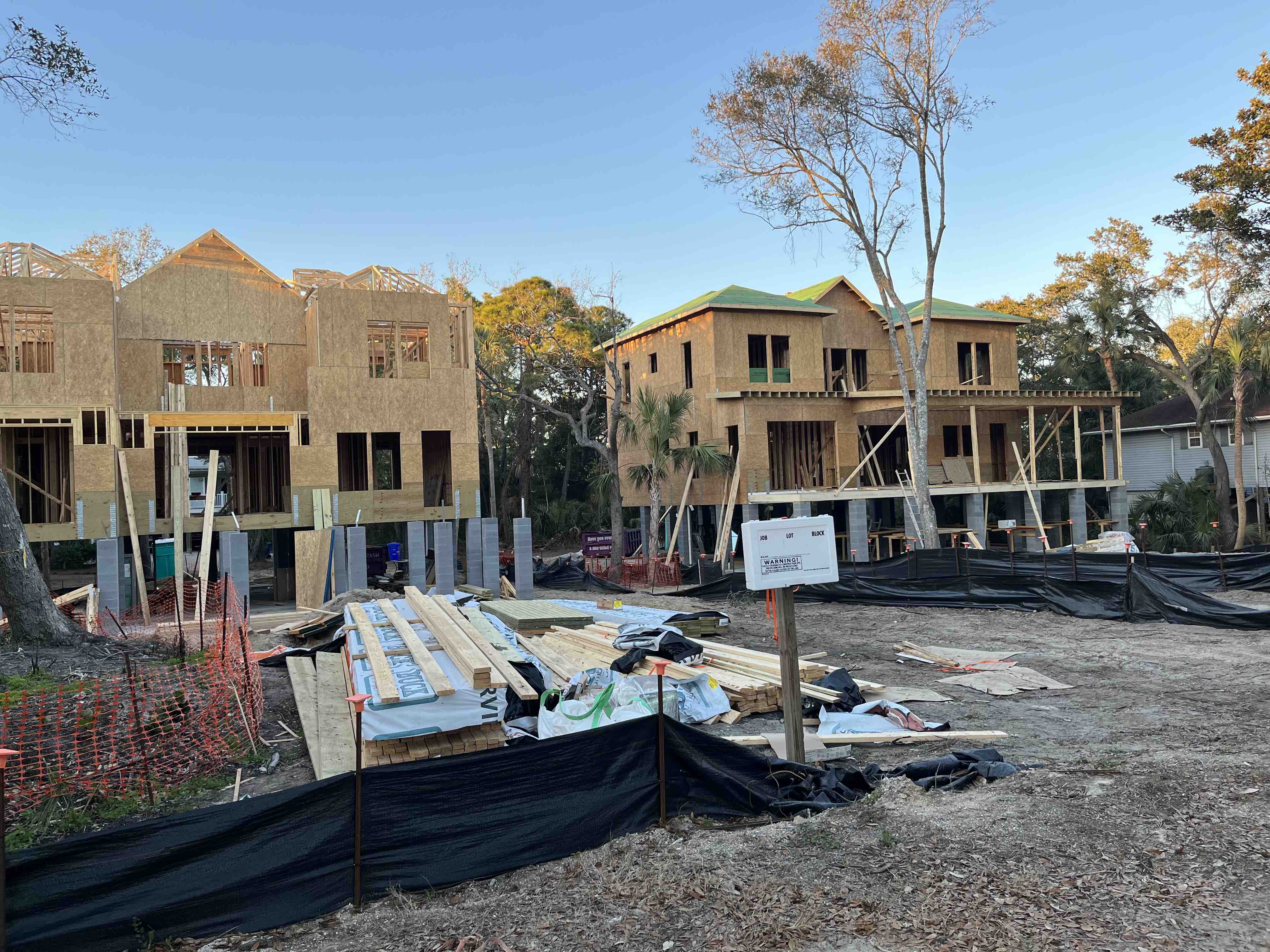
Here’s a view from my front porch as two identical behemoth short term rental clones arise from low lying lots that required groundwater to be pumped into a tidal ditch.
As Bobby Zimmerman once pointed out, “Money doesn’t talk; it screams.”
February

Slim pickings in February. I guess I’ll go with “Strange Encounters,” a weird-ass conversation I had with two puttering tourists.
March
After checking out Dylan (i.e. “Bonny Zimmerman”) at the Performing Arts Center, my friend Keith Sanders and I tuned into the Academy Awards just in time for the Will Smith/Chris Rock brouhaha, which I commented on in “The Sixth Deadly Sin.”
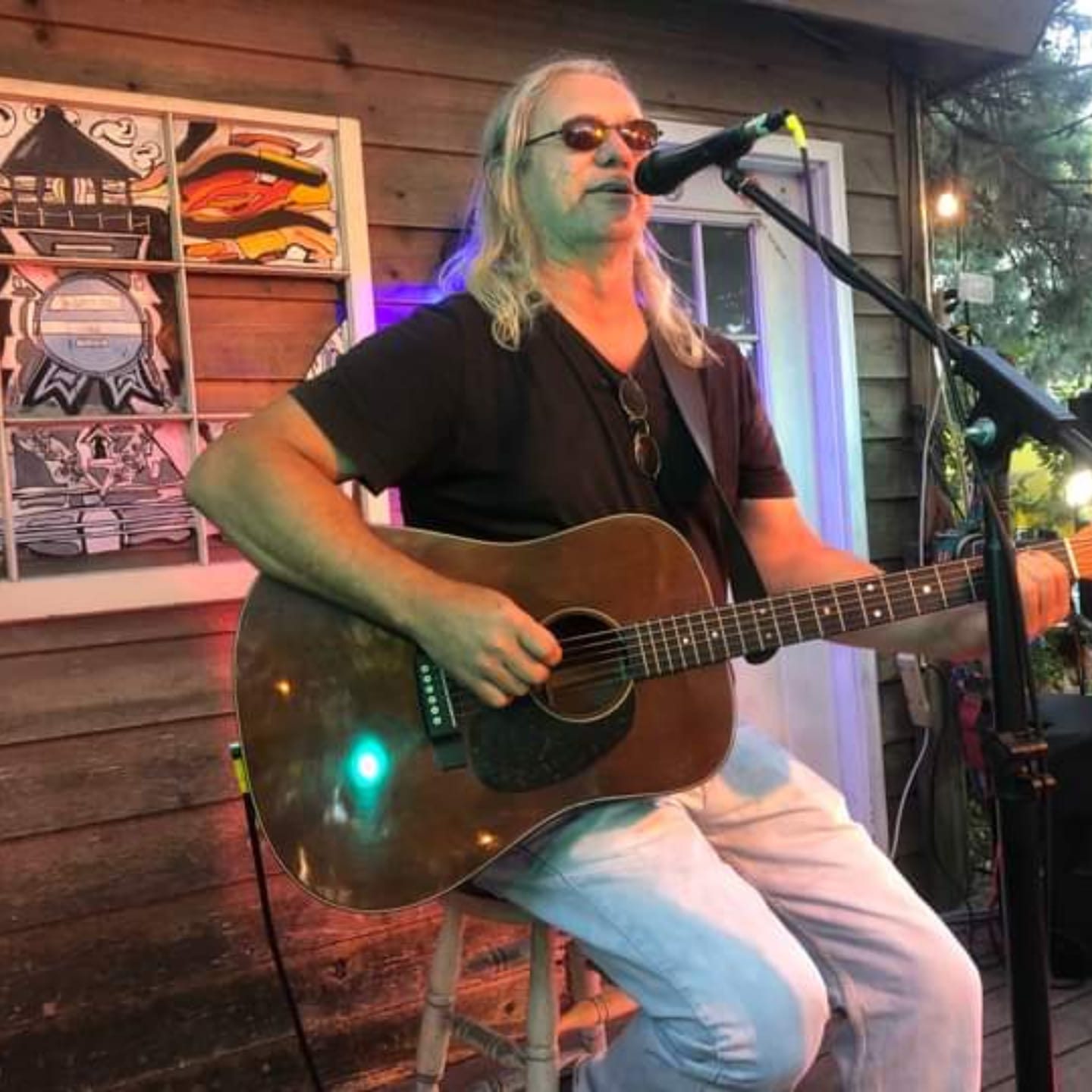
And there can be silver linings to dark clouds. From that sad incident, my friend, the prolific Pernell McDaniels, wrote this brilliant song, “The Ballad of Chris and Willy,” which you can watch him perform by hitting the link.
April

Here’s another post featuring a live performance at Chico Feo’s Singer/Songwriter Soapbox, this one by George Fox, who took the above photo of Pernell. If you’re from the Charleston area, you need to make the trek to Folly on Monday nights to check it out.
This one’s called “Song Lyrics as Opposed to Poetry, George Fox Edition“.
May
For May, let’s go with “The Folly of Living on Folly.“
June
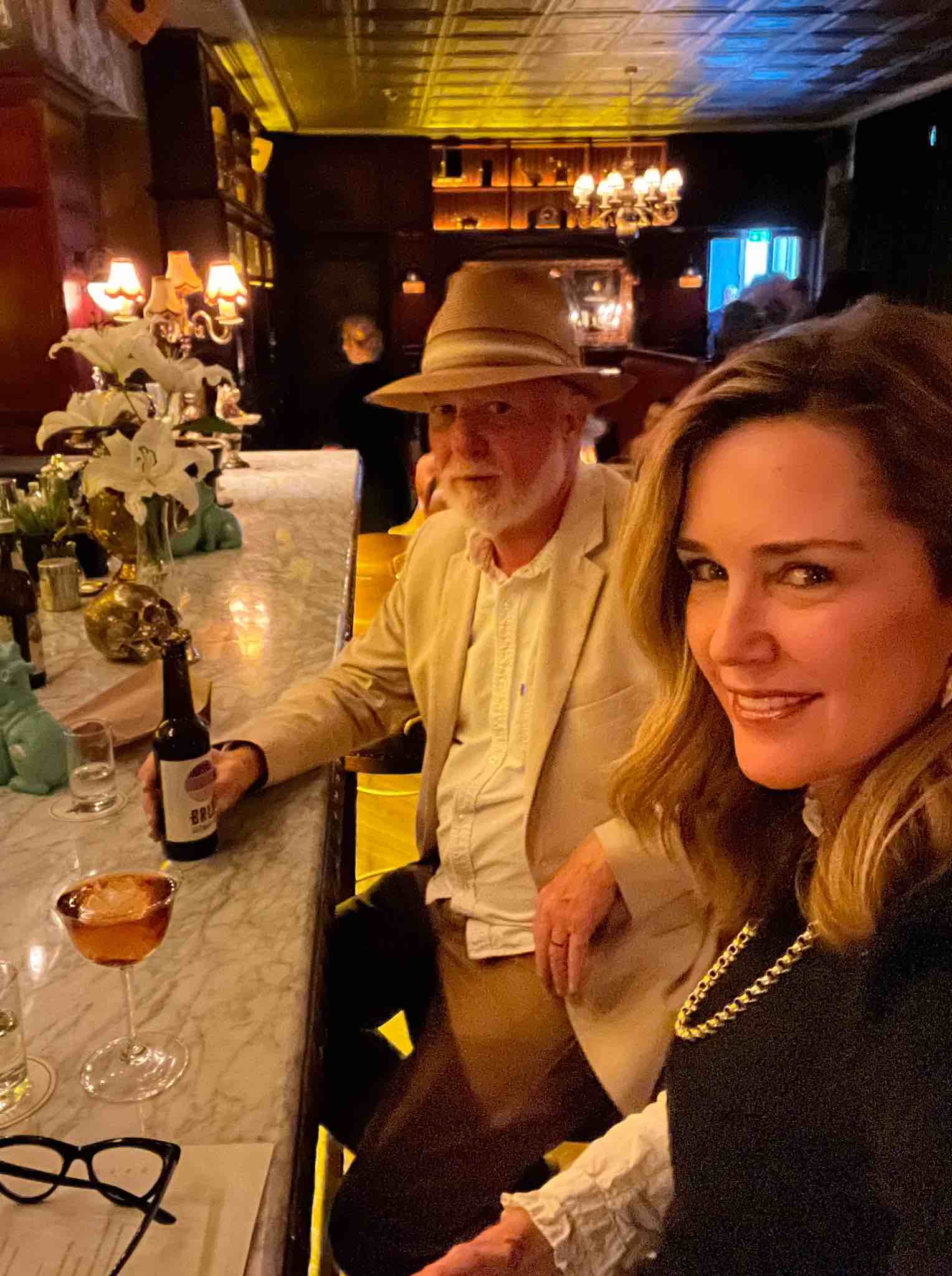
In June Caroline and I travelled to Germany to visit my ex-pat son Ned. We had a great time, got to meet his girlfriend’s Ina’s parents, have dinner with them, and visit their home.
Before all that wholesomeness, though, Caroline and I visited a speakeasy that was so weird it was like being on acid.
“Decadence Lite, Berlin Edition.”
July

Here’s a post for you language mavens: “Redundant Tautologies” whose very title merits a footnote.
August
I took August off, essentially recycling old posts.
September

Dig this live reading of an original poem from Meg Posey (pictured above), who doubles as my spiritual advisor.
October
I only produced four posts in October. Even though it’s really stupid to follow the above poem with one of my own, I can be really, really stupid. This is called “From Old Wes’s Almanack.”
November
Oh man, in November, a pickleball tournament took place on Folly, and I went all gonzo.

December
This may not surprise you, but I first smoked marijuana in high school. You can, too, vicariously, by shitting this link: “Smoking Pot, Weed, Refer in the Bad Ol’ Days.”

Thanks so much for reading, dear scrollers. Caroline and I are headed to DC to see my boys, my daughter-in-law Tayrn, Ned’s Ina, and my glorious grandson Julian.
Happy Holidays!

Last Wednesday night at the dinner table, I mentioned to Caroline and Brooks that I’d run across an ALL-CAP Trump post on Truth Social heralding a MAJOR ANNOUNCEMENT to be revealed the next day.
I confidently suggested that they “mark my words,” that Trump was going to announce that defeated Arizona gubernatorial candidate Kari Lake was his choice for vice president. After all, Lake has been a ubiquitous presence at Mar-a-Lago, and she and Trump share the conviction that the elections they lost had been stolen from them. In fact, it wouldn’t surprise me if they’ve engaged in a little extramarital hanky-panky.

”Whatcha wanna bet that the announcement is about Lake?” I asked.
Luckily for me, they demurred, because as we now know, the “major announcement” was that the Trump organization was trotting out an “official Donald Trump Digital Trading Card collection” in the form of non-fungible tokens. For a mere $99 dollars a pop, you could collect cards depicting the former president in various heroic poses – as superhero, sheriff, hunter, astronaut, etc.
To quote Aretha Franklin, “I ain’t no psychiatrist, I ain’t no doctor with degrees,/
but, it don’t take too much high IQ’s ” to see Trump’s got him a mental disease.
Acute Narcissistic Personality Disorder.
I mean, you’re talking Caligula-grade delusions of grandeur.[1] Check some of these out, a svelte yet swole Trump glistening godlike in poorly photoshopped incarnations from images illegally lifted from the internet.
These are especially inept:

I mean, what sane adult would publish altered images of himself to impress total strangers.

Okay, never mind.
[1] During his reign, Caligula, not only proclaimed his divinity and appeared in public dressed as various gods, but he also had heads removed from various statues of the gods and replaced with his own (not unlike Trump with these cards).

Smoking Pot, Weed, Reefer (Whatever You Wanna Call It) in the Bad Ol’ Days
I started out on Burgundy
But soon the harder stuff.
Dylan, “Just Like Tom Thumb’s Blues”
In the fall of 1970, I abandoned the friend group I’d embraced since kindergarten and Cub Scouts to become a member of Summerville’s small but growing counterculture.[1]
Rather than going to football games on Friday nights, my new friends and I started hanging out at an apartment, swapping stories, and drinking Old Milwaukees in fourteen-ounce cans.[2]
Sometimes, we’d head out to the Clay Pits, an abandoned heavily wooded former phosphate site, and do essentially the same thing, except under the stars and around a campfire. We had all grown up in the Southern tradition of storytelling and were learning how to practice the art ourselves.
We sported bellbottoms, wide flowery woven belts, dingo or desert boots. We boys had hair longer than the dress code allowed, and occasionally we’d get sent home from school to get it cut. Our girlfriends could grow their hair down to the waists but weren’t allowed to wear pants to school, so miniskirts became all the rage.
Hippies gotta do what hippies gotta do.
Eventually one of us, probably Gordon, purchased a nickel of skank-ass seeds-and-stems from some Middleton High surfer dude. Back then, Summerville was so small that if you went down to the Piggly Wiggly and bought a pack of rolling papers, the checkout lady was liable to tell your mama. So, we ended up rolling our first joints in Juicy Fruit chewing gum wrappers.
Sad? Pathetic? Comical?
I’d never even smoked a cigarette, so I didn’t know how to inhale. I sort of gulped the smoke in swallows. Of course, I didn’t get high, but I did suffer stomach distress the next day that had me bending over in pain as I attempted to rake some wealthy people’s expansive yard for pay. It was a weekly October Saturday gig. I dreaded it so much it gloom-shadowed my Friday nights.
I didn’t have to burn the leaves but merely haul them to the edge of the woods that bordered their house. On that day, after I had dumped a load of leaves onto an established waist-high pile, I lay down on top it, clutching my stomach, eventually rolling on my back, lying there, looking up, closing my eyes, following the sun-spawned blobs of color floating in greyness.
“Rusty!”
It was the woman, the homeowner, I don’t remember her name.
“Rusty, what are you doing?”
I told her I had a stomachache. She commanded I get back to work, which I did. This was before I could drive, so my mother picked me up at four. When the lady paid me, she told me my services were no longer required. She said it pleasantly.
I think she paid me something like two dollars for four hours work, so I was happy about getting dismissed. I’d rather collect cast away Coke bottles on the side of the road for deposits than suffer the Sisyphean labor of raking her yard and coming back the next week to see it again blanketed and to do it all over again, to have the onus of the obligation weigh me down on Friday nights.
Mary Jane had set me free.[3]

[1] Summerville, South Carolina. Population 1970, around 3,000
[2] I could barely force two beers down at first. I hated the way it tasted and sometimes even surreptitiously poured out a swallow or two. I’d get slightly buzzed but never really drunk.
[3] Mary Jane is the lamest of all cannabis sobriquets in my esteemed opinion.

Marius van Dokkum
On Turning Seventy
The days of our years are threescore years and ten; and if by reason of strength they be fourscore years, yet is their strength labour and sorrow; for it is soon cut off, and we fly away.
Psalm 90:10. King James Version
I have a milestone birthday coming up, the big SEVEN-O, the biblical three score and ten, the average life expectancy for a red-blooded American male when I was a kid, a birthday so far distant that a child couldn’t take it seriously.
O, yeah, yeah pissing in my pajamas, slop drooling out of
my mouth.
2 young schoolboys run by—
Hey, did you see that old guy
Christ, yes, he made me sick!
Charles Bukowski – “the last days of the suicide kid”

Charles Bukowski by Drew Friedman
Cue the cinematic cliches: sand moving through an hourglass, the winds of time ripping pages from a calendar, time-lapsed growth, and decay.
Trite but true: in the wink of an eye, you transition from making out in the back seat of station wagon to being wheeled into assistant living.
But the thing is – as I keep the cliches coming – it’s hard to smell the roses when you’re changing diapers, sitting through interminable meetings, or visiting a loved one in a cancer ward.
Chances are you’re not old enough to remember Mike Douglas’s cloyingly sentimental hit “The Man in My Little Girl’s Life.”
Well, before I knew it, time had gone
My, how my little girl had grown: Then it was:
“Uh! Father! There’s a boy outside – his name is Eddie
He wants to know if we can go steady?
Can we Father? Yes Father?
Oh! can we borrow the car Pop?”
Yes, it seems like only yesterday
I heard my lovely daughter say:
“Dad! There’s a boy outside – his name is Jim
He asked me if I’d marry him?
I said yes, Dad! – Got something in your eye – Dad?
I love him, Dad.”
A child, an adolescent, a young lady, a wife
Oh! and oh yes, Heh! Heh!
There’s another man in my little girl’s life
“Hi Dad! There’s a boy outside – his name is Tim
I told him Grandpa was gonna baby sit with him
Thanks Dad. Bless you Dad. Goodnight, Dad.”
Good night, ladies, good night, sweet ladies, good night, good night.
Wise old men and women no doubt take Cicero’s De Senectute to heart, or rather, to head. Cicero wrote it in this sixty-third year and argues that the longer perspective that old age provides is rich compensation for the lost pleasures of youth, that “each stage of existence has been allotted its own appropriate quality; so that the weakness of childhood, the impetuosity of youth, the seriousness of middle life, the maturity of old age — each bears some of Nature’s fruit, which must be garnered in its own season.”
Whistling past the graveyard, he offers this:
[T]he fact that old age feels little longing for sensual pleasures not only is no cause for reproach, but rather is ground for the highest praise. Old age lacks the heavy banquet, the loaded table, and the oft-filled cup; therefore, it also lacks drunkenness, indigestion, and loss of sleep. But if some concession must be made to pleasure, since her allurements are difficult to resist, … then I admit that old age, though it lacks immoderate banquets, may find delight in temperate repasts.
If only!
Yeats, who, on the other hand, cast a jaundiced eye on old age, who bemoaned it as “an absurdity” that had been “tied to [him] as to a dog’s tail,” nevertheless acknowledged that through art one could vicariously hold on to youth by studying “monuments of unageing intellect.”
An aged man is but a paltry thing,
A tattered coat upon a stick, unless
Soul clap its hands and sing, and louder sing
For every tatter in its mortal dress,
Nor is there singing school but studying
Monuments of its own magnificence,
WB Yeats, “Sailing to Byzantium”

Hey, it’s the week after Thanksgiving, and I am grateful for so many things, my old age being one of them. The romantic notion of living fast, dying young, and leaving a beautiful corpse is patently absurd. Adrenaline rushes are fun, but near fatal auto crashes aren’t (and I’ve lived through one). Plus, there’s no such thing as a beautiful corpse. Sure, nowadays, I’m not much to look at, my auburn locks have given way to a freckled scalp, my once lithe frame gone paunchy, and my ability to remember names a semi-serious social liability; however, at the moment, I enjoy good health, a harmonious homelife, successful sons, a thriving grandson, and a remarkably wise and kind thirteen-year-old stepdaughter. I enjoy reading, writing, listening to music, hanging with Caroline, and holding court at Chico Feo.
No doubt my good health will not last, but I would like to think I won’t end up like Philip Larkin’s old fools, “crouching below/ Extinction’s alp,” suffering through “a hideous, inverted childhood.”
As Caroline says, “we can hope; we can dream.”
And, hey, if you’re on Folly 10 December 2022, come have a drink with me after the Xmas parade at Chico Feo while I’m still among the quick, because, to quote Ulysses from Shakespeare’s Troilus and Cressida:
Time hath, my lord,
A wallet at his back, wherein he puts
Alms for oblivion.
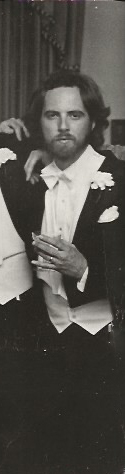
The old me circa 1978

the new me 2021
 You Do Hoodoo