America’s Dystopia Jones

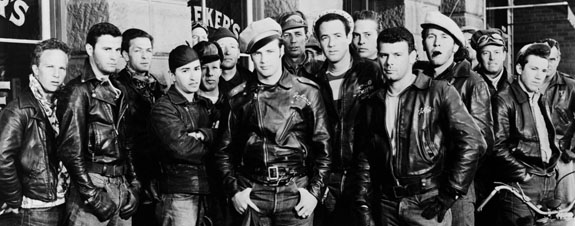
Motorcycle Gang in The Wild OneOh, for those quaint days of yore when the worst your uptight cinematic town had to fear was a motorcycle gang led by Marlon Brando cutting doughnuts on Main Street, shattering the plate glass windows of hardware stores. [TRAILER HERE]

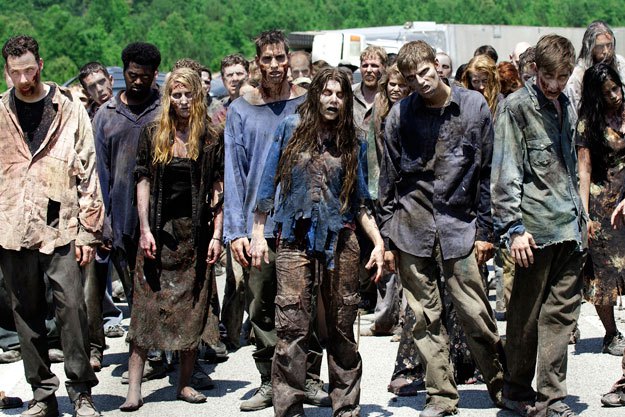
how-to-be-on-the-walking-deadNowadays, it’s brain-eating zombies upsetting the ambiance of the townships of Televisionland, shuffling like Roman Legions down Martin Luther King Boulevard, crossing the tracks, headed toward gated communities guarded by underpaid military retirees in police uniforms.

For whatever reason, we First World consumers crave catastrophe, whether we’re curling up on the sofa with Cormac McCarthy’s The Road, programming our DVRs to record the latest episode of The Walking Dead, or listening to the dulcet intonations of NPR announcers bringing us up to date on Ebola and ISIS.

Horror is all the rage in Late Empire America. Walking your rescue dog past young Bentley’s house, you can hear heavy gunfire and explosions emanating from his manipulations of a video console. Hmm, sounds like he’s playing Mortal Kombat Armageddon, or is it World of Welfare: Let’s Kill the Bloodsuckers?

Edwin Butler-Bayliss

Edwin Butler-Bayliss

All of this got me to wondering when the West quit writing utopias a la Thomas More and started portraying the future world as a nightmare. Of course, my go-to unscholarly source is Wikipedia, and it anoints Jonathan Swift’s Gulliver Travel’s as the first dystopian “literature “– though Oedipus Rex might lay some claim to being the first with its plague-ridden Thebes ruled by a tainted king whose sexual misdeeds make the Clinton/Lewinski dalliance seem downright wholesome in comparison. But Oedipus Rex predates empire, and I suppose you must have an empire, a nation state, or a fucked-up planet to qualify as a dystopian society. My colleague Aaron Lipka tells me the civilization must be a fallen one. I’d add that God has to be Dead.


Frank Speaking

“Well, I try not to hope for too much [. . .] It puts pressure on the future at my age.  If you know what I mean.  Sometimes a hope’ll slip in when I’m not paying attention [. . .] That I’ll die before my wife does, for instance.  Or something about my kids.  It’s pretty indistinct.”

Frank Bascombe from Richard Ford’s Let Me Be Frank With You

Bill Walsh of Live-5 Weather

Bill Walsh of Live-5 Weather

It’s a bleak morning, the day before Thanksgiving. Last night on the side porch when I sensed a drop in temp, I boldly predicted that our tubby foppish weatherman Bill Walsh was wrong. The chill in the air meant that high pressure was pushing the dismal, life-negating, leaden, dripping sky turds out to sea and that we’d awake to blue skies and the possibility of the Moore/Birdsong nuclear family foursome enjoying a beer at my favorite meeting place, the open air bar known as Chico Feo, home of the $2 PBR, the $3 All Day IPA, home of homeless, Greg and Odie.

But I was wrong, and Bill was right. Today dawned — if you can even call it that — as bleak as ever — with low dark clouds scudding in the same direction as the river and a wind so strong it’s sloshing the water in the birdbath.

Despite the mournful weather, I’ve been enjoying the company of a very old friend, Frank Bascombe, the protagonist of what now are known as the “Frank Bascombe books” — The Sportswriter, Independence Day, The Lay of the Land, and Let Me Be Frank With You, the last a surprise gift from Judy Birdsong.

Richard Ford

Richard Ford

Although the phrase “Frank Bascombe Books” might suggest to the uninitiated tales of detection or spydom, these novels follow the quotidian life-journey of a once-promising fiction writer who turned to the easier craft of sportswriting but even abandoned that for the even easier money of real estate sales, at which he excelled. Their author, Richard Ford, like his protagonist, for a while worked as sportswriter, but praise be to whatever he didn’t give up fiction-writing for real estate. The second book in the Bascombe series, Independence Day, got him a Pulitzer and a Faulkner Pen award.

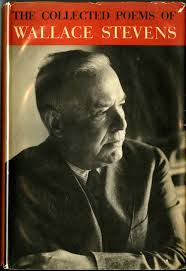
Now, in this latest book, a collection of four interrelated stories, Frank is 68, retired, and living in post-Sandy Haddam, New Jersey, a city name that conjures in the echo chamber of my juke-box-like mind Wallace Stevens’ great lines:

O thin men of Haddam,

Why do you imagine golden birds?

Do you not see the blackbird

Walks around the feet

Of the women about you?

imagesFrank Bascombe has taken Stevens’ advice about jettisoning the wanna-be for the what-is. He seeks to see things as they are, un-misted by sentiment. Here he is in the last story “The Death of Others” talking about simplifying his life:

Indeed for months now — and this may seem strange at my late moment in life (sixty-eight) — I’ve been trying to jettison as many friends as I can, and am frankly surprised more people don’t do it as a simple and practical means of achieving well-earned, late-in-the-game clarity. Lived life, especially once you hit adulthood, is always a matter of superfluity leading on to less-ness. Only (in my view) it’s a less-ness that’s as good as anything that’s happened before — plus it’s a lot easier.

In addition to paring down friendships, Frank is also eliminating certain words and phrases from his vocabulary, words that he believes “should no longer be usable – in speech or any form.” He continues, “Life’s a matter of gradual subtraction” and “a reserve of fewer, better words could help, I think, by setting an example for clearer thinking.”

Here are some of the words and phrases on the chopping block:

poop

friggin’

We’re pregnant

What’s the takeaway

awesome

no problem (as a substitute for thank-you)

soft landing

sibs

hydrate (when it means drink)

reach out

It’s been quite a pleasure growing old with Frank, who in The Sportswriter at 38 tried to overcome the death of his son Ralph by willing away irony but succumbed to what he calls dreaminess and the temptations of extra-marital embraces, which wrecks his marriage and to a lesser extent his writing career.

I’d call him a practical existentialist,* a nephew of good ol’ Binx Bolling from The Moviegoer. What I really love about Frank, though, is his voice, his way with words, how he expresses what I sometimes think so much better than I ever could, for example this description of a mealy-mouthed preacher — “Fike’s morning devotionals all have the tickle-your-funny-bone, cloyingly Christian pseudo-irreverence calculated to make God Almighty as just one of the boys” or this description of searing pain: “my neck had started zapping me, and I’d begun feeling the first burning-needles-prickle-stabs in the soles of my feet, sensations that now [. . .] had travelled all the way up my groinal nexus and begun shooting Apache Arrows into my poor helpless rectum.”

Alas, I’m afraid this book may be the last we hear from Frank, another notable subtraction from the subtractions that old age brings.

If so, so long, pal. It’s been great knowing you.


*I don’t look in mirrors anymore. It’s cheaper than surgery.


Designer Porn

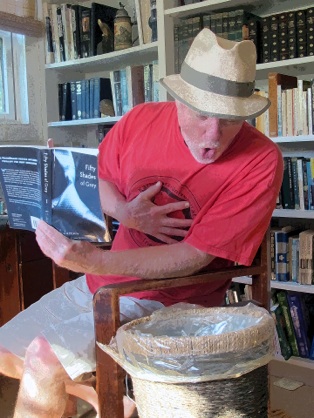
Overheard a student say he couldn’t wait until the Fifty Shades of Grey movie came out, so I thought I’d excavate this May 2012 post from the Purgatorio of my defunct blog Late Empire Ruminations.

THE BATH IS A white stone, deep, egg-shaped affair, very designer. Christian leans over and fills it from the faucet on the tiled wall. He pours some expensive looking bath oil into the water. It foams as the bath fills and smells of sweet, sultry jasmine.

EL James, Fifty Shades of Grey
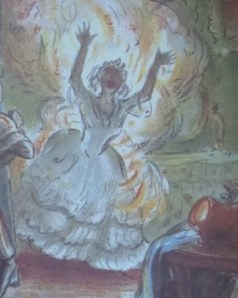
DSC06444Sometimes, heroic individuals sacrifice their happiness, peace of mind, even their lives for the greater good. One thinks immediately of Sarah Smith, pantomime artiste, who, according to her memorial plaque in Postman’s Park, London: Died of terrible injuries received when attempting in her inflammable dress to extinguish the flames which had enveloped her companion January 24 1863.

Think of Sydney Carton, the doomed ne’er-do-well of A Tale of Two Cities, ministering unto the young seamstress as he awaits his self-chosen beheading to save the life of Charles Darnay and the happiness of his beloved Lucie.
Yours Truly

Yours Truly

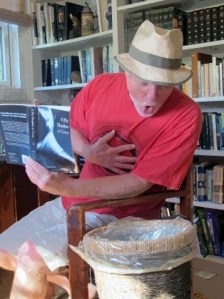
Or, if you will, think of your humble blogger subjecting his all too delicate sensibility to the vulgarities of EL James’s hyperventilated prose so that he can save you from the experience.

Of course, if you’re reading this blog, you’re hip to the Fifty Shades of Grey phenomenon – the blockbuster bestseller supposedly every woman is devouring, a novel so entrancing that it has transformed ardent feminists into devotees of male domination. That paragon of journalistic integrity Fox News proclaims:

Everyone from so-called “mommy bloggers” to hardcore feminists is hailing the tome as a triumph for women, in spite of the book’s strong themes of female submission at the hands of a high-powered man.

Personal Note: As I read that hardcore feminists see the book as a triumph for women, I feel cognitive dissonance – dyspeptic, incessant – surging from my belly to my esophagus. I am in its Sartrean thrall! Holy Hell, hardcore feminists, how can it be my left brain murmurs as I clamber from my antique desk chair and pad across discount carpet into the master bath to retrieve my Thorazine.

More from Fox:

Television host Dr. Drew Pinsky recently called the book a “rape fantasy” on his HLN show.  Women writers laughed off Pinky’s remarks, saying there is absolutely no reason for men to weigh in on this issue at all, and certainly no reason for them to use the term rape.

Arch-Feminist Jessica Wakeman of Frisky

Arch-Feminist Jessica Wakeman of Frisky

“Why is Dr. Drew speaking on behalf of the fantasies and desires of women, let alone women he hasn’t even met?” Jessica Wakeman of the women’s blog The Frisky told Fox411.

The novel chronicles the sexual awakening of Anastasia Steele, a seemingly asexual college senior English major who has only been kissed twice because none of the fellows she’s met can flip her switch the way that Edmond Dantès and Heathcliff do. Somehow or another, the college newspaper her roommate edits lands an interview with publicity-shy Christian Grey, a man who possesses the beauty of Adonis and the net worth of Nebuchadnezzar. Alas, Ms Steele’s domineering roommate Kate is too sick to conduct the interview so she sends in her stead Ms. Steele, who, perhaps too concerned with the unruliness of her hair or the largeness of her eyes, doesn’t bother to google Mr. Grey in preparation of the interview.

As Steele enters the headquarters of “Mr. Grey’s global enterprise,” the lavishness of the decor works its magic on her like skilled foreplay.

Behind the leather chairs is a spacious glass-walled meeting room with an equally spacious dark wood table [huh?] and at least twenty matching chairs around it. Beyond that, there is a floor to ceiling window and a view of the Seattle skyline that looks out through the city toward the Sound. It’s a stunning vista, and I’m momentarily paralyzed by the view. Wow.

As soon as she lays eyes on Grey, Anastasia’s long repressed hormones break free from the Bastille of their repression, clambering in waves from down there, up, up, up into her cerebral cortex where they hungrily devour all synapses devoted to critical thinking.

So young – and attractive, very attractive. He’s tall, dressed in a fine gray suit, white shirt, and black tie with unruly dark copper-colored hair and intense, bright eyes that regard me shrewdly*. It takes a moment for me to find my voice.

Anastasia swoons as her bare skin comes into contact with Grey’s Rolex

Anastasia swoons as her bare skin comes into contact with Grey’s Rolex

*n.b., Anastasia has not lost her voice because Christian Grey’s tie has copper hair and is shrewdly regarding her. Suggested edit for subsequent editions: Slap a period after tie, capitalize the w of with, place a comma after eyes, substitute he for that, add an s to regard, and you’ll see that it’s Grey not the tie who sports copper hair and is doing the regarding.

Grey himself possesses all of the charm of a Bond villain and employs the same stilted politesse:

“Business is all about people, Miss Steele [. . .] My belief is to achieve success in any scheme one has to make oneself master of that scheme, know it inside and out, know every detail. I work hard, very hard to do that.”

Well, to make 514 page story short, Steele wants to add unconfident Anastasia to his collection of contracted submissives, to have her willingly perform various acts stipulated by the contract she signs  — in short, to completely dominate her. In essence, his wealth and beauty have transformed her from an unconfident, gawky lover of English literature into as vapid a tween as you’ll ever encounter at a Justin Bieder concert.

There is a state-of-the-art [cooking] range. I think I have the hang of it [. . .] Amy Studt is singing in my ear about misfits. This song used to mean so much to me; that’s because I’m a misfit. I have never fitted in anywhere [. . .] I whisk some eggs and turn and Christian is sitting at one of the stools of the breakfast bar, leaning on it, his face supported by his steepled hands. He’s still wearing the T-shirt he slept in. Just-fucked hair really, really suits him, as does his designer stubble.

Amy Studt

Amy Studt

W-t-f, my superego scolds, designer stubble , please! Look at all of the books that remain unread, Remembrance of Things Past, The Mill on the Floss, e.g. – put that trash down immediately. “Okay,” I murmur, my face reddening with shame . . .

Okay, enough, but the question remains – what is it about this poorly written, cliche-ridden, salacious piece-of-shit that has all of womankind in the Late Empire in its throes?

I’m probably wrong, but I don’t think it’s the sex. After all, Mr. Grey doesn’t deflower Ms Steele until page 117. I think the Anastasia’s fast-paced, commodity-laden first person narrative (it reads like a diary) must trigger some atavistic impulse in women to relive their early adolescence. Perhaps they find Anastasia’s lack of confidence endearing, the tug-of- war between her “subconscious” and “inner goddess” familiar, and as they vicariously live her life, their inner tweens emerge, shattering, as Anastasia might put it, their critical faculties into a thousand little pieces.
 

A Teachable Moment Botched

Time is the school in which we learn — John Didion, The Year of Magical Thinking

Yesterday before class, a petite, clear-eyed fifteen year-old announced that she has decided that she doesn’t want to grow old, that she wants to make great contributions to the world, and then die at 60. She added, “Mr. Moore, that means that if that happens, then 25% of my life is over!”

This is what we call in the my business[1] a “teachable” moment, and I botched it. I should have called on Alexander Pope, that four-foot, six-inch[2] colossus:

In fearless Youth we tempt the Heights of Arts,

While from the bounded Level of our Mind,

Short Views we take, nor see the lengths behind,

But more advanc’d, behold with strange Surprize

New, distant Scenes of endless Science rise!

So pleas’d at first, the towring Alps we try,

Mount o’er the Vales, and seem to tread the Sky;

Th’ Eternal Snows appear already past,

And the first Clouds and Mountains seem the last:

But those attain’d, we tremble to survey

The growing Labours of the lengthen’d Way,

Th’ increasing Prospect tires our wandering Eyes,

Hills peep o’er Hills, and Alps on Alps arise!

Although our flowers fade (I too had pretty plumage once!), the world becomes increasingly more interesting as we gain perspective, and as the social preoccupations of adolescence dissipate, the “cool people,” if given the choice, would rather hang with Charles Bukowski than Wink Martindale, with Joan Didion rather than Kim Kardashian.

Kim Kardashian

Kim Kardashian

Joan Ddidion

Joan Didion

But, like I said, I botched it. I turned to of all people Marcus Aurelius and paraphrased the following:

Were you to live a thousand years, or even thirty thousand, remember that the sole life which a man can lose is that which he is living at the moment; and furthermore, that he can have no other life except the one he loses. This means that the longest life and the shortest life amount to the same thing. For the passing minute is every man’s equal possession, but what has gone by is not ours. Our loss, therefore, is limited to that one fleeting instant, since no one can lose what is already past, not yet what is still to come — for how can he be deprived of what he does not possess?

Like, I said, I botched it. I told her and the rest of the students to think lineally only so far ahead that they can salvage more of the present for their enjoyment, in other words, to get that rough draft out of the way early Saturday morning so it won’t be squeaking like a wobbling wheel in the back of your mind all day. But I told them not to think too far into the future, not to dream about their freshman year at Duke or their wedding day or their future contributions to humanity.

I write this as my beloved is receiving a blood transfusion and have come myself to live the advice I gave those students yesterday. It’s always now. The future is not ours. The past is kaput. I hear a bird’s staccato chirp outside my open window on this gorgeous Saturday and wish him or her the best.


[1] Schools, alas, have taken on the corporate model, though they still give lip service to the “family” metaphor.

[2] 1.37 meters for my European readers

Bang Endings

Barry-White-Soul-SeductionA while back, I posted a piece called “First Impressions,” which celebrated killer opening sentences from various novels like [cue Barry White] this here delicious, obsessive echo chamber of a love song from Mr Baddass himself, Влади́мир Влади́мирович Набо́ков:

Lolita, light of my life, fire of my loins. My sin, my soul. Lo-lee-ta: the tip of the tongue taking a trip of three steps down the palate to tap, at three, on the teeth. Lo. Lee. Ta.

However, as Franz Kafka once told me, “Starten eines Roman ist eine verdammt viel einfacher, als Abschluss einer“* so I decided to lay 5 of my favorite closing lines on you, lines that rat-a-tat-tat the novels’ themes in sound and sense. (BTW, the actual quotes themselves should be read aloud).

*Starting a novel is a helluva lot easier than finishing one.


1. The Sound and the Fury: “The broken flower drooped over Ben’s fist and his eyes were empty and blue and serene again as cornice and façade flowed smoothly once more from left to right, post and tree, window and doorway and signboard each in its ordered place.”

If Mr. Faulkner were employed by SparkNotes, he might “summarize” that last sentence like this: A description of Benjy — christened Maury — Compson, idiot grandson of the Confederate General patriarch of that fallen family, the drooping and broken flower an emblem of Ben’s beloved lost sister’s honor, Maury/Benjamin just having gone apeshit because the black tween servant Luster had swung the wagon bearing the family on their ritualistic visit to the grave of General Compson’s alcoholic son Jason Sr. to the left of the monument, provoking sounds of ”horror; shock; agony eyeless, tongueless, just sound,” from the that thirty-three-year-old with the mind-of-a-three-year-old, bellowing until the “only sane” Compson brother, Jason Jr., catches the reins to swing the horse Queenie in the opposite direction, calming Benjy, the sentence itself capsuling the fall of the House of Compson, the disappearance of the Old South, its doomed fetish for tradition.

joyce mainUlysses: O and the sea the sea crimson sometimes like fire and the glorious sunsets and the figtrees in the Alameda gardens yes and all the queer little streets and pink and blue and yellow houses and the rosegardens and the jessamine and geraniums and cactuses and Gibraltar as a girl where I was a Flower of the mountain yes when I put the rose in my hair like the Andalusian girls used or shall I wear a red yes and how he kissed me under the Moorish wall and I thought well as well him as another and then I asked him with my eyes to ask again yes and then he asked me would I yes to say yes my mountain flower and first I put my arms around him yes and drew him down Jo me so he could feel my breasts all perfume yes and his heart was going like mad and yes I said yes I will Yes.

Riding the rapids of Mrs. Molly Bloom’s stream of consciousness as she contemplates her hubby Leopold, heroic cuckold, who has come home again, home again, jiggedy jig, and who lies in bed next to her, his feet facing the headboard and his head facing the footboard, and what can you say to the life-affirming ending of that concluding sentence but yes sir ree bob tail– Yes!

Y’all ready now for a slow dance?

The portrait of Abert Camus by Haeree Choi

The portrait of Abert Camus by Haeree Choi

3. The Stranger: For everything to be consummated, for me to feel less alone, I had only to wish that there be a large crowd of spectators the day of my execution and that they greet me with cries of hate.

Mon Dieu, is smoking a cigarette during the absurd ritual of sitting up all night with your mother’s corpse or having casual sex the night after her funeral so wrong? How absurd! These acts by our narrator Meursault seem to shock his all-white Algerian jury more than the offing of a mere native (which in Colonial Africa is tantamount to jaywalking).  You might say that Meursault’s jail sentence has been a Godsend – i.e., you might say that if he didn’t exist in an arid, godless abyss of a universe — but the good news is that in the fleeting ever disappearing now in which he types the concluding paragraph, he has discovered that he and the indifferent universe are one. OM.

4. The Sun Also Rises: A taxi came up the street, the waiter hanging out at the side. I tipped him and told the driver where to drive, and got in beside Brett. The driver started up the street. I settled back. Brett moved close to me. We sat close against each other. I put my arm around her and she rested against me comfortably. It was very hot and bright, and the houses looked sharply white. We turned out onto the Gran Via.

“Oh, Jake,” Brett said, “we could have had such a damned good time together.”

Ahead was a mounted policeman in khaki directing traffic. He raised his baton. The car slowed suddenly pressing Brett against me.

“Yes,” I said. “Isn’t it pretty to think so?”fiesta-sun-also-rises-ernest-hemingway-paperback-cover-art

Who knows if Viagra would have worked on narrator Jake Barnes. Did his war injury render him a gelding or sever his penis? No crisp declarative sentences answer those questions. Certainly, as a man Jake is the opposite of what the vulgar call “dickless.”  Whatever, all I really care about is that mounted policeman raising his baton is an invaluable tool in convincing skeptical students that phallic symbols aren’t perverse illusions engendered by English teachers’ diseased minds .

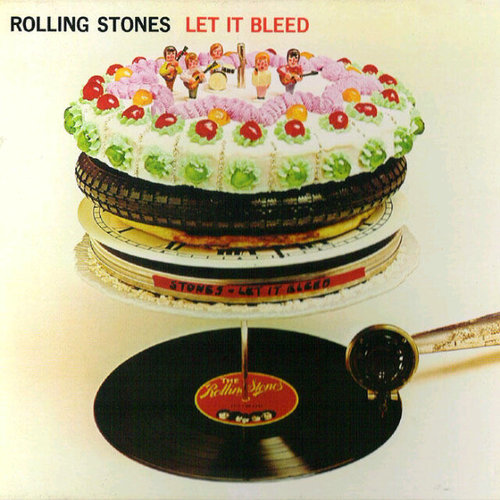
5. “Midnight Rambler”: I’ll stick my knife right down your throat, baby, and it hurts!

Okay, as Condoleezza Rice’s and Colonel Kurtz’s lovechild might say, “Strictly speaking, ‘Midnight Rambler’ isn’t exactly a novel, but it is a narrative, sort of, and this post is getting too long, and goddammit, that last line of the Stones’ classic absolutely nails the sound and sense of the sort of narrative, and it‘s literally “killer”, so fuck you and your rigid mind-forged manacles.”  

Let_it_Bleed