Transitioning from Tween to Teen in 1966

The summer before my eighth grade year, I started hanging out with nerdy high school sophomores who, rather than drinking and fornicating, behaved like tweens, tweens who could drive at night but who also did dumb stuff like chunking lit cherry bombs out of windows of moving vehicles with fireworks galore on board. I didn’t lie to my mother – my father was a distant figure, not involved with my comings and goings – I’d tell Mama I’d be riding around town with Ricky and Dave, and she’d say okay but be home by ten. I can’t remember my precise curfew, probably ten. In high school it was 11:30.

I have no memory of what we talked about on those hours-long drives, but I do remember cherry bombs exploding underwater when we’d stop at a bridge, and I remember the circuit we’d take, heading out Trolley Road to Dorchester, taking a left, then another left that took us to Ladson, skirting a subdivision called Tranquil Acres where my crush, blandly pretty, super-intelligent Laura Alexander lived with her Air Force Lt. Colonel of a father, her mother, and whatever siblings she may have had. 

We’d head back along that stretch of Hwy 78 towards Twin Oaks, or sometimes take Lincolnville Road back to our subdivision. This looping drive introduced me to a strange, incongruous world of manufactured houses with meticulously tended gardens and churches, churches, churches, tiny concrete block churches, every half-mile on both sides of the road, with exotic names rife with schism, like the Second Church of God Consecrated in Holy Blood of the Nazarene.[1]

My high school friend Ricky was the product of what some called in those days “a broken home,” and he rarely saw his father, an airline pilot who showered him with gifts whenever they did get together. His mother worked, so we could hang out at his house and listen over and over and over again to The Animals Greatest Hits, which ended up being a revelation to me, hearing Eric Burdon sing “House of the Rising Sun” in a voice that sounded as if he himself could have been  born in Summerville, singing in baritone with a hint of Gullah about things much deeper than you found in the Monkees’ catchy love songs.
Ricky had two sisters, one off at college and another maybe a junior or senior, a year or two older. Her name was Penelope, and one afternoon, she jumped out of a closet in her institutional white bra and panties screaming “boo!” If this were a graphic novel instead of po-dunk memoir, I’d have my auburn hair porcupining like I’d received an electric shock. She howling, laughing, sprinted to her room, butt jiggling, and slammed the door. It was weird, but cool, yet it never happened again. She spent a lot of time in her room alone. She was a brunette, very good looking, but not all that popular.

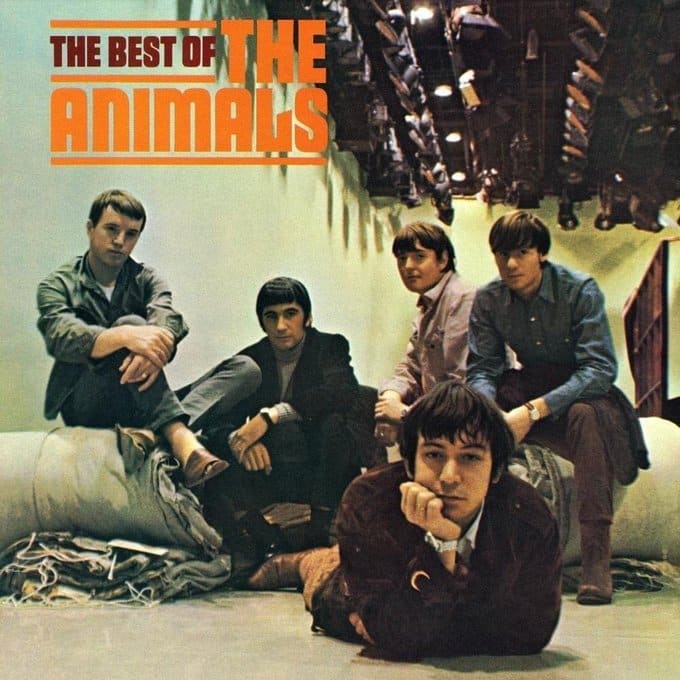
The older sister, on the other hand, a coed at the University of South Carolina, had been a Summerville High School superstar, the homecoming queen, maybe.[2] I met her once with her boyfriend at Ricky’s, the boyfriend Hollywood good-looking and the son of the woman who four years later would be my English teacher, the model for Mrs. Barrineau in Today, Oh Boy. I knew about this star couple because my aunt Virginia, only 6 years older than I-and-I[3], was in their graduating class. I felt as if I were hanging with celebrities, and they shocked me by striding up to Ricky’s mama’s bar and pouring themselves some kind of whiskey over ice. Ricky showed my future teacher’s son of Best of the Animals‘ album cover, and he said that “House of the Rising Sun” was the only song he liked, and I thought to myself what about “We Got to Get Out of This Place,” what about “It’s My Life,” what about “Please Don’t Let Me Misunderstood?” 

It was a memorable summer. 


[1] Or something like that.

[2] None of my yearbooks have survived my bopping from place to place, so I can’t confirm. 

[3] This affectation, using the Rasta hyphenated pronouns, does come in handy here where I can avoid the conversational, grammatically incorrect “me” yet sound hip.

You can purchase Today, Oh Boy HERE.
You Can’t be Any More Out of It Than Dead

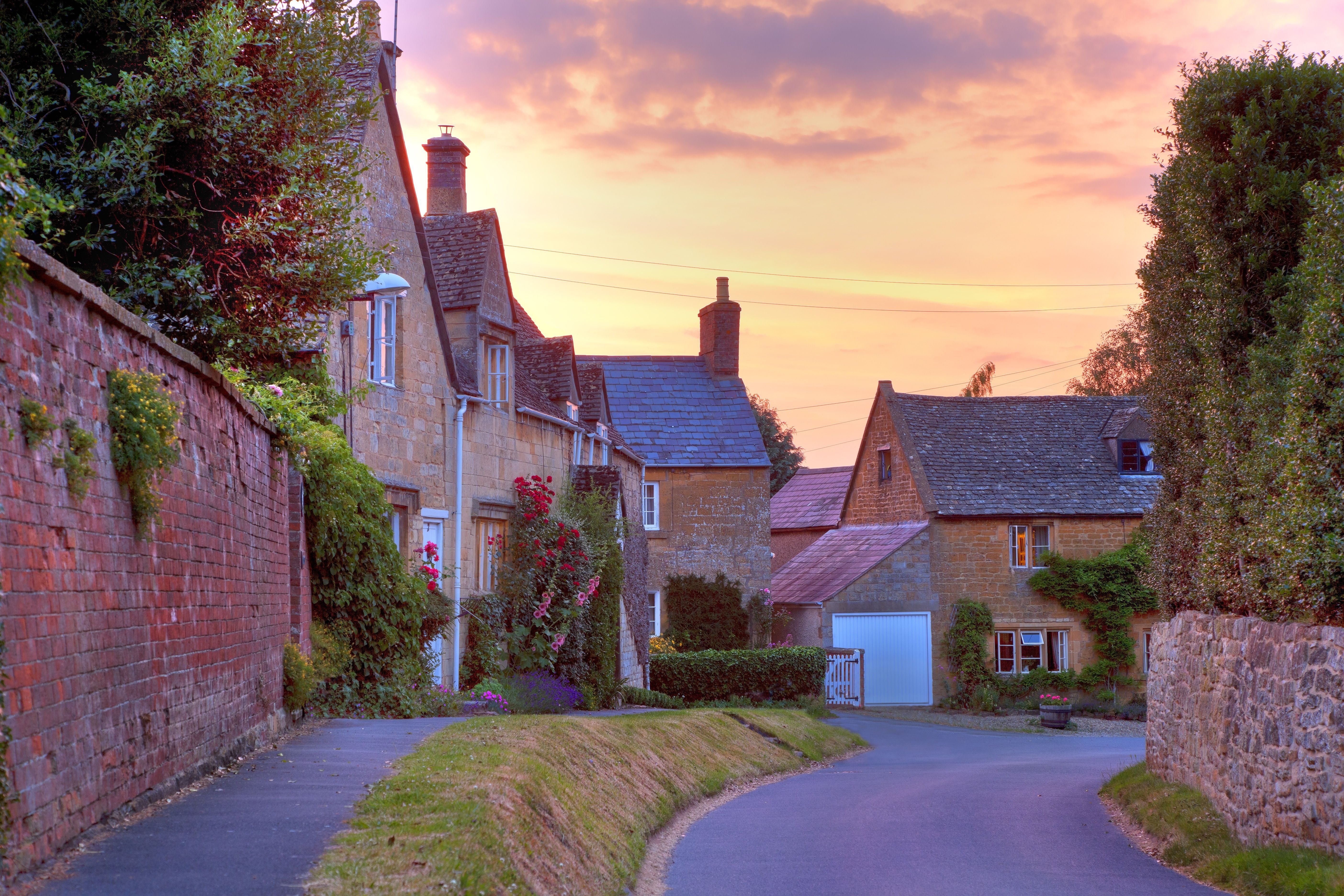
Cotswold cottages with hollyhocks and roses at sunset, Mickleton near Chipping Campden, Gloucestershire, England.

You Can’t be Any More Out of It Than Dead

Nor dread nor hope attend
A dying animal;
A man awaits his end
Dreading and hoping all.

WB Yeats

Perhaps the only people who die happy are James Dean types who, defying speed limits, enjoy an intense adrenaline rush right before a fiery crash instantaneously switches off the lights. Dean died young as did F Scott Fitzgerald, who legend has it, suffered a massive heart attack at 44 while making love to Sheilah Graham, a gossip columnist. Nevertheless, I doubt that he died happy. One of the symptoms of a heart attack is a feeling of impending doom.

Of course, the opposite of dying young is enjoying an extended lifespan, but you don’t want to overdo it. Chances are that if you succumb at the way overripe age of 97, you’ve outlived your spouse – maybe two – and perhaps one or two of your children. Chances are you’re sick and tired of wheelchairs, sick and tired of constant confusion, or simply sick and tired. 

Even if you’re happy right before your death, after the event, you’re simply dead, so nothing matters to you anymore anyway. You don’t pick up on those Happy Heavenly Father’s Day Facebook posts, nor, on the plus side, does the Braves’ bullpen blowing a save bother you. Fact is that you can’t be any poorer than dead, or, as Flannery O’Connor’s Francis Marion Tarwater puts it, “The dead don’t bother about particulars.”

It would be nice, though, to die in a relatively serene era of history, puttering around a cottage in the Cotswolds’ in the 1870s, say, not fixating on the Franco-Russian war, but tending to your roses, having time enough to notice the lovely russet sunset beyond the hedgerows. Wouldn’t it be nice to die in a place of peace and quiet surrounded by loved ones who realize that death is the mother of beauty? 

That’s the way to go. 

Copyright: Copyright © 2013 Tom Bartel

Here Comes the Night

Illustration by James Lee Chiahan. Source image: Karol Jalochowski / Santa Fe Institute / Miller Omega Program.

13 June 2023

I can’t listen to music and write simultaneously. For example, right now I’m attempting to crank something out while listening to the Human Beinz only hit, “Nobody But Me.”

“Nobody, Nobody, Nobody, Nobody . . . “[fade out]

Big day today. It’s William Butler Yeats’s 158th birthday, Trump’s been arraigned, Cormac McCarthy has died, and an obviously un-embalmed would-be corpse in Ecuador disrupted her wake by banging on her coffin lid, which brings to mind the Irish song “Finnegan’s Wake” and that Bloomsday is only two days away.

Yeats, Joyce, and McCarthy, three undisputed geniuses.

Now, Lucinda Williams is singing “2 Kool 2 Be 4-Gotten,” which reminds me of these spiral notebooks kids passed out in junior high. I can’t remember what we called them, but the owner would pass the notebook to you, and you signed your name in the front page with a number, and each kid in the class had his or her own page, and you wrote what you thought about the person on that page using the number as your signature. At the top of one of the pages, you’d see your name, then in various handwritings assessments of your character and personality. To find out who thought what, you’d refer to the first page with the names and numbers. I’d get a slew of “OK”s, a couple of “cools” but no 2 Kool 2 Be Forgotten”s. Then you’d cast your own judgement on the participants and hand the notebook back to the owner.[1]

Now, I’m hearing through my headphones Nancy Griffin’s cover of Kate Wolf’s great song “The Great Divide”. When I was teaching, I used the song to illustrate TS Eliot’s notion of what he called “the objective correlative,” the idea that ideas need to be embodied in imagery.

The finest hour that I have seen
Is the one that comes between
The edge of night and the break of day
It’s when the darkness rolls away.

It’s gone away in yesterday.
Now I find myself on the mountainside
Where the rivers change direction
Across the Great Divide.

The great divide, Cormac, Treat Williams. Nanci Griffin, Kate Wolf, Judy Birdsong, but not the woman from Ecuador, not Donald Trump, not Henry Kissinger, not Jason Chambers, not Caroline Tigner Moore, not you, not I-and-I, not yet.

And Not Van Morrison, who, conveniently enough, is singing “Here Comes the Night” as I abandon this silly little experiment.


[1] Note the shittiness of the music-marred prose. Like I said, I can’t write and listen to music at the same time.

Lock Him Up – Let the Great Axe Fall 

Obviously, Donald Trump considers himself above the law, thinks that whatever he wishes can be conjured by the genie of his entitlement to become immediately manifest. If he, the Mighty Wizard of Oz Mar-a-Lago, wants documents declassified – presto – they’re his to keep.

According to an audio tape in the possession of prosecutor Jack Smith, Trump has shared the contents of a top-secret document concerning a proposed invasion of Iran with people without security clearances, which is patently illegal. Why be bothered by petty little procedures like institutional declassification if you’re Donald J Trump? Sheltered by his wealth, he routinely has gotten away with ignoring inconvenient laws, and obviously he became complacent about not being taken to task. However, now that has been indicted for stealing classified documents, he is, according to his own paranoid estimation, the most persecuted president in history, more wronged than Lincoln, Garfield, McKinley, and Kennedy.[1]

Instead of “Macho Man,” they should play “Poor, Poor Pitiful Me” at his rallies.

I admit to being old and hard-hearted. I grew reading Hemingway in neighborhoods where dads who had fought hand-to-hand in the Pacific eschewed self-pity and kept their mouths shut when it came to their own personal suffering. They didn’t whine about their travails on the beaches of Normandy or in the jungles of Korea. For them it was blood – literally in some cases – under the bridge. That was the price you paid for freedom.

Of course, Donald Trump avoided the draft via bone spurs so didn’t get the chance to employ his reform school military training in Viet Nam. He learned from his father Fred that rules were made to be broken. What he didn’t receive from Fred was affection. It’s not at all surprising that an unloved scion of a real estate fortune would grow up to be needy. 

What does surprise me, though, is that so many self-proclaimed red-blooded males, especially Southern males, have not only embraced, but in some cases deified, this crybaby. Donald Trump is the absolute antithesis of the caricature of Robert E Lee that Southerners of my generation had been groomed to revere. 

Despite his vulgar bluster, Trump is no John Wayne, no James Bond. no Hamlet the Dane. Rather, he’s Michael Henchard from the Thomas Hardy’s The Mayor of Casterbridge (though that’s a little unfair to Henchard who was capable of self-recrimination and regret).

JOEY MACALLE 

Like Henchard, Trump’s a self-pitying blowhard who somehow PT Barnum-ed his way into elected office.  Unlike Henchard, though, Trump has become a cult figure, a demigod. His deification among gun-toting, drag-queen-hating outdoorsmen is beyond counter-intuitive, especially given his copious application of make-up, his platinum comb over, his gut-concealing girdle. Why do evangelicals see him as Christlike, even though he’s incapable of feeling empathy for anyone but himself?

I don’t know, but I say where offence is – and espionage is a great offence – let the great axe fall. 


[1] Bonus question: Can you name their assassins? 

The Un-Woke Mind Virus

I read this morning in an actual newspaper printed on newsprint that some parent in Utah has successfully petitioned to have the Bible removed from elementary and middle school libraries in that most conservative of states. I guess, though, if you’re going to yank Judy Blume, ‘ol Moses ought to go down, too, writing all that shit about fratricide, genocide, incest. Add to that David’s offing Uriah to he could be with Bathsheba; Job’s getting whacked with woe by his Creator in a friendly bet with his prodigal son Satan; Jacobs’ sons attacking Hamor and Shechem, butchering every male of their enclave, looting livestock, dragging away the wives and children of their victims.[1]

I suspect that the usual vulgarians in Congress (a couple of whom are depicted above) will be howling in protest, perhaps not discerning that their putting parents in charge of schools has more than one ideological scenario. If they’re sincerely serious about eradicating the Woke Mind Virus, they should be ecstatic that the New Testament with its pacifistic, communistic, and inclusive messages won’t fall into the hands of impressionable young people trying to make sense of what TS Eliot called “the immense panorama of futility and anarchy that is contemporary history.”

Compare the MAGA ethos with the Beatitudes, delivered by Jesus after dividing private property (i.e., loaves and fishes) and redistributing them among the masses.

Talking about woke!

Blessed are the poor in spirit,
    for theirs is the kingdom of heaven.
Blessed are those who mourn,
    for they will be comforted.
Blessed are the meek,
    for they will inherit the earth.
Blessed are those who hunger and thirst for righteousness,
    for they will be filled.
Blessed are the merciful,
    for they will be shown mercy.
Blessed are the pure in heart,
    for they will see God.
Blessed are the peacemakers,
    for they will be called children of God.
Blessed are those who are persecuted because of righteousness,
    for theirs is the kingdom of heaven.

I’m reminded of Woody Guthrie’s song “Jesus Christ,” sung to the tune of “Jesse James.”

This song was written in New York City
Of rich men, preachers and slaves
Yes, if Jesus was to preach like he preached in Galillee,
They would lay Jesus Christ in his grave.


[1] The last item in that series happens to be Donald Trump’s favorite Bible story. For more, do yourself a favor and click on the link for BIBLE STUDY WITH DONALD TRUMP.

Cha-Cha-Cha-ing Towards Bethlehem

[Cue Alice Cooper] Now that for me school’s out forever, I have ditched academics, abandoned trying to explain sprung rhythm[1], deep-sixed Victorian bric-a-brac, and turned my attention to my first love, my av-av-av-ocation, anthropology. 

For the last two weeks, between book signings and interviews,[2] I’ve been hanging out with Oscar Wilde, the great-great grandfather of Diana Ross/Lady Gaga, while pondering the relationship among peace, prosperity and decadence.

Wilde embraced the dark velvet decadence of Poe and Baudelaire, cocooning himself in aromatic rooms with lily-stuffed vases, handcrafted furniture, and arrases.  His conversation, to quote Lucinda Williams, “was like a drug,” and he somehow managed to produce two minor masterpieces The Portrait of Dorian Gray and The Importance of Being Earnest in his downtime between partying and lecturing. 

The Great British Empire had enjoyed peace and prosperity for so long that it seemed, as Oscar’s pal Willy B put it, “it would outlive all future days.”  Far from the horrorshow in Africa and India and elsewhere, one lolling on a divan in Chelsea could focus one’s attention on decor even while mocking decorum. 

However, World War I eventually turned people’s attention away from wallpaper design to spiritualism, as widows attempted to contact via seance their dead husbands and sons.  In fact, Wilde’s own son Cyril would die in the trenches at the age of 29, fifteen years after his father’s checking out of this Vale of Tears Days Inn of Woe.

Hit it, Willy B:

We too had many pretty toys when young:

A law indifferent to blame or praise,

To bribe or threat; habits that made old wrong

Melt down, as it were wax in the sun’s rays;

Public opinion ripening for so long

We thought it would outlive all future days.

O what fine thought we had because we thought

That the worst rogues and rascals had died out.


All teeth were drawn, all ancient tricks unlearned,

And a great army but a showy thing;

What matter that no cannon had been turned

Into a ploughshare? Parliament and king

Thought that unless a little powder burned

The trumpeters might burst with trumpeting

And yet it lack all glory; and perchance

The guardsmen’s drowsy chargers would not prance.


Now days are dragon-ridden, the nightmare

Rides upon sleep:  a drunken soldiery

Can leave the mother, murdered at her door,

To crawl in her own blood, and go scot-free;

The night can sweat with terror as before

We pieced our thoughts into philosophy,

And planned to bring the world under a rule,

Who are but weasels fighting in a hole.

                                           WB Yeats “Nineteen-Hundred-and-Nineteen”                   

It was not an enemy’s bullet but the Book of Leviticus what eventually done Oscar in.

“If a man also lie with mankind, as he lieth with a woman, both of them have committed an abomination: they shall surely be put to death; their blood shall be upon them.”

                                                                                                                              20:13

Although increasingly, we outside the MAGA cult resemble the Greeks more than Victorians in our attitudes towards same sex relationships, we, like British Victorians, live in a homeland that has not been invaded by foreign armies for hundreds of years.  Our wars are fought abroad, and not necessarily by our best and brightest.[3]  We can choose not to enlist and focus our attention elsewhere, which in Late Empire America means pursuing the good life, a life of hedonism, of epicureanism, which is all fine and dandy (I confess having stashed away behind a custom-made maple cabinet one bottle of the limited Malt Master’s Edition of a Glenfiddich, a single malt double-cured in oak and sherry casks).

However, if my 1500+ acquaintances on Facebook provide an accurate sample of the bourgeoise, there seems to be a sort of insecure compulsion to woo-hoo about how wonderful their lives are, to snap photographs of luscious dishes (whether prepared at home or eaten out) or inviting beach vistas (perhaps with propped-up bare feet peeking up from the bottom of the photo).  Typical captions read “not too shabby” or “life is good.”   And every coed in America seems to have adopted the preening, narcissistic pose of Kim Kardashian.

This preening worries me because it smacks of pride, and if Oscar were given the second chances that our politicians claim as their due, he certainly might have embraced that other profound pleasure-seeker’s advice, Sir John Falstaff’s, about discretion’s being the better part of valor.  Flaunting, which can create resentment and contempt, tempts fate. Some envious psychotic Trump cultist reads this post, finds out where I live, breaks into my house, takes an ax to my custom-made maple cabinet, and pours out my Glenfiddich before being taken down by our ninja dog KitKat.

By all means, let’s enjoy life but try not to be so smug about it, for O, my brothers and sisters, trouble’s brewing everywhere, in the Atlantic as glaciers melt and hurricanes incubate, in sub-Saharan Africa as bacteria mutate, in Russia where Putin is rattling nukes, in the Far East as Kim Jong II preens into the not-so-funhouse mirror of megalomania.

Happy summer, everyone!


[1] Sprung rhythm is associated with the poet Gerard Manley Hopkins: E.g.

 O the mind, mind has mountains; cliffs of fall 

Frightful, sheer, no-man-fathomed.

[2] I’ve been promoting my novel Today, Oh Boy, which you can buy HERE!

[3] Beau Biden was the first presidential offspring to serve in combat since Ike’s son John Eisenhower.