from A Child’s Meth Lab of Verses

meth lab of verse


Bad Choices


In Nashville, Mississippi,

not far from the Rio Grande,

there lived a French Canadian trapper

named Hedrick Eckelmann.


He wrote a short novella

about the Second World War.

It ran ten-thousand pages;

he called it Less Is More.


He married a gal named Betty Sue,

who gave him two fine sons,

but she died a virgin at 44

cleaning one of his guns.


Terribly devastated,

he remarried within a week,

and lived happily ever after

until he choked on a steak


right outside of Nashville

in the heart of the Lone Star State,

right across the river from Canada.

Damn, he could’ve had a V-8.

A Sub-Literate, Sorrowful Not-Walt-Whitman Hitching

walt hitching

I missed a bus in Baltimore, and with no place to stay, restless, desperate, running low, I thought I’d try to hitch a ride.

I should have known. Ain’t no decent man gonna pick up a hoary-headed hobo nowadays.

I stood on the shoulder, stuck out my thumb, squinting down the highway through the afternoon exhaust, hoping that some good Samaritan might stop.

Eight hours later, round about one or so, a jacked-up pick-up pulled over, one of them monster pick-ups, black, four-door, with a stunted back seat of sorts.

“Hop in, old man,” the driver snarled. “Let’s go. Ain’t got all night.”

I slung my bag into the bed, climbed my way way up, and slammed the door.

The passenger rolled up his window, the driver grabbed the wheel, put the pedal to the metal, war-hooped a holler, laid some rubber, and we was on our way.

The two of them wore their baseball caps backwards, nothing but kids, white, maybe twenty or so, but right off I could see their eyes lacked light, like they was lost.

(And I could’ve been sleeping in that depot waiting for the morrow).

“How much you plan pay us for this ride?” the driver drawled. “We ain’t no commies, ain’t got no use for no freeloaders.”

I told them I was bust broke, that if I had me some money, I wouldn’t be standing on the side of a highway at one a.m. in the morning.

The passenger punched me in the chest, slapped my face, and while I was wallowing, jacked my wallet.

The driver pulled over, hopped out, slung me to the ground, climbed back in, then drove off with my bag in the back rattling around in the bed of the truck.

That was a month ago. I’m back in Mayo now writing these so-called adventures on scraps of paper.

I keep them on my person, in the pocket where my wallet used to be, so on the day they find me dead, they’ll know a bit about me.

A Review of Punditry re. the Republican Debate

Jimmy Carter, one of the Right’s favorite punching bags, commented recently that the United States was no longer a democracy but an oligarchy. Although perhaps hyperbolic, Carter’s comments do highlight some uncomfortable facts. For example, according to the New York Times, “fewer than four hundred families are responsible for almost half the money raised in the 2016 presidential campaign, a concentration of political donors that is unprecedented in the modern era.”

Not surprisingly, one of the most pressing issues for these donor families is the abolition of estate taxes.   How many family estates pay taxes, you might wonder? In 2015, 1.2% of the population paid “death taxes” as the Koch brothers call them, or the “Paris Hilton tax” as EJ Dionne of the Washington Post labels them.

Of course, loopholes large enough for not only camels, but also elephants and asteroids to pass through are there for the exploitation, so when you get down to it, the effective tax rate for the estates of this 1.2% of the population boils down to a paltry 16.6% on average. And get this, according to the Center on Budget and Policy Priorities, only “20 [that’s 4 x 5 = 20] small business and farm estates nationwide owed any estate taxes in 2013.”

So does repealing the estate tax make any sense for a government that spends in excess of 600 billion dollars a year on defense alone?

You betcha, if you’re one the Koch brothers or the other 400 families who have raised half of the money flowing into these so-called super PACs.

Next question. How many of the Republican presidential candidates are for the abolishment of estate taxes?

[cue sarcastic laughter]

Which brings me to last Thursday’s presidential debate, which I sort of watched while checking out tweets. (Given my delicate sensibility, my enduring such a grotesque circus is tantamount to drinking that rancid pre-colonoscopy concoction).

More to my taste is reading the pundits’ “takeaways.” Who were the winners and losers?

Well, here’s Hoodoo’s run-down of the conventional wisdom.

The BIG WINNERS according to the pundits:

Carly Fiorina

WASHINGTON, DC - DECEMBER 18:  Carly Fiorina, former CEO of the Hewlett-Packard Company, speaks at the Heritage Foundation December 18, 2014 in Washington, DC. Fiorina joined a panel discussion on the topic of

As far as biography goes, Ms Fiorina, the daughter of a law school professor, dean, and federal judge father and a portrait/abstract artist mother has the advantage of growing up in relative poverty, despite the fact that her parents gave her a grand piano as a wedding gift. She touts her career arc as rising “from secretary to CEO,” and it’s no lie.

During summers while attending Stanford, she worked at Kelley services, and after dropping out of UCLA’s School of Law, she served time as a receptionist at the real estate firm Marcus and Millichap. Later, she earned an MBA from Maryland and a Masters in Management from the Sloan School of Management at MIT.

Obviously, she ain’t no dummy, and besides that, she’s articulate and quick on her feet, attributes she displayed Thursday night and a rare commodity among most of the other “contestants” on the stage of what seemed more like a gameshow than a debate.

So I agree with the CW on Fiorina. Don’t be surprised if she ends up being a vice presidential choice, despite her first ex-husband Todd Bartlem’s accusation that during their marriage she had an affair with her soon-to-be second and later ex-husband, Frank Fiorina, a senior executive at ATT. Obviously bitter, Bartlem told that paragon of journalistic excellence the Daily Mail that Fiorina “los[t] her humanity” in a “pathological” pursuit of power.

In her memoir Tough Choices, she describes the marriage’s dissolution this way: “While we were married, we weren’t peers.”

Ouch!

Marco Rubio

rubio_perplexed_master_0Like Carly Fiona, Rubio was also lucky enough not to be a beneficiary of great wealth. (Some people have all the luck; sorry, Jeb). In fact, Rubio’s father worked as a bartender, as Marco likes to boast.

CW went gaga over Rubio’s performance. He took on Hillary’s claim of “living from paycheck to paycheck” to great applause and spoke of the 100K of student loans he racked up and repaid in full, though he wisely didn’t mention the $80,000 boat he purchased while paying off his loans, his liquidating a $68,000 retirement account, nor did he mention his failure to make mortgage payments on his home for five months, nor the fact that he had a lease of $50,000 on a 2015 Audi Q7.

Now that’s what I call living from paycheck to paycheck in style!

I disagree with the CW that Rubio was a big winner because of his statement that he doesn’t believe in abortions even if the mother’s life is at stake.

Not to mention rape and incest.

I can see the Hillary commercial now. Female voiceover, pregnant mother with damaged fetus that threatens her life makes the excruciating decision to abort. Cut to subsequently born happy white children skipping towards a swing set to be pushed by surviving, smiling mother.

Or, how about a couple of shots of the baby in David Lynch’s Eraser Head?

John Kasich

pic_related_111014_SM_John-KasichOnce again Kasich is fortunate to come from modest means; his father was a mail carrier.

During the debate, I agree he was very effective. His response to why he had expanded Medicaid was superb, essentially, “duh,” who in her right mind wouldn’t?

Though the pundits universally adored it, I was less impressed with his non-answer on how he would explain to his hypothetically gay daughter why he doesn’t support marriage equality. Rather than saying, “because the Bible tells me so” or “I believe that sexual orientation is a choice,” he dodged the question and boasted that he had recently attended a gay wedding and added, “If one of my daughters were that, of course, I would love them.” (my italics)

Well, duh, who in his right mind wouldn’t?

Still, if you’re a rational Republican willing to compromise on your contempt for the poor, Kasich strikes me as eminently electable.

THE SO-SO WATER TREADERS

Jeb Bush

I actually think Jeb was a loser and agree with Frank Rich’s assessment that Bush speaks “with all the conviction of a robo-call.” He needed to create some sparks and didn’t.

Plus the poor bastard is a scion of one of the 1.2% of the families who will have to pay some estate taxes when #41 passes from, in Richard Wilbur’s words, “this rotten/Taxable world to a higher standard of living.”

Scott Walker

walker super durpThe conventional wisdom — too scripted — which maybe was a good thing. I can’t find to share the mean-spirited image flashing its way through cyberspace the night of the debate, a motion gif that makes Dukakis in that iconic attack ad featuring him in a tank look like Sean Connery’s James Bond in comparison.

So the picture above will have to do.

Mike Huckabee

An articulate spokesman for the 5th Century BCE, but will his message appeal to 21st Century voters?

Chris Christie, Rick Perry, et al

 Yawn.

BIG LOSERS

Rand Paul

Rand Paul

Though some have touted him a winner, most see Rand Paul as a loser, and I agree with the latter. To break out of this pack, you need charisma, and in Paul’s case, a new hairdresser.

And last but not least

Donald Trump.

ptbOh, where is HL Mencken when we need him?

Dead and gone to hell, according to all these men and woman of faith.

I so wish someone had asked Trump about his metaphysical beliefs. Perhaps he would have identified himself as the Messiah.

I would, though, if I were Fox News, not be so gung-ho in expelling him from Republic contention. As my favorite saint, Teresa of Avila, famously put it, “More tears have been shed over answered prayers than unanswered prayers.”

A Trump independent candidacy would doom the Republicans.

Bottom line: All these candidates seem to care about are rich folk and fetuses.

That may be enough if you have the 1.2% shoveling unlimited money your way. For as PT Barnum said and Donald Trump’s ascendency proves, “There’s a sucker born every minute.”
The Not-So-Official Donald Trump Campaign Theme Song

Campaign theme songs go all the way back to Andrew Jackson’s “The Hunters of Kentucky” with these inspiring lyrics:

We are a hardy, free-born race,
Each man to fear a stranger;
Whate’er the game, we join in chase,
Despising toil and danger.
And if a daring foe annoys,
Whate’er his strength and forces,
We’ll show him that Kentucky boys
Are alligator horses.

Sometimes candidates choose already established tunes, like FDR’s appropriation of “Happy Days Are Here Again” and JFK’s employment of “High Hopes.”  Other times candidates commission original songs as Barry Goldwater did with the all but forgotten Tom McDonnell and Otis Clements number “Go with Goldwater.”  These songs are often flops. I seriously doubt that any of you codgers out there remember the ’68 election campaign song “Nixon’s the One.”

Nevertheless,  I can’t tell you how honored I am to have chosen myself to compose the theme song for Donald’s Trump 2015 campaign, which is entitled, appropriately enough,  “Donald Trump, We’re so Pumped.”  Let’s hope it ends up being more successful than the Republican candidate’s 1972 theme song “Nixon Now,” which you can experience for yourself here.

the donald

To be sung to the tune of “The Mickey Mouse Club Theme Song”

Ah, one, a two, sing:

Who’s the man in the GOP,

Whose best for our country?

D-O-N-A-L-D T-R-U-M-P!

*

Not Bush, Not Walker, Not Carson!

They’re as bland as they can be

D-O-N-A-L-D T-R-U-M-P!

*

Donald Trump!

We’re so pumped!

Donald Trump!

He’s on the stump!

*

Let’s raise a middle finger and fuck propriety:

D-O-N-A-L-D T-R-U-M-P!

*

Come along and join the throng

On the road to prosperity

D-O-N-A-L-D T-R-U-M-P!

He has a solution, embraces pollution,

Gets results, slings insults.

(Who cares if the rest of the world is retching?)

*

Who’s the alpha of the pack,

Who can heal our sick country?

D-O-N-A-L-D T-R-U-M-P!

*

Hey there! Hi there! Ho there!

He’s as angry as you and me,

D-O-N-A-L-D T-R-U-M-P!

Donald Trump!

We’re so pumped!

Donald Trump.

He’s on the stump!

*

Come along, let’s sing the song

And start a P-A-C

D-O-N-A-L-D T-R-U-M-P!

*

Yay Donald!

Yay Donald!

Yay Donald Trump!

Just Can’t Cut That Juice a Loose: KILLER ROCK LYRICS ABOUT SUBSTANCE ABUSE!!!

Foreign_Affairs_Tom_WaitsI-and-I, that’s right, Mr. Hoodoo Man he-self, boon companion and devoted supporter of Mr. John Jameson, lover of hoppy craft beer concoctions, not to mention spicy Sunday morning bloody marys, has voluntarily climbed aboard that proverbial wagon that refuses to stop at taverns, bodegas, juke joints, and roof top bars.

Or to put it more succinctly, he’s quit drinking alcohol.

Why, you ask? Has Mr. Moore been stumbling in at 3 a.m. and slapping around his beloved consort Judy Birdsong?

Of course not.

Has he found that drinking has adversely affected his social life?

To the contrary.

Okay, is he chronically late, a no-show sometimes? Does he hire barmates to grade his essays? Does he put himself in risky situations? Is he a frequent visitor to emergency rooms?   Has he gotten a DUI? Recently made a complete and utter ass out of himself?

No, no, no, no, no, and “not that he is aware of.”

Why then?

The answer is vanity. Recently, he saw photographs of himself at his son’s wedding and realized that his once David-Niven-like svelteness had ballooned into a girth approaching Hitchcockian proportions. And even though he now possesses a Falstaffian paunch, his arms and legs have maintained the emaciation of his 97-pound-weakling adolescence.

John Falstaff by Eduard Von Grutzner

John Falstaff by Eduard Von Grutzner

He’s too vain to post a photograph, but picture a four-month pregnant Mick Jagger and you get the picture.

Why not cut out those empty calories? Why not give it a try?

So how has he been spending those hours not spent in drinking establishments?

Listening to songs about substance abuse, that’s how, and he’s come up with a list a few killer song lyrics devoted to over-indulgence, like this classic from Willie Nelson:

The night life ain’t no good life, but it’s my life.

Not only that, he’s going to provide sound samples to go along with a few of his favs. So sit back and enjoy

THESE KILLER ROCK LYRICS ABOUT SUBSTANCE ABUSE!!!

(I know it lacks that Buzzfeed allure of botched plastic surgeries).

Okay, we’re going to start with John Hiatt’s “Paper Thin,” whose first sentence has the panache of the opening of a well-crafted short story. Listen.


Here’s how the song ends:


(Saw John about a year ago in concert.  Here’s the REVIEW).


Okay, for our next lyric on substance abuse, let’s go way back to my tenth grade year of 1968 and the Butterfield Blues Band’s “Drunk Again.”  The song’s by Elvin Bishop and features the domestic trauma drinking can cause.  Here’s a snippet:


Of course, as Bob Dylan famously tells us in “Just Like Tom Thumb’s Blues” — “I started off on burgundy but soon hit the harder stuff” — alcohol is the ultimate gateway drug.  I betcha ain’t nobody ever shot up heroin who hadn’t started out on the road to perdition with wine or beer. You start off seemingly innocuously with a PBR and the next thing you know your rolling up bills and snorting cocaine or worse.  Here’s John Hammond, Jr’s superb cover of the Tom Wait’s classic “Heart Attack and Vine”:


That’s right:

Boney’s high on china white;

Shorty’s found a punk

You know there ain’t no devil;

that’s just god when he’s drunk.

Well, this stuff will probably kill you;

let’s do another line.

What you say you meet me

down on Heart Attack and Vine.

Love can be a drug, they say.  Wasn’t Robert Palmer “addicted to love?”  Here’s the great Lucinda Williams making the analogy:


C’mon, Lucinda.  You know what Willie B Yeats sez:  “Never give all the heart for love . . .

Okay, let’s end this thing on a positive note.  The resurrection of Tim Finnegan via Irish whiskey.  Here, the Clancy Brothers describe how dead Tim’s corpse is brought back to life during a drunken brawl at his wake, which is the song that gave rise to James Joyce’s last novel.


:


Mickey Maloney ducked his head
when a bucket of whiskey flew at him
It missed, and falling on the bed,
the liquor scattered over Tim
Now the spirits new life gave the corpse, my joy!
Tim jumped like a Trojan from the bed
Cryin will ye walup each girl and boy,
t’underin’ Jaysus, do ye think I’m dead?”

Come to think of it, quitting drinking altogether seems anti-Buddhist.  Maybe the middle way would be better.  Lose weight by exercising, eating healthily, and limiting one’s intake to a couple a day?

Sounds like a plan.

Elegy for Saisy Joy

1

Our Saisy never really shook off that early abuse,

the beatings, starvation, the two-foot chain.

She’d wince when you went to pet her,

snap if you rubbed her head for too long.

As her rescue “foster mom” in Statesboro put it,

“That gal’s got her some food issues.”

Like stealing bread and hiding pieces ‘round the house,

gobbling down the rankest roadside carcass, knocking over

garbage cans, consuming their rotten whatever.

Afterwards, her Stygian, Technicolor diarrhea

would ruin our rugs.

2

Yet the rescuer’s daughter named her Joy

for that dervish dance when you’d grab a leash.

She’d rear and buck like a bronco, jump, hump her back,

swivel in a circle, smile like a very happy cartoon dog.

And what a beauty! that black slick fur, the brown undercoat,

distinctive of one of her breeds, the German Longhaired Pointer part.

On the beach or through the woods to the dock she’d strut,

a country beauty proud of her charms.

Indifferent to birds and squirrels, she hated cats,

despised UPS trucks. Her frantic bark was acquainted

with the dark — PTSD the vet once guessed.

3

That morning there would be no dance. She had died

in her sleep, and lay there on the rug peacefully unaware,

her eyes closed. She didn’t look dead, was barely cold,

but her teeth were clenched: no more biting, eating,

romping, barking, being. She hadn’t seemed sick,

was playful during her very last walk twelve hours ago.

To her it probably wouldn’t matter much, the vacancy

we feel when we return from work or a trip.

I can still see her, though, at the top of the stairs,

beginning that dance, nodding her head, smiling,

humping her back, clicking her nails on the wooden floor.

saisy profile (original)

Miss Saisy

Low Stakes Testing

LARGEIMAGE_301696 copyPangloss Academy is a non-profit independent school dedicated to providing affluent children with the self-confidence they’ll need to navigate an increasingly stressful world. Study after study has shown that self-confidence trumps intelligence in most everyday situations — like those fraternity and sorority rushes of college, the cocktail parties of young adulthood, and the parent/teacher conferences of middle age. Who’s more likely to get her way in an exclusive retirement facility, a wizened mathematician or confident, forceful Pangloss alum?

We believe that success breeds success. Our curriculum has been engineered to insure every one of our students graduates with a 4.0 GPA. While the children of your friends and neighbors are developing negative self-images as they struggle with high stakes Common Core exit tests, your sons and daughters will be accumulating confidence as they ace test after test.

For example, let’s take a peek at Pangloss’s exit exam for juniors.

* * *

PLEASE, PLEASE, PLEASE DO NOT OPEN TEST BOOKLET UNTIL INSTRUCTED BY YOUR PROCTOR.

The following test will determine how much common sense you possess, and you know and I know you’re going to ace this test because you’ve aced every single other test you’ve taken. This sequence of success is called a pattern, and being able to recognize patterns is what success is all about.

Although the test is short and sweet, you have up to four hours to complete it, and don’t forget that if for some unheard of reason you don’t make a 100, you can retake the test as many times as you like until you’ve mastered the material.

Each of you has been provided with a sharpened number 2 pencil with an excellent eraser. If you find that you do make a mistake and need to erase, please raise your hand, and one of the proctors will come by and erase it for you to insure that the answer sheet is not smudged and the Scantron picks up the correct bubble.

Okay, ready. Please open your booklet.

Like every single test you’ve taken at Pangloss, this test consists of multiple choice and short answer questions. Please darken the appropriate bubbles in the multiple-choice section and write your responses to the short-answer questions in the blue books with the smiley faces you’ve been given.

Okay, let’s try the practice question. Darken the bubble of the letter that best answers the following question.

What is the second letter of the alphabet?

A. A

B. B

C. C

D. D

Yes, B’s the correct answer.

When you complete the exam, raise your hand, and one of the proctors will take it up and give you a coupon for a free ice cream cone at Ben and Jerry’s.

Turn the page and begin.

Multiple Choice

1 -4. Place the following historical events in the correct chronology. Place the letter of the answer that occurred first for number one, the letter of the event that occurred second in number two etc.

A.  The 2016 presidential election

B.  The extinction of the dinosaurs

C.   World War II (2)

D.  The building of the Egyptian Pyramids

5.   Who wrote Beethoven’s Fifth Symphony?

A.  Amadeus Wolfgang Mozart

B.  The Mamas and the Papas

C.  Ludwig von Beethoven

D.  Johannes Kepler

6.  Beethoven wrote nine symphonies.  What symphony did he write after his Fifth?

A.  Sixth

B.  Second

C.  Ninth

D.  A Concerto for Violence

7.  Who is the main character of Shakespeare’s famous tragedy Hamlet?

A. Hamlet

B.  Gertrude

C.  Clown (gravedigger)

D.  William Faulkner

8- 11  Place the following in ascending order from smallest to largest in relation to its size with the smallest going in number 7, the next larger in number 8, etc.

A.  an atom

B.  a swimming pool

C.  Lake Erie

D.  The Indian Ocean

You’ve now competed the multiple-choice section. Remember to write the answers for the following questions in the blue book with the smiley face on its cover. You don’t have to write in complete sentences, but if you want to, that’s okay, too.

Short Answer Questions

  1. Do you own a dog?
  1. What do you call either your grandmother or grandfather, you know, Paw Paw, Nana, etc. If you don’t have any grandparents, what do you call your mom and dad?
  1. This year you’ve studied American literature. Name one author you’ve studied. (If you draw a blank, see number seven of the multiple-choice section).
  1. In math we learned about pi, π, a mathematical constant, the ratio of a circle’s circumference to its diameter. This ratio is commonly approximated as 3.14159.

Draw a circle.

  1. Pi has a homonym spelled p-i-e. Homonyms are words that sound alike but have different meanings. From the perspective of looking straight down from above, draw a picture of a pie. What do the two drawings you have made have in common? What is the approximate ratio of their circumference to their diameter. Carry the decimal point to five places. (See number 4).
  1. What reward to you get when you finish this test?

You’re done. Now raise your hand to receive that coupon for a free ice cream cone!

candidegarden-e1265986384504

“America’s Culture of Hyperachievement among the Affluent”

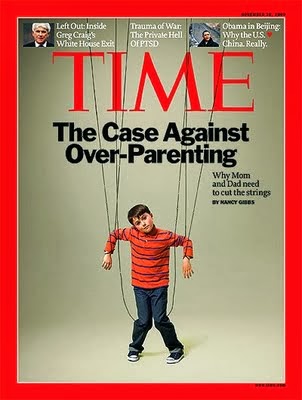
helicopter-parents 2I copped this post’s title from Julie Scelfo’s front-page Sunday NY Times article “Campus Suicide and the Pressure of Perfection.” Interestingly enough, on the same Sunday the Washington Post also ran a front-page article on the plight of over-stressed students, which is much more lurid than Ms Scelfo’s piece, and features, not only self-inflicted razor blade cuts, but forged transcripts and hit men. The Post copped their article from a piece in Toronto Life magazine entitled “Jennifer Pan’s Revenge: the inside story of a golden child, the killers she hired, and the parents she wanted dead.”

Less sensational but more typical, the Times story chronicles the psychic collapse of a Penn freshman named Kathryn DeWitt who “has understood since kindergarten that she was expected to attend an elite college” and whose mother checked “[e]very day at 5 p.m. test scores and updated grades” to monitor Kathryn’s progress.

Long article short, Kathryn gets into Penn, discovers her relative mediocrity, makes a 60 on a midterm calculus exam, and whips out razor blades and begins “cutting herself to ‘prepare’ for the pain” of suicide.

In fact, in a thirteen month stretch, six Penn students killed themselves, presumably like Kathryn, the victims of overweening parents and “carefully curated depictions” from social media, — you know, those Facebook pix of propped feet in Acapulco and those Gourmet Magazine cover shots of the meals your “friends” are devouring while you slowly turn the key of the metal container that houses the Spam you’re frying for supper.

Back to Kathryn: thanks to the intervention of her roommate, who found “pink rose-adorned” suicide notes stacked neatly on Kathryn’s desk, she ended up in a hospital, is now on the road to recovery, and has made it through her first year at Penn (with an A- in Calculus to boot). The revenge she’s exacting on her parents, portraying them as helicopter parents, is certainly less severe than Ms Pan’s of the Post story, but it can’t be fun to read about your daughter’s wearing a “lime green watch” that “covers up where she had cut herself.”

Cut (I know, I know) to this morning’s Post and Courier.  We have another helicopter parent, Melanie MacDonald, who with her daughter downloaded one of West Ashley’s freshman summer reading choices Some Girls Are “in hopes of tackling the summer reading assignment together.”

Although she assures us she’s “no prude,” Mrs. MacDonald considers the novel “smut” and has had it successfully yanked on August Eve from the summer reading list, which is not good enough for her because “she’s still waiting for ‘an explanation’ and “an apology.'”

Although I haven’t read the book, I can offer an explanation. The West Ashley English Department no doubt chose the book because they believe that it vivifies negative high school culture, especially the so-called mean-girl syndrome, which means its characters say “fuck” and give “blow jobs” but that the novel also demonstrates how hurtful bullying can be.

Here’s Jaime, the author of a blog called The Perpetual Page-Turner’s take:

It was such an interesting experience to watch [the protagonist] Regina fall from grace because you feel so conflicted. On the one hand, you can tell she is a mega biotch who has been a HUGE bully and so you kind of hate her from the start. But early on you have sympathy pangs for her because something terrible happens to her and it all gets twisted into an AWFUL rumor by someone in her group. But then you think, (about the rumor aspect… NOT about what happened to her), “pshh girl got what is coming to her with all HER nasty rumors she’s started.” But then as the bullying gets worse from everyone in school you feel for the girl. Having a heart…it’s a bitch sometimes! I can’t stand to see anyone get bullied and what happens to her is TERRIBLE and nobody deserves it. I felt really emotional and sick about it because it felt so real. I’ve never been bullied before but I’ve heard about terrible things and seen stories about kids being bullied to the point of suicide and it angers me. Courtney Summer made sure your heart would flip flop over whether to like/dislike Regina but you could agree she didn’t deserve THAT.

In other words, the novel fosters empathy.

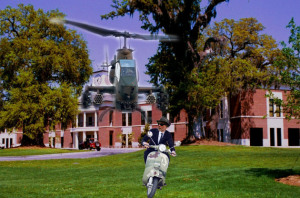
Anyway, parents, back off. There are a slew of books coming out about the damage you’re causing. What I find with helicopter parents is that they destroy the joy of learning, that Hamlet is reduced to “data’ to be mastered for “the test.”

School is reduced to a job and with it childhood is tossed.

helicopter-helicopter

Smug Sounding But Sincere Philosophical Advice on Dealing with Peripheral T-Cell Lymphoma NOS

mansfield 1365 days later we find ourselves all alone at a picnic area near the summit of Mt. Mansfield, the highest mountain in Vermont. We’re on the south side looking down at 180 degrees of spectacular scenery, and behind us clouds rush over the summit, revealing a patch of blue sky. A waterfall of light pours through the opening and cascades down the side of the summit, progressively devouring shadows. Or perhaps the light’s more like lava because a waterfall is always there pouring forth, and this light is creeping, shimmering its way down, illuminating boulders and green growth.

judy-walkingI point it out to Judy, whose short, wavy hair ripples in the strong wind. She’s never seen anything like this lava flow of light either. It sure beats last July when we were perched on the balcony on the fifth floor of Roper Hospital, Judy tethered to a chemo dispenser. This light overcoming shadows in the mountains is an apt analogy of how we feel now one year later after six 96-hour sessions of chemo, a stem cell transplant, and radiation. I say we, but it’s Judy who has undergone all of this, Judy who makes Ernest Hemingway look like Woody Allen when it comes to stoicism.

* * *

No one wants to get cancer, but you certainly don’t want to get Non-Hodgkin’s Peripheral T-Cell Lymphoma, Not Other Specified. Its very name sounds as if the doctors don’t know exactly what it is, and they don’t. Googling its prognosis is literally life negating. Here’s the first sentence from an article on the disease from a medical journal called Blood: “Peripheral T-cell lymphomas (PTCLs) are a heterogeneous group of clinically aggressive diseases associated with poor outcome.” (sic)

The five-year survival rate is about 32%. When I mentioned these percentages to Judy’s oncologist, he said, “There are only two numbers, 0 and 100. It’s either going to kill you or it isn’t. It’s curable. Stay off the Internet.”

But I didn’t. I kept searching for success stories, but they were hard to find in the haystack of scientific studies, cancer treatment advertisements, information websites, etc., so I decided to write this piece to offer hope to anyone out there who has been recently diagnosed, and believe me, I know that Judy’s cancer might come back. The odds that it is cured are 50% to 81%, depending on what study you look at. But the ultimate scoop is that anyone can die anytime, and we all should start practicing the Buddhist habit of living in the moment because as my pal Hamlet says

If it be now, ’tis not to come; if it be not to come, it will be

now; if it be not now, yet it will come: the readiness is all.

* * *

Okay, let me get down to business to offering hope.

All of those stats on PTCL-NOS are based in the past, sometimes several years in the past, and based on therapies that have been abandoned or modified. 32% of patients have survived, even with those obsolescent treatments.

Furthermore, percentages are abstractions, and you are not.

For example, 85% of non-Hodgkin’s lymphomas are the easier cured B-cell variety, whose success rate is more like 90%, so going by percentages, you should have the B, not T cell variety. But you don’t. Your projected statistical five-year survival rate is twice that of the chances of having T-Cell lymphoma in the first place, so our oncologist is right. You are you, not an abstraction.

As far as treatments go, read this article. How I Treat PTCL-NOS.

If your physician has you on the CHOP regimen of chemo, ask him why not CHEOPS? Tell him you’ve read that it may offer a better outcome, especially the 96-hour continuous infusion delivery system. In Judy’s case, the chemo was not nearly as bad as we had feared. (The stem cell transplant chemo is another story, but then, at least the end of the tunnel is illuminated). Sure, chemo drains you, affects your palate and appetite, and you lose your hair, but losing hair is a good thing. Hair cells divide quickly, like cancer cells. Losing your hair is a sign that the chemo’s doing its job. New drugs have been developed to help deal with nausea.  I liken the 96-hour infusion to sipping a gallon of rotgut whiskey rather than chugging it. Anyway, read the article, and discuss it with your physician.

* * *

Everyone says to be positive, and it’s hard, but now at least you know what you got, and it’s going to be treated, and scientists are working their asses off to find better treatments.

Your life probably seems more meaningful now because you know all too well how ephemeral it is. Your plight offers an opportunity to exhibit grace under pressure, so take every breath and every step with the assurance that it is now, and now is all anyone ever has or ever has had.

And good luck!

The Havisham Syndrome: Why Children Haters Become Teachers

art  by Steve Messa

art by Steve Messa

Don’t know about you, but whenever I see a colon in a title, I think, okay, this essay’s not likely to be all that whiz-bang exciting, but it’s probably well researched and well developed. If I’m interested in the subject matter — e.g., the elopement of Robert and Elizabeth Barrett Browning, vintage Bengalese pornography, or the psychology behind wives of professional golfers wearing skinny jeans with factory-installed rips — I’ll check it out. What I expect from a title with a colon is serious, academic exegesis.

In the case of this essay, however, despite the title’s colon, my conclusions of what factors impel child-haters to enter the teaching profession rely on intuition, not research, so, strictly speaking, it’s about as scientific as a Discovery Channel documentary on the search for Noah’s ark. Nevertheless, intuition is a powerful mental force, a subconscious storehouse of forgotten events. Intuition is like a precocious child tugging at the sleeve of your consciousness, trying to get your attention to point out something important you’re too tall to notice.

One more caveat: the following theory is based only on one incredibly callous individual who made two years of my early adolescence the educational equivalent of the Bataan Death March. But I suspect that if my theory is true for her, it must be true for others as well. So bear with me as unveil my explanation of a phenomenon I have dubbed “the Havisham Syndrome,” which answers the question: why would a child hater choose to spend the working years of her life surrounded by children.

Choosing the Teaching Profession

Perhaps because I considered each school day a prison sentence and spent as much time glancing up at clocks as I did down at my work, I always shake my head in wonderment when someone tells me she knew she wanted to be a teacher for as long as she can remember, so obviously, for some, certain aspects of the profession override its promise of poor pay, tons of take home work, and low social status.

Many teachers, for example, go into teaching because they love children. They find very young human beings adorable, so they don’t mind spending their days herding miniature but toweringly egocentric bipeds to and from art class or to the dining hall where the teachers’ lunches go cold while they clean up spills, break up arguments, or try to cajole the little Brittany to take at least one bite of something nutritious.

Other teachers, believe it or not, love middle school students. They find seventh and eighth graders endearing and early adolescence ripe — and I don’t mean ripe in the olfactory sense — I mean ripe as in propitious, a time conducive for instilling life-long habits that will produce solid citizens.

Others are drawn to teaching because they love their subject matter and think it’s important, that a knowledge of history, math, or art is life enriching.

Still others, like me, stumble into teaching through a combination of happenstance and incompetence.

And then there are those who choose teaching because it’s an undemanding major with fairly good job prospects (i.e., if you don’t mind teaching in an impoverished school district with sub-Saharan murder rates). Whatever the case, the motivations of most teachers are neutral at worst and very positive in most cases.

However, in my career both as a student in Summerville schools and as a teacher elsewhere, I’ve encountered hateful, sometimes cruel people[1] who seem to have been drawn to the classroom to make young people’s lives miserable. There’s a sadistic streak in some teachers, teachers who make out multiple-choice questions like this:

Which of the following doesn’t fit?

A. mobsters                       B. gangsters

C. hipsters                         D. bankers

I bet you chose D, right? You idiot. The answer is C. Hipsters aren’t obsessed with money.

Even if these teachers are obviously wrong, they can’t admit a mistake. They have favorites, usually popular, brilliant, or rich kids, but treat the average or slow student with undisguised contempt.

Take my 7th and 8th grade English teacher, for example.

A Case Study

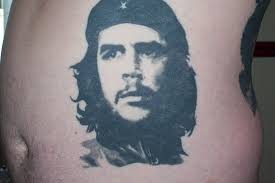
ted's tattooEven though the chances of this woman’s still being alive or her one offspring’s running across this post are about as remote as Ted Cruz’s opting for a Che Guevara tattoo next time he gets smashed on tequila in a South Texas Barrio, for the sake of discretion, I’m going to refer to her as Mrs. Choakumchild, after M’Choakumchild from Charles Dickens’ biting satire on Utilitarianism, Hard Times.)

It’s my belief that Mrs. Choakumchild entered teaching because of deeply rooted psychological problems, problems arising from her own experiences as child in the classroom. Let’s face it, children have an inherent pack mentality that prompts them to single out weird, unattractive, and/or socially clueless kids and turn them into the class pariah. Young Mrs. Choakumchild – let’s say her maiden name was Gradgrind — no doubt hit the hat trick here.

Of course, when I had her as a seventh and eighth grader, I couldn’t have told you how old she was. She did have a daughter a year older than I.  In any case, Mrs. Choakumchild was significantly overweight, had stringy, poorly dyed orange hair and a withered right arm that dangled at her side. Her sharpening a pencil in the wall-mounted pencil sharpener was a terrifying experience. She would claw-like grasp the pencil in her right hand, cross over with her left hand, and vigorously crank the handle as if grinding meat.

She had absolutely no friends, ate her lunches alone in her room. I never remember her smiling once during the two years she taught me. Nor do I remember her ever saying something positive about my work. I was in the advanced section, and once she informed me in front of the entire class that I was “an error in classification,” that is, I didn’t belong in the class. Later, in my senior year, when I had won a school wide award for a piece of fiction, my mother, who was a substitute teacher, showed it to Mrs. Choakumchild, perhaps wanting to show her how well she had taught me. After reading it, her only comment was, “He still can’t spell ‘government.’”

My Theory

Obviously, Mrs. Choakumchild was not a people person, nor did she seem at all fond of children. So we can rule benevolence out as a motivation for her becoming a teacher. She may have during college developed a great love for sentence diagraming (it seems that’s what we mostly did), but part of that love for a subject entails wanting to share it with students, not cram it down their mental feeding tubes. On the other hand, it is possible she went into teaching for the reason that women had much fewer job opportunities in those days, and I can’t rule that out.

I think, however, that it’s possible that she went into teaching for the same reason Miss Havisham adopted Estella in Great Expectations, to exact revenge. You’ll recall that being jilted at the altar, Miss Havisham decided all men were evil and reared Estella to be cruel so she could punish boys who fell in love with her. Likewise, Mrs. Choakumchild came to the conclusion that all children are inherently cruel, so decided to gain control over groups of them and to get her revenge. Of course, if true, this behavior would fall under the category of sadomasochism, because it she hated children, being around them couldn’t be pleasurable.

Could this be true of other teachers as well?

Of course not. The theory is preposterous. (Note the post is classified under satire). However, teachers do possess an enormous amount of power, and they need to be extremely careful in what they say. Obviously, I remember all too well Choakumchild’s comments on my intelligence, and she really did make me think I was stupid. Also, I know that over the years that I certainly have said things to hurt students’ feelings, and the thought of that makes me sick.


[1] Once one of my PE teachers yelled out as at obese boy was running the hundred yard dash, “Hold your arms up, X, so I can tell if you’re running or rolling.”