A Brief Analysis of the Likability of 2016 Presidential Candidates

Wisconsin Budget & You


We US citizens prefer warm, at-ease, smiling, sparkly-eyed presidents to stiff, ill-at-ease socially awkward ones. Look at the slack the nation granted Reagan and Clinton, the former so hen-pecked that he allowed his wife to schedule his travel plans according to the prognostications of an astrologer, the later so randy that he conducted official business on the phone in the Oval Office while being fellated by a woman young enough to be his daughter.

No big deal, we the people, proclaimed.
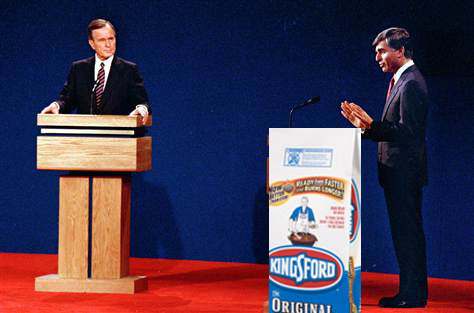
debateWe dumped awkward mealy-mouthed, well-meaning Jimmy Carter and awkward preppy well-qualified GHW Bush after one term. Okay, I admit things weren’t going all that smoothly during their presidencies economically, but I bet neither would have ever been elected in the first place if they’d had an opponent in the general who possessed even a scintilla of personality, Carter facing stolid cabbage-faced Gerald Ford and Bush Michael Dukakis, who possessed all of the charisma of a sack of charcoal.

Although Obama can be charismatic in a speech, he’s not smooth in a sit-down interview, um-erring a bit too much and emanating a vibe of really not liking people all that much, which I can certainly understand but which isn’t going to endear him to most folk. Given how the economy has turned around during his administration and the disastrous performance of his predecessor, you wouldn’t think he’d be showing up near the top on any the-worst-president-in-history polls, but he is.

Of course, his being bi-racial doesn’t endear him to a large swath of people, especially where I live, in South Carolina, the home of Strom Thurmond, father of four – make that five – children and the creator of the Southern strategy that flipped the South from solidly Democratic to solidly Republican because whites down here have a historical enmity to blacks.
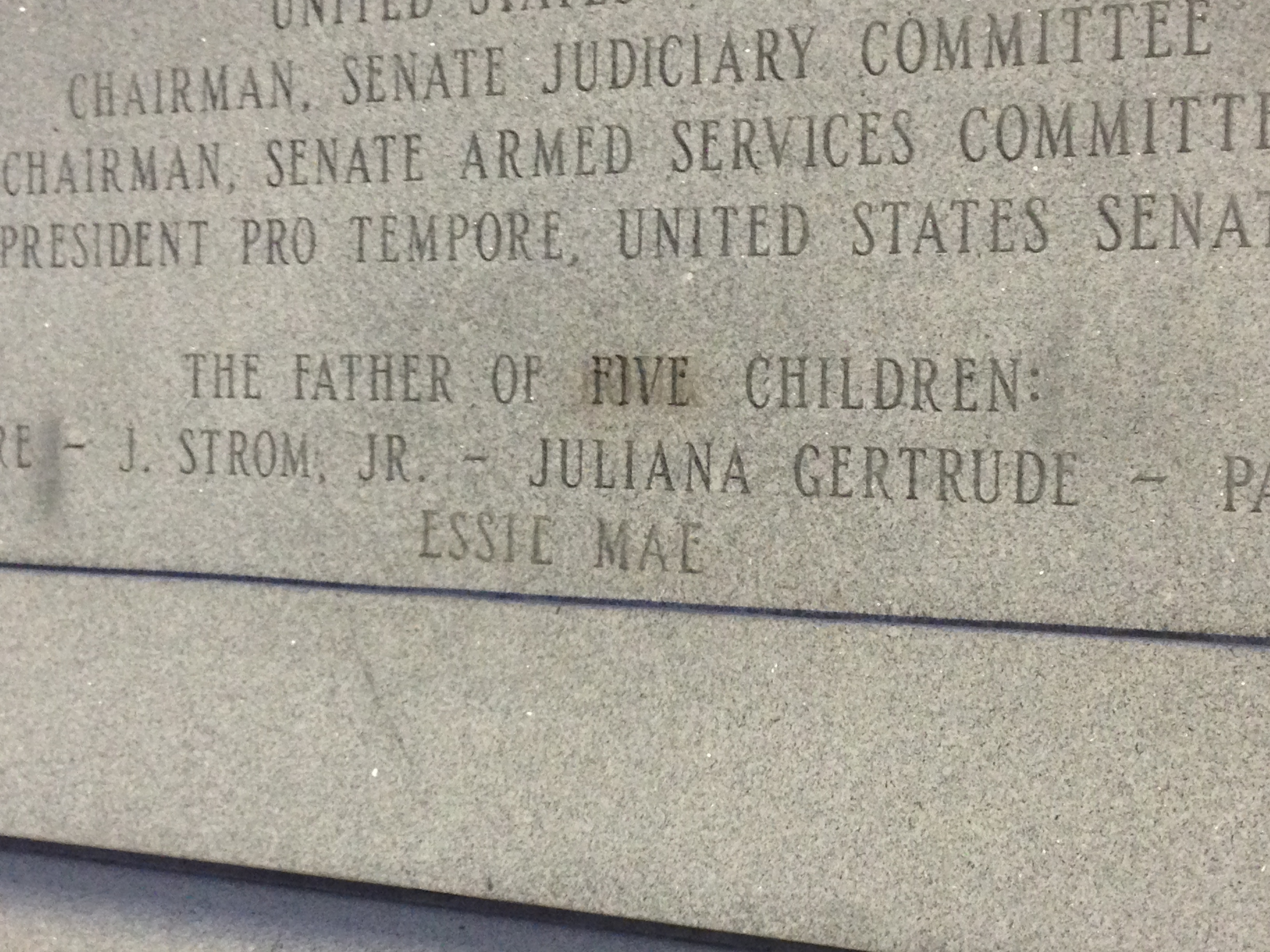
Strom Thurmond Monument, State House Ground

Strom Thurmond Monument, State House Grounds, Columbia, SC

At any rate, Obama’s term is three-quarters done, and the 2016 race is starting, so I thought I’d do an early, completely nonpartisan [cue ironic cough] survey of the likability/charisma indexes of the major candidates aspiring to become the most important powerful person on the third planet from the sun.

We’ll start with the thin (as in numbers) Democratic Field:

webb-2016


 Jim Webb


I like Jim Webb. He once had this exchange with President W Bush when Bush asked about Webb’s son, who was fighting in Iraq at the time.

Bush: How’s your boy?

Webb: I’d like to get them out of Iraq, Mr. President.

Bush: That’s not what I asked you. How’s your boy?

Webb: That’s between me and my boy, Mr. President.

Webb later said that he got so angry that he wanted to “slug” Bush, which would have been so wonderful, but he didn’t, and I’m afraid this exchange doesn’t reflect all that well on Webb’s social intelligence. For example, he could have answered more deftly.

Bush: How’s your boy?

Webb: Having the time of his life risking it in a godforsaken hellhole, the worst foreign policy debacle in the history of the Republic. By the way, what club are your girls going to tonight?

Bush: Fuck you.

Webb [slugging him] asshole!

Clinton1web_2831249b


  Hillary Clinton


Let’s face it, Hillary’s not likable, the female equivalent of Al Gore.   She brays when she laughs, dresses in odd anatomy concealing eye-singing pants suits. She lacks the common touch. She’ll try to overcome these problems by reminding people she’s a grandmother. Good look with that.

Okay, now for the Republicans


ted-cruz-AP


 Ted Cruz


Ted Cruz looks way too much like Grandpa Munster ever to be elected President. I admit Lincoln wasn’t what you would call a pretty boy, but he had kind eyes. Cruz needs to hire some trainer/consultant to erase that self-satisfied contemptuous look off his mug. But then he’d still look like Grandfather Munster, only less of an ass-holey one.


granda and ted

 Rand Paul Attends South Carolina Republican Party Summer Barbecue


  Rand Paul 


I like Paul’s hair but he seems a bit too prickly, too thin-skinned, which most people find off-putting, but I can imagine having a beer with him and not wanting to take my own life during the encounter.

Rick_Santorum_Pic1

  Rick Santorum


Yawn. He’s ditching the sweater vests. I’d suggest he try on one of Hillary’s pantsuits, though by his reckoning, that might lead to bestiality.
jeb-bush


Jeb Bush


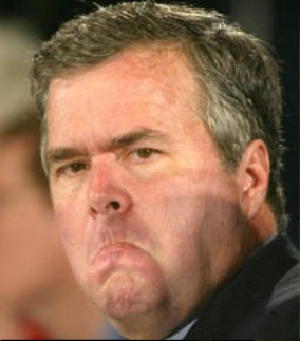
By my standards, he’s more likable than his brother, but by my standards, so is Justin Bieber. It’s good that he doesn’t affect that Texan drawl and that his family is multicultural and that he speaks Spanish, but he seems arrogant (like Obama) and has that simian Bushgene that screams oh-here-we-go-again stamped on his features.

Scott Walker

 Scott Walker 


Of course, I don’t like Scott Walker, but given he’s won three elections in four years, he must come off as an okay guy,  And I like that he’s a college dropout. Lots of people can relate to that. Then again, my having a beer with him personally seems about as much fun as having a beer lemonade with Mitt Romney

images


Mark Rubio 


I read that he’s charismatic, but I’m immune. He looks too cherubic, like a Hispanic cupid.

 Chris Christie Gives Speech On Financial Integrity And Accountability In DC


Chris Christie


What’s not to like? A self-promoting bully with the face of a hitman who makes Rabelais’s Gargantua look refined in comparison.

Lindsey Graham


Lindsay Graham 


Too soft-spoken, too captious.  Imagine him with Frank Underwood’s accent. He’d have a shot. Graham versus Hillary is my dream contest. Foreign policy mana y mano.

* * *

I’m probably leaving someone important out, but this exercise has depressed me, on this of all days, the day of Folly Beach’s Sea and Sand Festival, so I’m checking out with the observation that none of these candidates seem like a “people person.”

My friend Tom Horton, a lifelong Republican, told me when he briefly met Bill Clinton that he, Tom, felt as if he were the most important in the world.

Too bad Slick Willie can’t bottle that and offer Hillary a swig.

Indolence: An Apology to All the Seniors I’ve Taught

. . others in Elysian valleys dwell,
Resting weary limbs at last on beds of asphodel 

A lovely word, with its three vowel-laden syllables, indolence: the Latin word for grieving – dolor – sandwiched between a negative prefix and a noun suffix.

It originally denoted a state of not grieving, of avoiding trouble, but lapsed in time to mean laziness, what Ozzie and Harriet would call not giving a “hoot,” what the Bellamy Brothers would call not giving a “rip,” what Johnny Depp would call not giving a “shit.”

In other words, high school seniors after spring break.

The path to graduation leads through fields of poppies past the prom into the prison block of final exams.

Meanwhile, they sit with their heads on their desks, their glazed eyes like marbles staring vacantly as a boring old baldheaded shuffling jackass reads out loud lines of poetry

That young men, tossing on their beds,
Rhymed out in love’s despair
To flatter beauty’s ignorant ear.

A Buddhistic Approach to Kafka’s Metamorphosis

K-buddah_jpgA professor friend of mine at the College of Charleston who teaches a freshman course entitled The Nature of Solitude: Sacred & Secular, Voluntary & Involuntary invited me to come and cover Kafka’s “Metamorphosis,” so I thought I’d share with any instructors out there the approach I took. Since the course is philosophical, not literary, rather than discussing the structure or aesthetics of the work or taking a Freudian or Marxist approach to the narrative, I’ve opted to approach the work more practically.

I decided to begin the hour-and-fifteen minute class with a keynote presentation that highlights the remarkable unlikelihood that any of the students sitting in the class actually have come into being (see “Slide 4” for further explanation) to underscore the horrible tragedy of the stunted life of the Metamorphosis’s protagonist, Gregor Samsa.  In addition, the presentation also suggests that mythology and its talented stepsister literature offer interesting ways to cop insight into, not only our lives, but science as well.  In fact, the presentation suggests that science itself is a myth, albeit a self-correcting one. Finally, I wanted to alert students to the human propensity of projecting our biology onto the cosmos as a way of explaining mysteries outside of ourselves. Of course, you can view the presentation all at once, but I have provided how I deal with each slide below the presentation.

Slide 1

As you can see, the first slide, the title slide, consists of two images, the first a sperm cell crashing into an ovum, the second, an artist’s rendering of a comet or meteor crashing into earth, which is science’s current best guess as to what engendered the chemical reactions that led to life.  I do the ol’ Socratic method, asking the students to identify what’s going on in each slide.

Slide 2

Slide 2 consists of Wordsworth’s famous sonnet “The World Is Too Much with Us,”  as in the work-a-day world overwhelms me with its mind-numbing responsibilities and anxieties, which, of course, relates to “The Metamorphosis.”  As you recall, Gregor who has awakened in the form of a gigantic beetle seems more worried about getting to work on time than he does about horrible fact that he has been transformed from a mammal to an insect who still possesses a human consciousness.

The poem offers a plethora of potential Socratic questions as you relate the sonnet to the novella.  I actually talk about the structure of the sonnet, its volta in line 9, but the main focus is what the speaker of Wordsworth’s sonnet and Gregor Samsa have in common and what the sonnet and Dylan’s lyrics have in common.

Slide 3

Slide 3 quotes a stanza from Dylan’s “Subterranean Homesick Blues,”  which offers a beautifully truncated catalogue of childhood.  Note the anxiety inherent in Dylan’s ditty. (By the way, you can read my argument why Dylan deserves a Nobel Prize in literature HERE).

Slide 4

The fourth slide is an excerpt from the movie Adaptation, which didn’t successfully make the trip from my hard drive to the Internet, but you can view it here: 

Obviously, ultimately, Nicolas Cage’s character’s question how did I get here has a very complicated answer.  For him to exist on this tiny planet swirling around a run-of-the-mill star much has had to happen, much of which from my perspective seems random, the first meteor which brings life, the second meteor that brings death to the dinosaurs and their displacement by mammals; then you have to factor in the long odds of that particular sperm hitting that particular egg through the long line of his ancestors culminating with his parent’s coupling on that particular day of his conception, a day when his mother didn’t have a headache, a coupling that led to one of 250,000 sperm cells in what I call the most important-race-of one’s-life reaching the finish line of one of mother’s 300 or so ova, a process that resulted in him, and by extension, you, C of C freshman, or you, blog reader.

Slides 5 & 6

These slides underscore the long odds of existence, emphasizing just what a shame it is for poor Gregor to live such a stunted life given the enormous odds of existence.  Here, I sneak in Buddhist doctrine, and talk about the Samsa family dynamic, the office manager, etc.

Slide 7

I talk about myth here, not as untruths, but in the Joseph Campbell mode as symbolic structures that embody profound truths.

Slide 8

This slide suggests that science is often wrong about details (not theories).  If I had written “quark” instead of “electron” in my 1970 chemistry test, I would have been correct but had my answer marked wrong.  By the way, I’ve photoshopped my 1970 self into this slide (the redheaded one leaning over the desk) to show the freshmen what I looked like 45 years ago and to horrify them with the realization that they too one day will look like me now [cue maniacal laughter]

Slide 9

The discoverer of the quark, Murray Gell-Mann named it after a word from James Joyce’s novel Finnegan’s Wake, suggesting that scientists like literature, that disciplines are all interrelated.

Slide 10

A reprise of Slide 8

Slide 11

In Slide 11, I ask if anyone recalls the Greek creation myth of Uranus and Gaia.  If no one does, I retell it, which is essentially, the sky Uranus had sex with the earth Gaia and life began, which, brings us back to the first slide.  The current scientific theory and the Greek myth are essentially the same.

For the rest of the period, I let the students talk about “The Metamorphosis” and give them wide range.  Of course, given the title of the course, Gregor Samsa’s involuntary solitude should be brought up.

You Do Hoodoo Sound Track

mash it upIn this age of the rank amateur, I thought I’d mash up a theme song for the blog.  Collage, baby, collage.  It’s sorta like Muddy Waters meets the B-52’s meets Screaming’ Jay Hawkins meets the Boss.  The end is guaranteed to transform even woebegone Mike Pence’s thin-lipped frown into a smile.

Click the arrow for sound.


Whispers of Schadenfreude, Mike Pence Edition

SwagKennedy

As the self-proclaimed Jimmy Swaggart of Buddhism, I openly admit where I fall short of the ideal established by the Enlightened One, and certainly the cultivation of compassion is an area in which I fall way —make that — abysmally short.

I do sincerely wish that through meditation I could relax the tight little angry fist of my heart and show some empathy for those I dislike when they stumble, rather than luxuriating in a warm, soothing, spiteful bath of schadenfreude.

For example, rather than empathizing with Governor Mike Pence of Indiana as he made a gargantuan ass out of himself on national television, I smirked derisively, enjoying every drop of perspiration forming on his quivering upper lip as if they were karmic pearls bestowed upon me by a benevolent universe. Certainly, I’m no stranger to making a complete ass out of myself, though, of course, I haven’t had the opportunity as yet to elevate my asshoodness to a level worthy of the adjective gargantuan, never having been interviewed by a local broadcast reporter much less by George Stephanopoulous. However, given the chance, I think I’m capable of it.

And certainly, Pence is worthy of compassion if we consider wretches worthy of compassion. I suspect that Pence hasn’t had a decent night’s sleep since deep into last week. Perhaps his problem lay in his admittedly not-exactly-heroic condition of not being able to lie well extemporaneously.  In case you’re just now emerging from a coma, Pence refused to answer Stephanopolous’s yes-or-no question as to whether under Pence’s new Indiana Restoration of Religious Freedom Act, a florist (i.e., a business) could refuse to provide flowers for the wedding of a gay couple. (If you haven’t seen it, you can watch an edited version here:

A more practiced liar would have hissed, “Of course, not,” but then again, I suspect that the bill’s raisin de etre is to have “the base” at least think fundamentalists can refuse to cater or provide flowers to gay weddings, coming as it does right after the SCOTUS nixed Indiana’s ban on gay marriage. So rather than telling a lie, he ineffectually tried to dodge the question, transforming himself from a possible presidential candidate to an international laughing stock, the plump bourgeoise target of many a comedian’s acid-laced arrows.

(Not to worry, he made up for his refusal to lie by providing a tractor trailer load in subsequent days)

And, of course, Indiana’s super-majority Republican government would have gotten away with it, as my native South Carolina did with its law, if it had not been for certain segments of corporate America, including NASCAR, deriding the law as bad for business, which just goes to show, as Bob Dylan pointed out lo so many years ago, “Money doesn’t talk; it screams.”

Well, perhaps this confession is a first, halting step from my detour from the golden 8th-fold path, or maybe not. I hear Pence made Letterman’s Top 10 list. Maybe I’ll check that out instead.


Our Own Little Worlds

Although Daddy had nothing but contempt for ”bluebloods,” Mama was ambitious for me, a shy and anxious only child, so she immediately accepted Mrs. Tillyard’s invitation to come and play with Lawson at their home.

Situated on a hill, it was an impressive two-story clapboard house with white square columns, high ceilings, faded oriental rugs, and a strange odor – musty, sweet, sad. Pathologically shy, I hadn’t wanted to come, and this strange boy was so pale that you could see blue veins running like rivers underneath his skin. He had long, curly red hair, big blue eyes, and a tiny girlish mouth. He spoke formally, like a character in a book or in an old movie. After shaking my hand, he said, “Shall we go upstairs so I can show you my toys?”

mural     I followed him, glancing back down at Mama and Mrs. Tillyard, who stood stiff-backed and whose hair was already white. I wanted to kiss Mama goodbye, but now she was out-of-sight as I followed Lawson to the end of the hall. Walking on tiptoes, leaning forward at an awkward angle, he opened the door to a room like I’d never seen before. Someone – a skilled artist – had painted on its walls a vista looking out from the battlements of a castle. Silver armored knights on horseback jousted in the distance. Across rolling green hills were dragons, fairies, faraway castles, and a forest. Puffy white clouds floated in the blue sky of the ceiling,

Lawson said matter-of-factly, “Welcome to my own little world.” Then he added, “Close the door. Quickly.”

I obeyed.

“I know they call you Trey,” he said, “but what is your Christian name?”

“Christian name?”

“Your real first name.”

“It’s John.”

“I shall call you John then. I detest nicknames. By the way, I play with dolls.”

This admission didn’t shock me. He wasn’t the first boy I’d met who played with dolls. He opened one of the hatches of a built-in cabinet that ran the length of the wall and beckoned me to look. His dolls weren’t baby dolls but miniature people, male and female, dressed in costumes from various countries – a Japanese woman, a Scotsman with kilts and a bagpipe, a dark skinned boy with a turban. They were standing in a row, about ten of them, facing sideways in the same direction as if they were waiting in line.

He reached in and retrieved a blonde pigtailed girl in a alpine outfit who had been unprofessionally painted brown. “This is my lady in waiting. Her name is Octavia.”

“Who painted her/”

“I did.”

“Why?”

“Because the real Octavia is brown.”

Just then the door opened, and Mrs. Tillyard and Mama stepped in. I was afraid that they would see the doll and frown, but they didn’t seem to notice. “My word,” Mama said, “this room is like a wonderland!”

“Lawson’s idea,” Mrs. Tillyard said proudly. “He’s very much the bookworm, very enamored of the Middle Ages.”

Mama smiled weakly, said goodbye and that she’d pick me up at four. I sat there, next to the longest toy chest in the world, and waved goodbye.   I felt more at ease, as if I might have fun playing with Lawson. This was a new world, a lavish world.

He asked what I liked to do, and I said to play checkers, but he suggested Parcheesi instead. He went over to a different compartment of the cabinet and brought out the game, carefully unpacking it. He plinked a pair of dice into one of the four cardboard canisters and handed it to me.

“Pick whatever color you like and go first.”

“Don’t you want to roll for it?”

“No, you’re my guest. You go first.”

So we played Parcheesi, emphatically counting out the steps of the men, tapping them in the spaces: one-two-three; one-two-three-four.

“I’m afraid I’ve gotten myself into a tragic love affair,” Lawson suddenly said. I glanced up from the board. He was sitting with his legs crossed in front of him while leaning on his right arm.

“I met her at Spells Grocery Store. Have you been to Spells? It’s a dusty, dark, old country store loaded with Mary Janes, Squirrel Nut Zippers, and Tootsie Rolls. It’s there I met Octavia. Love at first sight,but I can tell you right now it’s doomed.”

Although I secretly liked girls, you were supposed to pretend you hated them.

“Octavia is a funny name,” I said.

She’s colored. That’s not an unusual colored name. They seem to especially like old Roman names.”

“Colored?”

“Colored as in Alston Elementary School.”

Though I didn’t look up, I could tell he was staring at me. “You shouldn’t kid like that,” I finally said.

“I’m not kidding. She’s the most beautiful girl in the entire world.”

“That’s impossible,” I said.

“Why do you say that?”

I could see that he wasn’t kidding

“Colored people aren’t allowed to be beautiful.”

“Who says?”

“Everybody.”

“Beauty is in the eye of the beholder,” he said.

I rattled the dice and cast them.   My stomach was tightening, beginning to cramp. Although you were supposed to be nice to colored people, loving them was unthinkable, far worse than playing with dolls. I wanted to call Mama, but I was scared to because she wouldn’t believe that my stomach really hurt. “I’m tired of playing this,” Lawton said. “Do you want to see my very favorite toy? What’s the matter with you? Are you crying?”

“I got a stomach ache,” I said. “It really, really hurts.”

“Perhaps, it is something that you ate,” he suggested. “It’ll go away.”

“I need to call my mama to come get me,” I said.

“He suddenly looked terribly concerned. “Very well, stay here. I’ll inform Mother if you make me a solemn promise.”

“What’s that?”

“That you promise to come see me again when you’re better. You’re not stupid like the boys Mother calls and brings around here. And I haven’t shown you my model castle or toy knights and damsels and dragons and ogres. Do you promise? I mean to come again? Give me your word of honor.”

“I promise,’ I said.

“Word of honor.”

“Word of honor.”

I never did go visit Lawson again. On the way home in the car, I told Mama when she started fussing how Lawson liked to play with dolls and that he was in love with a colored girl. When Mrs. Tillyard later called to invite me over, I heard Mama whisper a lie into the telephone receiver. I hadn’t known my mother was capable of lying. Eventually, Mrs. Tillyard quit calling, and after Lawson left for boarding school up north, my memory of him and his own little world faded.

On weeknights, Daddy would come home from the Shipyard, turn on the Walter Cronkite, and we would watch in black and white the belligerent Mississippi sheriffs, the policemen with fire hoses, the snarling German shepherds. Then one day, I found myself in Spells Grocery, and I remembered Lawson and Octavia, and I think I might have seen her counting out pennies on the counter, a tall, graceful, barefooted girl with cornrows and a calico dress.

Undergraduate Existentialism Circa 1973

Rick Borstelman 2003

Rick Borstelman 2003

Existentialism was all the rage in the 60’s and ‘70’s when I intermittently attended classes in high school and college. The philosophy of Kierkegaard, Nietzsche, Sartre and Camus must have hit its peak then, because the authorities allowed students to smoke — in high school in certain outdoor designated areas, and in college, right there in class. If existentialism is about anything, it’s about the rights of the individual, as we shall see.

kierkSøren Kierkegaard

Where I went to college each desk in the Humanities Building had a disposable cardboard ashtray. Students bogarted their Marlboros as they took notes, scrawling as best they could the professor’s explanation of Kierkegaard’s exegesis of the Abraham and Isaac story, scrawling (in my case, illegibly) observations like

Faith is precisely the paradox that the single individual as the single individual is higher than the universal, is justified before it, not as inferior to it but superior—yet in such a way, please note, that it is the single individual who, after being subordinate as the single individual to the universal, now by means of the universal becomes the single individual who as the single individual is superior, that the single individual as the single individual stands in an absolute relation to the absolute. This position cannot be mediated, for all mediation takes place only by virtue of the universal; it is and remains for all eternity a paradox, impervious to thought. And yet faith is this paradox…

The fact that you couldn’t follow the argument, that you couldn’t figure out what the fuck the subject of the third “is” was wasn’t* important because professors didn’t test you on the material; they had you write essays just as unintelligible as the texts you couldn’t understand, which represented a triumph of subjectivity over objectivity because who has the authority to tell an individual that his reading of the text is incorrect. That would have been so fascistic.

For example, here might be my undergraduate explanation of the passage I quoted above:

See, the individual smoker who is superior to the rest of the class who doesn’t smoke gets to smoke because the smoker’s subjective universe is paradoxically the only universe because if it weren’t for him, the individual smoker, there would be no universe, the way there was no universe as far as he was concerned in 1492 because he was not as yet a sentient being who possessed the autonomy to light up a Marlboro, despite that the individual who sits behind him, who, once again, would not exist for him if not for his being able to perceive her, or, in this case not perceive her, as she suffers an asthma attack because of the smoke that would not exist except for him.

You got A’s for this type of shit — at least I did.

Meanwhile, next door, in the poetry class you might have students reading this poem by Emily Dickinson:

Abraham to kill him
Was distinctly told—
Isaac was an Urchin—
Abraham was old—

Not a hesitation—
Abraham complied—
Flattered by Obeisance
Tyranny demurred—

Isaac—to his children
Lived to tell the tale—
Moral—with a mastiff
Manners may prevail.

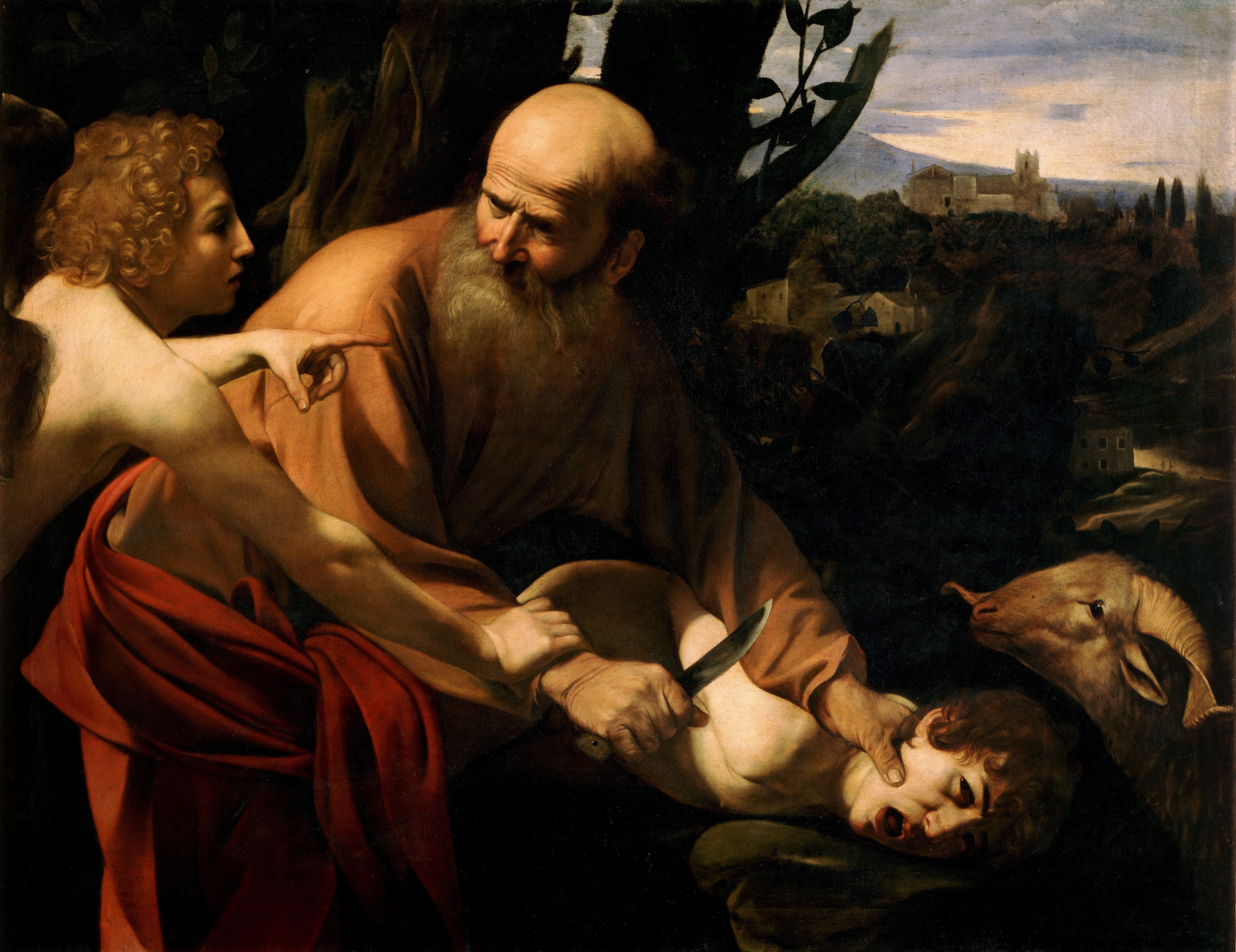
Sacrifice_of_Isaac-Caravaggio_(Uffizi)Now, this poem, despite its implicit criticism of the All Mighty, poses dangers for the existentialist because it doesn’t exactly offer a multitude of defensible readings. The poem rather obviously suggests that Abraham agreed to kill his beloved son Isaac because Abraham was afraid God was going to sic a big ferocious dog on his ass.

These were the types of classes existentialists should avoid because the professors tended to dismiss the right of the individual to spell words whichever way he wanted. These fascist bastards took off points when you spelled “p-a-i-d” “p-a-y-ed.”

*Verbs of being rule in existentialism; the fact that I strung three in a row suggests I get it.

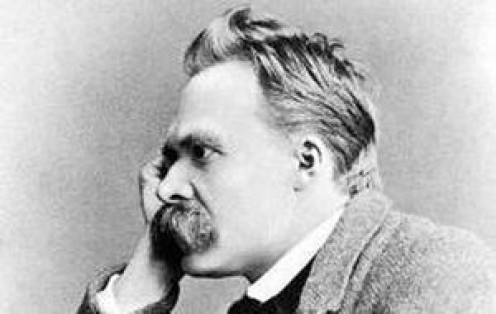
new-nietzscheFredrich Nietzsche

In the progression of existential philosophers, Nietzsche comes next chronologically, and back in 1973, he was a lot easier and more fun to read than Kierkegaard. Plus, Nietzsche was quotable, the king of the aphorism. You’d even heard of some of his sayings before, like

And if you gaze long enough into an abyss, the abyss will gaze back into you.

All things are subject to interpretation.

That which does not kill us makes us stronger.

God is dead.

The problem with Nietzsche, though, is that these killer quotable quotes are imbedded in long, rambling essays that lack structure and sometimes seem to contradict themselves, so by the time you get to the end, you’re not sure what his main point is.

Once you got to Nietzsche in your 1973 existential survey, all that was necessary is that you kept your mouth shut if you were a Christian and not try to exercise your first amendment freedom-of-speech right because chances are your professor was an atheist who would rip you to shreds because, after all, the universe would not exist except for him.

In other words, he’d sic his rhetorical Mastiff on you.

Jean Paul Sartre

sartre-jp-728x485Although Sartre’s masterpiece On Being and Nothingness makes Kierkegaard’s Fear and Trembling read like a Hemingway story in comparison, the ideas themselves are not that hard to understand.

What you got is a consciousness and whatever the consciousness is perceiving, and because this consciousness has a negative power of nothingness that can create a lack of self-identity, you, the individual, need to exercise your freedom by bringing into being and acting upon your individual spontaneous choices, and if you fail to do so, if, say, you decide not to run off to Best Buy and purchase a TV monitor the size of a drive-in movie screen and instead grade those sophomore essays, you have committed “bad faith,” which leads to “nausea,” which is really stupid of you because life is meaningless, and you’ll be dead in no time and therefore kiss good-bye the universe that only exists because you perceive it be.

On on that happy note, it’s DVD time.

A Rural Funeral

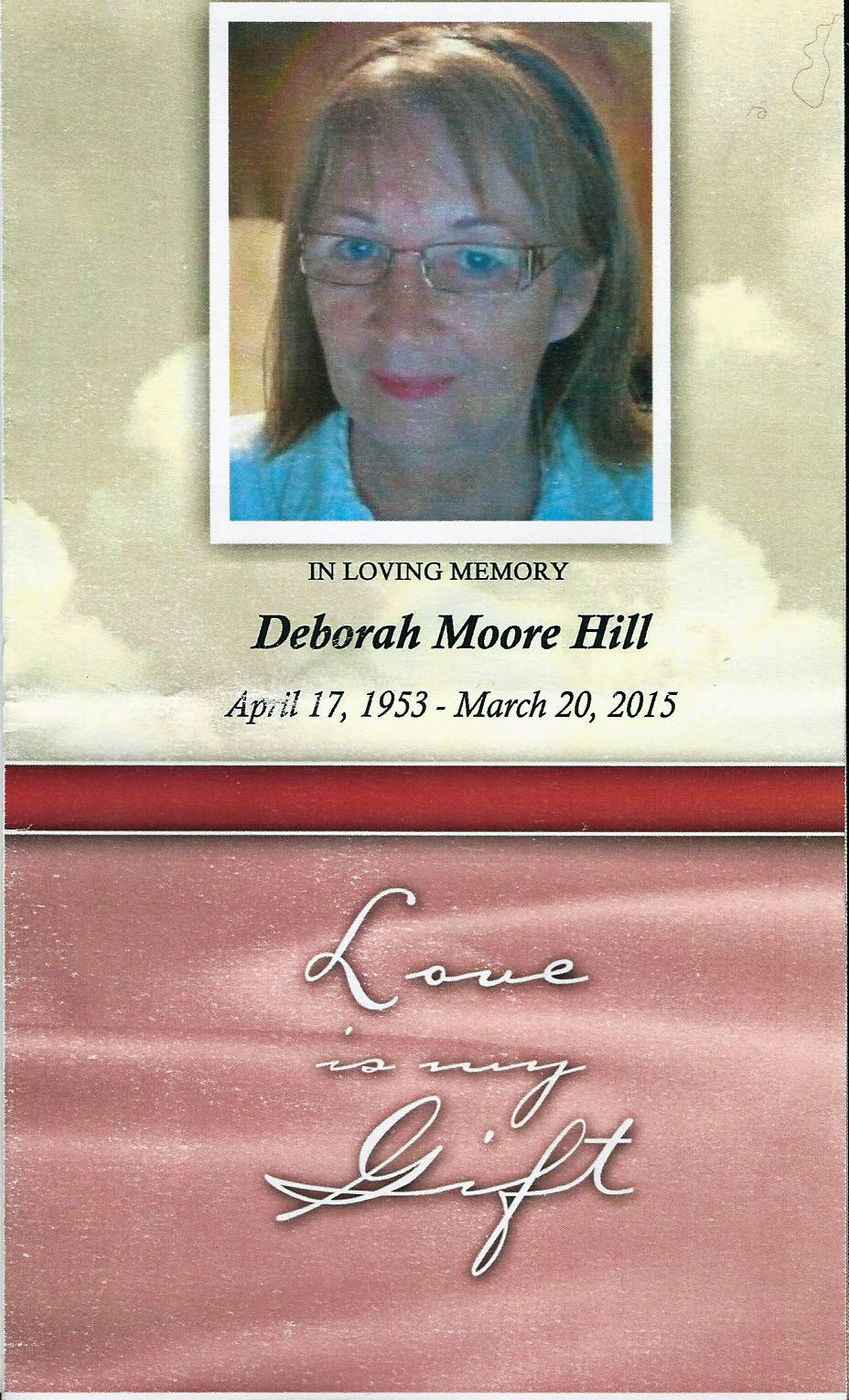
Funeral ProgramWhat they call Main Street in Jackson, South Carolina, isn’t what I would call a street — it’s more like a road running through farm fields, past a row of handsome houses standing on generous lots subdivided from what was once a pecan grove. The only businesses I saw: some type of mechanical repair shop with a hand-lettered sign and a defunct “Super Market.” There appear to be more churches in Jackson than businesses, at least on Main Street. We’re talking the Deep South, the Bible Belt, country music, V-8 engines, spiritual people.

I was at Jackson to attend the funeral of my first cousin Debbie, Uncle David’s second daughter, and although as a youngster I asked God to bless Elaine, Debbie, Pamela, and Scarlet each night as I recited “Now I Lay Me Down to Sleep,” we rarely got together in childhood and virtually never in adulthood, unless we were visiting the terminally ill or, like yesterday, laying a departed family member to rest.

For whatever reason, my branch of the Moore clan isn’t close — even my siblings and I don’t see each other often — so it isn’t surprising that I can count the memories of visiting my cousins on one hand. However, when we did get together, we had a blast playing pick-up sticks and softball or listening to German-born Aunt Maria play her accordion. We simply enjoyed being together because there’s something about blood, about seeing hints of your features stamped on someone else, knowing you have sprung from common roots.

Elaine Ackerman Moore

Elaine Ackerman Moore

Roots like our irascible great granddaddy Luther Moore (“I’m deaf and blind so there’s no need to come up and talk to me!”), our sweet great grandmama and great granddaddy Ackerman, whose daughter, our grandmother, the beautiful Elaine Ackerman Moore, died before we were born and for whom my father and Uncle David mourned for the rest of their lives.

Blood, like they say, is thick.

Perhaps the most memorable event of our cousinhood occurred when Mama sold Uncle David a pony my father had bought and tried to keep in our backyard in a subdivision not zoned for farm animals. This pony was the equine equivalent of Homer Jo Roberts, Summerville’s town bully, who once punched 24 different people one night at the Curve-In Pool (I was one of them) because, as he later said by way of apology, “ Whiskey and beer don’t mix.”

This pony kicked, bit, brayed. I doubt John Wayne would have the courage to put a saddle on him. More problematic was the pony’s penchant for busting out of the make-shift fencing Daddy had erected by nailing some 2x4s to trees in our backyard. This transformation of our backyard into a farm helped to solidify our status as not-ideal neighbors (we also had tied to a tree in the backyard a wingless Ryan PT-22 airplane that we had to crank once a week to keep the engine from freezing). Neighbors were particularly unhappy when the pony got out and trampled their flower beds or deposited unsought fertilizer on their lawns.

So, Uncle David to the rescue. He drove from Jackson to Summerville with a horse trailer and relieved us of the nightmare, or, if you will, night-pony, whose behavior seemed to have improved remarkably the next time I saw him in Jackson safely enclosed behind well-constructed fencing.

I learned at her funeral that my cousin Debbie was a devout animal lover and had left behind two beloved dogs, Smoky and the Bandit. I already knew of her generosity because when Daddy was dying, she took off work and stayed for days with Mama. While she was there, she fixed mama’s broken washing machine and rewired the utility room. Debbie was a first-rate mechanic who could repair anything, who could replace the floor of a trailer, who could hold her own working beside anybody.

However, until yesterday, I had no idea of the breadth and depth of Debbie’s generosity. I learned it through reminiscences delivered during the service by her nephews, a niece, and a co-worker. I learned of material gifts galore and also of the gift of time devoted to others, the gift of love bestowed.

For example, when one nephew had to sell his beloved yellow Camaro, Debbie insisted on buying it herself so she could, unknown to him, leave it to him upon her death. I learned of her extraordinary work ethic, her meticulousness, her courage in butting heads with authority figures (a Moore trait for sure), her stoicism in enduring with grace the ravages of cancer.

I also learned of her sense of humor, an attribute that she kept right up to the very end.

For example. during her last week on earth, she was helped out of bed into her wheelchair, donned a wig, and when the nurse came in, Debbie asked her what she had put in her IV bag.

“Nothing special, just the regular.”

“Well, look what it’s done,” Debbie said. “Whatever it was, It made all my hair grow back.”

What I learned most profoundly is how much I had missed by not really knowing Debbie. Watching her nephew Steven manfully deliver an eloquent, heartfelt eulogy, I felt love manifested palatably in that sanctuary. The entire funeral from start to finish underscored the power of love and faith (something I certainly lack). How moving to hear Debbie’s brother-in-law Jeff sing to the accompaniment of his own guitar a medley of “Amazing Grace” and “My Chains Are Gone.”

On the front of the program for Debbie’s funeral are the words “Love is my gift.” How fitting.

Music Quiz: Can You Identify These 1966 Haiku-Converted Hits?

Okay, first off, I’ve never been fan of haikus, no, not even in the 5th grade when a writing assignment was limited to 17 syllables.  Given that Japanese characters have a built-in visual component that the Roman alphabet lacks, I don’t think haikus work well in English.  They’re so ripe for parody:

hummingbird hovers —

basset hound lifts leg to piss —

the blind sun moves on

Nevertheless, haikus are compact and well-suited for riddles, or this little quiz for you Medicare-eligible music lovers out there.  I’ve chosen the year 1966 and written 5 haikus that represent songs from Billboard’s Top 100 of that year, the year that preceded the Summer of Love, the year when the #1 song was Sgt. Barry Sandler’s “The Ballad of the Green Berets.”

So see if you can identify the song from the haiku, and to get the answer, click on the audio sample below.

Here’s Billboard’s #3 song of 1966:

digits 9 and 6

lying back to back in bed

too many teardrops


Here’s #20:

sledgehammer of hurt,

funereal organ moan

she bring misery


#21:

girls in summer clothes

walk past red doors to the tune

of sitar strum – drums!

#82

poor Saint Stephen ain’t

alone, no, eventually,

everybody.

#92

the word calamine

don’t appear in this itch song –

he needs some scratching


slip harpo


Let’s Rebrand Ultra-Conservatives as Reactionaries

One thing I try to stress to my students is that they shouldn’t assume that technological sophistication is the equivalent spiritual, intellectual, or social sophistication. Certainly, Tibet isn’t known for its state-of-the-art infrastructure, luxury condos, or sound systems, but few First World citizens would argue that US Televangelist Joel Osteen is a higher being than the Dalai Lama or that Jacques Derrida’s intellect was superior to Aristotle’s or that Dr. Phil understands human nature better than Geoffrey Chaucer.

For example, here’s one former member of the University of South Carolina’s Law Review, a former executive director of the South Carolina’s Republican Party, and current 21st Century US citizen’s solution to the now all but forgotten Ebola crisis:

todd quote


Need I add that, of course, Mr. Kincannon is pro-life.

Imagine someone in the 1950’s suggesting euthanasia as a way to eradicate polio. I suspect if you conducted a poll of sustenance farmers throughout Asia, the vast majority would consider Mr. Kincannon’s solution to the Ebola epidemic barbaric, even though a large number of them might very well be illiterate.

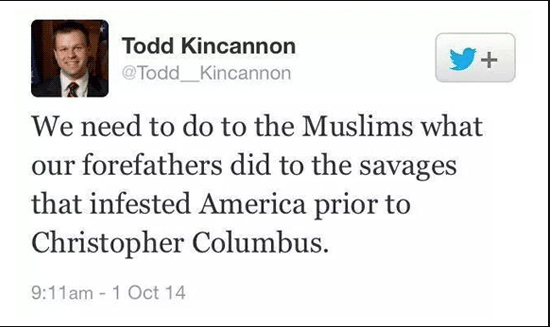
This same Kincannon fellow in another tweet offers this rather un-PC assessment of the original inhabitants of the American continent:

Tood q 2


Of course, the metaphor is backwards: my ancestors, the colonists, were the infestation. Native Americans were here first. We sort of, to be crude about it, car-jacked the continent.

Unfortunately, the media brand rabble-rousers like Kincannon as conservatives, but they have about as much in common with Edmund Burke as Andrew Dice Clay does with Oscar Wilde. They are reactionaries, hipshooters, intemperate, the opposite of conservatives.

Of course, the irony is that often far right adversaries like Benjamin Netanyahu and Ayatollah Ali Khamenei often have a lot in common — monotheism, tribal intransigence and the fervent wish that the US/Irani negotiations fail.