I don’t remember ever seeing the name Caitlyn spelled with a “y” before this week, but now, this morning it appears in two incarnations on the front page of my local paper, Charleston, SC’s Post and Courier. One “Caitlyn” belongs to the decathlon 1976 Olympic gold medal winner formerly known as Bruce, the other to a 15-month-old Chocolate Staffie mix whose muzzle had been wrapped shut with electric tape right here in Charleston.
Caitlyn, sometimes spelled as Caitlin, is an Irish female given name. It’s a lovely trochee with its long A and liquid L, and I suspect you’d lose a bit of its lilting cadence if you were to Anglicize it to Katelynn, though that would be a killer name for an Americana singer from Natchez.
Caitlyn the dog has become an international phenomenon, and for sure, it ‘s heartbreaking to think of the suffering she must have endured (I can’t bring myself to post a picture of her), and it’s encouraging that the sadist who tortured her has been arrested. I’m reminded of my own recently deceased German longhaired pointer/ border collie/ Cerberus mix, Saisy, who had been starved and tied to a post with a two-foot rope before noble souls rescued her. She ended up fairly okay, though, except for food issues, which never really went away, but over the years, she quit flinching when you leaned over to pet her head or rub her muzzle and quit snapping at you if you petted her for too long.
I miss her every day.
The late, great Saisy
For some reason, many of us tend to care more about pets, especially dogs, than other people. I noted this evolutionary oddity over the years through showing the film Apocalypse Now to high school students as a follow up to their reading Heart of Darkness, the novella the film is loosely based on.
Set in Viet Nam, the film earns its R-rating via violence. In one particularly harrowing scene, known as the Sampan massacre, American soldiers machine gun to death an entire family of Vietnamese transporting produce on a boat – men, women, and children – when the soldiers panic after a Vietnamese girl runs to protect a puppy. As the family is ripped apart by bullets, my students sit there silently; however, when one of the soldiers – Chef – finds the surviving puppy and picks it up roughly by its scruff, the room fills with highly audible disapproving oooohs.
Meanwhile, stories like the one below we hardly hear about, and most of us don’t care about:
[Kansas Governor] Brownback has often characterized his opposition to expanding Medicaid and other poverty programs, in Wright’s words, as a “moral rejection of dependency.” Last June, for example, Brownback told the Heritage Foundation’s Daily Signal Web site that Kansas had not expanded Medicaid because “We’re trying to push people that are able-bodied right now to get a job.” Similarly, Brownback pledged in his State of the State address this year to continue “helping people move from dependence on the government to independence.”
But, in practice, Brownback’s resistance to Medicaid expansion is causing some people to move from independence to desperation. [Nation editor Kai] Wright spoke with several Kansans who are suffering because of Kansas’s severe eligibility requirements. Far from the right-wing caricature of lazy moochers, they are hard workers who aren’t looking for a handout. One woman, RaDonna, is too sick to hold down food, let alone a full-time job. Yet, as a childless adult, she doesn’t qualify for Medicaid — and the state rejected her application for disability benefits. While RaDonna now lives with her sister, Cathy, she insists on helping with the laundry and dishes to earn her keep. “She can’t do the whole sink full of dishes without stopping and sitting down for a while,” Cathy says.
No, we’re more interested in Bruce Jenner’s transformation into Caitlyn and argue about whether he’s courageous or merely an attention-starved ex-Kardashian in-law. After all, the poor will always be with us.
In the courage department, though, I give the nod to RaDonna.
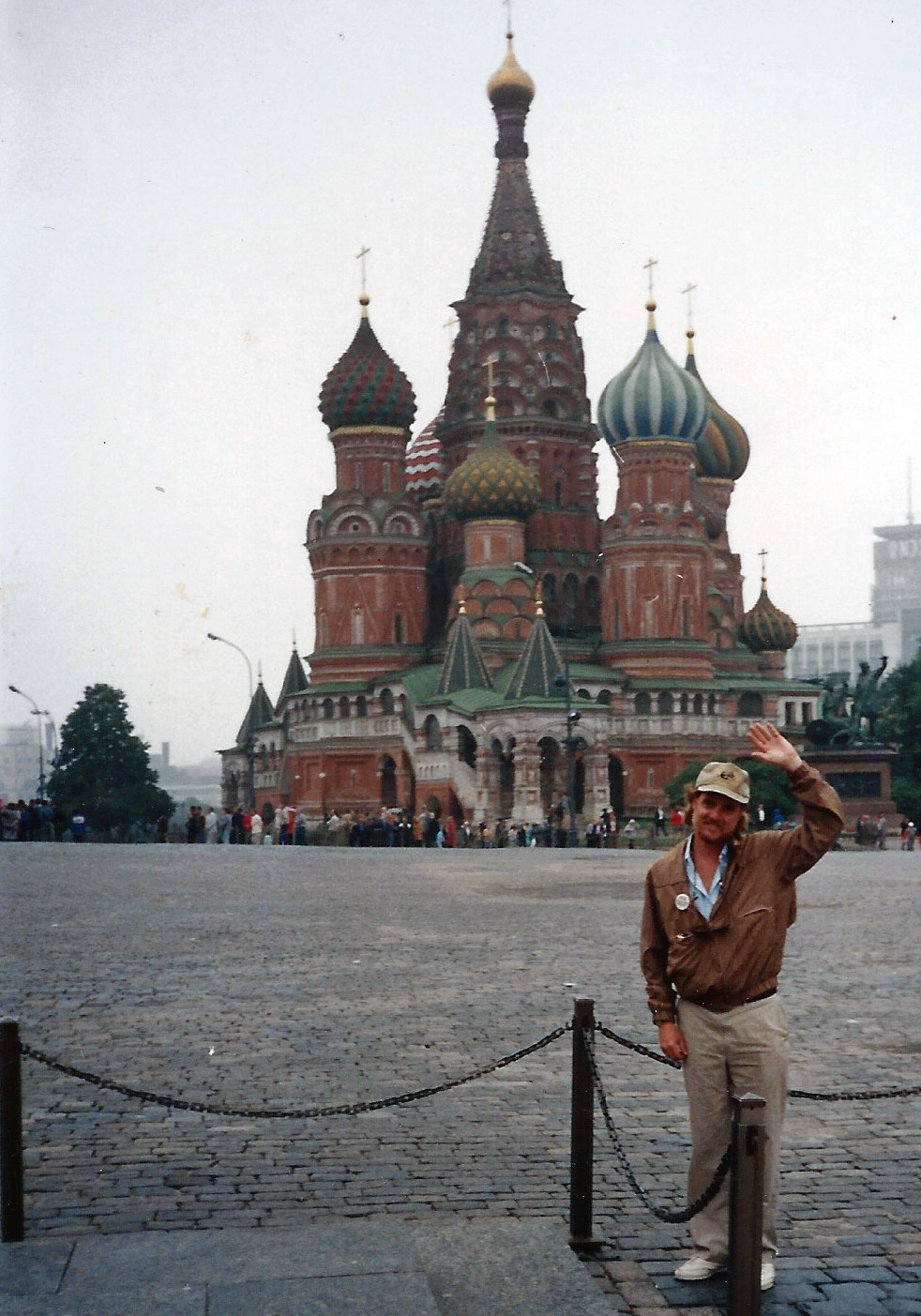
Chances are I’ll never return to Russia, the country formerly known as the Soviet Union, where I spent twenty-eight days in June of 1989, a quarter of a century ago and counting. I didn’t realize it at the time, but I was taking a last peek at an empire on the brink of collapse, and indeed I didn’t experience the police state I thought I’d encounter. My naive expectation was that the KGB would sweep down on jaywalkers and haul them off to some gulag in Irkutsk, but what I found instead were swarms of black-marketers openly operating everywhere I wandered, exchanging money or swapping a Soviet flag for a pair of blue jeans or sunglasses.
During a long sunshiny night on the Gulf of Finland, just west of Leningrad, an East German tourist pulled a knife on me. I had knocked on the door of his room where five men were bellowing patriotic songs at 3 AM. At first, the knife-wielder and his non-English speaking compatriots invited me in to share beer and sausage, but after I communicated that I was from the US, one pulled out a knife. The others quickly quieted him and produced snapshots of their children to establish our brotherhood. I didn’t carry photos of my own boys who were five and four at the time and would have appreciably “aged” when I would see them next.
I was one of four chaperones in charge of twenty high school students and two college freshmen. It was a frenetic trip that took us from Leningrad to Moscow to Siberia, then westward down through Uzbekistan, Kazakhstan, Soviet Georgia, then finally back to Moscow. However, it was Leningrad — now St. Petersburg — the setting of Crime and Punishment — that was the most surreal.
The ornate subways of St. Petersburg/Leningrad
Criss-crossed with canals, Leningrad was a beautiful city of 18th century pastel-colored buildings (and, of course, so is St. Petersburg today). However, back then, its citizens were the most morose human beings I’ve ever encountered. To a man and woman (I don’t remember seeing any children), they shuffled along wearing expressions of total, abject despair. Even on the two-story escalators leading to and from the gorgeous subway stations, lovers who faced each other holding both hands wore the expressions of people about to be taken away to be shot.
In fact, the only time I saw anyone smile was on a city bus. I was by myself and had mastered the arcane procedures of dealing with city transportation. You bought a ticket, an unofficial looking thin sheet of paper, from a machine at the station and then punched it yourself on the bus. However, you didn’t give it to the driver; you just held onto it in perpetuity. In other words, the buses operated on the honor system.
Anyway, I was seated next to a woman whose mien made images of Mary at Golgotha look upbeat in comparison. As we sat there in stony silence — no one conversed with each other — a thin East German tourist, a David Byrne lookalike in a dark suit and skinny tie, boarded with a ticket in his hand. He was as jittery, as nervous as I’ve ever seen anyone in my life. He stood there trembling, turning this way and that, holding the ticket up beseechingly, so I got up and showed him what to do. He punched the ticket, and as I turned around, every single person on the bus hit one sarcastic clap in unison, and on their collective faces a pained smile broke through the ice of their glacial unhappiness. It was as if they had forgotten how to smile, as if they were using muscles unaccustomed to exercise.
Moscow was slightly less Kafkaesque, and the further east you travelled, the happier the citizenry and the better the food. I would never have guessed that Siberia would be more upbeat than Leningrad. The Islamic Republics were interesting (and deafeningly quiet). In a hotel in Samarkand one afternoon, I purchased a two-dollar Heineken and handed the bartender a five in US currency. He handed me a twenty pound British note and some kopecks for change. I tried to explain that it was too much, but he misunderstood and thought I was complaining. I explained the situation to Sasha, our Intourist guide, and he said, “Keep it. These people are pigs.”
So we left Samarkand the next day for Bukkara. At dinner that night, Sasha summoned me and explained that he had just talked on the phone with the bartender from Samarkand who “had tears in his voice, tears in his voice.” Unless I reimbursed the £20, the bartender, a father of five, would lose his job. So, of course, I forked it over, not at all sure Sasha was on the up-and-up.
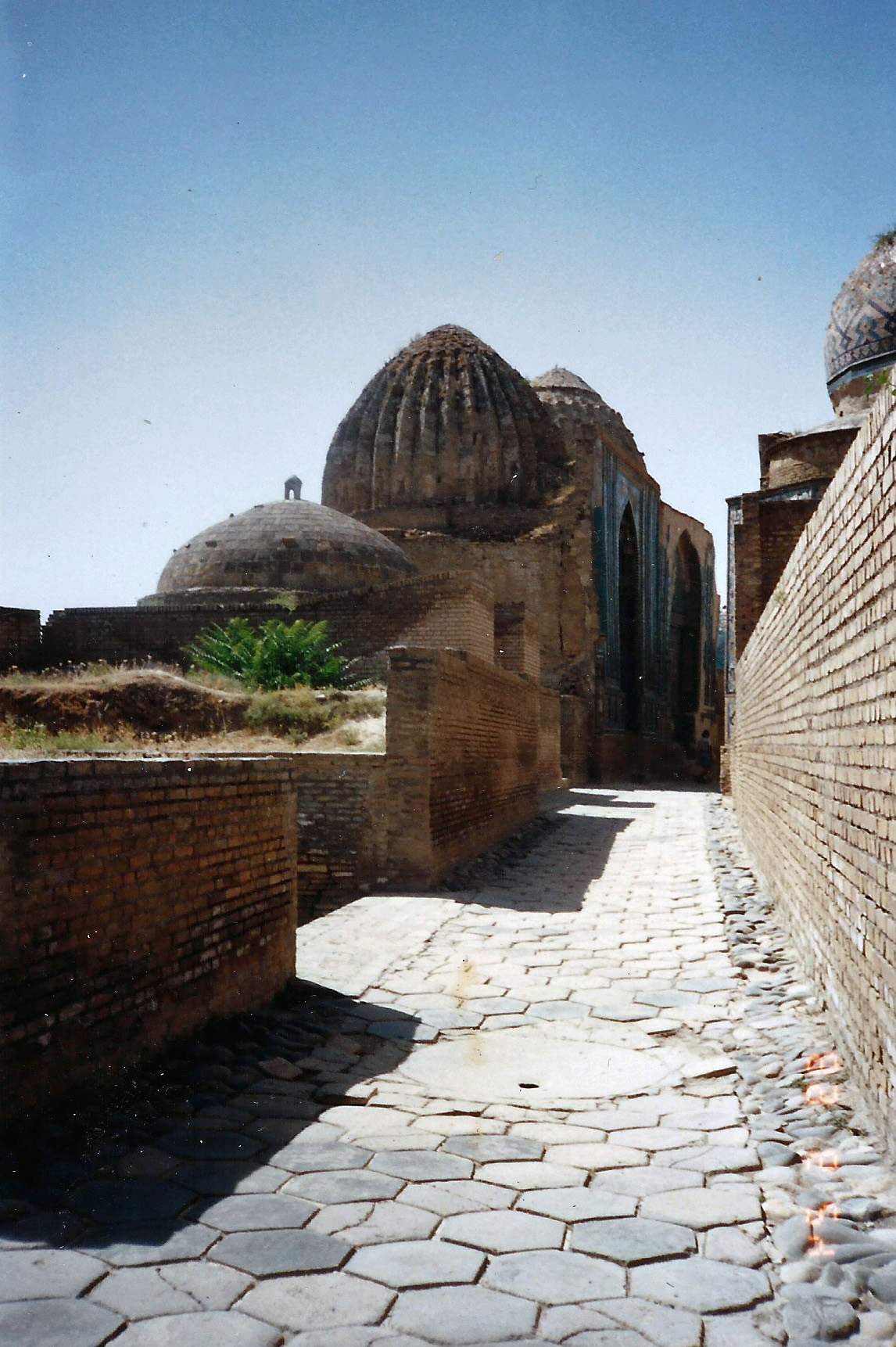
an alleyway in Bukkara 1989
Our final destination was the Republic of Georgia. Two months before, an anti-Soviet demonstration had been brutally crushed by the Soviet Army in what is now known as the Tbilisi Massacre. Soviet troops were still heavily present. Nevertheless, Georgia was the most pleasant place we encountered. People wore colorful clothes and seemed much more prosperous.
Not surprisingly, I was ever so eager to return home to my family, to sidewalks that didn’t need mowing, to signs sporting the Roman alphabet, to well-stocked grocery stores where you didn’t receive your change in mixed combinations of foreign currencies.
Standing waiting in Heathrow for our London to Washington flight, a student asked me if I’d ever heard of Dizzy Gillespie.
“Of course,” I said.
“Well, he’s standing right over there. He just finished an interview.”
And, sure enough, there he was, a tall black man with glasses sporting a jazz dot.
I approached him and said, “Mr. Gillespie. I hate to bother you, but it would be a great honor to shake your hand.”
“Ne parle pas Anglais, he replied.
“Ah, come on, Dizzy,” I said. “I’m from South Carolina.”
He smiled broadly, and in a thick Southern African American accent asked, “Where? Myrtle Beach?”
It was music to my ears.
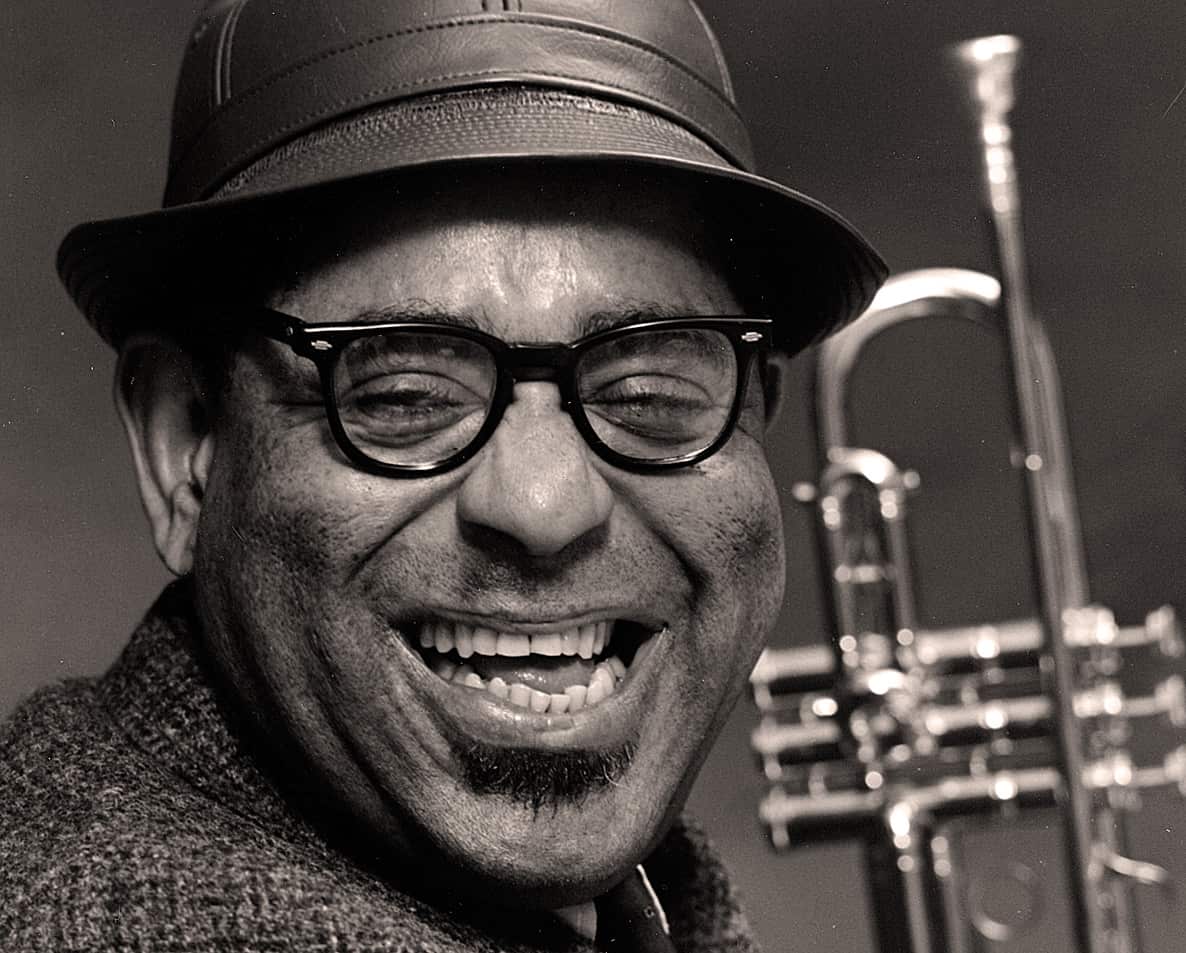
Dizzy Gillespie, a native of Cheraw, South Carolina



 You Do Hoodoo