The Krushtones + The Sand Dollar Social Club = Federico Fellini

shapeimage_2

The Sound Track

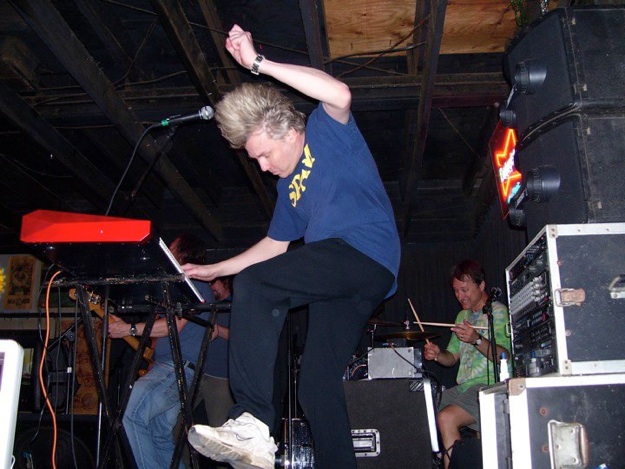
One of the most pleasurable rites of spring celebrated in the Lowcountry each year occurs at the Sand Dollar Social Club on Folly Beach when the Krushtones take the stage for their annual April gig.

[Cue country preacher]: We’re talking glorification, brothers and sisters, talking bout light!

Krush-tones: (krùsh’- tõns) n. a band that features high-Watt[s] drumming; a bodacious bottom; a searing, eloquent guitar; and a latter day Jerry Lee Lewis on keyboards.

Joyous!

I swear, even if they were a mediocre band, the Krushtones’ taste is so exquisite I’d pay to hear the song sets. Al Green/Talking Heads, the Beatles, Stones, Chuck Berry. But mediocre they ain’t. They exude this palatable vibe of happiness that spreads in concentric circles as if a pearl has been dropped into a pool of sound.

Make you want to dance and holler hallelujah!
24742_407551362867_205748902867_5143575_8340625_n

The Venue

The Sand Dollar itself is difficult to categorize. As a private social club, it offers all of the exclusiveness of a subway station. One dollar secures you a year’s membership, but you can’t actually enter the club until 24 hours after your card has been issued. A typical Friday and Saturday night offers free live music, canned beer for a buck*, and and an eclectic clientele that, depending on the vibe the night you happen to be there, ranges from Felliniesque to Lynchian.

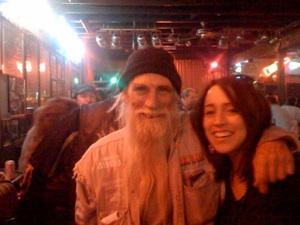
Bikers comprise a large contingent of the revelers, parking their Harleys (I don’t think I’ve ever seen a BMW) perilously close together out front like a chorus line of internally combustive Rockettes. I dread the day some reeling rummy trips and sets them crashing domino style one after the other. Years ago, before the bikers arrived, I had parked my VW minibus just in front of the designated space. When JB and I left for home, I was horrified to see at least twenty Harleys lined up about six inches from my back bumper and another car looming about a foot from my front bumper. Luckily, the fellow pictured below, a regular, helped me successfully to negotiate the scores of gear shifts, wheel turns, and progressions/reversals that liberated me from that straitened space.

*In 2014, a Bud will cost you $1.50
2

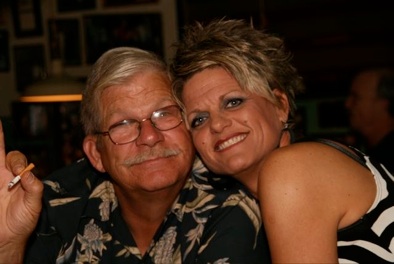
Joining the bikers as a discernible group are the long-in-the-tooth dead-end hedonists, who can be subdivided into old hippies and old shaggers. These sybarites, who hated each other in high school (the former letting their freak flag[s] fly, the latter sliding sockless feet into their Bass Weejuns) have mellowed over the years and appreciate each other in their shared ethos of self-medication and the never ending but increasingly difficult quest of getting laid.
jim-bell-and-sissy-jamesavatar_3454

A calico combination of others rounds out the squad – attractive, young preppies; South of Broad slummers; working folk shooting pool; the occasional bombastic prophet-of-doom blogger.

Lynchian vis-a-vis Felliniesque

What’s the distinction, you may wonder, between these two cinematic adjectives denoting surrealism?

fellini 2

Although baroque, Fellini’s surrealism tends towards the comic/satiric. His Satyricon, for example, counterbalances sensuous shots with grotesque images of Late Empire overindulgence. Carnivalesque might be an appropriate approximation.

lynch

Lynch’s surrealism is darker, a world of evil where the hideous co-mingle with grotesquely bland clichés of Americana, a la the image of above, where the sinister red-clad midget sits beside someone who looks like he may be employed as a hardware store clerk in a Norman Rockwell painting or the son of the couple depicted in Grant Wood’s American Gothic. Kafkalite-ish.

american-gothic-large4

If I had to choose between the hellish dilemma of spending eternity in a Fellini film or a Lynch film, I’d definitely opt for the former. Underneath all of the grotesqueness of Fellini lies a positive procreative impulse. Take “The Widow of Ephesus” segment of The Satyricon, for example, where a woman who has decided to starve herself in her husband’s tomb is seduced by a soldier guarding crucified corpses.

Now that’s what I call pro life.

Lynch, on the other hand, is anti-life. Not that his films aren’t hugely enjoyable and laugh-out-loud funny. Nevertheless, like the parents in Eraserhead, procreation begets monstrosity. You don’t want to bring a child into David Lynch’s world.

In short, a Felliniesque evening at the Sand Dollar is more pleasurable Lynchian evening,

Friday, 9 April 2010

I’m not making this up. During the Krushtones’ first set, I witnessed the departure of one of Charleston’s wealthiest septuagenarians and his seeing-eye trophy wife. She, a blonde, a head taller and thirty years younger, held his hand mommy-like as she led him through the throng. As they were leaving, three female dwarves dressed to the nines flowed past them and took their place at the corner of the stage. I repeat, I’m not making this up.

Lynchian or Felliniesque?

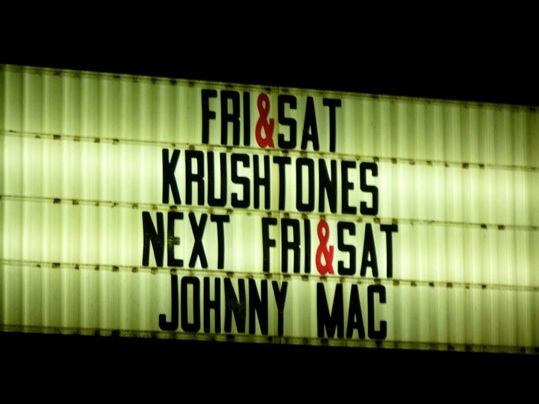
If Johnny Mac had been playing that night, a man deeply in love with the sound of his own guitar, or Jeannie Wiggins, trapped in the wrong gender, thumping serviceable rock to her adoring groupies, the karma might have darkened the brain chemistry that ultimately determines the existential nature of my world. However, with the Krushtones on stage, beaming, jumping, singing “Lady Madonna,” the positive vibration was infectious. Even the stern-faced bouncer who looks like the promotional US Marine of recruitment commercials cracked a smile.

Too bad the Krushtones were too young to play at Altamont.
24742_407552142867_205748902867_5143603_4958261_n

The 5 Greatest Rock-n-Roll Covers of All Time

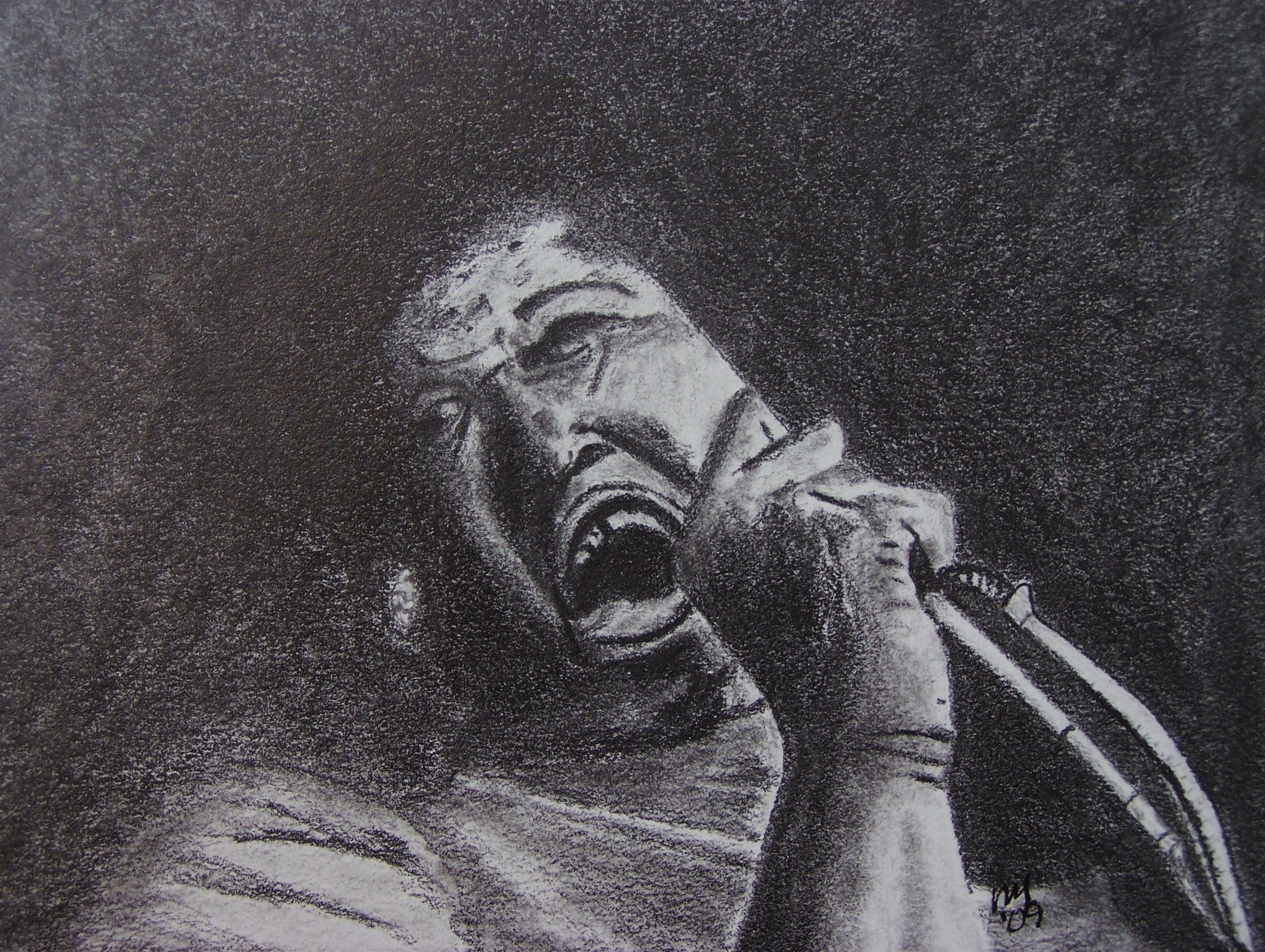
BigMamaTwoWillie Mae “Big Mama Thornton” by Nick Young

A couple of weeks ago when I was luxuriating in vast open freedom of spring break, the musician Howard Dlugasch and I sat at the bar at the newly opened Jack of Cups Saloon (nee Brew Pub) on Folly discussing the difficulties local musicians face in performing original compositions at bar gigs. “No,” he said, “They don’t want to hear originals. They all want to hear covers. They all want to hear Journey.”

Howard Dlugasch

Howard Dlugasch

Howard’s lament got me thinking about covers themselves, and I began cataloging what I consider the greatest covers of all time, a Herculean task if you stop to think about it.  I immediately jettisoned jazz, decided to limit my purview to rock and folk. After racking my brain, I decided to limit my list to five, and certainly many will disagree with the following choices.

Before I announce my top five, though, I ought to provide the criteria I used in the construction of this pantheon.

1) The original song had to be significant in both its music and content.  By content I mean both the degree of significance of the lyrics’ poetic purpose and the poetic quality of the lyrics themselves.  Alas, this criterion eliminates Hendrix’s great cover of “Wild Thing.”

2)  The cover of the song had to make the song, as Ezra Pound would say, new.

3) The musicianship had to be first class.

Rather than attempting to rank the covers from “grooviest” to least “groovy,”¹ I’ve copped out by presenting the 5 Greatest Covers of all time in chronological order from oldest cover to most recent.

¹I retrieved these vintage terms from the Teen Beat files located in the adolescent wing of my memory museum.

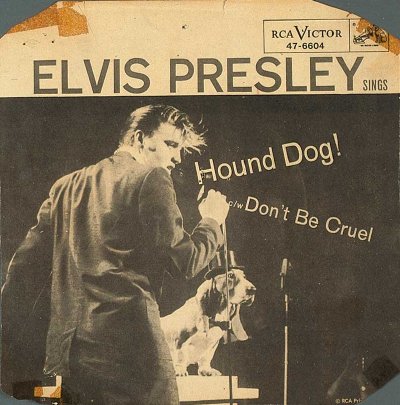
  • Elvis Presley’s cover of Big Mama Thornton’s recording of Jerry Leiber and Mike Stoller’s “Hound Dog”  Thornton’s 1953 recording is killer, backed by badass bass and drumming and some imitative barking.  Hit the arrow for a 20 secondish listen:

elvis-presley-songs-hound-dog

Before Presley, others had recorded the song, and some critics claim that Presley was actually covering a Bob Wills cover or a Freddie Bell and the Bellboys cover. Nevertheless, Presley was aware of and liked the Thornton original, and so I contend he’s covering the original, not a covering a cover.  At any rate, Elvis and his producer Steve Sholes have twanged the tune to rockabilly with some aggressive drum rolling.

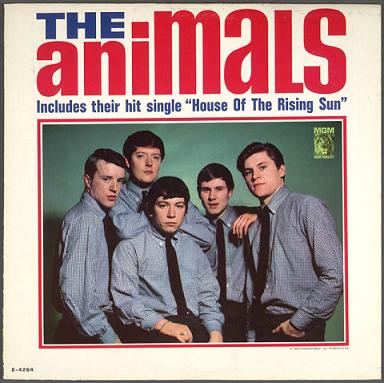
  • Next comes the Animals cover of the traditional folk song “Rising Sun Blues,” a song whose roots go to 18th Century England and a popular genre called “the Unfortunate Rake.” Immigrants  transported the song across the Atlantic and transplanted the setting to New Orleans.  Some contend the song’s narrator is a woman turned whore after being abandoned by a rake, which is the scenario Dylan employs in his cover, a recording that precedes the Animals’. The earliest recorded version is by Clarence “Tom” Ashley in 1934, which tells the tale from a male perspective.  Here’s a snippet from an early ’60’s version by Ashley and the great Doc Watson.  Note the featured lyrics are much different from the Animals version.

 the_animals

Ashley/Watson:  

The Animals:

Electric guitarist Hilton Valentine’s minor key arpeggio and Alan Price’s organ transform the song into what the critic Dave Marsh called “the first rock folk hit.”

  • Jimi Hendrix’s 1968 recording of Bob Dylan’s 1967 release “All Along the Watchtower.”

jimi-hendrix

Dylan:

Hendrix: 

Now, that’s what I call making it new.

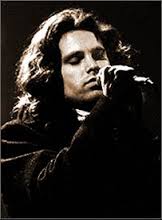
  • The Doors 1970 live version of Bo Diddley’s “Who Do You Love”  This selection is perhaps the most controversial.  However, I’m going with it.  Listen.

images

Bo Diddley:

The Doors: 

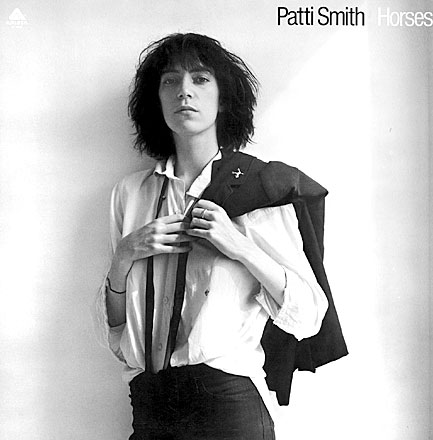
  • Also, perhaps, controversial, I rank Patti Smith’s 2007 cover of Nirvana’s 1991 “Smells like Teen Spirit” in the top five.  Here Smith substitutes banjos and fiddles for electric guitars and replaces Cobain’s solo with a poem that elevates the song from an anthem of teen angst to some sort of post apocalyptic nightmare.

6a0120a7b5f86a970b015437e241f9970c-800wi

Nirvana:  

Patti Smith:  

Well, there you go.  Would love to hear some comments.  Obviously, I also stayed away from soul music because rating covers there would be almost as hard as jazz.  Also, I’ve dissed Janis, whose cover of “Piece of My Heart” should probably bump Morrison and Smith off this list.

Vulgarity as Poetry

Freud-benefits-sup_1952707b

Let’s say you’re browsing Twitter and run across a sponsored post by John Bolton, the former UN Ambassador, one of the architects of the second Iraq war, that invasion launched by Bush and Company to purge non-existent weapons of mass destruction from Saddam’s non-existent stockpiles because, despite Iraq’s not having an air force or a navy that could deploy those non-existent weapons of mass destruction, Saddam posed a “present and growing danger.”

And let’s say that rather than financing this ruinously expensive, absolutely unnecessary war through raising taxes, the Bush Administration introduced legislation that slashed taxes, which depleted Clinton’s 280 billion surplus that cratered into a 1.2 trillion deficit under Bush.

And, finally, let’s say that besides virtually bankrupting our nation, this absolutely unnecessary war resulted in 4.488 American deaths, 500,000 Iraqi deaths.

Oh, yeah, the John-Bolton-sponsored post on Twitter that triggered the above screed:

“Barack Obama. Worst president ever? Vote here.”

Obviously, my first three paragraphs exceed Twitter’s 140-character limit; plus, let’s face it, the explanation is tediously verbose and doesn’t even address the outrageous hubris that Bolton exhibits, this man who has made a mistake so grievous that he ought to have blinded himself Oedipus-like and be tapping his staff across the Arabian Desert in an attempt at expiation.

How, you ask, can anyone successfully address the outrageousness of Bolton’s question in the constricted medium of Twitter?

Here’s how:

Andrew Otis Weiss ‏‪@ThatWeissGuy‬ Mar 21
.‪@AmbJohnBolton Go back to selling oatmeal and diabetes meds, you blood splattered fuck (emphasis mine).

Colonel Kurtz, what do you have to say about Andrew Otis Weiss’s response to Bolton’s tweet?

Yes, it is genius, a perfect putdown, more graphic than even a photoshopped picture. Weiss has melded sound, sense, and image into a barbarous haiku: you blood-splattered fuck.

The introductory “you,”  accusatory, echoing that expletive for disgust we emit when coming upon fresh roadkill -eww – the adjective “blood-splattered” with its connotations of careless butchery, the onomatopoetic splat, the thudding consonance of the terminal D-sounds  (plus the word turd imbedded in splattered subliminally adding shit into the  mix).

But then the clincher, the noun fuck.  No, not dickdick won’t do – no, not prickprick won’t do – the vowels too short, too effete – but fuck – the abyss.  You blood-splattered fuck, you casual slaughterer of half a million human beings.

Bravo, Andrew Otis Weiss, def poet of the absolutely perfect insult!

Skulls-at-Sang-prison-Dc-Cam-pic-600x