Wesley’s One Hit Hall of Fame

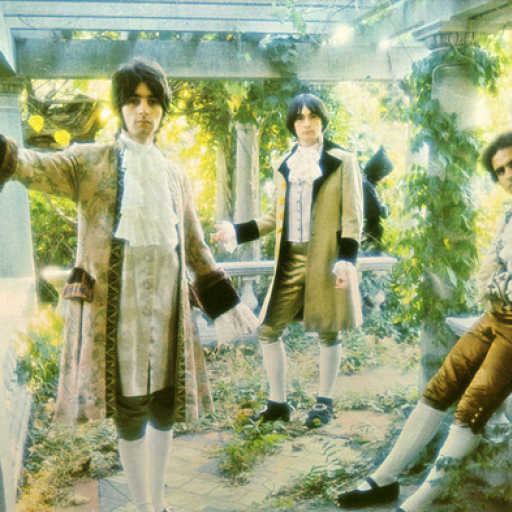
For whatever reason, the ol’ cerebral jukebox this morning had the 1966 novelty hit “Winchester Cathedral” playing in my head. Chances are you’ve never heard this New Vaudeville Band tune even though it won the Grammy for Best Contemporary R and R song that year (despite not being a rock-n-roll song). It features someone named John Carter singing through cupped hands a la Rudy Vallée singing though a megaphone.[1] On December 6th it displaced the Supremes’ “You Keep Me Hangin’ On” as the number one song in the US. Believe me, I’d much rather have “You Keep Me Hangin’ On” stuck on replay on the ol’ cerebral jukebox. “Winchester Cathedral” is inane, irritating, obviously catchy, or otherwise it wouldn’t be lying dormant in my unconscious for fifty-five years.

The tune got me thinking about one-hit wonders, those special songs that for whatever reason memed[2] their way into becoming mega hits, songs like “The Monster Mash,” “Snoopy and the Red Baron,” “Loving You Has Made Me Bananas.”[3] However, not all one-hit wonders are novelty songs. In fact, some of my favorite pop songs are one-hit wonders. Here be my top five, not necessarily in order of preference.

“96 Tears” (? and the Mysterians)

 “96 Tears” might be the grandaddy of all garage band hits, and some say (according to Wikipedia) that it played a role in the genesis of punk rock. I don’t know about that, but Springsteen has covered it, which speaks volumes.  It also came out in 1966, and I’ve never gotten tired of it.

“Double Shot of My Baby’s Love” (The Swinging Medallions)
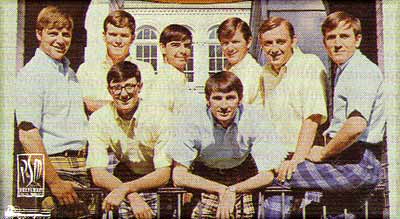
Although written by Don Smith and Cyril Vetter and first recorded by Dick Holler and the Holidays in 1963, it’s the South Carolina Beach Band The Swingin’ Medallions who made it a hit in ­– yes, you’ve guessed it – in 1966.  Damn, what an infectious, party hoot, and ladies and gentlemen, I actually heard Springsteen cover it live in 2008 at the North Charleston Coliseum. In fact, the Boss opened the show with it, hollering something like “How’ bout some Beach Music?”

“A Whiter Shade of Pale” (Procol Harem)
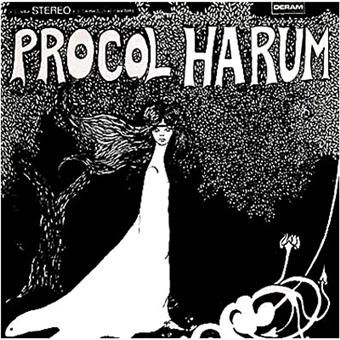
This moody, somewhat surreal, 1967 song provided an apt soundtrack for my doomed infatuation with fellow freshman Francine Light. I can see her now, standing across the cafeteria in her green tartan skirt and matching knee socks. O, woe was me!

Walk Away Renée” (The Left Banke)

When I began this little project, I had no idea that four of these favs were recorded with in a year of each other. This sad love song made it to number 5 on US Billboard Hot 100 chart. Despite its lush orchestration, flute, and harpsichord, I still sort dig it after all these years, not so much for its music but because of the memories it evokes.

“Wipe Out” (The Sufaris)

This is for my money the quintessential surf song, released in 1963 and covered by every garage band in my hometown of Summerville, SC, including The Marijuana Brass, an instrumental brass band modeled on Herb Albert. 

A couple of observations. Three of the five feature organs (a harpsichord doesn’t count) and all were recorded about the same time during my junior high days. Of course, there have been subsequent one-hit wonders I’ve enjoyed like “Play That Funky Music, White Boy.”  Oh, yeah, and “Tighten Up” by Archie Bell and “Sweet Soul Music” by Arthur Conley beat the hell out of my top five, but I don’t care. 

Maybe hormonal imbalance played a role. Anyway, this exercise has effectively effaced “Winchester Cathedral” from its seemingly never-ending loop, and for that I’m very thankful.


[1] Chances are you’ve also never heard of  Rudy Vallée, Chances are, however, you’ve heard of Frank Sinatra, who covered it on his 1966 album That’s Life. Go figure.

[2] Verb, to meme, to catch on culturally, from the noun meme, an element of culture “selected” by the masses because of its contagious appeal. (Forgive me, Richard Hawkins).

[3] “Loving You Has Made Me Bananas begins with these immortal words:

    Your red scarf matches your eyes.

    You closed your cover before striking.

    Father has the shipfitter’s blues.

    Loving you has made me bananas.
A Brief, Possibly Inaccurate History of Summerville’s Counterculture

angelheaded hipsters burning for the ancient heavenly connection to the starry dynamo in the machinery of night

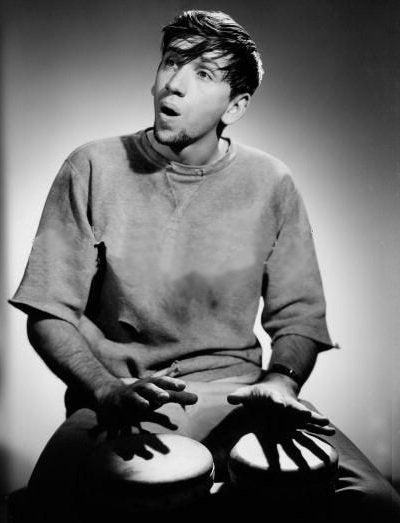
Born in December of 1952 in the small South Carolina town of Summerville, I missed out on the Beatniks, except, of course, for Maynard G Krebs, the goateed bongo-bopping pal of Dobie Gillis in the sitcom that ran from 1959-63.[1]

Bob Denver as Maynard G. Krebs

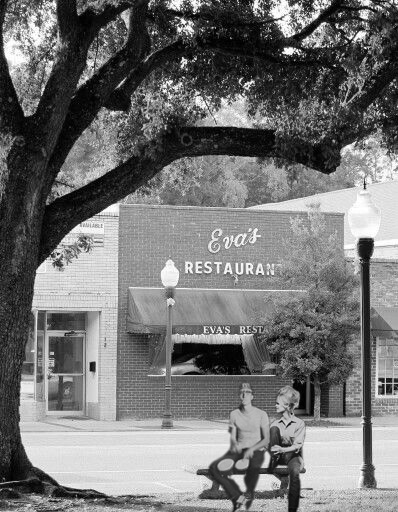
If Summerville had any beatniks, I never ran into them in my family excursions to the Cub Drive-In, Eva’s, or the Piggly Wiggly. I’m pretty sure we didn’t have a coffee shop in the sense of a bohemian hangout where beret-wearing malcontents high on MaryJane passed around copies of Alan Ginsberg’s Howl

It’s too bad because I happen to think that bohemian cultures are healthy counterbalances to potentially stifling conformity. When I taught at Porter-Gaud, after the Magnet School of the Arts opened, we lost a slew of our countercultural students, i.e., nearly all of our liberals, and so without safety in numbers, fewer divergent thinkers were willing express unpopular opinions, which, of course, can led to smug complacency, especially in a community that lacks economic diversity. Plus, occasionally it’s fun to encounter a hep-cat daddy-o sporting a black turtleneck and straight-legged cigarette pants.[2]

So when did Summerville begin to develop a counterculture you may – but I doubt it – wonder?  From my admittedly fogbound memory, I’m going to peg the year as 1965 and credit surfers as the first countercultural subgroup of Summerville.

Back in those days, at Spann Junior High, PE classes weren’t divided into grades, but 7th, 8th, and 9th graders met en masse during whatever period you happened to have PE. After playing football or basketball or softball, we were supposed to take showers, which could be a tad bit uncomfortable, depending upon whatever stage of hormonal transformation you happened to find yourself.[3]  Anyway, one afternoon when we were showering after PE, someone shouted, “Are there any surfers in here?” One of my fellow 7th graders, I think it might have been Joe Dorn, answered enthusiastically, “I am” and was met with a basso chorus of “Surfers suck!”

This rather unsettling incident occurred right about the time a fellow named Greg Nutt arrived at Summerville High from California. Greg sported longish blonde hair, horizonal striped shirts, white jeans, and spoke in that somewhat whiny affected accent we associate with California. Greg claimed to have had some musical connection with the Beach Boys and played drums in a really good band called the Pendleton’s.[4]  Greg was a charismatic cat, as we jazz enthusiasts like to say, and after the administration booked the band for a pep rally before a big game against archrival Berkeley, the animosity against surfing abated somewhat. The Pendleton’s performed killer covers of “Pipeline” and “Wipe Out,” and it would take one cold-blooded adolescent not to get off on that the drum solo from “Wipe Out.” In fact, Greg might have been the first non-football player who achieved some degree of celebrity at Summerville High.

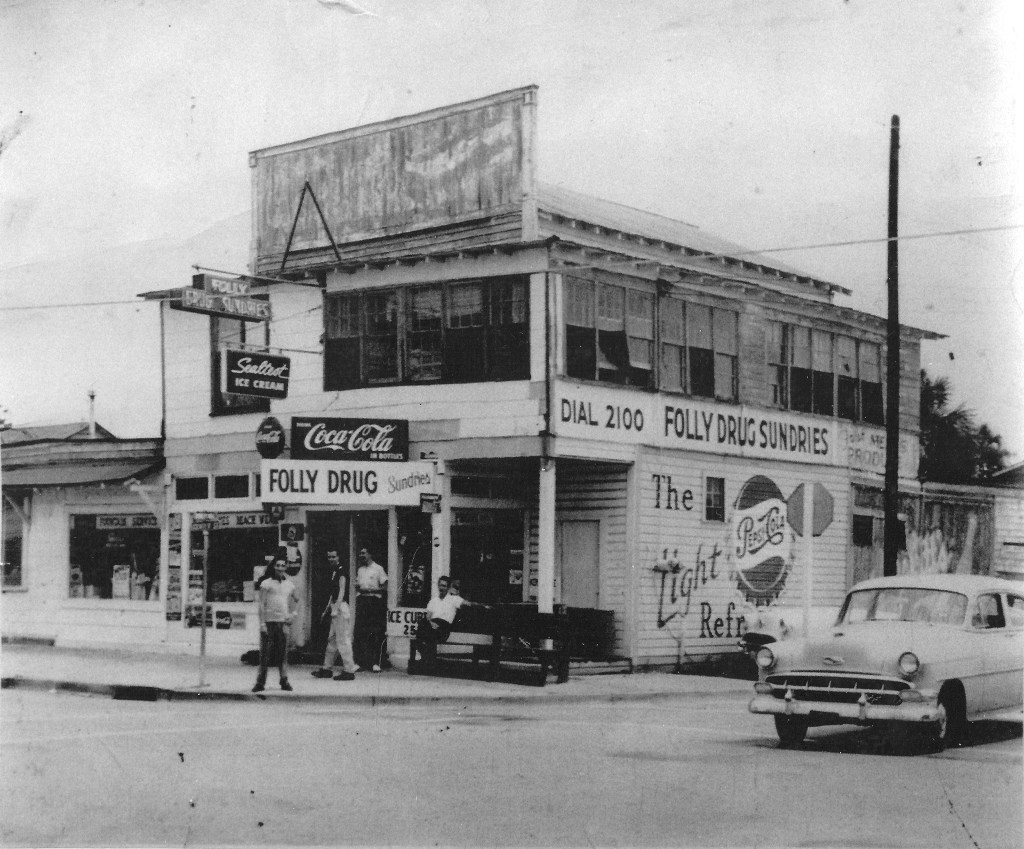
And so more and more of Summerville’s youth turned to surfing, despite the long trip to Folly Beach in those wireless days when you had to call long distance to McKevlin’s to get a not very up-to-date and perhaps enhanced surf report.

What one day would become Snapper Jack’s on Folly Beach

And to be a surfer, you wanted to look like a surfer, which meant long hair and flipflops as opposed to flattops and tasseled alligator loafers. Ven Diagrams of surfer and hippie costumes share a large swath of concentric shading, and on 15 October 1969, the day of the Moratorium to end the Viet Nam War, many of the Summerville High students who wore black armbands were surfers.

Thus, the counterculture had arrived for sure in Flowertown, which meant marijuana, LSD, and all that jazz heavy metal. Bye-Bye American pie; hello tie-dye.[5]


[1] Maynard was played by Bob Denver, who became much more famous as asexual Gilligan, the most famous castaway this side of Robinson Crusoe.

[2] On the other hand, too much of a good thing can be equally offputting; a completely countercultural community can be just as conformist in its own way as a country club. As much as I like Asheville, I sometimes wish I’d run across someone sporting a polo shirt and pair of khakis. 

[3] Alas, puberty had yet to even knock on my door when I was a seventh grader, so showering among 9th graders who had failed a grade or so was, shall we say, unfun.

[4] Greg also played the sousaphone in the marching band where I encountered him in my short-lived gig of pantomiming playing the clarinet in that group.

[5] By the way, my friend Tim Miskell was the first to bring the art of tie-dying to Summerville. He had sneaked off to his old stomping ground of Croton-on-the-Hudson, which was, not surprisingly, much hipper than Summerville, and upon his return started tie-dying his friends’ t-shirts and bell bottoms for a nominal fee.