Transitioning from Tween to Teen in 1966

The summer before my eighth grade year, I started hanging out with nerdy high school sophomores who, rather than drinking and fornicating, behaved like tweens, tweens who could drive at night but who also did dumb stuff like chunking lit cherry bombs out of windows of moving vehicles with fireworks galore on board. I didn’t lie to my mother – my father was a distant figure, not involved with my comings and goings – I’d tell Mama I’d be riding around town with Ricky and Dave, and she’d say okay but be home by ten. I can’t remember my precise curfew, probably ten. In high school it was 11:30.

I have no memory of what we talked about on those hours-long drives, but I do remember cherry bombs exploding underwater when we’d stop at a bridge, and I remember the circuit we’d take, heading out Trolley Road to Dorchester, taking a left, then another left that took us to Ladson, skirting a subdivision called Tranquil Acres where my crush, blandly pretty, super-intelligent Laura Alexander lived with her Air Force Lt. Colonel of a father, her mother, and whatever siblings she may have had. 

We’d head back along that stretch of Hwy 78 towards Twin Oaks, or sometimes take Lincolnville Road back to our subdivision. This looping drive introduced me to a strange, incongruous world of manufactured houses with meticulously tended gardens and churches, churches, churches, tiny concrete block churches, every half-mile on both sides of the road, with exotic names rife with schism, like the Second Church of God Consecrated in Holy Blood of the Nazarene.[1]

My high school friend Ricky was the product of what some called in those days “a broken home,” and he rarely saw his father, an airline pilot who showered him with gifts whenever they did get together. His mother worked, so we could hang out at his house and listen over and over and over again to The Animals Greatest Hits, which ended up being a revelation to me, hearing Eric Burdon sing “House of the Rising Sun” in a voice that sounded as if he himself could have been  born in Summerville, singing in baritone with a hint of Gullah about things much deeper than you found in the Monkees’ catchy love songs.
Ricky had two sisters, one off at college and another maybe a junior or senior, a year or two older. Her name was Penelope, and one afternoon, she jumped out of a closet in her institutional white bra and panties screaming “boo!” If this were a graphic novel instead of po-dunk memoir, I’d have my auburn hair porcupining like I’d received an electric shock. She howling, laughing, sprinted to her room, butt jiggling, and slammed the door. It was weird, but cool, yet it never happened again. She spent a lot of time in her room alone. She was a brunette, very good looking, but not all that popular.

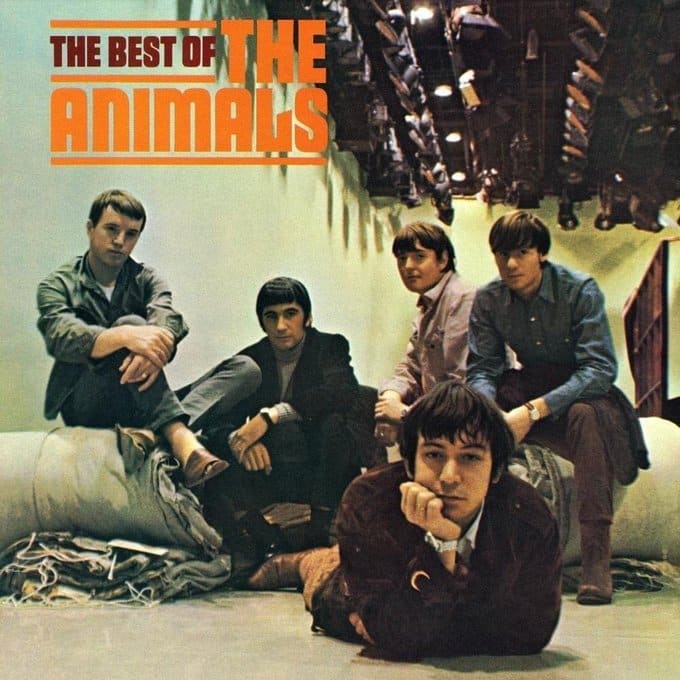
The older sister, on the other hand, a coed at the University of South Carolina, had been a Summerville High School superstar, the homecoming queen, maybe.[2] I met her once with her boyfriend at Ricky’s, the boyfriend Hollywood good-looking and the son of the woman who four years later would be my English teacher, the model for Mrs. Barrineau in Today, Oh Boy. I knew about this star couple because my aunt Virginia, only 6 years older than I-and-I[3], was in their graduating class. I felt as if I were hanging with celebrities, and they shocked me by striding up to Ricky’s mama’s bar and pouring themselves some kind of whiskey over ice. Ricky showed my future teacher’s son of Best of the Animals‘ album cover, and he said that “House of the Rising Sun” was the only song he liked, and I thought to myself what about “We Got to Get Out of This Place,” what about “It’s My Life,” what about “Please Don’t Let Me Misunderstood?” 

It was a memorable summer. 


[1] Or something like that.

[2] None of my yearbooks have survived my bopping from place to place, so I can’t confirm. 

[3] This affectation, using the Rasta hyphenated pronouns, does come in handy here where I can avoid the conversational, grammatically incorrect “me” yet sound hip.

You can purchase Today, Oh Boy HERE.

An Homage to Bo Diddley

I can’t remember when I first heard the song “Bo Diddley” with its hambone beat, hypnotic riffs, and Jerome Green powered maracas, but it thrilled me. I realize that Chuck Berry’s more wide-ranging musically and possesses a deeper canon, but Bo’s early songs with their African rhythms reverberated in my marrowbone like nothing else in early rock-n-roll. 

Later in high school, my friend Tim Miskel turned me onto the album Animal Tracks. On the final cut of Side 1, Eric Burdon provides a five-minute bio of Bo, which initiated a mild obsession.

One day, one night
Came a Cadillac, four headlights
Came a man with a big long fat cigar.
He said “Come here son, I’m going to make you a star.”
Bo Diddley said, “Uh, what’s in it for me?”
The man said, “Uh, shut your mouth son and play the guitar
And you just wait and see.”

                                    From “The Story of Boy Diddley,” Animal Tracks

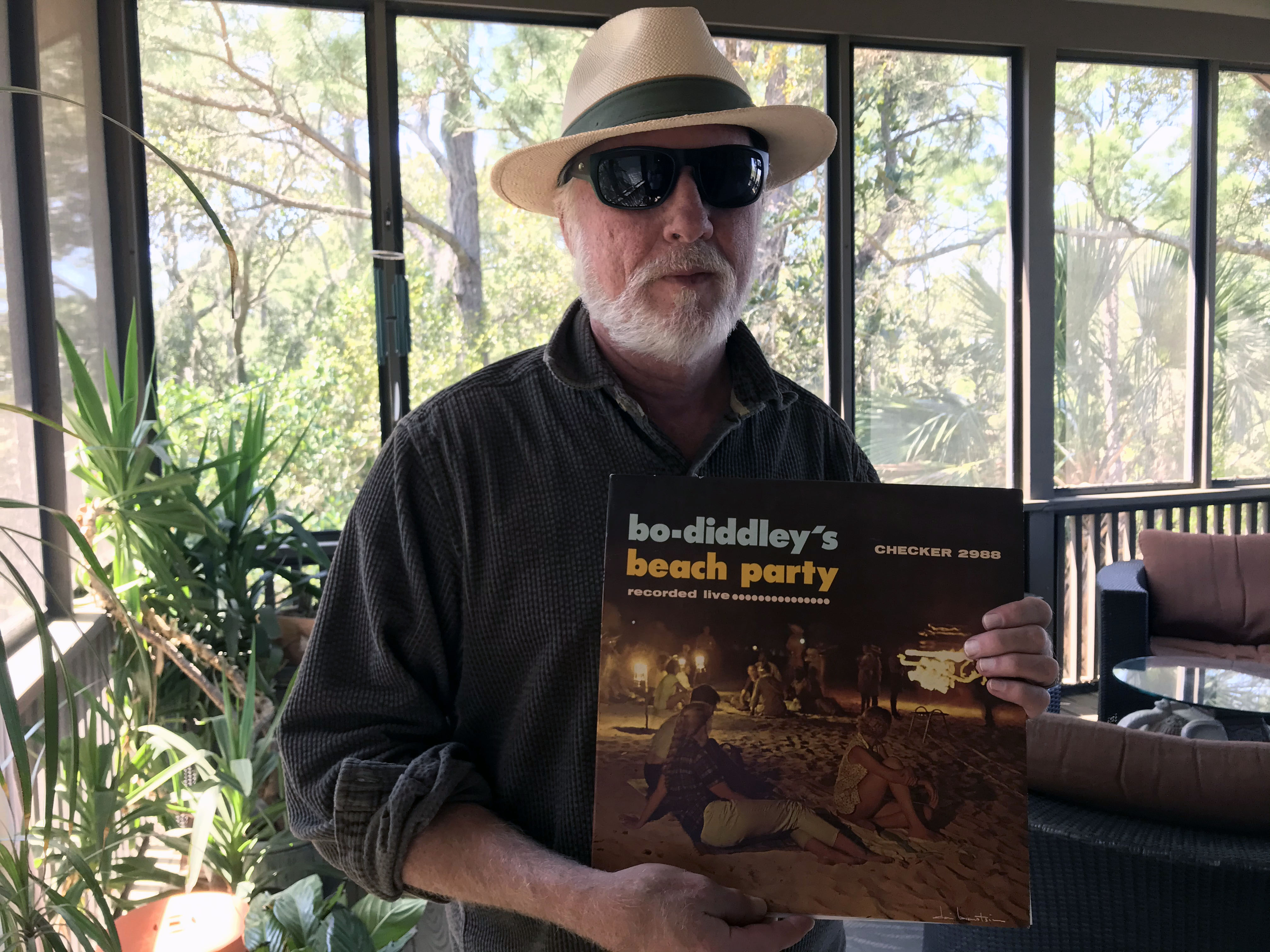
Whenever I’d go into a new record store, I’d see if they had any Diddley. No luck ever until one day I wandered into Fox Music House on King Street in Charleston. Their inventory was eclectic, old-fashioned, but sparse. You could cop some Doris Day but not the Stones. As I was flipping through their loosely organized bins, I found a first edition copy of Bo Diddley’s Beach Party (recorded live at the Beach Club in Myrtle Beach, SC). Fox sold albums for the exorbitant price of five dollars a pop.[1]  I actually tried to talk the clerk into a discount. “No one’s ever going to buy this record,” I argued. “It’ been sitting here since since 1964.” It was no dice, but I snatched it up anyway. By the way, the vinyl was heavy on those discs of yore; you could beat someone senseless with a pre-70s LP.

Alas, one debauched night in the first semester of my freshman year, I left Beach Party on the floor of the suite adjoining our dorm rooms, and someone stepped on it. The damned thing cracked like a glass plate.

Chalk it up to the wages of carelessness or drunkenness or ganjafication or a combination of the three.

Later, in graduate school, all hepped up on Dada, my friends Jake Williams, Keith Sanders, and I had a mini Bo revival. We nearly wore out Keith’s Diddley’s records. We’d meet on Sunday evenings, prepare dinner, imbibe second tier scotch, and jive talk our way into the wee hours while listening to Keith’s world class vinyl collection.

A few flips of the calendar later, in the pre-children early years of my marriage to Judy Birdsong, I got to see Bo play live at a club in North Charleston. In between sets, I approached him as he walked off stage.

Wesley: Oh, man, Bo, I’m such a big fan. This is such an honor.

Bo: silence.

Wesley: Hey, Bo, where’s Jerome Green, your maraca man?

Bo: deceased.

Wesley: How about the Duchess?

Bo: Chicago.

Wesley (finally getting the hint): Well, thank you so much!

Bo: head nod.

Well, in the course of the years that followed – childbirth, school days, graduation, empty nest, cancer, the death of Judy – my Bo Diddley obsession faded away,[2] though I still listened to him now and then and sometimes included one of his songs on the mixed tapes and later mixed CDs I made for my students who won vocabulary bees. 

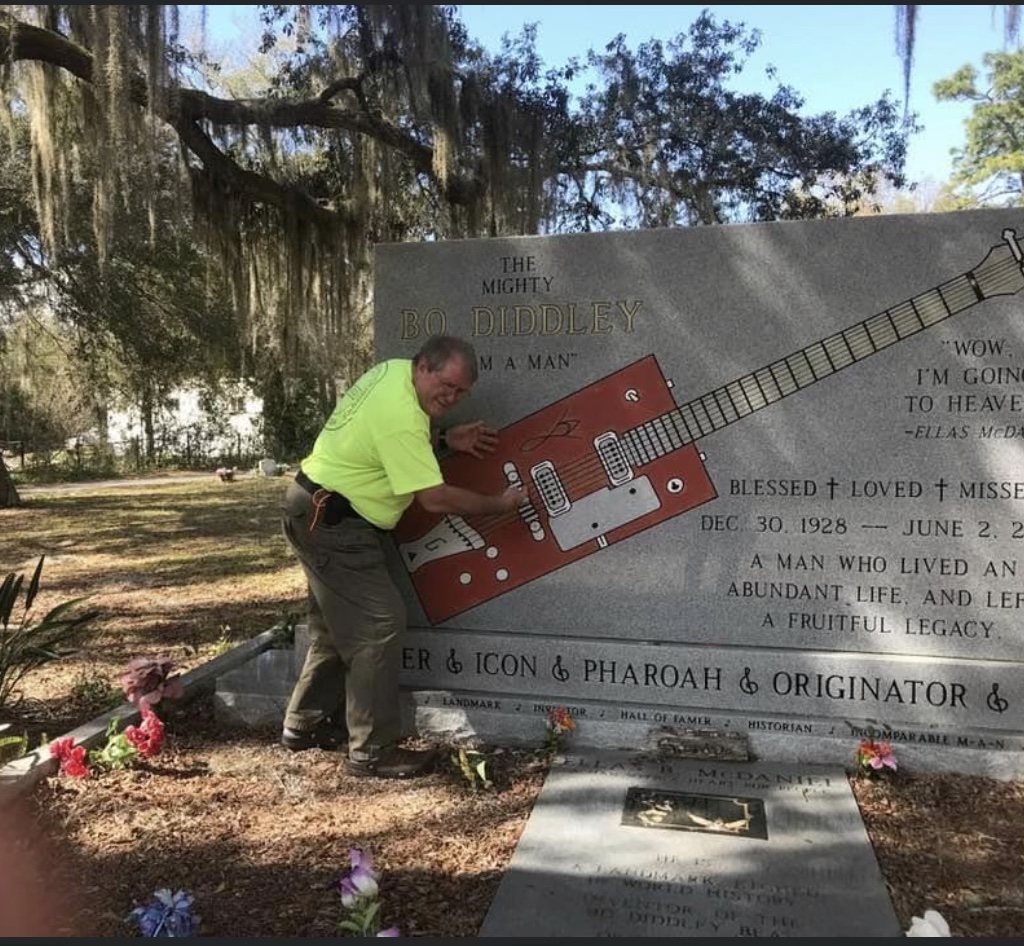
When Caroline, my second wife, took me to meet her father Lee Tigner for the first time in the wilds of Awendaw, I discovered that he, too, was a Diddley devotee and could match me lyric for lyric. He also had met Bo in person but received a somewhat warmer albeit taciturn response. After Bo’s demise, Lee made the pilgrimage to Bronson, Florida, to visit the grave of the master. We’re talking about serious admiration. 

Lee Tigner at Bo Diddley’s grave

Anyway, Lee and I bonded over Bo, which is perhaps a small compensation to him in light of my being an unintrepid indoorsman. 

A couple of weeks ago, on an internet hunt, I found a copy of the late departed Bo Diddley’s Beach Party for sale and ordered it. It finally arrived today. So now, when Lee’s birthday comes around, I’ve gotten him a gift that I know he’s gonna dig, at least more than he did the last Christmas president I got him, an autographed copy of a mystery set on Folly Beach that Lee pegged as the worst novel ever published in the United States.

I’ll leave you with this:


[1] Back then, most albums cost under three bucks.

[2] If you’re gonna get all grammatical on me and say the “away” is unnecessary, I’ll respond by saying that it’s an allusion to Buddy Holly’s “Not Fade Away,” which uses the Bo Diddley beat.