Every Bod Gone Cruzy

Every Bod Gone Cruzy[1]

Well, not everybody’s gone cruzy. I’m as sane as David Attenborough, Walter Cronkite, Ward Cleaver, as sane as Thich Naht Hahn — or at least I’d like to think so. Certainly, I’m saner than the Lt. Governor of North Carolina, Mark Robinson, who has dubbed himself a “Black Nazi” on a transporn[2] site where he confessed nostalgia for the institution of slavery and expressed the desire to purchase a couple of human beings himself.

Here’s a photo of him mugging with the 45th president of the United States. Obviously, he and Idi Amin share a common ancestor.

BTW, here’s the greatest sentence in the history of American literature that features “Idi Amin.”

“I was in the water for six hours. Shivering, praying, scared, full of adrenaline. I kept making deals with the Fates, with God, Neptune, whoever, thinking I’d trade places with anybody anywhere – lepers, untouchables, political prisoners, Idi Amin’s wives – anything, so long as I’d be alive.”

                                                                        T. Coraghessan Boyle, Budding Prospects

Idi Amin

Also, I’d like to think I’m saner than Robert Fitzgerald Kennedy, Jr. For example, if I were ever unfortunate enough to run across a washed up dead whale, I’d like to think I wouldn’t saw its head off and take the head home with me. 

How did these [alliterative participle deleted] fools attain such high status you might wonder.

Well, Kennedy is a Kennedy after all. He was born into perhaps the most famous American family this side of Maybelle Carter’s clan. But Robinson? How did he rise from an abusive childhood bouncing back and forth from foster homes to his mama?  Here’s how. By giving a pro-gun speech at a Greensboro City Council meeting that went viral on Facebook. 

Robinson’s entry into politics reminds me of Lester Maddox’s who gained fame by chasing potential Black customers out of his restaurant with ax handles, became a sort of redneck folk hero, and was chosen as governor by the state legislature because of election confusion caused by a write-in candidate.

Lester and Mark strange bedfellows indeed.

And now both Georgia and North Carolina are swing states.

It’ll be interesting to see in forty something days, how many US citizens will vote for a candidate promising detention camps, mass deportations, tariffs, a candidate who portrays The US as a hellscape despite inflation under 3%, all three stock indices at record levels, and crime significantly decreasing.[3]

Maybe, a majority of voters in swing states won’t have gone cruzy. Maybe Georgians and North Carolinians will dump Trump. 

I wouldn’t bet on it, though.


[1] The title is a direct quote from a paragraph I received when I was teaching Developmental English at Trident Technical College circa 1980. Here’s another direct quote from the same paragraph. “Vivid sex on my mind every day.”  

[2] Can’t believe stodgy ol’ Microsoft Word doesn’t have “transporn” in their spelling dictionary. Tsk, tsk. 

[3] In 2020, the United States experienced one of its most dangerous years in decades.

The number of murders across the country surged by nearly 30% between 2019 and 2020, according to FBI statistics. The overall violent crime rate, which includes murder, assault, robbery and rape, inched up around 5% in the same period.

But in 2023, crime in America looked very different.

“At some point in 2022 — at the end of 2022 or through 2023 — there was just a tipping point where violence started to fall and it just continued to fall,” said Jeff Asher, a crime analyst and co-founder of AH Datalytics.

In cities big and small, from both coasts, violence has dropped.
T. Coraghessan Boyle and Me

When prepping for my trip to “the Hostess City of the South” to hear T. Coraghessan Boyle read at the Savannah Book Festival, I searched high and low (literally) for my copy of his short story collection Greasy Lake to get him to autograph it. Oh, I own probably two-thirds of the thirty-one books he has published, but I especially wanted his signature on Greasy Lake because it is stained with my blood, now a brown smear after thirty-eight years of residence on page whatever. 

It had been in my hand when I stood up in the back of a pick-up truck to tell the driver Larry Howland he needed to turn right, which he did suddenly, catapulting me Buster-Keaton-style out of bed of the pickup onto the hard pavement of Folly Beach’s Ashley Avenue.[1] When I stumbled to my feet, I was bleeding from my head and right hand. I must have picked the book off the pavement, thus the blood stain. Anyway, I couldn’t find Greasy Lake anywhere, not in my drafty garret, nor in the book-choked guest room where I keep my valuable volumes, like the one pictured below.

So, I took Water Music instead, Boyle’s first novel and a first edition to boot, probably a felicitous turn of luck for the heirs of the Moore Living Trust given that it will likely fetch a better price at the upcoming the estate sale, whenever that is – let’s hope not soon.

Anyway, I’m a huge fan, especially of his early short stories, manic riffs like this first paragraph from “Green Hell,” a parody of all those movies involving plane crashes and jungles:

There has been a collision (with birds, black flocks of them), an announcement from the pilot’s cabin, a moment of abeyed hysteria, and then a downward rush. The plane is nosing for the ground at 45-degree angle. Engines wheezing, spewing smoke and feathers. Lights flash,  breathing apparatus drops and dangles. Our drinks become lariats, the glasses knives. Lunch (chicken croquettes, gravy, reconstituted potatoes, and imitation cranberry sauce) decorates our shirts and vests. Outside there is the shriek of the air over the wings; inside, the rock-dust rumble of grinding teeth, molar on molar. My face seems to be slipping over my head like a rubber mask. And then, horribly, the first trees become visible beyond the windows. We gasp once and then we’re down, skidding through the greenery, jolted from our seats, panicked, repentant, savage. Windows strain and pop like light bulbs. We lose our bowels. The plane grates through the trees, the shriek of branches like the keen of harpies along the fuselage, our bodies jarred, dashed and knocked like silver balls in a pinball machine, And then suddenly it’s over; we are stopped (think of a high diver meeting the board on the way down). I expect (have expected) flames.[2]

Boyle might resent this comparison, but his early stories remind me of the early Woody Allen movies, inventive, farcical, satiric, hilarious.

Here’s one last example from “The Big Garage,” an homage to Kafka, where the protagonist B. fills out an application to get an appointment to repair his Audi that has been towed to a Kastle-like nightmarish auto repair establishment:

B. Takes a seat beside the Cougar women and stares down at the form in his hand as if it were a loaded .44. He is dazed, still tingling from the vehemence of the secretary’s attack. The form is seven pages long. There are questions about employment, annual income, collateral, next of kin. Page 4 is devoted to physical inquiries: ever had measles? leprosy? irregularity? The next delves deeper: do feel people are out to get you? why do you hate your father? The form ends up with two pages of IQ stuff: if a farmer has 200 acres and devotes 1/16 of his land to soybeans, 5/8 to corn a 1/3 to sugar beets, how much does he have left for a drive-in movie? B. glances over at the Cougar woman. Her lower lip is thrust forward, a blackened stub of pencil twists in her fingers, an appointment form, scrawled over in pencil with circled red corrections, lies in her lap.

The Savannah reading, which was well attended, took place in a Lutheran church. Caroline and I had good seats/pews, but because of the acoustics of the church or the PA system or most likely my defective hearing, I had a hard time making out much of what he was reading, which I could tell was a fine performance, complete with acted out voices from several characters and emphatic gesturing.

Afterwards, we strode over to a square a block away where tents were set up for signings. We were about fourth in line, and once we shook hands, I mentioned that I used to teach “The Big Garage,” and as it turned out a student of his had made a film from it.[3] We had, what I would call a meaningful conversation. He said he really enjoys channeling disturbed male characters like in the story he had just read “because we’re all such saints.”[4]

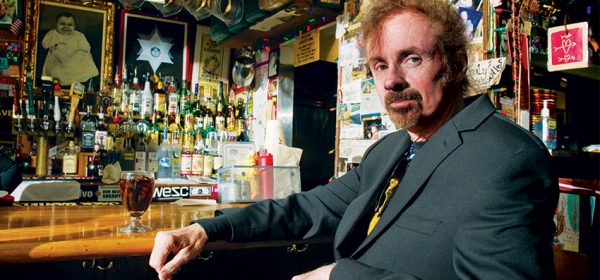
Caroline asked if he minded if she took our photo, and he smilingly consented. And here we are, I gazing up like a beaming schoolchild in the presence of Micky Mantle.


[1] It’s one thing to trick fate, but to trick natural selection is especially gratifying. Although, to be truthful, I had already procreated, my older son Harrison being just over a year old and my younger son Ned at the time nestled in utero inside of luckily not-to-be-widowed-at-31 Judy Birdsong.

BTW, I have immortalized Larry, who in his fifties changed his name to Buck, with this BALLAD.

[2] I’ve always been a sucker for razzmatazz prose, like this sentence from James Wolcott: “An orange Elvis squirted from a can of Cheez Whiz, the Trump of The Apprentice bent the distortion field of Reality TV until it fit him like a girdle.”

[3] Here’s a link. Tap on media and look under the column FILM.

[4] From an interview: “Some writers just write about their own lives. Well, I don’t want to do that. I want to have a really boring life. A quiet, boring life so no one wants to write a biography. I’m the only writer in history only to have one wife, for instance.

Quotes from Curmudgeons

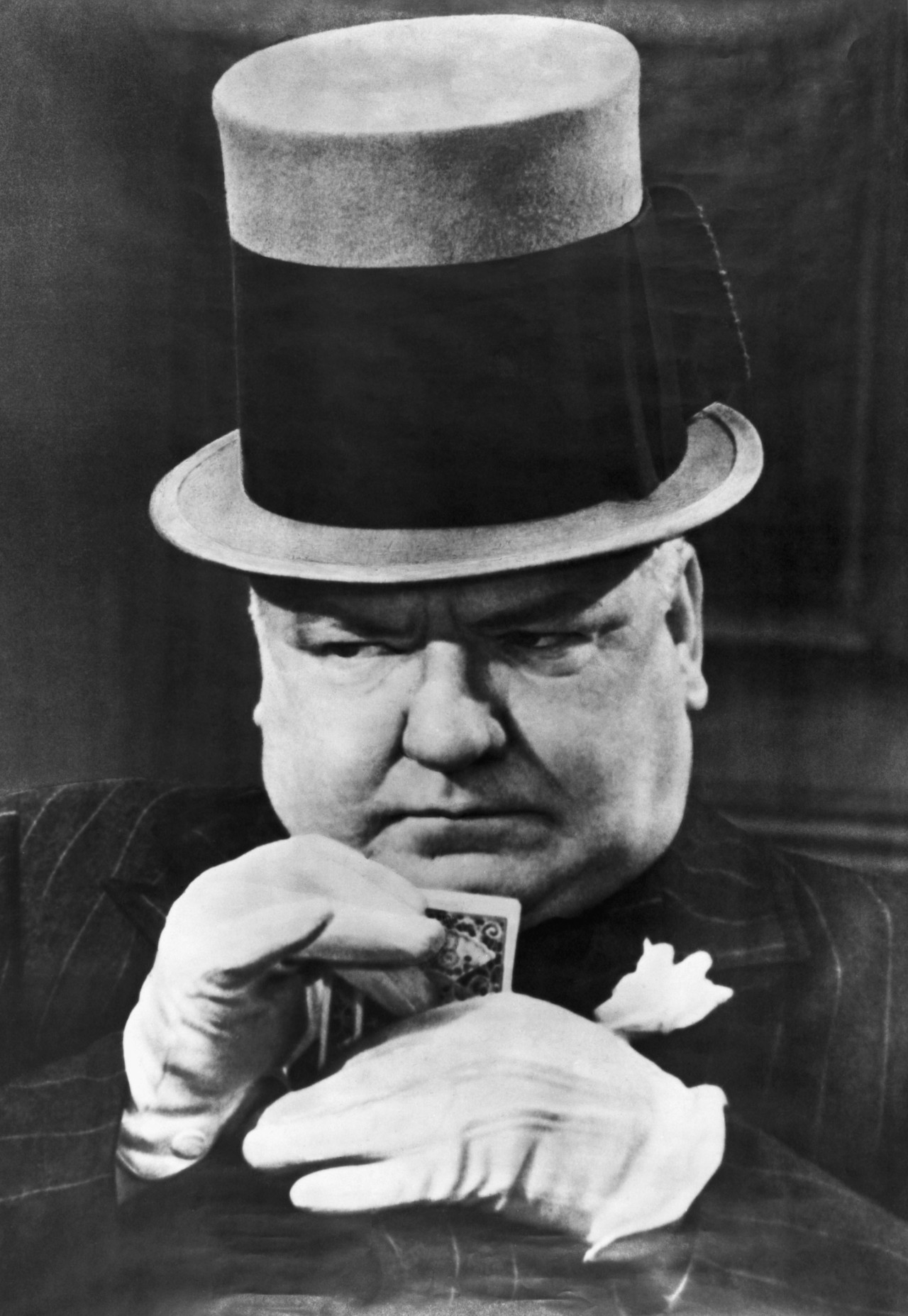
Original Caption: W.C. Fields in typical poker face pose. Undated photograph.

Original Caption: W.C. Fields in typical poker face pose. Undated photograph.

No doubt most curmudgeons begin their careers as a high school cynics, as smart-mouthed skeptics equipped with highly sensitive antennae tuned to hypocrisy. More often male than female, these snarling scoffers tend to mock propagandists dedicated to transforming them into productive contributors to society.

Burned as idealistic children who naively believed the blandishments of their elders, they eventually begin to realize that life’s rewards and punishments can be ridiculously unjust. For example, even though Bobby copies his homework and bullies smaller kids, Santa showers him with $800 skateboards and brand name clothing; meanwhile, the rule-obeying future curmudgeon treats others kindly but ends up with a can of Play Dough and a Wal-Mart fleece.

“Yeah right,” becomes the sardonic rejoinder to uplifting quotes in the morning announcements.

But let’s face it: constant negativity is not one of Dale Carnegie’s strategies in the pursuit of winning friends and influencing people. Although the most talented high school cynics can be fairly entertaining, their shtick can get really, really old after a while.

Eventually, though, with a little luck – a good marriage helps — these young cynics can marinate over the decades into well-seasoned curmudgeons who cultivate a sense of absurdity’s humorous possibilities, rather than becoming outraged at the human tragicomedy. Life becomes not a “tale/ Told by an idiot, full of sound and fury/Signifying nothing” but a “spiritual pickle preserving the body from decay.”

So on this Thanksgiving Eve, I choose not to mock my Facebook brethren for typing “adorable” beneath photos of non-photogenic babies; I choose not to mock sentimentalists for cajoling me to like and share cloying idiocies like “if you ‘heart’ your mother click like and share.”

No, instead, I’ll share, these inspiring quotes from some of my favorite curmudgeons for whom I’m especially thankful. They, by my book, truly have made the world a better place.

Jonathan Swift: “Last week I saw a woman flayed, and you will hardly believe how much it altered her person for the worse.”

Mark Twain: “Go to Heaven for the climate, Hell for the company.”

Amboise Bierce: “OBLIVION, n. Fame’s eternal dumping ground. Cold storage for high hopes. A dormitory without an alarm clock.”

Oscar Wilde: “A gentleman is one who never hurts anyone’s feelings unintentionally.”

HL Mencken: “Democracy is a pathetic belief in the collective wisdom of individual ignorance.”

Dorothy Parker: “If all the girls who attended the Yale prom were laid end to end, I wouldn’t be a bit surprised.”

WC Fields: “Start every day off with a smile and get it over with.”

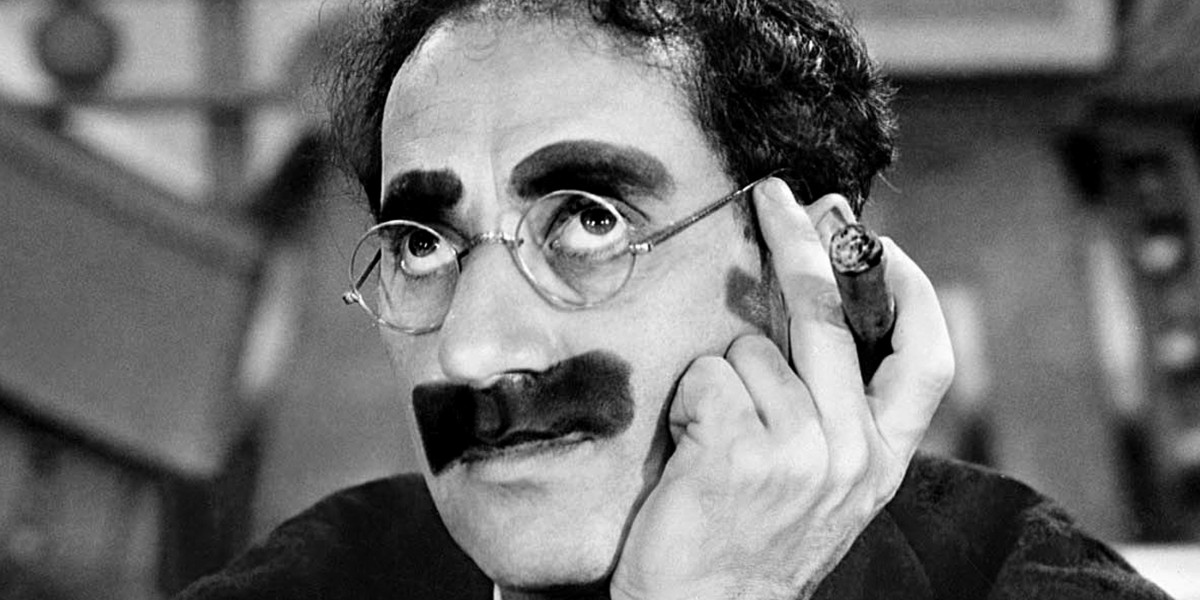
Groucho-Marx-Duck-Soup-e1434598275998Groucho Marx: “Military justice is to justice what military music is to music.”

Lenny Bruce: “I won’t say ours was a tough school, but we had our own coroner. We used to write essays like: What I’m going to be if I grow up.”

Kurt Vonnegut: “True terror is to wake up one morning and discover that your high school class is running the country.”

But when it all comes down to it:

TC Boyle: “I was in the water for six hours. Shivering, praying, scared full of adrenaline. I kept making deals with the Fates, with God, Neptune, whoever, thinking I’d trade places with anybody anywhere – lepers, untouchables, political prisoners, Idi Amin’s wives – anything, so long as I’d be alive.”

Be thankful!