Wouldn’t it be nice if the pleasant moments of our lives passed as slowly as Mac system updates? For example, for the last hour or so, my update bar has been stuck on “about 15 minutes remaining.”
You glide into a warm bath. Rather than cooling, the water remains at a constant soothing temperature, pleasure’s non-existent blue bar stuck, as it were, frozen in time, as you sing on key a melancholy air like “Danny Boy.”
. . . And I will know, though soft you tread above me,
And all my grave will warmer sweeter be,
And you will bend and tell me that you love me
And I rest in peace until you come to me!”
Once, “Danny Boy’s” in its grave, so to speak, you launch into “The Streets of Laredo.”
“Go fetch me a cup, a cup of cold water. To cool my parched lips”, the cowboy then said. Before I returned, his spirit had departed, And gone to the round up – the cowboy was dead.
We beat the drum slowly and played the fife lowly, And bitterly wept as we bore him along. For we loved our comrade, so brave, young and handsome, We all loved our comrade, although he’d done wrong.
The water’s still warm, life affirming.
There’s time for another, “Jeanie With the Light brown Hair.”
I long for Jeanie with a day-dawn smile, Radiant in gladness, warm with winning guile; I hear her melodies, like joys gone by, Sighing round my heart over the fond hopes that die:— Sighing like the night wind and sobbing like the rain,— Wailing for the lost one that comes not again: Oh, I long for Jeanie, and my heart bows low, Never more to find her where the bright waters flow.[1]
OMG, as the young people say, as I typed the above, the bar inched forward to “10 minutes remaining.”
At this rate, the update will be completed by Doomsday!
[1] My father rocked me to sleep while singing these songs, among others. It explains a lot. You can read more about that HERE.
Now that I’m retired, I begin each morning with a leisurely stroll through the pages of “The South’s Oldest Newspaper,” the Post and Courier. One of my favorite features is “Today in History,” which chronologically recaps the high-and-lowlights that occurred on the day the edition appears. For example, today, the 13th of January, we have in 1941 Puerto Ricans gaining birthright citizenship and James Joyce succumbing to an ulcer less than a month before his 59th birthday.
The aged sisters draw us into life: we wail, batten, sport, clip, clasp, sunder, dwindle, die; over us dead they bend. Joyce, from Ulysses
The 13th of January was an unlucky day for several other notables as well. In 1962 Comedian Ernie Kovacs perished in an auto crash, and 16 years later, former Vice President Hubert H Humphrey died in Waverly, Minnesota at the age of 66.
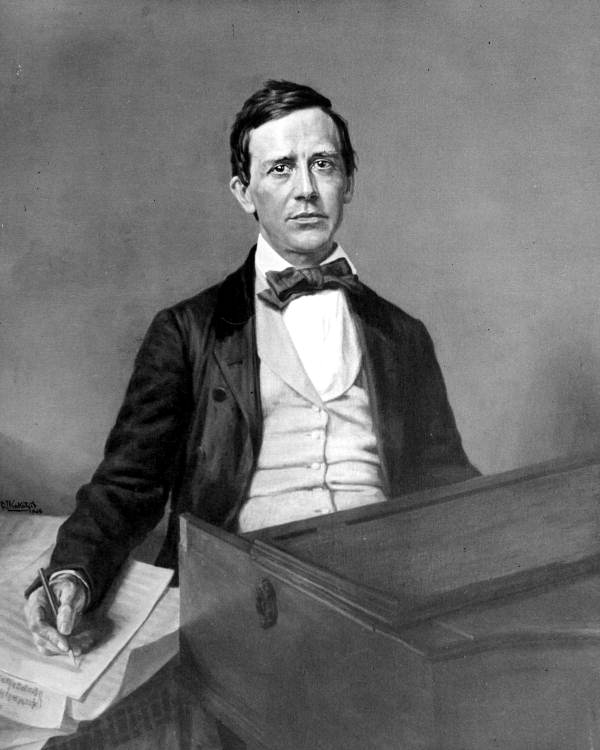
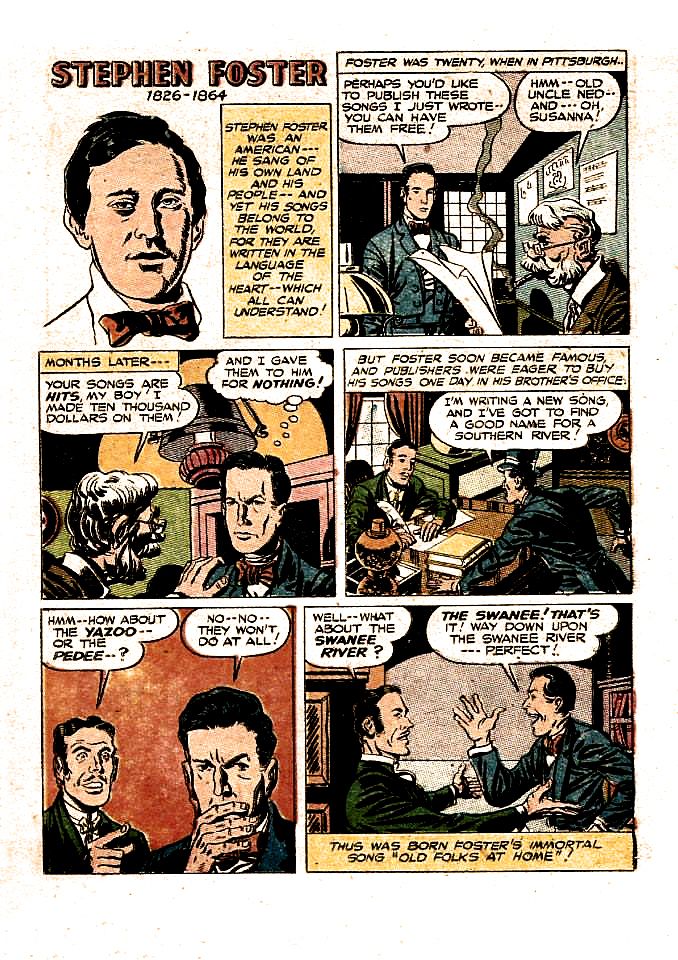
The saddest death recorded that day, however, belongs to Stephen Foster, America’s first great songwriter, who, estranged from his wife, drunkenly slipped on a piece of glass while shaving in a flophouse in the Bowery. In the fall, he accidentally cut his neck, was found on the floor in a pool of blood, and died at Bellevue Hospital 3 days later. On the day of his death, his worldly possessions consisted of that razor, a comb, a few items of clothing, and a leather wallet. The wallet contained 38 cents in Civil War scrip, 3 pennies, and a scrap of paper with the words “Dear Hearts and Gentle People” scrawled on it.
I first heard of Stephen Foster’s music orally when my father would rock and sing me to sleep and from my Grandfather Kiki who sang “Campton Ladies” while playing his ukulele.
‘Doo-dah, doo-dah.”
My father, a sentimentalist, told me about Foster’s sad life, often the fate of geniuses, he intimated. Although Foster did write comic songs, the majority of them pulled on the proverbial heartstrings.
We have roamed and loved mid the bowers
When thy downy cheeks were in their bloom
Now I stand alone mid the flowers
While they mingle their perfumes o’er thy tomb.
Because he wrote for the Christy Minstrels, a Northern blackface minstrel troupe, and sentimentalized the plight of slaves, Foster is now a controversial figure. Defenders claim that Foster’s attitude was sympathetic and that he admired African American slaves.
Others, not surprisingly, disagree. In 2010 members of the Yale Glee Club refused to sing “My Old Kentucky Home” at a concert and later burned a copy of the song, according to Ken Emerson, Foster’s biographer, “[My Old Kentucky Home], he writes, “was actually inspired by “Uncle Tom’s Cabin,” a deeply abolitionist novel. And the sense of loss here, and the sense is because Uncle Tom is being sold down the river as he was in the famous novel.”
Ironically, Foster hailed from Pennsylvania and only travelled below the Mason-Dixon line once in his life on a honeymoon steamboat cruise to New Orleans.
Emerson, the biographer, goes on to say, “his politics were definitely not abolitionist, but his heart and his feelings were very strongly sympathetic with the African-American plight. This contradiction, I think, is – the conflict between sentimentality and self-interest is something that, I think, characterizes – has always characterized Americans.”
And the songs themselves reflect the ol’ melting pot metaphor, an amalgam of Irish, African American, Italian, German, and Czechoslovakian influences. For example, “Oh Susanna” is rendered in a polka beat.
Again, Emerson: “And I think he merged [the various musical influences] in way that appeals to the multicultural, mongrel experience of America in its history and culture.”
The bottom line is that Foster remains popular even today, a century-and-a-half after his death, a rarity for a pop artist. In fact, I own a 2004 tribute album that features such artists as Alvin Youngblood Heart, John Prine, Mavis Staples, Roger McQuinn, and Michelle Shocked.
The combination of those beautiful melodies he created and pathos he conjured can still mesmerize.


 I first heard of Stephen Foster’s music orally when my father would rock and sing me to sleep and from my Grandfather Kiki who sang “Campton Ladies” while playing his ukulele.
 You Do Hoodoo