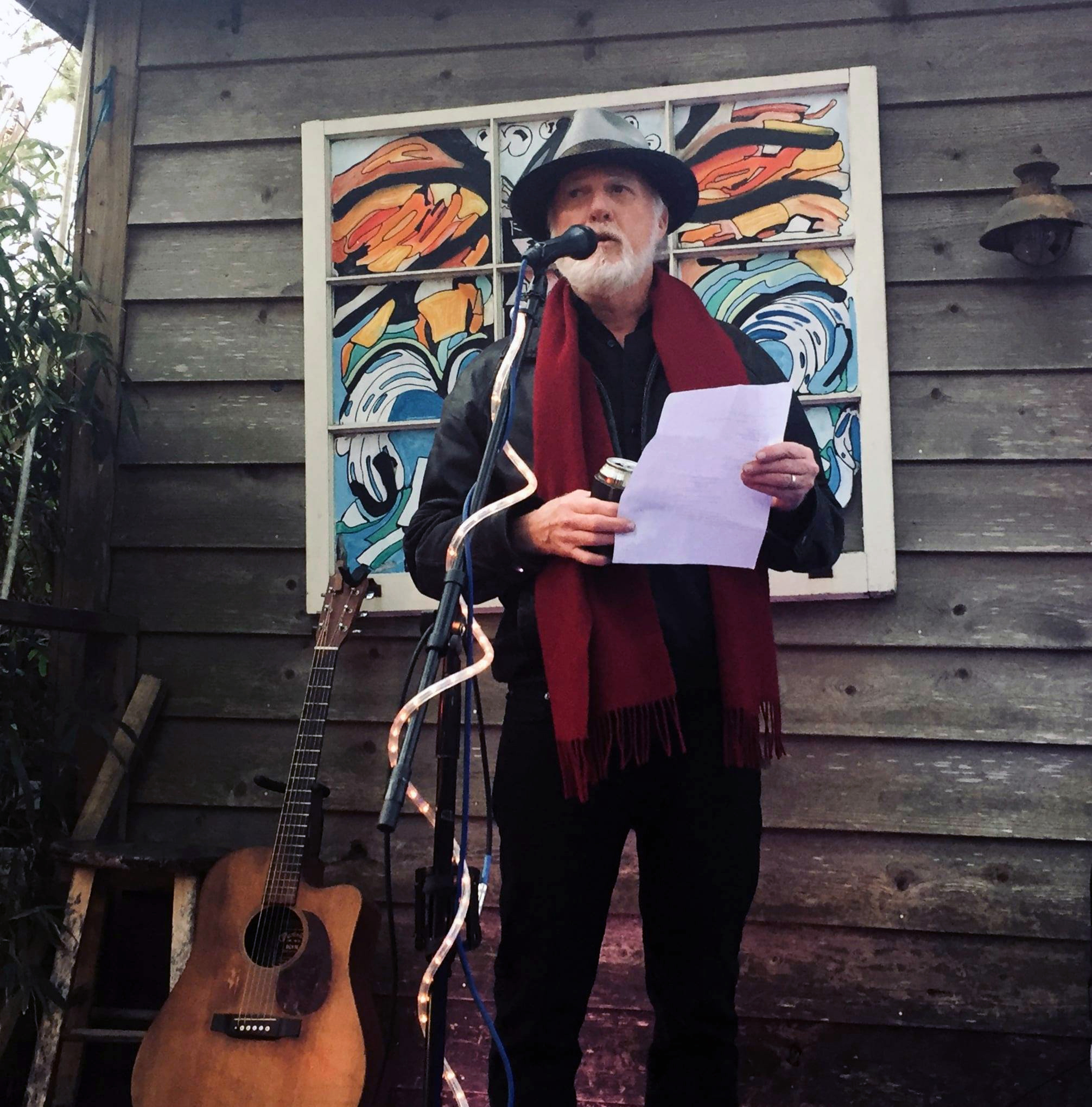
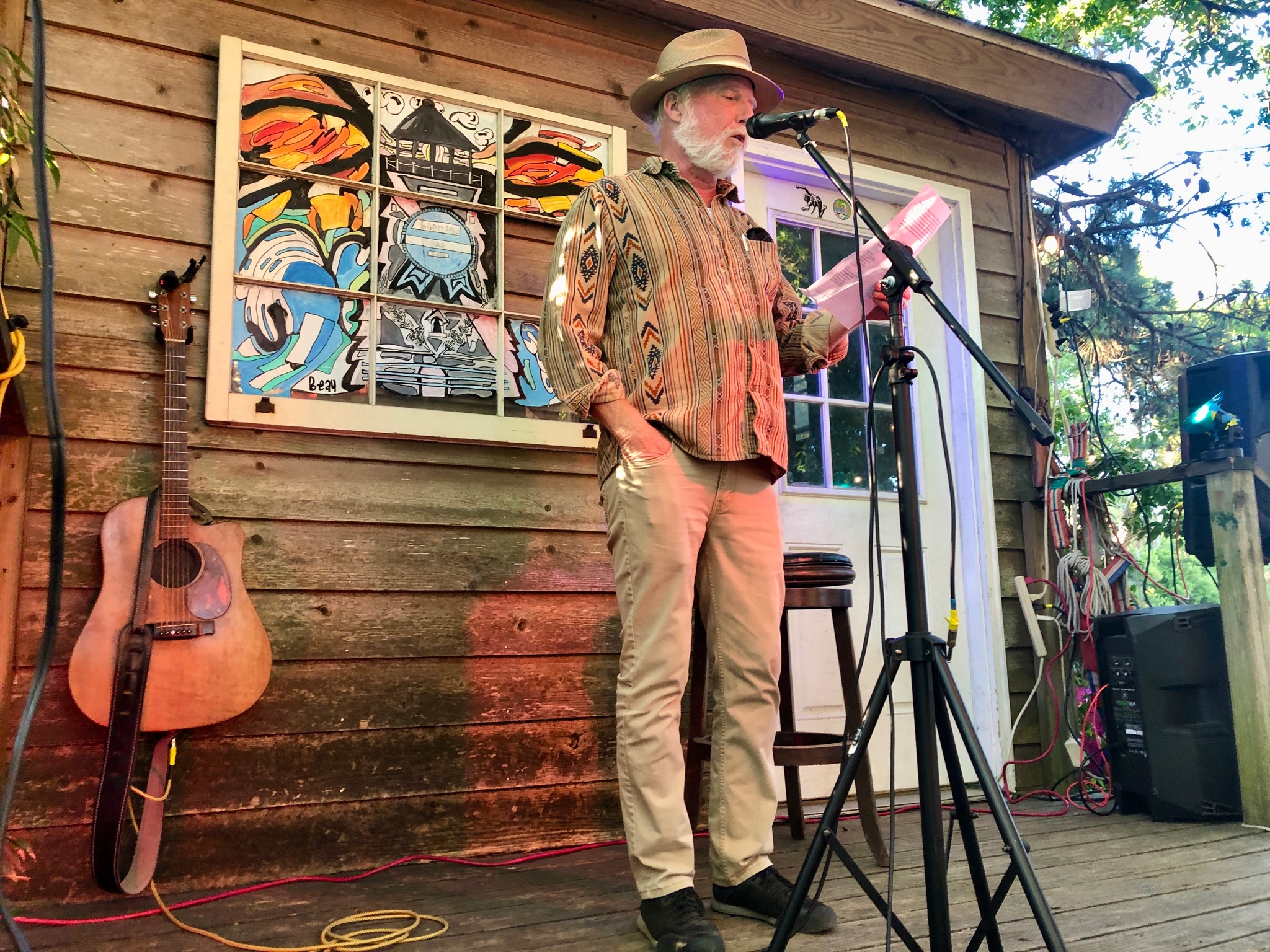
Here’s a video of my reading my original poem “St. James Infirmary iPhone Blues” on February 6 2023.
St James Infirmary iPhone Blues
Tapping a cane, Mr. Andre Beaujolais, with some hoodoo magic in his front pants pocket bopped down St. Charles on his way to see Miss Hattie Dupree, the one-time lover of McKinley Morganfield, better known as Muddy Waters, King of the Chicago Blues.
Those who got bad mojo go see Miss Hattie Dupree for the inside dope in the hope of counteracting shenanigans ¬– hexes, curses, drywet nurses, vexations, permutations, marital relations. genetic mutations, Haitian sensations, and genital truncations.
Mr. Andre Beaujolais was on his way to deliver a batch of John the Conkeroo juice to help some dude whose private conversations had been swiped by advertisers, enterprisers, franchisers, monopolizers, and merchandizers.
He’d been telling his gal about Blind Willie McTell, how the Dylan song by the same name was sung to the same tune as St James Infirmary Blues. Their moment of intimacy the next day mysteriously appeared in an ad for a book being peddled on the dude’s Facebook page.
“I Went Down to the St, James Infirmary: Investigations in the shadowy world of early jazz-blues in the company of Blind Willie McTell, Louie Armstrong . . . where did this dang song come from anyway? “That title don’t trip off the tongue,” Mr. Beaujolais said when he heard the dude explain.
“Hand me your phone,” Andre said, then took off its cover, whupped out the Conkeroo juice, poured it all over the device, mumbled some mumbo jumbo. “Ta da! problem solved!” “Wait a minute, “the dude complained. My phone’s not working!” “No shit,” Mr. Andre replied. “That’ll be fifty dollars. I’ll accept ten fives.”
George Fox’s Monday Night extravaganza known as the Singer/Songwriter Soapbox provides local musicians and poets a venue to showcase their original works, and many of them are damned good, like Jason Chambers, Chuck Sullivan, among a host of others.
Last night Megan Posey recited – not read – recited “Screen-Faced Nation,” a performance you can check out in the video below. This twenty-something has some serious chops. Check her out.
Note: the incompetent videographer [embarrassed throat clearing] didn’t start shooting until the fifth line, but you can read the entire poem below the video.
Screen-Faced Nation
by Megan Posey
I’m reporting to you live from Addictionville, USA
Found in the collective mind of humankind
Where substances and behaviors disguised as property investors
Develop land on top of your bulldozed dopamine receptors
Uppers, downers, booze, gambling, sex, shopping and food
Are just some of the towns long established moguls of real estate
The city was historically inhabited by massive huddles of the tired and poor
And though many transients were lured in by the pleasure and escapism that dangled as bait
It was an exit on the interstate that you would probably just ignore
But that is clearly that is no longer the case
We’ve become a needle-armed, powder-nosed, screen-faced nation.
Pundits are puzzled over what led to the gentrification
But I’d like to shift your attention back to 2010
When we had just demolished OxyContin
And nicotine was undergoing renovation
The cigarette was outdated but we hadn’t yet created
A plan to market vaping to the younger generation.
So there was some land available in town
And a growing family looking to settle down
That’s when Social media began to break ground
And construct their now all-encompassing compound
But look beyond the flimsy facade of connection
And you’ll see an opium den filled to the brim with junkies
Fiending for their next self-esteem injection
This just in
Property crime in the area has now reached an all-time high
Your focus, motivation, and creativity are being jacked in broad daylight
But the truth is you hand them over without so much as a fight
See, you were so scared of getting left behind
That you closed your eyes and got in line with the blind
Until one day you woke up with your head pounding on a cold, hard floor
You tried to escape, but what did you find?
The foyer had turned to a labyrinth of corridors
And there was just no easy way out anymore
Even if you could manage to free your mind
These days you still gotta have at least one foot in the door
It’s sad to watch people waste their whole lives in this podunk town
They’re like stillborns in the underbelly who never started to crown
A real individual could have been born and that’s a hefty cost
But so long as you search outside of yourself for the way
It does not matter what turn you take, you will always end up lost
In the unnavigable wasteland of Addictionville, USA
Here’s a snippet from a reading from Today, Oh Boy! at Chico Feo’s Singer/Songwriter’s Soapbox. The novel is coming out this fall via Austin Macauley Publishers.
A Bit of background: Over the intercom, Summerville High School Principal Paul Pushcart is interrupting art class by summoning Rusty Boykin to the office on a Monday in October 1970.
Dreading an upcoming midterm because he hasn’t opened a book, Rusty is drawing a model of the human digestive system in a ruse to sneakily study for the exam.
Generally, when I first listen to a song, I don’t pay much attention to lyrics. If I dig the melody and beat – as the boppers used to say on Bandstand – I’ll start paying closer attention to the words, and if the diction is clever or thought-provoking, all the better.
After all, it’s really rare to encounter lyrics that possess the compression and structural integrity of poetry, i.e., to find songs with words that can stand alone on a page and engage sans musical accompaniment.
My friend George Fox’s latest song – so new that it’s still untitled – comes close to accomplishing this rare feat. The song, which consists of three verses followed by a chorus, distills a lifetime in four-and-a-half minutes and does so employing diction, imagery, and structure that reinforce and embody the song’s central theme, what Andrew Marvell famously dubbed “time’s wingèd chariot.” George wrestles with the metaphysics of time, the illusive nature of past, present, and future, and how a lifetime passes [cliché alert] in the blink of an eye.
The song begins with a callous youth speeding through life in rural Orangeburg County, South Carolina:
Just eighteen, driving an old pickup truck, Joint in the ashtray and a bed full of luck. Running nowhere as fast as I can Down an Orangeburg County washboard road Not enough sense to take it slow. Rolling Stones singing “Street Fighting Man.”
Here, the theme of speed is introduced, and we have our first bit of compression in the allusion to the Stones’ “Street Fighting Man,” which melds the attitude of the the speaker in the Stones’ song with George’s narrator, both young men fueled by the fire of youthful exuberance.
What’s a poor boy to do but “run nowhere as fast as [he] can?”
The chorus shifts to the present, and again, we have speed, the idea of chasing “the dying light,” or as Marvell puts it in “To His Coy Mistress,” although “we cannot make our sun /Stand still, yet we will make him run.” Yet, in the last line, the speaker comes to the realization it’s always now, that the past and future only exist in the present and meaning lies in perspective, depending on where “you’re standing.”
Right outside of your window, just outside your door, Everything is waiting for you To fall into the night and chase the dying light. There’s no need to be gentle. Sometimes it’s heaven, sometimes it’s hell. Sometimes it’s hard to tell. All depends on where you’re standing. I stand before you now, and I see it written in in the clouds, All that was and is and could be is now.
In the video below you can check out the first verse and chorus from a live performance at Chico Feo’s Monday Night Singer/Songwriter Soapbox, which George emcees. The song is a work-in-progress, and for me, it’s thrilling to see it evolve on stage, as George experiments with phrasing and gestures.
In the second verse, the middle verse, the narrator finds himself suddenly middle aged, “thirty-three/With two little boys sitting on my knee” and has come to know “how love is made,” but swoosh, suddenly, with the days having flown by “like a midnight train,” he looks down to see, not his sons, but his granddaughter Eliza Jade.
Turned around and I was thirty-three With two little boys sitting on my knee, And I realized how love is made. The days flew by like a midnight train. The years fell on me like the pouring rain. Now I look down and see Eliza Jade.
The last stanza arrives like a melancholy last act, with “second guesses, another last chance, and one more shot.” Once again, the radio is playing, not “Street Fighting Man,” but “a brand new song” saying “the same old thing” but “still get[ting] it wrong.”
Second guesses are all I’ve got, Another last chance and one more shot. And how I got here I don’t even know. The radio plays a brand new song. It says the same old thing they still get wrong Oh man, and so it goes.
And so it goes – a lifetime distilled into a handful of words.
I could go on about structure, how the number three is central to the architectonics – three six-line stanzas, three nine-line choruses, the narrator citing at one point his age is thirty-three, but you’d think I was overdoing it, and you’d be wrong. If it’s there, it’s there, whether the artist planned it or not. Making art is like dreaming, it comes from below, often surprising the artist him or herself.
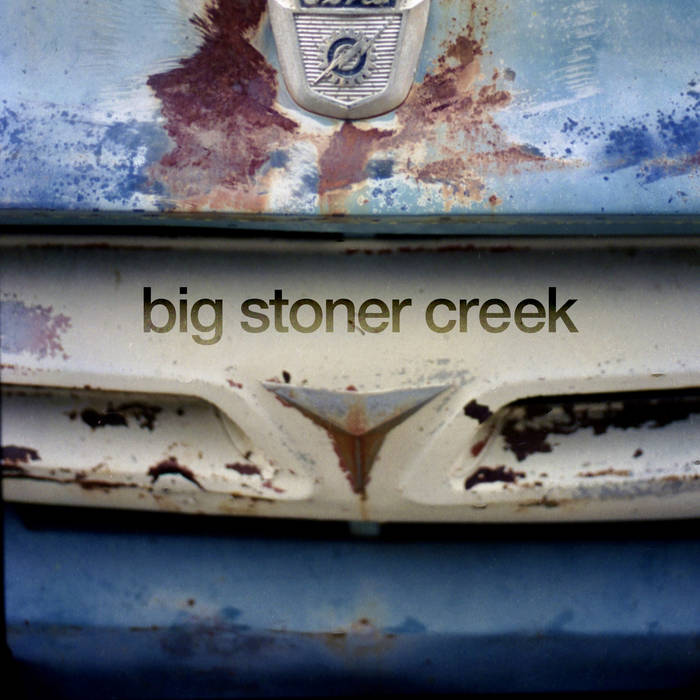
By the way, George’s band Big Stoner Creek has a new album out. You can check it out HERE.
PS. Here’s an earlier rendition of stanza three and the concluding chorus:



 You Do Hoodoo