An excerpt from my upcoming novel TOO MUCH TROUBLE

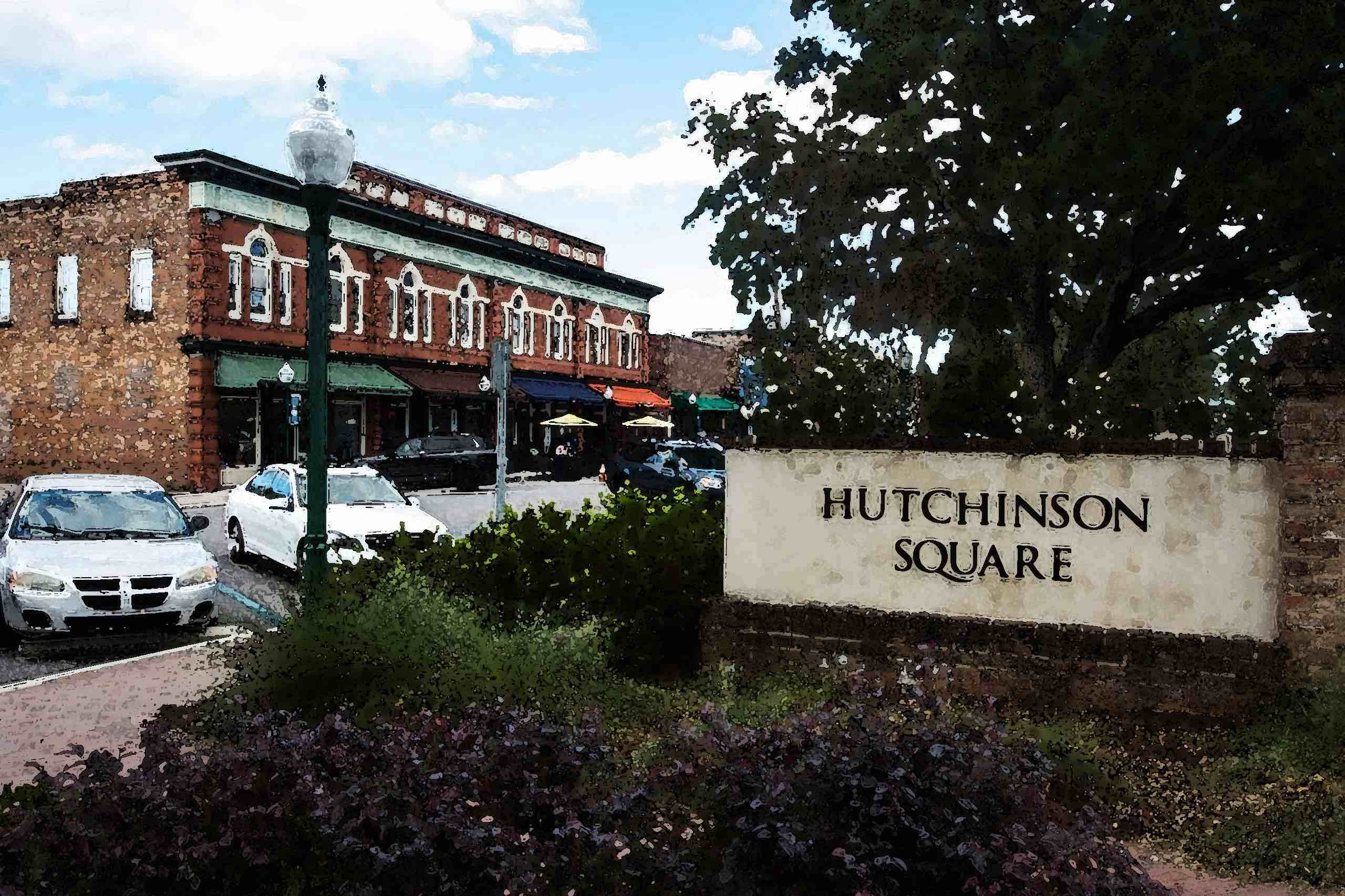
This is an excerpt from Too Much Trouble, a stand alone sequel to my novel Today, Oh Boy. In this scene, high school sweethearts Ollie Wyborn and Jill Birdsong, college freshmen home for Christmas after their first semester, meet for pool hall hotdogs in Hutchinson Square in downtown Summerville, SC. It’s the first time they’ve seen each other since their breakup in June before Ollie reported to the Air Force Academy.

Hutchinson Square

Jill’s relieved that so far her “date” with Ollie has been low-key, like two old friends catching up. He looks great. His boyish features have become more angular, his posture a bit more rigid. It’s breezy out on the square, the shadows of the trees swaying on the ground in front of their bench.

Unlike most males Jill has known, Ollie seems to genuinely care about what’s going on in her life and listens attentively. Before he left to fetch the chili dogs, he asked very thoughtful questions about life at Davidson, and his follow-up questions demonstrated sincere interest.

Now, in his absence, Jill’s mind drifts to Rusty. She wonders what he does during the day, an exile from his home.

Duh, he reads.

He’s been a booklover since she first met him in the 7th grade. In the fast-track history and English classes they shared, he was engaged, a lot more engaged than most students, and sometimes offered controversial takes on what they were reading, like calling Nick Carraway a smug, arrogant know-it-all, the worst of the slew of unlikable characters in The Great Gatsby. Then again, he didn’t seem to care all that much about his grades.

When Principal Pushcart read the daily announcements each morning over the intercom, Rusty was frequently one of the troublemakers summoned to the office. One time in the hall, Jill overheard Rusty tell Sandy Welch that he was, quote, “nothing but a crazy mixed up kid.” Jill wonders whatever became of Sandy, Tripp’s girlfriend, a wild child. Her family moved back to New Jersey not long after Tripp died, not long after the car chase she never wants to hear about again.

Here comes Ollie, smiling, walking up the paved pathway with a bag of chili dogs, fries, and a couple of Cokes.

“Is this wind bothering you?” he asks once he’s standing in front of her bench. “We could eat these somewhere else.”

“No, I like it here,” Jill says. “I like the sound the wind makes in the trees.”

He glances up at the limbs of the oak overhead, its branches swaying, its Spanish moss holding on for dear life.

“You’ll never guess who I just saw in the pool hall.”

“Who?”

“Rusty Boykin and Alex Jensen.”

“Really! Just now?”

Ollie nods. “Yep, they’re there right now.”

“Did you tell them you were with me?”

“Yeah, since girls don’t go into the poolroom, I was going to invite them over here to say hi, but they seemed to be in a very serious conversation. AJ has really put on a lot of weight, and Rusty’s hair’s down past his shoulders.”

“I know,” Jill says.

“So you’ve seen them over the holidays? Of course, Rusty works at Katz’s.”

“I saw Rusty last night.”

“Last night?”

“Yeah, we went on a date.”

“You and Rusty?”

“Yes.”

Ollie, who has been straining to be upbeat so far, frowns for the first time, then quickly recovers.

He carefully removes the white paper sleeve that holds Jill’s chili dog and hands it to her and then a small bag of rather greasy fries. She reaches down herself to grab a Coke. Ollie hands her a napkin, then retrieves his dog and fries and Coke.

“God,” Jill says, “I’d forgotten how good these are.”

God as an expletive, not gah, per usual.

“Indeed delicious. Did you have fun on your date?”

“Yes, I did. We both did.”

Ollie averts his eyes, takes a bite.

They eat in silence, the wind in the trees indeed highly audible. Ollie hadn’t noticed until Jill mentioned it. It bothers him somewhat that he doesn’t pay more attention to sounds.

Jill takes the last bite of her chili dog.

“Look, Ollie, the last thing I want to do is hurt you, but I haven’t forgotten the last words you said right before you hung up the other day. I’m sorry you think you love me, but I’ve changed a lot since June. I’m not the same Jill you knew. I’ve started drinking wine. I’ve quit believing in God. What you love is the idea you had of me back in high school.”

Ollie, ever quick on the take, instantaneously sees that it’s true. This Jill sitting next to him on the park bench isn’t the same Jill he took to the prom last May. Yet he’s more or less the same Ollie he was in high school. Oh, he’s better educated, in better physical shape, but his philosophical bearings haven’t wavered.

“I can see that,” he says, “but the funny thing is that I don’t think I’ve changed at all.”

“That’s because you’ve always been so mature, Ollie, and so good. I’d hate to see you change. I really would.”

Ollie doesn’t know what to say to this, so he says nothing.

She glances at her watch.

While Ollie pursues an errant napkin, she drops hers in the empty bag, crumples the bag, and deposits it in the trash can.

316 Camellia Drive

When Ollie returns home to his house in the Twin Oaks subdivision, he’s understandably downcast. Although he likes Rusty Boykin as a person and was even going to seek him out for companionship this week, he thinks Rusty’s all wrong for Jill—he’s wild, reckless, disorganized, and countercultural, which means he undoubtedly smokes cannabis and therefore breaks the law. That is, unless Rusty, too, has changed, but it certainly doesn’t look like it with his wild hair and raggedy outfit.

Ollie’s feeling the inherent sadness of the end of a relationship. He realizes that he and Jill will never be friends again in any meaningful sense. However, he also realizes—after all, some of the kids in Summerville call him Spock—that change is the one constant in life. While he’s sitting right now in the model airplane museum of his bedroom, his cells are multiplying and dividing, water is evaporating over the ocean, clouds are shifting shapes, the moon is waning. Virtually every high school romance ends like this. It’s, as his grandma would say, just part of life.

He’s chomping to get back to Colorado Springs. Summerville isn’t really his home. Here he’s a Yankee, and if he lived here for another 50 years, he’d still be a Yankee. He’s never completely understood the fixation they have with the Civil War.

A knock on the door interrupts his musings.

“Come in. Hi, Mom, what’s up?”

“You have a phone call. Cindy Cauthen would like to speak to you.”

“Cindy Cauthen. Okay, I’m coming.”
Too Much Trouble – Sneak Preview

Too Much Trouble

BOOK I

Chapter One: Goings and Comings

Thornwell Dormitory, the University of South Carolina, 22 December 1972 

Crisscrossing his dorm room, Rusty Boykin wads up clothes and shoves them into a sour-smelling duffel bag. He leans over and snatches his two-tone cowboy shirt from the floor, the one with fake pearl snaps, and shoves it in on top of two pairs of faded Levi’s. Turning around, he rifles through the built-in drawers in his closet and crams into the bag the four boxer shorts he owns. After yanking the drawstring tight, he slings the duffel over his shoulder hobo-style and steps out of the room into the suite he shares with three other students. Before leaving, he checks himself out in the mirror above the sink, admiring his Keith Richards–inspired shoulder-length shag that’s sure to give his ol’ man a hemorrhage-and-a-half.

Red on the head like a dick on a dog 

His suitemates, Jersey boys, have already departed for the frigid Northland. Despite going to the University of South Carolina, two-thirds of Rusty’s dormmates hail from the Northeast while the rest come from small in-state towns like Hampton, Seneca, and Sumter. Yesterday was the last day of exams, so most students have already cleared out for the holidays.

Rusty doesn’t own a car, so he’ll get back home the way he usually does—by hitchhiking. With luck, someone will take him straight to the Summerville exit so he won’t have to hitch on the interstate. It’s no fun shivering on the side of the highway, getting wind-whipped in December as 18-wheelers roar past on their way to some soulless Kmart loading dock. Not to mention that hitchhiking on the interstate is illegal.

I-95, Robeson County, North Carolina, 20 December 1972 

Rusty’s pal Alex Jensen, better known as “AJ,” has had a socially successful but academically disastrous first semester at Hampden-Sydney College—three Ds, an F, and a lone A in freshman English. “Frat life ain’t no good life, but it’s my life,” he sometimes jokes, echoing the Willie Nelson song. The good news—if you can call it that—is that AJ’s parents have become inured to being disappointed in their only offspring, a child conceived late in life when his mother Anne was 40 and her husband Thom was 52. So they won’t be shocked when they discover AJ’s abysmal grades and that he’s been lying, having assured them throughout the semester that classes were going great.

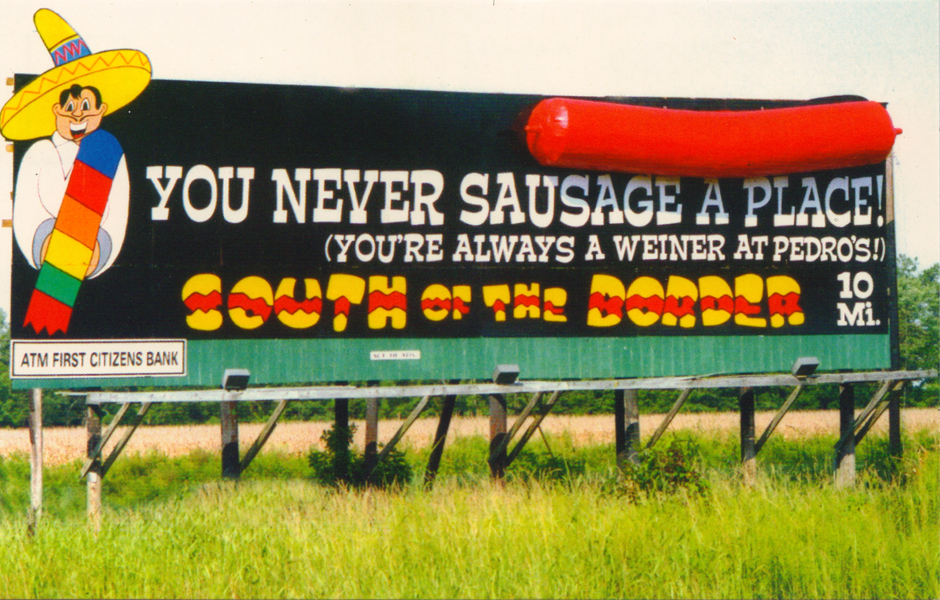
Four hours into his drive from Hampden-Sydney, AJ’s hangover has leveled off into a dull headache. He measures his progress to Summerville by the number of miles separating him from South of the Border, a Mexican-themed tourist attraction just below the state line. An absurd number of South of the Border billboards featuring their sombrero-sporting mascot Pedro appear with increasing frequency on the drive north or south on I-95 toward the North Carolina/South Carolina border. Up ahead, AJ spots yet another billboard, this one with a giant red hot dog standing upright above a sign that reads YOU NEVER SAUSAGE SUCH A PLACE!
(YOU’RE ALWAYS A WEINER AT PEDRO’S)
SOUTH OF THE BORDER 10 MI.

He thinks, Hell, why not? I’ll stop there, check it out, maybe get a bite to eat, and take a piss.

Fun ahoy!

506 Farrington Drive, Kings Grant subdivision, Summerville, South Carolina
21 December 1972 

Jill Birdsong, a tall, slender freshman at Davidson College, opens a Christmas card from her high-school boyfriend Ollie Wyborn. A fourth class cadet at the Air Force Academy, Ollie isn’t allowed to come home for Christmas. Jill hasn’t seen him since they broke up in June just before his departure for Colorado Springs. Although fond of Ollie—she admires his intelligence and integrity—Jill has never been “in love” with him, and their make-out sessions were relatively tame—especially for Summerville’s teenage culture, where, at least once every school year, some sophomore or junior or senior suddenly disappears “to stay with her aunt for a while.”

At Davidson, Jill has had a few dates, but nothing has clicked. Just recently, though, she has started drinking socially. In high school, Jill was religious—a member of the national Christian organization Young Life—and never indulged in alcohol; however, gradually, thanks largely to her biology courses, Jill has stopped believing in the Resurrection, a change of heart (and mind) she would never share with her parents, who are devout Episcopalians but not teetotalers.

Ollie, whose lack of playfulness had always been a bit of an impediment in their relationship, has never been a believer. In fact, in high school, when Rusty Boykin once asked Ollie if he believed in God, Ollie explained that the series of events Rusty had mistaken for divine intervention was merely coincidence. Although not friends, they had been thrown together the October of their junior year after some rednecks jumped Ollie outside the pool hall. Rusty and his would-be girlfriend Sandy Welch were slowing down, looking for a parking space when they saw Ollie karate-kick one of his three assailants.  They yelled for him to jump into Sandy’s Mustang to escape—only to have the rednecks tear after them in a high-speed chase through town. The rednecks’ pick-up ended up running off the road at Bacon’s Bridge and crashing into the Ashley River.

In Summerville, fistfights are common, especially among the undereducated white male population. Ollie, originally from Minnesota, was surprised at first by the belligerence and obsessions of small-town Summerville, especially people’s fixation on what they call “the War Between the States.” Ollie has contemplated the differences between the cultures of the Midwest and South with anthropological detachment. A talented academic with a scientific bent, he finds almost everything interesting.

Ollie cares deeply for Jill, but he’s a rationalist, not a romantic, so he understands it made sense for her to nix their high-school romance when college puts two time zones and military restrictions between a couple. Anyway, his boyhood dream of becoming an astronaut is paramount, so he intends to focus his attention on that goal. He could have asked for leave toward the end of the holidays but opted not to because he’s determined to demonstrate his devotion to his duties.

Jill slides the card from the envelope, glances at the glittering snow scene, then opens it and reads Ollie’s neat, efficient cursive:

Happy Holidays, Jill. As always, I wish you the best and hope that if our spring breaks coincide, we can perhaps go to a movie or have lunch and catch up. Your forever friend, Ollie.

Poor Ollie.