Do the Mash Potato, Do the Alligator, Do the TS Eliot

This year’s Spoleto Festival features a potentially budget-busting array of popular musical choices. To wit, Mavis Staples, Patti Smith, Jeff Tweedy, Lucinda Williams, MJ Lenderman, Band of Horses, and Yo La Tengo. 

For the sake of solvency, I’ve limited myself to two performances, Patti Smith and Lucinda Williams. 

First up was Patti Smith, who appeared Wednesday at the Cistern, a splendid outdoor venue located on the College of Charleston’s campus.  

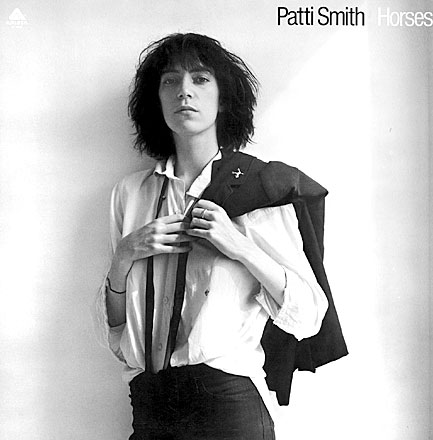
I love Patti Smith. Her injecting high art references into three chord rock inspired me back when I was a wastrel grad student in 1975, a mere half century ago.  The album was Horses, its cover photo shot by Robert Mapplethorpe, her housemate.  What I love about that record is its expansive allusiveness, its juxtaposing via a sonic collage high and low art, Rimbaud and Boney Maroney, bats with baby faces doing the Watusi like Bela Lugosi. But, most of all, what I love is that it rocks.[1]

In my old age, I purchase expensive concert tickets that put us way up front.  For Patti, my wife Caroline and I sat on the third row.  I was under the false impression that Patti might perform the songs of Horses in order, but she only sang one song from the album, “Redondo Beach,” a lilting reggae number whose light-hearted melody belies the lyrics’ first person account of a gay lover’s suicide. 

Why try to explain when you can listen to a snippet yourself.

Anyway, the concert was laidback, with Patti filling up deadtime with friendly anecdotes while her band tuned and retuned their instruments in Kingston-Jamaica-grade humidity. 

Caroline was blown away, and so was I, though I really would have loved it if she had included “Gloria,” a mash-up of the Van Morrison/Them classic and some badass self-assertion:

I walk in a room, you know I look so proud
I move in this here atmosphere where anything’s allowed
Then I go to this here party and I just get bored
Until I look out the window, see a sweet young thing
Humping on a parking meter, leaning on the parking meter 


Oh, she looks so good, oh, she looks so fine
And I’ve got this crazy feeling that I’m going to, ah-ah, make her mine.

G-L-O-R-I-A!!!

photo credit I-and-I

So tonight, we’re headed back to the Cistern to see Lucinda, which for me will be the third time.  She’s had a stroke, which she says affects her guitar playing, but I bet it hasn’t diminished that beautiful distinctive Southern vowel-rich hoarse voice of hers.

I certainly hope not.


[1] You can read a tribute to Patti by clicking HERE.

Garage Band Modernism

I’ve never cared for rock songs with lush orchestral arrangements, cellos and violins sugar-coating the three or four chords that make up the melody. Take the Stones’ “As Tears Go By,” for example, overwrought in every way, the lyrics lamenting unspecified dissatisfaction, the strings transporting the speaker’s melancholy to the suburbs of tragedy, Schmaltzville, where eyes mist over at the slightest sentimentality: puppy dogs, Grandmas, Eugene Fields’s bathetic “Little Boy Blue.”[1]

This is what I’m talking about:

snippet from “As Tears Go By”

Hey, crybaby singerboy, take a hint from Frederick Henry, read some Lucretius, grab an umbrella, and head to a pub.[2]

Compare “As Tears Go By” with this ditty from the same album, December’s Children.

snippet of “Get Off My Cloud”

Now, that’s more like it. 

And speaking of the Stones, man oh man, after the psychedelic silliness of Their Satanic Majesties Request, hearing the six successive opening G chords of “Honky Tonk Women” was like welcoming home a long-lost prodigal cousin returning deprogrammed from some sort of Scientology-like hypno-indoctrination. 

beginning of “Honky Tonk Women”

To quote that Big Mama Thornton of Modernist literature, Sweet Molly Bloom, “Yes!”  

Anyway, I really dig garage bands, Sam the Sham, ? & the Mysterians, the Kingsmen, the Human Beinz, etcetera.

Forgive my Western predilection to have to rank things. It’s sort of stupid really, but that said, in my not-all-that humble opinion, the greatest garage album of all time – and this may surprise you – is Patti Smith’s first release, Horses – a masterpiece whose subtitle could be “TS Eliot meets the Troggs.”

For example, here’s a snippet from the first song of the flipside, “Kimberly.”

snippet of Kimberly

You “Waste Land” junkies out there no doubt caught the echoic allusion to bats with baby faces and violet skies.

Horses is Modernist garage band, flashing with fragmented musical and literary allusions that imbue its songs with concentrated meaning and ultimately create a constellation of images revolving around alienation.

In other words, it’s a work of art.

The masterpiece cut of this masterpiece album is the 9:42 penultimate song “Land,” which, to my ear, has the greatest transition in all of rock-n-roll. Check it out. (The transition occurs at 1.11 minutes.)

the beginning of “Land”

The boy was in the hallway drinking a glass of tea
From the other end of the hallway a rhythm was generating
Another boy was sliding up the hallway
He merged perfectly with the hallway,
He merged perfectly, the mirror in the hallway

The boy looked at Johnny, Johnny wanted to run,
but the movie kept moving as planned
The boy took Johnny, he pushed him against the locker,
He drove it in, he drove it home, he drove it deep in Johnny
The boy disappeared, Johnny fell on his knees,
started crashing his head against the locker,
started laughing hysterically

When suddenly Johnny gets the feeling he’s being surrounded by
horses, horses, horses, horses
coming in in all directions
white shining silver studs with their nose in flames,
He saw horses, horses, horses, horses, horses, horses, horses, horses.
Do you know how to pony like bony maroney
Do you know how to twist, well it goes like this, it goes like this
Baby mash potato, do the alligator, do the alligator

What follows is eight minutes of stream-of-consciousness as Johnny’s brain transitions from sentience to eternal silence.

Now that’s what I call transcending a sub-genre. It’s simultaneously raw and polished, gritty and eloquent, Rimbaud and Wicked Wilson Pickett playing pingpong backstage in a dance hall.


[1] I’m being unfair to the Stones, “As Tears Go By” isn’t nearly as bad as “Little Boy Blue.” 

[2] Here’s Henry describing leaving the corpse of his wife in A Farewell to Arms.

“But after I had got them out and shut the door and turned off the light it wasn’t any good. It was like saying good-bye to a statue. After a while, I went out and left the hospital and walked back to the hotel in the rain.”

The 5 Greatest Rock-n-Roll Covers of All Time

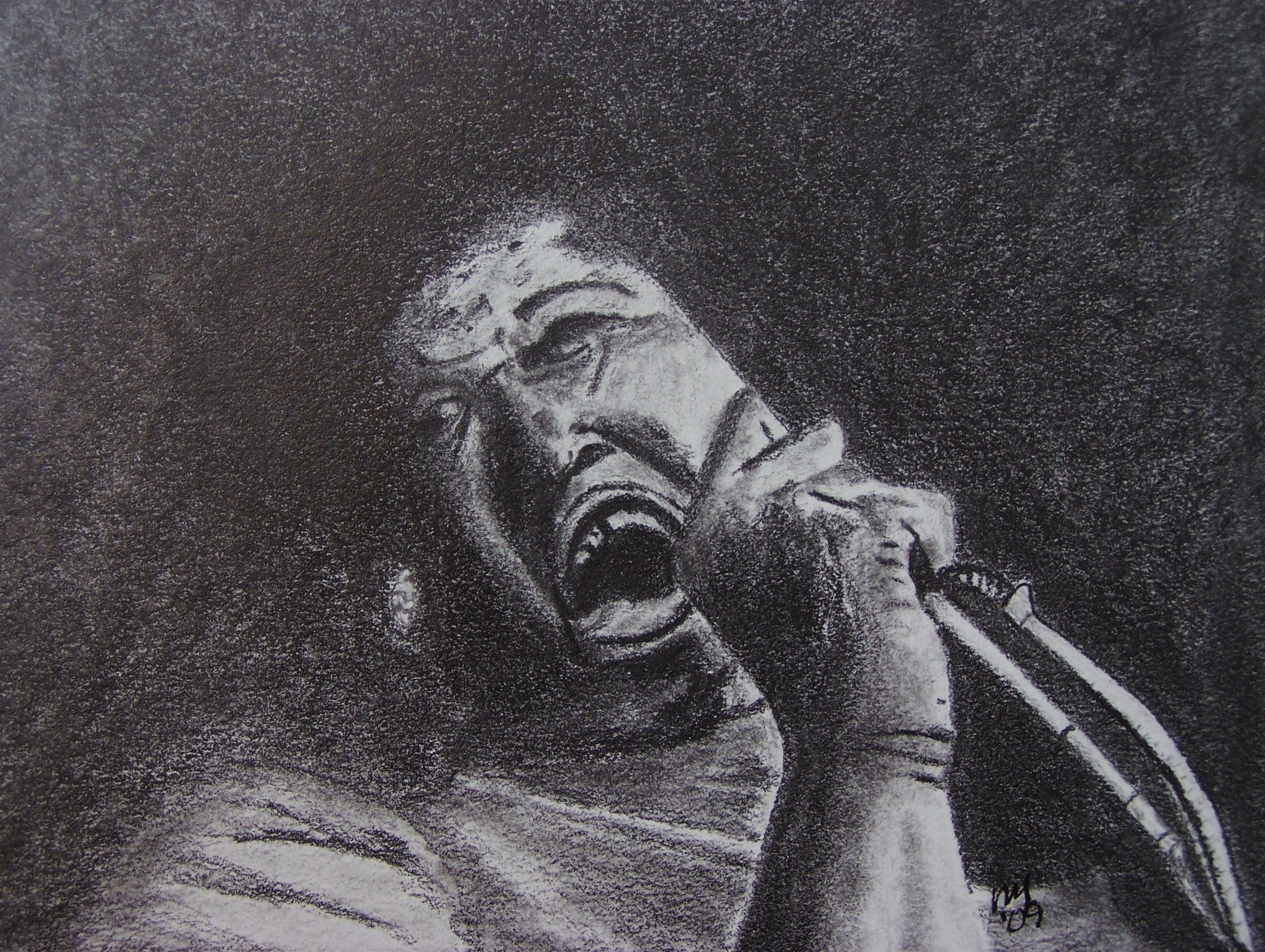
BigMamaTwoWillie Mae “Big Mama Thornton” by Nick Young

A couple of weeks ago when I was luxuriating in vast open freedom of spring break, the musician Howard Dlugasch and I sat at the bar at the newly opened Jack of Cups Saloon (nee Brew Pub) on Folly discussing the difficulties local musicians face in performing original compositions at bar gigs. “No,” he said, “They don’t want to hear originals. They all want to hear covers. They all want to hear Journey.”

Howard Dlugasch

Howard Dlugasch

Howard’s lament got me thinking about covers themselves, and I began cataloging what I consider the greatest covers of all time, a Herculean task if you stop to think about it.  I immediately jettisoned jazz, decided to limit my purview to rock and folk. After racking my brain, I decided to limit my list to five, and certainly many will disagree with the following choices.

Before I announce my top five, though, I ought to provide the criteria I used in the construction of this pantheon.

1) The original song had to be significant in both its music and content.  By content I mean both the degree of significance of the lyrics’ poetic purpose and the poetic quality of the lyrics themselves.  Alas, this criterion eliminates Hendrix’s great cover of “Wild Thing.”

2)  The cover of the song had to make the song, as Ezra Pound would say, new.

3) The musicianship had to be first class.

Rather than attempting to rank the covers from “grooviest” to least “groovy,”¹ I’ve copped out by presenting the 5 Greatest Covers of all time in chronological order from oldest cover to most recent.

¹I retrieved these vintage terms from the Teen Beat files located in the adolescent wing of my memory museum.

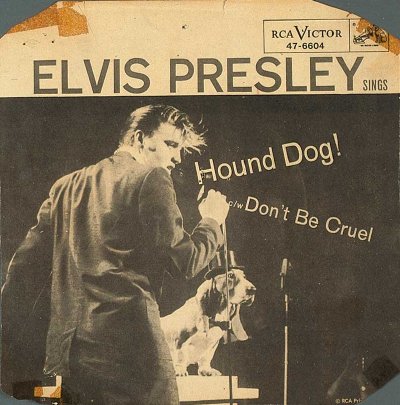
  • Elvis Presley’s cover of Big Mama Thornton’s recording of Jerry Leiber and Mike Stoller’s “Hound Dog”  Thornton’s 1953 recording is killer, backed by badass bass and drumming and some imitative barking.  Hit the arrow for a 20 secondish listen:

elvis-presley-songs-hound-dog

Before Presley, others had recorded the song, and some critics claim that Presley was actually covering a Bob Wills cover or a Freddie Bell and the Bellboys cover. Nevertheless, Presley was aware of and liked the Thornton original, and so I contend he’s covering the original, not a covering a cover.  At any rate, Elvis and his producer Steve Sholes have twanged the tune to rockabilly with some aggressive drum rolling.

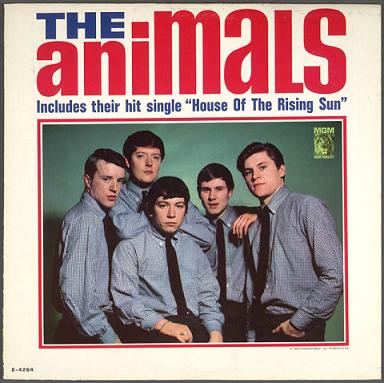
  • Next comes the Animals cover of the traditional folk song “Rising Sun Blues,” a song whose roots go to 18th Century England and a popular genre called “the Unfortunate Rake.” Immigrants  transported the song across the Atlantic and transplanted the setting to New Orleans.  Some contend the song’s narrator is a woman turned whore after being abandoned by a rake, which is the scenario Dylan employs in his cover, a recording that precedes the Animals’. The earliest recorded version is by Clarence “Tom” Ashley in 1934, which tells the tale from a male perspective.  Here’s a snippet from an early ’60’s version by Ashley and the great Doc Watson.  Note the featured lyrics are much different from the Animals version.

 the_animals

Ashley/Watson:  

The Animals:

Electric guitarist Hilton Valentine’s minor key arpeggio and Alan Price’s organ transform the song into what the critic Dave Marsh called “the first rock folk hit.”

  • Jimi Hendrix’s 1968 recording of Bob Dylan’s 1967 release “All Along the Watchtower.”

jimi-hendrix

Dylan:

Hendrix: 

Now, that’s what I call making it new.

  • The Doors 1970 live version of Bo Diddley’s “Who Do You Love”  This selection is perhaps the most controversial.  However, I’m going with it.  Listen.

images

Bo Diddley:

The Doors: 

  • Also, perhaps, controversial, I rank Patti Smith’s 2007 cover of Nirvana’s 1991 “Smells like Teen Spirit” in the top five.  Here Smith substitutes banjos and fiddles for electric guitars and replaces Cobain’s solo with a poem that elevates the song from an anthem of teen angst to some sort of post apocalyptic nightmare.

6a0120a7b5f86a970b015437e241f9970c-800wi

Nirvana:  

Patti Smith:  

Well, there you go.  Would love to hear some comments.  Obviously, I also stayed away from soul music because rating covers there would be almost as hard as jazz.  Also, I’ve dissed Janis, whose cover of “Piece of My Heart” should probably bump Morrison and Smith off this list.