That Way, Down Highway 61

Bug-Splattered Windshield

When I was a child, before the completion of I-26, there were two routes that led from Summerville to Charleston, and the two couldn’t have been more different in character. The more pleasant passage my parents called “the River Road,” Highway 61, a tree tunnel of moss-draped oaks running parallel to the Ashley River and past the antebellum plantations of Middleton, Magnolia, and Drayton Hall, which had become tourist attractions.

The River Road

My parents referred to the other route, Highway 52, as the “Dual Lane” because it featured four lanes divided by a wide grassy median. It took you past the Navy Base through what we called the Charleston Neck, a narrow passage between the Cooper and Ashley Rivers, a forlorn industrial wasteland where fertilizer plants spewed thick orange smog and produced insufferable acrid odors that could make a six-year-old sick to his stomach.

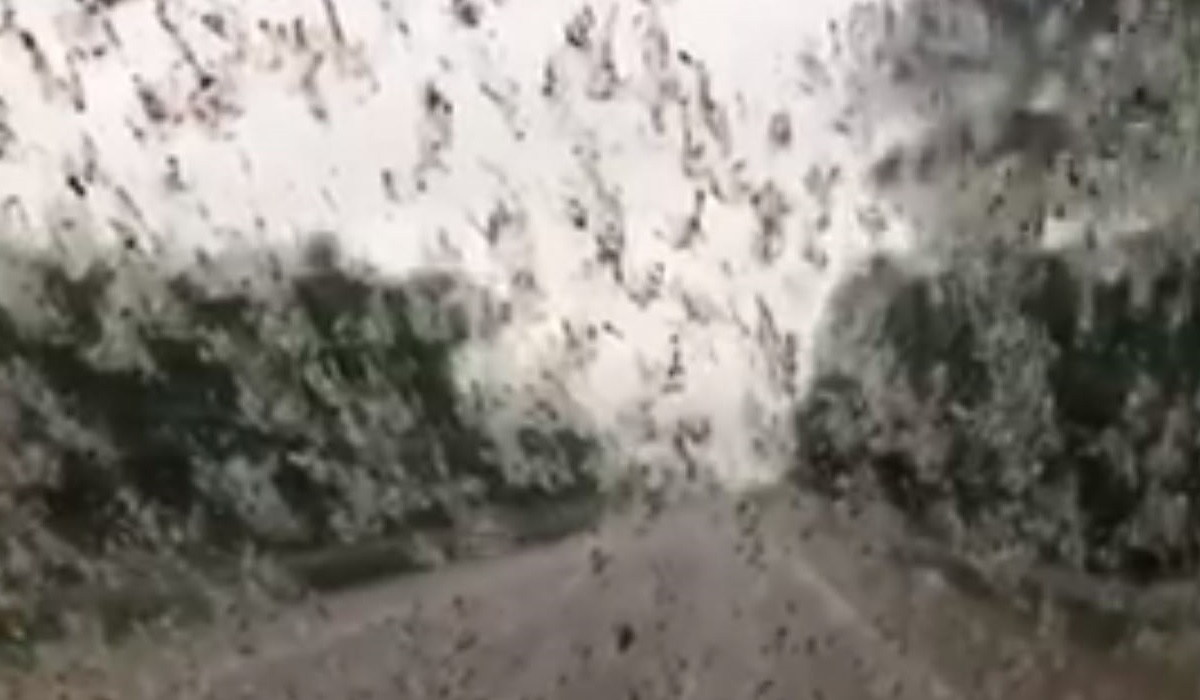
If you were in a hurry, it made more sense to take Highway 52, which was faster and much safer, especially at night. I would hate to hazard a guess as to how many people lost their lives veering off 61 into one the majestic oaks that stood ever so close to the shoulder. Also, if you took the route at night, insects bombarded the windshield in non-stop splattering, making a mess, obscuring visibility. Of course, in those days, you couldn’t press a button to spray liquid and engage wipers.  

Highway 52 featured a large, old, dilapidated house that my parents mistakenly thought was the Six Mile House, a notorious inn run by John and Lavinia Fisher.[1] Lavinia, who along with her husband John, was hanged 18 February 1820, became known as “the first female serial killer in the United States,” an epithet that doesn’t really trip off the tongue the way epithets should.[2] There was also a rumor that the skeleton at the Old Charleston Museum belonged to Lavinia, who had responded to her husband’s pleas that she make peace with the Lord with these memorable last words: “Cease! I will have none of it. Save your words for others that want them. But if you have a message you want sent to Hell, give it to me; I’ll carry it.”

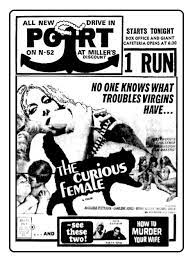
Also, the Dual Lane had drive-in movies whose screens were visible at night.  Later, when I myself was driving, a triple X movie playing at the Port or North 52 could itself cause a traffic mishap.
Nevertheless, I preferred the River Road because my parents would sometimes sing duets when we took that route, and never did when we travelled the Dual Lane. Here’s one of their favorites:

I know a ditty nutty as a fruitcake
Goofy as a goon and silly as a loon
Some call it pretty, others call it crazy
But they all sing this tune:

Mairzy doats and dozy doats and liddle lamzy divey
A kiddley divey too, wouldn’t you?
Yes! Mairzy doats and dozy doats and liddle lamzy divey
A kiddley divey too, wouldn’t you?

If the words sound queer and funny to your ear, a little bit jumbled and jivey
Sing “Mares eat oats and does eat oats and little lambs eat ivy.”

Oh! Mairzy doats and dozy doats and liddle lamzy divey
A kiddley divey too, wouldn’t you-oo?

Maybe the smog or the faster traffic of the Dual Lane dissuaded them from singing. It would have been nice to own a car with a radio – or air-conditioning for that matter – but we didn’t until my friend, the late Gordon Wilson, totaled my parents’ Ford Falcon in the spring of 1971.

How did he total the car? We hit a mule that had escaped from Middleton Plantation right there on Highway 61 about ten miles north of Summerville. The mule didn’t make it, but we did, which is surprising given the Falcon didn’t have seatbelts.

Because my butt was sore from a penicillin shot, I let Gordon drive, a decision that didn’t delight my sometime-singing parents.


[1]The Six Mile House was burned to the ground in 1820.

[2] C.f., “the Butcher of Baghdad,” “the Teflon Don,” etc.

Enjoying Genocide at the Drive-in

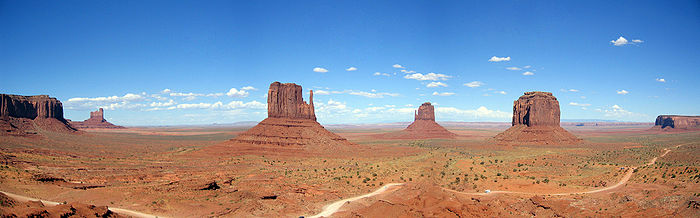
Apr_SheWoreAYellowRibbonLast night TMC broadcast the John Ford classic She Wore a Yellow Ribbon. This early Technicolor production relies heavily on the majestic vistas of Monument Valley located on the Arizona-Utah border. You might even go so far as to say the setting steals the show, more like the scenery chewing up the actors instead of vice versa.

The film came out in 1949, right about the time television started to invade postwar households. Ford and his cinematographer Winton Hoch, who won an Academy Award for the picture, make heavy use of long shots that exploit the incredible russet beauty of the landscape but also render the characters antlike in the grand scheme of it all. Seeing it on TV barely hacks it, even now with our current technology. Imagine what would be lost watching it back in the day on a black-and-white 16-inch screen Zenith.

1959-Zenith-16C20-17in

I remember first seeing the movie in the late 50’s with my parents, either at the North 52 or Flamingo Drive-in Theater. Until last night, all I recalled of the film was its invasive theme song and John Wayne’s character having conversations with his deceased wife at her graveside.

Those were the halcyon days before education when you could blithely curse the Arapaho, Cheyenne, and Kiawah for having the temerity to wander off their reservations. You could innocently celebrate the replication of their genocide as arrows whizzed, rifles thundered, and stuntmen tumbled from galloping horses.

large-3Going to Drive-ins offered working class families like mine a cheap night’s worth of entertainment. Kids under 12 got in free. My brother David and I would dress in our pajamas, Mama would pop popcorn at home, and we’d bring along our own Coca-Colas. Not only did we save money, but also my parents could chain smoke, which, along with the burning mosquito repellent, helped to diminish the chances of our contracting Malaria. Usually, David and I would conk out, so Mama and Daddy could engage in adult conversations without forking out money to a babysitter.

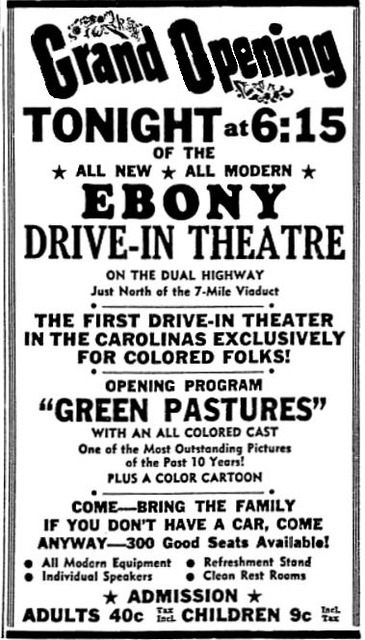
large-4The Flamingo had been originally called The Ebony and catered to, as the ad says, “Colored Folks,” but it only lasted less than a year. Its next incarnation was as the Bonny Drive-In, which was actually integrated, but this social experiment ended in less than a month. It reopened finally as the Flamingo and had by far the coolest sign, a neon-tubed flamingo that lit up in progressive sections over and over again on the back of the screen facing the highway.

West Ashley also had its drive-ins, the Magnolia, located at 1500 Savannah Highway, the present location of Rick Hendricks Chevrolet. There were others as well, the St Andrews Drive-In, also on Savannah Highway, the 4-Mile Drive-In on North Meeting Street Road, but I don’t remember them, nor do I recall the Sea-Breeze Drive-In on Coleman Boulevard in Mt. Pleasant. (You can read all about those lost treasures at this site, Special Feature: Charleston Area Drive-Ins).

I do, however, remember the Gateway, where we went as teenagers, not so much to watch movies but to risk our lives making out in back seats, because as anyone knows who has ever seen a B-horror flick at a Drive-in movie, teenagers necking in cars are the number one target of monsters, whether they be zombies, werewolves, or radioactive mutated reptiles.

Later the Gateway specialized in porn films, which no doubt led to more than one auto crash as drivers tooling across overpasses caught glimpses of the screen as they exited onto 52, which in those days was called “the Dual-Lane.”

Rumor has it that some of my high school acquaintances sneaked into area drive-ins by getting into surf bags and strapping themselves on surf racks on the top of VW buses. Of course, it wasn’t Coca-Colas they were smuggling inside.

I can’t say I pine for those long gone days  — in many ways they sucked . However,  I wouldn’t mind catching another John Ford film at a drive-in, though like last night, I’d be pulling for the Indians.

700px-Monumentvalley