James, Huck, and James McBride: A Review of Percival Everett’s “James”

After reading Dwight Garner’s laudatory review of Percival Everett’s James, I was eager to check it out, especially since I’m a huge fan of Huckleberry Finn

Here’s a snippet of Garner’s paean:

Percival Everett’s majestic new novel, James, goes several steps further. Everett flips the perspective on the events in Huckleberry Finn. He gives us the story as a coolly electric first-person narrative in the voice of Jim, the novel’s enslaved runaway. The pair’s adventures on the raft as it twisted down the Mississippi River were largely, from Huck’s perspective, larks. From Jim’s — excuse me, James’s — point of view, nearly every second is deadly serious. We recall that Jim told Huck, in Twain’s novel, that he was quite done with “adventures.”

Garner goes on to say, “This s Everett’s most thrilling novel, but also his most soulful.”

Alas, when reading James, I was never able to suspend my disbelief, to lose myself in the flow of action and forget that the narrative I was reading was a fictive construction. In his retelling of Huckleberry Finn from the perspective of Jim, Everett creates the conceit that the antebellum argot of slaves, the “Else’n they takes you to the post and whips ya[s]” is a linguistic ruse to appease the white population by making them feel superior. The narrator James (aka Jim) speaks (and thinks) in English so standard that he uses “one” instead of “you.”  In short, for me the novel is a contrivance; it’s created in a way that seems artificial and unrealistic.

Everett’s relating the events from James’ perspective in easy-to-decipher prose makes a lot of practical sense; however, the regionless diction of the retelling of Jim and Huck’s escape robs Jim of a breathing individual’s voice –– he could be from 21st Century Dayton, Ohio –– there are no quirks in his phraseology, no flashes of individuality, few regional linguistic markers, which divorces him from time and place and therefore relegates him into the status of a character in a novel rather than a person whom we believe is real. 

That said, Everett does an outstanding job of effectively depicting the horrors of slavery, the never-ending degradation, the perennial fear of having your family disbanded, the horrors of being horsewhipped, the constant verbal abuse. And the novel, especially after James hooks up with a minstrel show, becomes a real page turner, a sort of thriller with cliffhanging chapter endings as he and Huck manage a series of hairbreadth escapes a la The Perils of Pauline. Everett also creates a rich array of colorful characters that you care enough to keep reading, though you might grow a bit weary of the episodic nature of the plot bequeathed by Clemons. 

I couldn’t help unfavorably comparing James to James McBride’s The Good Lord Bird, which is also narrated by a slave, Little Onion, who is “liberated” by the historical abolitionist John Brown.  

Here’s Little Onion describing his liberator:

The old face, crinkled and dented with canals running every which way, pushed and shoved up against itself for a while, till a big old smile busted out from beneath ’em all, and his grey eyes fairly glowed. It was the first time I ever saw him smile free. A true smile. It was like looking at the face of God. And I knowed then, for the first time, that him being the person to lead the colored to freedom weren’t no lunacy. It was something he knowed true inside him. I saw it clear for the first time. I knowed then, too, that he knowed what I was – from the very first.

This is a person talking, not the idea of a person talking, which creates a depth of character that James lacks.

Compare McBride’s description with this: 

I was afraid of the men, but I was considerably more afraid of the dogs I’d heard coming our way. I could only imagine that they were after me, and so I was left confused by the presence of these two white men in our boat. Adding to the absurdity was the fact that they were opposite in nearly every way. The older man was very tall and gaunt, while the younger was nearly as short as Huck and fat. The younger had a head full of dark hair. The older was completely bald.

That’s not what I would call “cooly electric first person narrative.” In fact, when I taught composition, I would not allow my students to use the phrase “was the fact that.”

But, hey, look, as I’ve said elsewhere and often, writing a novel is a very difficult undertaking, and James is well worth reading, even though it falls short of my censorious standards for the high praise it has received.  It’s an audacious effort to reconfigure the novel that Hemingway credited with being the root of “all American literature.”  Also, the idea of seeing Huck’s world from Jim’s perspective is existentially cool, underscoring Hamlet’s observation that “There is nothing either good or bad but thinking makes it so.” 

I’d give it a B+ overall.

Election Fraud Madness in Poe and Way Beyond

As I was joy scrolling through my Twitter feed this morning, basking in what I fear will be short-lived solace, I ran across this tweet from Lapham’s Quarterly regarding the death of Edgar Allan Poe, my first literary hero.

https://www.laphamsquarterly.org/democracy

Originally tweeted by Lapham’s Quarterly (@laphamsquart) on January 5, 2021.

I’ve written elsewhere about my discovery of Poe when I was a small boy trespassing in a sequestered library. A few years later, Mrs. Morgan, my seventh-grade teacher, read out loud “The Tell Tale Heart. ” As she mimicked the madman narrator’s voice, she began pounding her palm on her desk to approximate the sound of the beating heart the narrator imagines he hears beneath the floorboard where he has deposited the remains of his murder victim. It was out-of-character for Mrs. Morgan to read a complete story out loud, but it certainly held our attention.

The first paragraph of that story, which as a child astonished[1] me, now produces a wry smile: 

True! –nervous –very, very dreadfully nervous I had been and am; but why will you say that I am mad? The disease had sharpened my senses –not destroyed –not dulled them. Above all was the sense of hearing acute. I heard all things in the heaven and in the earth. I heard many things in hell. How, then, am I mad? Hearken! and observe how healthily –how calmly I can tell you the whole story.

Throughout the tale Poe cultivates dramatic irony through the raving narrator’s insistence that he’s perfectly sane, demonstrated in the special care he took in suffocating the old man (whom he claims he loved) and the rational steps he took in dealing with the corpse.

If still you think me mad, you will think so no longer when I describe the wise precautions I took for the concealment of the body. The night waned, and I worked hastily, but in silence. First of all I dismembered the corpse. I cut off the head and the arms and the legs. I then took up three planks from the flooring of the chamber, and deposited all between the scantlings.

Rereading it just now for the first time in a half-century produced a chuckle, not, I suspect, the effect Poe was seeking. 

Anyway, I became a Poe aficionado, devouring all of his short stories and most of his poems, reveling in the dead weight of distracting details that characterize his tales, his Latinate diction and erudite references, the creepy Freudian obsessions of tubercular lovers and diabolical murderers. 

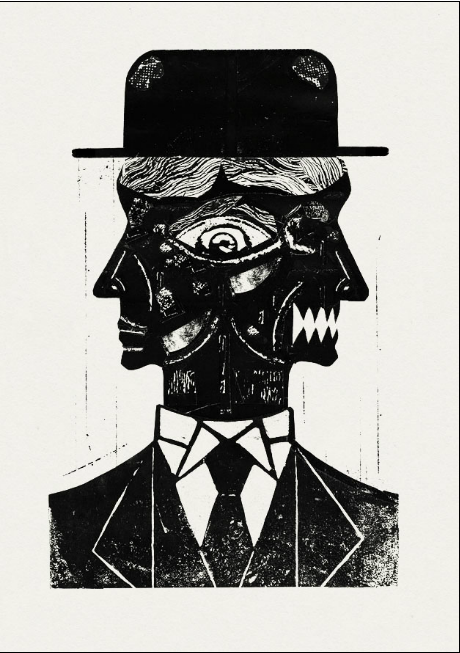
In fact, when I began teaching Poe, I used his work to introduce students to psychoanalytical criticism, demonstrating how “The Fall of the House of Usher” could be read as an allegory of Freudian repression as Frederick Usher buries his sister (hints of incest) in the crypt beneath his house only to have her break from her casket with superhuman strength, crashing forth to clasp him in her deathly embrace. Also, we analyzed Poe’s story “William Wilson” through the lens of Jungian criticism, with the mysterious other William Wilson, the narrator’s nemesis, representing the doppelgänger archetype, a sort of superego that unconsciously undermines the narrator’s attempts at perpetrating crimes. In doing so, we looked at his biography to see how life events creep their way into his fictions.

illustration Of William Wilson by Ben Jones

Alas, poor Poe, the victim of “coopering,” an unwitting pawn of election fraud in those halcyon days when you didn’t need doctored software or mail-in ballots or dead Venezuelan politicians to steal an election. You could just ply a toper with demon rum or laudanum, change his clothes, drag him from polling place to polling place, a sad end to a consistently sad existence: an orphan whose father flew the coop before his son’s mother became consumptive and died; an orphan adopted by a cruel – in this case –  stepfather who tried to mold the sensitive child into someone he wasn’t; an orphan whose child bride cousin, like his mother, also wasted away with tuberculosis; an orphan who was his own worst enemy, whose panning of an anthology edited by a friend led to a literary feud that resulted in the former friend’s writing a scurrilous biography that depicted Poe as an opium addled madman, a legacy that still lives on.

Meanwhile, 170 years later, we still have our madmen and women, confabulating about pedophiliac Democratic cabals devoted to Satan worship, evangelical in their quest to disseminate their fever dreams to the masses.

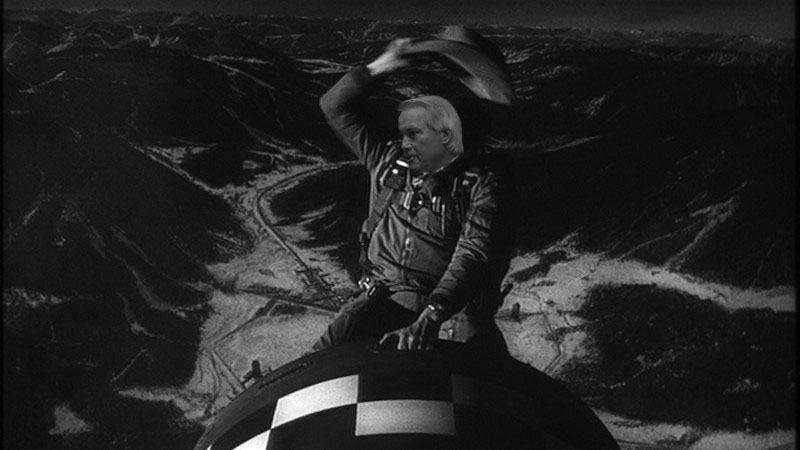
And today’s the day when what has been a pro forma constitutional rite will be transformed into a circus while Proud Boys and Lizard Squads and other fringe groups take to the streets, a slightly more sophisticated attempt at undermining an election than dragging an impoverished writer through the alleyways of Baltimore. Today’s madcap spectacle might make an entertaining action-packed novel or movie – or perhaps a cynical dark comedy like Dr. Strangelove.

This brand of madness and mayhem, however, doesn’t suit Poe’s talents as a storyteller. I’m thinking Dickens or Twain would be better able to do justice to the likes of Sidney Powell, Lin Wood, and Rudy Giuliani, or maybe a movie directed by Robert Altman or Quentin Tarantino might be the way to go..


Lin Wood Yippee-Ti-Oh

Anyway, fun ahoy. The let the games begin.


[1] I love the sound of astonished, which originally meant to turn to stone, an ear-pleasing blend of an Anglo-Saxon prefix, root, and suffix.

Quotes from Curmudgeons

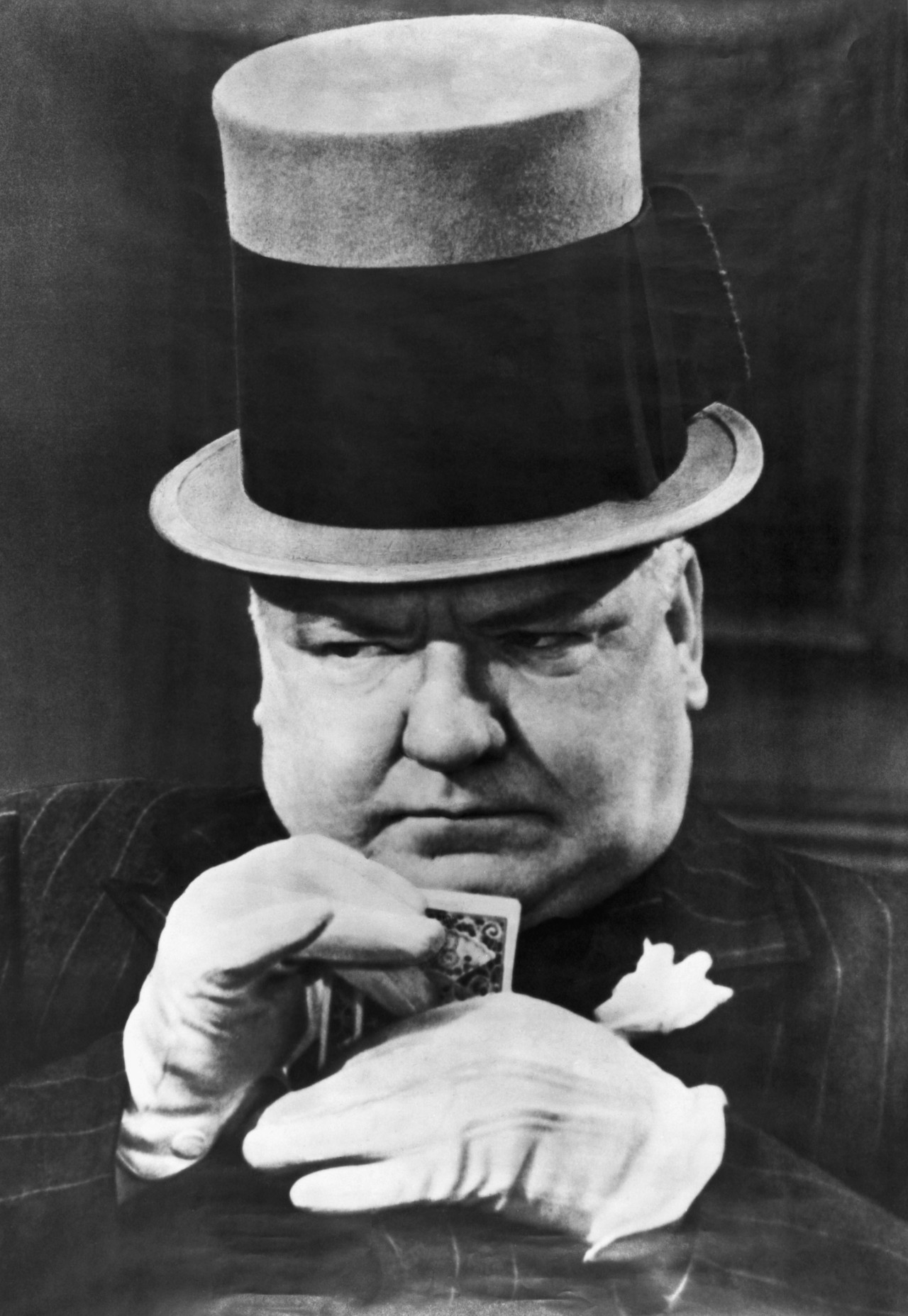
Original Caption: W.C. Fields in typical poker face pose. Undated photograph.

Original Caption: W.C. Fields in typical poker face pose. Undated photograph.

No doubt most curmudgeons begin their careers as a high school cynics, as smart-mouthed skeptics equipped with highly sensitive antennae tuned to hypocrisy. More often male than female, these snarling scoffers tend to mock propagandists dedicated to transforming them into productive contributors to society.

Burned as idealistic children who naively believed the blandishments of their elders, they eventually begin to realize that life’s rewards and punishments can be ridiculously unjust. For example, even though Bobby copies his homework and bullies smaller kids, Santa showers him with $800 skateboards and brand name clothing; meanwhile, the rule-obeying future curmudgeon treats others kindly but ends up with a can of Play Dough and a Wal-Mart fleece.

“Yeah right,” becomes the sardonic rejoinder to uplifting quotes in the morning announcements.

But let’s face it: constant negativity is not one of Dale Carnegie’s strategies in the pursuit of winning friends and influencing people. Although the most talented high school cynics can be fairly entertaining, their shtick can get really, really old after a while.

Eventually, though, with a little luck – a good marriage helps — these young cynics can marinate over the decades into well-seasoned curmudgeons who cultivate a sense of absurdity’s humorous possibilities, rather than becoming outraged at the human tragicomedy. Life becomes not a “tale/ Told by an idiot, full of sound and fury/Signifying nothing” but a “spiritual pickle preserving the body from decay.”

So on this Thanksgiving Eve, I choose not to mock my Facebook brethren for typing “adorable” beneath photos of non-photogenic babies; I choose not to mock sentimentalists for cajoling me to like and share cloying idiocies like “if you ‘heart’ your mother click like and share.”

No, instead, I’ll share, these inspiring quotes from some of my favorite curmudgeons for whom I’m especially thankful. They, by my book, truly have made the world a better place.

Jonathan Swift: “Last week I saw a woman flayed, and you will hardly believe how much it altered her person for the worse.”

Mark Twain: “Go to Heaven for the climate, Hell for the company.”

Amboise Bierce: “OBLIVION, n. Fame’s eternal dumping ground. Cold storage for high hopes. A dormitory without an alarm clock.”

Oscar Wilde: “A gentleman is one who never hurts anyone’s feelings unintentionally.”

HL Mencken: “Democracy is a pathetic belief in the collective wisdom of individual ignorance.”

Dorothy Parker: “If all the girls who attended the Yale prom were laid end to end, I wouldn’t be a bit surprised.”

WC Fields: “Start every day off with a smile and get it over with.”

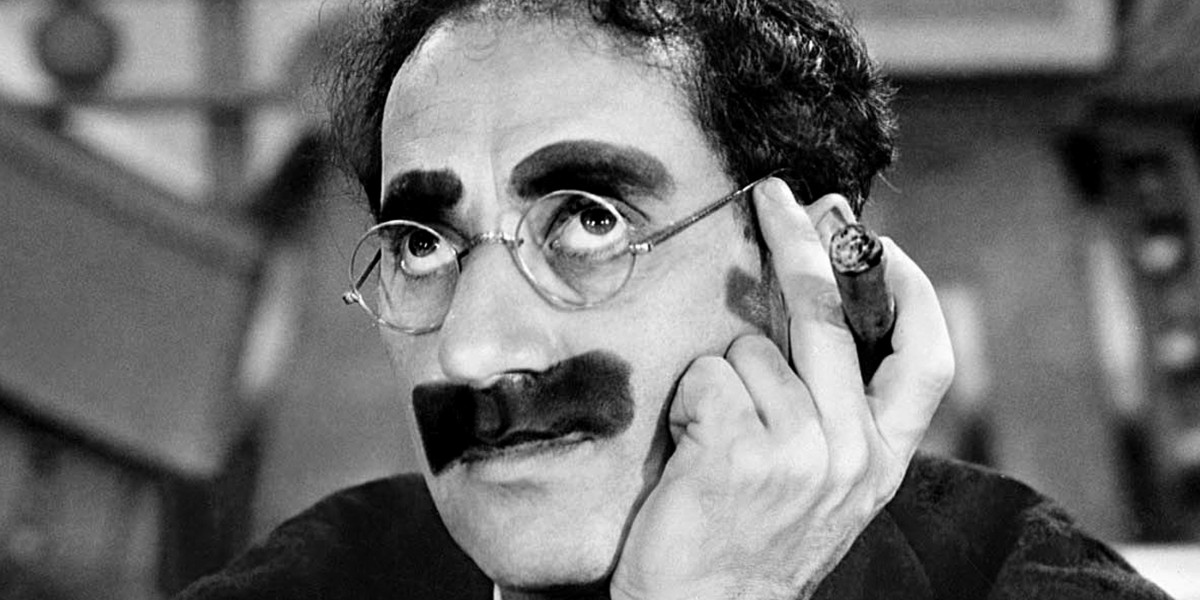
Groucho-Marx-Duck-Soup-e1434598275998Groucho Marx: “Military justice is to justice what military music is to music.”

Lenny Bruce: “I won’t say ours was a tough school, but we had our own coroner. We used to write essays like: What I’m going to be if I grow up.”

Kurt Vonnegut: “True terror is to wake up one morning and discover that your high school class is running the country.”

But when it all comes down to it:

TC Boyle: “I was in the water for six hours. Shivering, praying, scared full of adrenaline. I kept making deals with the Fates, with God, Neptune, whoever, thinking I’d trade places with anybody anywhere – lepers, untouchables, political prisoners, Idi Amin’s wives – anything, so long as I’d be alive.”

Be thankful!