Hurricane Hugo Anniversary Ramblings

Today, 21 September 2024, happens to be the autumnal equinox, and here on Folly Beach, the Edge of America, the weather is perfect, not a cloud overhead, the temperature Edenic, downright Elysian — no flies at Chico Feo, no mosquito swatting needed on my walk home from the bar. 

However, today also happens to be the 35th anniversary of Hurricane Hugo. As you can see above, Hugo was, “a mighty, mighty storm.”[1] Ask any Lowcountry resident who opted not to evacuate, and you’re likely to hear tales ranging from extreme discomfiture to abject terror.

Our family – Judy Birdsong, sons Harrison (5) and Ned (3), springer spaniels Jack and Sally, and I-and-I lived on the Isle of Palms, a barrier island that lay in the crosshairs of a cone of inevitability – in other words, Charleston was going to get clobbered by a monster category 4 cyclone.

On Wednesday evening before Thursday’s late night landfall, before we drove to my parents’ house in Summerville to drop off the dogs and spend the night before fleeing further inland to Columbia, I drove downtown to Charleston to hear Allan Gurganus read from his just published novel The Oldest Living Confederate Widow Tells All. I bought a copy, had Allan inscribe it, then drove back home and nailed plywood over sliding glass doors.

As it turned out, the novel, which deals with Reconstruction, offered a parallel to what we were about to endure. My father-in-law Ralph Birdsong compared the post-Hugo Isle of Palms and Sullivans Island to the bombed out towns of Europe he witnessed in World War II. 

Sullivan’s Island 22 September 1989

Reconstruction indeed.

We left Summerville first thing Thursday morning and arrived at my friend’s Jake’s house around noon where we watched the storm swirl closer and closer to the coast on a television screen. That evening, we had dinner at a restaurant in Five Points. We had been lately listening to Lyle Lovett’s most recently released album, which featured a song called “Here I Am.” 

Here’s are the lyrics from the last verse, which is spoken rather than sung:

Look, I understand too

little too late.

I realize there are things

you say and do

you can never take back.

But what would you be if

you didn’t really try?

You have to try.

So after a lot of thought

I’s like to reconsider.

Please if it’s not too late,

Make it a cheeseburger.

When it was time to order our meal, I asked three-year-old Ned what he would like to eat, and he said in a tiny little Lyle Lovett voice, “Please make it a cheeseburger.”

That almost made the entire ordeal worth it.

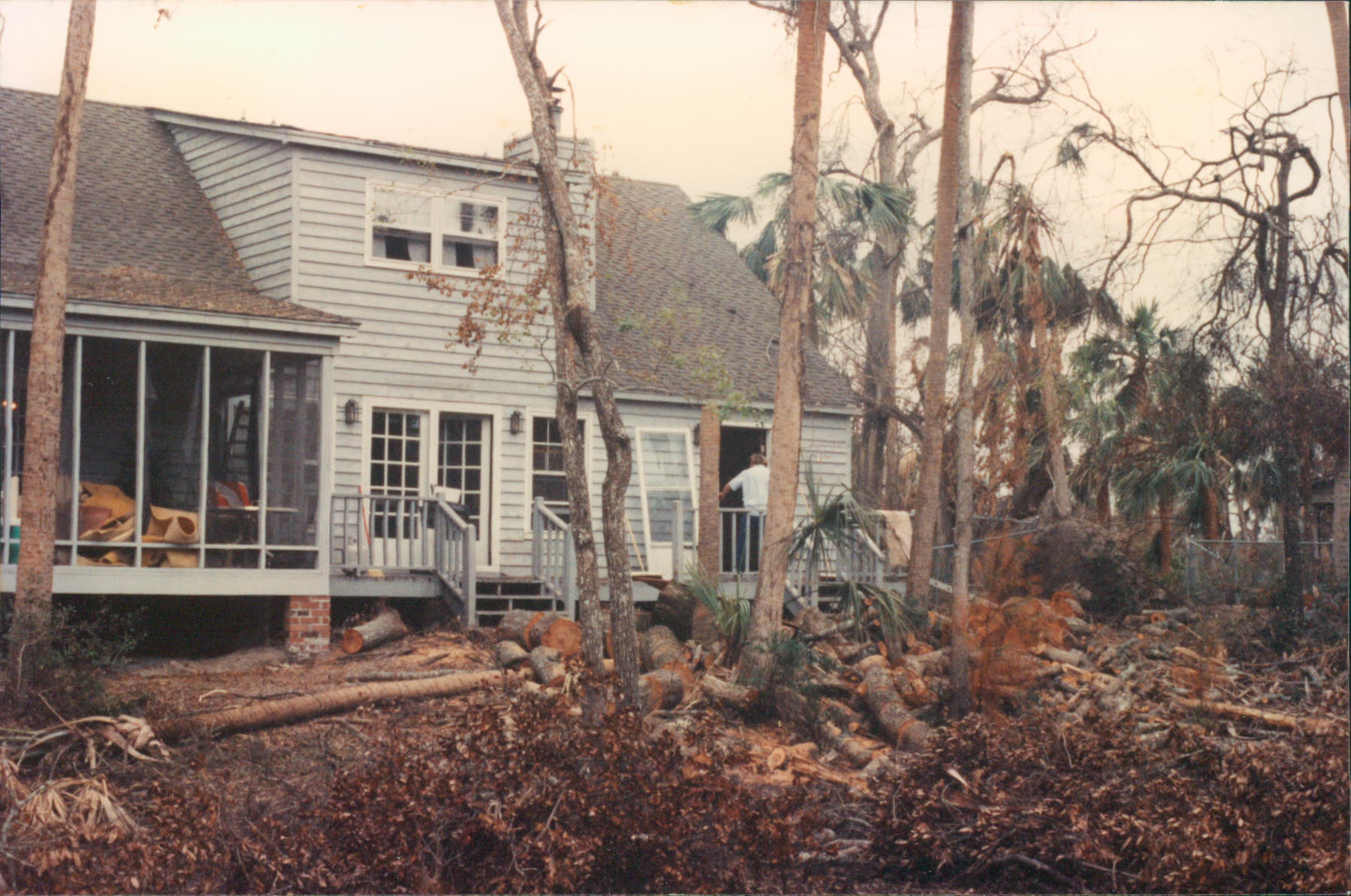
Almost, but nor entirely. Because the only bridge to the islands was destroyed, we became homeless for 17 long days, moving from family to family, devoured by anxiety. However, once we finally made it to the island via a ferry and walked from the marina to our home, he were delighted to see it standing in one piece. The ground floor had received about two inches of water, a tree had smashed through a back door into our bedroom, the floors were warped, so we had tons of work to perform, but we could sleep upstairs.
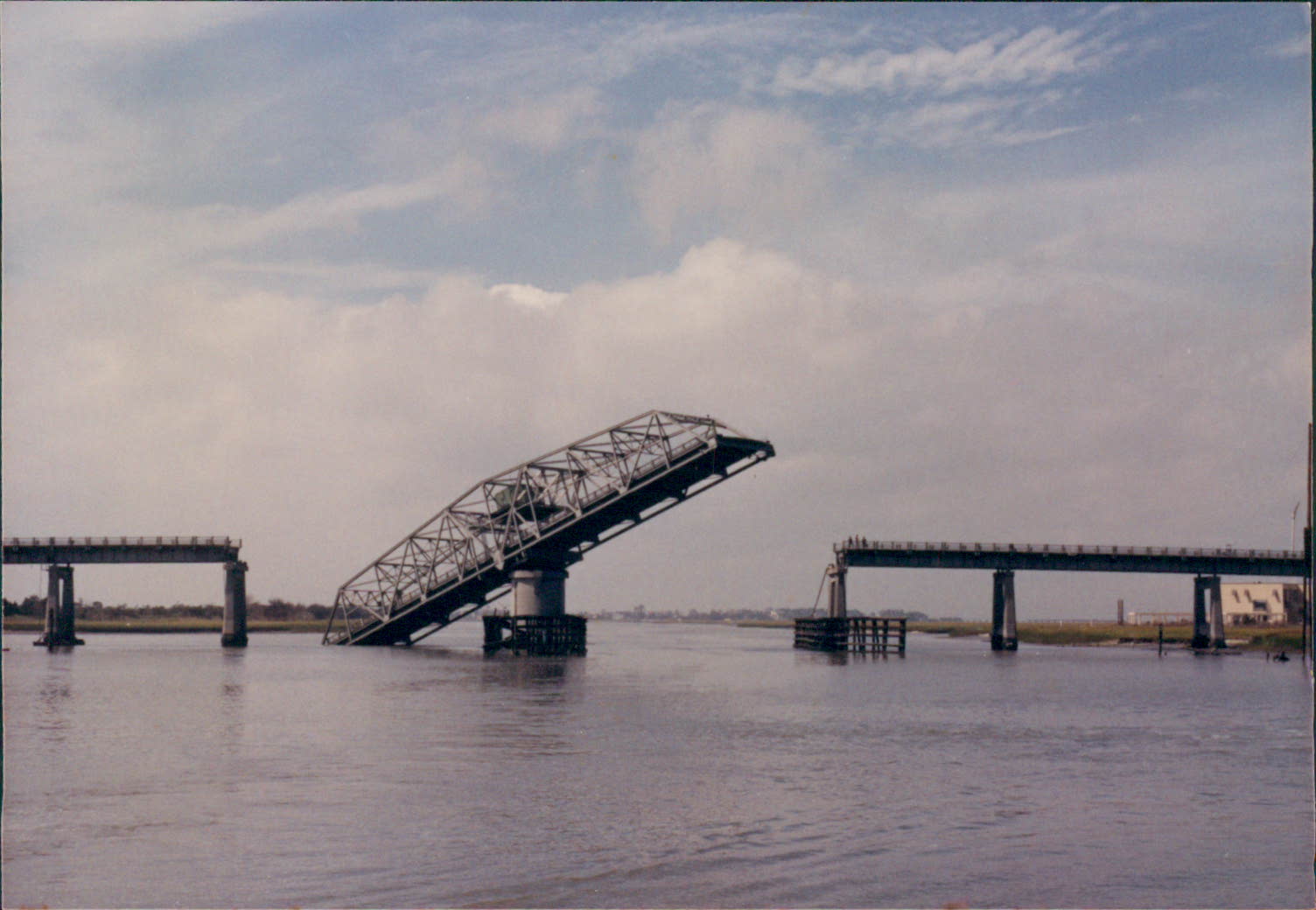
Sullivan’s Island Bridge (photo credit Judy Birdsong)

Ever it be so pounded, there’s no place like home. 

[1] I copped that quote from the Black spiritual about the Galveston hurricane of 1900.
The Briefest of Tributes to John Hiatt

I just read Wikipedia’s account of John Hiatt’s career, a disjointed narrative that comes off more like a collection of bullet points than it does an essay. However, I did learn something that surprised me. Because my first Hiatt record was Slug Line, I always assumed that he started as a new wave musician, but as it turns out, Hiatt moved from the rock/country rock of his first two albums, Hangin’ Around the Observatory and Overcoats (1974), to the punkish, ska-ish Slug Line (1979) and, finally, then back to rock/country rock. When he ran away to Nashville after dropping out of school, Hiatt worked for Tree Publishing earning $25 a week as a songwriter. Although Hangin’ Round the Observatory wasn’t a commercial success, a Three Dog Night cover of “Sure As I’m Sitting Here” hit #16 on Billboard.

In fact, it’s hard to find someone who hasn’t covered a Hiatt song. Dylan has, the Neville Brothers have, Springsteen has, even one of his boyhood heroes, Mitch Ryder has. Of course, Bonnie Raitt scored a big hit with “A Thing Called Love.”

Whatever the genre, Hiatt delivers solid melodies and clever lyrics, often in the form of narratives. Here’s a snippet from Slug Line’s “The Night That Kenny Died,” a tale of teen hypocrisy as high schoolers go all hooey when a classmate they disliked dies suddenly.


It was so touching all the girls that would not touch him
He drew their pictures in his books I used to watch him
And then he’d pick his nose
And wipe it on his clothes
But everybody cried
The night that Kenny died
Everybody cried
The night that Kenny died
Died on a motorcycle
We never understood
That he was holdin’ on tight
Through the middle of the night
Starin’ at a [?] one Mercury hood
It seemed so spooky that the nerd we all detested
Would die so gloriously and so unexpected
A wonderful guy God knows
They kept the casket closed
And everybody cried
The night that Kenny died
Everybody cried
The night that Kenny died
And everybody cried
The night that Kenny died
Everybody cried
The night that Kenny died

Perhaps his two best records are Bring the Family (1987) and Slow Turning (1988), recorded with Ry Cooder, Nick Lowe, and Jim Keltner.

Hiatt’s wit, I think, rivals Warren Zevon’s. In “Your Dad Did,” Note the sitar during the daughter’s prayer,  which she immediately undercuts with her coda.


Well, the day was long now, supper’s on
The thrill is gone
But something’s taking place
Yeah, the food is cold and your wife feels old
But all hands fold
As the two year old says grace
She says, “Help the starving children to get well
But let my brother’s hamster burn in hell.”
You love your wife and kids
Just like your dad did.

Check out this from “Perfectly Good Guitar.”

:

Well he threw one down form the top of the stairs
Beautiful women were standing everywhere
They all got wet when he smashed that thing
But off in the dark you could hear somebody sing
Oh it breaks my heart to see those stars
Smashing a perfectly good guitar
I don’t know who they think they are
Smashing a perfectly good guitar
It started back in 1963
His momma wouldn’t buy him
That new red harmony
He settled for a sunburt with a crack
But he’s still trying to break his momma’s back.


I finally got to see Mr. Hiatt live on his 2014 Terms of My Surrender Tour,[1] a great show but a melancholy one for me personally. My wife Judy had just been diagnosed with lymphoma, and it would be her last concert.

Although he didn’t play it at the show, this was Judy’s favorite (and you ought to check out the Johnny Adams cover).  Dig the lyrics.


[1] I had seen him with Lyle Lovett, Joe Ely, and the late Guy Clark but not by himself.