Probably my favorite and most oft-repeated personal anecdote is my half-hour ride to Folly Beach chauffeured by none other than that legendary folk hero and serial killing cut-up Donald “Pee Wee Gaskins,” nee Donald Parrot, AKA Junior Parrot.[1]
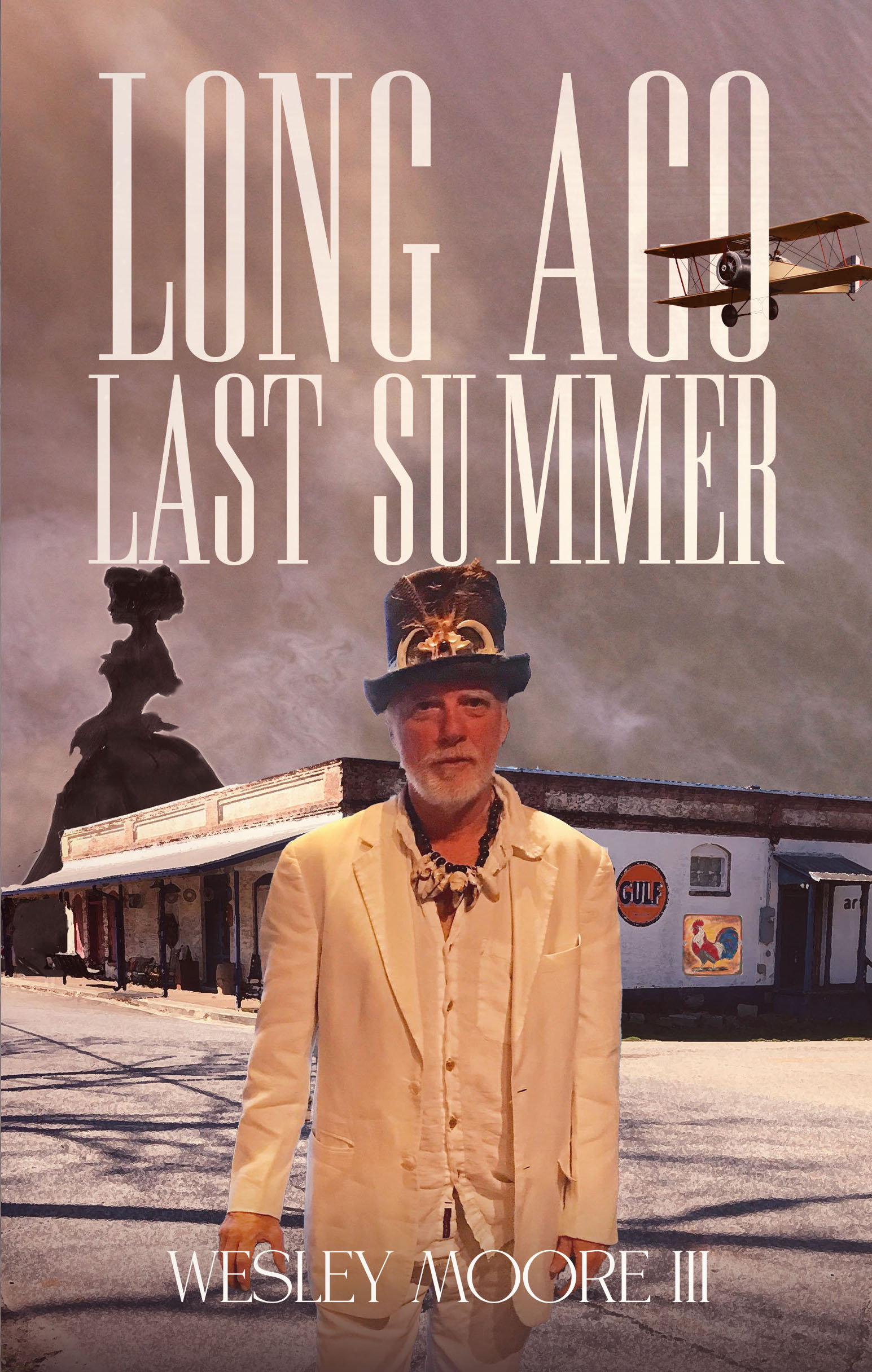
In fact, the Kirkus review of my memoir Long Ago Last Summer highlights the Pee Wee incident:
One of the standout pieces involves the author hitchhiking to Folly Beach as a teenager—he and his brother survived an encounter with someone who was likely the serial killer Donald “Pee Wee” Gaskins. Even though the hitchhiking story is only four pages long, it fits a lot of frightening intrigue into a short space; the reader not only learns who Gaskins was, but gets to see the monster in action, doing things like casually burning a boy with a cigarette. [2]
Of course, during that harrowing hitch-hiking experience, Pee Wee didn’t formally introduce himself or the beer-swilling, cigarette smoking ten-year-olds accompanying him, but twenty years later when I read his autobiography Final Truth, I put two-and-two together when he mentioned that he’d take nephews on beach excursions to Folly.
By the way, the memoir also boasts an original poem entitled “Pee Wee Gaskins Stopping at a Lake House on a Summer Evening.” Because of its macabre content and abject vulgarity, I dare not post it here in its entirety, but I will share its first stanza:
Whose corpse this is I ought to know
Cause I’m the one what killed it so.
I hope no one comes by here
To watch me in the lake it throw.
So you can imagine how delighted I was last week to receive unsolicited through the mail a pre-publication copy of Dick Harpootlian’s upcoming book Dig Me a Grave: The Inside Story of the Serial Killer Who Seduced the South.
I’ve not quite finished it, but when I do, I’ll post a review here. For now, I’ll just say it’s a real page turner written in noirish prose as Harpootlian, who prosecuted Pee Wee, weaves the narrative of Pee Wee’s life with his own. Exposure to cold blooded killers transforms Harpootlian from an underground newspaper publisher[3] into a prosecutor of murderers and from an anti-capital punishment advocate into a diehard (forgive the pun) proponent.
And as luck would have it, just last night I was privileged to hear my pal David Boatwright and his band Minimum Wage perform David’s song “Pee Wee Gaskins” at art reception at Redux Contemporary Art Center where Buff Ross is showing some of David’s murals that have lost their original homes in Charleston’s real estate shuffles.
The murals are so great. My favorite is a street scene in which Fredick Douglas is operating a Trolly Car that runs from White Point to the Neck.
Cool ass art is displayed throughout the building, which is located at 1054 King Street.
It’s not every day you see an ad for a James Brown inflatable sex machine sex toy.
Anyway, here’s a snippet of Minimum Wage performing “Pee Wee”Gaskins.” The iPhone video doesn’t do it justice.
[1] He’s also the namesake of an Indonesian punk rock band.
[2] It’s floundering at number 1,125,593 on the Amazon Best Sellers list, so why don’t you do a senior citizen on a fixed income a favor and order yourself one.
[3] The Osceola, which I read as an undergrad at USC
My former student and forever friend Alex Werrell has, as my mother used to say, “a way with words.” I discovered that talent when I taught him in an honors Brit Lit survey several years ago at Porter-Gaud School. When we were reading Chaucer’s Canterbury Prologue, Alex, an opera buff, turned me on Alessandro Moreschi, “the last castrato.” Chaucer hints that the Pardoner has been, as we callous pet owners say, “fixed.”
I explained to the horrified students that boys with beautiful voices were sometimes disencumbered of their testosterone-producing testicles to preserve the youthful timbre of their angelic voices, “a small price to pay for art’s sake,” I’d joke.
Playing Moreschi’s recording of “Ave Maria” became a tradition in my British Lit course. Forgive the cliche, but talons raking a blackboard would be a more pleasant sound. What a pleasure to watch the students squirm!
Alex ended up at Yale where he earned a BA and MA in English and became the mentee of the great literary critic Harold Bloom. After Yale, Alex remained in New Haven, published essays in Salon, and taught, first at the Hopkins School, and now at Taft.
After I heard Alex deliver a masterful eulogy for his grandfather, I selfishly thought that, hey, I could tap him for my memorial service, but fortunately, by having him introduce me at the book launch for Long Ago Last Summer, I was able to hear him sing my praises while among the quick.
Forgive my vainglory in posting Alex’s speech below, but once a jackass, forever, a jackass (me, not Alex).
After all, it’s not every day that you can applaud being called a “motherfucker.”
Take it away, Alex:
Bearing in mind my grandmother’s suggestion for any speech — all great orators should study Shakespeare, she said, and learn his most important lesson: “All’s Well That Ends” — I won’t catalogue all that Wesley Moore has written, taught, and done.
You’d need a TI-84 to add up the lives he molded, shaped, and changed — and if he were to receive royalties for every lesson plan of his that I’ve copied, this book launch would be in Mallorca. It is a gargantuan and daunting task to try to introduce this Renaissance raconteur, writer, poet, teacher, and philosopher king, so I’ll outsource the job responsibly and sustainably to Cecil Franklin, who was once asked by a reporter to describe his little sister: “Call Aretha a great blues singer and you’re telling the truth. Call her a great gospel singer and no one will argue. Call her a great jazz singer and the greatest jazz artists will agree. Bottom line—she’s all three at once. And in the language of the jazzman, that’s what’s called a motherfucker.”
Wesley Moore is all that and more.
His latest work is a testament to that LongAgo Last Summer transports and transforms, synthesizes and sympathizes; short fiction gives way to essays which inspire poetry and deep, graceful swan dives into memory.
Like a casserole in the Donner Pass, this “Southern Gothic gumbo” has a lot of himself mixed in. Given that, one of the many reasons why Long Ago Last Summer is brilliant is that it is precisely the opposite of that scourge of modern texts, generative AI. And while talking about generative AI at a book launch feels a bit like reading “The Ballad of Hollis Brown” at a baby shower, that menacing technology walks among us now. Like one of the foundational sins coursing through the Southern Gothic, AI perverts creation and devalues the human; the fullness of what it means to be a human does not matter half as much as mere production, production, production. In dramatic contrast, Long Ago Last Summer is a thrillingly human book because Wesley Moore stands for what matters: connection, imagination, integrity.
Searching for the book on Amazon — (And, please, gracious hosts: this was for research purposes only; the only destination wedding I want for Jeff Bezos is at the bottom of the ocean.) — I wanted to see what the heartless algorithm might suggest as “related books.” One was Walter Isaacson’s biography of Einstein which, given Mr. Moore’s excellent lessons on relativity and cultural Modernism, seemed fitting. Then there was Rhinestone Cowboy, Glen Campbell’s autobiography. I don’t have an explanation for that one.
What might the algorithm consider when determining whether to recommend Long Ago Last Summer to a prospective reader? It could be something as simple as geolocation: did this person grow up within twenty miles of a filling station that offers both diesel and barbecue? Or maybe it’s that stray google search for city ordinances concerning the accidental murder of a domestic cat. Maybe it’s looking up sterling silver hallmarks of the Confederacy and then looking up statutes of limitations for stolen Confederate silver. Or maybe it’s trying to find higher resolution images of Pee Wee Gaskins.
While the algorithm is good at pushing polyester blends off of Temu, I have a feeling it would struggle with Wesley Moore’s newest book. In no small part that’s because it’s hard to categorize. As Wesley himself said on television, “It’s really not a novel.”
In 1925, as she was struggling to write To the Lighthouse, Virginia Woolf found herself frustrated. Writing in her diary that she needed “a new name” for her books “to supplant ‘novel,’” Woolf floundered about trying to find the right word: “A new — — by Virginia Woolf. But what?” she writes.
The word Woolf ends up on is “elegy” — a word that feels fitting for this book. To be clear, this is not because, as Mr. Moore says, he’s retired and living on a fixed income, nor is it even because of biplane rotors and headless fathers and tubercular aunts.
Instead, it feels so fitting to me because Mr. Moore spent so many classes in English 10 on such poems, insisting that we memorize Blackburn Hughes’s list of the four “greatest English elegies.” To help us in that endeavor, Mr. Moore demonstrated the rhythmic swish-swish of Gray’s heroic quatrains with an epee. Doing his best impression of Stevie Wonder’s star role in the John Milton biopic, Mr. Moore recited bits of Lycidas. And, in his Lowcountry baritone, he intoned Tennyson’s In Memoriam.
Elegy is no stranger to anyone who has grown up in the South. An elegy has but one requirement: it must defy the laws of linear temporality, enabling the past to persist. Time becomes fluid; what for Tennessee Williams was Suddenly, Last Summer, unbearably close, is, for Mr. Moore, Long Ago Last Summer, unbearably distant. The reversal that so haunts Flannery O’Connor’s Misfit — Jesus’s setting the world off balance, taking dead Lazarus and making him walk like a natural man — is the foundation of elegy: a reversible alternation between presence and absence. Reflecting on Mrs. Ramsay in To the Lighthouse, Vanessa Bell writes to her sister Virginia how “it is almost painful to have [Mother] so raised from the dead.” Milton ends Lycidas with talk not of yesterday and of death, but of “To-morrow” and “pastures new.” Reading through the night the letters Arthur Henry Hallam wrote him, Tennyson finds himself surprised by dawn — and, in a flash, understands that “East and West” had “mixt their dim lights, like life and death, / to broaden into boundless day.”
The fourth great elegy is “Adonaïs, “written by Percy Shelley for John Keats, who died in an apartment overlooking the Spanish Steps in Rome, hemorrhaging up what little remained of his lungs at only 25.
Mr. Moore’s voice always took on a different timbre when he read to us Keats and Shelley. I cannot read their poems without feeling as if I’m back in his classroom — wind-up nuns, Rashaan, paleological timeline and all. His humanity and his teaching have become grafted to the Young Romantics in my mind’s eye. Throughout their poetry are traces of birdsong, so precious and so vital to both short-lived poets — and so like the traces of Judy Birdsong, so precious and so vital, in this work in front of us.
Shelley, mourning Keats, likens life to a “dome of many-colored glass” that “stains the white radiance of Eternity.” The many pieces of colored glass lovingly assembled here — with Caroline’s steady hand, keen eye, and beautiful verse — are aptly described by the author as a “mosaic” of his life.
The glue that binds these pieces — the guide for navigating the disparate stories, poems, and essays — is memory. “Memory…ties it all together.”
In the spirit of elegy and memory, I’ll close with some words from Mr. Moore’s former colleague Erica Lesesne, who once defined what it meant to be a hero: “Ethical, competent, non-judgmental, yet communicating high ideals and expectations, thereby influencing others to risk their own best sides in a seethingly adolescent environment.”
It is a pleasure to introduce one of my heroes, Mr. Moore. As he writes, “Let’s crank up the old Victrola.”
Vaudeville Meets William Faulkner Meets The Hallmark Channel
On Friday, I had my first interview involving my new book Long Ago Last Summer. Lorne Chambers, who owns the Folly Current and has an MFA in writing from the College of Charleston, met me at Chico Feo where we chatted about creative writing in general and Long Ago in particular over a couple of beers.
Occasionally, I didn’t know how to respond to Lorne’s excellent questions because Long Ago is such a strange book that it can’t be easily categorized. When you’re trying to sell something, it’s helpful to have a clear, simple message like it’s “a coming-of-age novel” or a “dystopian sci-fi epic” or “a romantic comedy.” With Long Ago Last Summer it’s more like Vaudeville meets William Faulkner meets The Hallmark Channel.
In essence, it’s a memoir, which is embarrassing enough because of the egocentricity inherent in thinking my life is so noteworthy that it warrants being shared with others. And in many ways, my life has been unadventurous. I enjoyed a long lasting, loving marriage for 38 years, a stable teaching career for 34 years, reared two successful sons, owned a succession of dogs, remarried as a widower and gained a remarkable stepdaughter. I’m well-travelled, I guess, but that’s not unusual in this day and age. To adapt a cliche: my adulthood has not been much to write home about as far as excitement goes.
On the other hand, I grew up in the segregated South, a very dark, fascinating place, a fallen civilization forever picking its scabs but then licking those newly opened wounds. The little Lowcountry town of Summerville where I grew up had two (what I’m going to uncharitably call) village idiots, among other eccentrics, like the old crone Miss Capers, religious fanatics galore, creepy good humor men, and more alcoholics per capita than most places this side of the Betty Ford Center.
Much of the book deals with an awakening consciousness that develops in a Southern Gothic setting, or, as the back cover puts it, Long Ago Last Summer “embodies the profound paradoxes of Southern culture against a landscape dotted with antebellum plantations, shotgun shacks, suburban subdivisions, Pentecostal churches, and juke joints.”
However, Long Ago is not a typical memoir in that it’s fragmentary, a collage of sorts, a mosaic, a smorgasbord or gumbo that runs the gamut from lighthearted vignettes to bleak accounts of terrible wrongdoing. If I were going to wax hyper-pretentious, I’d call it neo-Modernistic because like Eliot’s “The Waste Land,” it pieces together fragments to create a narrative held together by recurring themes. In this case, Sothern Gothicism, alienation, insomnia, and the vagaries of memory and reality.
Short fiction, verse, essays, and parodies that can stand alone out of their context occur chronologically to trace my life from its beginnings in 1952 to the present. Long Ago is, as stated in the preface, “a guided tour of the haunted houses and cobwebbed attics of my youth” followed by my college experience, my meeting and falling in love with Judy Birdsong, her illness and death, and my finding new love after her departure. In fact, included in the collection is a villanelle written by my wife Caroline that deals with Judy’s lingering presence in our marriage. In some cases, fiction is juxtaposed with non-fiction so that it’s not necessarily clear which is which.
In other words, Long Ago Last Summer is really weird, like its subject matter.
I’m appearing next week on Fox News 24’s midday show to attempt to explain all of this to viewers who may or may not have heard of TS Eliot and/or Modernism or vaudeville for that matter.
Also, weather permitting, I’m reading brief samples Monday, May 26 around 7:20 at George Fox’s open mic Soap Box at Chico Feo.
Although I often whine about my chronic insomnia, in reality, it’s not a big deal because I’m retired. Rarely do I have to be at a certain place at a designated time, so I can nap whenever I want, sometimes snatching a snooze as early as ten a.m., so it’s not like stumble about zombie-like all day, sleep deprived.
In fact, it doesn’t make much evolutionary sense to be unconscious eight straight hours. I’ve read that our spear-toting pre-agrarian savannah-dwelling ancestors didn’t necessarily sleep through the predatory night, and during the Middle Ages, people engaged in a routine called “two sleeps,” turning in around nine or ten, slumbering for two or three hours, then awakening around one for what was known as “the watch,” a period in which they’d tend to tasks, socialize, and/or procreate.[1] Around two or three they’d again hit the literal hay (or if wealthy, a feather-stuffed mattress) and sleep until dawn or a bit later.
However, I don’t want to give the impression that now that I no longer have to battle Folly Road traffic in the a.m. that I dawdle away the day doing crosswords, binging Netflix, or wasting time on the internet. This week, in fact, I’ve been especially busy going through the second proofs of my next book, engaging in a political protest, and most vexing of all, jumping through the electronic hoops of TurboTax. Being retired makes performing these acts much more convenient.
Excuse me; I need to vent. Correcting the proofs on Long Ago Last Summer was much more difficult than it had been with my first book, Today, Oh Boy. This time around, rather than having a human being perform the copy editing phase, the publisher shoved the manuscript’s 62, 327 words through the woodchipper of AI.
The bookis a compilation of short fiction, poetry, and personal essays that features a medley of Southern voices. Each piece can stand alone; however, collectively, they form a sort of mosaic with one of the major patterns being Southern Gothic, that literary subgenre that features “incestuous aristocrats, necrophiliac halfwits, sadistic Alabama sheriffs [. . .] the suicide hanging in the attic, the alcoholic great aunt who gave birth to the idiot child buried in the backyard.”[2]
You know, the human byproducts of the post-Reconstruction South, the folks I grew up with.
Alas, AI wasn’t up to the task of dealing with the book’s cacophony of styles and voices. Not only did it remove double negatives from the foul mouth of serial killer Donald “Pee Wee” Gaskins (who picked me up hitchhiking in 1970) and replace them with grammatically correct utterances, but it also altered direct quotes from the poetry of Emily Dickinson. Anyway, on Monday I completed the weeklong task of correcting the corrections. If I were teaching full time, I would not have had the leisure to pick through the rumble and piece back together my original tiles.
Nor could I have attended Tuesday’s anti-Trump demonstration at Hampton Park without having to take a personal day. I had planned on Tuesday to do our taxes, but it ended up being one of those rare days when I had to be somewhere at a specific time. The protest occurred on the very day of Trump’s state of the union address in which he stupidly misconstrued the words “transgender” and “transgenic.”
Trump: Eight million dollars for making mice transgender. This is real.
Jeff Tiedrich: No, no, no, no. Nobody is spending government money to make mice transgender. You low-wattage dolt. The word is transgenic.
Let’s say you’re a cancer researcher, and you implant some human genetic material into mice, in order to better study how cells mutate. boom! — you’ve just created transgenic mice.
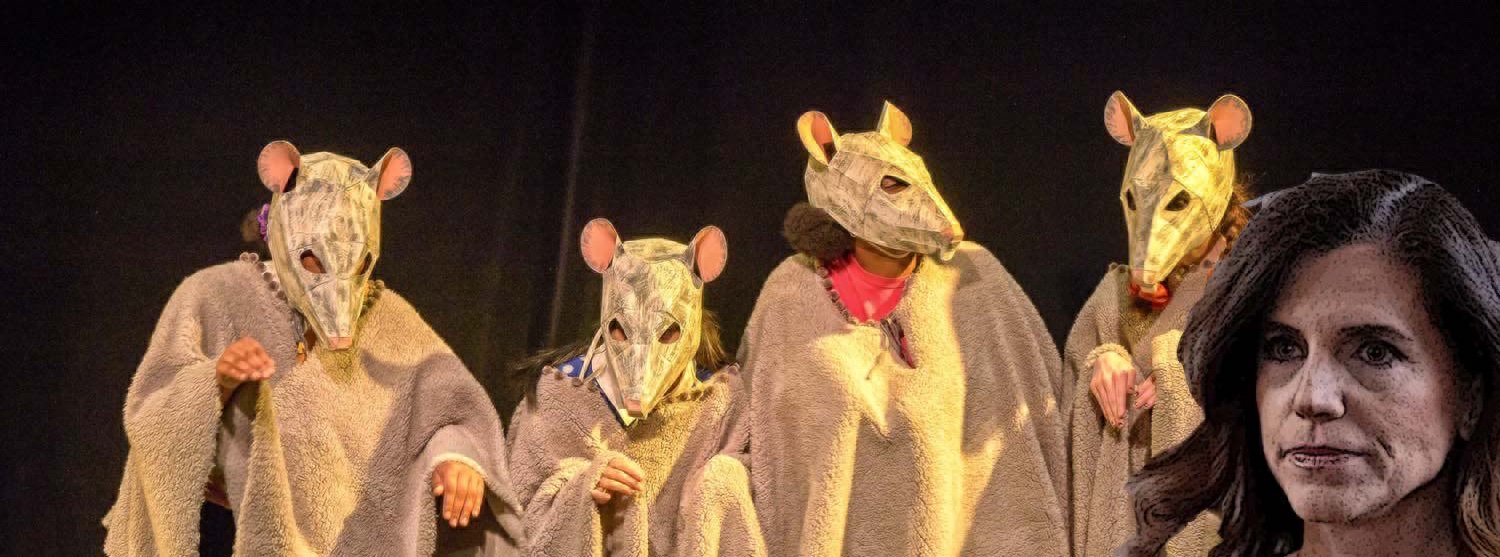
Nobody is doing sex-change operations on mice and setting them loose in Nancy Mace’s bathroom.
But I digress. I hadn’t engaged in a public protest since the fall of 1971, and I it looked like many of the protestors in attendance were alive and kicking during the Viet Nam era, which makes sense, given they are past retirement age and free to go wherever they choose midday on a Tuesday in March. I used to tell my students that if the governor told my generation that we couldn’t drink until we were 21, there would have been 300,000 of us on the lawn of the Governor’s mansion every day of the week.
The protest, though somewhat limited in its attendance[3] and no doubt in swaying public opinion or sending shivers up the spines of Republican representatives, did provide an outlet for our outrage at Trump’s destroying our democracy and cruelly wreaking havoc upon the lives of so many of our citizens, not to mention his abandoning of Ukraine and the rest of our European allies.
It was somewhat comforting to rub elbows with like minded people whose intelligence and commitment was apparent in the signs that they carried.
photo credit Joan Perry
photo credit Caroline Tigner Moore
photo credit Linda Bell
Okay, don’t worry about this 5-paragraph essay set up. I’m not going to give you a blow by blow account of my doing taxes, which thanks to my late wife’s assets is complicated by K-I limited partnerships, etc. Nevertheless, I do them myself because nowadays accountants essentially have you enter your financial information into their computer software instead of TurboTax. It ends up being the same amount of work. Using an accountant might save us some money, but what the hay.
Ah, with my daily labors completed, here I sit sipping a Westbrook IPA at Lowlife Bar on a Wednesday afternoon scribbling this down in a composition notebook, happy to have completed the taxes and survived the tornados that never showed up on a day when Charleston County schools were called off.
Cheers! Thanks for reading until the end.
PS. Uh-oh! I just saw on LinkedIn that I appeared in 12 searches, two of which were the State Department and USAID. Yipes.
photo credit Joan Perry
[1] Since families usually slept in communal beds, having sex could be problematic.
[2] from the preface of Long Ago Last Summer, 38-9.
The other day on Facebook, every septuagenarian’s favorite social media platform, I posted this confession:
“I’ve just come to the terrible realization that I’m a professional dilettante!”
I meant the quip, of course, to be humorous given the oxymoronic pairing of professional, denoting lucrative compensation for someone who can claim to be an expert, and dilettante, which describes a poser, an amateur who dabbles in the arts.[1]
A few kind responders begged to differ, claiming that I was the real deal, which I appreciate, but don’t buy, especially when it comes to what I have come to call my “fake paintings,” which are essentially photocollages filtered to look like paintings and printed on canvases. Not that they’re not eye-catching in a good way. My friend the painter and filmmaker David Boatwright — the antithesis of a dilletante — finds them amusing.[2] So even though I call them “fake,” I do think they qualify as “art,” but it’s amateur art. When in a groove, I can crank one out in a couple of hours.[3] David, on the other hand, toils over his canvases and murals for months, not ceasing until every last miniscule detail is right.
Which brings me to the central subject of these ramblings — AI generated illustrations.
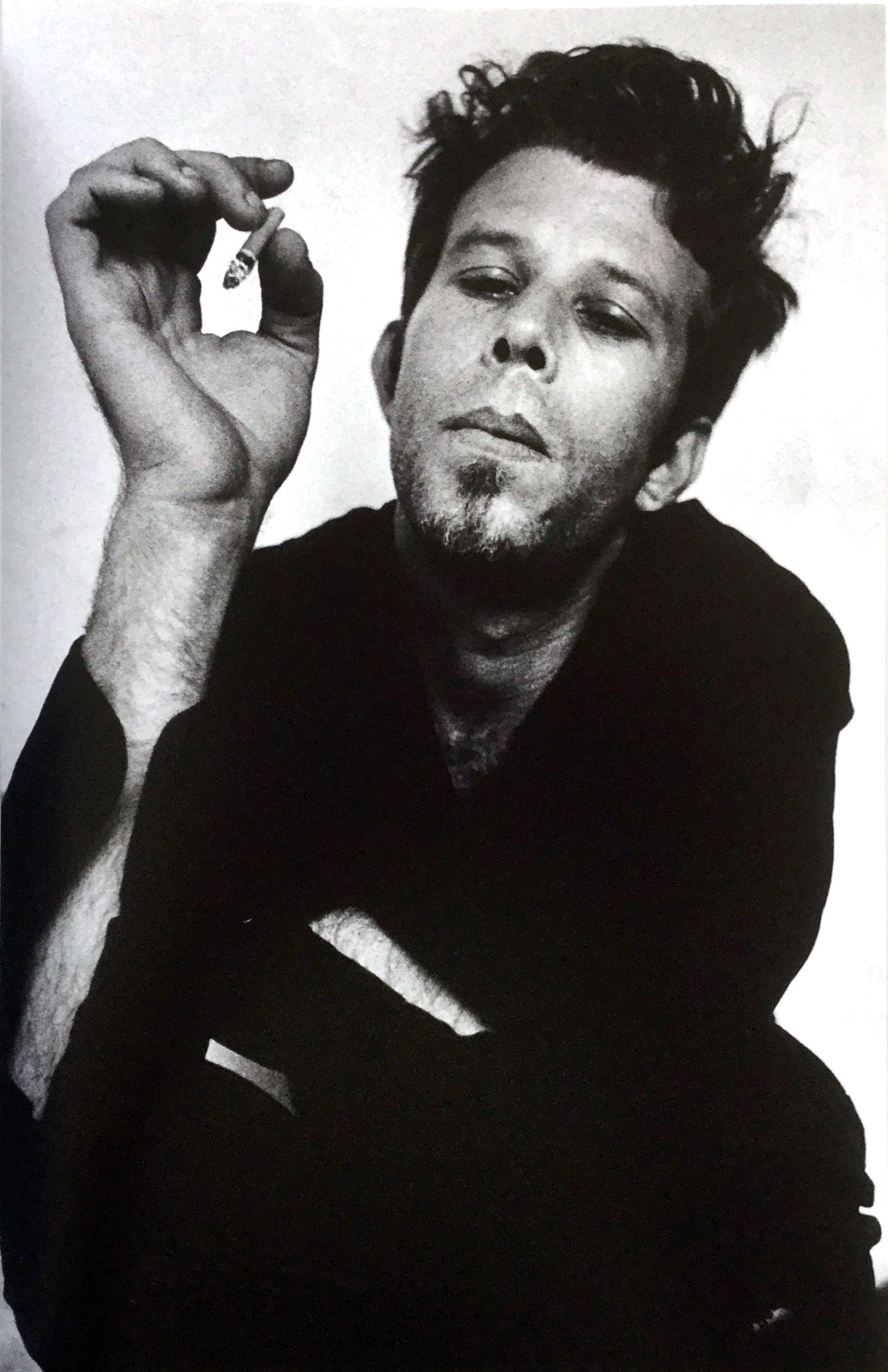
A while back a Facebook friend lamented that AI-generated “art” was going to put people like me out of business, but I begged to differ. “AI hasn’t listened to Tom Waits while smoking Thai sticks,” I responded. It can’t, by its very essence, be original. It ain’t got soul.
Last night my wife Caroline and I were looking at my two latest canvases, and I said, “There’s no way AI could come up with either one of these.”
“Let’s do a little experiment and see what AI comes up with,” she said.
So we did, prompting the software to create something similar.
Before we begin the comparison, I’ll explain briefly how I go about making a fake painting.
I start with a high resolution photograph. In my latest (see below) TGIF Chico Feo, I took a photo of the bar area when I was the only customer in the establishment.
I upload the photograph to Photoshop and add an artistic filter, in this case, the “Dry Brush” filter.
Almost always, I have no preconceived notions about what I’m looking to create. In this case, I googled “pulp cover paperbacks bar scenes” and scored the couple kissing from a novel entitled Divorce. Of course, the man wasn’t leaning over a bar to kiss his lover, but I determined I might be able to cut the couple out and paste them into the photo, and, damn, it worked. Next, I found the woman sitting to the couple’s left and did likewise, and once again, I was successful.
I thought it might be amusing to have an organ grinder in the foreground, but I couldn’t find any illustrations that suited; however, I did find the begging monkey with the cup and tried him in various locations until I hit upon placing him on the bar, interrupting the passionate kiss.
I decided to place a large figure in the foreground and went Screaming-Jay-Hawkins hunting. I experimented with various Hawkins iterations, but the vibe wasn’t right, and then the proverbial cartoon light bulb went off above my fedora. Louis Armstrong, Satchmo!
So here are my TGIF Chico Feo and AI’s response to the prompt “create a picture of Louis Armstrong playing at a beach bar.”
See what I mean.
One more example.
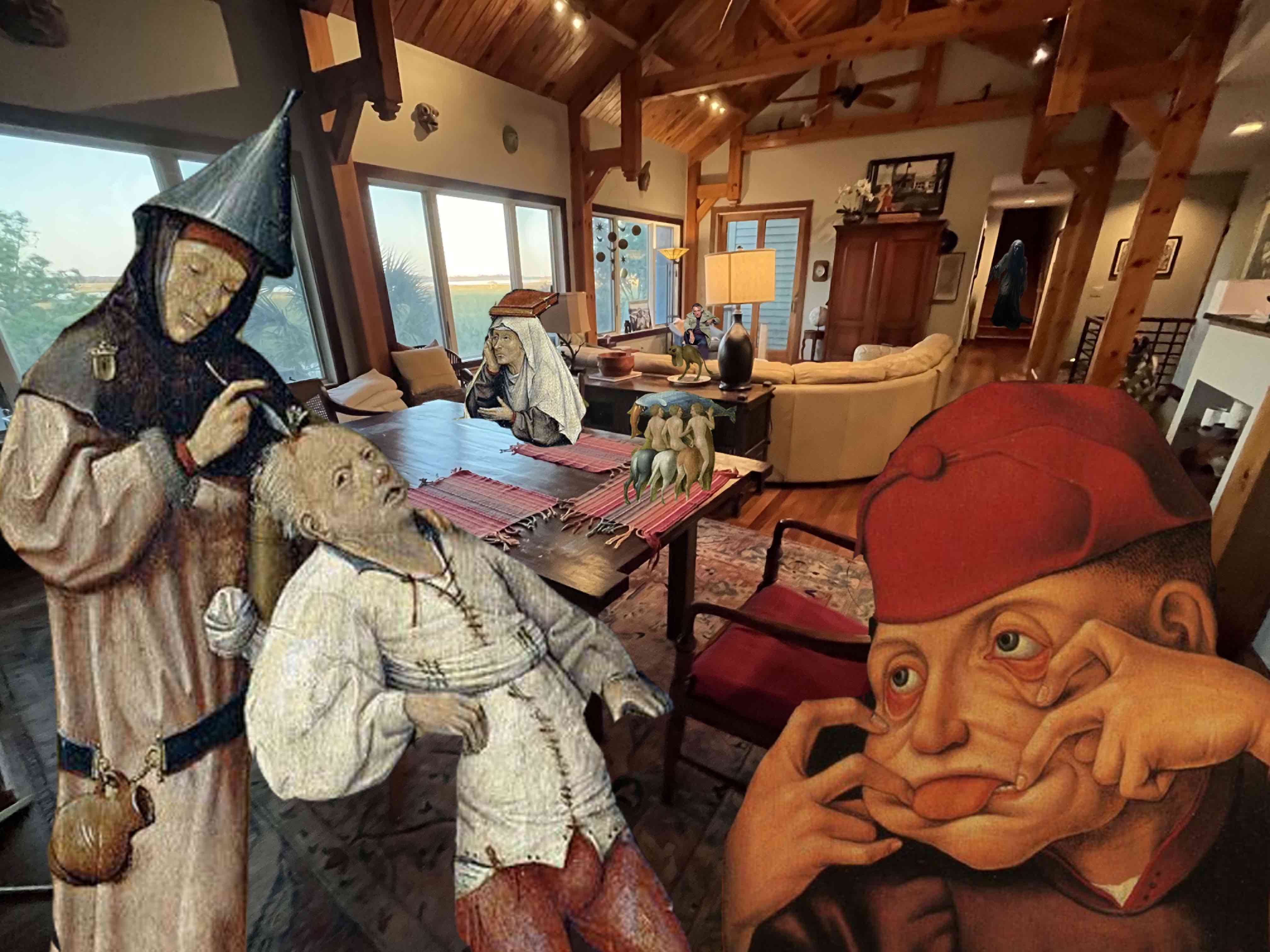
Two of my favorite artists are Bruegel the Elder and Hironimus Bosch.
I took a photo of our living room, which struck me as sort of Flemish-looking so I peopled it with Bosch figures, being in a mocking post-election funk.
Here’s the final product.
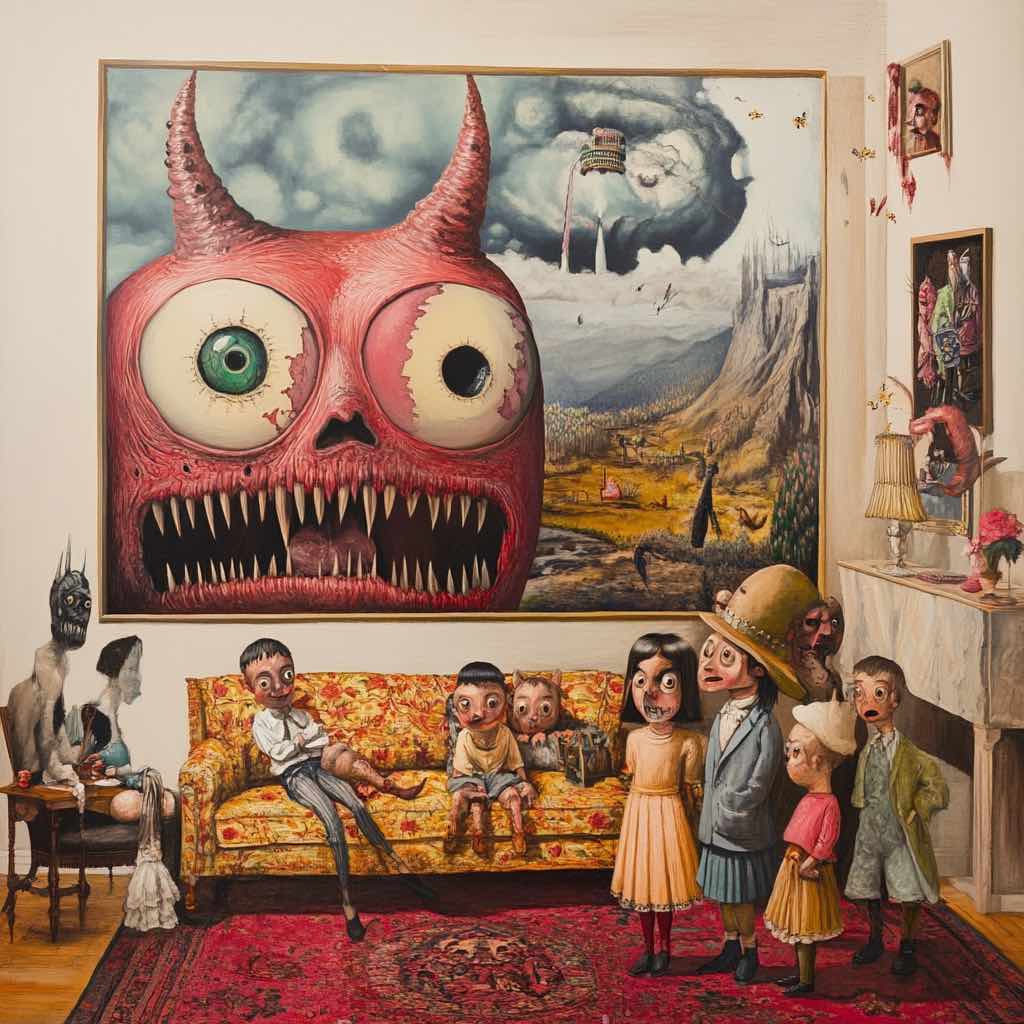
And here’s what AI came up with when prompted “Boschian style weird people and one Boschian monster in a regular modern beach house living room.”
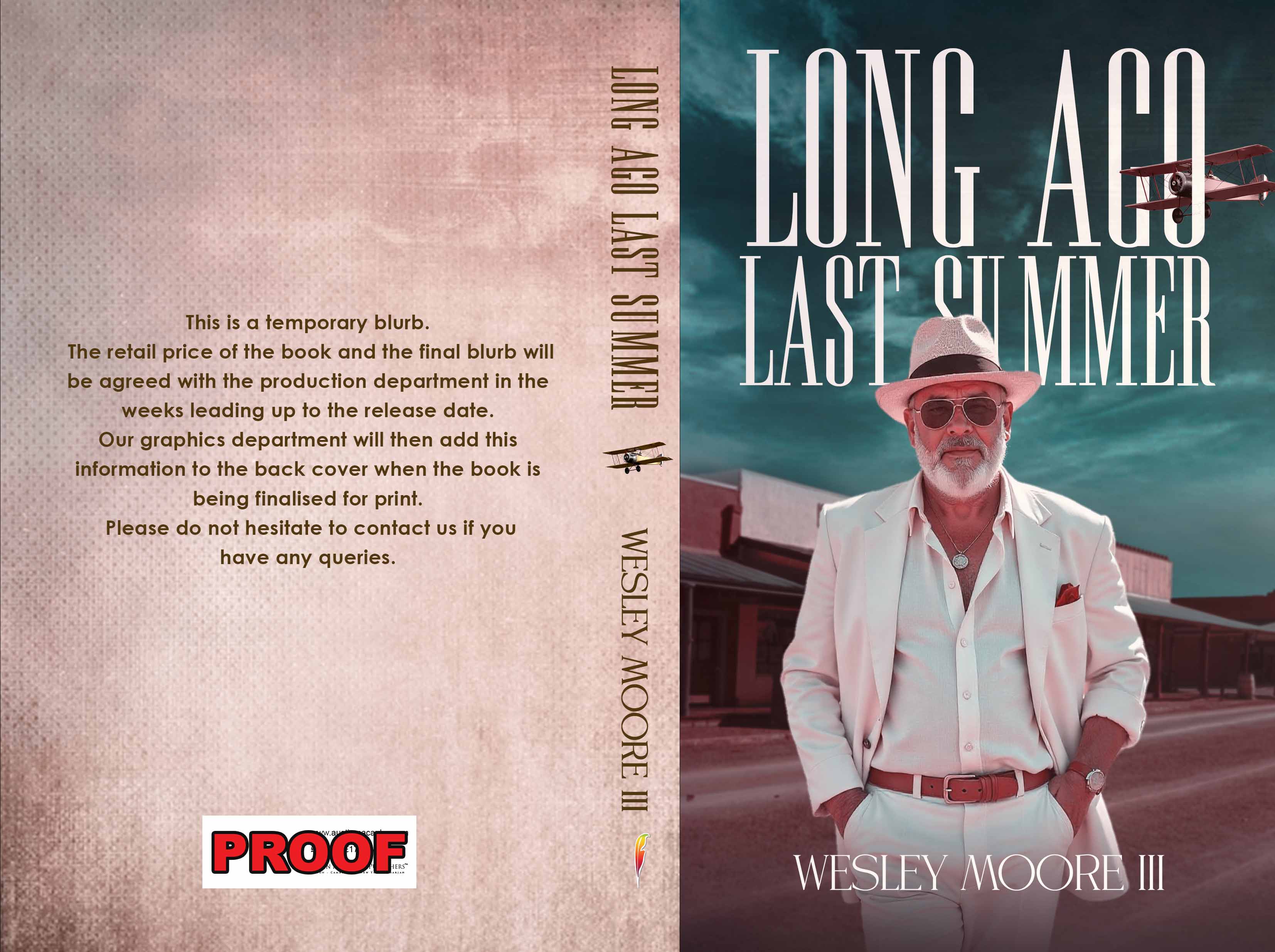
Of course, AI is likely to put some illustrators out of business. In fact, because Caroline subscribes to AI software, I might ask her to provide me images to illustrate some of my blog posts. However, for book covers, I always prefer scruffy over slick.
Which cover would you guess Caroline and I chose?
[1] The awkwardly phrased sentence this footnote references is proof in and of itself of my dilettantism. A professional, a true wordsmith, would devote time to express these ideas in a more cogent fashion, spending perhaps an hour or so insuring that every word was in its proper place and that the clauses melded in pleasant fluidity. but [cue Bob Dylan]. “[That] ain’t me, babe.
[2] BTW, David has written a screenplay for a 15-minute film based on the poolroom chapter of my novel Today, Oh Boy and is just 50K short of having the funds to start production, so if you happen to be wealthy and want to be an art patron and contribute to making a really cool indie film, contact me, and I’ll forward your info to David.
[3] I have had a one-man show at Studio Open and have sold a couple of dozen, two of which went for $500, so there’s that.
[4] I also Hitchcock like, try to make a cameo appearance in the “paintings.” In this case, it’s the cover photo of my next book Long Ago Last Summer. Can you find it?










 You Do Hoodoo