Andrew Hickey Explains Swing, Boogie Woogie, Backbeats, and All That Jazz

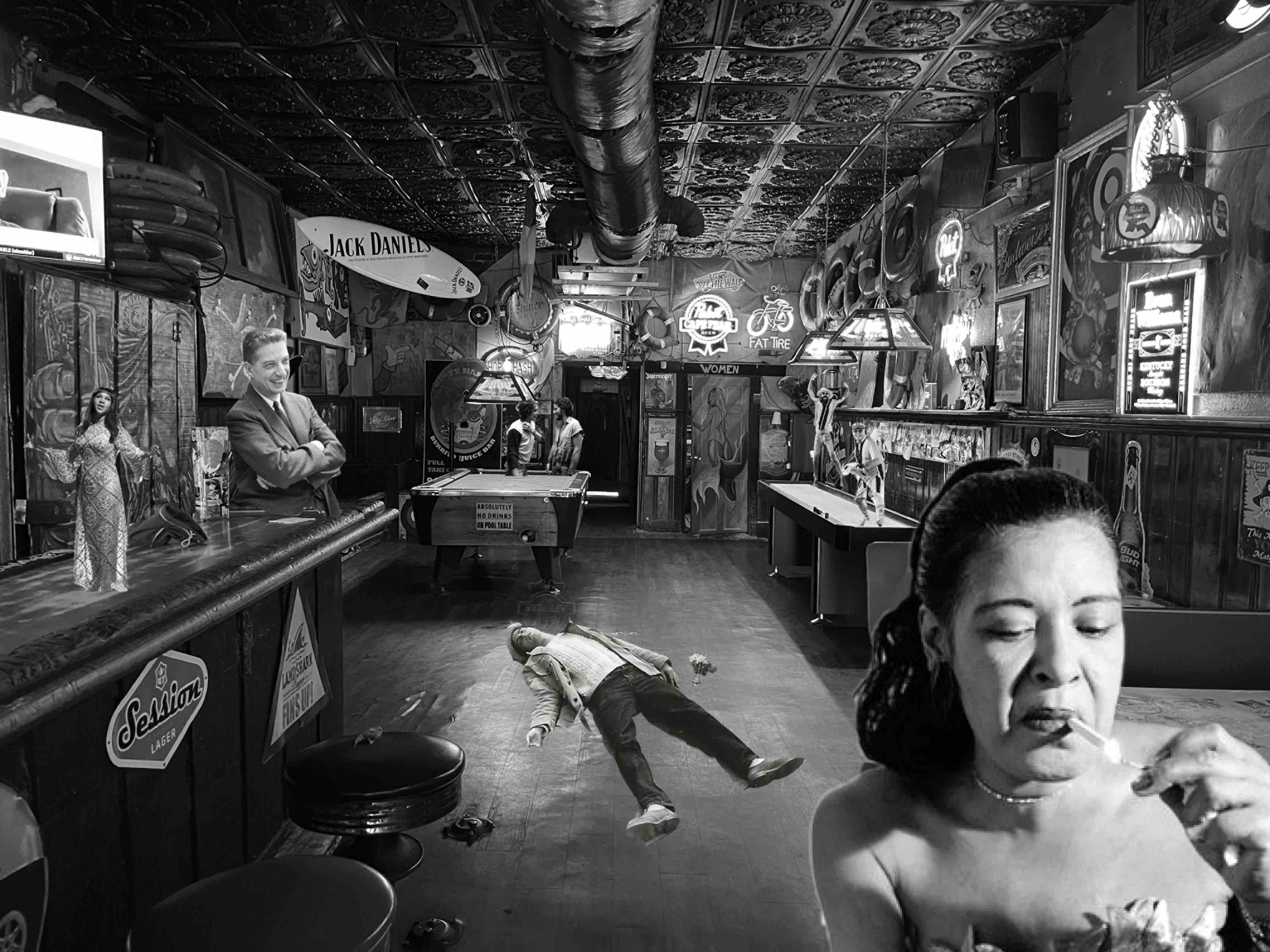
From left to right Aretha Franklin, John Hammond, Bob Dylan, Bruce Springsteen, Rusty Moore, Kip Vino, Erich Huber, Billie Holiday

Thanks to my pal Erich Hubner, the guitarist of the killer cover band Pleasure Chest, I’m getting schooled by the ridiculously erudite musicologist Andrew Hickey, whose podcast The History of Rock Music in 500 Songs traces the evolution of rock-n-roll from its earliest influences up until 1990. 

Sometimes the best things in life are free, if you have access to a computer, that is.

Recently, Erich and Pleasure Chest’s front man Kip Veno and I-and-I wandered uptown to Leon’s to slurp down some oysters, and Erich asked me if I were familiar with the Hickey’s podcast, and since I’ve only listened to one podcast ever, the answer was, um, no. Erich convinced me that I’d find it interesting, and man oh man was he ever right.

BTW, if you wanna see Pleasure Chest in action, click HERE.

I’m only two episodes in, but already I’ve learned so so much. I thought I was hip when it came to John Hammond minutia.  John Hammond, a scion of the Vanderbilt clan, went rogue, became a 20th century champion of civil rights and the most influential record producer in history.[1] He’s also the father of John Hammond, Jr, a bluesman whose cover album of Tom Waits tunes is to my mind a classic. Waits actually plays on the album. 

Oh where was I?  Oh yeah, here’s one thing I didn’t know about Hammond: he introduced Fletcher Henderson to Benny Goodman, Hammond’s brother-in-law, and Henderson integrated Goodman’s band, along with the great vibraphonist Lionel Hampton, who wittily observed that you needed both black and white keys to play a piano. The Goodman band was the first band to feature both black and white musicians, and Hammond was the catalyst. 
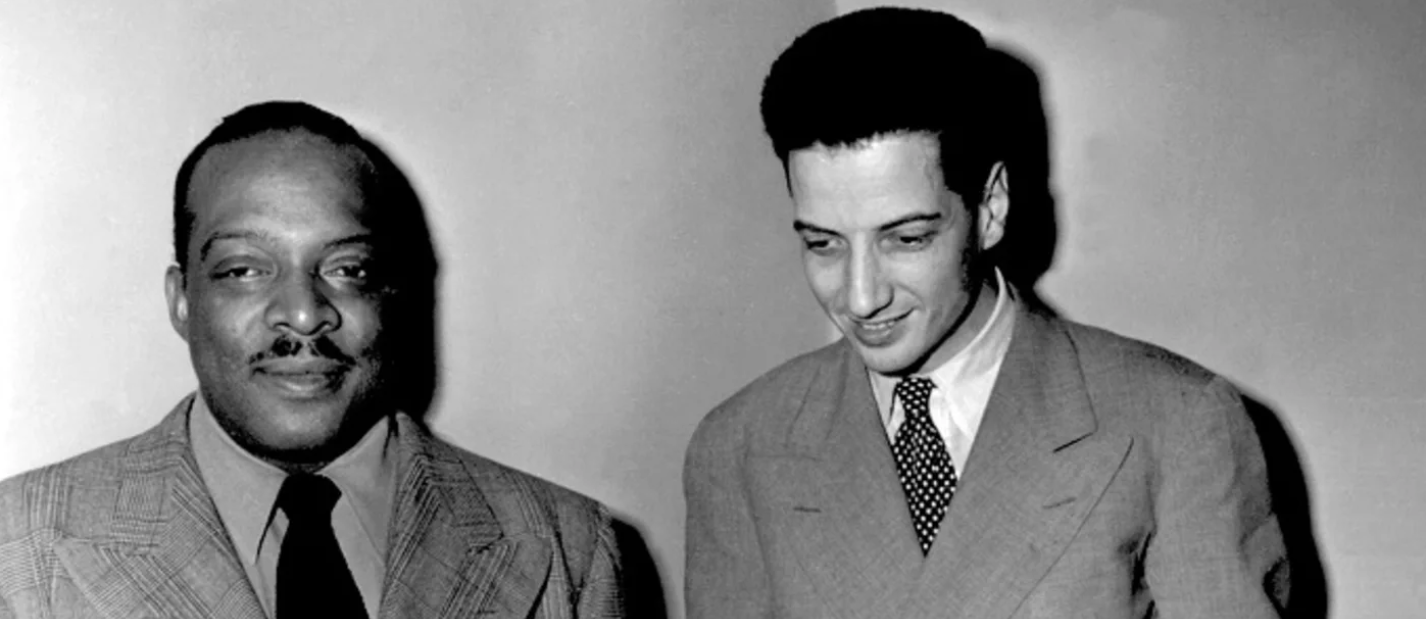
Count Basie and John Hammond

Henderson went on to lead his own big band that featured the likes of Louis Armstrong, Red Allen, and Coleman Hawkins. Excuse me for all this tangentification.[2]

Anyway, Andrew Hickey is not only encyclopedic in his knowledge of popular music, but he’s also a trained musician who can demonstrate sonically the differences among the big band’s swing beat, boogie woogie, and rock-n-roll’s backbeat. He does this with vocalizations along with clips from recordings.

He begins “Episode 1” by exploring early influences on rock, starting with Benny Goodman’s sextet that featured Charlie Christian, an early electric guitarist who way back in the 30s was playing proto rock-a-billy riffs, which Hinckley illustrates in the featured song of the episode “Flying Home.” Anyway, I’m nerding out on y’all, zigzagging all over the place. My main purpose here is to have you check out the podcast and Hickey.  If you’re into popular American music, it’s more than worth your while.

Here’s a link to his website: https://500songs.com

Andrew Hickey


[1] Here’s a partial catalogue of musicians he discovered and recorded: Bennie Goodman, Count Basie, Billie Holiday, Bessie Smith Aretha Franklin, Bob Dylan, Leonard Cohen, Bruce Springsteen, and Stevie Ray Vaughan.

[2]  Fedora tip to Dr. John.

Just Can’t Cut That Juice a Loose: KILLER ROCK LYRICS ABOUT SUBSTANCE ABUSE!!!

Foreign_Affairs_Tom_WaitsI-and-I, that’s right, Mr. Hoodoo Man he-self, boon companion and devoted supporter of Mr. John Jameson, lover of hoppy craft beer concoctions, not to mention spicy Sunday morning bloody marys, has voluntarily climbed aboard that proverbial wagon that refuses to stop at taverns, bodegas, juke joints, and roof top bars.

Or to put it more succinctly, he’s quit drinking alcohol.

Why, you ask? Has Mr. Moore been stumbling in at 3 a.m. and slapping around his beloved consort Judy Birdsong?

Of course not.

Has he found that drinking has adversely affected his social life?

To the contrary.

Okay, is he chronically late, a no-show sometimes? Does he hire barmates to grade his essays? Does he put himself in risky situations? Is he a frequent visitor to emergency rooms?   Has he gotten a DUI? Recently made a complete and utter ass out of himself?

No, no, no, no, no, and “not that he is aware of.”

Why then?

The answer is vanity. Recently, he saw photographs of himself at his son’s wedding and realized that his once David-Niven-like svelteness had ballooned into a girth approaching Hitchcockian proportions. And even though he now possesses a Falstaffian paunch, his arms and legs have maintained the emaciation of his 97-pound-weakling adolescence.

John Falstaff by Eduard Von Grutzner

John Falstaff by Eduard Von Grutzner

He’s too vain to post a photograph, but picture a four-month pregnant Mick Jagger and you get the picture.

Why not cut out those empty calories? Why not give it a try?

So how has he been spending those hours not spent in drinking establishments?

Listening to songs about substance abuse, that’s how, and he’s come up with a list a few killer song lyrics devoted to over-indulgence, like this classic from Willie Nelson:

The night life ain’t no good life, but it’s my life.

Not only that, he’s going to provide sound samples to go along with a few of his favs. So sit back and enjoy

THESE KILLER ROCK LYRICS ABOUT SUBSTANCE ABUSE!!!

(I know it lacks that Buzzfeed allure of botched plastic surgeries).

Okay, we’re going to start with John Hiatt’s “Paper Thin,” whose first sentence has the panache of the opening of a well-crafted short story. Listen.


Here’s how the song ends:


(Saw John about a year ago in concert.  Here’s the REVIEW).


Okay, for our next lyric on substance abuse, let’s go way back to my tenth grade year of 1968 and the Butterfield Blues Band’s “Drunk Again.”  The song’s by Elvin Bishop and features the domestic trauma drinking can cause.  Here’s a snippet:


Of course, as Bob Dylan famously tells us in “Just Like Tom Thumb’s Blues” — “I started off on burgundy but soon hit the harder stuff” — alcohol is the ultimate gateway drug.  I betcha ain’t nobody ever shot up heroin who hadn’t started out on the road to perdition with wine or beer. You start off seemingly innocuously with a PBR and the next thing you know your rolling up bills and snorting cocaine or worse.  Here’s John Hammond, Jr’s superb cover of the Tom Wait’s classic “Heart Attack and Vine”:


That’s right:

Boney’s high on china white;

Shorty’s found a punk

You know there ain’t no devil;

that’s just god when he’s drunk.

Well, this stuff will probably kill you;

let’s do another line.

What you say you meet me

down on Heart Attack and Vine.

Love can be a drug, they say.  Wasn’t Robert Palmer “addicted to love?”  Here’s the great Lucinda Williams making the analogy:


C’mon, Lucinda.  You know what Willie B Yeats sez:  “Never give all the heart for love . . .

Okay, let’s end this thing on a positive note.  The resurrection of Tim Finnegan via Irish whiskey.  Here, the Clancy Brothers describe how dead Tim’s corpse is brought back to life during a drunken brawl at his wake, which is the song that gave rise to James Joyce’s last novel.


:


Mickey Maloney ducked his head
when a bucket of whiskey flew at him
It missed, and falling on the bed,
the liquor scattered over Tim
Now the spirits new life gave the corpse, my joy!
Tim jumped like a Trojan from the bed
Cryin will ye walup each girl and boy,
t’underin’ Jaysus, do ye think I’m dead?”

Come to think of it, quitting drinking altogether seems anti-Buddhist.  Maybe the middle way would be better.  Lose weight by exercising, eating healthily, and limiting one’s intake to a couple a day?

Sounds like a plan.