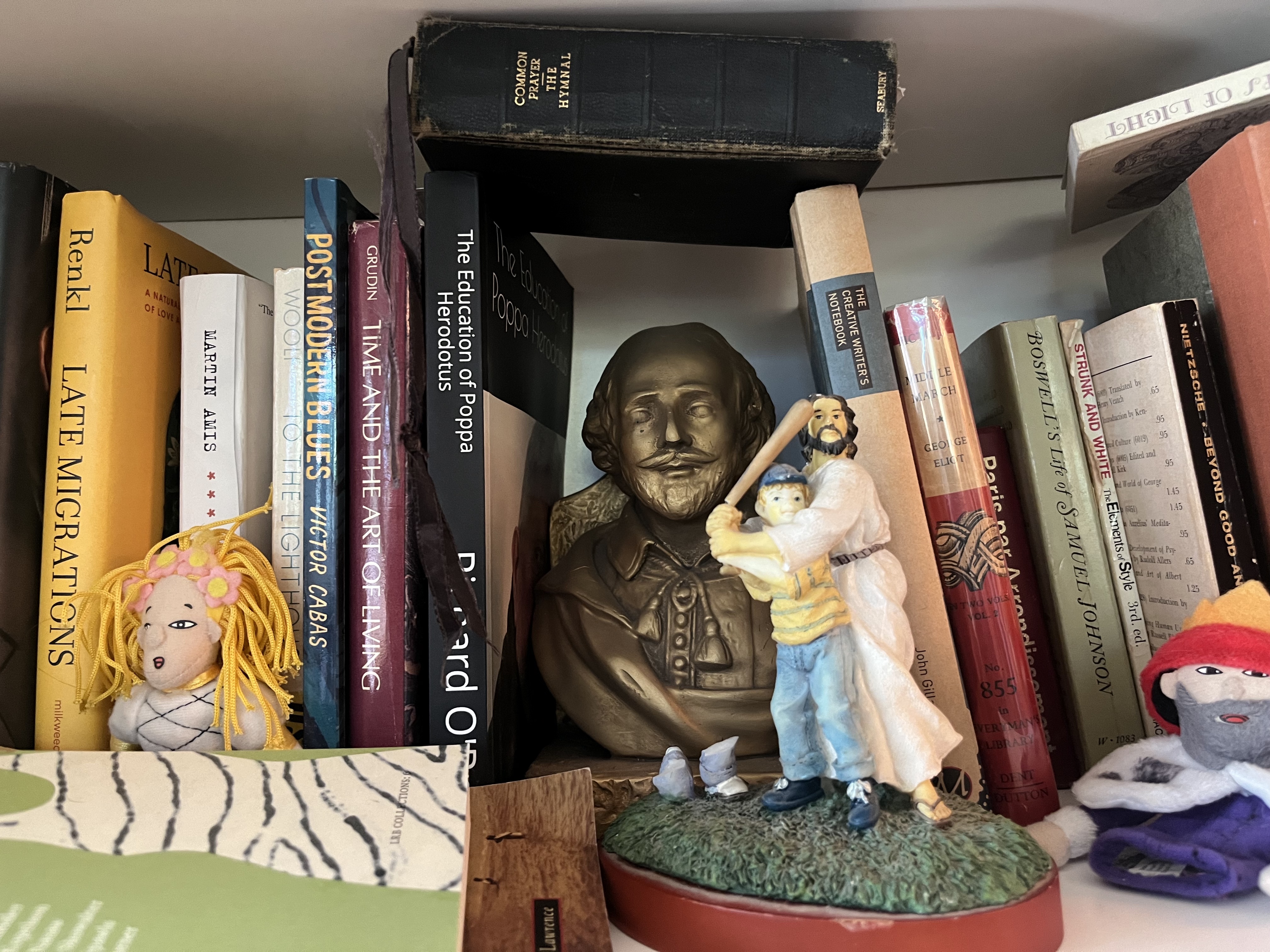
My mother’s people were Baptists, serious Baptists, no drinking, no playing cards on the Sabbath, no dancing, though where would they have danced in rural Orangeburg County if given the chance? Juke joints were devil dens. Maybe there were barn dances, but I doubt it.
On the other hand, my daddy’s people were indifferent Methodists. In the 19th Century, they must have been devout because my great-great grandfather Wesley, a Confederate foot soldier and later prisoner of war, named his son Luther, and I’m one of four descendants named Wesley in honor of the founder of the Methodist Church.

However, by my grandfather’s generation, none of the Moores I know of attended church. We did pray, mumbled the same rote grace every meal, but otherwise, the only time God’s name was uttered in our house, it was taken in vain by my father in anger.
Other families I occasionally ate with might ad-lib their blessings, mentioning current events, family members, and on one occasion, me, which made me feel somewhat uneasy for whatever reason. Obviously, praying was meaningful to them, an attempt at communication with the Lord rather than the empty abracadabra lip service we recited at our dinner table.
For a year or two, when I was eight nine, my mother, my brothers, and I sporadically showed up at Summerville Baptist Church where my grandmother Hazel worshipped. Pathologically shy, I despised going because I felt out-of-place, like an intruder; plus the place smelled strange, chemically odd, like they overdid the disinfectant. I’d much rather been at home smelling stale cigarette smoke dreading Monday reading the funny papers.
My mother wasn’t enamored with Summerville Baptist, yet sought a spiritual haven, so she joined St. Paul’s Episcopal Church, willing to be tarred with the accusation of being a social climber. So here I was again intruding in a strange place of worship, this one with ritualistic recitations, head-bowing, and kneeling that were alien to me. But Mama was serious this go around. She signed me up for confirmation classes.
I hated being two years older than the other confirmation students, yet once I started attending, I did learn the basics of Judeo-Christianity, that the Old Testament was a covenant between God and Moses, and the New Testament a covenant between God and us mediated by his only begotten son. We had to memorize the names of the books of the Torah and the names of the first six books of the New Testament. I scored a 100 on the exit exam, was confirmed, and became a member of St. Paul’s.
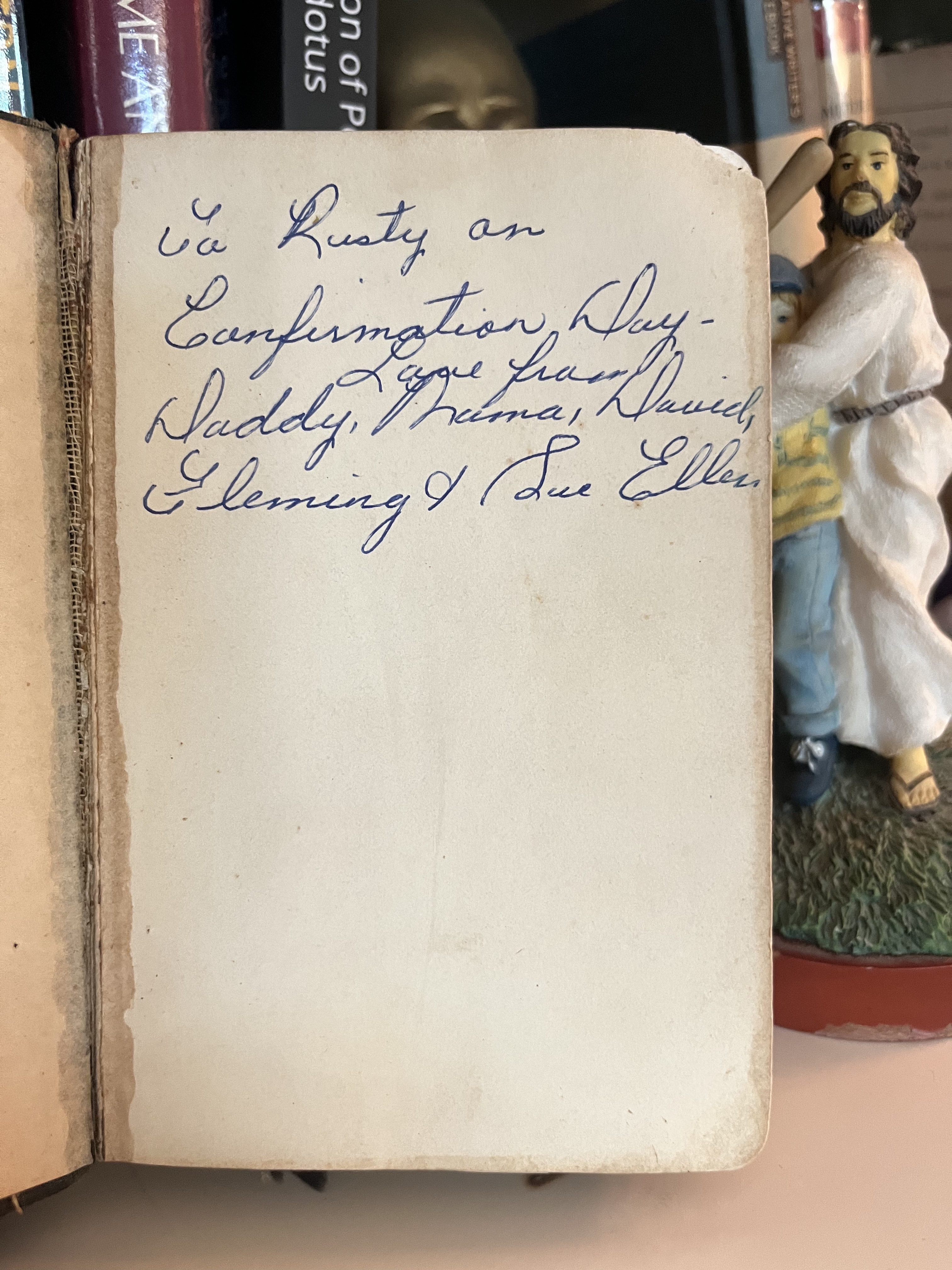
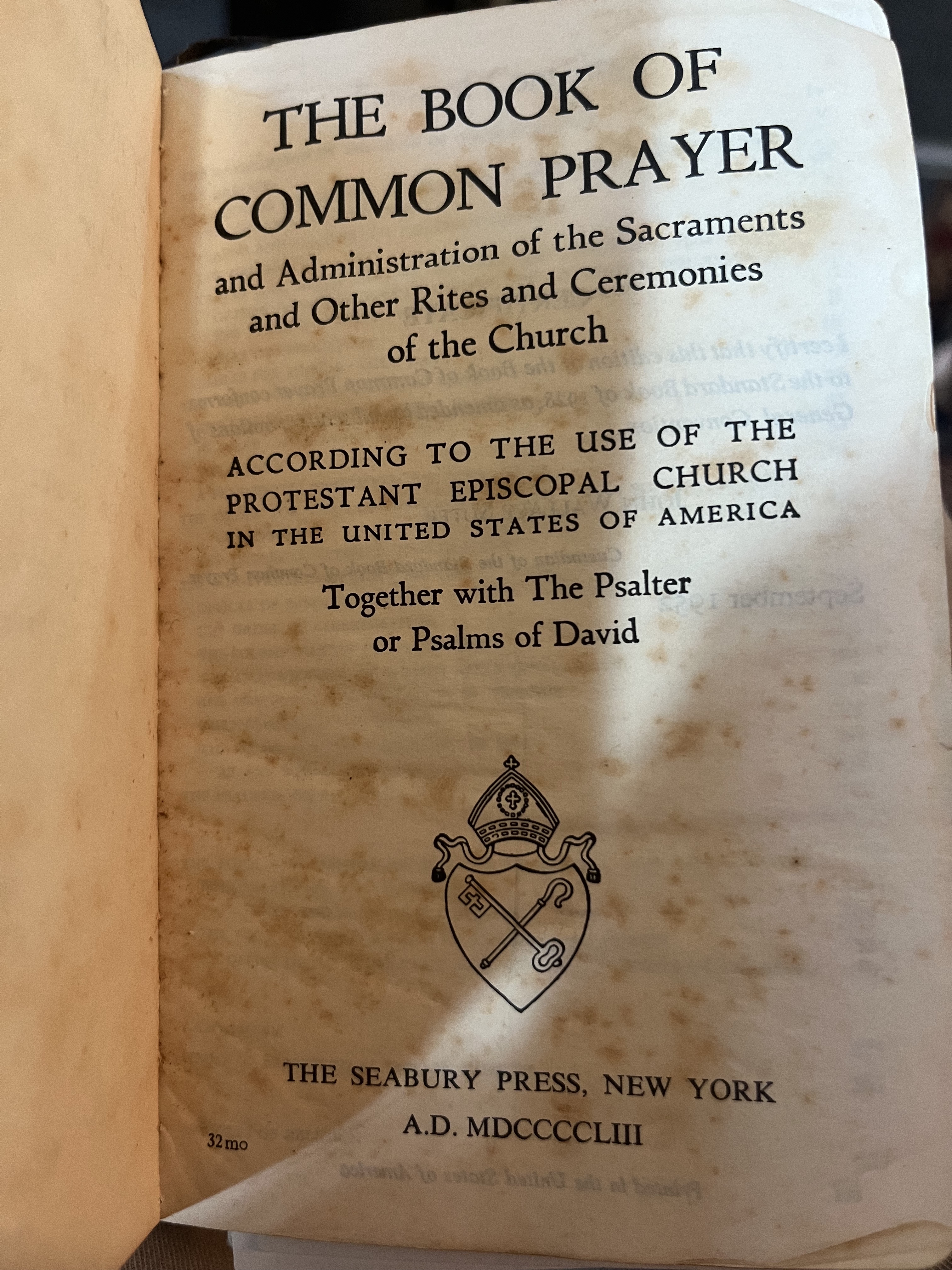
Back then, we used the 1928 version of the Book of Common Prayer which employed Jacobean English, and because of my uncanny ability to retain verse, song lyrics, and in this case liturgy, in a few years I could recite “The Order of Morning Prayer” by memory.[1]
Here’s my favorite ditty from the Rite of Holy Communion: “If any man sin we have an Advocate with the Father, Jesus Christ the Righteous, and he is the Propitiation for our sins.”
Has a ring to it, doesn’t it.
Anyway, once I became an adult and married Judy Birdsong, who had been a Young Lifer in high school, lost her religion at Presbyterian College in Clinton, SC, “a small Christian College for small Christians,” as Judy used to say, I bid adieu to Christianity.
We had our two sons baptized, but other than a short two-month stint at Sullivan’s Island’s Church of the Holy Cross when the boys were five and six, we didn’t go to church. However, they did attend Porter-Gaud, an Episcopal School, and sat in chapel every other week.
My cousin Zilla, my great aunt Ruby’s daughter, an incredibly nosy and outspoken Baptist, once asked me if I had seen to my sons’ spiritual needs, and I could honestly say they frequently attended services at their school.
As I’ve written more than once, I envy people blessed with faith. It must be an enormous comfort, especially in the waning days of the American Empire.
O God, the Father of Our Lord Jesus Christ, our only Saviour, the Prince of Peace; Give us grace seriously to lay to heart the great dangers we are in by our unhappy divisions. Take away all hatred and prejudice, and whatsoever else may hinder us from godly union and concord.
Amen!
[1] This “uncanny ability” of memory doesn’t, alas, kick in with people’s names.

 You Do Hoodoo