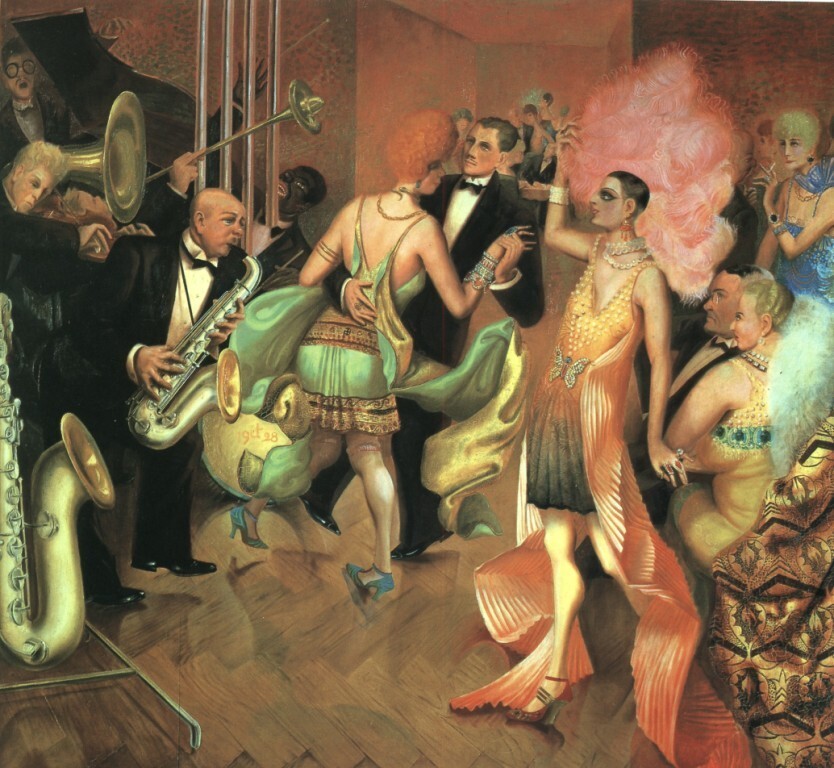
Little Baby Blues: 1953 Edition

Little Baby Blues: 1953 Edition

On 14 December 1952, a rare snowy day in Summerville, South Carolina, Dr. Howard Snyder, aided and abbeted by forceps, yanked me from my mother’s womb into a world of relative woe.  The procedure flattened my head, which resulted in cephalohematoma, a condition in which blood pools under a newborn’s scalp. My father had to leave that afternoon to return to Clemson via a Greyhound bus.  When the lady sitting next to him asked why he looked so sad, he replied, “My wife just gave birth to a seven pound, eight ounce monkey.”  

As a child and teenager, I heard this anecdote on more than one occasion, which would elicit a cackle from my mother, who in so many words agreed that indeed I was a hideous newborn. However, she was quick to assure me that in a couple of weeks I was so beautiful that when she pushed my stroller around Colonial Lake, strangers stopped her to admire my beauty. 

I took solace in my mom’s stroller story as a child, not realizing that praising a baby’s looks is a common practice of adults when they run across almost any infant. On Facebook, I often encounter the red puffy yet wrinkled faces of newborns who are deemed “beautiful” or “adorable” by scores of friends of the parents. 

Meanwhile, elsewhere, Ethel and Julius Rosenberg sat in a courtroom being grilled by Roy Cohn, Donald Trump’s mentor.  My first full year, 1953, marked the feverous height of the Red Scare, back when the Russians were our enemies rather than our friends (or at least our President’s friend).[1] This collective commiephobia spread, appropriately enough, during an epidemic of polio. 

Trump and Cohn

In 1953, R&B had not made it to the mainstream, and rock-n-roll was in utero.  Every artist but one in Billboard’s top 30 singles of 1953 is white, mostly male crooners and female sopranos. Overly orchestrated instrumentals were also popular. The number one hit that year is “The Song from the Moulin Rouge” by Percy Faith and His Orchestra, a song so saccharine sounding that your ears might develop diabetes if you listen to more than twice. 

I’ve never heard of loads of these hitmakers like Pee Wee Hunt, Frank Chacksfield, Richard Hayman, Joni James. By far, the coolest song in that top 30 is from the one Black performer, South Carolina’s own Eartha Kitt, singing and purring “C’est si Bon” en francais.  She later was cast as Cat Woman in the Batman TV series. 

On the other hand, I have not only heard of but seen all of the top movies of ‘53, except for The Naked Spur. I’ve seen From Here to Eternity and Gentlemen Prefer Blondes at least twice, I’ve also watched Roman Holiday and Stalag 17.  Disney’s Peter Pan was one of my favorite movies in childhood, especially because the leader of the Lost Boys was, like me, a red head.

Nevertheless, despite the general awfulness of 1953, being born around then ended up being a propitious time to begin life’s journey. My parents, who had grown up during the Great Depression, wanted my siblings and me to have a better life than they suffered yet didn’t monitor our every move, allowing us to roam freely, unencumbered with water bottles or walkie talkies, the ’60’s equivalent cell phones. 

And by our adolescence in the mid ’60s, the music got ridiculously good, though we feared getting drafted and going to Nam, but by then the war was winding down and a draft lottery was in force. Compared today, college tuitions were dirt cheap. I could earn enough money in the summers to cover tuition.

However, I must say, for me at least, it’s a melancholy situation in my twilight years to witness the spectacle of lawlessness and corruption foisted on the Republic by Roy Cohn’s mentee, who obviously, as far as Machiavellianism is concerned, was an A+ student. 

C’est la vie, as Eartha might sing.

I’ll leave you with the number 1 hit of 1953.


[1] Fun facts to know as share: Roy Cohn, who in addition to being one of the prosecutors at the Rosenberg trial, also served as chief counsel for Joseph McCarthy’s witch hunts, a term Donald Trump appropriated during his first term to describe investigations targeting him for such acts of malfeasance like storing stolen classified documents in bathrooms and paying hush money to porn stars. 

Of Palsied Eld

Once a month or so when I was a child, my mother would drive her mother, my younger brother, and me from Summerville to visit my great aunt Ruby, who lived on Warren Street in downtown Charleston. The two older women, the daughters of a prosperous Orangeburg County farmer, were Baptists and considered alcohol Satan’s saliva, the most detestable substance known to humankind.  On the other hand, they deemed the painkillers and mood enhancers prescribed by their physicians to be the Balm of Gilead and freely exchanged these brightly colored pills the way we did Halloween candy after trick-or-treating.[1] I also remember their complaining of their various ailments, an epic catalogue of aches and pains, a tedious topic of conversation for a ten-year-old to endure. I dreaded these visits that took me away from wooded yet-to-be-subdivided acres surrounding our neighborhood in Summerville where we built forts and played Davey Crockett.

On my father’s side, it was my great grandfather and grandmother whose visits I dreaded. My great grandfather, Fleming David Ackerman, had been a pharmacist who owned a drug store on the corner of Spring Street and Ashley Avenue in Charleston during the Depression. He was a hypochondriac extraordinaire who actually slept in a hospital bed. Mama’s daddy, Kiki, a spry bantam rooster of a man, used to say that Grandaddy Ackerman “enjoyed bad health,” which would elicit a smoker’s cackle from my mother, who somehow had managed to grow up open-minded, unlike Aunt Ruby’s daughter Zilla, whose embrace of puritanism would give Carrie Nation a run for her money.

Carrie Nation

Of course, ten-year-olds don’t fret about their own eventual senescence until that distant day in the unreckoned future when they too will stiffen, as TS Eliot put it, “in a rented house.”  Alas, for me, that day has arrived, sneaked up on me like ninja, one day my urine jetting in a beautiful arc into an empty Coke bottle, the next sprinkling weakly as if from a watering can.[2]  Rolling over several times a night in bed is necessitated by lower back issues, and to me even more vexing is the tinnitus I’ve recently developed, which in my case isn’t a ringing of the ears, but a frenetic clicking, as if mice are sending out desperate messages via telegraphs, a fitting soundtrack for the insomnia that visits me nightly.

So here I am, like Aunt Ruby and Grandmama Hazel and Grandaddy Ackerman, taking pleasure in complaining about ill health. 

Ah, but here’s an antidote:

Thou hast nor youth nor age,
But as it were an after-dinner’s sleep

Dreaming on both, for all thy blessèd youth
Becomes as agèd and doth beg the alms
Of palsied eld; and when thou art old and rich,
Thou hast neither heat, affection, limb, nor beauty

To make thy riches pleasant. What’s yet in this

That bears the name of life? Yet in this life
Lie hid more thousand deaths; yet death we fear,
That makes these odds all even.

Measure for Measure, 3.1 34-43


[1] I remember in grad school actually copping a tranquilizer from my grandmother to assuage my nervousness before delivering an oral report in one of my classes.

[2] OMG, TMI!