My Boys Are Back in Town: Joel Chandler Harris Backroads Edition

On the main drag through Allendale, SC.

Episode 1

Family Time

My far flung sons, Harrison up in Chevy Chase. and Ned over in Nuremburg, came for a visit in mid-February. It’s rare to be together in one place; however, Ned decided to come down for two-plus weeks during an academic break, and Harry took a couple of days off to join Caroline, Brooks, and me with his wife Taryn and their boy, Julian Levi Moore, the mighty mini-mensch, my grandson.

Harry and Taryn rented a bright yellow cottage around the corner, something you might encounter in a Winslow Homer watercolor, one of the many spiffed-up two-bedroom houses on Folly that in rental brochures affect a Key West vibe.

Julian, who is two-and-a-half, is as verbal – as his late grandma Judy would say – “as all get out.” Though he conflated our house with the state of South Carolina, and would say when he was in the rental, “I wanna go to South Carolina, I wanna go to South Carolina.” [1]

the mighty mini-mensch

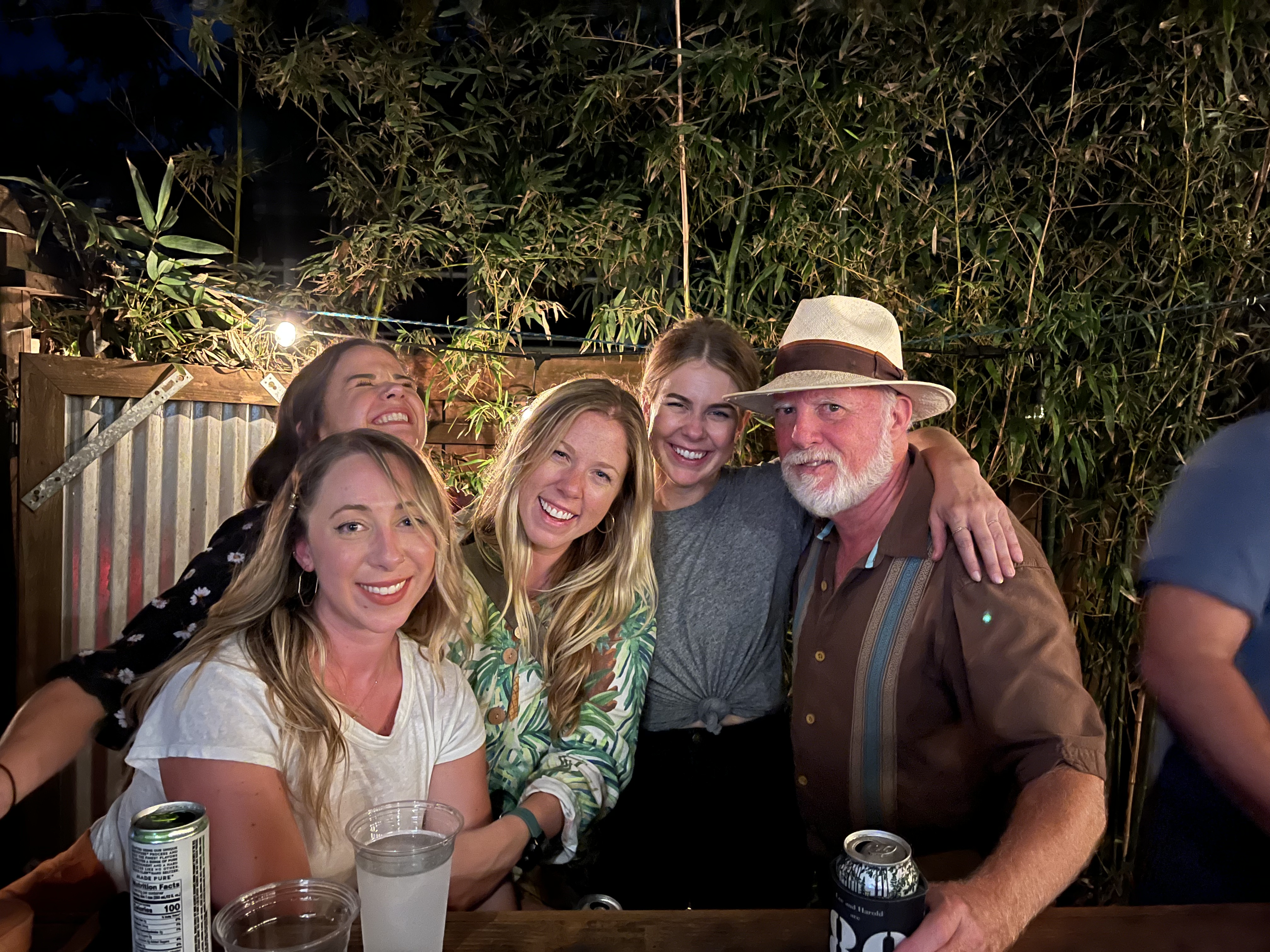
We all had a great time, and the boys and I got to hang in a bar reminiscing about days of yore – surfing on the Isle of Palms, playing wiffle ball in our backyard, bedtime readings, and  movies in theaters we’d seen together, starting off with Snow White and ending up with David Lynch’s Mulholland Drive.

Harrison (left) and Ned at Lowlife

We also got to celebrate Brooks’ 15th birthday, a festive occasion for sure!
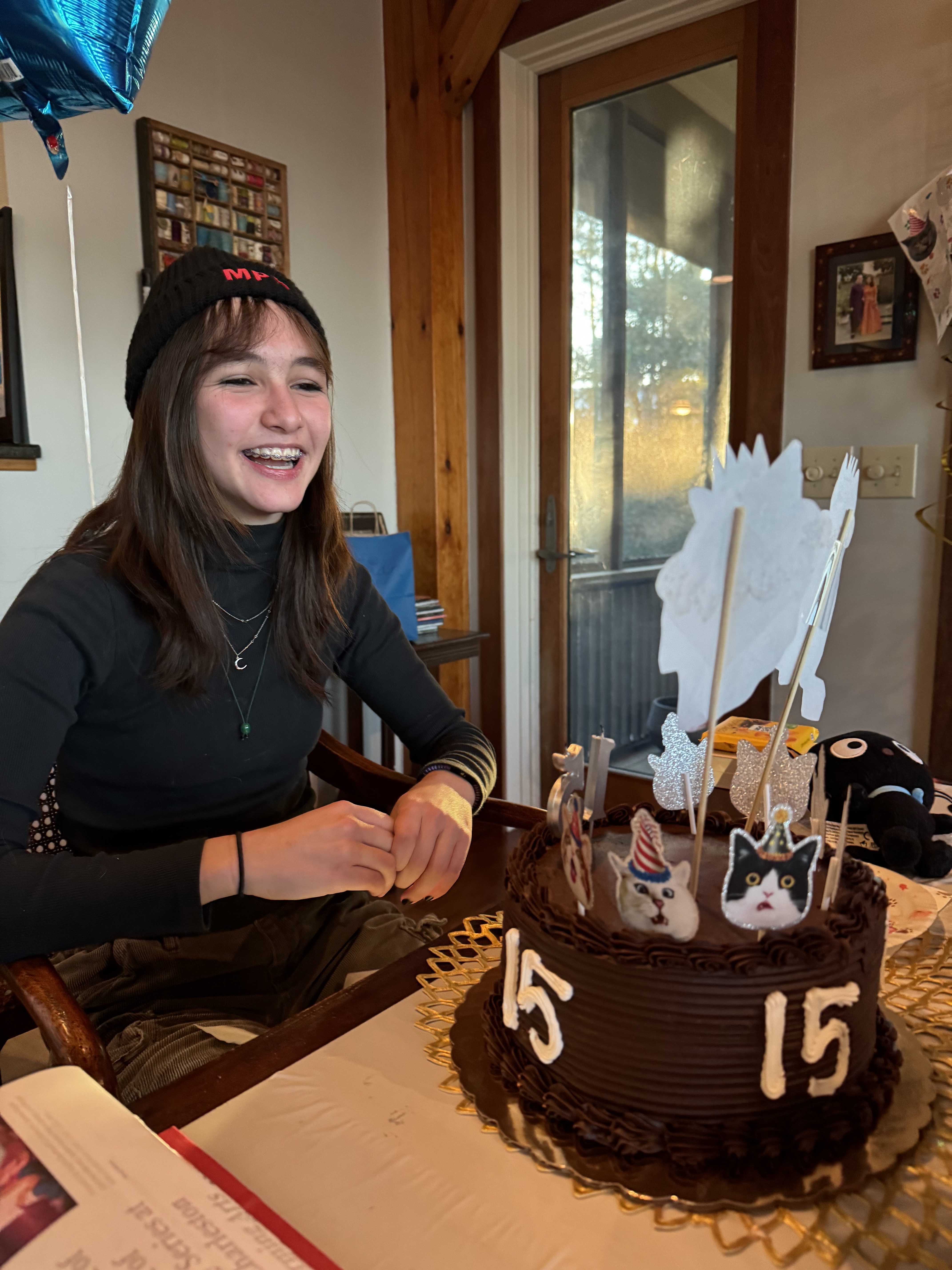
Brooks

But, alas, Harrison had to get back to work, so we sad our sad goodbyes, sad for me anyway, because of the limited number of these encounters left as my twilight continues its necessary progression. 

[Hello, sorry to interrupt, but I’m Marcus Aurelius, and I do not approve of that previous paragraph.]

You’re right, Marcus, that sounded whiny. And, sure, we can FaceTime. It’s not like when we depended on handwritten letters for communication. I remember my uncle Jerry’s infrequent missives to my grandmother when he was in the service. That had to be tough.
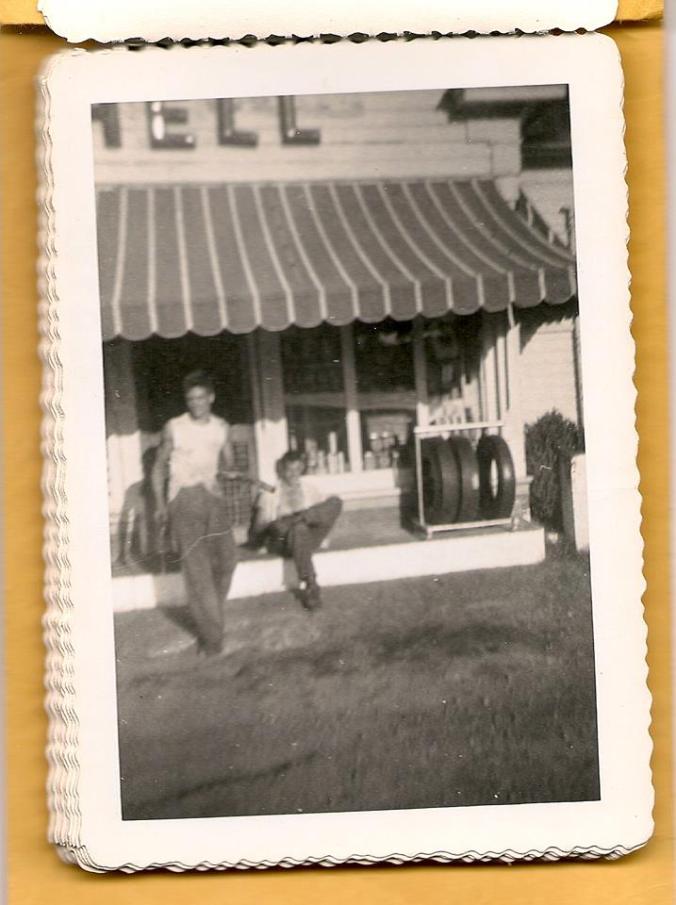
Uncle Jerry (standing) at my grandparents’ service station in Summerville

Back Roads Road Trip

Abandoning Caroline and bonus daughter Brooks, Ned and I took off to see his Aunt Becky, Uncle Dave, and Cousin Scott in Reynolds, nee Reynolds Plantation, a golfing development on Lake Oconee between Greensboro and Eatonton, Georgia. 

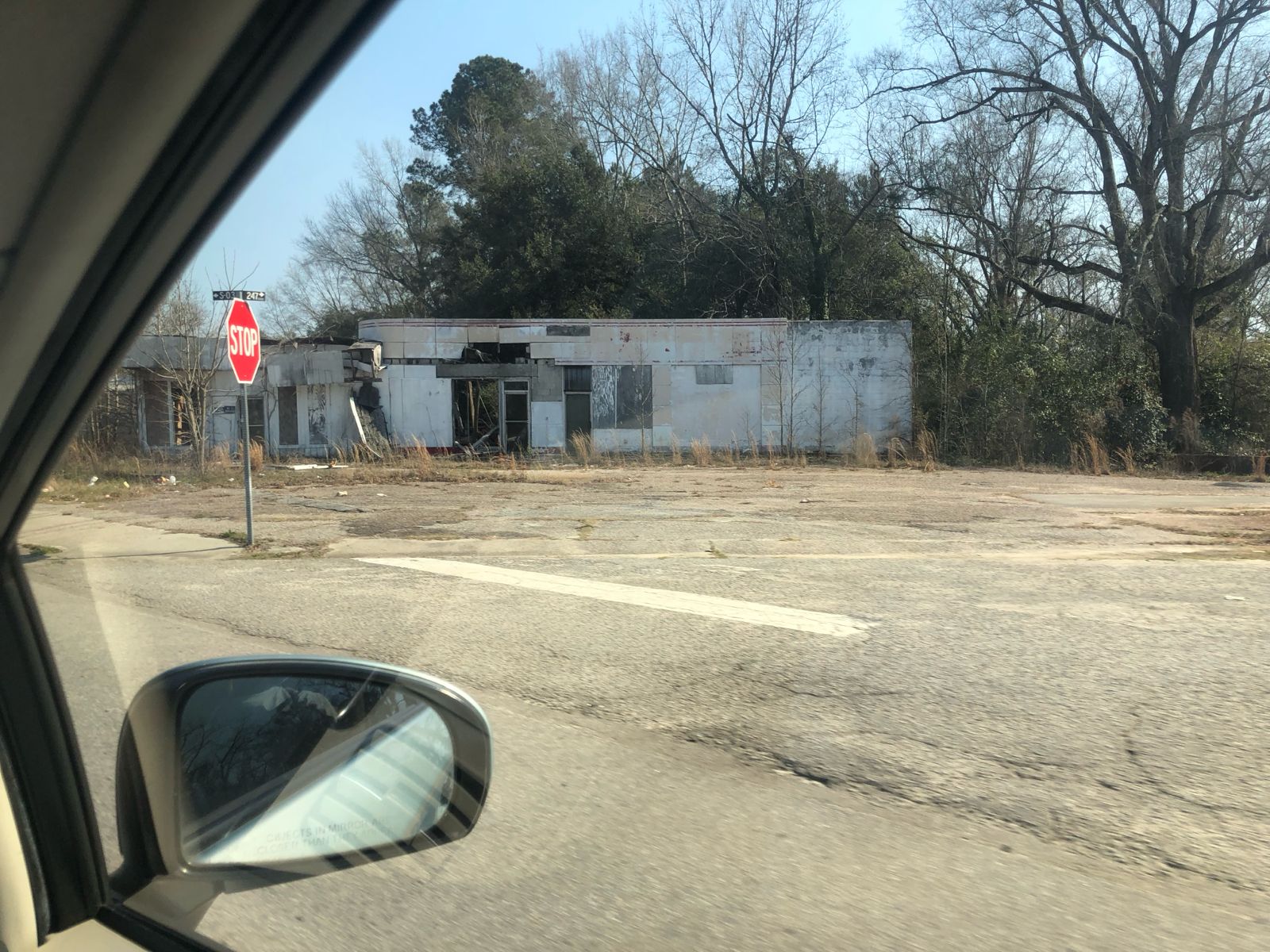
I almost always go on the back roads because you don’t see shit like this on the Interstate. 

Or curiosities like this.

We had a problem, though. ATT had crashed, Ned’s German phone was dataless, so [gasp], we’d have to negotiate the labyrinthian lefts and rights, rights and lefts, four way stop signs on Highways 17 South, 64 West, etc. etc. with an anachronistic road map, a document incapable of saying out loud in a soothing yet robotic tone, “At the light, take a right, Stonewall’s Calvary Road.”

How does the trip go? Do we pick up a blind hitchhiker complete with red tipped white cane?

Find out next time to Episode 2, “Allendale Ain’t Looking So Good, Though Come to Think of it, Neither Am I.”


[1] When hearing our waitress Jaime at Jack of Cups Saloon list food kids might like, before she was finished, he looked her in the eye, and said, “Grilled cheese please.”
Random Thoughts from a Dry Brain in a Dry Season

Random Thoughts from a Dry Brain in a Dry Season

“Vacant shuttles/Weave the wind.”  – TS Eliot, “Gerontion”

One of the many positive aspects of retirement is that I am no longer bound by industrialization’s time clock. If I awaken at three a.m.– what Gerard Manley Hopkins called “the fell of dark, not day” – instead of trying to grunt myself back to sleep, I tiptoe out of the bedroom, fire up the ol’ iMac and play Spelling Bee, a word game on the NYT crossword page. To attain the designation of “Genius” takes me anywhere from five to forty minutes. Generally, I fall asleep again around four or so and reawaken around six. I sometimes take two naps a day, one in the morning and one in the afternoon.

A man of leisure at last.

In my previous life as an English teacher, I would spend those awakened hours brooding about my working life and/or what TS Eliot called “the immense panorama of futility and anarchy that is contemporary history.”

By the way, that most quotable of quotes comes from Eliot’s essay “Ulysses, Order, and Myth.” Here’s another far less quotable snippet from that same essay: “Mr. Aldington treated Mr. Joyce as a prophet of chaos; and wailed at the flood of Dadaism which his prescient eye saw bursting forth at the tap of the magician’s rod.”

You win some; you lose some.

Speaking of losing, I just received this very minute this message via What’s App:

Hi, I’m Ivana. Nice to meet you.

I am looking for the other half of my life, someone who can accompany me throughout my life.

I am 36 years old and single. I like polite men. If you are very similar to me, please leave me a WhatsApp message now. I believe we can be each other’s life partners.

We can share each other’s lives and understand each other better.

WTF, as the young people say. 

Then last Friday, at Chico Feo, Harlan, the bartender, told me that a young woman, an investigative reporter, wanted to interview me. I said, “Uh, okay,” so she, an attractive, twenty-something, sat on the stool next to me and asked if I were a writer. I had assumed she had known that, so I said yes, and she asked what I had written, so I told her about Today, Oh Boy,” a novel set in Summerville, South Carolina, which coincidentally is where she’s from. To cut to the chase, she’s doing an in depth investigation on the serial killer Richard Valenti, who murdered two teenaged girls on Folly Beach in 1973. I have a close friend who was also kidnapped by Valenti but who escaped along with two of her friends, which led to his arrest.

She asked if I minded being recorded, and I said no, so she pinned a mic on my lapel and started asking questions. She was impressively articulate, explained her interest in the case, and while we were talking, my wife Caroline arrived, so I invited her to join the conversation because Caroline is much smarter than I am. The reporter is also friends with one of the teens who escaped and is hesitant to ask her about it because “she might not want to reopen that door,” as she put it. Caroline jumped in and talked about how the patriarchy deals with women who have been sexually assaulted.  By the way, this was two days after Trump’s 83 million dollar fine.

So anyway, I got 99 problems but worrying about grading essays ain’t one of them.

A Little Madness in the Spring

A Little Madness in the Spring

I recently ran across a balding fellow, probably in his early forties, wearing a grey too-snug tee-shirt that read “Every Day Is a Good Day.” Of course, I get the subtext: life is miraculous on the cosmic impersonal plane – the nighttime sky, as Hamlet put it, a “brave o’erhanging firmament, [a] majestical roof fretted with golden fire,” not to mention down below “the beauty of the world, the paragon of animals.” We should be thankful for the chain of events that gave rise to a consciousness that allows us to appreciate and contemplate these wonders around us. The subtext of the subtext is that this wonderfulness is the handiwork of a benevolent deity. Every day is a good day because it’s a colorful shard in the ever-shifting kaleidoscope of a creator god’s abracadabra. 

But, as we all know, a day’s goodness or badness depends on an individual’s experience during that 24-hour period. For example, at Chico Feo I just heard a horrific account of a traffic fatality that happened on Folly Beach last night. A car crammed with six drunks doing 65 in a 25-zone barreled into a golf cart driven, as the story was told to me, by a woman who had just gotten married that very day on the island.[1]

So, I might suggest, that the tee shirt’s message be edited: “For me, every day is a good day” instead.

And print this on the back.

A little Madness in the Spring
Is wholesome even for the King,
But God be with the Clown —
Who ponders this tremendous scene —
This whole Experiment of Green —
As if it were his own!

                                    Emily Dickinson


[1] The fellow who related the story said she was in her bridal gown.

The Pickleball Extravaganza

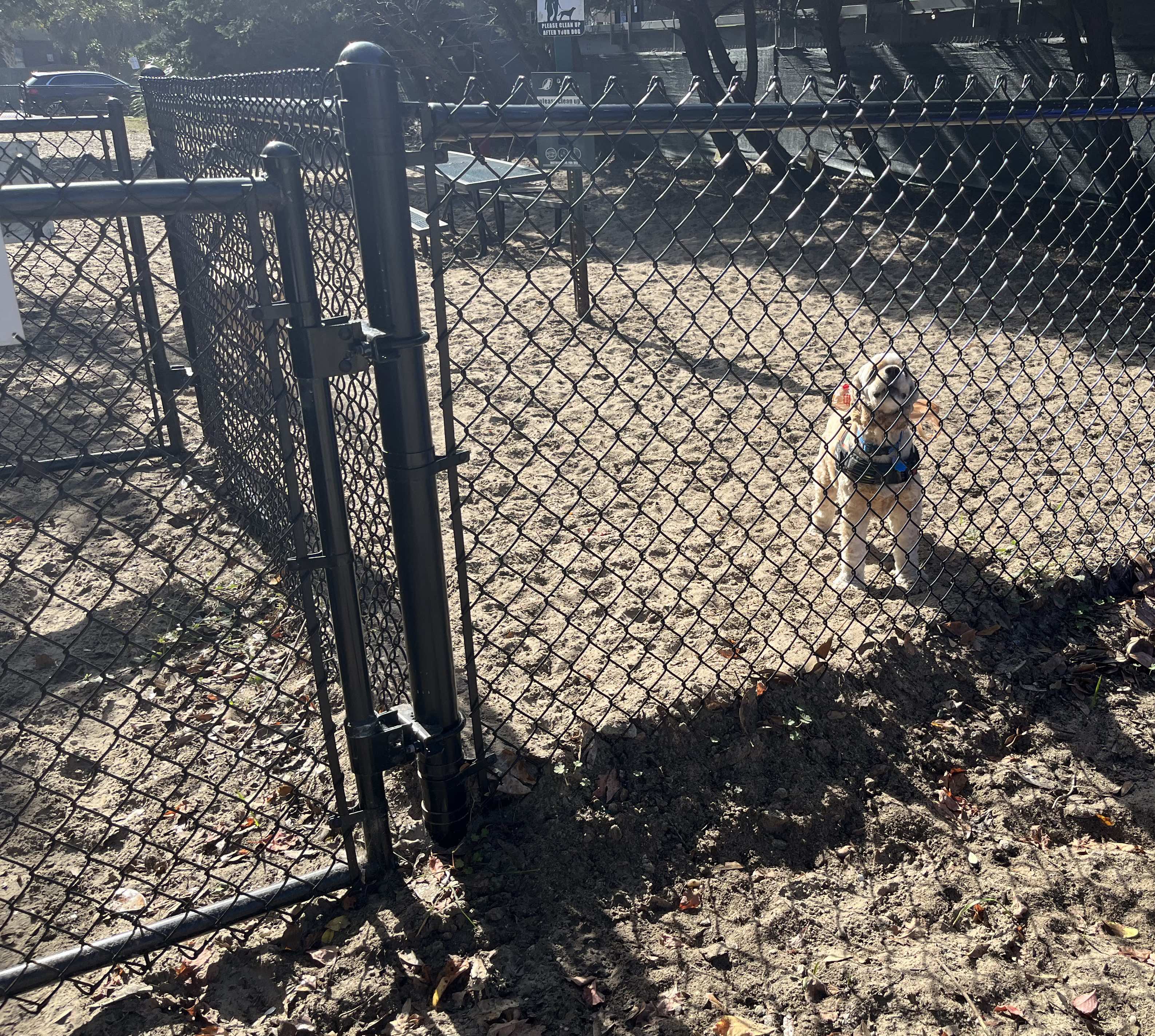
Yesterday afternoon, after dropping Caroline and Brooks off at the airport, I returned to my pet-ridden but otherwise empty house, and like a good canine stepdad, took KitKat to the dog park where she spazzed out with her patented chihuahua/Jack Russell berserko barking – high-pitched, frantic – perhaps off putting to the other dog owners. However, being dog lovers, they smiled at her, leaned over, and scratched her tiny head, understanding that dogs, like virtually all animals, are territorial.

Folly Dog Park

Unlike KitKat, the humans at the dog park are friendly, non-territorial. We know each other as acquaintances, and welcome newcomers into “our community.”

After I returned KitKat to the house, I decided to do a very not unusual thing, i.e., to ride my bike to Chico Feo for two or three (or as it turned out, in this case, four) low-alcohol Founders All-Day IPAs.[1]

When I arrived, the bar was pleasantly uncrowded. I conversed with my pals Mike and Francesca, bantered with the Irishman Jack, checked out Cory’s multifunctional Swiss-like army knife thingamajig, and talked Dharma with Megan, a poet, my Buddhist friend who through mediation is engaged in the very difficult process of dismantling her ego. She’s shedding intoxicants –­ ­not only alcohol and drugs, but social media, the World Wide Web itself, preparing to leave Folly to travel the world.

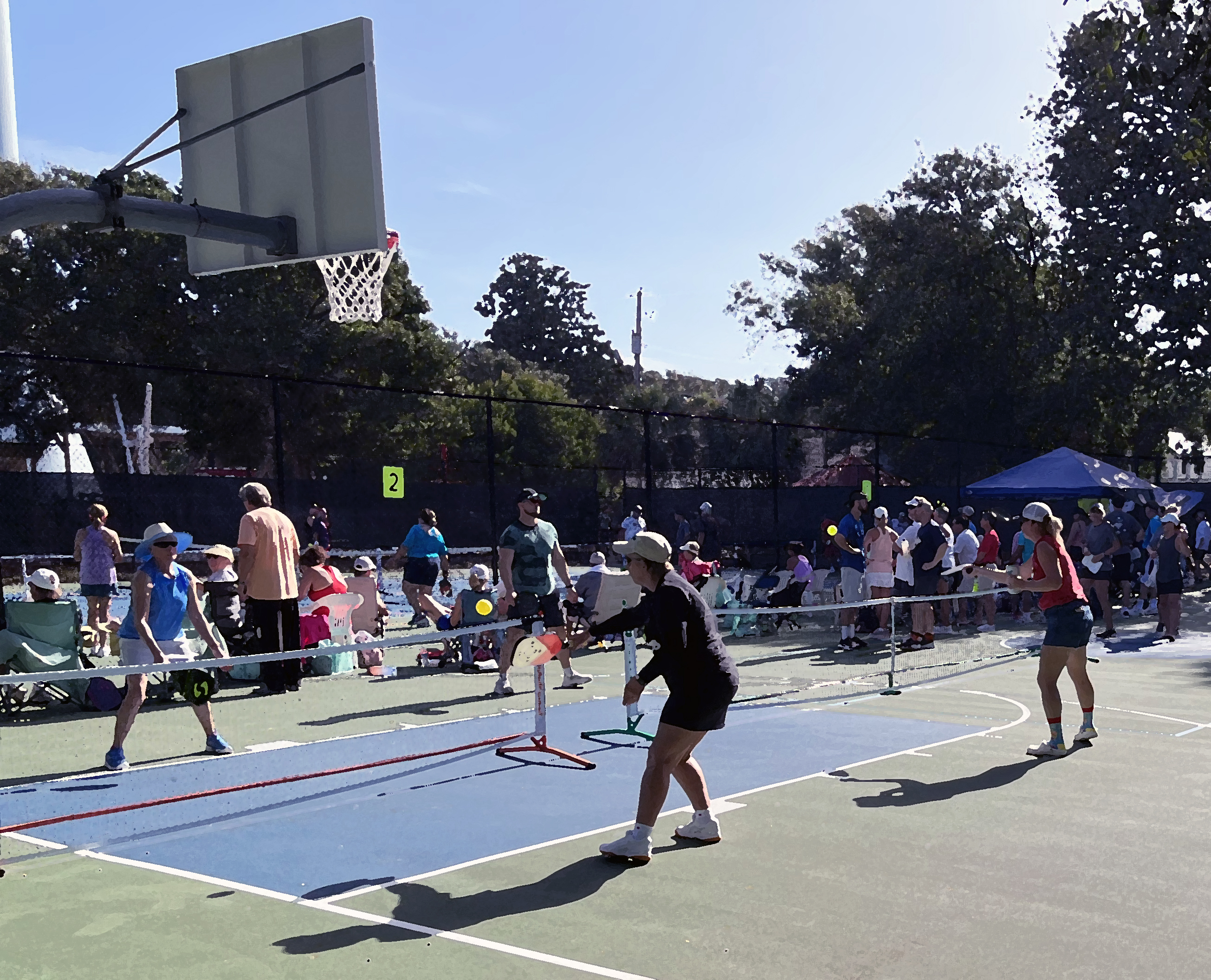
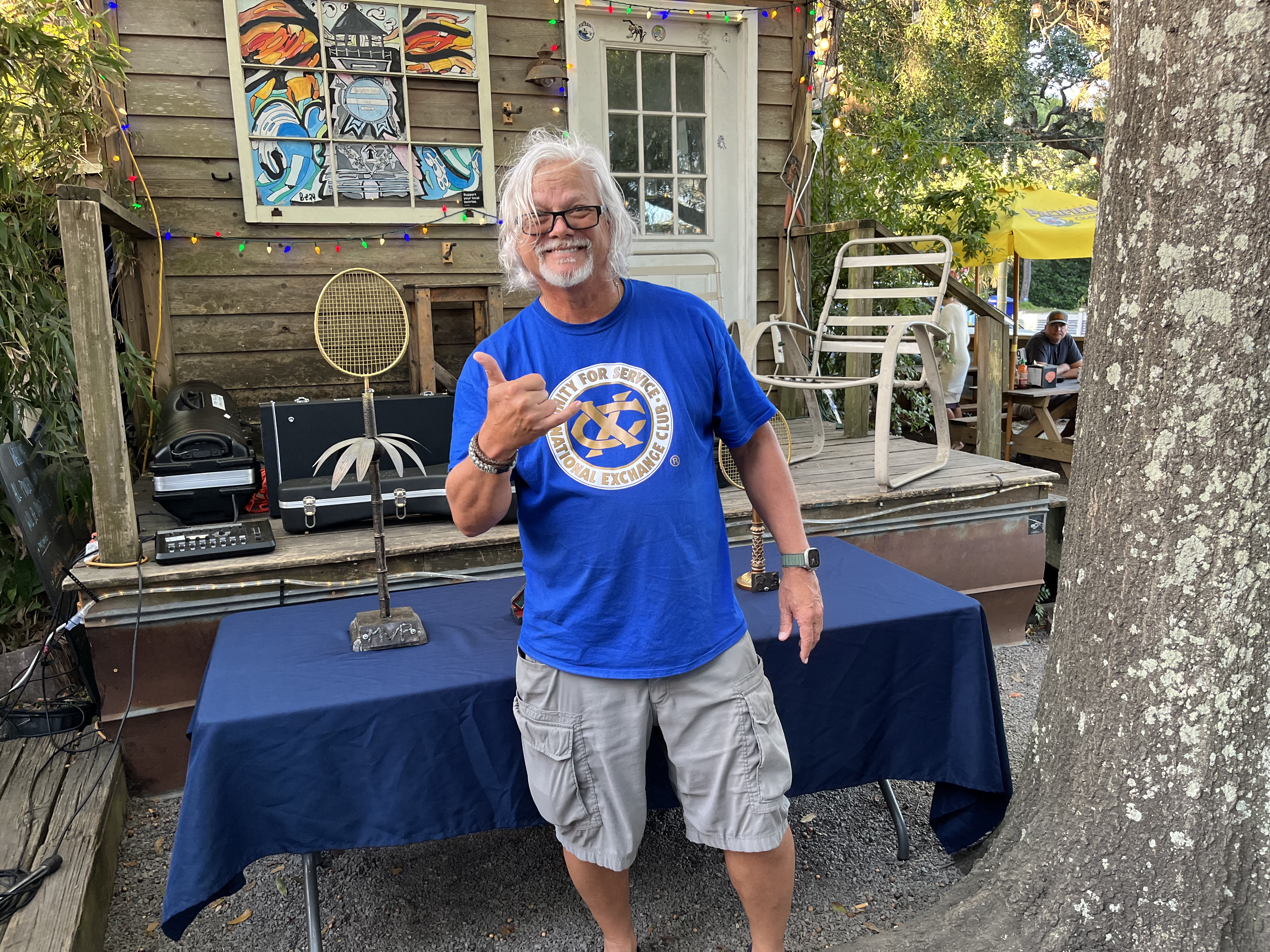
A band was setting up, and someone asked Solly, the greatest of bartenders, who was playing, and he said they were associated with the charity pickleball tournament being held this weekend at the Folly Beach tennis courts.[2]  Then, a bit later I spotted my pal Billy Grooms, the City Councilman, hauling a handsome trophy to be awarded to whoever[3] wins the tournament. It appeared that Chico was helping to promote the event.

Billy Grooms

Billy, a hip-looking fifty-something, seemed to be spearheading the tournament, and as a former manager of FM radio stations in the Columbia area, he’s an expert promoter. He sat next to me at the bar and rhapsodized about the salutatory effects of playing pickleball. As more and more tournament people filled the area in front of the bar, I joked that they had elevated the median age of Chico Feo by a decade or so, that I was feeling downright young, though that was hyperbole. Most of the patrons looked to be in their fifties of early sixties.

Billy likened the pickleball community to the movie Cocoon in which old hedonists fly off into outer space to recapture their youthfulness. Billy mentioned that the close quarters of the courts create a sort of intimacy as doubles partners face off at each other at close range. He extolled the camaraderie that pickleball creates, mentioning that opponents often engage in G-rated trash talking.

In other words, pickleball is a helluva lot of fun, not to mention great exercise.

Megan had spotted some young women across the bar dressed up as old folks, sporting white wigs and unhip attire, and wondered if they were mocking the pickleballers.

Although I was wearing a fedora, not a pith helmet, I immediately assumed my amateur anthropologist persona and went over to ask them what was up. “Noooo,” they chimed in unison in their pleasant upstate twangs, “we love pickleball.”

As it turned out, they were bachelorette party participants. One of the women, a short twenty-something in a white wig, assisted by another costumed woman on a stool, performed a magic trick for me with boxes and colors, and I dutifully played along. “Yes, green was the color I had chosen!”

All in all, it was quite a night at Chico with a much more wholesome crowd, some of whom seemed to have stepped directly out of a family friendly sitcom from the Sixties, Hugh Beaumont and Barbara Billingsley types. When one country club Republican-looking fellow shook my hand and said what a pleasure it had been chatting with me, I accidentally blurted, “Yeah, mon,” which perhaps confused him and made me feel slightly guilty.

Meanwhile, in front of the band stand, young couples danced with their toddlers. I warned Solly that now these wholesome folks had discovered Chico, they’d overtake the joint, displacing lovable territorial losers like I-and-I.

He shook his head like that ain’t ever going to happen.

Addendum: The next night I ran into the bachelorettes who had been in costume, and after reading this post, they wanted the world to know that they’re not twentysomethings but thirtysomethings. Whatever, they were a blast to hang out with. Safe travels, ladies.

photo credit Mikey


[1] Note to writers: the phrase “low alcohol Founders All-Day IPAs” is technically redundant because “low-alcohol” is implied in the adjective “all-day.” However, it sounds too cool not to say – low-alcohol Founders All-Day IPAs. I say ear music should trump over-rigid grammatical purity.

[2] Note, they’re called “tennis” not “pickleball” courts. Last week the NYTs ran a lengthy article about pickleball’s bourgeoning popularity and how traditional tennis players resent having their courts overtaken by practitioners of what they consider a bastardized version of their beloved sport. In fact, Megan, the Buddhist, falls into the traditional tennis category.

[3] In the a-foolish-consistency-is-the-hobgoblin-of-little-minds mode, I consider using the pronoun “whom” as a subject an almost unforgivable grammatical lapse.

Screen-Faced Nation

Megan Posey

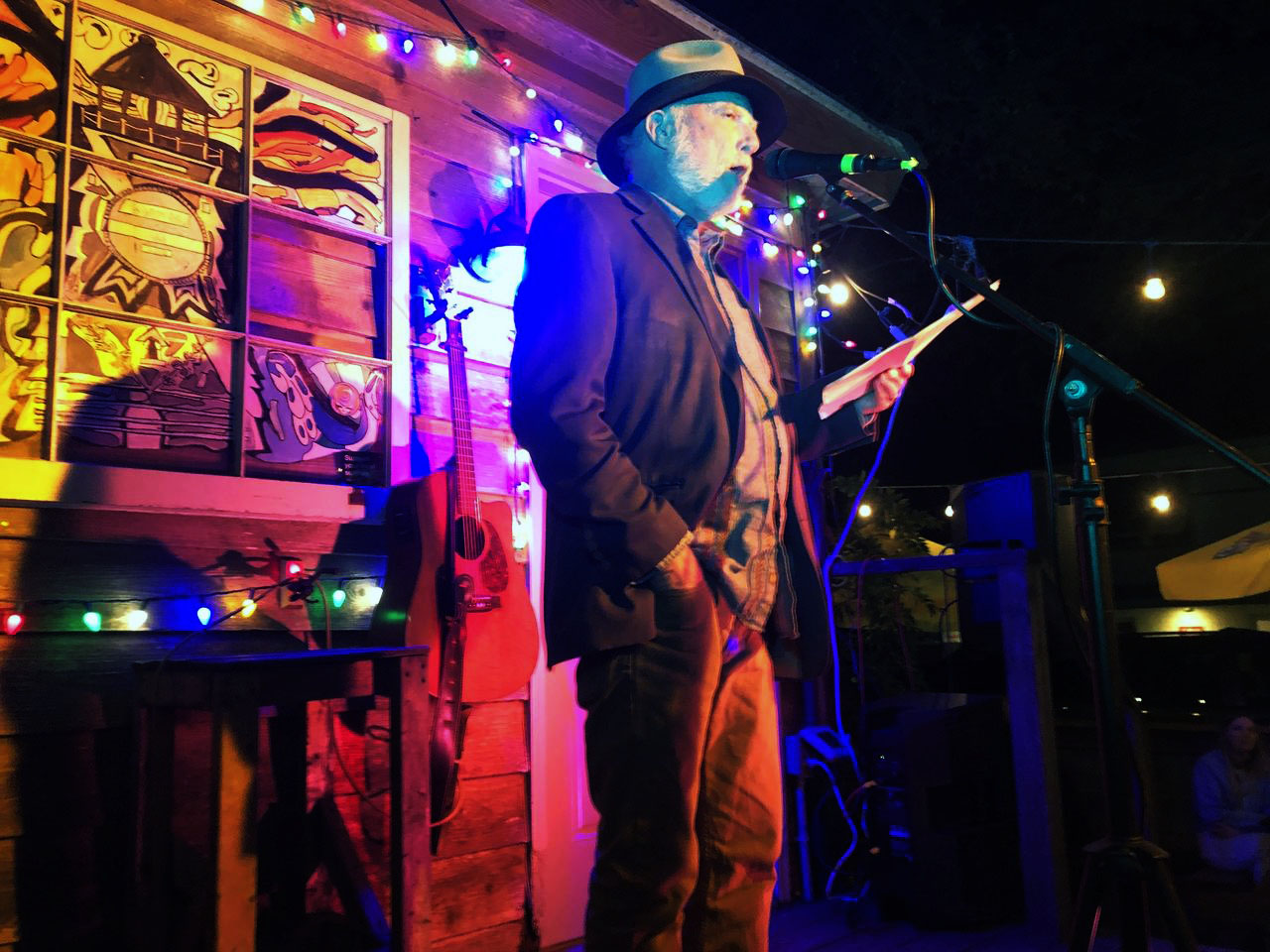
George Fox’s Monday Night extravaganza known as the Singer/Songwriter Soapbox provides local musicians and poets a venue to showcase their original works, and many of them are damned good, like Jason Chambers, Chuck Sullivan, among a host of others.

Last night Megan Posey recited – not read – recited “Screen-Faced Nation,” a performance you can check out in the video below. This twenty-something has some serious chops. Check her out.

Note: the incompetent videographer [embarrassed throat clearing] didn’t start shooting until the fifth line, but you can read the entire poem below the video.

Screen-Faced Nation

by Megan Posey

I’m reporting to you live from Addictionville, USA

Found in the collective mind of humankind

Where substances and behaviors disguised as property investors

Develop land on top of your bulldozed dopamine receptors

Uppers, downers, booze, gambling, sex, shopping and food

Are just some of the towns long established moguls of real estate

The city was historically inhabited by massive huddles of the tired and poor

And though many transients were lured in by the pleasure and escapism that dangled as bait

It was an exit on the interstate that you would probably just ignore

But that is clearly that is no longer the case

We’ve become a needle-armed, powder-nosed, screen-faced nation.

Pundits are puzzled over what led to the gentrification

But I’d like to shift your attention back to 2010

When we had just demolished OxyContin

And nicotine was undergoing renovation

The cigarette was outdated but we hadn’t yet created

A plan to market vaping to the younger generation.

So there was some land available in town

And a growing family looking to settle down

That’s when Social media began to break ground

And construct their now all-encompassing compound

But look beyond the flimsy facade of connection

And you’ll see an opium den filled to the brim with junkies

Fiending for their next self-esteem injection

This just in

Property crime in the area has now reached an all-time high

Your focus, motivation, and creativity are being jacked in broad daylight

But the truth is you hand them over without so much as a fight

See, you were so scared of getting left behind

That you closed your eyes and got in line with the blind

Until one day you woke up with your head pounding on a cold, hard floor

You tried to escape, but what did you find?

The foyer had turned to a labyrinth of corridors

And there was just no easy way out anymore

Even if you could manage to free your mind

These days you still gotta have at least one foot in the door

It’s sad to watch people waste their whole lives in this podunk town

They’re like stillborns in the underbelly who never started to crown

A real individual could have been born and that’s a hefty cost

But so long as you search outside of yourself for the way

It does not matter what turn you take, you will always end up lost

In the unnavigable wasteland of Addictionville, USA

The Folly of Living on Folly

art by Wesley Moore

The Folly of Living on Folly

With apologies to DuBose Heyward and George Gershwin[1]

Let us swear an oath, and keep it with an equal mind,
In the hollow Lotos-land to live and lie reclined.

Tennyson, “The Lotos-eaters”

Summertime,
And the living is queasy,
Traffic’s stalled,
And the rent’s sky high.
Our landlord’s rich
And constantly bitching,
So, c’mon, sweet baby,
Let’s stiff the bitch and fly.

Up ‘26,
there’s the hipster haven of Ashville
with its majestic mountains
‘neath a blue Carolina sky.
But come to think of it,
We’re pretty awful lazy.
So, never mind, sweet baby,
We’ll stay right here and get high.


[1] Gershwin wrote the song “Summertime” on Folly Beach.

The ABZs of Auto-Obituary Writing

Look, I’m vain, love attention.[1] Therefore, there’s no way I’m going to let anyone get in the last word after I have checked out of this Motel 6 of Life. 

No, I’m writing my own obituary before I expire, and you should as well. After I succumb, I certainly don’t want my cousin Zilla to compose my obituary. Rather than merely “dying” or “passing away” or “entering eternal rest,” I might have “left the world to be with the Lord,” or worse, “entered the loving embrace of [my] Lord and Savior Jesus Christ.”  Though I wouldn’t mind getting a hug from Jesus, I’m agnostic, so I want my obituary to be an accurate reflection of my life. 

Don’t trust others to do right by you. Do it yourself!

So, what follows is an easy guide for composing your very own obituary.[2]

Okay, let’s get started.

Rule #1. Know your audience. Chances are the readers of the obit are friends, family, or acquaintances. Most people don’t read strangers’ obits (yours truly being a notable exception), and if they do, you can bet they’re retired, likely former English teachers, and/or grammar Nazis. Therefore, make sure to proofread carefully but address the audience in a familiar fashion.

Rule #2. Sentence one should state the sad fact that Wesley is dead and when and where that regrettable transition took place. Although it’s not necessary to state the cause of death, inquiring minds want to know. In the following I have bracketed words that can be omitted according to your own predilections. 

Wesley “Rusty” Moore died Monday [at his home/at a sterile assisted living facility/on the side of the road] [after a short/long illness[3]//months of neglect// stumbling in front of a car outside of Chico Feo].

Rule #3. It’s best to get the bio out of the way first. Make sure to include the occasional introductory subordinate clause; otherwise, these lists of facts are deadly tiresome enough without your bludgeoning the reader with an unrelenting barrage of declarative sentences.

Wesley, the first son of Wesley E Moore, Jr and Sue Blanton Moore, began life on 14 December 1952 in Summerville, South Carolina. After graduating from Summerville High, Wesley attended the University of South Carolina and received a BA in English in 1975.[4] [Because of the post-OPEC oil embargo recession of 1975 and the fact that he didn’t own a car and couldn’t score a job], Wesley immediately entered the English graduate program the fall after his graduation.

Tending bar as a graduate student, Wesley met his first wife, fellow bartender Judy Birdsong. After they decided to marry, Wesley [weary of scaling the mountainous molehills that characterize literary criticism] left the university without a Master’s. After [somehow] getting an adjunct gig at Trident Technical College, Wesley and Judy wed on 4 February 1978 [in Decatur, Georgia.]

[After a short stint of collecting rejection slips,] in 1985, Wesley started teaching at Porter-Gaud. By then, Wesley and Judy had two sons, Harrison and Ned, [who eventually attended Porter-Gaud and rode to school with their father, providing the boys the opportunity to amass quite a quantity of profane and vulgar words as their father battled traffic from the Isle of Palms and later Folly Beach on their way to West Ashley.]

After Judy’s death from lymphoma [on Mother’s Day] in 2017, Wesley fell in love and married Caroline Tigner.  Caroline, her daughter Brooks, and Wesley made their home in Folly Beach, a community they treasured [until it was overrun by Airbnb short term rentals that transformed the once funky residential island into a virtual Sodom and Gomorrah/ Myrtle Beach].

Bored yet? 

Rule #4. You should follow the bio with a paragraph that humanizes the deceased. I don’t know how many obits I’ve read that have short-changed the not-seemingly-so-dearly departed by expending a scant sentence or two. 

For example, Harold enjoyed fishing. That’s it; that’s all it says. Or Mabel enjoying playing with her grandsons.

In mine, I would mention my writing, particularly the novel Today, Oh Boy! and the handful of writing awards I’ve received. I would also mention my collage-making and blog and perhaps my four decades of surfing.

Papa Hemingway, Joyce, and Tom Waits in Wilmington, a collage by Wesley Moore

Rule #5. You should then list survivors and pre-decedents. By the way, if you’re old like me, there’s no need to specify that your parents preceded you in death.

NOT: The great-great-great-great-great grandson of Adam and Eve, Methuselah was predeceased by his parents . . . 

Rule #5. Although the time and place of the memorial service/funeral/burial at sea, can be stated at the beginning of the obituary, I prefer it at the end, though it’s completely up to you.

Now, all you have left is to designate where memorial donations should go and perhaps to thank anyone who was especially helpful in the dying process.

So that’s it, have at it, don’t put off until tomorrow because, well, you know why.

Fin.


[1] Hence this blog.

[2] I realize that most people (Prince Hamlet being a notable exception), don’t cotton to contemplating their own demise. However, look upon the exercise of auto obituary composition as a fond look back on a life well lived. On the other hand, if you consider your life a tale told by an idiot, full of sound and fury, signifying nothing, you can lash out at your enemies in your obit. It’s up to you! [insert smiley emoji].

[3] For me, the more specific the better. If possible, I’d like to precisely name the illness, for example, “after an acute case of cirrhosis of the liver.” BTW, I hate the trite trope of illness as a martial encounter. Waging heroic battles with Goliath-like adversaries such as inoperable brain cancer is yawn-producing. Certainly, there must be people out there who whined their way to the grave.

[4] Why are red-blooded Americans omitting the “from” in sentences pertaining to graduation, as in “graduated high school or graduated university?”  

Hanging with Dylan

An incident that occurred yesterday engendered a frustrating dream last night, or to be more accurate, this morning. 

On most weekday afternoons around five o’clock, I walk to Chico Feo for two or three beers. Yesterday was particularly lovely with its offshore breeze and low humidity. I found a seat at the bar and chatted with someone named Thomas about Charles Bukowski. Later, I learned from my friend Jim that the operator of Folly toll booth of the 1920s could refuse entrance to undesirables. Right before leaving, I hung awhile with the swashbuckling twenty-something surf crew, Connor, Nathan, Ike, etc. Eventually, I forked over fifteen bucks to bartender Gavin for three low potency IPAs (tip included) and began my seven-block trek back to East Huron for a chat on the deck with Caroline before she prepared fried chicken, air-fried broccoli, and couscous for dinner. 

When walking home, I take various routes, depending on the heat and shade or my mood. Yesterday afternoon, I took East Erie to 4th Street, and as I made the turn, I spotted a couple in their forties playing badminton. She was wearing a knee-length floral dress and giggling girlishly as she retrieved what we vulgarians call the “birdy.”[1]

Lovely, I thought, wholesome.

As I turned right from 4th to Hudson, I encountered eight or so short-term renters who had placed the largest inflatable pool I’d ever seen in the side yard. Three of the young men, in their late twenties or early thirties, splashed around sitting in the pool while three or four women stood over them with their wine. Completing the tableau was a springer spaniel in profile defecating, his head facing the pool. 

It was a wonderful sight to see, the cast of characters spaced harmoniously, the modest one-story cream colored clapboard house in the background, the dog triangular. I thought, “Man, Edward Hopper would love this,” and then, “I ought to take a picture,” but I had already passed and knew that if I turned around, the dog likely would have finished its business.

In this age of unlimited photo-shooting, many of us – and I’m including myself here – feel that if we don’t have a photo, it didn’t happen. I remember visiting the Louvre years back and marveling at Japanese tourists viewing masterpieces through the lens of cameras and my ruing their inability to nakedly gaze in appreciation of the art in and of itself. But now here I was approaching the fifth block of Hudson and chiding myself for both not taking the picture and for regretting not taking the picture, which led to more general musings about behavioral oddities in the age of social media.

Fastforward ten hours or so. 

I’ve bumped into Bob Dylan on Folly, a younger version than I one I last saw in concert.[2] He’s dressed modestly and is relatively friendly. Afraid of alienating him, I don’t share what a pivotal role he played in my life or ask any of the thousands of questions that have popped up in my now teeming brain. 

I’m desperate, though, to take a picture, to prove to the world I was hanging with Bob. He is on Folly for an exhibit of his art, and I ask if I can take a picture of one of his paintings, but he doesn’t answer . I walk away to fiddle with my phone so I can take a photo, but when I come back, he has vanished, replaced by a core of festive people saying, “We heard that Dylan was just here.”

Yes, he had been, and I had been in his presence, sort of, but sort of not, because rather than living the moment, I abstracted the experience by wanting photographic proof, validation for my coolness, hoping that some of his immortality would rub off on me.

A day late and a springer short

[1] I can’t bring myself to use “shuttlecock” even though “giggling girlishly as she retrieved the shuttlecock” sounds more musical, an improvement over “what we vulgarians call the ‘birdy.’”

[2] I don’t know if this is related, but Bill Murray was at Chico Feo three weeks ago, and I had no inclination whatsoever to engage him in any way or to take a photo. Also, a couple of Christmases ago, I met Stephen Colbert at a relatively small house party. We conversed about Porter-Gaud, his alma mater and where I used to teach. During the party, only one person asked to have his picture taken with him, which I considered très gauche.