Too Much Trouble – Sneak Preview

Too Much Trouble

BOOK I

Chapter One: Goings and Comings

Thornwell Dormitory, the University of South Carolina, 22 December 1972 

Crisscrossing his dorm room, Rusty Boykin wads up clothes and shoves them into a sour-smelling duffel bag. He leans over and snatches his two-tone cowboy shirt from the floor, the one with fake pearl snaps, and shoves it in on top of two pairs of faded Levi’s. Turning around, he rifles through the built-in drawers in his closet and crams into the bag the four boxer shorts he owns. After yanking the drawstring tight, he slings the duffel over his shoulder hobo-style and steps out of the room into the suite he shares with three other students. Before leaving, he checks himself out in the mirror above the sink, admiring his Keith Richards–inspired shoulder-length shag that’s sure to give his ol’ man a hemorrhage-and-a-half.

Red on the head like a dick on a dog 

His suitemates, Jersey boys, have already departed for the frigid Northland. Despite going to the University of South Carolina, two-thirds of Rusty’s dormmates hail from the Northeast while the rest come from small in-state towns like Hampton, Seneca, and Sumter. Yesterday was the last day of exams, so most students have already cleared out for the holidays.

Rusty doesn’t own a car, so he’ll get back home the way he usually does—by hitchhiking. With luck, someone will take him straight to the Summerville exit so he won’t have to hitch on the interstate. It’s no fun shivering on the side of the highway, getting wind-whipped in December as 18-wheelers roar past on their way to some soulless Kmart loading dock. Not to mention that hitchhiking on the interstate is illegal.

I-95, Robeson County, North Carolina, 20 December 1972 

Rusty’s pal Alex Jensen, better known as “AJ,” has had a socially successful but academically disastrous first semester at Hampden-Sydney College—three Ds, an F, and a lone A in freshman English. “Frat life ain’t no good life, but it’s my life,” he sometimes jokes, echoing the Willie Nelson song. The good news—if you can call it that—is that AJ’s parents have become inured to being disappointed in their only offspring, a child conceived late in life when his mother Anne was 40 and her husband Thom was 52. So they won’t be shocked when they discover AJ’s abysmal grades and that he’s been lying, having assured them throughout the semester that classes were going great.

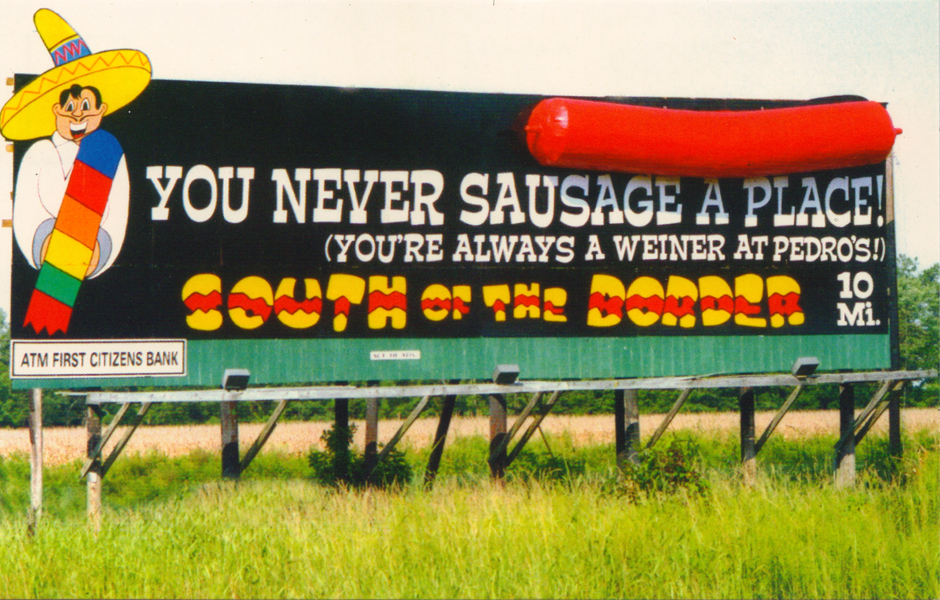
Four hours into his drive from Hampden-Sydney, AJ’s hangover has leveled off into a dull headache. He measures his progress to Summerville by the number of miles separating him from South of the Border, a Mexican-themed tourist attraction just below the state line. An absurd number of South of the Border billboards featuring their sombrero-sporting mascot Pedro appear with increasing frequency on the drive north or south on I-95 toward the North Carolina/South Carolina border. Up ahead, AJ spots yet another billboard, this one with a giant red hot dog standing upright above a sign that reads YOU NEVER SAUSAGE SUCH A PLACE!
(YOU’RE ALWAYS A WEINER AT PEDRO’S)
SOUTH OF THE BORDER 10 MI.

He thinks, Hell, why not? I’ll stop there, check it out, maybe get a bite to eat, and take a piss.

Fun ahoy!

506 Farrington Drive, Kings Grant subdivision, Summerville, South Carolina
21 December 1972 

Jill Birdsong, a tall, slender freshman at Davidson College, opens a Christmas card from her high-school boyfriend Ollie Wyborn. A fourth class cadet at the Air Force Academy, Ollie isn’t allowed to come home for Christmas. Jill hasn’t seen him since they broke up in June just before his departure for Colorado Springs. Although fond of Ollie—she admires his intelligence and integrity—Jill has never been “in love” with him, and their make-out sessions were relatively tame—especially for Summerville’s teenage culture, where, at least once every school year, some sophomore or junior or senior suddenly disappears “to stay with her aunt for a while.”

At Davidson, Jill has had a few dates, but nothing has clicked. Just recently, though, she has started drinking socially. In high school, Jill was religious—a member of the national Christian organization Young Life—and never indulged in alcohol; however, gradually, thanks largely to her biology courses, Jill has stopped believing in the Resurrection, a change of heart (and mind) she would never share with her parents, who are devout Episcopalians but not teetotalers.

Ollie, whose lack of playfulness had always been a bit of an impediment in their relationship, has never been a believer. In fact, in high school, when Rusty Boykin once asked Ollie if he believed in God, Ollie explained that the series of events Rusty had mistaken for divine intervention was merely coincidence. Although not friends, they had been thrown together the October of their junior year after some rednecks jumped Ollie outside the pool hall. Rusty and his would-be girlfriend Sandy Welch were slowing down, looking for a parking space when they saw Ollie karate-kick one of his three assailants.  They yelled for him to jump into Sandy’s Mustang to escape—only to have the rednecks tear after them in a high-speed chase through town. The rednecks’ pick-up ended up running off the road at Bacon’s Bridge and crashing into the Ashley River.

In Summerville, fistfights are common, especially among the undereducated white male population. Ollie, originally from Minnesota, was surprised at first by the belligerence and obsessions of small-town Summerville, especially people’s fixation on what they call “the War Between the States.” Ollie has contemplated the differences between the cultures of the Midwest and South with anthropological detachment. A talented academic with a scientific bent, he finds almost everything interesting.

Ollie cares deeply for Jill, but he’s a rationalist, not a romantic, so he understands it made sense for her to nix their high-school romance when college puts two time zones and military restrictions between a couple. Anyway, his boyhood dream of becoming an astronaut is paramount, so he intends to focus his attention on that goal. He could have asked for leave toward the end of the holidays but opted not to because he’s determined to demonstrate his devotion to his duties.

Jill slides the card from the envelope, glances at the glittering snow scene, then opens it and reads Ollie’s neat, efficient cursive:

Happy Holidays, Jill. As always, I wish you the best and hope that if our spring breaks coincide, we can perhaps go to a movie or have lunch and catch up. Your forever friend, Ollie.

Poor Ollie. 

I Read the Obituaries Today, Oh Boy

At my age, with 2.7 billion heartbeats (and counting) above my belt and 26,598 days (and counting) marked off my calendar, I’m not surprised when I learn that one of my highschool classmates has departed for “that undiscovered country from whose bourne no traveler returns.”[1]

A couple of weeks ago, for example, news that my junior-and-high school acquaintance Roanld Pinkney had died appeared on Facebook.  Ronald was one of the pioneering Blacks who integrated Summerville schools years before wholesale integration. No telling what indignities he suffered in silence. I’ve likened these pioneering Blacks to Jackie Robinson, intelligent, thick skinned stoics courageous enough to subject themselves to abuse for progress’s sake. Ronald was a genuinely good guy, and I toyed with the idea of attending his funeral, but didn’t, of course, because I’m selfish.

However, this Wednesday when I turned to the obituary pages of the Post and Courier and saw the name Adam Martin Reiley Jacobs VII, I was taken aback. Although Adam and I lost touch after he was drafted and I left for college, he was one of my best friends in my last two years of high school. I often stayed at Adam’s house, or we’d hang for days at Jerry Locklair’s beach house across from the Washout. 

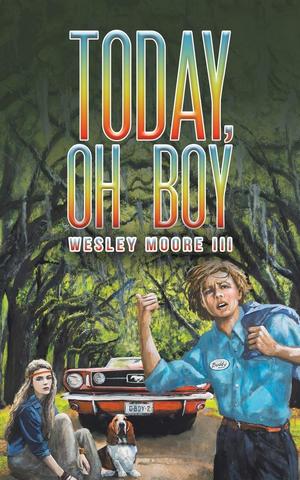
The thing is, even though I hadn’t seen Adam since his Uncle Sammy’s funeral a quarter century ago, I’ve been hanging out with him over the past few years because he’s the inspiration for the character Will Waring in my novel Today, Oh Boy. Perhaps that’s why I’m taking his death so hard.

Right now I’m in the process of writing a sequel to the novel set in 1972 when characters from Today, Oh Boy return to Summerville for Christmas after their first semester of college.[2] Will has just been drafted, has received orders to report to Fort Jackson in early January.  

Last Wednesday, the morning I learned of Adam’s death, I had just finished writing a scene where Rusty’s visits Will at his place. For Christmas, Rusty gifts Will his beloved blue jean jacket with the rolling paper icon Mr. Zig Zag silkscreened on the back. [3]  Will had openly coveted the jacket.

“Damn, Rusty, you scared me!”

“Sorry, man. I knocked, but those headphones make you as deaf as Helen Keller.”

Will stiffly rises from the sofa, and they shake hands.

“I guess you’ve heard the news,” he says.

“God, yes. I’m so sorry, man.  Whatcha gonna to do?”

“Bite the bullet.  I thought for a second about going to Canada, but I’m just gonna bite the bullet and hope like hell I don’t end up in Nam.”

Will looks – what’s the word? – haggard – though 20-year-olds aren’t supposed to look haggard.  In their friendship triad, it was always Will who preached chill to AJ and Rusty, chastising them for what he dubbed their “reel-to-reel anxiety.”

Rusty extends his arm that holds the present. “Merry Christmas!”

“Man, looks like whoever wrapped this was on smack.”

“Guilty but not guilty,” Rusty says.

Will removes the paper and sees that it’s the Zig Zag jacket. He pauses, holds it out at arm’s length to admire the silk-screening.

“Wow, man, thanks, but I can’t accept this. Though really appreciate the gesture.”

“But I want you to have it.”

“When I wear it, people behind me will mistake me for you.”

“So you’re planning on dying your hair red?”

“You mean like a dick on a dog?”

They both laugh.  

After Today, Oh Boy was accepted for publication, I worried that Adam might read it and get pissed off I had partially based Will’s character on him.  I worried that Adam might not appreciate the scene where he and AJ share a joint or how I portrayed his mother, a source of comic relief, though she’s really not his mother (and I find her sympathetic). 

There’s a bit of solace in that no one in the novel comes off worse than Rusty, the character based loosely on me. Wesley Moore III probably has the strongest case for a lawsuit. But the thing is, even though Rusty and I had red hair and both our parents smoked like fiends, he’s not really me. He’s much stupider than I was, but also much nicer.  When an interviewer once asked my pal Josephine Humphreys if any of the characters in her novels were based on her, she said, “No, but I sometimes let them wear my sweaters.”  I can relate.

When I posted news of Adam’s passing on Facebook, I was surprised by how people seemed to be moved by his death even though their constant refrain was “I haven’t seen him in 50 years.”

Here’s my brother David’s response, “This has affected me more than I would have thought.” Mutual friend Susan Wallace Hoppe, though she hadn’t seen Adam since the 1970s, wrote, “This death has really hit hard.”

Why? Why are we so moved by his death when he’s been absent from our lives for a half century? 

I believe it’s because Young Adam was handsome, charismatic, kind, modest and came to be a sort of icon in the early days of Summerville’s rather tepid counterculture.  He was an artist, a drummer, a rebel, a sympathetic friend.  In our minds, he’s the avatar of our youth, so to speak, a sort of immortal. But, of course, he wasn’t immortal. If dashing Adam is dead, we can’t be far behind. 

I was expressing all of these sentiments to my wife Caroline, and she said she thought that Adam would be grateful to be in the novel because he’ll come to life whenever someone reads the book.  

I don’t know if Adam would have liked Will, but I’d like to think so. I created him to be likable like Will. He’s, in a way, the most humane character in Today, Oh Boy. 

In fact, at least in the novel, I’d rather be Will than Rusty.

Anyway, goodnight, sweet prince.


[1] From Hamlet’s 3d soliloquy.

[2] Those of you who have read the novel will be happy to learn that Ollie Wyborn’s dream of attending the Air Force Academy has come to pass. 

[3] The jacket actually belonged to Tim Miskell, and Adam, who was an artist, had done the silkscreen.

Emma Bovary Meets the Hardy Boys

Obviously, I’m a huge fan of the novel as a literary genre. Just the other day, I was explaining to someone at Chico Feo how literary novels can be treasure troves of vicarious experience because they feature lifelike characters who behave like real people.  These novels aren’t didactic, but by co-experiencing Emma Bovary’s tragic vanity, you might glean that fabricating a persona through conspicuous consumption is not the way to go. 

In other words, rather than discovering through personal experience that purchasing a vintage Rolls Royce Silver Shadow will likely destroy your credit and leave you destitute, you can witness rabid Emma’s spending sprees, yet not personally suffer the consequences of her foolhardiness.

Of course, part of Emma’s problem is that she mistook the romance novels she misread as real life, the way I misperceived the Long Ranger as real life when as a five year old in Biloxi, Mississippi, I leapt from the top of my chest of drawers onto a rocking horse that catapulted me face first on a wooden floor, a hard lesson (literally) in appreciating the difference between illusion and reality. If I had read about a fool boy doing that in a book, I never would have tried it myself.

As Laurence Perrine states in his wonderful textbook Literature, Sound, Structure, and Sense, “inexperienced readers” [of commercial fiction] want their stories to be mainly pleasant. Evil, danger, and misery may appear in them, but not in such a way that they need be taken really seriously or are felt to be oppressive or permanent.”  A steady diet of happy endings could inculcate in an unsophisticated reader (or movie goer) the misperception that things always work out.  

In other words, evil, danger, and misery need to be taken very seriously.[1]

Of course, the puritans, those “vice crusaders farting through silk,” who have taken over the schoolboards in our budding authoritarian state are aware of the potential for fiction to alter attitudes.  For example, reading a novel that portrays a gay teenager as a decent, sincere person doing her best to navigate the perilous journey of adolescence might suggest to a homophobic sixteen-year-old that gay people are worthy of respect and empathy. 

The vice crusaders certainly don’t want that.

Just for the hell of it, after rereading Jo Humphrey’s brilliant but under-appreciated novel Fireman’s Fair –set in the disorienting wreckage of post Hurricane Hugo Charleston – I switched to escapist fiction, and for the first time since I read it out loud to my sons, ripped through the Hardy Boys series’ first title The Tower Treasure.

Whereas Jo’s book featured an array of well-rounded characters, The Tower Treasure trots out a series of underdeveloped static, one-dimensional mouthpieces: the indulgent dad, ace detective Fenton Hardy, his wife, a homemaker who doesn’t merit a first name because all she does is make sandwiches, and the boys themselves, Joe and Frank, and their various “chums” and female friends.

(A sidenote to budding fiction writers: avoid elaborate dialogue tags like “‘You’re elected,’ the others chorused.'”[2])

Truth be told, I actually enjoyed The Tower Treasure, which, despite its flaws, boasts a fast-moving plot that creates temporary suspense, but I never feared that the one of the two helmetless boy detectives would crash his motorcycle and end up a paraplegic.

And, of course, the novel also offers sociological insights into the attitudes of White people in the early 20th century and how those attitudes changed as the series progressed through the decades, e.g., Mrs. Hardy’s earning a first name –– Laura –– and eventually working outside the home as research librarian.

Someone (but not me) should do a scholarly paper on how the Hardy Boys novels reflect the social mores of their times and how those changing mores are reflected in changes in the novels’ depiction of the white enclave of Bayport, a city in New York in some novels and New Jersey in others.

After all, the ways things are going here in the dumb-downed US, the Hardy Boys may replace Animal Farm as required reading.


[1] Just last week a cook a Chico Feo, Jorge, who had a valid visa and a green card, was apprehended by ICE as he played by the rules by visiting his immigration office. ICE handcuffed him and swept him away to god knows where.  I don’t foresee a series of hairbreadth escapes in his future but, rather, disorienting displacement, maltreatment, in sum, a horrible existence. A novel dramatizing his sad journey could offer insights into the human condition; however, although an action novel depicting his escaping might be fun to read, it would literally be escapism, a means to avoid our everyday humdrum. 

[2] That the six “youths” in the scene all “chorus” the exact phrase “you’re elected” is distracting and Hindenburgs my suspension of disbelief.

Alex Werrell’s Book Launch Intro for Long Ago Last Summer

My former student and forever friend Alex Werrell has, as my mother used to say, “a way with words.”  I discovered that talent when I taught him in an honors Brit Lit survey several years ago at Porter-Gaud School.  When we were reading Chaucer’s Canterbury Prologue, Alex, an opera buff, turned me on Alessandro Moreschi, “the last castrato.”  Chaucer hints that the Pardoner has been, as we callous pet owners say, “fixed.” 

No berd hadde he, ne nevere sholde have

As smothe it was as it were late y-shave

I trowe he were a geldyng or a mare.[1]

I explained to the horrified students that boys with beautiful voices were sometimes disencumbered of their testosterone-producing testicles to preserve the youthful timbre of their angelic voices, “a small price to pay for art’s sake,” I’d joke.

Playing Moreschi’s recording of “Ave Maria” became a tradition in my British Lit course. Forgive the cliche, but talons raking a blackboard would be a more pleasant sound. What a pleasure to watch the students squirm!

Alex ended up at Yale where he earned a BA and MA in English and became the mentee of the great literary critic Harold Bloom.  After Yale, Alex remained in New Haven, published essays in Salon, and taught, first at the Hopkins School, and now at Taft.

After I heard Alex deliver a masterful eulogy for his grandfather, I selfishly thought that, hey, I could tap him for my memorial service, but fortunately, by having him introduce me at the book launch for Long Ago Last Summer, I was able to hear him sing my praises while among the quick.

Forgive my vainglory in posting Alex’s speech below, but once a jackass, forever, a jackass (me, not Alex).  

After all, it’s not every day that you can applaud being called a “motherfucker.”

Take it away, Alex:

Bearing in mind my grandmother’s suggestion for any speech — all great orators should study Shakespeare, she said, and learn his most important lesson: “All’s Well That Ends” — I won’t catalogue all that Wesley Moore has written, taught, and done.

You’d need a TI-84 to add up the lives he molded, shaped, and changed — and if he were to receive royalties for every lesson plan of his that I’ve copied, this book launch would be in Mallorca. It is a gargantuan and daunting task to try to introduce this Renaissance raconteur, writer, poet, teacher, and philosopher king, so I’ll outsource the job responsibly and sustainably to Cecil Franklin, who was once asked by a reporter to describe his little sister: “Call Aretha a great blues singer and you’re telling the truth. Call her a great gospel singer and no one will argue. Call her a great jazz singer and the greatest jazz artists will agree. Bottom line—she’s all three at once. And in the language of the jazzman, that’s what’s called a motherfucker.”

Wesley Moore is all that and more.

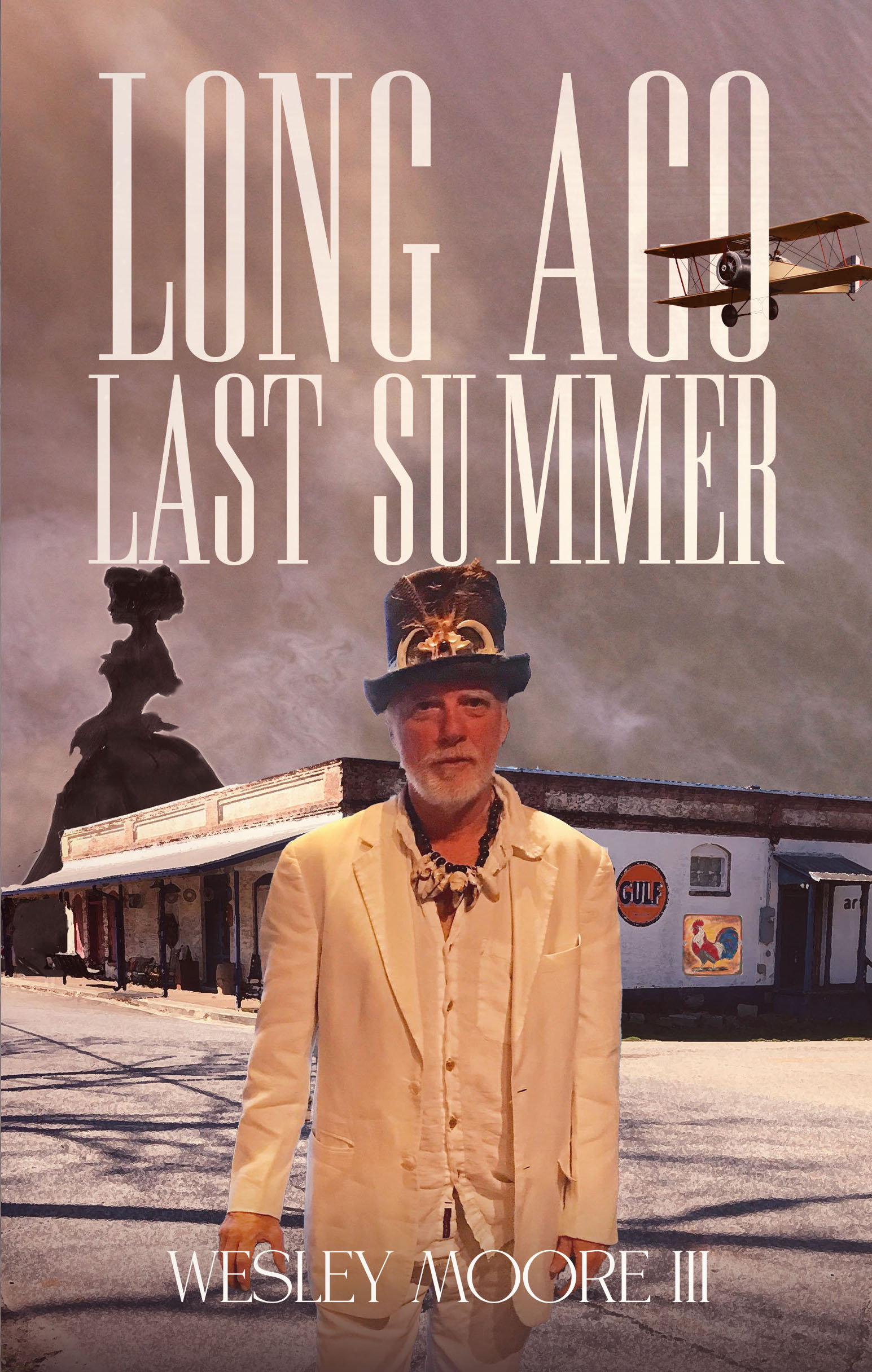
His latest work is a testament to that Long Ago Last Summer transports and transforms, synthesizes and sympathizes; short fiction gives way to essays which inspire poetry and deep, graceful swan dives into memory.

Like a casserole in the Donner Pass, this “Southern Gothic gumbo” has a lot of himself mixed in. Given that, one of the many reasons why Long Ago Last Summer is brilliant is that it is precisely the opposite of that scourge of modern texts, generative AI. And while talking about generative AI at a book launch feels a bit like reading “The Ballad of Hollis Brown” at a baby shower, that menacing technology walks among us now. Like one of the foundational sins coursing through the Southern Gothic, AI perverts creation and devalues the human; the fullness of what it means to be a human does not matter half as much as mere production, production, production. In dramatic contrast, Long Ago Last Summer is a thrillingly human book because Wesley Moore stands for what matters: connection, imagination, integrity.

Searching for the book on Amazon — (And, please, gracious hosts: this was for research purposes only; the only destination wedding I want for Jeff Bezos is at the bottom of the ocean.) — I wanted to see what the heartless algorithm might suggest as “related books.” One was Walter Isaacson’s biography of Einstein which, given Mr. Moore’s excellent lessons on relativity and cultural Modernism, seemed fitting. Then there was Rhinestone Cowboy, Glen Campbell’s autobiography. I don’t have an explanation for that one.

What might the algorithm consider when determining whether to recommend Long Ago Last Summer to a prospective reader? It could be something as simple as geolocation: did this person grow up within twenty miles of a filling station that offers both diesel and barbecue? Or maybe it’s that stray google search for city ordinances concerning the accidental murder of a domestic cat. Maybe it’s looking up sterling silver hallmarks of the Confederacy and then looking up statutes of limitations for stolen Confederate silver. Or maybe it’s trying to find higher resolution images of Pee Wee Gaskins.

While the algorithm is good at pushing polyester blends off of Temu, I have a feeling it would struggle with Wesley Moore’s newest book. In no small part that’s because it’s hard to categorize. As Wesley himself said on television, “It’s really not a novel.” 

In 1925, as she was struggling to write To the Lighthouse, Virginia Woolf found herself frustrated. Writing in her diary that she needed “a new name” for her books “to supplant ‘novel,’” Woolf floundered about trying to find the right word: “A new — — by Virginia Woolf. But what?” she writes.

The word Woolf ends up on is “elegy” — a word that feels fitting for this book. To be clear, this is not because, as Mr. Moore says, he’s retired and living on a fixed income, nor is it even because of biplane rotors and headless fathers and tubercular aunts.

Instead, it feels so fitting to me because Mr. Moore spent so many classes in English 10 on such poems, insisting that we memorize Blackburn Hughes’s list of the four “greatest English elegies.” To help us in that endeavor, Mr. Moore demonstrated the rhythmic swish-swish of Gray’s heroic quatrains with an epee. Doing his best impression of Stevie Wonder’s star role in the John Milton biopic, Mr. Moore recited bits of Lycidas. And, in his Lowcountry baritone, he intoned Tennyson’s In Memoriam.

Elegy is no stranger to anyone who has grown up in the South. An elegy has but one requirement: it must defy the laws of linear temporality, enabling the past to persist. Time becomes fluid; what for Tennessee Williams was Suddenly, Last Summer, unbearably close, is, for Mr. Moore, Long Ago Last Summer, unbearably distant. The reversal that so haunts Flannery O’Connor’s Misfit — Jesus’s setting the world off balance, taking dead Lazarus and making him walk like a natural man — is the foundation of elegy: a reversible alternation between presence and absence. Reflecting on Mrs. Ramsay in To the Lighthouse, Vanessa Bell writes to her sister Virginia how “it is almost painful to have [Mother] so raised from the dead.” Milton ends Lycidas with talk not of yesterday and of death, but of “To-morrow” and “pastures new.” Reading through the night the letters Arthur Henry Hallam wrote him, Tennyson finds himself surprised by dawn — and, in a flash, understands that “East and West” had “mixt their dim lights, like life and death, / to broaden into boundless day.”

The fourth great elegy is “Adonaïs, “written by Percy Shelley for John Keats, who died in an apartment overlooking the Spanish Steps in Rome, hemorrhaging up what little remained of his lungs at only 25.

Mr. Moore’s voice always took on a different timbre when he read to us Keats and Shelley. I cannot read their poems without feeling as if I’m back in his classroom — wind-up nuns, Rashaan, paleological timeline and all. His humanity and his teaching have become grafted to the Young Romantics in my mind’s eye. Throughout their poetry are traces of birdsong, so precious and so vital to both short-lived poets — and so like the traces of Judy Birdsong, so precious and so vital, in this work in front of us.

Shelley, mourning Keats, likens life to a “dome of many-colored glass” that “stains the white radiance of Eternity.” The many pieces of colored glass lovingly assembled here — with Caroline’s steady hand, keen eye, and beautiful verse — are aptly described by the author as a “mosaic” of his life. 

The glue that binds these pieces — the guide for navigating the disparate stories, poems, and essays — is memory. “Memory…ties it all together.”

In the spirit of elegy and memory, I’ll close with some words from Mr. Moore’s former colleague Erica Lesesne, who once defined what it meant to be a hero: “Ethical, competent, non-judgmental, yet communicating high ideals and expectations, thereby influencing others to risk their own best sides in a seethingly adolescent environment.” 

It is a pleasure to introduce one of my heroes, Mr. Moore. As he writes, “Let’s crank up the old Victrola.”


[1] No beard had he, nor was meant to have,

It was smooth as if he’s just shaved;

I think he was a gelding or mare.

Deaf Heaven, Bootless Cries, Sha La La La La Live for Today

Like the recurring characters in Cheers, I show up most afternoons at what the quaint call “a local watering hole.”  Chico Feo, my bar of choice, is one part Cannery Row, one part Key West tourist mecca, one part – as far as the cooks and bartenders go – extended family.  

I enjoy watching people interact, hearing the latest gossip, and, if the opportunity arises, engaging tourists with meaningful conversations. After all, I suspect my obituary will mention that among other things I was a fiction writer, and as I often inform total strangers, I’m constantly gathering “data” about this and that, which I might use in creating a character. It’s a way to justify my personal questions about their lives.  To me, constructing characters that readers care about is the most gratifying aspect of fiction-writing.

Unfortunately, today I happened to sit next to a borderline asshole. He was in his late 20s sporting muscles, tattoos, and the ubiquitous baseball cap worn backyards.  On the plus side, he might end up in one of my stories and receive the karmic comeuppance he deserves. 

Solle, perhaps the most effective bartender I’ve encountered in a drinking career that spans over a half a century, asked me how my book promo TV interview went, and the aforementioned borderline asshole said, “I saw it!”

I informed the borderline asshole that his having seen it was impossible in the current space/time continuum because the interview hadn’t aired yet.  Then he said, “I saw you at the studio.”  It occurred to me that he might be a camera person, so I asked him if he worked for FOX 24, and he said, laughing, “No, I’m just fucking with you.”

I was not amused.

He and his friend started talking about how great it must be to live on Folly, and I agreed it was, that I was very fortunate.  They live in West Ashley, and I said that was a convenient place to live because it’s near everything – the airport, downtown Charleston, Folly itself.

A few minutes later, the borderline asshole asked me what the book was about, so I clicked off some sound bites from the interview.  “It’s a memoir,” I said, “but it’s as much about the South as it is about me – antebellum plantations, shotgun shacks, Pentecostal churches, juke joints.  It’s a collection of short stories, essays, and poems, each of which can stand alone and be enjoyed separately, but if you read it cover to cover you get a history of the South from segregation through the civil rights movement and the cultural revolution of the 60s.”

“Wow, you must be a racist,” he said.

“What!!!??? Why do you say that?”

“If you’re not a racist, then why aren’t you?”

“Why not, because I grew up with Black people. I like most of them I’ve met.”

“I’m a racist,” he said.

No doubt I was scowling, because he immediately said, “Ha, ha, I’m not really a racist. I’m just fucking with you.”

Dark clouds were scudding overhead, so I decided it was time to walk home, which takes me past a melancholy memorial marking the spot where someone named Phillip died in a traffic accident.  For some reason – maybe because before I left the bartender Katarina clasped her hands in mock prayer asking the skies not to rain – my inner poetic jukebox cued a line from one of Shakespeare’s sonnets: “And trouble deaf heaven with my bootless cries” and then a line from A Midsummer’s Night’s Dream followed: “Chanting faint hymns to a cold fruitless moon.” And finally, a line from a Grass Roots song that I don’t even like: “Sha la la la la la live for today.”

I took a right on Erie, and as coincidence would have it, I encountered an interracial couple pushing a baby stroller. They were taking up the entire right hand lane, so I suggested they walk on the left so they could see the traffic coming.  The red-haired woman and her husband smiled. She said, “Thanks, but we’re staying right here” and disappeared into the yard of a rental.

So much for my mansplaining.

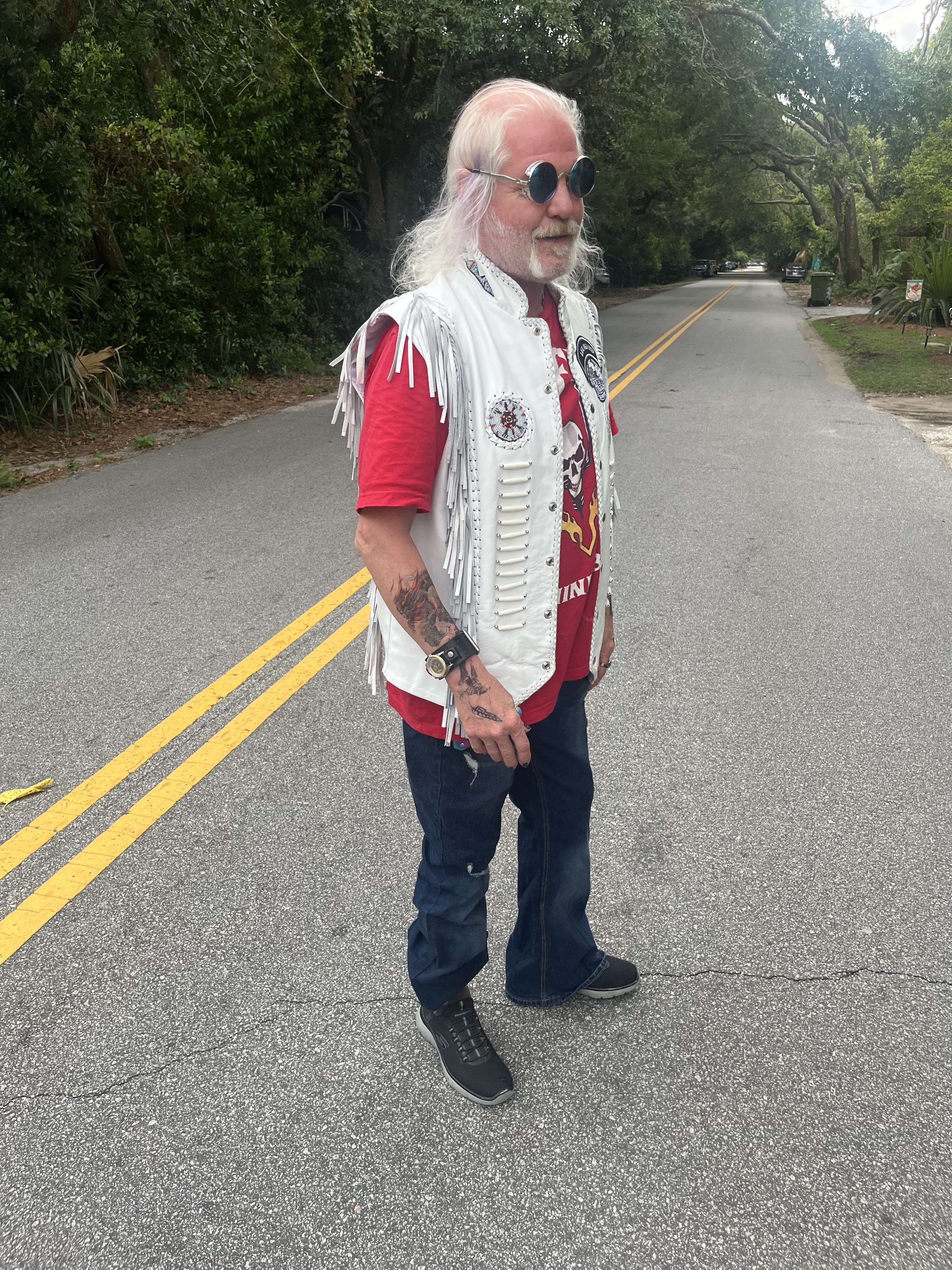
I decided to cross over to Hudson using a tree embowered beach access path and spotted through the tree tunnel a couple weaving past on skateboards.  Once I hit 5th Street, I bumped into my neighbor Lance.  I asked him about his outfit, a white fringed patch-bedecked vest over a red tee shirt emblazoned with a skull, and he explained the various patches and emblems.

As I said good-bye, he said, “I love you, man,” which was a nice way to end my excursion.  

Fa la la la la, live for today.

Vaudeville Meets William Faulkner Meets The Hallmark Channel

Vaudeville Meets William Faulkner Meets The Hallmark Channel

On Friday, I had my first interview involving my new book Long Ago Last Summer.  Lorne Chambers, who owns the Folly Current and has an MFA in writing from the College of Charleston, met me at Chico Feo where we chatted about creative writing in general and Long Ago in particular over a couple of beers. 

Occasionally, I didn’t know how to respond to Lorne’s excellent questions because Long Ago is such a strange book that it can’t be easily categorized.  When you’re trying to sell something, it’s helpful to have a clear, simple message like it’s “a coming-of-age novel” or a “dystopian sci-fi epic” or “a romantic comedy.”  With Long Ago Last Summer it’s more like Vaudeville meets William Faulkner meets The Hallmark Channel.

In essence, it’s a memoir, which is embarrassing enough because of the egocentricity inherent in thinking my life is so noteworthy that it warrants being shared with others.  And in many ways, my life has been unadventurous. I enjoyed a long lasting, loving marriage for 38 years, a stable teaching career for 34 years, reared two successful sons, owned a succession of dogs, remarried as a widower and gained a remarkable stepdaughter. I’m well-travelled, I guess, but that’s not unusual in this day and age.  To adapt a cliche: my adulthood has not been much to write home about as far as excitement goes.

On the other hand, I grew up in the segregated South, a very dark, fascinating place, a fallen civilization forever picking its scabs but then licking those newly opened wounds.  The little Lowcountry town of Summerville where I grew up had two (what I’m going to uncharitably call) village idiots, among other eccentrics, like the old crone Miss Capers, religious fanatics galore, creepy good humor men, and more alcoholics per capita than most places this side of the Betty Ford Center.

Much of the book deals with an awakening consciousness that develops in a Southern Gothic setting, or, as the back cover puts it, Long Ago Last Summer “embodies the profound paradoxes of Southern culture against a landscape dotted with antebellum plantations, shotgun shacks, suburban subdivisions, Pentecostal churches, and juke joints.” 

However, Long Ago is not a typical memoir in that it’s fragmentary, a collage of sorts, a mosaic, a smorgasbord or gumbo that runs the gamut from lighthearted vignettes to bleak accounts of terrible wrongdoing.  If I were going to wax hyper-pretentious, I’d call it neo-Modernistic because like Eliot’s “The Waste Land,” it pieces together fragments to create a narrative held together by recurring themes.  In this case, Sothern Gothicism, alienation, insomnia, and the vagaries of memory and reality. 

Short fiction, verse, essays, and parodies that can stand alone out of their context occur chronologically to trace my life from its beginnings in 1952 to the present. Long Ago is, as stated in the preface, “a guided tour of the haunted houses and cobwebbed attics of my youth” followed by my college experience, my meeting and falling in love with Judy Birdsong, her illness and death, and my finding new love after her departure.  In fact, included in the collection is a villanelle written by my wife Caroline that deals with Judy’s lingering presence in our marriage.  In some cases, fiction is juxtaposed with non-fiction so that it’s not necessarily clear which is which. 

In other words, Long Ago Last Summer is really weird, like its subject matter. 

I’m appearing next week on Fox News 24’s midday show to attempt to explain all of this to viewers who may or may not have heard of TS Eliot and/or Modernism or vaudeville for that matter.

Also, weather permitting, I’m reading brief samples Monday, May 26 around 7:20 at George Fox’s open mic Soap Box at Chico Feo. 

So, thoughts and prayers, y’all. I need them.

Novels Vis-a-Vis Screenplays

Novels Vis-a-Vis Screenplays

At the request of an actor who’s interested in pitching my novel Today, Oh Boy to producers he’s worked with, I’ve written an adaptation of the novel for the screen.[1] It’s not an official screenplay per se, but a roadmap for the actor to determine what scenes he will use to produce a short “teaser” reel consisting of would-be shots from the would-be movie. I have no idea how this is done. Via AI I suspect.  Anyway, with the final proofs from the novel to the right of my iMac’s screen and a blank Word document on the left, I began writing and cutting and pasting.

The good news is that originally, using present tense and employing crisp visual imagery, I consciously composed Today, Oh Boy to read like a movie progressing. For example, here’s the opening of the novel.

A mango-hued, pockmarked bulletin board hangs on a classroom wall of pale lime green concrete blocks, the bulletin board pencil-stabbed and compass point-gouged. Among the graffiti are the names of the star-crossed lovers: Sandy + Tripp. Tragic Tripp, whose body was found last week tangled in blackberry bushes along the banks of the Ashley River, his skull smashed after falling off Bacons Bridge.

S-A-N-D-Y + T-R-I-P-P.

Rusty Boykin, a skinny, freckled redhead sitting on the bulletin board row in Mrs. Laban’s homeroom, traces his index finger in the depression of Sandy’s name. He supposes it’s Tripp’s work – the letters inartistic, juvenile. Sandy hasn’t been to school since Tripp’s death, four class days ago, and now it’s Monday, and she’s still not here. She should be sitting right in front of Rusty, her honey-colored hair hanging like a curtain to her waist. 

How to adapt this for the screen?  One way, you could have Rusty tracing his finger in Sandy’s name and then suddenly cut to Tripp falling off the bridge, or you could begin with Tripp’s accident. What I did was to begin with Tripp’s last meeting with Sandy, a conversation through her open bedroom window, his leaving in a rage, jumping into his GTO, pealing off, and ultimately driving his car off the road at Bacons Bridge into the Ashley River.

Actually, Tripp’s death is what Hitchcock called a McGuffin, a misleading device that’s irrelevant to the overall narrative.  After all, Today, Oh Boy is a comedy. Its title comes from the Beatles’ song “A Day in the Life.”

I read the news today oh boy

About a lucky man who made the grade

And though the news was rather sad

Well I just had to laugh 

So, by having Tripp drive off the bridge rather than falling off the bridge, what I gain in cinematic excitement, I lose in the comic pairing of his first and last names. As it turns out, Tripp was a bully, a high school version of Trump.  At one point in the book, Alex Jensen, a junior at Summerville high, says to a friend Will, “Your last name is Trotter, you name your son Tripp, and he falls off a bridge to his death. What a surprise.”

In addition, the novel employs a great deal of what critics call “indirect discourse,” a device that allows a narrator to report what someone is thinking without using his exact words. For example, in the above excerpt, the sentence, “She should be sitting right in front of Rusty, her honey-colored hair hanging like a curtain to her waist” is rendered second-hand through Rusty’s consciousness. In a screenplay, you have to “show” rather than tell “tell,” which can lead to really awkward exposition, like you find in bad fiction like “The Most Dangerous Game”:

You’ve good eyes,” said Whitney, with a laugh,” and I’ve seen you pick off a moose moving in the brown fall bush at four hundred yards, but even you can’t see four miles or so through a moonless Caribbean night.”

That I couldn’t use direct narration or indirect discourse meant I had to omit some characters, like Camilla Creel, the impoverished girl who lives in an abandoned school bus with her mother and sister, and Weeza Waring, Will’s mother, who added several comic touches throughout the narrative.

So, overall, the script is much tidier than the novel, much more streamlined, yet not as rich in my attempt to capture the zeitgeist of Summerville, South Carolina in 1970, during integration, the beginning of the counterculture, and during an influx of Northerners moving to what at the time was a staid, conservative community.

Then again, I’m sure a professional screenwriter could do a much better job.


[1] By the way, it’s on sale at Amazon for a mere $10. 

“Go Away, Lindsey; You Bother Me.”

Let me say right off that I’m an avid admirer of WC Fields, who, in fact, is the inspiration for Colonel Duckenfield, the amiable but drunken calculus teacher in my novel Today, Oh Boy.[1]

Here he is in action:

Colonel Dukenfield has charged his minions with two in-class problems using the squeeze principle, so he has excused himself, ostensibly to use the restroom. A huge veined bulbous nose dominates his round, puffy, flushed face, though there’s still a gleam in his squinty blue eyes, especially when he’s talking to a pretty lady. His knees, though, are killing him, along with his corn-riddled toes stuffed into a pair of scuffed wingtips, the only dress shoes he owns. Once he reaches the faculty men’s room, he closes the door and takes out the pewter flask that bears his name and the name of his plane, the Flying Fortress, etched handsomely in ornate, old-fashioned cursive. He sloshes the Jameson’s whiskey around before taking a long, hard draw. Carefully, he screws the cap back on and places the flask in the right pocket of his blazer.

I mean, what’s not to love?

So I don’t intend any disrespect to Field’s surviving progeny (his great granddaughter’s wedding picture appeared in the Santa Cruz Sentinel in 2018) when I suggest that Lindsey Graham could be plausibly cast as an older Fields in a biopic once his political career is over, which may be sooner rather than later, given that he could get primaried on the one hand, and the country is on the road to economic and geopolitical ruin under our unhinged Dear Leader on the other.

What a great pairing of buffoons, Fields’ cinematic persona with Graham’s real life personality!

I know you might be thinking that Graham’s a little long in the tooth at 69 to embark on a new career; however, look at me at 72, getting ready to make a cameo in an upcoming short feature based on a chapter from Today, Oh Boy.[2]

So, Lindsey, see, it’s never too late to segue into something new. Look, man, you’re addicted to the limelight, and look, even if there’s not a Fields biopic on the horizon, maybe some enterprising filmmaker will buy the rights to Today, Oh Boy, and you can end up playing the Colonel himself.

As my wife Caroline says, “We can hope. We can dream.”


[1] You can read a review and purchase it here.

[2] I’ll be sitting at a bar, sipping a PBR, a role that I was born to play.

The Green Pastures of Retirement

Although I often whine about my chronic insomnia, in reality, it’s not a big deal because I’m retired.  Rarely do I have to be at a certain place at a designated time, so I can nap whenever I want, sometimes snatching a snooze as early as ten a.m., so it’s not like stumble about zombie-like all day, sleep deprived. 

In fact, it doesn’t make much evolutionary sense to be unconscious eight straight hours. I’ve read that our spear-toting pre-agrarian savannah-dwelling ancestors didn’t necessarily sleep through the predatory night, and during the Middle Ages, people engaged in a routine called “two sleeps,” turning in around nine or ten, slumbering for two or three hours, then awakening around one for what was known as “the watch,” a period in which they’d tend to tasks, socialize, and/or procreate.[1] Around two or three they’d again hit the literal hay (or if wealthy, a feather-stuffed mattress) and sleep until dawn or a bit later. 

However, I don’t want to give the impression that now that I no longer have to battle Folly Road traffic in the a.m. that I dawdle away the day doing crosswords, binging Netflix, or wasting time on the internet. This week, in fact, I’ve been especially busy going through the second proofs of my next book, engaging in a political protest, and most vexing of all, jumping through the electronic hoops of TurboTax. Being retired makes performing these acts much more convenient.

Excuse me; I need to vent. Correcting the proofs on Long Ago Last Summer was much more difficult than it had been with my first book, Today, Oh Boy.  This time around, rather than having a human being perform the copy editing phase, the publisher shoved the manuscript’s 62, 327 words through the woodchipper of AI.

The book is a compilation of short fiction, poetry, and personal essays that features a medley of Southern voices. Each piece can stand alone; however, collectively, they form a sort of mosaic with one of the major patterns being Southern Gothic, that literary subgenre that features “incestuous aristocrats, necrophiliac halfwits, sadistic Alabama sheriffs [. . .] the suicide hanging in the attic, the alcoholic great aunt who gave birth to the idiot child buried in the backyard.”[2]

You know, the human byproducts of the post-Reconstruction South, the folks I grew up with. 

Alas, AI wasn’t up to the task of dealing with the book’s cacophony of styles and voices.  Not only did it remove double negatives from the foul mouth of serial killer Donald “Pee Wee” Gaskins (who picked me up hitchhiking in 1970) and replace them with grammatically correct utterances, but it also altered direct quotes from the poetry of Emily Dickinson. Anyway, on Monday I completed the weeklong task of correcting the corrections. If I were teaching full time, I would not have had the leisure to pick through the rumble and piece back together my original tiles.

Nor could I have attended Tuesday’s anti-Trump demonstration at Hampton Park without having to take a personal day. I had planned on Tuesday to do our taxes, but it ended up being one of those rare days when I had to be somewhere at a specific time. The protest occurred on the very day of Trump’s state of the union address in which he stupidly misconstrued the words “transgender” and “transgenic.”

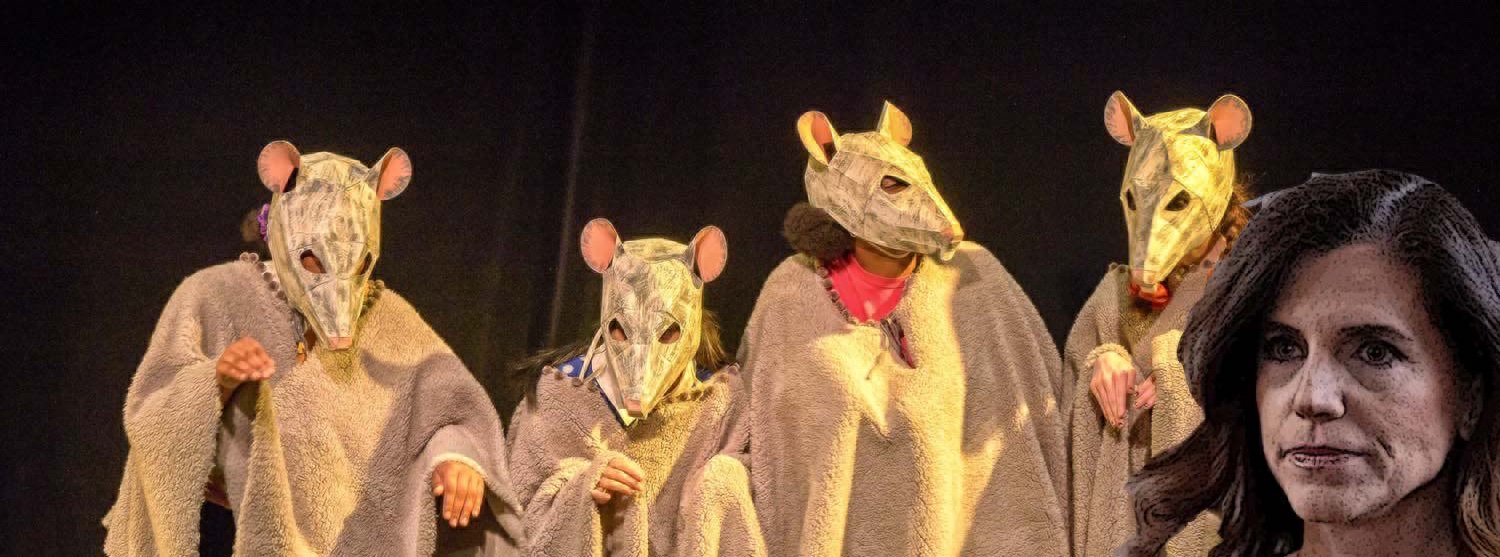
Trump: Eight million dollars for making mice transgender. This is real.

Jeff Tiedrich: No, no, no, no. Nobody is spending government money to make mice transgender. You low-wattage dolt. The word is transgenic.

Let’s say you’re a cancer researcher, and you implant some human genetic material into mice, in order to better study how cells mutate. boom! — you’ve just created transgenic mice

Nobody is doing sex-change operations on mice and setting them loose in Nancy Mace’s bathroom.

But I digress. I hadn’t engaged in a public protest since the fall of 1971, and I it looked like many of the protestors in attendance were alive and kicking during the Viet Nam era, which makes sense, given they are past retirement age and free to go wherever they choose midday on a Tuesday in March. I used to tell my students that if the governor told my generation that we couldn’t drink until we were 21, there would have been 300,000 of us on the lawn of the Governor’s mansion every day of the week. 

The protest, though somewhat limited in its attendance[3] and no doubt in swaying public opinion or sending shivers up the spines of Republican representatives, did provide an outlet for our outrage at Trump’s destroying our democracy and cruelly wreaking havoc upon the lives of so many of our citizens, not to mention his abandoning of Ukraine and the rest of our European allies. 

It was somewhat comforting to rub elbows with like minded people whose intelligence and commitment was apparent in the signs that they carried.

photo credit Joan Perry

photo credit Caroline Tigner Moore

photo credit Linda Bell

Okay, don’t worry about this 5-paragraph essay set up. I’m not going to give you a blow by blow account of my doing taxes, which thanks to my late wife’s assets is complicated by K-I limited partnerships, etc. Nevertheless, I do them myself because nowadays accountants essentially have you enter your financial information into their computer software instead of TurboTax. It ends up being the same amount of work. Using an accountant might save us some money, but what the hay. 

Ah, with my daily labors completed, here I sit sipping a Westbrook IPA at Lowlife Bar on a Wednesday afternoon scribbling this down in a composition notebook, happy to have completed the taxes and survived the tornados that never showed up on a day when Charleston County schools were called off.

Cheers! Thanks for reading until the end.

PS. Uh-oh! I just saw on LinkedIn that I appeared in 12 searches, two of which were the State Department and USAID. Yipes.

photo credit Joan Perry


[1] Since families usually slept in communal beds, having sex could be problematic.

[2] from the preface of Long Ago Last Summer, 38-9. 

[3] The Post and Courier estimated around 500,

James Brown Silent at the Apollo

The other night Caroline and I stumbled across the 1928 silent film Our Dancing Daughters on TCM and watched the whole damn thing. As the hepped up actors herky-jerkyed across the screen, it occurred to me that I wouldn’t mind living within the confines of a silent movie. For one thing, I’m practically deaf, so how convenient it would be to have utterances appear in writing, floating in the air long enough for even the slowest of readers to decipher. 

Also, facial cues are a breeze to pick up on in a silent flick. In my adulthood, on more than one occasion, I’ve had a highschool friend tell me that she had a crush on me back in the day. Well, in a silent movie, picking up on flirting is less of a problem.

On the other hand, music in silent films is generally melodramatic, a solo piano tinkling or a muted orchestra holding forth. James Brown, the Godfather of Soul, the hardest working man in showbiz, would be wasted in a silent movie, though his amped-up dancing might give Buster Keaton or Charlie Chaplin a run for his money.

The Godfather came up in conversation last night at the Blind Tiger Porter-Gaud alumni party. I was chatting with former student Jamie Ewing, reminiscing about driving his cousin Willy Hutcheson to school in the 90s with the late Erin Burton and my two sons. On our trip from the IOP and Sullivan’s Island, we listened to various CDs Monday thru Thursday, but Friday mornings were dedicated to JB.

I told Jamie that I saw the Godfather live in ’75 at the Carolina Coliseum, one of the few white folks to attend that extravaganza. Then Jamie floored me with this revelation: he waited in line at the Apollo Theater in Harlem[1] to see James Brown lying in state, one of the hundreds to file past the coffin.

I mean, one of the greatest albums of all time is Brown’s 1963 Live at the Apollo, and Jamie can boast that he saw James Brown dead at the Apollo.

Bravo, Jamie, and RIP Barnwell, South Carolina’s, most famous citizen, the hitmaker who gave us “Pass the Peas,” “Gimme Some More,” “It’s a Man’s World,” “Papa’s Got a Brand New Bag” . . . 


[1] I know “in Harlem” is redundant, but ain’t everybody as hip as you and me.