Excuse Me, Sir

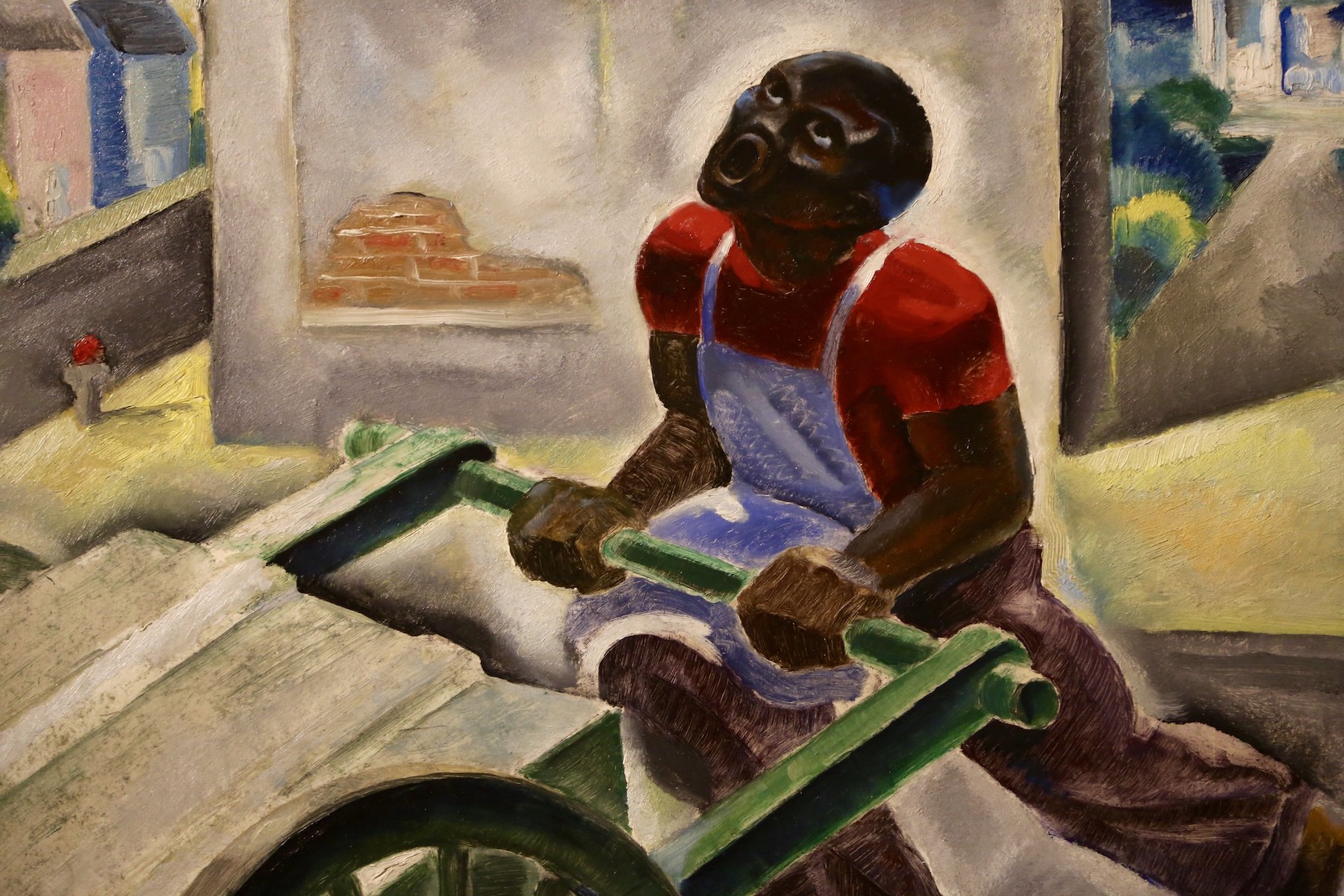
Street Huckster – Charleston by James Augustus McLean, Greenville County Museum of Art

I recall as a boy my daddy complaining about how television news stereotyped Southerners, the correspondents constantly trotting out before the cameras a series of Bull Connor belligerents, grammatically challenged podunk politicians, and/or dentally deficient racists whose lack of front teeth made pronouncing the n-word problematic. 

I didn’t know enough back then to explain that they were the ones making the most noise, the ones cracking Blacks with baseball bats, unleashing snarling German shepherds, that they were newsworthy, that his own nuanced, quiet racism wouldn’t be all that interesting to viewers.[1]

And if you were born and raised in the South in the first or middle portion of the 20th Century, you were bound to be racist because bigotry was inculcated, abundant in the air you breathed: segregation included not only movie theaters, restrooms, and water fountains, but even doctors’ offices.  Even if your parents didn’t explain to you as a child that Blacks were inferior, you would sense that they were because of their forced separation. It went without saying, though of course, lots of people were saying it, repeating racist jokes and addressing grandfathers as boy. The Blacks’ poverty was proof of their lowness, as if conquering systemic racism and overcoming a substandard education should not be a hinderance from rising from rags to riches. Look at the Greek immigrants, the Italians, etc.[2]

Last Tuesday, my friend Warren Moise presented his excellent memoir The Class of ’71: A Tale of Desegregation in Gamecock City to the Thomas Street Book Club. This was our first in-person meeting since the pandemic, so attendance was sparse. In fact, all the participants were white male Southerners of the boomer generation, so we all had stories to tell of race relations back in the day, of “maids” entering through back doors and yardmen eating their lunches on back stoops.

However, to my mind, the most poignant narrative came from Ed, a physician who grew up in Little River, South Carolina.

In high school Ed worked at an A&P supermarket bagging groceries. Like many establishments, the store had an in-door and an out-door. After working a month or two, Ed discovered he could save time exiting the store through the in-door as he carted customers’ groceries to their vehicles in the parking lot. 

One of the stores’ produce suppliers was an elderly Black man who brought in his vegetables on a cart composed of wood and cardboard, a sort of oversized wheelbarrow he pushed along the highway to the store. 

One day, Ed rocketed out through the in-door and collided with the old man, overturning the cart, knocking the man to the pavement. The cement was strewn with vegetables, with smashed tomatoes, the cart destroyed.

Clearly in the wrong, Ed was mortified, worried that the old man was hurt, that he’d have to pay for the ruined produce, that he might be fired.

Slowly, Ed said, the old man tottered to his feet, placed his cap back in his head, looked Ed in the eye, and said, “Excuse me, sir.”


[1] C.f. Atticus Finch and Bob Ewell in To Kill a Mockingbird.

[2] It just occurred to me that what I’m writing is exactly what opponents of critical race theory want to, pardon the term, whitewash. 

Woo-Hoo/Boo-Hoo

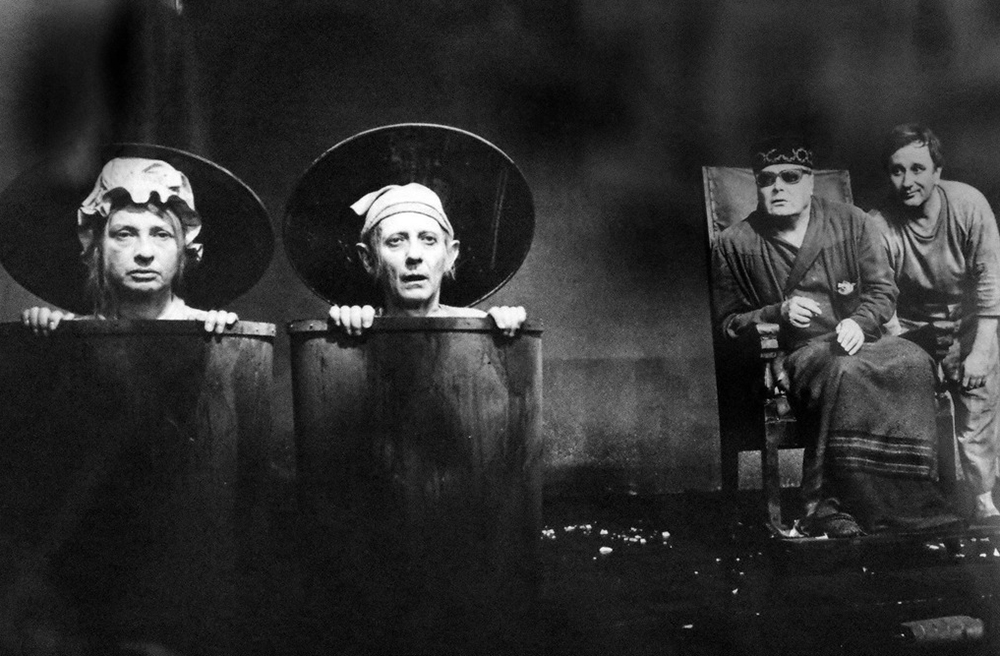
Dominique Mercy in a performance by Pina Bausch

Happiness is a warm puppy gun.

                                                            Schultz/Lennon

Many Americans, like those who rant against Critical Race Theory, don’t have much patience with malcontents like me who catalogue the various and sundry crimes in our nation’s blood-drenched history ­– the initial genocide, the horrorshow of slavery, our third world murder rates. To even acknowledge these negatives is to “apologize for America” – in the words of Senator Mitt Romney – who beneath those corporate jeans and collared shirts enjoys the freedom to wear magic Mormon “temple garments,” a tribute to the wisdom of our Founding Fathers and the bravery of those heroes who made the supreme sacrifice, etc. And who can argue with the undeniable truth that a country in which a descendent of a Black African (or a bishop in a marginalized religion like Mormonism) can rise to the highest offices of the land is truly exceptional?

temple garments

Our constitution – and this is exceptional – grants us the right to pursue happiness – whether that means spending a Saturday afternoon discharging elephant guns at a shooting range, watching Sergei Eisenstein’s,  Бронено́сец «Потёмкин, or cross dressing and parading down 5th Avenue in celebration of the resurrection of our Lord.

Yet, happiness can be so elusive. Great success certainly doesn’t guarantee felicity as Tiger Woods or Amy Winehouse can/could testify. There is, I think, in the USA a misconception that having a constitutional right to pursue happiness means that you’re entitled to happiness, and as my childhood hero Sportin’ Life put it so eloquently in Porgy and Bess. “It ain’t necessarily so.”

However, in Late Empire America, judging by the posts of my thousand-plus Facebook friends, trumpeting one’s happiness seems to be a borderline obsession.[1] Certainly, there must be battalions of social scientists studying the ratio of positive to negative posts as they attempt to determine the happiness quotient of Facebook subscribers. Certainly, among the unscientific sampling of my friends,[2] I’d say happy dominates a thousand to one.

Of course, the tendency to post positive rather than negative feelings makes sense. When one of my barmates at Chico Feo asks how I’m doing, I virtually never put into words the existential angst that shadows every waking minute of my Beckettian existence.

“Hi, Wes. How’s it going?

“Every word is like an unnecessary stain on silence and nothingness. No, I regret nothing, all I regret is having been born, dying is such a tiring business I always found. And when I die let me go to hell, that’s all I ask, and go on cursing there, and them look down and hear me, that might take some shine off their bliss.”

“Uh, OH-Kay. Have a good one.”

Anyway, nothing much makes sense anymore. The Trump people simultaneously long for authoritarianism while decrying the tyranny of mask mandates while the far left’s free speech intolerance is so extreme that even milquetoasty comedians like Jerry Seinfeld won’t play college campuses. 

Like Kris Kristofferson once put it, “Freedom is just another word for nothing left to lose.  


[1] On the other hand, this isn’t the case on Twitter, which teems with death announcements and the oft repeated phrase, “I’m broken,” following.  Why is Facebook so positive and Twitter so negative?

[2] I.e., “friends, acquaintances, former students, cousins, virtual strangers [including at one time Jerry Lee Lewis himself (thanks, Killer, for the Asian bikini model link)], Lucinda Williams, etc.