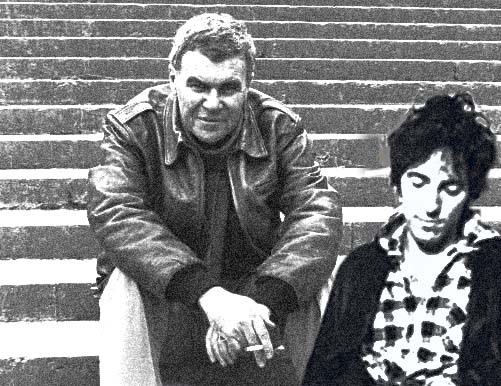
In the early ’80s, after my late wife Judy Birdsong landed a full-time position at Trident Technical College teaching psychology, I quit my po-dunk so-called assistant managerial position at Safeco[1] and decided to try my hand at writing short fiction full time. I had been selected to participate in a SC Arts Commission workshop headed by Blanch McCrary Boyd. Other writers in the workshop included Josephine Humphreys, Lee Robinson, Billy Baldwin, Harlan Greene, Steve Hoffius, Greg Williams, and Starkey Flythe, Jr., among others.
Through Starkey’s suggestion, Greg Williams and I attended the Sandhills Writing Conference at Augusta College in Georgia, where Starkey lived.[2] At the conference, I learned a lot from writers I’d never heard of before, but the most profound consequence of my attending was discovering Raymond Carver. Why I had not heard of Carver is puzzling; nevertheless, better late than never.
I found his short stories thrilling, well crafted in the Flannery O’Connor sense of every detail contributing to the stories’ central themes, for example, the long white beard of the blind man in “Cathedral” evoking associations with blind seer Tiresias as he guides the benighted first person narrator into the realm of light, the blind not leading the blind not into a ditch but into a state of enlightenment.

However, most of Carver’s stories are the opposite of uplifting, like “A Serious Talk,” the story of a post-divorce Boxing Day encounter in which an estranged husband attempts to make up with his wife after trying to burn her house down, or like “Popular Mechanics,” a story dramatizing a breakup that ends with the husband and wife engaging in a literal tug-of-war with their baby:
“Let go of him, he said.
“Don’t,” she said. “You’re hurting the baby,” she said.
“I’m not hurting the baby, he said
The kitchen window gave no light. In the near-dark he worked on her fisted fingers with one hand and with the other hand he gripped the screaming baby up under an arm near the shoulder. She felt her fingers being forced open. She felt the baby going from her.
“No!” she screamed just as her hands came loose.
He would have it, this baby. She grabbed for the baby’s other arm. She caught the baby around the wrist and leaned back. But he would not let go. He felt the baby slipping out of his hands and he pulled back very hard.
In this manner, the issue was decided.
* * *
Three years after Carver’s collection What We Talk About When We Talk About Love was published, Bruce Springsteen released his seventh album, Born In the USA. Aside from the sonic pleasures of Springsteen’s rock-‘n’-roll, I have always admired his story-telling talents, how he creates working class characters who come alive for the listener. He, too, like Carver, provides details that vivify his narratives, and as with Carver’s, Springsteen’s characters often don’t find redemption.
Here are the lyrics of “Downbound Train,” the final song of Side 1.
I had a job, I had a girl
I had something going, mister, in this world
I got laid off down at the lumber yard
Our love went bad, times got hard.
Now I work down at the carwash
Where all it ever does is rain
Don’t you feel like you’re a rider
On a downbound train?
She just said, “Joe, I gotta go
We had it once, we ain’t got it anymore.”
She packed her bags, left me behind
She bought a ticket on the Central Line.
Nights as I sleep, I hear that whistle whining
I feel her kiss in the misty rain,
And I feel like I’m a rider
On a downbound train.
Last night, I heard your voice
You were cryin’, cryin’, you were so alone
You said your love had never died.
You were waiting for me at home.
Put on my jacket, I ran through the woods.
I ran ’til I thought my chest would explode.
There in the clearing, beyond the highway
In the moonlight, our wedding house shone.
I rushed through the yard, I burst through the front door.
My head pounding hard, up the stairs I climbed.
The room was dark, our bed was empty.
Then I heard that long whistle whine
And I dropped to my knees, hung my head and cried.
Now I swing a sledgehammer on a railroad gang
Knocking down them cross ties, working in the rain.
Now don’t it feel like you’re a rider
On a downbound train?
But here’s something else. When Springsteen performs these songs, he transforms into the characters he sings about. Like a method actor, he summons memories that blur the distinction between rock star and the wretches he sings about. He feels what they feel, and it shows.
For example, note during the dream sequence of the clip below, at 1:55, how he trembles when he sings,
“Put on my jacket, I ran through the woods.
I ran ’til I thought my chest would explode.
There in the clearing, beyond the highway
In the moonlight, our wedding house shone.
I rushed through the yard, I burst through the front door.
My head pounding hard, up the stairs I climbed.
The room was dark, our bed was empty.
Then I heard that long whistle whine
And I dropped to my knees, hung my head and cried.”
I mean, I find this to be very moving. Like the blind man in “Cathedral,” Springsteen is creating empathy, creating someone besides myself I can feel sorry for.
Blessed be the artists who take us out of ourselves.
[1] Not the insurance company but a safety equipment distributor.
[2] Coincidentally, Greg won in a tie the second place short fiction award.



 You Do Hoodoo