Bo Diddley Revisited

Bo Diddley Revisited

I’ve been making good use of my time, watching YouTube videos of interviews with Eric Burdon, former front man for the Animals.[1] In the mid-Sixties, the Animals ranked as my favorite band because the timbre of Burdon’s singing voice sounded as if he could have been from my native ground, the Lowcountry of South Carolina (as opposed to Eric’s Newcastle-upon-Tyne). In fact, it was the Animals, and to lesser extent the Rolling Stones, who introduced me the blues, to Muddy Waters, Howlin Wolf, John Lee Hooker, and a host of others.

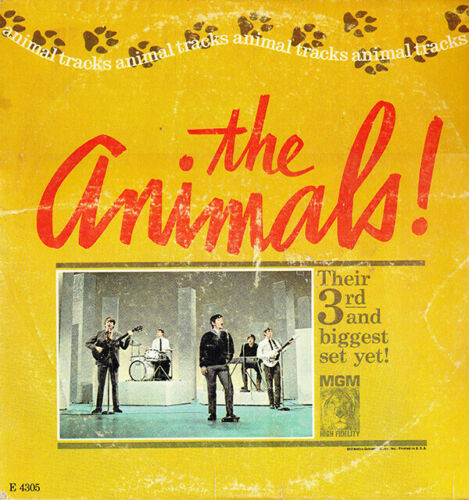
Decades ago, at his record store on Society Street (we’re talking Charleston, South Carolina), Gary Erwin, AKA Shrimp City Slim, told me that the Animals also had turned him onto R&B and the blues. He referenced their album Animal Tracks as his gateway into the land of shotgun shacks, cotton fields, black snakes, two-timing, big-legged women, and prison farms. 

Here’s the tracklist for Animal Tracks.
A1We Gotta Get Out Of This Place3:17
A2Take It Easy Baby2:51
A3Bring It On Home To Me2:40
A4The Story Of Bo Diddley5:42
B1Don’t Let Me Be Misunderstood2:26
B2I Can’t Believe It3:35
B3Club A-Go-Go2:19
B4Roberta2:04
B5Bury My Body2:52
B6For Miss Caulker3:55

Although “We Gotta Get Out of This Place” and “Don’t’ Let Me Be Misunderstood” are the big hits from the album, my two favorite tracks are the magnificent cover of Sam Cooke’s “Bring It on Home to Me” and “The Story of Bo Diddley,” a sort of pop song bio of one of the pioneers of rock-n-roll, which ends with a comic encounter when Bo, his sister the Duchess, and Jerome Greene meet the Animals at the Club A-Go-Go in Newcastle. 

Listen and read along:

Now lets hear the story of Bo Diddley
And the Rock n Roll scene in general

Bo Diddley was born Ellis McDaniels
In a place called McCoom, Missississipi about 1926
He moved to Chicago about 1938
Where his name was eventually changed to Bo Diddley.


He practiced the guitar everyday and sometimes into the night
Till his papa’s hair began to turn white
His Pa said “Son, listen hear, I know
You can stay but that guitar has just gotta go.”


So he pulled his hat down over his eyes
Headed out for them Western Skies
I think Bob Dylan said that, he hit New York City.


He began to play at the Apollo in Harlem,
Good scene there, everybody raving.
One day, one night, came a Cadillac with four head lights
Came a man with a big, long, fat, cigar said,
“C’mere son, I’m gonna make you a star”
Bo Diddley said, “Uh.whats in it for me?”
Man said, “Shut your mouth son,
Play the guitar and you just wait and see.”


Well, that boy made it, he made it real big
And so did the rest of the rock n roll scene along with him
And a white guy named Johnny Otis took Bo Diddleys rhythm
He changed it into hand-jive and it went like this
In a little old country town one day
A little old country band began to play
Add two guirtars and a beat up saxophone
When the drummer said, boy, those cats begin to roam

Oh baby oh we oh oh
Ooh la la that rock and roll
Ya hear me oh we oh oh
Ooh la la that rock and roll

Then in the U.S. music scene there was big changes made.
Due to circumstances beyond our control such as payola,
The rock n roll scene died after two years of solid rock
And you got discs like, ah…
Take good care of my baby
Please don’t ever make her blue and so forth.


About, ah, one year later in a place called Liverpool in England
Four young guys with mop haircuts began to sing stuff like, ah…
It’s been a hard days night and I’ve been working like a dog and so on.

In a place called Richmond in Surrey, whay down in the deep south

They got guys with long hair down their back singing
I wanna be your lover baby I wanna be your man yeah and all that jazz.


Now we’ve doing this number, Bo Diddley, for quite some time now
Bo Diddley visited this country last year
We were playing at the Club A Gogo in Newcastle, our home town.

The doors opened one night and to our surprise
Walked in the man himself, Bo Diddley
Along with him was Jerome Green, his maraca man,
And the Duchess, his gorgeous sister.
And a we were doing this number


Along with them came the Rolling Stones, the Mersey Beats,
They’re all standing around diggin’ it
And I overheard Bo Diddley talkin’
He turned around to Jermone Green
And he said, “Hey, Jerome? What do you think these guys
Doin’ our.our material?”


Jerome said, “Uh, where’s the bar, man? Please show me to the bar…”


He turned around the Duchess
And he said, “Hey Duchess… what do you think of these young guys
Doin’ our material?”


She said, “I don’t know. I only came across here
To see the changin’ of the guards and all that jazz.”


Well, Bo Diddley looked up and said to me,
With half closed eyes and a smile,
He said “Man, ” took off his glasses,
He said, “Man, that sure is the biggest load of rubbish
I ever heard in my life…”


Hey Bo Diddley
Oh Bo Diddley
Yeah Bo Diddley
Oh Bo Diddley
Yeah Bo Diddley

from lest to right, Bo Diddley, the Duchess, and jerome Green
Bo, the Duchess, and Jerome Green

By the way, this is my second homage to Bo. I also wrote about him in April of 2021 and my father-in-law’s Bo Diddley obsession. If so inclined, you can access that HERE, and it features videos of Bo performing on the Ed Sullivan Show and a snippet from the movie Fritz the Cat

By the way, the white fellow in the collage up above is my father-in-law Lee Tigner in his younger days.

[bongo fade out]


[1] What prompted this foray into nostalgia was my recent poem, which you can access HERE, “The St James Infirmary iPhone Blues.”

An Homage to Bo Diddley

I can’t remember when I first heard the song “Bo Diddley” with its hambone beat, hypnotic riffs, and Jerome Green powered maracas, but it thrilled me. I realize that Chuck Berry’s more wide-ranging musically and possesses a deeper canon, but Bo’s early songs with their African rhythms reverberated in my marrowbone like nothing else in early rock-n-roll. 

Later in high school, my friend Tim Miskel turned me onto the album Animal Tracks. On the final cut of Side 1, Eric Burdon provides a five-minute bio of Bo, which initiated a mild obsession.

One day, one night
Came a Cadillac, four headlights
Came a man with a big long fat cigar.
He said “Come here son, I’m going to make you a star.”
Bo Diddley said, “Uh, what’s in it for me?”
The man said, “Uh, shut your mouth son and play the guitar
And you just wait and see.”

                                    From “The Story of Boy Diddley,” Animal Tracks

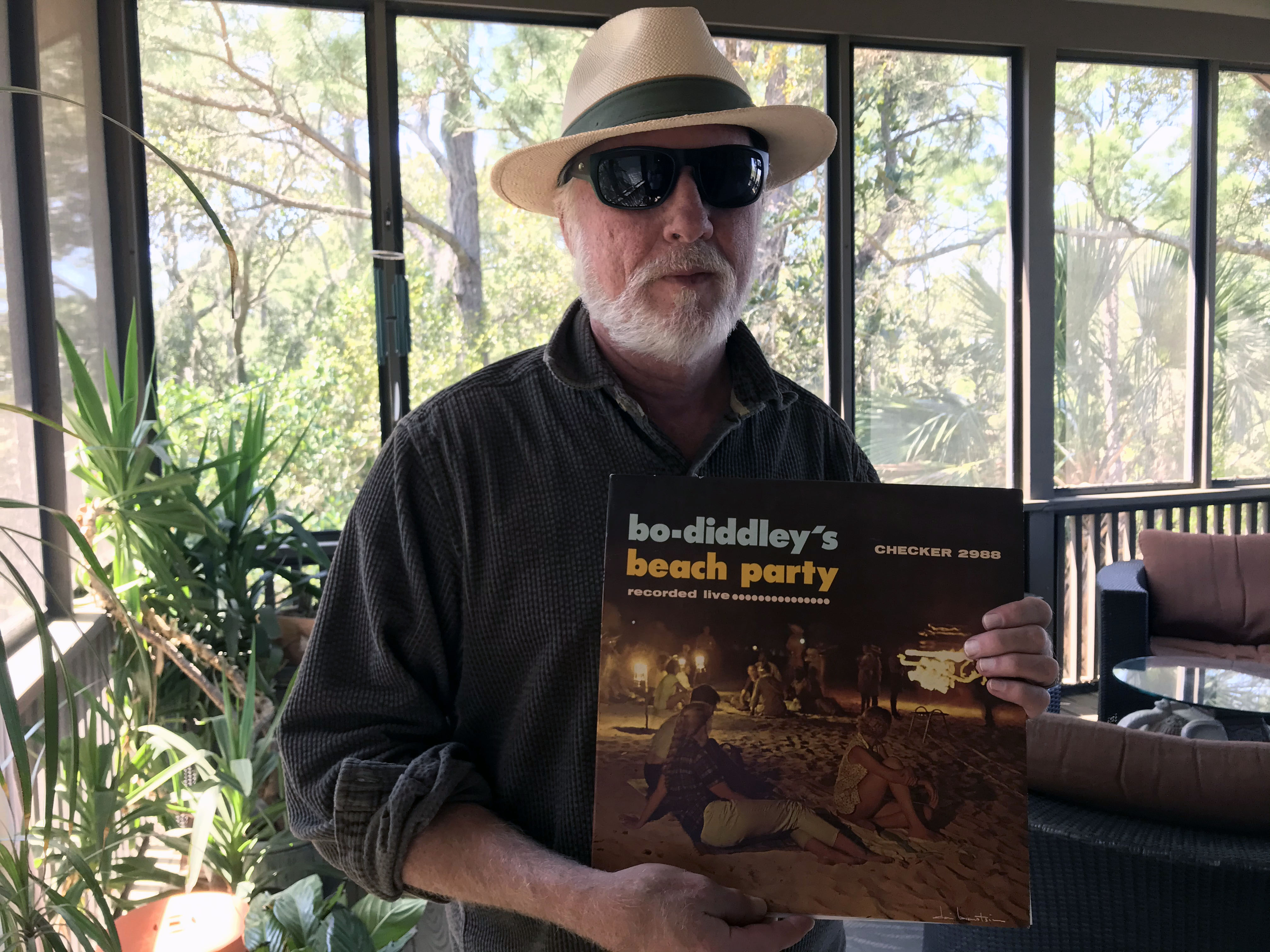
Whenever I’d go into a new record store, I’d see if they had any Diddley. No luck ever until one day I wandered into Fox Music House on King Street in Charleston. Their inventory was eclectic, old-fashioned, but sparse. You could cop some Doris Day but not the Stones. As I was flipping through their loosely organized bins, I found a first edition copy of Bo Diddley’s Beach Party (recorded live at the Beach Club in Myrtle Beach, SC). Fox sold albums for the exorbitant price of five dollars a pop.[1]  I actually tried to talk the clerk into a discount. “No one’s ever going to buy this record,” I argued. “It’ been sitting here since since 1964.” It was no dice, but I snatched it up anyway. By the way, the vinyl was heavy on those discs of yore; you could beat someone senseless with a pre-70s LP.

Alas, one debauched night in the first semester of my freshman year, I left Beach Party on the floor of the suite adjoining our dorm rooms, and someone stepped on it. The damned thing cracked like a glass plate.

Chalk it up to the wages of carelessness or drunkenness or ganjafication or a combination of the three.

Later, in graduate school, all hepped up on Dada, my friends Jake Williams, Keith Sanders, and I had a mini Bo revival. We nearly wore out Keith’s Diddley’s records. We’d meet on Sunday evenings, prepare dinner, imbibe second tier scotch, and jive talk our way into the wee hours while listening to Keith’s world class vinyl collection.

A few flips of the calendar later, in the pre-children early years of my marriage to Judy Birdsong, I got to see Bo play live at a club in North Charleston. In between sets, I approached him as he walked off stage.

Wesley: Oh, man, Bo, I’m such a big fan. This is such an honor.

Bo: silence.

Wesley: Hey, Bo, where’s Jerome Green, your maraca man?

Bo: deceased.

Wesley: How about the Duchess?

Bo: Chicago.

Wesley (finally getting the hint): Well, thank you so much!

Bo: head nod.

Well, in the course of the years that followed – childbirth, school days, graduation, empty nest, cancer, the death of Judy – my Bo Diddley obsession faded away,[2] though I still listened to him now and then and sometimes included one of his songs on the mixed tapes and later mixed CDs I made for my students who won vocabulary bees. 

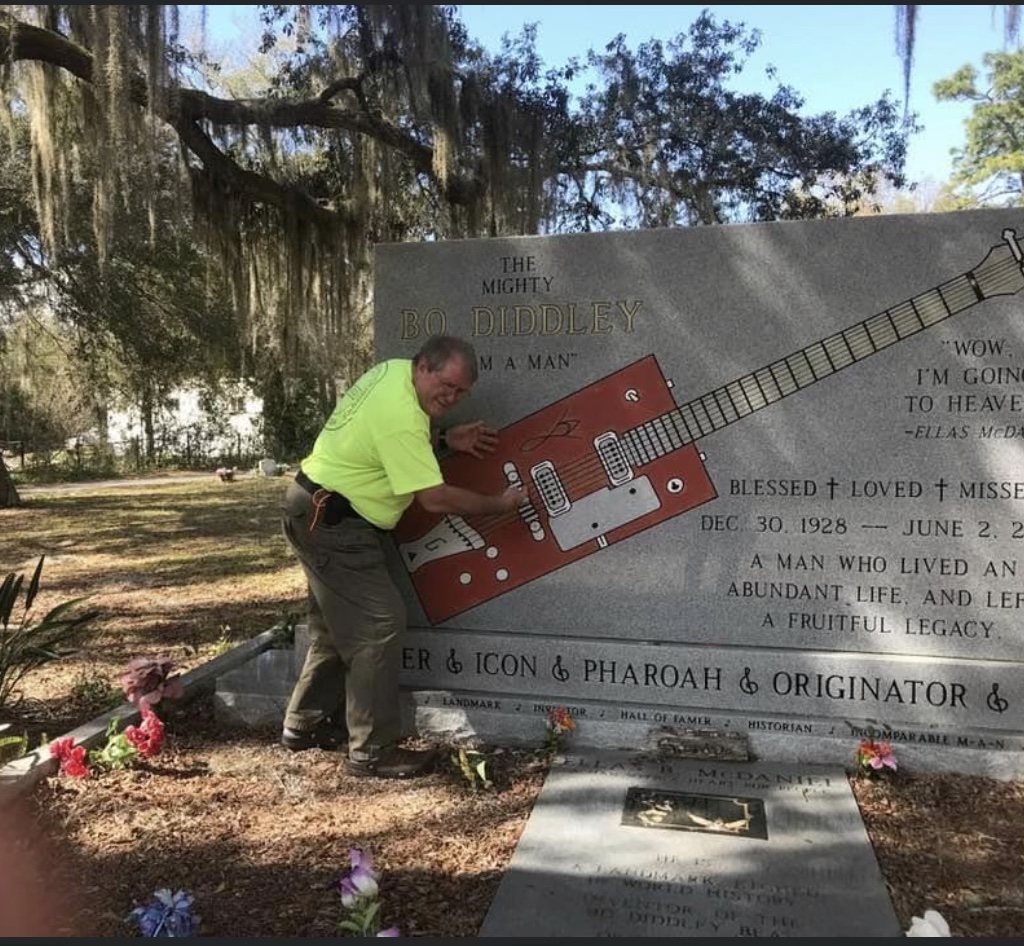
When Caroline, my second wife, took me to meet her father Lee Tigner for the first time in the wilds of Awendaw, I discovered that he, too, was a Diddley devotee and could match me lyric for lyric. He also had met Bo in person but received a somewhat warmer albeit taciturn response. After Bo’s demise, Lee made the pilgrimage to Bronson, Florida, to visit the grave of the master. We’re talking about serious admiration. 

Lee Tigner at Bo Diddley’s grave

Anyway, Lee and I bonded over Bo, which is perhaps a small compensation to him in light of my being an unintrepid indoorsman. 

A couple of weeks ago, on an internet hunt, I found a copy of the late departed Bo Diddley’s Beach Party for sale and ordered it. It finally arrived today. So now, when Lee’s birthday comes around, I’ve gotten him a gift that I know he’s gonna dig, at least more than he did the last Christmas president I got him, an autographed copy of a mystery set on Folly Beach that Lee pegged as the worst novel ever published in the United States.

I’ll leave you with this:


[1] Back then, most albums cost under three bucks.

[2] If you’re gonna get all grammatical on me and say the “away” is unnecessary, I’ll respond by saying that it’s an allusion to Buddy Holly’s “Not Fade Away,” which uses the Bo Diddley beat. 

The 5 Greatest Rock-n-Roll Covers of All Time

BigMamaTwoWillie Mae “Big Mama Thornton” by Nick Young

A couple of weeks ago when I was luxuriating in vast open freedom of spring break, the musician Howard Dlugasch and I sat at the bar at the newly opened Jack of Cups Saloon (nee Brew Pub) on Folly discussing the difficulties local musicians face in performing original compositions at bar gigs. “No,” he said, “They don’t want to hear originals. They all want to hear covers. They all want to hear Journey.”

Howard Dlugasch

Howard Dlugasch

Howard’s lament got me thinking about covers themselves, and I began cataloging what I consider the greatest covers of all time, a Herculean task if you stop to think about it.  I immediately jettisoned jazz, decided to limit my purview to rock and folk. After racking my brain, I decided to limit my list to five, and certainly many will disagree with the following choices.

Before I announce my top five, though, I ought to provide the criteria I used in the construction of this pantheon.

1) The original song had to be significant in both its music and content.  By content I mean both the degree of significance of the lyrics’ poetic purpose and the poetic quality of the lyrics themselves.  Alas, this criterion eliminates Hendrix’s great cover of “Wild Thing.”

2)  The cover of the song had to make the song, as Ezra Pound would say, new.

3) The musicianship had to be first class.

Rather than attempting to rank the covers from “grooviest” to least “groovy,”¹ I’ve copped out by presenting the 5 Greatest Covers of all time in chronological order from oldest cover to most recent.

¹I retrieved these vintage terms from the Teen Beat files located in the adolescent wing of my memory museum.

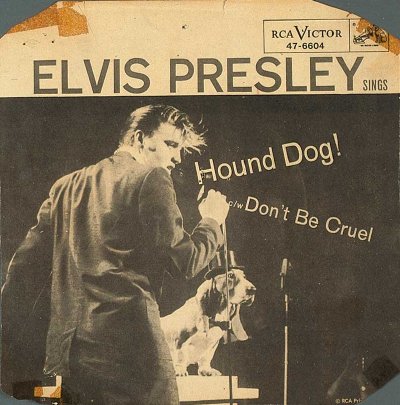
  • Elvis Presley’s cover of Big Mama Thornton’s recording of Jerry Leiber and Mike Stoller’s “Hound Dog”  Thornton’s 1953 recording is killer, backed by badass bass and drumming and some imitative barking.  Hit the arrow for a 20 secondish listen:

elvis-presley-songs-hound-dog

Before Presley, others had recorded the song, and some critics claim that Presley was actually covering a Bob Wills cover or a Freddie Bell and the Bellboys cover. Nevertheless, Presley was aware of and liked the Thornton original, and so I contend he’s covering the original, not a covering a cover.  At any rate, Elvis and his producer Steve Sholes have twanged the tune to rockabilly with some aggressive drum rolling.

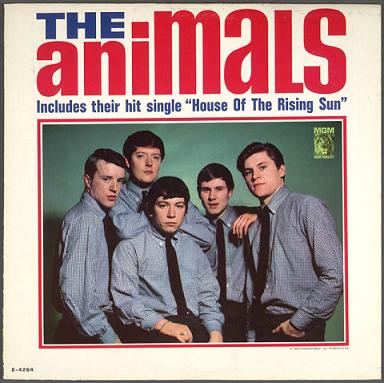
  • Next comes the Animals cover of the traditional folk song “Rising Sun Blues,” a song whose roots go to 18th Century England and a popular genre called “the Unfortunate Rake.” Immigrants  transported the song across the Atlantic and transplanted the setting to New Orleans.  Some contend the song’s narrator is a woman turned whore after being abandoned by a rake, which is the scenario Dylan employs in his cover, a recording that precedes the Animals’. The earliest recorded version is by Clarence “Tom” Ashley in 1934, which tells the tale from a male perspective.  Here’s a snippet from an early ’60’s version by Ashley and the great Doc Watson.  Note the featured lyrics are much different from the Animals version.

 the_animals

Ashley/Watson:  

The Animals:

Electric guitarist Hilton Valentine’s minor key arpeggio and Alan Price’s organ transform the song into what the critic Dave Marsh called “the first rock folk hit.”

  • Jimi Hendrix’s 1968 recording of Bob Dylan’s 1967 release “All Along the Watchtower.”

jimi-hendrix

Dylan:

Hendrix: 

Now, that’s what I call making it new.

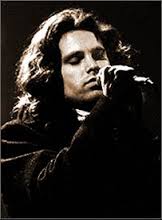
  • The Doors 1970 live version of Bo Diddley’s “Who Do You Love”  This selection is perhaps the most controversial.  However, I’m going with it.  Listen.

images

Bo Diddley:

The Doors: 

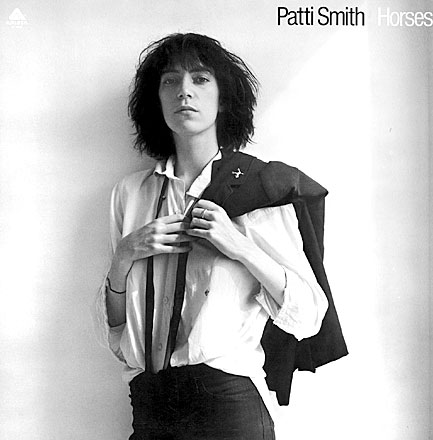
  • Also, perhaps, controversial, I rank Patti Smith’s 2007 cover of Nirvana’s 1991 “Smells like Teen Spirit” in the top five.  Here Smith substitutes banjos and fiddles for electric guitars and replaces Cobain’s solo with a poem that elevates the song from an anthem of teen angst to some sort of post apocalyptic nightmare.

6a0120a7b5f86a970b015437e241f9970c-800wi

Nirvana:  

Patti Smith:  

Well, there you go.  Would love to hear some comments.  Obviously, I also stayed away from soul music because rating covers there would be almost as hard as jazz.  Also, I’ve dissed Janis, whose cover of “Piece of My Heart” should probably bump Morrison and Smith off this list.