Functional Allusions

I’ve always been a big fan of allusions because they infuse whatever the writer is conveying with even more meaning, offering subtext or cross references that deepen. If you don’t pick up on the references, no harm done. If you do, God is in his heaven, and all’s right with the world.[1]

Here’s what I’m talking about: in the Richard Wilbur ‘s poem “A Late Aubade,” the speaker is trying to talk his lover into cutting class so they can continue to lie in bed in what I’m assuming is an interlude between another session of lovemaking.

Here’s, as the vulgar say, the money shot:

It’s almost noon, you say? If so,
Time flies, and I need not rehearse
The rosebuds-theme of centuries of verse.


If you must go,Wait for a while, then slip downstairs
And bring us up some chilled white wine,
And some blue cheese, and crackers, and some fine
Ruddy-skinned pears.

Rehearse, as in re-hearse, as in death mobiles, black limousines, but then – BAM – the allusion to Robert Herrick’s, “To the Virgins to Make Much of Time”:

Gather ye rosebuds while ye may,
   Old Time is still a-flying;
And this same flower that smiles today
   Tomorrow will be dying.

Carpe Diem!  

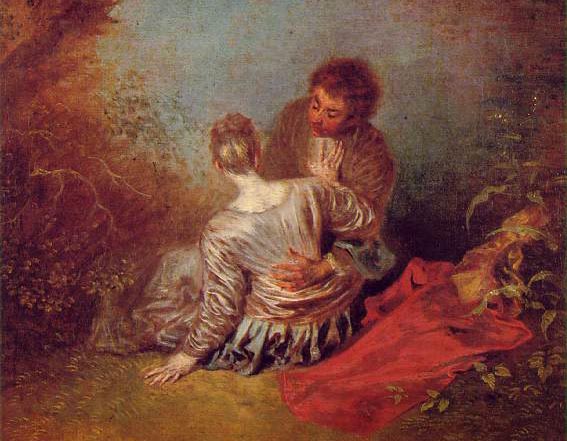
Or, as Andrew Marvell put it:

The grave’s a fine and private place, 

But none, I think, do there embrace.

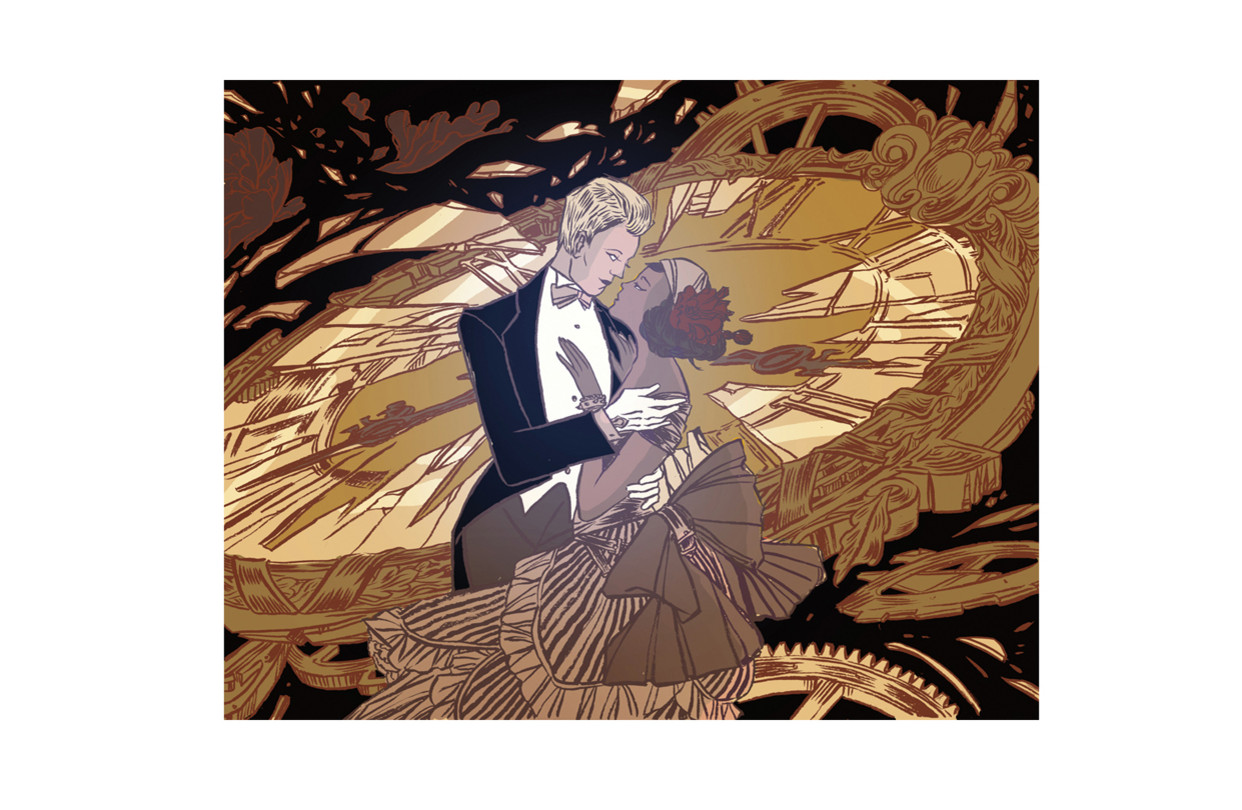
ILLUSTRATION: YAO XIAO


[1] BTW, I wish I did, but I don’t believe in anthropomorphic Semitic deities. “God is in his heaven” is an allusion, albeit an ironic one, to the Victorian poet Robert Browning. 

Heeding Andrew Marvell

Heeding Andrew Marvell

Thus, though we cannot make our sun 

Stand still, yet we will make him run.

                                    Andrew Marvell – from “To His Coy Mistress”

One of the entries in the epic catalog of my character flaws is a lotus-eater-grade tendency towards lassitude, which I’ve written about HERE.

However, in the last two weeks I’ve been on the go-go-go, on a tear – touring Mexico City, hosting family and friends, signing books, reading from Today, Oh Boy at its book launch, attending the reading of an original play in a private home, and dancing to the music of the Krushtones.[1]

Mexico City

Caroline had booked the trip before we discovered that T,OB‘s publication date was to be 31 March, the day before our departure. Buxton Books scheduled the launch for 11 April, so the trip didn’t interfere with promotion.[2] On the other hand, ex-pat son Ned booked a flight to Charleston that arrived on 4 April, three days before my scheduled return, so I came back a day early while Caroline and Brooks stayed on in Mexico City, which is 2000 miles higher than Denver, the Mile High City. Hey, but none of us suffered any altitude sickness, so praise Huitzilopochtli!

We traveled with Celeste Joye and her husband Tom Foster and their daughter Juliette. The short-term rental they had booked was a falsely promoted malodorous, sofa-stained apartment without hot water. The rental is located the floor below at kick-boxing studio where a cousin of Cujo barked ferociously.  

Not succumbing to the languor that would have me holding my nose (literally) and staying there all week, Celeste and Caroline scouted out new digs, called and cancelled, and we ended up staying at the swank Camino Real, which boasts a 007 early-60s vibe.

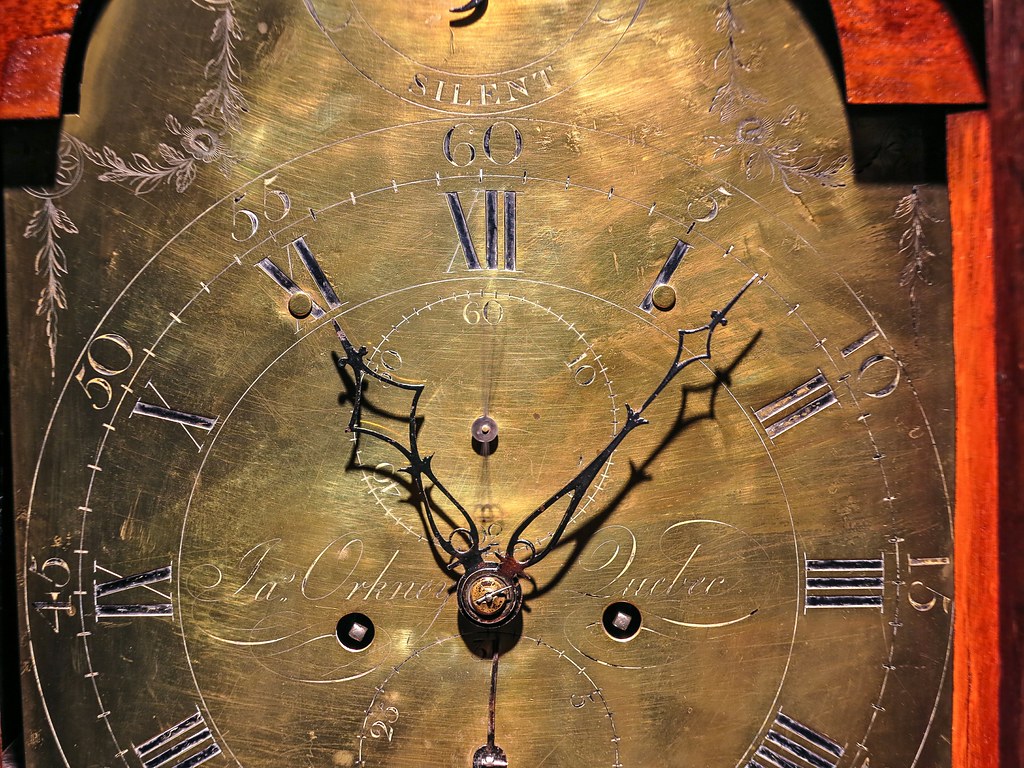
When I travel, my above-mentioned lassitude demands that I engage in only two tourist activities a day, one mid-morning and one after lunch; however, Celeste, Tom, and Caroline were go-getters, and the days and nights were filled with sight-seeing which featured a guided tour of Aztec ruins and a guided tour of Museo Nacional Antropologia.[3]

We also ate a various top tier restaurants, had drinks at Tenampa, a mariachi bar, and saw the Ballet Folklórico perform in a beautiful performing arts center.

But, as Andrew Marvell was wont to point out, all good things must end.[4]

Hosting my Family

Last week was the first time that my two sons had been home at the same time since 2018 – Harrison, his wife Taryn, her mother Susan, and grand-toddler Julian rented a house on Folly, and Ned and his love Ina came all the way from Nuremberg and stayed with his at 516 East Huron.

Also, I had the pleasure of having lunch with a childhood friend John Walton whose mother and my mother were best friends growing up and always.

But dammit, but that too had to end with Harrison and crew flying out Wednesday and Ned and Ina Friday.

The Book Launch[5]

I’ve already gone on enough about the launch. The curious can access the reading HERE if they have “world enough and time.”

Seeing Is Believing 

The indefatigable Eugene Platt and his wife Judith hosted a soiree of sorts in which a cast of seven or so readers performed his play-in-progress Seeing Is Believing. Based on the account in the Gospel of John, the play is set post-resurrection and consists largely of Andrew and Thomas walking to a “safe house’ where Jesus appears and puts a screeching halt to Thomas’s skepticism. 

If I were Eugene, I’d produce it as a film instead of trying to get it produced as a play. Staging a fifteen-minute walk would be challenging, but you could really do some interesting things on film.

I bet some religious-minded film student at SCAD would find it interesting.

The Krushtones

What can I but enumerate old themes? I love me some Krushtones, who play at the Sand Dollar around 15 April every year. I couldn’t believe how fresh and practiced they sounded.

If you’re interested in learning more about this killer cover band and the Sand Dollar Social Club, click HERE.

THE END

Sometimes, Mr. Marvell, endings aren’t all bad. For example, I’ve finished writing the first draft of this blog post, and my dear readers have finished reading it and can get going on something more productive, because, as you have pointed out so eloquently: 

 [. . .] all before us lie/ Deserts of vast eternity.

So, carpe diem, y’all. Hubba-hubba-hubba, swish-boom-ba-ba-ba-ba-Barbara Ann.


[1] Not to mention doing our taxes.

[2] After zooming to number 570 on Amazon’s Young Adult and Teen Historical Fiction category, it’s now dropped into the 900s. C’mon people. I’m a senior citizen on a fixed income!

[3] I’ve been told my Spanish accent isn’t terrific. BTW, I’ve never been much for guided tours, but I must admit you learn a helluva lot more.

[4] E.g., “The grave’s a fine and private place/ But none, I think, do there embrace.”

[5] Thank you, Polly and Julian Buxton!

Song Lyrics as Opposed to Poetry, George Fox Edition

George Fox, photo by Caroline Tigner Moore

Generally, when I first listen to a song, I don’t pay much attention to lyrics. If I dig the melody and beat – as the boppers used to say on Bandstand – I’ll start paying closer attention to the words, and if the diction is clever or thought-provoking, all the better.

After all, it’s really rare to encounter lyrics that possess the compression and structural integrity of poetry, i.e., to find songs with words that can stand alone on a page and engage sans musical accompaniment.

My friend George Fox’s latest song – so new that it’s still untitled – comes close to accomplishing this rare feat. The song, which consists of three verses followed by a chorus, distills a lifetime in four-and-a-half minutes and does so employing diction, imagery, and structure that reinforce and embody the song’s central theme, what Andrew Marvell famously dubbed “time’s wingèd chariot.” George wrestles with the metaphysics of time, the illusive nature of past, present, and future, and how a lifetime passes [cliché alert] in the blink of an eye.

The song begins with a callous youth speeding through life in rural Orangeburg County, South Carolina:

Just eighteen, driving an old pickup truck,
Joint in the ashtray and a bed full of luck.
Running nowhere as fast as I can
Down an Orangeburg County washboard road
Not enough sense to take it slow.
Rolling Stones singing “Street Fighting Man.”

Here, the theme of speed is introduced, and we have our first bit of compression in the allusion to the Stones’ “Street Fighting Man,” which melds the attitude of the the speaker in the Stones’ song with George’s narrator, both young men fueled by the fire of youthful exuberance.

What’s a poor boy to do but “run nowhere as fast as [he] can?”

The chorus shifts to the present, and again, we have speed, the idea of chasing “the dying light,” or as Marvell puts it in “To His Coy Mistress,” although “we cannot make our sun /Stand still, yet we will make him run.” Yet, in the last line, the speaker comes to the realization it’s always now, that the past and future only exist in the present and meaning lies in perspective, depending on where “you’re standing.”

Right outside of your window, just outside your door,
Everything is waiting for you
To fall into the night and chase the dying light.
There’s no need to be gentle.
Sometimes it’s heaven, sometimes it’s hell.
Sometimes it’s hard to tell.
All depends on where you’re standing.
I stand before you now, and I see it written in in the clouds,
All that was and is and could be is now.

In the video below you can check out the first verse and chorus from a live performance at Chico Feo’s Monday Night Singer/Songwriter Soapbox, which George emcees. The song is a work-in-progress, and for me, it’s thrilling to see it evolve on stage, as George experiments with phrasing and gestures.

In the second verse, the middle verse, the narrator finds himself suddenly middle aged, “thirty-three/With two little boys sitting on my knee” and has come to know “how love is made,” but swoosh, suddenly, with the days having flown by “like a midnight train,” he looks down to see, not his sons, but his granddaughter Eliza Jade.

Turned around and I was thirty-three
With two little boys sitting on my knee,
And I realized how love is made.
The days flew by like a midnight train.
The years fell on me like the pouring rain.
Now I look down and see Eliza Jade.

The last stanza arrives like a melancholy last act, with “second guesses, another last chance, and one more shot.” Once again, the radio is playing, not “Street Fighting Man,” but “a brand new song” saying “the same old thing” but “still get[ting] it wrong.”

Second guesses are all I’ve got,
Another last chance and one more shot.
And how I got here I don’t even know.
The radio plays a brand new song.
It says the same old thing they still get wrong
Oh man, and so it goes.

And so it goes – a lifetime distilled into a handful of words.

I could go on about structure, how the number three is central to the architectonics – three six-line stanzas, three nine-line choruses, the narrator citing at one point his age is thirty-three, but you’d think I was overdoing it, and you’d be wrong. If it’s there, it’s there, whether the artist planned it or not. Making art is like dreaming, it comes from below, often surprising the artist him or herself.

By the way, George’s band Big Stoner Creek has a new album out. You can check it out HERE.

PS. Here’s an earlier rendition of stanza three and the concluding chorus:

Roll On, Roll On . . . 

photograph by Wesley Moore, a.k.a. I-and-I, a.k.a. Yours Truly

The night before last, Caroline and I saw the Rolling Stones for the second time in three years, which, as we say in Summerville, ain’t nothing. We had lunch yesterday with Tom and Kathy Herman in Little Five Points, and Tom told me that the Atlanta show was the third show he’d seen in the current tour.[1]

For this concert, his tickets were in the pit to the right of the stage and ours smack dab in the middle, just beyond the end of the jutting runway. Not surprisingly, the closer the proximity of the performers, the more expensive the ticket, and, hence, the more geriactic the concert goer.  In fact, most of the people around us could have been cast in the movie Cocoon, though they sported Stones’ tee-shirts and knew the words to every song. The ashen old man in front of me smiled broadly, swaying feebly as he held his phone aloft to record “Midnight Rambler.”  Yet, he left early. Standing up for three straight hours was too much for him.

Not for seventy-eight-year-old Mick. He danced, clapped, dervished, sang, stuck his tongue out a la the logo, a lean but amiable Dionysian machine, his on-stage persona friendly, making sure to mention local landmarks, addressing the audience as if he appreciated their presence.  Of course, on this evening, he gave a shout-out to the World Champion Atlanta Braves. 

Keith, on the other hand, seemed – to put it mildly – less robust. Ronnie Wood took up most of the guitar duties and killed it while Keith slowly wandered around playing mostly rhythm. Occasionally, while Ronnie was screeching a solo, the jumbotron showed Keith.

Still, the cat also turns 78 in December, and it ain’t like he was propped on a stool. If Charley Watts is/was the heartbeat of the Stones, Keith is its soul, conveying the darkness of the blues, howling wolves, muddy Mississippi waters, hearts shattered like beer glasses on the floors of Delta juke joints.

Keith is a walking, talking memento mori.

The set list for this show featured rarely performed “Shattered” from Some Girls and “She’s a Rainbow,” a period piece from the Stones’ blessedly short-lived foray into psychedelia. Of course, you can’t always get what you want, but I would have rather heard “Beast of Burden” from Some Girls and, if you wanna go obscure, why not “The Spider and the Fly” from Out of Our Heads, a truly great album, which also features “Play With Fire,” which would have been more than a worthy substitute for “She’s a Rainbow.”

Flashback: I guess I was about sixteen when I first heard “The Spider and the Fly,” and, I’m sort of ashamed to admit it, but I found the following lyrics disgusting:

She was common, flirty, she looked about thirty 
I would have run away but I was on my own 
She told me later she’s a machine operator 
She said she liked the way I held the microphone 
Then I said “hi” like a spider to a fly 
Jump right ahead in my web.

Yuk, thirty years old! Who would want to go home with a thirty-year old?

Yes, young readers, the cliches are accurate, a blink of the eye, calendar pages riffling, being torn off by the winds of time in a black-and-white movie that your great grandparents watched for a dime a second ago. 

However, to quote my man Andrew Marvell:

Thus, though we cannot make our sun 

Stand still, yet we will make him run.

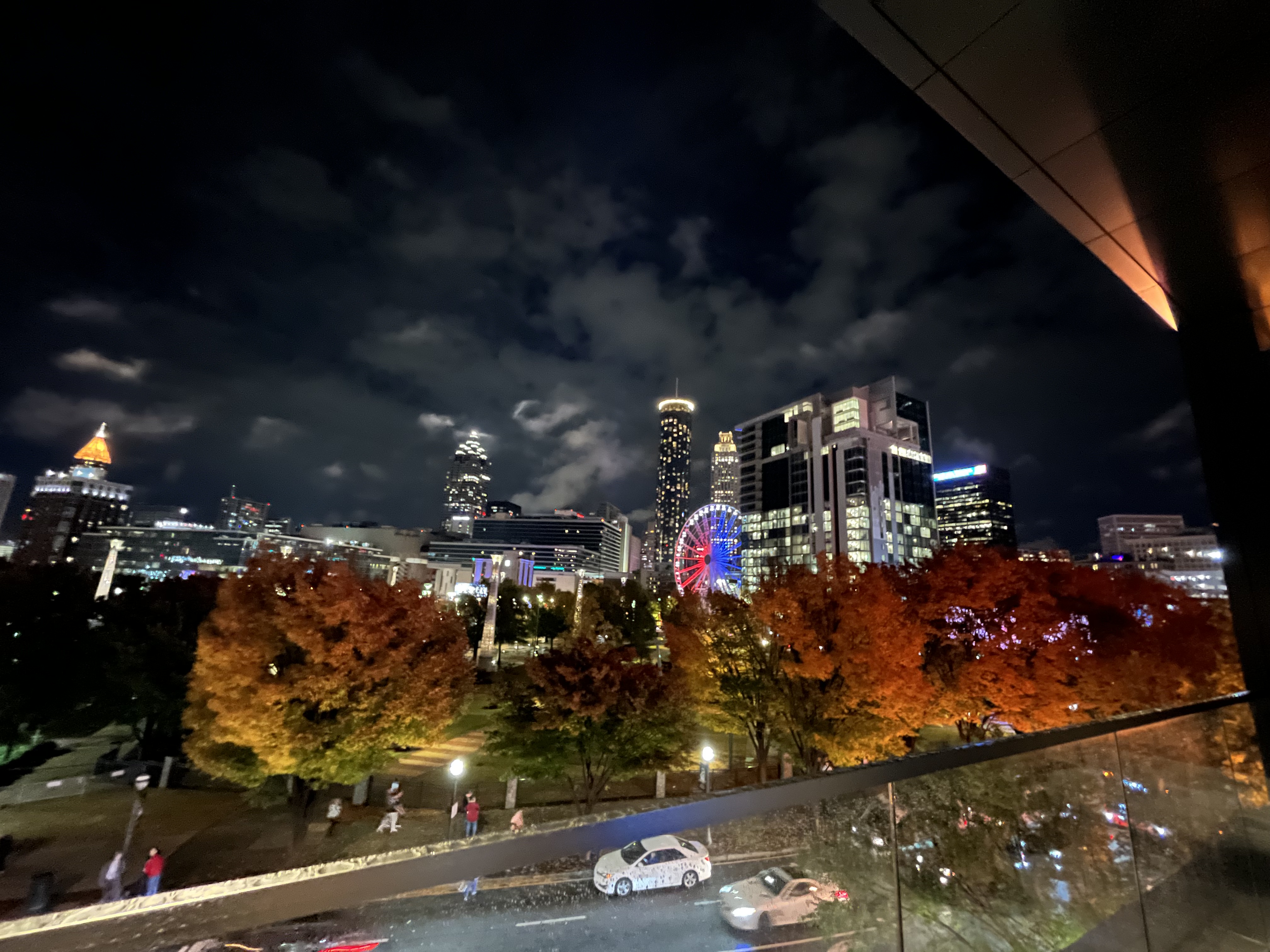
In other words, after a Stones’ concert, you can either limp back to the hotel and retire, or hit the hotel bar, which at the Omni boasts a balcony overlooking the skyline, which on this particular night looked downright Boschian. As we sipped our drinks, Caroline regaled me with stories from her wanderings in North Viet Nam in the previous century as the sun dropped below the horizon of the British Empire.

And when we returned to the hotel room, we continued our conversation, talking about this and that, looking out over at another view of Atlanta, not wanting to go to sleep, yet looking forward to tomorrow, to our lunch with Kathy and Tom.

view from the hotel bar balcony

[1] By the way, Little Five Points is a funky, mural-rich blip of Bohemia in an otherwise seemingly staid state capital. Outside a vintage clothing shop, I ran into this fellow dressed up like Dr. John, complete with voodoo hat and tooth necklace, plus the male version of Dorthey’s ruby slippers from Oz.  I said something like, “Hey, mon, dig the Doctor John get-up.” His response, a blank contemptuous look.  I asked, “You’ve heard of Doctor, John, right?” He said no and asked me if I had ever heard of some bullshit name like ‘Magnifico, Light Bringer” and then proclaimed that he was Magnifico, Light Bringer, a magician, and then launched into this puffed-up Jesus spiel. I interrupted by saying “party on,” and split, though I felt like stealing the Tom Waits line and saying, “You know they ain’t no devil. That’s just God when he’s drunk.”

mural in Little Five Points, photograph by Caroline

You, T.S. Eliot

Ronald William Fordham Searle: Sick and Dying: Cholera, Tarso Camp, 15 September 1943, Two Months After Illness. Copyright: © IWM. Original Source: http://www.iwm.org.uk/collections/item/object/24373

Note: Words in bold provide passageways to complete texts alluded to in the poem, which was also influenced by the John Prine song “Hello, in There.” By clicking on the audio file at the very bottom of the post, you can listen to the song in its entirety. 

a reading of the poem

You, TS Eliot[1]

Thoughts of a dry brain in a dry season.

TS Eliot, “Gerontion

He died alone in a hospice house
Hallucinating for a day and a half,
Surrounded by a swirl of phantoms,
A misremembrance of things past.

His funeral, too, was poorly attended,
Empty pews here and there,
The eulogy, merely perfunctory.
No one shed a single tear.

Too long a life ¬– calamitous.
No fun being one-hundred-and-one,
Outliving every single peer,
His wife, his daughter, and his son.


[1] The title echoes Archibald MacLeish’s “You, Andrew Marvell,” a very different type of meditation on death. 

“Hello in There” John Prine

Down Their Carved Names

Hardy and his second wife Florence

On a clear March afternoon in 1977 after we had decided to get married, I remember riding shotgun in Judy Birdsong’s gold-flecked Camaro headed over the Gervais Street Bridge in Columbia, South Carolina, and thinking to myself as I watched her hair fluttering in the open window wind, “Oh no, in twenty-five years she very well may be dead.”[1]

A fairly morbid thought for a twenty-four-year-old, but it runs in the family.

And, um, duh, every organism, whether it be goldfish, hamster, kitty cat, or puppy dog– not to mention house plants and patches of Saint Augustine – is doomed to die. Healthy people repress the thought or look forward to an afterlife or rationalize that there could be no genetic diversity without death or like Wallace Stevens hail death “the mother of beauty.”

Not Thomas Hardy. For him, death is ever-present, lurking in even the most pleasant of settings. Here’s a poem he wrote shortly after his first wife Emma’s death.

During Wind and Rain

They sing their dearest songs— 

       He, she, all of them—yea, 

       Treble and tenor and bass, 

            And one to play; 

      With the candles mooning each face. . . . 

            Ah, no; the years O! 

How the sick leaves reel down in throngs! 


They clear the creeping moss— 

       Elders and juniors—aye, 

       Making the pathways neat 

            And the garden gay; 

       And they build a shady seat. . . . 

            Ah, no; the years, the years, 

See, the white storm-birds wing across. 


They are blithely breakfasting all— 

       Men and maidens—yea, 

       Under the summer tree, 

            With a glimpse of the bay, 

       While pet fowl come to the knee. . . . 

            Ah, no; the years O! 

And the rotten rose is ript from the wall. 


They change to a high new house, 

       He, she, all of them—aye, 

       Clocks and carpets and chairs 

          On the lawn all day, 

       And brightest things that are theirs. . . . 

          Ah, no; the years, the years; 

Down their carved names the rain-drop ploughs.

These lives aren’t “solitary, nasty, brutish and short” but rather pleasant. In fact, the first five lines of each stanza are positive, describe harmonious family gatherings. However, each stanza ends in a refrain that foreshadows what Andrew Marvel called “deserts of vast eternity.”

The critic John Foy describes the poem’s structure as “double-looking,” pointing “to both life and oblivion.”

“This rhetorical pattern, replicated in all four stanzas, contains two thematic perspectives, where the first five lines point one way and the last two point another.  It acknowledges Hardy’s understanding of the terrible duality inherent in the nature of things.  We are here for a while, and then we are gone.  In his stanza, the heedlessness and the impending dissolution don’t cancel each other out.  They exist together in tragic equipoise, five lines to life, two lines to dissolution, bound together by the structure”.

            John Foy, “Form as Moral Content in Thomas Hardy’s ‘During Wind and Rain’”

To love a poem doesn’t mean you have to embrace the poem’s theme. For example, although I’m not a Christian, I’d haul Paradise Lost with me to the proverbial desert island (or on a spacecraft headed to Mars). Despite that sudden morbid thought in 1977, I haven’t spent my life brooding over its inevitable end. In fact, I’m fine with oblivion, didn’t mind at all my pre-existence, yet I really love Hardy’s poem, especially its last line, the music of it, the three accented final words and the image of a raindrop like a tear running down a name carved in stone.

And, as it turned out, Hardy remarried a woman named Florence Dugdale who wrote to a friend, “Perhaps you have read, if you have the English papers, that I am now the proud and very happy wife of the greatest living English writer – Thomas Hardy. Although he is much older than myself it is a genuine love match – on my part, at least, for I suppose I ought not to speak for him. At any rate I know I have for a husband one of the kindest, most humane men in the world.”

A happy ending of sorts for Hardy, a rarity in his works.


[1] Actually, it was 40 years later that she died.

Commiseration Via Poetry

antidepressant-Mirjana-Veljovic

Antidepressant by Mirjana-Veljovic

In college, back in the fall of 1972, my sophomore poetry teacher assigned our class the task to compile an anthology of contemporary poems that revolved around a common theme.  I chose despair because I reckoned that depression might be a common theme for poets, a notoriously withdrawn and navel-gazing lot.  I figured poems of despair, unlike, say, political poems or poems dealing with domestic bliss, would make for easier harvesting because they would exist in greater abundance.

So, I checked out anthologies and skimmed poem titles and promising poems hoping to amass thirty or so specimens to satisfy the minimum requirement. In 1972, Auden and MacLeish were alive, Sylvia Plath less than a decade dead, Anne Sexton about to kill herself in a couple of years, so many of the poems I looked at had been written mid-century.

Of course, I have lost my anthology, which was hand written and received a B (likely the lowest grade given), but I do remember two of the poems I included.  One was Auden’s “As I Walked Out One Evening,” whose rhymes and rhythms I liked and whose rather childish message was right up my cynical alley:

I walked out one evening,

Walking down Bristol Street,

The crowds upon the pavement

Were fields of harvest wheat.


And down by the brimming river

I heard a lover sing

Under an arch of the railway:

‘Love has no ending.


‘I’ll love you, dear, I’ll love you

Till China and Africa meet,

And the river jumps over the mountain

And the salmon sing in the street,


‘I’ll love you till the ocean

Is folded and hung up to dry

And the seven stars go squawking

Like geese about the sky.


‘The years shall run like rabbits,

For in my arms I hold

The Flower of the Ages,

And the first love of the world.’


But all the clocks in the city

Began to whirr and chime:

‘O let not Time deceive you,

You cannot conquer Time.


‘In the burrows of the Nightmare

Where Justice naked is,

Time watches from the shadow

And coughs when you would kiss.


‘In headaches and in worry

Vaguely life leaks away,

And Time will have his fancy

To-morrow or to-day.


‘Into many a green valley

Drifts the appalling snow;

Time breaks the threaded dances

And the diver’s brilliant bow.


‘O plunge your hands in water,

Plunge them in up to the wrist;

Stare, stare in the basin

And wonder what you’ve missed.


‘The glacier knocks in the cupboard,

The desert sighs in the bed,

And the crack in the tea-cup opens

A lane to the land of the dead.


‘Where the beggars raffle the banknotes

And the Giant is enchanting to Jack,

And the Lily-white Boy is a Roarer,

And Jill goes down on her back.


‘O look, look in the mirror,

O look in your distress:

Life remains a blessing

Although you cannot bless.


‘O stand, stand at the window

As the tears scald and start;

You shall love your crooked neighbour

With your crooked heart.’


It was late, late in the evening,

The lovers they were gone;

The clocks had ceased their chiming,

And the deep river ran on.



auden

WH Auden

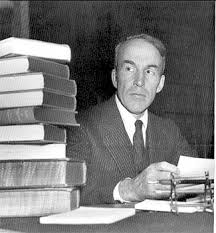
The other poem I remember including, a much better poem, is Archibald McLeish’s, “You, Andrew Marvell.”  As it turned out, the very next year I would hear MacLeish read the poem in person, he who was born the year that Tennyson died.

You, Andrew Marvell

And here face down beneath the sun

And here upon earth’s noonward height

To feel the always coming on

The always rising of the night:


To feel creep up the curving east

The earthy chill of dusk and slow

Upon those under lands the vast

And ever climbing shadow grow


And strange at Ecbatan the trees

Take leaf by leaf the evening strange

The flooding dark about their knees

The mountains over Persia change


And now at Kermanshah the gate

Dark empty and the withered grass

And through the twilight now the late

Few travelers in the westward pass


And Baghdad darken and the bridge

Across the silent river gone

And through Arabia the edge

Of evening widen and steal on


And deepen on Palmyra’s street

The wheel rut in the ruined stone

And Lebanon fade out and Crete

High through the clouds and overblown


And over Sicily the air

Still flashing with the landward gulls

And loom and slowly disappear

The sails above the shadowy hulls


And Spain go under and the shore

Of Africa the gilded sand

And evening vanish and no more

The low pale light across that land


Nor now the long light on the sea:

And here face downward in the sun

To feel how swift how secretly

The shadow of the night comes on …
 

Unknown

Archibald MacLeish

Sometimes, like this morning, when sleep has stood me up and I don’t feel so hot mentally, I seek a dark poem with which I’m not familiar as a way to commiserate with a stranger who might have it worse than I-and-I.

And lo and behold I discovered this poem by Jane Kenyon a couple of hours ago. Jane Kenyon, who died of leukemia, was the subject of the superb book-length elegy Without by her husband Donald Hall.  I read the poem in the New Yorker in the mid-Nineties right after I had recovered from a serious case of clinical depression. You can read one of the poems from the collection here, but I would love to share with you Jane’s poem, which I find profound and beautiful:

HAVING IT OUT WITH MELANCHOLY” BY JANE KENYON

  1. FROM THE NURSERY

When I was born, you waited
behind a pile of linen in the nursery,
and when we were alone, you lay down
on top of me, pressing
the bile of desolation into every pore.

And from that day on
everything under the sun and moon
made me sad — even the yellow
wooden beads that slid and spun
along a spindle on my crib.

You taught me to exist without gratitude.
You ruined my manners toward God:
“We’re here simply to wait for death;
the pleasures of earth are overrated.”

I only appeared to belong to my mother,
to live among blocks and cotton undershirts
with snaps; among red tin lunch boxes
and report cards in ugly brown slipcases.
I was already yours — the anti-urge,
the mutilator of souls.

  1. BOTTLES

Elavil, Ludiomil, Doxepin,
Norpramin, Prozac, Lithium, Xanax,
Wellbutrin, Parnate, Nardil, Zoloft.
The coated ones smell sweet or have
no smell; the powdery ones smell
like the chemistry lab at school
that made me hold my breath.

  1. SUGGESTION FROM A FRIEND

You wouldn’t be so depressed
if you really believed in God.

  1. OFTEN

Often I go to bed as soon after dinner
as seems adult
(I mean I try to wait for dark)
in order to push away
from the massive pain in sleep’s
frail wicker coracle.

  1. ONCE THERE WAS LIGHT

Once, in my early thirties, I saw
that I was a speck of light in the great
river of light that undulates through time

I was floating with the whole
human family. We were all colors — those
who are living now, those who have died,
those who are not yet born. For a few
moments I floated, completely calm,
and I no longer hated having to exist

Like a crow who smells hot blood
you came flying to pull me out
of the glowing stream.
“I’ll hold you up. I never let my dear
ones drown!” After that, I wept for days.

  1. IN AND OUT

The dog searches until he finds me
upstairs, lies down with a clatter
of elbows, puts his head on my foot.

Sometimes the sound of his breathing
saves my life — in and out, in
and out; a pause, a long sigh. . . .

  1. PARDON

A piece of burned meat
wears my clothes, speaks
in my voice, dispatches obligations
haltingly, or not at all.
It is tired of trying
to be stouthearted, tired
beyond measure.

We move on to the monoamine
oxidase inhibitors. Day and night
I feel as if I had drunk six cups
of coffee, but the pain stops
abruptly. With the wonder
and bitterness of someone pardoned
for a crime she did not commit
I come back to marriage and friends,
to pink fringed hollyhocks; come back
to my desk, books, and chair.

  1. CREDO

Pharmaceutical wonders are at work
but I believe only in this moment
of well-being. Unholy ghost,
you are certain to come again.

Coarse, mean, you’ll put your feet
on the coffee table, lean back,
and turn me into someone who can’t
take the trouble to speak; someone
who can’t sleep, or who does nothing
but sleep; can’t read, or call
for an appointment for help.

There is nothing I can do
against your coming.
When I awake, I am still with thee.

  1. WOOD THRUSH

High on Nardil and June light
I wake at four,
waiting greedily for the first
note of the wood thrush. Easeful air
presses through the screen
with the wild, complex song
of the bird, and I am overcome

by ordinary contentment.
What hurt me so terribly
all my life until this moment?
How I love the small, swiftly
beating heart of the bird
singing in the great maples;
its bright, unequivocal eye.

Unknown-1

Jane Kenyon

Happy Hump Day!


Not So Fabulous Pick-Up Lines from Master English Poets

coy

Is poetry really the way into a lover’s heart? Here’s the Swan of Avon, Mr. William Shakespeare himself, having a go at it:

But no roses see I in her cheeks,

And in some perfumes there is more delight,

Than in the breath that from my mistress reeks.

Here, Master Will is attempting to flatter his dark-skinned mistress by underscoring how she doesn’t conform to pale-faced Elizabethan standards of beauty while mocking poets who overstate their lovers’ charms. However, judging by the limited number of women I have courted, I don’t see this strategy working well at all.

For example, I would not have attempted to flatter my late beloved wife with these lines:

My mistress’s breasts are fairly flat

And her hair a sort of mousey brown,

Yet she makes my heart go rat-a-tat-tat

Whenever I take her out on the town.

Nor do I think John Donne’s “The Flea” would work with most women. Sure, his comparing flea bites to sexual intercourse is “imaginative” and his “a-ha” comeback at the end of the poem clever, but, really, do you think this argument has even a Casper-the-Friendly-Ghost of a chance:

It sucked me first, and now sucks thee,

And in this flea our two bloods mingled be.

Thou knowst this cannot be said

A sin, nor shame, nor loss of maidenhead.

Then there’s Andrew Marvell’s “To His Coy Mistress,” which at least starts off on the right foot with some extravagant praise.

An hundred years should go to praise

Thine eyes and on thine forehead gaze;

Two hundred to adore each breast,

But thirty thousand to the rest;

An age at least to every part,

And the last age should show your heart.

For, lady, you deserve this state,

Nor would I love at lower rate.

But then gets all morbid on us:

Thy beauty shall no more be found;

Nor, in thy marble vault, shall sound

My echoing song; then worms shall try

That long preserved virginity . . .

As one of my students once said when I told her that faculty members often lie around unclothed in the faculty lounge:

BAD MENTAL PICTURE!

Sir John Suckling, he of the unfortunate name, creates this sure-not-to-please image:

Her feet beneath her petticoat

Like little mice stole in and out,

As if they feared the light;

But oh, she dances such a way!

No sun upon an Easter-day

Is half so fine a sight.

Maybe chicks back then thought vermin cute, foot-fetishes adorable?

Here’s another from Sir John:

Her lips were red, and one was thin;

Compared with that was next her chin,—

Some bee had stung it newly.

Jacobean Botox!

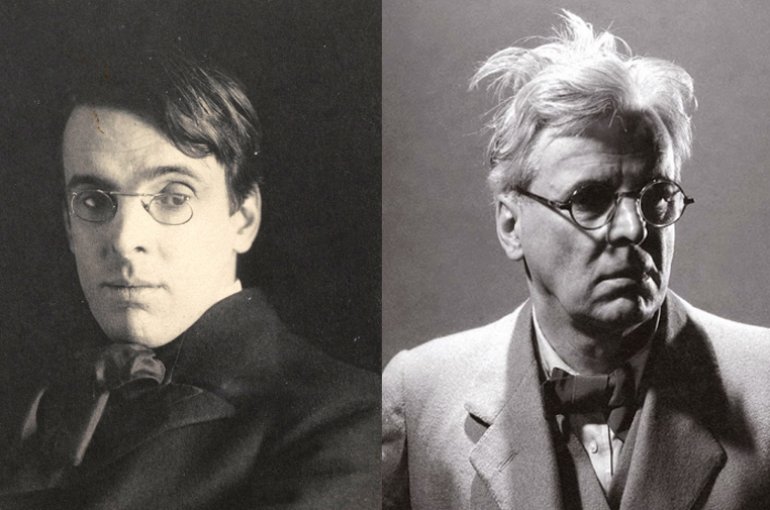
No, boys and girls, I doubt seriously that poetry is capable of melting hearts. After all, the greatest of poets, William Butler Yeats, devoted god knows how many iambs in his lifelong but vain attempt to win the love of Maud Gonne.

He leaves us with this good advice:

Never give all the heart, for love
Will hardly seem worth thinking of
To passionate women if it seem
Certain, and they never dream
That it fades out from kiss to kiss;
For everything that’s lovely is
But a brief, dreamy, kind delight.
O never give the heart outright,
For they, for all smooth lips can say,
Have given their hearts up to the play.
And who could play it well enough
If deaf and dumb and blind with love?
He that made this knows all the cost,
For he gave all his heart and lost.

WB Yeats