I’ve come up with the male equivalent of “resting bitch face,” that sexist slight used to describe women who don’t dutifully beam sun-splashed smiles as they slog through yet another day of taxing responsibilities. Unfortunately, my term for the male equivalent—resting ogre face—aptly describes—to echo Eliot’s “Prufrock”—the face I prepare to face the faces that I meet. In other words, I shuffle through my world looking like an angry old man, projecting an aura that conveys get out of my way, don’t mess with me, whoever you are.
Even when I should be attempting to look somewhat pleasant—for example, in a public interview at a book festival—I come across like a put-upon asshole. Take a look. Notice the interviewer’s cheerful demeanor. Now notice the expression of the man sitting next to him.
I don’t even know, at this late stage of my existence, if it’s worth the effort to emend this unfortunate aspect of my demeanor. After all, a genuine scowl, as opposed to an ersatz smile, might be preferable in today’s timeline, when our country is led by an amoral, narcissistic vulgarian who sports a white baseball cap at a solemn ceremony where he meets the families of slain soldiers in a war he started under false pretenses—apparently to distract the public from the almost assured likelihood that he’s a pedophile.
In any case, until circumstances improve, resting ogre face may simply be the most honest expression available.
The days of our years are threescore years and ten; and if by reason of strength they be fourscore years, yet is their strength labour and sorrow; for it is soon cut off, and we fly away.
Psalm 90:10. King James Version
I have a milestone birthday coming up, the big SEVEN-O, the biblical three score and ten, the average life expectancy for a red-blooded American male when I was a kid, a birthday so far distant that a child couldn’t take it seriously.
O, yeah, yeah pissing in my pajamas, slop drooling out of my mouth. 2 young schoolboys run by— Hey, did you see that old guy Christ, yes, he made me sick!
Charles Bukowski – “the last days of the suicide kid”
Cue the cinematic cliches: sand moving through an hourglass, the winds of time ripping pages from a calendar, time-lapsed growth, and decay.
Trite but true: in the wink of an eye, you transition from making out in the back seat of station wagon to being wheeled into assistant living.
But the thing is – as I keep the cliches coming – it’s hard to smell the roses when you’re changing diapers, sitting through interminable meetings, or visiting a loved one in a cancer ward.
Chances are you’re not old enough to remember Mike Douglas’s cloyingly sentimental hit “The Man in My Little Girl’s Life.”
Well, before I knew it, time had gone My, how my little girl had grown: Then it was: “Uh! Father! There’s a boy outside – his name is Eddie He wants to know if we can go steady? Can we Father? Yes Father? Oh! can we borrow the car Pop?”
Yes, it seems like only yesterday I heard my lovely daughter say: “Dad! There’s a boy outside – his name is Jim He asked me if I’d marry him? I said yes, Dad! – Got something in your eye – Dad? I love him, Dad.”
A child, an adolescent, a young lady, a wife Oh! and oh yes, Heh! Heh! There’s another man in my little girl’s life “Hi Dad! There’s a boy outside – his name is Tim I told him Grandpa was gonna baby sit with him Thanks Dad. Bless you Dad. Goodnight, Dad.”
Good night, ladies, good night, sweet ladies, good night, good night.
Wise old men and women no doubt take Cicero’s De Senectute to heart, or rather, to head. Cicero wrote it in this sixty-third year and argues that the longer perspective that old age provides is rich compensation for the lost pleasures of youth, that “each stage of existence has been allotted its own appropriate quality; so that the weakness of childhood, the impetuosity of youth, the seriousness of middle life, the maturity of old age — each bears some of Nature’s fruit, which must be garnered in its own season.”
Whistling past the graveyard, he offers this:
[T]he fact that old age feels little longing for sensual pleasures not only is no cause for reproach, but rather is ground for the highest praise. Old age lacks the heavy banquet, the loaded table, and the oft-filled cup; therefore, it also lacks drunkenness, indigestion, and loss of sleep. But if some concession must be made to pleasure, since her allurements are difficult to resist, … then I admit that old age, though it lacks immoderate banquets, may find delight in temperate repasts.
If only!
Yeats, who, on the other hand, cast a jaundiced eye on old age, who bemoaned it as “an absurdity” that had been “tied to [him] as to a dog’s tail,” nevertheless acknowledged that through art one could vicariously hold on to youth by studying “monuments of unageing intellect.”
An aged man is but a paltry thing, A tattered coat upon a stick, unless Soul clap its hands and sing, and louder sing For every tatter in its mortal dress, Nor is there singing school but studying Monuments of its own magnificence,
WB Yeats, “Sailing to Byzantium”
Hey, it’s the week after Thanksgiving, and I am grateful for so many things, my old age being one of them. The romantic notion of living fast, dying young, and leaving a beautiful corpse is patently absurd. Adrenaline rushes are fun, but near fatal auto crashes aren’t (and I’ve lived through one). Plus, there’s no such thing as a beautiful corpse. Sure, nowadays, I’m not much to look at, my auburn locks have given way to a freckled scalp, my once lithe frame gone paunchy, and my ability to remember names a semi-serious social liability; however, at the moment, I enjoy good health, a harmonious homelife, successful sons, a thriving grandson, and a remarkably wise and kind thirteen-year-old stepdaughter. I enjoy reading, writing, listening to music, hanging with Caroline, and holding court at Chico Feo.
No doubt my good health will not last, but I would like to think I won’t end up like Philip Larkin’s old fools, “crouching below/ Extinction’s alp,” suffering through “a hideous, inverted childhood.”
As Caroline says, “we can hope; we can dream.”
And, hey, if you’re on Folly 10 December 2022, come have a drink with me after the Xmas parade at Chico Feo while I’m still among the quick, because, to quote Ulysses from Shakespeare’s Troilus and Cressida:
Time hath, my lord, A wallet at his back, wherein he puts Alms for oblivion.
I remember going to a Warren Zevon show at a bar in 1992[1] and overhearing some kid say, “There’s nothing but old people here.” He was talking about people like me, an overripe just turned 39. As it turns out, coincidentally, the show took place a day after Zevon’s 45th birthday, and despite his semi-elderly status, he put on one helluva show. His encore cover of Leonard Cohen’s “First We Take Manhattan, Then We Take Berlin,” actually stirred for an n-second the dead embers of my long extinguished revolutionary zeal.
Of course, 39 or 45 might seem ancient to a 20-something, but to my mother, 60 at the time, or to my 92-year-old grandmother-in-law, I was only on the second leg of my TWC[2] flight to that undiscovered country from whose bourne no tourist returns.
[montage of calendar pages flapping and tearing off in a really stiff breeze][3]
Yikes! Seems just yesterday being a boomer meant you were young; now it’s a term of derision, a descriptor of someone in the market for a walk-in tub, someone whose gauze-wrapped brain is incapable of gazing beyond his own limited experience. In fact, aging is such an obsession that our local paper has a weekly column on how to handle encroaching decrepitude.
I don’t usually read the column, but glancing at this week’s edition, I did a double take when I saw this headline:
Aging for Amateurs: King Lear shows how to find freedom in limitations
WTF, my inner keyboard typed. Lear as role model? He ends up In Act 3 evicted by his fiendish daughters onto a heath during a hurricane. Earlier, the doddering king had disinherited his one decent child, Cordelia, and at the end of the play (spoiler alert) he carries her corpse in his arms as he intones, “Never, never, never, never, never?”
So I read the article, and what the author cites is a brief moment in Act 5 when Lear mistakenly thinks he and soon-to-be-hanged Cordelia are headed to prison.
The author of the article on aging, Bert Keller, concludes
The old king acknowledges the reality of his inevitable imprisonment. Looking beyond the literal, we know what the deeper meaning here is for us: not dungeon or detention center but the limitations and losses of advanced age. Our bodies weaken, our minds slow down, hearing fails and we move around with effort. And on top of all that, now we’re shut in by COVID-19. Yet here is 80-year-old Lear, saying “Let’s away to prison” with a willing heart! That is the amazing thing. He interprets unavoidable withdrawal in terms of inner freedom.
Then again, on the other side of the poetic ledger, there is Dylan Thomas, who suggests “[w]e rage, rage, against the dying of the light,” like my man WB Yeats who asks:
Did all old men and women, rich and poor, Who trod upon these rocks or passed this door, Whether in public or in secret rage As I do now against old age?
Well, all of this is a long-winded way to introduce a clever music video on the subject, which features for a second or two my brother, the musician and actor Fleming Moore, playing a punk who has made it to his golden years.” [4] The songwriter Killjoy says, “The song is about growing old, obsolete, irrelevant, dying, nostalgia, and being OK with all of that.”
The band is Killjoy & the Cutthroats, and the song is “Golden Years for a Gutter Punk.”
Crumbling civilizations and apocalyptic doom are all the rage. I should know. They’ve been my shtick for the 8 years I’ve been publishing blogs. As I decline into the vale of years, what could be more natural than to project my own serotonin-starved vision of bleakness onto the world at large, to float like a dark cloud above the carnival, to cast a shadow on the festivities?
That is no country for old men. The young
In one another’s arms, birds in the trees –
Those dying generations – at their song . . .
I suspect that this tendency of the aged to proclaim hell-n-handbaskets is a biological imperative as old as agriculture. Remember the Greek myth of the Golden Age? Grandmama’s tales of the good ol’ days back on the farm? How the Coca-Colas of your youth tasted so much better hissing from the fountain with a dollop of cheery juice? [I suspect that Great Grandmama’s was even more pleasurable packing that eponymous ( i.e., not-so-secret) ingredient].
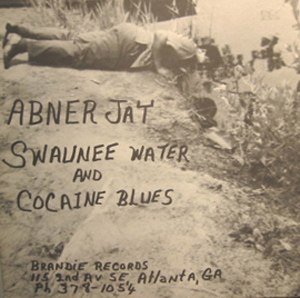
[cue Abner Jay]
As my aging body slouches towards dissolution, the world fast forwards beyond my capabilities and understanding. As I carefully negotiate the crowds, pedestrians rush past staring into boxes the size of cigarette packs, manipulating buttons with their thumbs.
Honk honk!
Pouring pollution from their tail pipes, vehicles the size of city states shimmer like mirages in the gridlock. Tinted windows obscure whoever inside has jacked up Jay-Z so loud that the bass lines sound like King Kong pounding on war drums.
Back home, my television offers more channels that I have the strength and/or attention span to cycle through: kung fu movies, costume jewelry emporiums, forty-year-old quiz shows, twenty-year-old football games, infomercials on ab-crushers, propagandists posing as news anchors.
Not to mention the kids these days, tattooed and pierced, playing the exotic dancer on Instagram, fantasizing about vampires, ending every statement with an interrogative lilt, sounding all alike whether they hail from Harlan, Kentucky or Exeter, New Hampshire.
An electorate with the attention span of a muscle spasm.
Well, if biologically I’m in decline, then the world must be in decline. Some corporate evil force is somehow manipulating us!
***
Back in my g-g-generation’s swaggering youth, we shrugged off atomic annihilation the way we did parking tickets. Wisely, we didn’t fret over scenarios of nuclear winters and genetic mutations because it was more fun (and made more sense} to devote our springtimes engaging in the lovedance beneath batik bedspreads in hippie vans, dormitories, and/or seedy apartments. The future existed as merely an abstraction.
In the immortal words of the Tams: Be young, be foolish, but be happy.
All too imminent horrowshow scenarios (e.g., getting drafted and sent to Nam) relegated more speculative disasters to paranoia’s hinterlands. Our elders – as I do now – articulated the Roman analogies, only targeted the bacchanalia of Woodstock rather than the Trimalchio’s Banquet of conspicuous excess that characterizes Late Empire capitalism (my favorite whipping child).
Despite their self-decorations, today’s youth strike me as more concerned about our planet and future generations than we proliferates. They wisely love their planet and understand the delicate balances that sustain existence. They fear not the sudden nuclear explosion (which may be naive given proliferation) but the gradual erosion of resources and climate change.
I say bravo! Live for today as you think ahead, mindfully turning down the AC before you climb the stairs with your lover. Tune out the hyperbolic curmudgeons (like me) and cultivate your gardens.
Be young, be wise, but be happy. And save the planet! Vote!
When I first started teaching at my current school, I was 32, and the mamas of the Upper School students looked matronly to me. Now 30 years later, the students’ mamas look like jail bait, and those very first students I taught look matronly.










 You Do Hoodoo