Lassitude

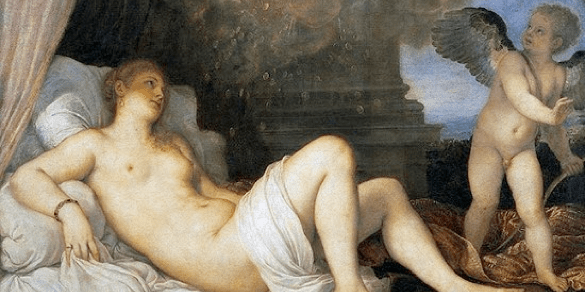
Titian, Danae

Me rather all that bowery loneliness,
The brooks of Eden mazily murmuring . . .

Alfred Tennyson: “Milton”

I’ve always sort of envied the industrious. My former neighbor Dale Petite, for example. Whether his compulsion for constant upgrading stemmed from a virulent strain of Protestant Work Ethic Syndrome, a wish to be alone, or an inability to relax, I cannot say. All I know is that while I lay on our deck in a hammock flipping through Victoria’s Secret catalogueshe could be heard hammering or chainsawing or pile-driving for hours on end. I can’t hope to reconstruct an epic catalogue of the projects he completed in the 7 years he was my neighbor; however, among those wonders were an industrial grade boat lift he erected on his self-built dock and a 1500 square foot bunker-like underground workshop[1] he burrowed into his back yard.
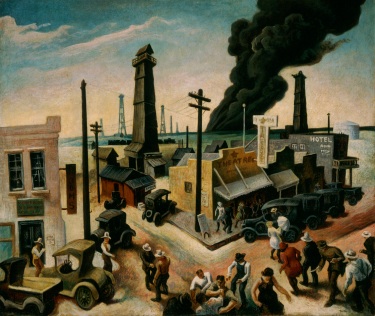
Thomas Hart Benton: Boomtown

Except for a few wretches afflicted with bipolar disorders, members of my family on both sides tend towards lassitude, and I myself do sorely suffer from a prevailing passivity that yields mildewed porches, un-replaced flood lights, income tax extensions, and never-sent manuscripts.  One might hope (or at least John Bunyan would) that with the ever-widening vistas of retirement opening before me, I would use my ample free time productively, but already I sense that this hope is probably a vain one.

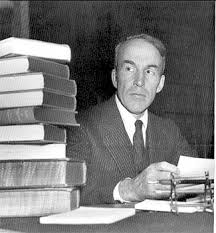
My trifling nature I consider genetic. My maternal grandmother was so lazy she paid a boy to retrieve her paper from the driveway each morning. On the other hand, her son Jerry, whose ashes [2] rested next to a bowl of ticket stubs on a shelf to in my study for over a year, was the Dale Petite type, though not as successful in his grand schemes (e.g., attempting to transplant 80 year-old house-high camellias from his backyard to the front).

So, in the nature/nurture argument, I give the nod to nature – certainly Jerry’s parental units were not go-getters, and his industriousness must have been the product of some recessive gene.
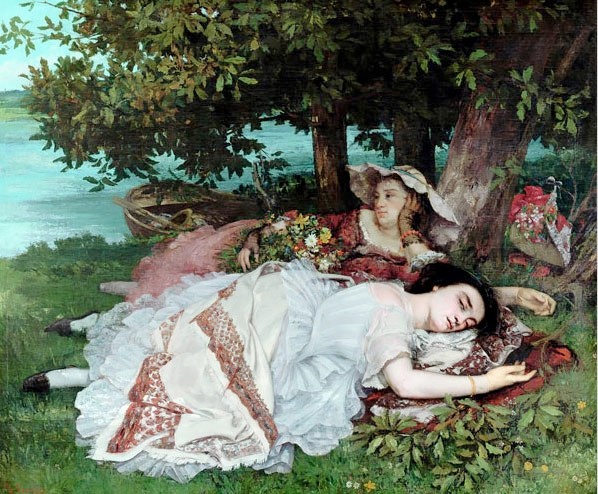
Gustave Courbet:  Young Ladies on the Banks of the Seine

Of course, given the Protestant bedrock upon which this mighty nation stands, idleness is the devil’s workshop (i.e., if like Milton, you consider every non-Christian deity demonic).  The Buddha – though not a deity – never seemed much in a hurry, nor did, come to think of it, Jesus himself.

When [Jesus] had heard therefore that [Lazarus] was sick, {Jesus] abode two days still in the same place where he was.

snip

Now Jesus was not yet come into the town, but was in that place where Martha met him.

The Jews then which were with her in the house, and comforted her, when they saw Mary, that she rose up hastily and went out, followed her, saying, She goeth unto the grave to weep there.

Then when Mary was come where Jesus was, and saw him, she fell down at his feet, saying unto him, Lord, if thou hadst been here, my brother had not died.

snip

And some of them said, Could not this man, which opened the eyes of the blind, have caused that even this man should not have died?

from John 11

Uh-oh. I see a malpractice suit coming.

Duccio Di Buoninsegna: The Raising of Lazarus

Chill thy selves.  No problem, brothers and sisters.

* * *

Of course, we ain’t got the get-out-of-jail-crypt-free card that Jesus had up his sleeve. Laziness is not our friend. Nor is, by the way, compulsive project completion. It’s the Middle Way we should be seeking, but nowadays technology has amped up the exchange of communication so profusely and instantaneously that seemingly every work minute is spent juggling a proliferation of disparate responsibilities that require further bureaucratization to harness, which, of course, creates even more avenues of endeavor as self-inseminating bureaucracies breed ever more complex matrices of responsibilities because it’s not enough for a corporate entity to be competent but it must also be forever improving, soliciting feedback, raising standards . . .

Yawn.

John Bonner: Waiting in Mass Ave T Station

As my erstwhile pal Ed Burrows pointed out one happy hour, human beings’ nervous systems, which are essentially identical to the nervous systems of our earliest ancestors, are not equipped to be bombarded by a never-ending barrage of flashing lights, honking horns, quick-cut images, thumping basses, distant sirens. In our pockets and purses we carry tiny devices with which we can communicate but which detonate like little time bombs throughout the day and night.

[cue blood-freezing scream]

Great God! I’d rather be

A Pagan suckled in a creed outworn;

So might I, standing on this pleasant lea,

Have glimpses that would make me less forlorn;

Have sight of Proteus rising from the sea;

Or hear old Triton blow his wreathèd horn.

Wordsworth, “The World Is Too Much with Us”
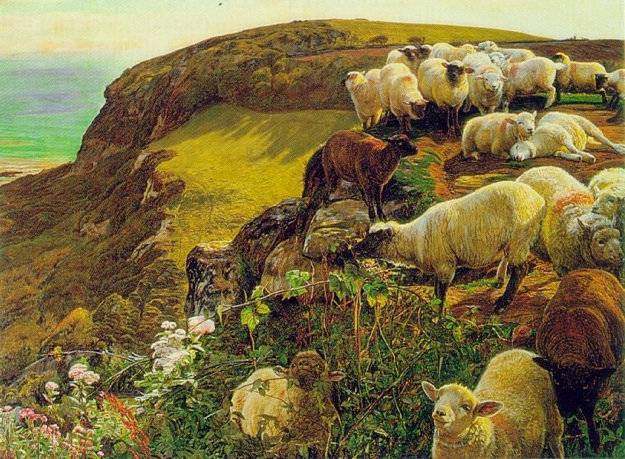
William Holman Hunt: Our English Coasts

I do wish we could relax a bit more in our workplaces. This never-ending ascent in effectiveness defies the arc of aging. No way could I summon in my last years at Porter-Gaud the energy I possessed in 1985 when I greeted my first class there, nor in my latter years did names and places come to me as quickly, and I’ve been around long enough to know that the latest pedagogical hula hoop is destined someday for the attic. It was just as well to let me muddle along pushing active verbs and introductory subordinate clauses. You can’t do much harm there.

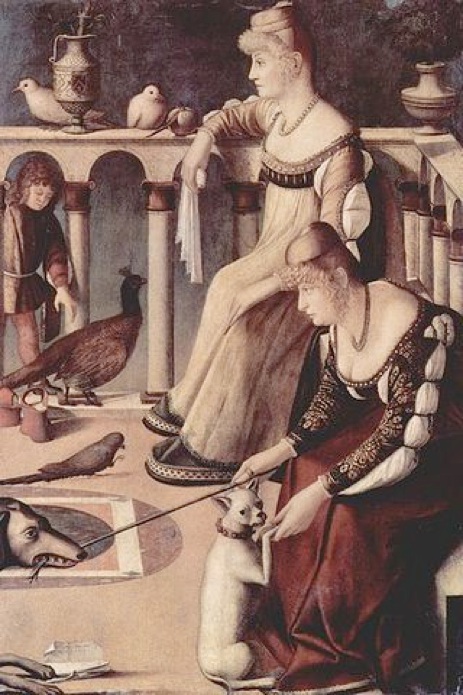
And, while I’m at it, allow me one more desire. May my lassitude never devolve into ennui, may my lassitudinous expression be that of Titian’s First Danae (this week’s covergirl) rather than the expressions of the women below (nor, come to think of it, the expressions of the dogs).

Vittore Carpaccio: Two Venetian Ladies
“This is the curse of our age, even the strangest aberrations are no cure for boredom.”

Stendhal


[1]also suitable for surviving a nuclear winter

[2]My mother didn’t want Jerry’s remains in her house, so my late wife Judy Birdsong placed them in the back of her Highlander and toted them around for a week or two but finally hauled them upstairs into my study where they languished until my brother Fleming came by one afternoon, hauled them into one of my kayaks, and spread them in the tidal creek behind my house.


Summer Solstice Musings

Ah, after the pyrotechnics of last night’s lightening strikes and Aeolian blustering, the longest day of the year has arrived with its magical moon that will drive the devotees of Dionysius from their dorms into frothing streets of the Holy City – but, no, wait, hold on; it’s the summer solstice! The College is out until August.

Praise Zeus!

That’s right, those dim-witted imbibers and garden urinators have returned to wherever in Off they’re from – Jersey City, Peoria, Cincinnati, Charlotte – and we say good riddance, especially if we live on Warren or George or Society Streets, where those sons and daughters of Belial are wont to dwell, reverberations from their self-indulgence echoing into the wee hours, disturbing the sleep of respectable burghers who live a life of not-so-quiet desperation, thanks to Bacchanalian cries of the inebriated.

In Courts and Palaces [Belial] also Reigns
And in luxurious Cities, where the noise
Of riot ascends above their loftiest Towers,
And injury and outrage: And when Night Darkens the

Streets, then wander forth the Sons
Of Belial, flown with insolence and wine.

Paradise Lost, Book 1 497-502

Jacobus de Theramo, Das Buch Belial. 1401.

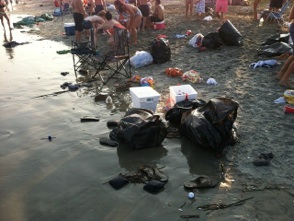
Happily, Caroline, Brooks, and I-and-I live far from that madding crowd in our little jungle paradise on the backside of Folly Island, 10 blocks away from the front-beach Center Street shit show. Things have quieted since the alcohol ban seven years ago – a half-ton less of detritus is strewn about the sands, according to officials. And Folly Gras is a thing of the past, and a recent city ordinance has banned outdoor music after ten.  It seems our city government is trying to change Folly from “The Edge of America” to “The Beige of America.”  Whatever the case, I’m certainly in favor of less litter.

Hit it, TS Eliot:

The [beach] bears [fewer] empty bottles, sandwich papers,

Silk handkerchiefs, cardboard boxes, cigarette ends

Or other testimony to summer nights.[1]

“The Waste Land” 176-9

our front yard

trash from the past

Yet, there’s something about the ripeness inherent in the summer solstice that cries out for revelry – the shedding of clothing, purple-stained mouth[s], ecstatic exclamations of pure joy.

It’s a day to celebrate Paganism – those all-too-human gods and goddesses – and their tolerance of the wild hair, their sanctioning of frenzy, their cult of fertility – latitude not afforded us via Hebraic mythology.

Santorini

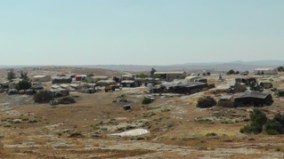
Susya, a Palestinian Village

So beware, neighbors.  This evening you might hear some moon-howling, some blaring Zydeco music, the thumping of crazed dancers doing the Wa-wa-tusi:

Wow!

Ow!

Uh!

You know I feel alright?

Hah!

Feel pretty good, y’all

Uh-hah!


[1]Not to mention beer cans, dirty diapers, used condoms, discarded panties, fast food bags, abandoned flip flops.


The Fringe Benefits of Teaching

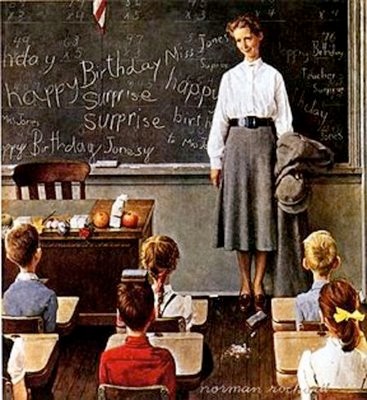
old school room

I cringe whenever I encounter anyone cluck-clucking about the plight of teachers, those noble souls who have forsaken the glint and bling of wealth to follow their calling [quiet fanfare]: educating rising generations of young Americans!

I wonder, did a god/intuitive-inner-voice whisper vocation into my high school Spanish teacher’s ear one monumental day in first or second grade after she had plopped her plump seven-year-old self into the seat of one of the tiny desks arranged in rows facing a green board riveted to a concrete wall painted a pale urine-tinged yellow inside of whatever squat penal-red brick elementary school she attended?[1]  Did she hear an inner voice? “Be a teacher!  One day you can wipe the noses of and teach the alphabet to little boys and girls just like you.”

Bet not.

Perhaps my high school Spanish teacher’s decision to enter the profession came later when some energetic young man or woman teaching Español Uno initiated her into the exotic world of piñatas and “La Cucaracha.” This teacher may have inspired the future Sra D____ so that she modeled her life after her mentor’s and became a high school Spanish teacher.

It’s possible.

But more likely, she was very good at Spanish, received positive reinforcement, fell in love with the language, then the culture, so she wanted to study both.  Not talented and/or wealthy enough for the bigtime world of serious postgraduate scholarship, given the choices that lay before her, she took up teaching, the road not less traveled.

No matter what had prompted Sra  D____ to take up teaching, when I suffered through her Spanish II class ( 48 years ago), something had gone wrong with her work ethic. From Michigan, married to a sailor stationed in Charleston, she looked twenty-five or so.  Sour-faced and an acetic-tongued, she plopped down behind her desk each morning, leaned over, and clicked on a tape recorder (one that had to be hand-threaded).

For the entire class period, we echoed in unison the tinny foreign sounds emanating from the machine’s dime-sized speakers.  Cheating on tests was so rampant in her class that a couple of boys audibly hummed the Mission Impossible theme whenever they extracted cheat sheets of conjugations from beneath their artificial alligator belts.

One day a friend, Sharon Mallard, leaned over and whispered, “You could train a chimp to do what she does.  Have it come in every day and turn on the tape recorder.”

James Grafsgaard Gran Flamenco

***

I don’t mean to imply that many teachers aren’t underpaid, only that some are overpaid and others fairly paid.  For me (albeit underpaid), the fringe benefits of teaching more than compensated for the monetary rewards of professions that demand year round onerous office hours (e.g., law/medicine/engineering) or that deal in the ultimately trivial enterprise of merchandizing non-essentials (e.g. 5000 sq. ft. houses for families of four).

If indeed time is money (rather than time’s being a chain of chemical reactions flashing sentient beings deterministically through a process that ultimately culminates in their demise), then the free time that teachers possess is a treasure trove, not of accumulated cultural artifacts, but of hours of freedom to pursue pleasures – in my case, reading, writing, traveling – pleasures that ideally made me richer in experience and knowledge and therefore theoretically a better teacher.

Because we periodically changed what English classes and grades I taught at my school, my job demanded that every few years I reread Great Expectations, Julius Caesar, Pride and Prejudice, Heart of Darkness, Song of Myself, Steppenwolf, A Portrait of the Artist as a Young Man, Hamlet.

The horror, the horror!

As I grew older, I cross referenced my interpretation of those texts with earlier readings, discovered previously unnoticed nuances, explored criticism that might prod me to read something of Nietzsche’s I hadn’t (e.g., Beyond Good and Evil) or something of Jung’s I hadn’t (e.g., “The Difference between Eastern and Western Thinking”)

Of course, grading essays was burdensome; however, at least I was dealing with something I actually love – words – and helping a young person acquire a valuable skill, [i.e., writing (i.e., diction, syntax, logic, illustration, mechanics, etc.)].

As self-serving as it sounds, I wandered into teaching not because I heard a calling (how awful it would have seemed to me at 16 to spend forty more years in high school) or because I particularly liked children (I didn’t), but because I wanted employment that provided me a comfortable living with enough free time to cultivate my own interests.

What I didn’t know when I stumbled into my first classroom at Trident Tech was how much I would enjoy interacting with students.  There I taught ex-cons, single mothers, semi-English-literate Philippine-born Navy veterans, frugal intellectuals, and curious grandmothers.

In the far different situation at Porter-Gaud, my students enriched my life in ways that are too numerous to catalogue.  Of course, I taught a few pains-in-the-ass as well, but I can’t ever remember encountering a former student anywhere (even one who failed senior English and didn’t graduate with his class) who wasn’t glad to see me or I to see him or her.

Moral: Don’t pity teachers; envy them.


[1]One critic* notes: Not only does the sentence effectively capture the visual ugliness of a typical public school setting but also the sheer boredom of school routines, with those dreary participial phrases stretching out like the periods of the day, a Bataan Death March of detail: Oh, when will the sentence, like the school day, ever end?

*I.e., I-and-I


How to Talk Mac Rebennack’s Oola-Ma-Walla-Malla Argot


Here’s a brief glossary of perhaps unfamiliar words and phrases from Mac Rebennack’s autobiography Under a Hoodoo Moon.


ax a musician’s instrument, derived from Mafia lingo, according to Rebennack

B drinkers – uncool bar customers

belly rub – a dance

bomolatchee –  a huge reefer, e.g. a Rasta spliff.

bonnaroo – cool, great, swell

boost, booster – to shoplift; a shoplifter

Chang Moi rocks  – a type of heroin

companfonkilation  – merging two songs and pulsing them with syncopation

Of all the songs on the album, the one that probably gave me the greatest kick was “Litanie des Saints,” my compafonkification of two pieces of music, Louis Gottschalk’s classical “‘Bamboula, Danse des Negres” and the chants I heard at various gris-gris churches over the years.


decks of gage – stacks of rolled up joints

desitively – positively, absolutely

dope sick – needing a fix

When we started working on the record, Wayne told me, “I can’t work no more like this.  I’m dope sick.  I need some serious money.”

down-goings – a play on “what’s going down” but in the sense of the process of sinking into further trouble

dry hump – a dance

ear bead – a blind man locating someone’s bodily presence

Ray [Charles] got an ear bead on him [and] knocked Charley on his ass.

Fess – Professor Longhair

Professor Longhair

fessee – the argot of professor Longhair (see propedeller, propelacter, e.g.)

festoon – Professor Longhair’s term for fun

flusturations – incidents that frustrate and fluster

One of the flusturations of this job was that when I delivered something I thought was good, many times Johnny didn’t put it out.

FonkLiterally, “a syncopation on or around a beat.”

 Fonky, fonked– a derivation of funky, but more emphatic, more positive, having the positive vibe associated with fonk.

In the bat of an eye, I’m out on the fonky streets of Fort Worth, smelling rawhide and cowpies, headed for the airport and blue skies.

This approach fonked up the more abstract northern jazz sound.

funksterators – funk creators, musicians that play funk

forever-and-one-year – a long prison sentence

frolic presto – to play music fast

Come on, boys.  Let’s frolic presto.

funky – the music of funk, cool, but less emphatic than fonky.  Rebennack uses both spellings, but fonky seems richer then funk.

get a sick off  –  score narcotics to counteract withdrawal

He needed to get his sick off.  His habit was an oil burner.

goofer dust – a hoodoo concoction

a combination of dirt from a graveyard, gunpowder, and grease from [church] bells; if you throw it into somebody’s eyes, it’ll blind them, and throwing it behind them while they’re walking will put a curse on them.

gris-gris – New Orleans styled voodoo, magic

hang paper – forge checks

hipped – turned on to new information

He hipped him to the fine points of hustling gigs.

in need of a little brain salad surgery – needing to get high

jingle jungle – the business of writing jingles for advertisements

junk-a-dope-a-nals – any intoxicatingy pharmaceutical ending in “nal”

A lot of them went for goofballs: Nembutal, Seconal, tuinal, phenobarbital.  The nals we used to call them – the junk-a-dope-a-nals.

lushing – drinking, doping

making cake – earning money

marble-lized – immortalized

“I think I marble-lized you.” Rebennack to Queen Julia Jackson after dropping her name in a song.

marygeranium– of or relating to marijuana

The truth was, I think my mother unconsciously dug reefer, or at least enjoyed the idea of a marygeranium high.

methodonian – an addict who has transitioned from heroin to methadone

ministrations – technical applications

We were all loaded and Rose was screaming and the doctor was doing his ministrations and it looked like the child was just about to come out when the doctor turned to us, real annoyed, and said, “Man, y’all can’t be smoking and doing all that shit in here, Get out!”

mootahs – reefers

muscle – bouncers

They had their own muscle working in the clubs or out on the street.

oaks and herbs – splendid, irie, as the Jamaicans say

And the second one said, “Everything’s oaks and herbs” – which means everything’s cool because they had smoked lots of herbs.

ofays – white people

The source of their bigotry seemed to be that the West Bank ofays were scared that black guys would take off with their women.


one-to-too-long-a-time –  any prison sentence

Now he’s in Angloa Penitentiary doing one to too long a time.

oola-ma-walla-malla language – specialized argot created by cats to confuse squares

‘plexed out – seriously frustrated by

They were truly down characters and kept me from getting ‘plexed out behind all the changes.

pluck – booze

He was a garbage head, a cat who would drink cheap pluck, smoke a bag of reefer, pop all the pills he could pop, then chase it all down with a shot of dope.

propedeller, propelacter – a drum pedal

“John, that ain’t what I want you to play on your foot propedeller.”

John said, “Whaaat?”

Fess said, “You know, I want you to propel the groove with your foot propelacter.”

rum-dums – winos, sots

One night a couple of rum-dums got into a fight and started throwing cans of corn and tomato juice around and busted up the store, making a hell of a gumbo in the process.”

shucker – a pretender

My voice was low and froggy; Shine had a husky voice, too, but was a real singer, not a shucker like me.

slotted – transitioned into a niche

I slotted into a different musical groove.

spew – a drum fadeout

stone – solid, set in stone, unalterable

There was a whole language and lifestyle that went along with being a stone dope fiend.

Leonard just didn’t have the stupidity to become a dope fiend or a weed or pill head; he was never anything but a stone character.

Cutting the album [Gumbo] was a stone kick from first to last.

tighten – to pay back owed money

Tomming – being an Uncle Tom

tragic magic  – heoin addiction

trashers – rock stars who wreck hotel rooms or ballrooms

traumatical – traumatic

All of this was very traumatical for me.  I’ve seen friends’ throats slit, my partner on the morgue table, kids getting turned out – it’s all very heavy, and a lot of it was stuff I’d forgotten until just recently when I went through rehab.

tricknology, tricknologists – the act of conning, fooling someone; con men, scam artists


Dr. John’s Dr. Johnston, Mad Props for the Malaprops


Polonius:  What do you read, my lord?

 Hamlet: Words, words, words.


Samuel Johnston in 1755-ish published the first ever dictionary in English.  He accomplished this Herculean feat single-handedly.

Imagine, idle reader, the enormity of the project.  How would you go about collecting words and defining them with no dictionary to consult? Would you start with aardvark and work your way alphabetically to zygote or start with verbs, assembling the gamut, so to speak, from states of being to acts of doing, and once you’d worked your way from is to zapped, would you then turn to the vast realm of nouns?

I ain’t know cause my mind be blown.

In 1994 with the help of a writer named Jack Rummel, Dr. John (nee Mac Rebennack) published an autobiography entitled Under a Hoodoo Moon.

Like Samuel Johnson, Dr. John, who just now died June 6, was a lover of locutions.  Like James Joyce, Mac, the Dr. (also known as the Nite Tripper) found the English language inadequate for his needs.

“So weenybeenyveenyteeny.”   James Joyce, Finnegan’s Wake

“Posilutely honorifficatedly medicatedly doctoratedly yours thank you.  Dr. John, from the liner notes of Desitively Bonneroo.

Sam Johnson was an eccentric. Obsessive, compulsive.   Before crossing the threshold of door, he’d go through a series of ritualistic gesticulations and when walking down the street feel compelled to touch every single post he passed.

Mac Rebennack was also an eccentric and was no stranger to wild gyratin-i-ficatin’,  as he might put it.

I’m now reading Under a Hoodoo Moon, and it occurs to me that I could honor these two doctor heroes of mine by doing a little lexicography myself, i.e., by compiling a Dr. John dictionary, a handy go-to reference when you run across a term like junk-a-dope-a-nals  or marygeranium.

The project is underway, and of course, I’ll publish it here, free of charge, despite Dr. Johnson’s oft-quoted observation: “No man but a blockhead ever wrote except for money.”

But, as Dr. John says, “You can’t shut the fonk up.  No, the fonk got a mind of its own.

Caricature of Samuel Johnson and James Boswell. — Image by © Lebrecht Authors/Lebrecht Music & Arts/Corbis

The Lighter Side of the Apocalypse

Crumbling civilizations and apocalyptic doom are all the rage.  I should know. They’ve been my shtick for the 8 years I’ve been publishing blogs.  As I decline into the vale of years, what could be more natural than to project my own serotonin-starved vision of bleakness onto the world at large, to float like a dark cloud above the carnival, to cast a shadow on the festivities?

That is no country for old men. The young
In one another’s arms, birds in the trees –
Those dying generations – at their song . . .

I suspect that this tendency of the aged to proclaim hell-n-handbaskets is a biological imperative as old as agriculture.  Remember the Greek myth of the Golden Age? Grandmama’s tales of the good ol’ days back on the farm?  How the Coca-Colas of your youth tasted so much better hissing from the fountain with a dollop of cheery juice?  [I suspect that Great Grandmama’s was even more pleasurable packing that eponymous ( i.e., not-so-secret) ingredient].

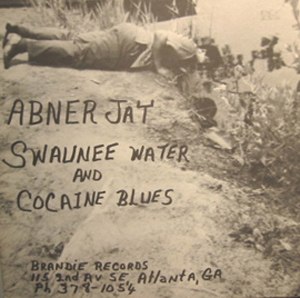
[cue Abner Jay]

As my aging body slouches towards dissolution, the world fast forwards beyond my capabilities and understanding.  As I carefully negotiate the crowds, pedestrians rush past staring into boxes the size of cigarette packs, manipulating buttons with their thumbs.

Honk honk!

Pouring pollution from their tail pipes, vehicles the size of city states shimmer like mirages in the gridlock.  Tinted windows obscure whoever inside has jacked up Jay-Z so loud that the bass lines sound like King Kong pounding on war drums.

Back home, my television offers more channels that I have the strength and/or attention span to cycle through: kung fu movies, costume jewelry emporiums, forty-year-old quiz shows, twenty-year-old football games, infomercials on ab-crushers, propagandists posing as news anchors.

Not to mention the kids these days, tattooed and pierced, playing the exotic dancer on Instagram, fantasizing about vampires, ending every statement with an interrogative lilt, sounding all alike whether they hail from Harlan, Kentucky or Exeter, New Hampshire.

An electorate with the attention span of a muscle spasm.

Well, if biologically I’m in decline, then the world must be in decline.  Some corporate evil force is somehow manipulating us!

***

Back in my g-g-generation’s swaggering youth, we shrugged off atomic annihilation the way we did parking tickets.  Wisely, we didn’t fret over scenarios of nuclear winters and genetic mutations because it was more fun (and made more sense} to devote our springtimes engaging in the lovedance beneath batik bedspreads in hippie vans, dormitories, and/or seedy apartments.  The future existed as merely an abstraction.

In the immortal words of the Tams: Be young, be foolish, but be happy.

All too imminent horrowshow scenarios (e.g., getting drafted and sent to Nam) relegated more speculative disasters to paranoia’s hinterlands.  Our elders – as I do now – articulated the Roman analogies, only targeted the bacchanalia of Woodstock rather than the Trimalchio’s Banquet of conspicuous excess that characterizes Late Empire capitalism (my favorite whipping child).

Despite their self-decorations, today’s youth strike me as more concerned about our planet and future generations than we proliferates.  They wisely love their planet and understand the delicate balances that sustain existence.  They fear not the sudden nuclear explosion (which may be naive given proliferation) but the gradual erosion of resources and climate change.

I say bravo! Live for today as you think ahead,  mindfully turning down the AC before you climb the stairs with your lover. Tune out the hyperbolic curmudgeons (like me) and cultivate your gardens.

Be young, be wise, but be happy.  And save the planet!  Vote!

Goodnight, Dr. John, May Flights of Brass Bands Blow Thee to Thy Rest


dr john keeper

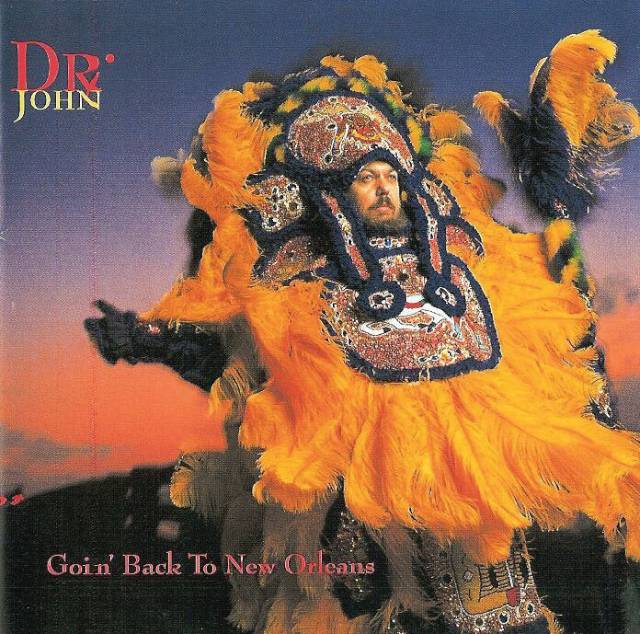
Okay, Mac Rebennack’s dead, which means so is Dr. John, which means no more gumbo music, no more funkificated word coinages, no more “mos’ scociouses,” no more “desitively bonnaroos.”

Unique is too weak a word.  Dig this from his Nite Tripper days:

Although Dr. John put on great shows right up until recently (I’ve seen him three times over the last twenty years), I think his best album is 1974’s Desitively Bonnaroo.  Music critic Nick Deriso: “Even today, there’s really no roadmap for the crazy-eyed co-mingling of R&B, jazz, island beats, blues, boogie funk and hoodoo whackadoo splashed across this LP, recorded alongside fellow New Orleans legends Allen Toussaint and the Meters more than 35 years ago.”

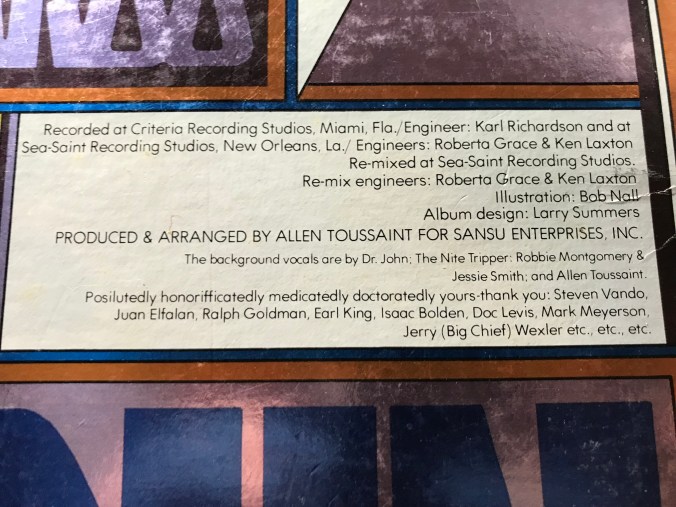
I still got the copy I copped from a sidewalk record sale in ’76.  Take a peek at the musicians, if you’re interested, while you listen to a snippet of the title song.

The first time I saw Dr. John live was at an outdoor street festival, again in Columbia, and I’ll never forget his entrance, sporting canary yellow socks, bopping his cane on the sidewalk, strut-dancing his way up the piano to play and croak and banter.

After Katrina, my friends Jake, Keith, and my late wife Judy Birdsong saw him at the Newberry Opera house.  You could see Katrina had taken a toll, and he kept saying throughout the show, “They put me on psych meds.”  That was back in his way-over-weight days, and he occasionally got up from the piano and do these gyrations that didn’t quite qualify as a dance.

In 2013, I saw him for the last time at the Leaf Festival where he played the guitar. He had started out as a guitarist until he got a finger shot in a scuffle and turned to the piano.

dr on guitar

photo by Wesley Moore

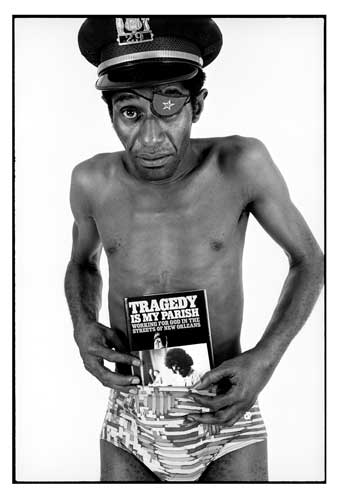
Given his hanging out in smokey bars and strip clubs since his teens, his three-decade heroin addiction, his doing some time in prison, I doubt that Mac would ever dream he’d make it to 77, a lucky number.  At any rate, he follows Professor Longhair, Earl King, and James Booker, whom Dr. John once described as “the best black, gay, one-eyed junkie piano genius New Orleans has ever produced.”

So long, old friend. Gonna miss your music, gonna miss your rap.

jb_tragedy

James Booker


“Call of the Wild” Meets “The Man with the Golden Arm”

Okay, Lefty.  What about this one?  There’s this German shepherd named Rolf working at LAX sniffing out dope, but the thing is, he starts to like the smell of the herb, wonders what it tastes like, and finally, one day loses his Teutonic dog discipline and tears into a bag of Acapulco Gold, wolfs the whole bag, starts seeing shit like black light bunny rabbits melting.

He’s instantaneously hooked. There’s nothing anybody can do.  They try everything: behavior modification, treats, punishments, but after that first taste, he’s long gone, addicted, unemployable, eventually let go, gets adopted, but busts out his backyard, his nose huffing, guiding him outside the city limits south to Flores where he spends every waking moment trying to cop.

This cat – I mean dog – has a world-class nose.  Can sniff dope out extraordinaire.  Becomes a pot pickpocket, gets the shit beat out of him a couple of times, but it’s worth it – he’s got to have it.  Loses weight, hair, looks scabby, his will-to-live vacates.  He considers throwing himself in front of a bus but then [cue violins] runs across a wino puking in a back alley, and in puke Rolf sees the face of Jesus. He eats the vomit, and after licking his chops, his mouth opens, and the words “Oh my God” come out loud and clear.

Rolf gets straight, spends the rest of his life talking to users, who think they’re hallucinating when a dog starts telling them what they already know deep down inside, but he assures them they’re not hallucinating, and a few of them follow in his pawsteps, so to speak, accept Jesus as their Lord and Savior, slip out of the chains of their addiction.

Getting people off drugs translates into some pretty powerful enemies.  One day a pusher named Roberto offs him, but Rolf goes to heaven, is the very first dog allowed in because dogs are basically amoral, no matter how much they seem to love you.  I realize this idea is unpopular, but it’s true.

I thought so.  Not believable.  Religious people won’t understand eating the vomit is communion, holy. I get it.  No hard feelings.

Well, the only other thing I got is even more unbelievable.  This reality TV star and professional wrestling promoter, who has a vocabulary of about 10,000 words, decides to run for president to drum up business for his brand.  The vulgarian is ridiculous, sports a platinum-dyed comb-over Teddy Boy do and tips the scales at 320. He has no intention of actually winning; it’s merely a publicity stunt, like I said, to hype his brand.  But the thing is that he kills his Republican competitors in the debates, mocking them to their faces.  It’s like, well, like professional wrestling: over the top, crass, stupid, the Red State Special. Even after he brags about his history of grabbing pussies, Evangelicals claim that God has sent him to save the nation.  He ends up winning the nomination, the presidency. Like I say, the talking Jesus dog is more believable.

My Last Class

I guess it’s apt that I taught Wilde’s The Importance of Being Earnest for my very last class.  It was Wilde, of course, who claimed “life imitates art,” and in my case it was true, in a way, as I chose Hemingway’s Jake Barnes and Humphrey Bogart as my public masks, assuming the persona of a hard-drinking cynic, eschewing public tears as a failure of, if not character, at least temperament.  I didn’t weep at my parents’ funerals or at Judy Birdsong’s memorial service.[1]

So I was somewhat surprised to find myself yesterday in that last class on the verge of tears.  My friend and colleague Bill Slayton, a hell of a teacher, who is also retiring, asked if he could sit in, and I was happy he was there. The class had just finished Heart of Darkness, which was serialized in 1899, four years after the debut of The Importance of Being Earnest. I postulated that Marlow could be sitting on the deck of the Nellie in the River Thames telling his dark tale of jungle boogie, starring Kurtz and featuring severed human heads, while at the same time across town Wilde’s Algernon might be “tickling the ivories” and ordering his manservant Laine to fetch some cucumber sandwiches.

I suggested they were in the same town at the same time but in different centuries.

Bill talked of Tennyson and Browning and their raging against the decline of culture.  He quoted the last lines of Tennyson’s “Ulysses”:

Tho’ much is taken, much abides; and tho’

We are not now that strength which in old days

Moved earth and heaven, that which we are, we are;

One equal temper of heroic hearts,

Made weak by time and fate, but strong in will

To strive, to seek, to find, and not to yield.

Wilde, he said, instead of tilting against the windmills of civilization’s decline, went with the flow, enjoyed the farce, embraced the titillation of sense organs and the idea that art existed merely for its own sake. [2]

The kids politely listened as Bill and I more or less had an adult conversation about art and civilization as the classroom clock wound down to dismissal.  As I wrapped up, I told them how much I had enjoyed teaching them.  Bill rose from his chair and said he’d done some calculating and over my career at Porter-Gaud that I’d taught over 30,000 classes and didn’t they feel privileged to be sitting in on the last one.  The kids were standing and clapping, and I was about to lose it until I managed to growl Yeats’ epitaph, “Cast a cold eye/, On life, on death/Horseman, pass by.”

I shook hands with them as they left.  A couple of the girls were teary eyed, but by then, my Bogie mask was back securely in place.


[1]Though behind closed doors for Judy I’ve done more than my share of sobbing.

[2]Until, of course, he found himself on his hands and knees scrubbing the latrines of Reading Gaol.

Commiseration Via Poetry

antidepressant-Mirjana-Veljovic

Antidepressant by Mirjana-Veljovic

In college, back in the fall of 1972, my sophomore poetry teacher assigned our class the task to compile an anthology of contemporary poems that revolved around a common theme.  I chose despair because I reckoned that depression might be a common theme for poets, a notoriously withdrawn and navel-gazing lot.  I figured poems of despair, unlike, say, political poems or poems dealing with domestic bliss, would make for easier harvesting because they would exist in greater abundance.

So, I checked out anthologies and skimmed poem titles and promising poems hoping to amass thirty or so specimens to satisfy the minimum requirement. In 1972, Auden and MacLeish were alive, Sylvia Plath less than a decade dead, Anne Sexton about to kill herself in a couple of years, so many of the poems I looked at had been written mid-century.

Of course, I have lost my anthology, which was hand written and received a B (likely the lowest grade given), but I do remember two of the poems I included.  One was Auden’s “As I Walked Out One Evening,” whose rhymes and rhythms I liked and whose rather childish message was right up my cynical alley:

I walked out one evening,

Walking down Bristol Street,

The crowds upon the pavement

Were fields of harvest wheat.


And down by the brimming river

I heard a lover sing

Under an arch of the railway:

‘Love has no ending.


‘I’ll love you, dear, I’ll love you

Till China and Africa meet,

And the river jumps over the mountain

And the salmon sing in the street,


‘I’ll love you till the ocean

Is folded and hung up to dry

And the seven stars go squawking

Like geese about the sky.


‘The years shall run like rabbits,

For in my arms I hold

The Flower of the Ages,

And the first love of the world.’


But all the clocks in the city

Began to whirr and chime:

‘O let not Time deceive you,

You cannot conquer Time.


‘In the burrows of the Nightmare

Where Justice naked is,

Time watches from the shadow

And coughs when you would kiss.


‘In headaches and in worry

Vaguely life leaks away,

And Time will have his fancy

To-morrow or to-day.


‘Into many a green valley

Drifts the appalling snow;

Time breaks the threaded dances

And the diver’s brilliant bow.


‘O plunge your hands in water,

Plunge them in up to the wrist;

Stare, stare in the basin

And wonder what you’ve missed.


‘The glacier knocks in the cupboard,

The desert sighs in the bed,

And the crack in the tea-cup opens

A lane to the land of the dead.


‘Where the beggars raffle the banknotes

And the Giant is enchanting to Jack,

And the Lily-white Boy is a Roarer,

And Jill goes down on her back.


‘O look, look in the mirror,

O look in your distress:

Life remains a blessing

Although you cannot bless.


‘O stand, stand at the window

As the tears scald and start;

You shall love your crooked neighbour

With your crooked heart.’


It was late, late in the evening,

The lovers they were gone;

The clocks had ceased their chiming,

And the deep river ran on.


auden

WH Auden

The other poem I remember including, a much better poem, is Archibald McLeish’s, “You, Andrew Marvell.”  As it turned out, the very next year I would hear MacLeish read the poem in person, he who was born the year that Tennyson died.

You, Andrew Marvell

And here face down beneath the sun

And here upon earth’s noonward height

To feel the always coming on

The always rising of the night:


To feel creep up the curving east

The earthy chill of dusk and slow

Upon those under lands the vast

And ever climbing shadow grow


And strange at Ecbatan the trees

Take leaf by leaf the evening strange

The flooding dark about their knees

The mountains over Persia change


And now at Kermanshah the gate

Dark empty and the withered grass

And through the twilight now the late

Few travelers in the westward pass


And Baghdad darken and the bridge

Across the silent river gone

And through Arabia the edge

Of evening widen and steal on


And deepen on Palmyra’s street

The wheel rut in the ruined stone

And Lebanon fade out and Crete

High through the clouds and overblown


And over Sicily the air

Still flashing with the landward gulls

And loom and slowly disappear

The sails above the shadowy hulls


And Spain go under and the shore

Of Africa the gilded sand

And evening vanish and no more

The low pale light across that land


Nor now the long light on the sea:

And here face downward in the sun

To feel how swift how secretly

The shadow of the night comes on …


Unknown

Archibald MacLeish

Sometimes, like this morning, when sleep has stood me up and I don’t feel so hot mentally, I seek a dark poem with which I’m not familiar as a way to commiserate with a stranger who might have it worse than I-and-I.

And lo and behold I discovered this poem by Jane Kenyon a couple of hours ago. Jane Kenyon, who died of leukemia, was the subject of the superb book-length elegy Without by her husband Donald Hall.  I read the poem in the New Yorker in the mid-Nineties right after I had recovered from a serious case of clinical depression. You can read one of the poems from the collection here, but I would love to share with you Jane’s poem, which I find profound and beautiful:

HAVING IT OUT WITH MELANCHOLY” BY JANE KENYON

  1. FROM THE NURSERY

When I was born, you waited
behind a pile of linen in the nursery,
and when we were alone, you lay down
on top of me, pressing
the bile of desolation into every pore.

And from that day on
everything under the sun and moon
made me sad — even the yellow
wooden beads that slid and spun
along a spindle on my crib.

You taught me to exist without gratitude.
You ruined my manners toward God:
“We’re here simply to wait for death;
the pleasures of earth are overrated.”

I only appeared to belong to my mother,
to live among blocks and cotton undershirts
with snaps; among red tin lunch boxes
and report cards in ugly brown slipcases.
I was already yours — the anti-urge,
the mutilator of souls.

  1. BOTTLES

Elavil, Ludiomil, Doxepin,
Norpramin, Prozac, Lithium, Xanax,
Wellbutrin, Parnate, Nardil, Zoloft.
The coated ones smell sweet or have
no smell; the powdery ones smell
like the chemistry lab at school
that made me hold my breath.

  1. SUGGESTION FROM A FRIEND

You wouldn’t be so depressed
if you really believed in God.

  1. OFTEN

Often I go to bed as soon after dinner
as seems adult
(I mean I try to wait for dark)
in order to push away
from the massive pain in sleep’s
frail wicker coracle.

  1. ONCE THERE WAS LIGHT

Once, in my early thirties, I saw
that I was a speck of light in the great
river of light that undulates through time

I was floating with the whole
human family. We were all colors — those
who are living now, those who have died,
those who are not yet born. For a few
moments I floated, completely calm,
and I no longer hated having to exist

Like a crow who smells hot blood
you came flying to pull me out
of the glowing stream.
“I’ll hold you up. I never let my dear
ones drown!” After that, I wept for days.

  1. IN AND OUT

The dog searches until he finds me
upstairs, lies down with a clatter
of elbows, puts his head on my foot.

Sometimes the sound of his breathing
saves my life — in and out, in
and out; a pause, a long sigh. . . .

  1. PARDON

A piece of burned meat
wears my clothes, speaks
in my voice, dispatches obligations
haltingly, or not at all.
It is tired of trying
to be stouthearted, tired
beyond measure.

We move on to the monoamine
oxidase inhibitors. Day and night
I feel as if I had drunk six cups
of coffee, but the pain stops
abruptly. With the wonder
and bitterness of someone pardoned
for a crime she did not commit
I come back to marriage and friends,
to pink fringed hollyhocks; come back
to my desk, books, and chair.

  1. CREDO

Pharmaceutical wonders are at work
but I believe only in this moment
of well-being. Unholy ghost,
you are certain to come again.

Coarse, mean, you’ll put your feet
on the coffee table, lean back,
and turn me into someone who can’t
take the trouble to speak; someone
who can’t sleep, or who does nothing
but sleep; can’t read, or call
for an appointment for help.

There is nothing I can do
against your coming.
When I awake, I am still with thee.

  1. WOOD THRUSH

High on Nardil and June light
I wake at four,
waiting greedily for the first
note of the wood thrush. Easeful air
presses through the screen
with the wild, complex song
of the bird, and I am overcome

by ordinary contentment.
What hurt me so terribly
all my life until this moment?
How I love the small, swiftly
beating heart of the bird
singing in the great maples;
its bright, unequivocal eye.

Unknown-1

Jane Kenyon

Happy Hump Day!