Robert Lighthouse made a surprise visit last night the Singer/Songwriter Soapbox. Opening Act, a villanelle dedicated to Hank Williams.
“No Joy in Mudville”
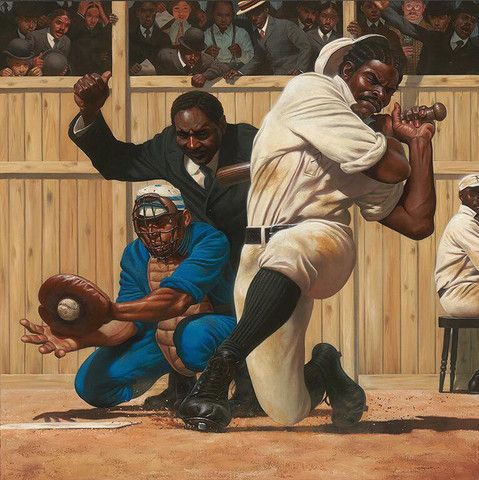
When my wife Judy Birdsong received her death-sentence diagnosis of Peripheral T-Cell Lymphoma, I swore to myself that I’d never again let the outcome of a sporting event darken an otherwise sunny day. After all, just a few months before, I had allowed the season-ending injury to Gamecock running back Marcus Lattimore ruin an otherwise glorious afternoon in the mountain town of Saluda, North Carolina. Judy was healthy, bees were flitting among the flowers outside the loft we had rented, and the trees were, as Yeats put it, “in their autumn beauty,” a canopy of orange and gold beneath a deep blue cloudless sky. But there I was sullenly obsessing about a mere athletic event, a tribal association I have with a perpetually underperforming football team, peace and joy squandered, preempted by my agonizing over a goddamned sporting event.[1]
So I more or less gave up following sports, which given the cursed programs I pull for, including not only the hapless Gamecocks, but also the Atlanta sports franchises, was an act of wisdom. For me, “the thrill of victory” doesn’t compensate for the agony of defeat.”
I followed the Atlanta Braves so religiously in the 90s that I would score the games at home as I watched them on TBS, my boys sitting watching with me as Judy puttered around peeking in every now and then. Eventually, it occurred to me that watching them wasn’t bringing me happiness but instigating anxiety. So I quit cold turkey.
Alas and alack! I’ve fallen off the wagon, have started following the Braves again! And the Gamecocks!
Friday night, instead of going to the Moonlight Drive-In with my wife Caroline and stepdaughter Brooks, I opted to stay at Folly to have my hopes dashed as the Braves squandered a two-run lead with poor base-running and relief pitching in a game had they won would have landed them in the World Series. They had triumphed the night before, which felt pretty good, but didn’t have me awakening in the middle of the night with a warm glow of serenity.
In the wee hours of Saturday morning, however, my inner superintendent switched on the lights of my consciousness, and the first thing I thought of was the Braves’ defeat. There next to me lay Caroline, fast asleep, looking angelic with her glorious hair cascading from her pillow, and there I was dyspeptic, again allowing what should be a happy moment shadowed by the missteps of multimillionaires playing a game.
I say Fie on it! Fie I say!
[1] By the way, the Gamecocks play Auburn Saturday, a team they haven’t beaten since 1933.
Doom and Gloom and the Amazon: Halloween Edition
Well, my son Ned who lives in Nuremburg and contracted the Coronavirus early in its planetary conquest, informs me that cases in Germany are again spiking, and sure enough, my phone flashed during last night’s woeful Braves game with the news President Emmanuel Macron has slapped a 9PM to 6AM curfew on the great cities of France. These Post-Christian Europeans with their rational approaches to contagion have been much more adept than we mega-church-building North Americans at containing the disease, so if the virus has returned with a vengeance to that venerable continent, you can bet we’re in store for a not very merry Christmas nor all that happy of a new year.
Add to that dolorous prediction, the reality that roughly half of the US population is going to suffer despair this autumn because their presidential choice will not be inaugurated on January 20th.
For the Trump faithful, a Biden presidency will bring about the destruction of suburbia. The well-trimmed hedges and lawns of planned communities will soon be covered in the choking kudzu of socialism, with its artificially high minimum wage ushering in hordes of immigrant workers usurping the American way of life. No one will be safe to walk the sidewalks as the police will be defunded and public safety left in the hands of patriotic militias roaming hellscapes in a never-ending dystopian action movie.
For Biden supporters, a Trump presidency means the end of the American experiment as our democratic republic follows Russia, Hungary, and Turkey into the realm of authoritarian kleptocracy. All too soon, they fear, Trump’s visage will appear on Mt. Rushmore while Ivanka’s profile will replace FDR’s on our dimes.[1] A never ending torrent of his mean-spirited and mendacious tweets will corrupt our children with the Trumpian ethos of amorality, and no one will be allowed to protest because fascist militias will terrorize hellscapes in a never-ending dystopian action movie.[2]
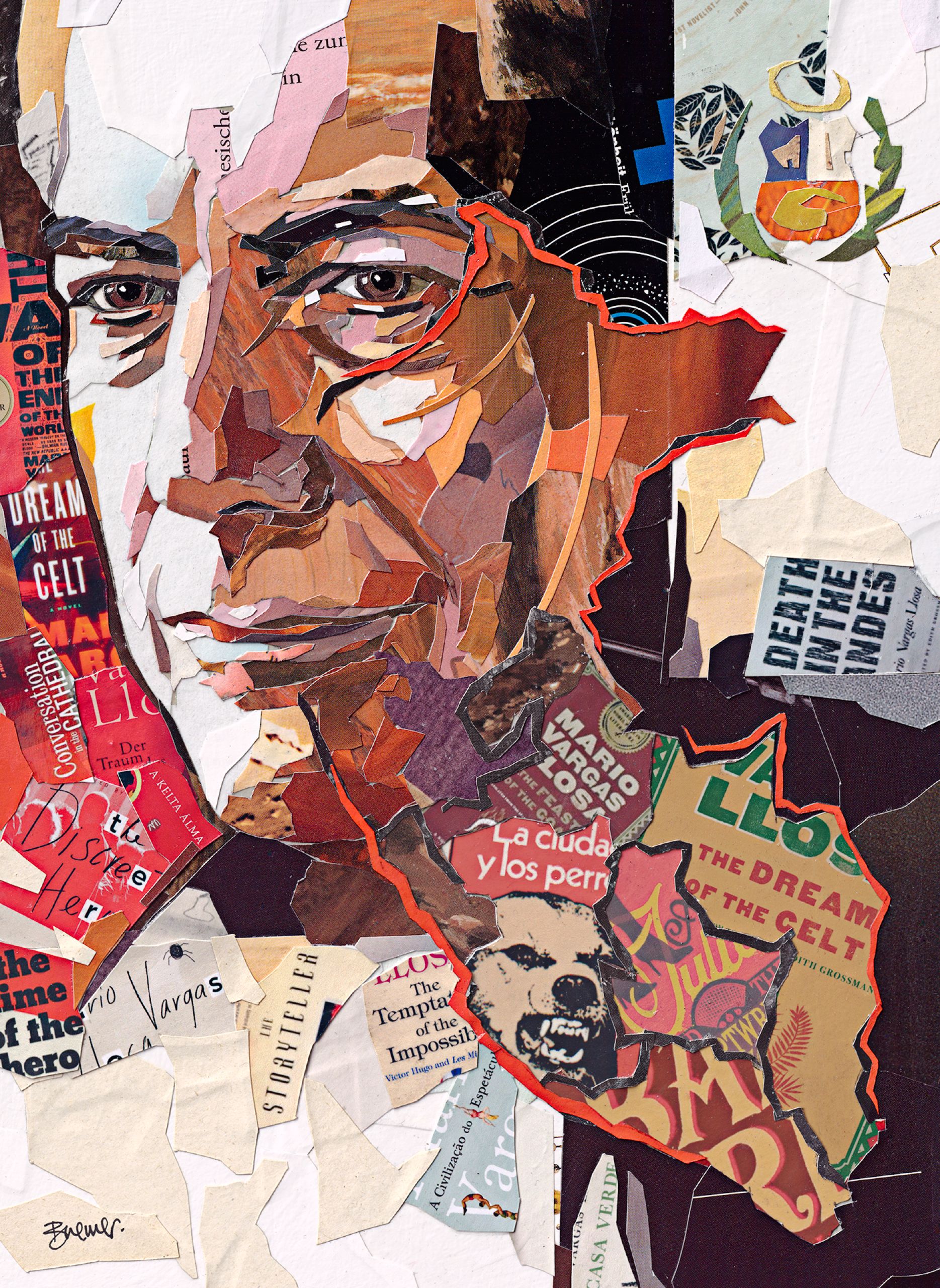
Envy, O my brothers and sisters, the tribes of the Amazon. Here’s a snippet from Nobel Laureate Mario Vargas Llosa’s 1990 novella The Storyteller:
The great trauma that turned the Incas into a people of sleepwalkers and vassals hasn’t yet occurred [among the Amazonian tribes]. We’ve attacked them ferociously, but they’re not beaten. We know now what an atrocity bringing progress, trying to modernize a primitive people, is. Quite simply, it wipes them out. Let’s not commit this crime. Let’s leave them with their arrows, their feathers, their loincloths. When you approach them and observe them with respect, with a little fellow feeling, you realize it’s not right to call them barbarians or backward. Their culture is adequate for their environment and for the conditions they live in. And, what’s more, they have a deep and subtle knowledge of things that we’ve forgotten. The relationship between man and Nature, for instance. Man and the trees, the birds, the rivers, the earth, the sky. Man and God, as well. We don’t even know what the harmony that exists between man and those things can be, since we’ve shattered it forever.”
So, if once again, we find ourselves in lockdown, stuck at home in a quarantine, it might be a good idea to abandon our screens – this blog included – and wander back into the three-dimensional world and pay a bit more attention to “Man and the trees, the birds, the rivers, the earth, the sky. Man and God, as well” as Llosa’s narrator Mascarita suggests.
Oh, yes, and to keep a wary eye out for those militias.

[1] By the way, when is the last time you’ve meted out change on a counter to pay for something?
[2] Quick news quiz. Which of the five freedoms of the First Amendment was Judge Barrett unable to recall in yesterday’s Supreme Court Senate Hearing?
Two Stanzas of Ottava Rima Written within Ear Shot of a Skateboard Park (a reading)
Two Stanzas of Ottava Rima Written in Earshot of a Skateboard Park
I said, ‘It’s certain there is no fine thing
Since Adam’s fall but needs much labouring.
WB Yeats
Willie B makes it seem so damned easy,
each iamb in it is appointed place,
but whenever I try it, I feel sleazy,
like a Wordsworth wannabe pissing in the lake.
Yet even to Yeats it didn’t come easy.
A line would take him hours. Better to “break
stones,” he whined, “in all kinds of weather”
than try “to articulate sweet sounds together.”
Form versus execution. I hear the clatter
of skateboarders’ failed attempts at competence.
They flip the board, fall off, curse, batter
their knees as they try to perform the tricks
they see on TV — as if mind over matter
weren’t a myth, as if practice makes perfect,
as if talent can be willed. I say
time to shut down this computer, call it a day.
Haikus Have Sprung (a reading)

Haikus Have Sprung
For Caroline
swich licour
Sticky yellow pollen smirch
dusts the birdshit spotted hood
of our Toyota.
Swarming clouds of gnats
feast on soccer moms – swat!
Run, Ronnie, run, run!
A motorcycle
revs, backfires, revs,
mufferless, blasting.
Yet Another Nursery Rhyme from Ayn Rand’s A Child’s Apartment Complex of Verse
There’s no such thing as Santa Claus,
No such thing as God,
No such thing as Old King Cole,
No Wynken, no Blyken, no Nod.
There was an old woman, sure,
But she didn’t live in a shoe.
She didn’t practice contraception;
That part’s certainly true.
She had so many children
Her homelife was quite wretched
Because the Catholic Church insisted
She practice the rhythm method.
So now her children’s stomachs growl
Cramped in subsidized housing.
Instead of playing hide-and-go-seek,
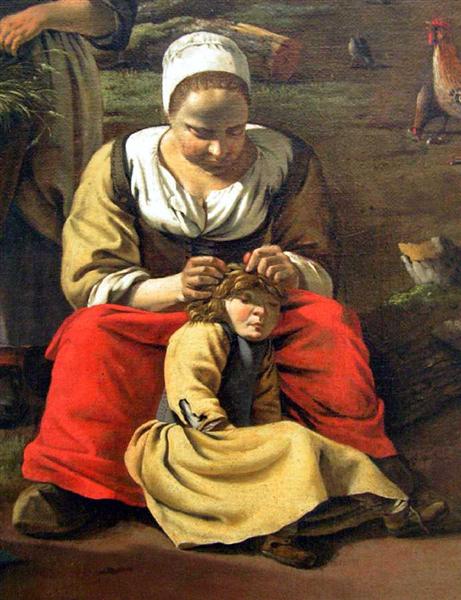
They spend their days delousing.
There’s no such thing as Santa Claus,
No such thing as God,
No such thing as Old King Cole,
No Wynken, no Blyken, no Nod.
Things Come in Threes

Until they think warm days will never cease.
John Keats, “To Autumn”
Like the faint semi-tragic scent of tea olive,
the epitome of ephemera, the butterfly flits
among lantana and disappears.
Hummingbirds hover; barred clouds bloom.
The retreating sun draws in its long shadows,
Then slowly dims the lights.
Bravo! Encore! Encore!
Four to six weeks the doctors said.
A sleepless night but then again the sun!
Excerpt from “Today, Oh Boy”
Today, Oh Boy is a comic novel that takes place at Summerville High School on a Monday in October 1970. From his homeroom, Alex Jensen, a rebellious student, has been sent to the Principal’s office for “disrespecting” the morning devotion, which, as the son of a liberal lawyer, he knows to be in violation of the Establishment Clause of the First Amendment of the Constitution. Instead of going to the office, he has sneaked away from campus and driven to see a friend, a high school dropout, Will Waring, who lives in a carriage house behind his mother’s larger house There’s an anatomy midterm today, but Alex and his friend Rusty spent the previous evening at Will’s house listening to records instead of studying.
Second Period
Between Classes 8:55 – 9:00
Mrs. Eula Lynne Laban, who has second period free, waits for Camilla Creel, lost and lonely, dawdling, packing up her things. Camilla, a poor girl from out Booneshill way, is wearing a thin linen dress with an ill-fitting white sweater draped over her freckled shoulders. “Come on, honey,” Eula Lynne Laban says smiling, her foot tapping nervously beneath her desk. “Let’s go! Giddy up! I’m on a mission!”
Camilla looks up and reluctantly smiles. She suffers from an enormous overbite and is painfully self-conscious about it, her surprisingly weathered sixteen-year-old hand reflexively rising to cover her mouth. Her hair is Irish orange, coarse, bordering on frizzy. Camilla, who doesn’t remember her father, lives in an abandoned school bus that has been fitted with a pot-bellied stove. Most of the seats have been ripped out. She and her sisters sleep at the back of the bus on pallets in spaces divided by hanging blankets. Her mother also sleeps on a pallet. There is an outdoor well, so they do have water, but not inside plumbing. Hurricane lamps provide light at nighttime. She walks about two-hundred yards through the woods to the school bus stop where she boards a bus much newer and nicer than the one she lives in.
Outside Mrs. Laban’s door, the halls reverberate with the trooping feet of students: leather boots, sneakers, pumps, desert boots, tasseled alligator loafers, brogans, buckled square-toed slip-ons, motorcycle boots, dirty white bucks, penny loafers, Hushpuppies: squeaking, scuffling, stomping, clomping, gliding along their communal and separate ways.
Eula Lynne figures she just might as well wait till the exodus is complete before striding down to the office to follow up on Alex Jensen. Nothing’s sacred to that boy – no, not even the sanctity of human life – if that filthy magazine was any indicator. It’s one thing to possess freedom of religion, she’ll grant you that, but no one has the right to mock other people’s faiths, and that’s exactly what that boy was doing. Born with a silver spoon in his mouth. Doesn’t bother to even bring his books home from school. She’s seen him walking towards the parking lot with not a durn thing in his hand. Eula Lynne’s daddy worked two jobs to send her to Teacher’s College, her mama took in sewing, and she herself worked as a waitress all during school. You can bet your bottom dollar she doesn’t take her education for granted. What she really resents is that air of superiority that practically emanates from the boy, a palpable air of superiority. She can’t tolerate that smug, mocking smirk on his face. A face crying out to be slapped!
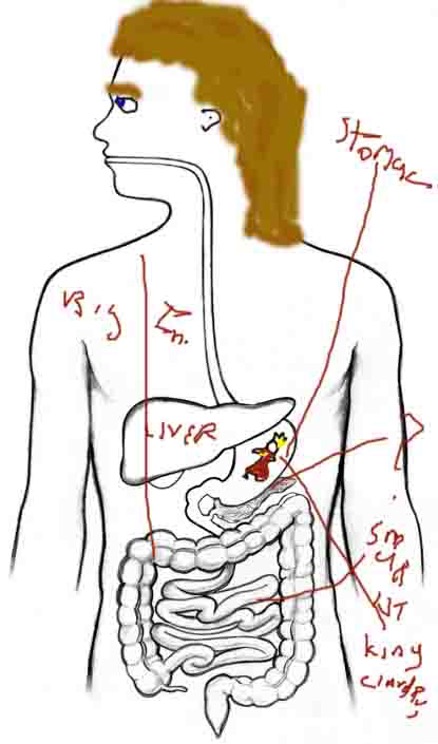
Alex’s pal, non-smirking Rusty, is at his locker, struggling with the combination so he can ditch his history text and cop his anatomy notes. He’s conceived this brilliant idea for an art project: a neo cubist rendering of the human digestive tract that will provide him with a clandestine opportunity to study for his anatomy test. Miss Turlock will think it’s clever, even if she sees right through the ruse. And who knows? The painting could end up being really cool. The embodiment of utilitarianism, you might say. His short stint in art class has demonstrated to him that he has no artistic talent, so he has decided to go the abstract expressionism route where ideas seem to be about as important as artistic facility, if not more so, but the thing is, now that he has his locker open, he can’t find his notes. The bottom of his locker is, like, a salad of detached loose-leaf pages from various disciplines, a French quiz here (74), an English essay there (A-), a history test below that (98), then a math test (76), and the most recent anatomy test (57). His frenzied search sounds like rats in a wall, rustling, clicking. Ah, there they are, wadded beneath an old Mad Magazine in the corner.
Across campus the boys in shop and agriculture pay no heed to the distant bell. Clad in coveralls or blue corduroy jackets, they measure cuts and loosen nuts. Or plant azaleas and apply insecticides. They cuss and spit Southern-style, talking bout fightin’ and 440 Overhead Busch cams and making money and football. Giving peace a chance ain’t up their alley. For example, propelled by red-hot angry blood, Jimmie Jo Bosheen’s heart thrumps like a punching bag. He’s one of the shop boys, a claw hammer in his right hand, his oddly spelt Christian name(s) stitched in yellow on the grayish green coveralls, which also display a sewn-on Confederate battle flag, the Stars-and-Bars. Jimmie Jo has developed a raw inchoate hatred for hippies, one of them in particular. Red-on-the-head-like-a-dick-on-a-dog. Whap, he pounds a nail. That gotdamn dungaree jacket and that gotdamn way of walking what makes his hair bounce up and down, flaunting. Whap. Jimmie Jo’s been picturing how much fun it would be to give that boy a barbering. Whap. He ain’t positive, but pretty damn sure he seen him riding round in a hippie van along with a black boy with an afro big as a basketball. Whap whap whap whap.
Caleb Sanders, the A.M.E. preacher’s son, is making his way to pre-Cal, along with Jill Birdsong, Patsy Jenkins, Rozier Ravenel, and the rest of the talented math group. They all skipped 7th grade math and took Algebra I in the 8th grade, so they’re on track to take Calculus their senior year – or they could skip math altogether – though none of them will. They’re headed to college, maybe an out-of-state college. Jill’s been looking at Davidson. Rozier’s headed for Sewanee, like every other member of the Ravenel clan dating back over several generations. Caleb is a shoo-in at Howard, though he’d love to go to Duke, so he’s been practicing his S.A.T. on the side. He lives in a black community called Germantown right outside of Summerville’s city limits. His mama teaches third grade at Alston, “the separate but equal school” on the other side of the tracks.
Camilla Creel, on the other hand, divides her classes among business courses and home economic courses, though Home-Ec is a waste of time because she already knows how to sew and boil a pot of grits (and pluck a chicken and clean a squirrel). Second period for her is typing, something that she dreads because of her slow fingers and bad spelling. She better hurry up or she’s going to be late, cause Mrs. Boatwater ain’t nearly as nice and Mrs. Laban.
The Art Room is in a separate building that also houses the upstairs Band Room. The Studio – as Miss Turlock calls it – boasts a large square space with rows of flat top paint-splattered tables and portable metal stools. Of course, art is eclectically displayed: twisted torsos in clay, charcoal seascape sunrises, an impressive pen and ink rendering of Chartres Cathedral, a pasty-faced Joni-Mitchell-wanna-be self-portrait, squiggly psychedelic posters. There’s a pleasant sense of productive disorder amid the pervasive smell of paint. Miss Becky Turlock is an unmarried thirty, and though she loves the kids, this year very well might be her last in Summerville. Maybe a move to Atlanta, she’s not sure, somewhere more progressive.
She takes her job seriously and never begins their time together without five minutes of communal instruction. With only twelve students in the class, she can take roll visually, and only AJ and Rusty are missing, which might not be coincidental. There’s still maybe a minute before the tardy bell, which she enforces, because to her art’s as important as any other subject, and not being on time is one of a growing collection of her pet peeves. She peeks through the narrow square window of the door and sees Rusty hurrying with a handful of papers cradled in his arms, and sure enough the wind snatches away one, so
RRRRIIIIIIIIIII
Second Period 9:00 A.M. – 9:45 A.M.
IIIIIIINNNNNNNNNNNNGGGGGGGG!!!
he pirouettes and chases the sheet of paper. It’s comical, the taunting wind snatching the sheet of paper away right when Rusty reaches for it, again, and again. The sight reminds her of Charlie Chaplin in a silent movie.
Inside, Miss Turlock’s art students, perched at their designated stools around various tables, quietly chat with their neighbors.
“Is AJ not here?” Miss Turlock asks.
Althea constructs a rueful smile. “Well, he’s at school, but not here.” Although born in Summerville, Althea sounds like she’s “from off,” her voice a bit affected, somewhat patrician, distinctly hip.
“And?”
“Mrs. Laban sent him to Mr. Pushcart’s Office.”
A small clattering of communal gossip arises.
Miss Turlock: “Uh-oh.”
The door opens, and Rusty flusters in, actually sweating though it’s a crisp 62 degrees outside. “Sorry I’m late,” he says, clutching the papers like keepsakes salvaged from a burning house.
“What’s the latest on AJ?” Becky asks knowing that they’re often partners in crime. “Dunno,” Rusty says innocently, plopping the papers on the table, shedding his blue jean jacket. “But this I do know: Dey haff wayz of dealing wit peoplez like him.”
The class laughs, and Becky herself smiles. She resents the Administration’s heavy-handed enmity towards the counterculture, having seen Pushcart practically push (pun intended) Will Waring into quitting school, sweet-natured Will, about as dangerous as a Vanilla Coke. Oh, it’s okay for the shop boys to sport hate symbols and pummel each other right on the school grounds, but Lord forbid an art student don a black armband in a national protest against an immoral war in accordance with the rights afforded him in the Constitution of the United States of America. No, that just won’t do.
Rusty is sketching out the rudiments of his utilitarian masterpiece that
he has tentatively entitled Progress Through the Guts of a Beggar:
Althea is sitting next to James Hopper, who is composing from an old postcard a startlingly precise and detailed rendering of the old Custom House in downtown Charleston. James has known what he wants to do ever since he can remember. Architecture, of course, is the most enduring of all the arts, and you don’t have to go the starving artist route. Despite all of the grief he suffers from the homophobes he encounters in his daily life, James, is arguably the best-dressed boy at Summerville High with his black silk shirt and black chino trousers and quite expensive black alligator belt and matching alligator shoes. He’s the only child in a divorced family, a rarity in Summerville, and his mother spares no expense to make her son as happy as she can. His father, whom he rarely sees, is in real estate in Atlanta and has a young new wife named Brandi whom James detests.
Althea, who is a big Led Zeppelin freak, is mentally drafting her satiric rendering of a Friday pep rally, flying the spacecraft imagination through the constellation of her collective unconscious, seeking images from the Great Memory, ancient corollary embodiments of contemporary evil.
A loud electronic crackling occurs. The red light of the intercom flashes. Never a good sign. Every class has one, a rectangular speaker box mounted somewhere on the wall. Another crackle. It speaks.
Speakerbox: Miss Turlock, Principal Pushcart. Is Alex Jensen in your class?
Miss Turlock: (looking up at the intercom, addressing it as if a person) No sir. It was my understanding that he was there with you.
Speakerbox: Who told you that?
Miss Turlock: Althea Roebuck.
Speakerbox: By any chance is Rusty Boykin in your class?
Miss Turlock (still looking up, still addressing the intercom): Yes sir. He’s sitting right here working on a drawing.
Speakerbox: Send him to me, please. Right away.
Miss Turlock: Yes sir.
Speakerbox: Crackle.
All pencils, brushes, kneading hands have halted. Rusty’s on his feet, a look of panic stamped on his face. James Hopper glances at Althea, who is frowning. Rusty casts a rueful glance at his crude rendering of the digestive tract lying next to his open Biology II notebook with its hurried, smudged, barely-decipherable, and misspelled anatomical terms. Then, he looks to encounter Miss Turlock’s sympathetic, blunt, open features.
“Run along, Rusty. You can leave your things here for now. “
“Okay,” he says, oblivious to the students’ staring faces, oblivious to the clay torsos, oblivious to the smell of paint, oblivious to the splattered tile, oblivious to the silence. He’s pushing open the door and stepping into the cool autumn air, oblivious to the yellow disc of morning sun suspended above distant loblolly pines. He’s deep, deep, deep inside the auditory darkness of a cave of dread where an echoing voice catalogs his various crimes and misdemeanors: smoking marijuana; drinking beer; mocking (though behind their backs) administrators, teachers, students, the Mighty Green Wave, Congressmen, Senators, Vice Presidents, Presidents, television shows, movies, various deities; purchasing and hiding Playboy magazines to use as visual aids in acts of self-pollution; masterminding a high stakes scheme to run away from home; receiving stolen goods in accordance with the above-mentioned scheme; not living up to his potential.
The list goes on and on.
As an elementary student, if he had been called to the office, Rusty might have feared that someone in his family had died or thought that he was being summoned to receive an award, but his name in conjunction with the initials AJ can only mean trouble. He’s forgotten his signature walk, the freak flag flop, and leans forward, head down, oblivious to the pebbly paving beneath his Thom McCann desert boots. In the thin cavity of his chest, his heart pounds like timpani as he reaches for the cold handle of the outer double doors. The hall is virtually void, the only sound clacking heels, out of sight, dopplering into the distance. His hand shaking, he grips the handle of the glass doors of the administrative offices, pulling outward . . .
Too Much to Ask?
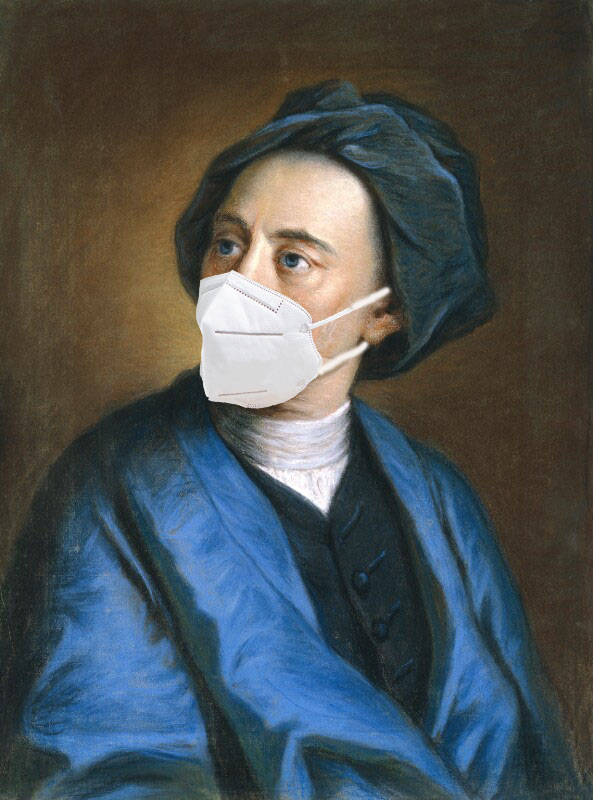
Of all the causes which conspire to blind.
Man’s erring judgement, and misguide the mind,
What the weak head with strongest bias rules,
Is PRIDE, the never-failing vice of fools.”
Alexander Pope, “An Essay on Criticism”
Is it really, really such an odious task
during a pandemic to put on a mask?
In the Trump White House, no mask is the rule,
Targeting the base, those Kool-Aid mainlining fools.
Masks remind voters of the invisible dread
That’s left more than 200,000 Americans dead.
What dat? Sistah Karma done come a-calling unexpected?
Kayleigh and Kellyanne done been infected?
Along with Thom Tillis, Hope Hicks, Mike Lee,
not to mention Donald J Trump and the First Lady?
Do Lawd! White House itself got more cases than New Zealand,
a country of just under five million people?
So is it really, really too much to ask
in a goddamn pandemic to put on a goddamn mask?
Irony and Karma, A Comedy Duo for the Ages

Okay, as I write this, President Trump languishes at Walter Reed Hospital battling a virus he claims was a “hoax” and would “magically disappear.” Four years ago, he mocked Hillary Clinton’s locomotion and coughing as she suffered from a short-lived bout of pneumonia.
Ironic? Karmic? Or both?
I like to think of karma and irony as a sort of comedy duo, a married couple, Karma, the female more powerful and profound, and Irony as male, wisecracking, cynical. They travel hand-in-hand around and around the crumbling empire of post-Modernism, she acting, he reacting, she detached, he involved. It’s a symbiotic relationship that can help educate us about the benefits and perils of good and bad behavior, so it’s helpful to be able to distinguish one from the other, to discern their similarities and differences.

Irony, of course, is often misunderstood, mistaken for coincidence, as it is throughout the Alanis Morrisette song “Ironic.”
[Irony’s] like rain on your wedding day
It’s a free ride when you’ve already paid . . .
Of course, precipitation on your wedding day isn’t ironic, that is, unless it’s a destination wedding in the McMurdo Dry Valleys of Antarctica.[1] A free ride when you’ve already paid isn’t a free ride. The song “Ironic” isn’t ironic, which stupidly makes it sort of ironic.
Bone fide irony is all about incongruence, the discrepancy between expectation and reality.
I sometimes run across the phrase “irony is dead” when a commentator is highlighting some blatant act of ignored hypocrisy. However, the failure of people to perceive the incongruences that create irony doesn’t mean that irony is dead; it merely demonstrates that irony is dead to them.[2]
Yes, Trump’s calling a disease that smites him a hoax is somewhat ironic, only somewhat because you might not be surprised that a foolish man who flips off science ends up regretting it. However, it is ultimately ironic because, unlike rain on a wedding day, getting ill from a virus you claim is a hoax is incongruent.
What’s not ironic is that Trump’s flaunting of safety protocols, like not wearing masks and eschewing social distancing, has resulted in his infection. That’s karmic.
Karma, कर्म in Sanskrit, means action; karma’s all about cause and effect, as in the cliche “what goes around comes around.” Is mocking Hillary’s illness the reason Trump’s now fallen ill? Is it karmic? Only in the sense that it’s indicative of his modus operandi of defying human norms of decent behavior, of embracing a hubris that distorts his perceptions of reality, of cultivating a false sense of invulnerability. Actions such as these will eventually, as the vulgar say, “come and bite you in the ass.”
Irony is surprising; karma is not.
[1] Average rainfall a year 0.00 millimeters.
[2] I remember fondly Misahn Bootay’s response Donald Trump’s tweet proclaiming “The Democrat [health] plan would obliterate Obamacare” during the 2016 midterm elections:
“Not only is irony dead,” he tweeted, “but it’s grave has been dug up and it’s been dressed in gaudy finery and paraded through the streets like the decaying corpse of a medieval pope.”
 You Do Hoodoo