Jamaican reggae musician, singer and producer Lee ‘Scratch’ Perry performs at Poppodium De Flux, Zaandam, Netherlands, 8th April 2018. (Photo by Paul Bergen/Redferns)
Here’s what I’m not going to write about today:
Not about the Murdaughs of Colleton County whose family drama has entered the terrain of Greek tragedy, a once proud House suffering a Faulknerian fall akin to the Compsons’ collapse.
The Murdaugh saga commenced with drunken redheaded USC junior Paul Murdaugh crashing his boat and killing a passenger, followed by his and mother’s murder, their bodies discovered by father/husband Alex at the family hunting lodge. This weekend as Alex changed a tire on a country road, a bullet allegedly fired from a truck grazed his head. On Labor Day, he checked himself into rehab after resigning from his law firm amid accusations of missing millions. We’re talking two mini-series worth of real life Southern gothic mayhem that out-Outer-Banks Outer Banks.
Have at it, Netflix screenwriters. I’ve got better things not to do.
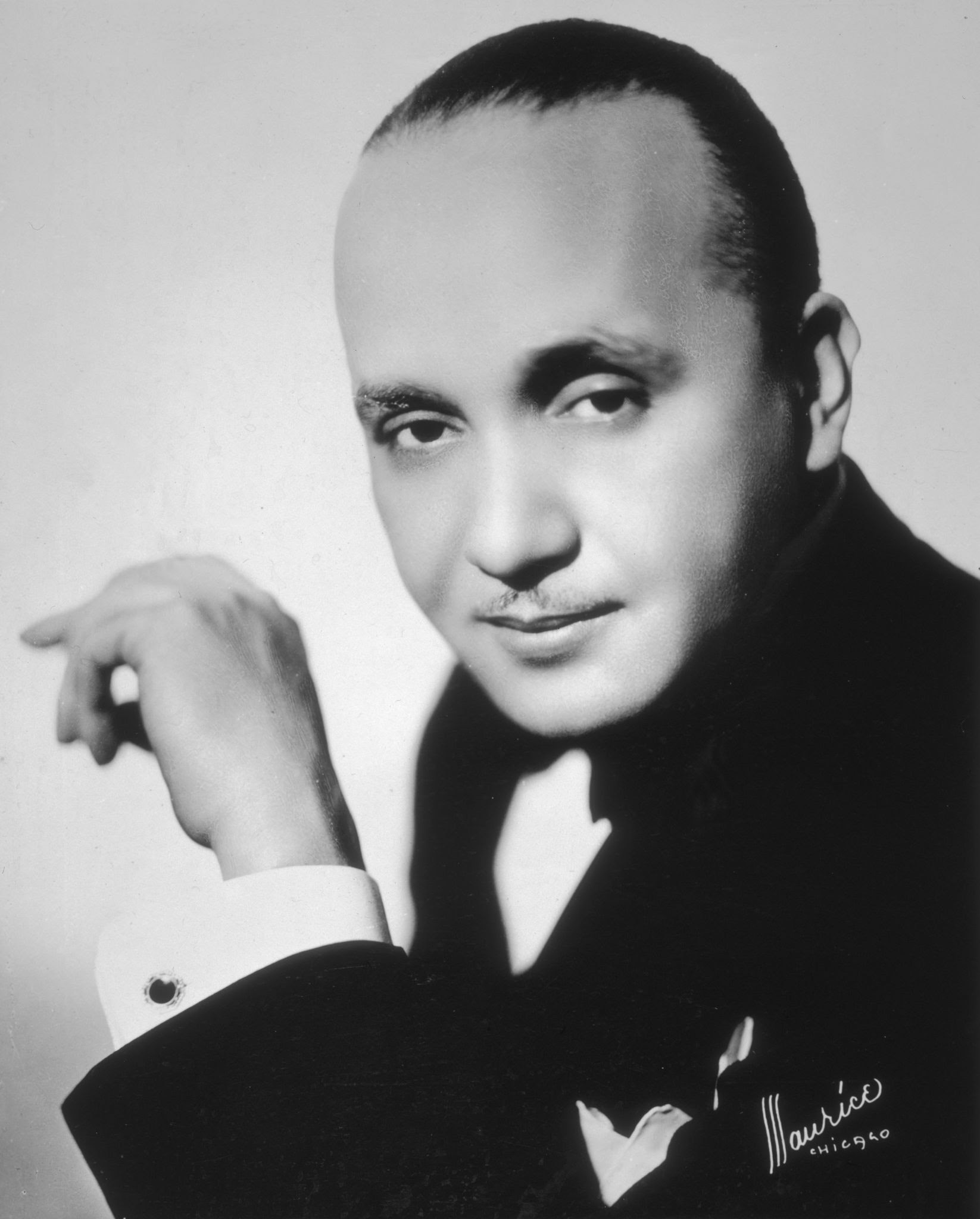
Not about Fletcher Henderson, underappreciated, who transformed Dixieland into Swing, led a big band that employed the likes of Louis Armstrong, Roy Eldridge, Coleman Hawkins, a band that provided the soundtracks for the Harlem Renaissance and Terrytoon animated shorts.
Fletcher Henderson
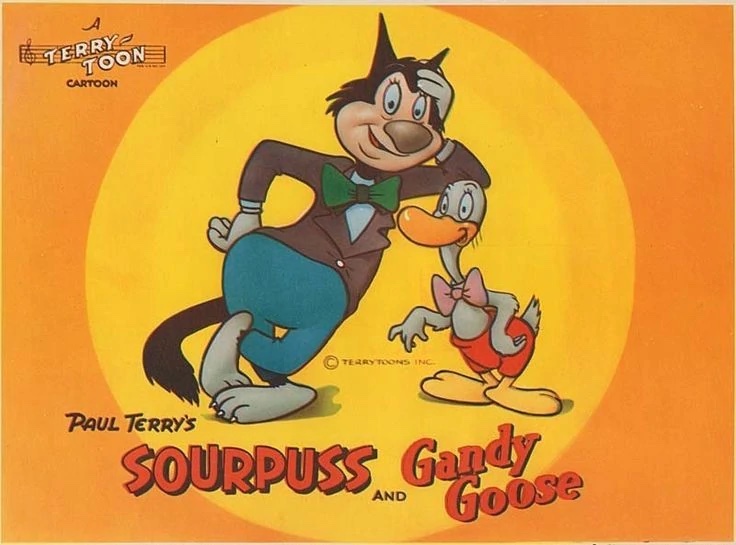
Not about Gandy Goose cartoons, an LSD substitute for tots, Gandy and pal Sour Puss bopping along, the jazz soundscape providing syncopation for the herky jerky action of the animation, often dream sequences with metamorphoses galore. BTW, Gandy Goose and Sour Puss sound as if they could be a Jamaican Dance Hall duo a la Yellowman and Fathead.
Not about Dub Shaman Scratch Perry, Reggae producer extraordinaire, mentor to Bob Marley, Scratch ping-ponging in the studio from synthesizer to guitar to drums in a creative dance that makes music rather than the music making the dance. An incredibly important figure in 20th century music that virtually no one has heard of.
On a clear March afternoon in 1977 after we had decided to get married, I remember riding shotgun in Judy Birdsong’s gold-flecked Camaro headed over the Gervais Street Bridge in Columbia, South Carolina, and thinking to myself as I watched her hair fluttering in the open window wind, “Oh no, in twenty-five years she very well may be dead.”[1]
A fairly morbid thought for a twenty-four-year-old, but it runs in the family.
And, um, duh, every organism, whether it be goldfish, hamster, kitty cat, or puppy dog– not to mention house plants and patches of Saint Augustine – is doomed to die. Healthy people repress the thought or look forward to an afterlife or rationalize that there could be no genetic diversity without death or like Wallace Stevens hail death “the mother of beauty.”
Not Thomas Hardy. For him, death is ever-present, lurking in even the most pleasant of settings. Here’s a poem he wrote shortly after his first wife Emma’s death.
During Wind and Rain
They sing their dearest songs—
He, she, all of them—yea,
Treble and tenor and bass,
And one to play;
With the candles mooning each face. . . .
Ah, no; the years O!
How the sick leaves reel down in throngs!
They clear the creeping moss—
Elders and juniors—aye,
Making the pathways neat
And the garden gay;
And they build a shady seat. . . .
Ah, no; the years, the years,
See, the white storm-birds wing across.
They are blithely breakfasting all—
Men and maidens—yea,
Under the summer tree,
With a glimpse of the bay,
While pet fowl come to the knee. . . .
Ah, no; the years O!
And the rotten rose is ript from the wall.
They change to a high new house,
He, she, all of them—aye,
Clocks and carpets and chairs
On the lawn all day,
And brightest things that are theirs. . . .
Ah, no; the years, the years;
Down their carved names the rain-drop ploughs.
These lives aren’t “solitary, nasty, brutish and short” but rather pleasant. In fact, the first five lines of each stanza are positive, describe harmonious family gatherings. However, each stanza ends in a refrain that foreshadows what Andrew Marvel called “deserts of vast eternity.”
The critic John Foy describes the poem’s structure as “double-looking,” pointing “to both life and oblivion.”
“This rhetorical pattern, replicated in all four stanzas, contains two thematic perspectives, where the first five lines point one way and the last two point another. It acknowledges Hardy’s understanding of the terrible duality inherent in the nature of things. We are here for a while, and then we are gone. In his stanza, the heedlessness and the impending dissolution don’t cancel each other out. They exist together in tragic equipoise, five lines to life, two lines to dissolution, bound together by the structure”.
John Foy, “Form as Moral Content in Thomas Hardy’s ‘During Wind and Rain’”
To love a poem doesn’t mean you have to embrace the poem’s theme. For example, although I’m not a Christian, I’d haul Paradise Lost with me to the proverbial desert island (or on a spacecraft headed to Mars). Despite that sudden morbid thought in 1977, I haven’t spent my life brooding over its inevitable end. In fact, I’m fine with oblivion, didn’t mind at all my pre-existence, yet I really love Hardy’s poem, especially its last line, the music of it, the three accented final words and the image of a raindrop like a tear running down a name carved in stone.
And, as it turned out, Hardy remarried a woman named Florence Dugdale who wrote to a friend, “Perhaps you have read, if you have the English papers, that I am now the proud and very happy wife of the greatest living English writer – Thomas Hardy. Although he is much older than myself it is a genuine love match – on my part, at least, for I suppose I ought not to speak for him. At any rate I know I have for a husband one of the kindest, most humane men in the world.”
A happy ending of sorts for Hardy, a rarity in his works.
[1] Actually, it was 40 years later that she died.
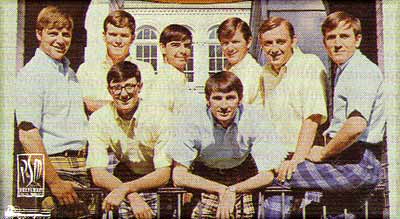
For whatever reason, the ol’ cerebral jukebox this morning had the 1966 novelty hit “Winchester Cathedral” playing in my head. Chances are you’ve never heard this New Vaudeville Band tune even though it won the Grammy for Best Contemporary R and R song that year (despite not being a rock-n-roll song). It features someone named John Carter singing through cupped hands a la Rudy Vallée singing though a megaphone.[1] On December 6th it displaced the Supremes’ “You Keep Me Hangin’ On” as the number one song in the US. Believe me, I’d much rather have “You Keep Me Hangin’ On” stuck on replay on the ol’ cerebral jukebox. “Winchester Cathedral” is inane, irritating, obviously catchy, or otherwise it wouldn’t be lying dormant in my unconscious for fifty-five years.
The tune got me thinking about one-hit wonders, those special songs that for whatever reason memed[2] their way into becoming mega hits, songs like “The Monster Mash,” “Snoopy and the Red Baron,” “Loving You Has Made Me Bananas.”[3] However, not all one-hit wonders are novelty songs. In fact, some of my favorite pop songs are one-hit wonders. Here be my top five, not necessarily in order of preference.
“96 Tears” (? and the Mysterians)
“96 Tears” might be the grandaddy of all garage band hits, and some say (according to Wikipedia) that it played a role in the genesis of punk rock. I don’t know about that, but Springsteen has covered it, which speaks volumes. It also came out in 1966, and I’ve never gotten tired of it.
“Double Shot of My Baby’s Love” (The Swinging Medallions)
Although written by Don Smith and Cyril Vetter and first recorded by Dick Holler and the Holidays in 1963, it’s the South Carolina Beach Band The Swingin’ Medallions who made it a hit in – yes, you’ve guessed it – in 1966. Damn, what an infectious, party hoot, and ladies and gentlemen, I actually heard Springsteen cover it live in 2008 at the North Charleston Coliseum. In fact, the Boss opened the show with it, hollering something like “How’ bout some Beach Music?”
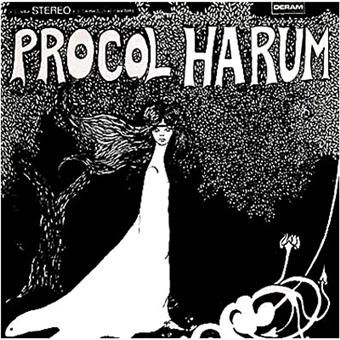
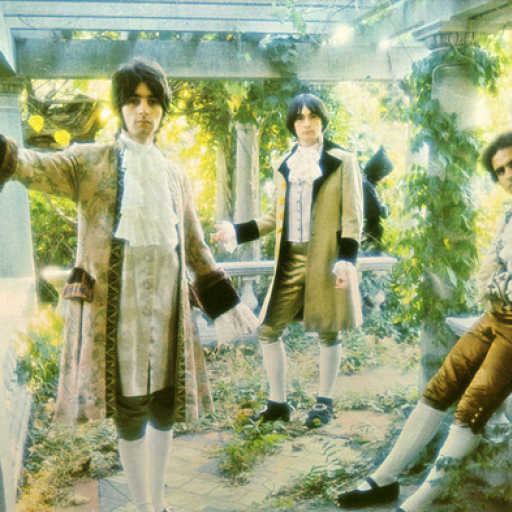
“A Whiter Shade of Pale” (Procol Harem)
This moody, somewhat surreal, 1967 song provided an apt soundtrack for my doomed infatuation with fellow freshman Francine Light. I can see her now, standing across the cafeteria in her green tartan skirt and matching knee socks. O, woe was me!
“Walk AwayRenée” (The Left Banke)
When I began this little project, I had no idea that four of these favs were recorded with in a year of each other. This sad love song made it to number 5 on US Billboard Hot 100 chart. Despite its lush orchestration, flute, and harpsichord, I still sort dig it after all these years, not so much for its music but because of the memories it evokes.
“Wipe Out” (The Sufaris)
This is for my money the quintessential surf song, released in 1963 and covered by every garage band in my hometown of Summerville, SC, including The Marijuana Brass, an instrumental brass band modeled on Herb Albert.
A couple of observations. Three of the five feature organs (a harpsichord doesn’t count) and all were recorded about the same time during my junior high days. Of course, there have been subsequent one-hit wonders I’ve enjoyed like “Play That Funky Music, White Boy.” Oh, yeah, and “Tighten Up” by Archie Bell and “Sweet Soul Music” by Arthur Conley beat the hell out of my top five, but I don’t care.
Maybe hormonal imbalance played a role. Anyway, this exercise has effectively effaced “Winchester Cathedral” from its seemingly never-ending loop, and for that I’m very thankful.
[1] Chances are you’ve also never heard of Rudy Vallée, Chances are, however, you’ve heard of Frank Sinatra, who covered it on his 1966 album That’s Life. Go figure.
[2] Verb, to meme, to catch on culturally, from the noun meme, an element of culture “selected” by the masses because of its contagious appeal. (Forgive me, Richard Hawkins).
[3] “Loving You Has Made Me Bananas begins with these immortal words:
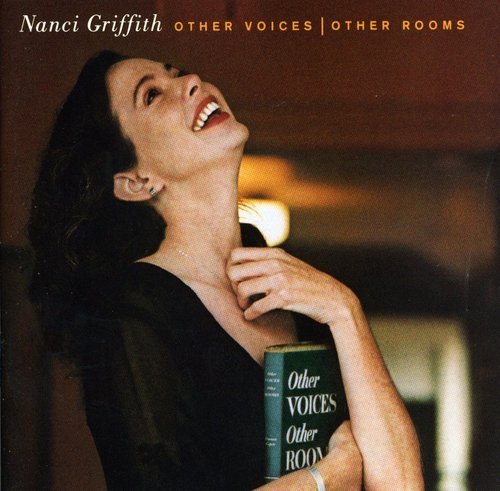
The very best Christmas present I ever received from an in-law is Nanci Griffith’s masterpiece Other Voices, Other Rooms, a collection of covers from songwriters who influenced Griffith’s own music making. My sister-in-law Linda Birdsong gave it to me in 1994, saying she thought I’d enjoy it. Understatement of the century Clinton years.
I ended up purchasing ten or so more CDs to check out the work of some of the featured songwriters, which include Kate Wolf, Vince Bell, Townes Van Zandt, Frank Christian, Bob Dylan, John Prine, Ralph McTell, Tom Paxton, Woody Guthrie, Janis Ian, Gordon Lightfoot, Jerry Jeff Walker, and Malvina Reynolds and Harry Belafonte, just to name fourteen.
The magic begins with a cover of Kate Wolf’s “Across the Great Divide,” an incredibly beautiful composition that embodies concretely the passage of time in both terrestrial and temporal images.
Here are the first three verses, but I encourage to go to YouTube (who won’t allow me to embed a link) and check out a live version:
I’ve been walkin’ in my sleep Countin’ troubles ‘stead of countin’ sheep Where the years went I can’t say I just turned around and they’ve gone away
I’ve been siftin’ through the layers Of dusty books and faded papers They tell a story I used to know And it was one that happened so long ago
Although they’re all excellent, the next song that blows me away is the third cut, Townes Van Zandt’s “Tecumseh Valley,” a duet Nanci performs with the great Arlo Guthrie.
Other personnel featured on the album include Dylan himself, who plays harmonica on “Boots of Spanish Leather” and Guy Clark on the Woody Guthrie’s “Do-Re-Mi.” Also, Emmylou Harris and Iris Dement are sprinkled about, and the final cut “Wimoweh” features Odetta, the Indigo Girls, John Prine, James Hooker, Holly and Barry Tashian, John Gorka, Dave Mallet, Jim Rooney, and Nanci’s father Marlin Griffith.
Demonstrating just how much of life is fraught with loss and longing, the overall mood is melancholic with “From Clare to Here” (featuring Peter Cummin), Jerry Jeff’s “Morning Song for Sally,” Michael Burton’s “Night Rider’s Lament,” and “Speed of the Sound of Loneliness” (featuring John Prine who wrote the song).
Of course, Nanci produced an admirable body of work herself, and she’s certainly going to be missed. From everything I’ve read about her, she was a lovely person, generous, intelligent, somewhat scholarly.
As a new grandfather, I’ve been riffling through the poetic jukebox of my memory trying to find a poem that embodies this profound visceral love I feel for this squiggling, big-headed creature I’ve seen in videos and while facetiming.
No luck. I can only recall poems about children, like Linda Pastan’s minor masterpiece “To a Daughter Leaving Home”:
When I taught you at eight to ride a bicycle, loping along beside you as you wobbled away on two round wheels, my own mouth rounding in surprise when you pulled ahead down the curved path of the park, I kept waiting for the thud of your crash as I sprinted to catch up, while you grew smaller, more breakable with distance, pumping, pumping for your life, screaming with laughter, the hair flapping behind you like a handkerchief waving goodbye.
And Peter Meinke’s “E-Mail from Tokyo,” which begins with this epigram from Philip Larkin:
They fuck you up, your mum and dad They may not mean to, but they do.
And ends with these two stanzas:
I know what memory and poetry need: storm moon dolphin eye strings of images strung like those kites across a summer sky years ago the wind snapping letters toward the sun Kiss me Dear one Stay safeWrite soon
but in the end we can only cry your names sending them skyward fragile and flammable affirming that you’re ours (poor babies): Perrie Peter Gretchen and at last thanking you for tomorrow’s letter Timothy
Since I couldn’t recall a grandchild poem from my memory, I turned to the internet and discovered, not surprisingly, grandchildren galore have been celebrated in verse, most of it along the lines of this:
I bought two new books for you today my sweet boy. The Wizard of Oz and The Jungle Book should bring joy.
I’m very proud of how wonderfully you read. As an English scholar, I know you will succeed.
[groan]
So, unfortunately, I must rely on my own threadbare wit to try to express this feeling, which, of course, lends itself to cliché because it “wells up” and “warms” and “heartens.”
I’ve seen other grandparents in its throes, flashing photos, and found their enchantment genetically understandable, if a tad bit too precious, but here I am experiencing that very rapture, a love I’m incapable of embodying in images or syllables, in iambs or trochees.
Seems to me that if you’ve read somewhere that a Covid vaccine reshuffles your DNA or magnetizes your epidermis or implants monitoring devices into your metabolism so that Satanic pedophiles can keep tabs on your comings and goings, that you’d want to wear a mask to avoid contracting a disease so mighty that it actually hospitalized superhuman Donald J Trump, who boasts an immune system so powerful your everyday microorganisms spontaneously combust if they dare enter the inner sanctum of his imperial badassness.
But, hell no, your garden variety anti-vaxxer is also an anti-masker. I saw a video today that captured a Tennessee school board meeting where health professionals arguing that masks help to stem infection were verbally ambushed by a pack of sign-bearing parents fearful that requiring their children to wear masks during a virulent resurgence of a pandemic would be the first step down a slippery slope of freedom-confiscation that eventually would lead to the United States becoming a country where citizens receive affordable healthcare.
Here’s the great Asheville cover band Pleasure Chest’s opening number from last night’s Chico Feo gig featuring Erich Hubner’s killer surf guitar solo.
The above mid-century snippet certainly demonstrates that times have changed. It’s hard to imagine anyone outside a Montana militia camp or Pentecostal rattlesnake farm who would adhere to the childrearing principles practiced by the vengeful patriarch of the song (spurred on, it would seem, by a brother who suffers a case of sibling rivalry that makes Edmund’s hatred of Edgar in Lear seem like mere disgruntlement). The song also projects a Taliban-like sexism in its relegation of females into the realm of property.
Of course, the lyrics are meant to be humorous, but it’s hard to imagine their not offending a large number of North American citizens of both sexes.
The word sadistic comes to mind.
another Arthur Godfrey knee-slapper
No, we middle class denizens of the Late Empire no longer treat our children as property, nor beat them with belts nor switch them with switches, which is all to the good. However, elevating them to the status of major deity might not be such a hot idea either. If judging from some of the Facebook posts of the current generation of DNA replicators and actual 3-D encounters with their offspring, a number of millennial parents seem to be transforming childrearing into some sort of strange counter-intuitive fetish in which the power of household management is ceded to tiny monomaniacs whose accumulated world wisdom would not fill one dimple of a thimble.
Idolatry!
Father to 5-year-old-daughter: Anastasia, tell Mr. Wesley where you went today.
Anastasia: [sullen silence, no eye contact]
Mr. Wesley: Yeah, Helen. I’m just dying to know where you went today.
Father [frowning]: Helen?
Mr. Wesley: Yeah, as in Helen Keller.
Anastasia [frowning]: Why did he call me Helen, Daddy?
Father: [squatting to accomplish eye-level conversation]. Because you didn’t answer Mr. Wesley, honey, so he was pretending that you were Helen Keller, a very accomplished person. Helen Keller was a famous girl, who well, had some obstacles to overcome. She couldn’t hear, so she didn’t know how to talk, but a wonderful woman named Anne Sullivan worked with Helen and taught her how not only to talk, but to write, and Helen Keller became a world-renowned writer –
Mr. Wesley: And she lived happily ever after even though she was blind as well.
Anastasia [tugging at parent]:
Father: Um, nice seeing you, Wesley. Say goodbye to Mr. Wesley.
Anastasia: [sullen silence, no eye contact]
My late wife Just Birdsong inherited a book from her mother Emily entitled Our Darlings’ ABCs, which sort of blew my very-difficult-to-blow mind.
A pretty book of A B C’s
The tiny folk is sure to please;
So here it is in colors bright,
With every letter placed in right,
And more than this, a rhyme as well
That will some Bible story tell,
To help the children learn with ease
The puzzling list of A B C’s.
Sounds innocuous enough, right? Well, it doesn’t take us long – the B’s in fact – to discover that childrearers around the turn of the previous century (the book appeared 40 years before Godrey’s recording of “Slap Her Down Again”) were a bit more brutal back in the day. Here are the facing pages for B.
As one who like Elisha has “no hair on the top of his head,” I find the children’s taunt of “Go up, thou bald head” hurtful in the extreme and agree with the author’s observation “How unkind to speak of his head in that way.” Certainly, Elisha’s wish to punish the children is understandable, and God knows, they certainly will never commit that unkindness again because “God heard and sent two large bears out of the woods. The bears were very fierce, and they soon tore forty-two of the children in pieces.”
Nighty night. Sweet dreams, sugarplum.
That’ll teach them to mock their elders
As I was perusing the alphabet and encountering Bible stories with which I was not familiar (e.g., how Moses told his people “to hasten away from Korah’s home” before “the ground opened up and swallowed Korah”). I couldn’t help but think of the ABC book I have written and how it reflects the kinder, gentler world of 2012.
Or [have you ever] barbered* a barbarian?*
*You can read the entire primer here and my complete guide to childrearing here.
We both use the same method, alliteration and assonance – “bad bald back” and “barbered barbarian” and offer illustrations to complement our lessons, though my primer is a tad bit less didactic.
As in most cases, the Middle Way is better – too much rod = brutish child and too much parental kowtowing = loutish child.
Anyway, I doubt if many millennials are reading goodnight stories from the O.T.
Well, enough. Good night, and may God bless!
Korah, his family and all they own fall into a bottomless grave.
Editor’s Note: Anthony Proveaux, a musician, photographer, and novelist based in Eugene, Oregon, has shared with me this coming-of-age essay about the social stresses of being a high school freshman in the small Southern town of Summerville, South Carolina, in a time of social upheaval. Enjoy!*
I’d suggest reading the text below the YouTube link as you listen to Anthony tell his story.
Change comes slow to small southern towns like Summerville South Carolina, where I was born and raised. But in the late 1960s, the times they were a-changin’ fast in our little slice of Mayberry. There, like in most places across America, we sat in front of our new color TVs and watched a world that was changing too fast for the times. The nightly news broadcast images of unrest across the nation, followed by stories of flower-power and love-ins, in faraway places like Haight Ashbury and not-so-far away places like Piedmont Park in Atlanta. It was hard to tell if the country was coming apart or coming together.
For young people, there was a definite sense of change in the air. Everywhere, hair was getting longer, and music was getting louder. Down at the local Tastee-Freez, the new sounds of Hendrix, Cream, and Creedence could be heard blasting from the 8-track players in the muscle-cars that cruised the loop. And in school, long hair was starting to challenge the dress-codes. Those were heady days for an impressionable young teen like myself, and like kids everywhere, I was totally swept up in the current of events.
Of course, the elephant in America’s living room at the time, and source of much of the nation’s angst, was the very real war going on in Vietnam. Our town, like so many other places across the country, had patriotically sent their sons “over there,” but sadly, an increasing number of them weren’t coming home. But I was too young to worry about the dreaded draft notice yet, and I couldn’t make much sense of it anyway.
In the late 60s I was in the thick of that awkward age of early teen hood and still learning to navigate the perils of post-puberty ‘boy’s life’. Over the course of a few short years, I’d evolved from science-fair kid with a crew cut, to a mop top teen, tie-dying t-shirts on the back porch. And the most challenging part of the teenage gauntlet lay just ahead, because I was about to partake in that great social experiment called high school.
In the fall of 1969, I was a fifteen-year-old freshman at the newly opened Summerville High. Walking those shiny hallways in the new modern buildings, passing the juniors and seniors that I had mostly only seen in my big sister’s yearbooks, was like entering a brave-new-world. It was also downright intimidating, but I was determined to fit in, and maybe even get my face above the crowd a little bit.
portrait of the artist as a 9th grader
I’d always been a good student with good grades, but by high school my studies had turned more towards girls, music, and teen trends (in that order). To get girls to notice you at that age, though, you had to be more than just a bright kid. You had to either be somebody, or be cool. Unfortunately, I was neither. Being a shy kid from a working-class family, I was three or four rungs down on the social ladder, and about as cool as a glass of day-old water. I definitely had some branding work to do.
So, shortly after entering the ninth grade, I began walking around Summerville High with a copy of Tom Wolfe’s The Electric Kool-Aid Acid Test in my back pocket. Making sure the title was showing, of course. It was a book I could barely get through. The writing was way over my head, and I’d never even been properly buzzed on beer, much less done “drugs.” But the paperback sure had a cool cover, with that psychedelic sugar cube, in Peter Max wrapping paper. The K in cool really meant something back then.
That little stunt only succeeded in making me look even more nerdy than I was. I quickly realized that if I wanted to be cool, I needed to hang out with the cool kids. In Summerville that meant teens like the Folly Beach surfers, guys that played in bands, and the college-bound students from the sophisticated families around town. At the new high school, I noticed that during lunch time the “in-crowd” hung out in the breezeway down by the cafeteria. So, I gradually started lurking around on the fringes of the group, half-hoping I wouldn’t be noticed, but desperately hoping that I would.
Of course, that group of cool guys and classy young ladies had no use for a gangly ninth grader, hanging around trying to infiltrate their noontime social club. No one was particularly rude to me. Genteel Summerville had good manners, and those with social status were always graciously “stuck-up.” So, I was politely, but pretty much totally ignored, save for a few “get lost” looks from some of the jocksters.
However, there was one dude who noticed me lurking and actually tried to bring me into the conversation a few times. It was Rusty Moore, a quick witted red-headed junior whom almost everyone seemed to like, except perhaps a few of the local rednecks who took his wit the wrong way on occasion.
Rusty even gave me a comeback line once. After some snobby kid cut-me-down about this loud paisley shirt I was wearing, Rusty leaned over and whispered in my ear. “Tell him his belt looks like it’s made out of beer can pop-tops” (my antagonist was wearing one of those ‘60s belts made with metal rings). Unfortunately, I totally blew the delivery of the comeback line and just further embarrassed myself. It was a pretty pathetic stab at a touché, but I really appreciated the encouragement from Rusty.
I only lasted a week or so hanging with those hipsters. I was still a mighty-green teen, and way out of my class. And in Summerville class was still taken seriously. Our family was somewhere below the middle of the social line. So I was definitely bumping my head on the class-ceiling, trying to break into those trendy social circles.
Fortunately, cool came to our neighborhood, when a family with several rambunctious and attractive teenage daughters moved in right across the street. And as you can imagine, it wasn’t long before cool dudes were hanging around. My big sister and I soon found our own little tribe of early Summerville heads. She met a free-spirited guy, and a few years later, when I’d just turned seventeen, we followed him out to California, where we hitch-hiked, hopped trains, and bummed around for about a year. Now that was a real education. In the early 1970s, the highways were filled with on-the-road youths of every color and class, out to “Look for America.” I ended up staying on the west coast, went to college, and finally settled down in Oregon.
I never lived in Summerville again, but still have fond memories of growing up there. Navigating the perils of the teenage years and high school sticks with us all, and that early attempt at trying to climb my way up the social ladder, and falling off, always stayed with me for some reason.
During that time, I also never got to know Rusty Moore, the kid who threw me a lifeline when I tried to swim-with-the-sharks. He was a few grades above me, and I left Summerville early on. He’d certainly never remember that insignificant event anyway, but it made an impression on me. When you’re young, those little nudges along the way do make a difference. So a shout out to Rusty Moore for the nudge.
by Anthony Proveaux
*You can purchase Anthony’s historical novel Finding Charlie Patton: A Historical NovelHERE
Here’s a video modern-day Anthony (on harmonica) making music during the quarantine.
One of the benefits of retirement is that “dicing time” becomes less thinly sliced, its passage vaguer, elapsing as it did before that infernal invention the clock transliterated the overhead sun into 12:00 P.M. Because I no longer have workday pressures that dictate how I spend my hours – no essays to grade, no lessons to plan, no report cards to crank out – I can take my own sweet time.
For example, on road trips, rather than enduring a regimented slab of interstate stretching forth with its green mile markers clicking past tick-tock like, you can opt for the back roads, which, if you’re driving from Athens, Georgia, to Folly Beach, South Carolina, means you motor through mostly farmland – cornfields, peach orchards, but also tiny towns in various stages of civic decay.
Sometimes, if you’re fortunate, you can run across something truly remarkable, as my wife Caroline and I did outside of the tiny town of Wrens, Georgia.
What caught Caroline’s eye
***
We had dropped Brooks off at Camp Illahee[1] and spent a couple of nights outside of Athens with our friends Jim and Laura. Both they and our friend Ballard, whom we met tending bar at Five & Ten, suggested we take the backroads home.
The route we chose took us through Thomson, Georgia, the birthplace of Blues legend Blind Willie McTell, whom I had discovered on a compilation LP called The Story of the Blues, a gift I received for my nineteenth birthday. So Blind Willie and I go way back.
I mentioned to Caroline that Blind Willie had been born in Thomson, so for a moment she abandoned her post as navigator and googled “Blind Willie.” She reported that there was a statue of Blind Willie in Statesboro but also that he was buried about eight or so miles outside of Thomson in Jones Grove Baptist Church Cemetery. So, as upright Protestants used to say – what the hay – we decided to take a side pilgrimage to pay our respects to Blind Willie. As Bob Dylan put it in one of his greatest compositions: “No one can sing the blues like Blind Willie McTell.”
***
I’ve visited Oscar Wilde’s and Jim Morrison’s graves at The Père Lachaise in Paris, both graves bedecked with flowers, notes, and in Wilde’s case, lipstick-like kisses imprinted on the stone obelisk that marks his resting place.
Not surprisingly, McTell’s grave is not as rich in gifts bestowed. There were no flowers, only a sprinkling of pocket change that wouldn’t cover the cost of a Coca Cola, a mini bottle, and a guitar pick.
Rather than backtracking to return to our original route, we improvised, GPS-ing out a more southerly passage. As I was tooling along, Caroline let out a “Whoa, what was that!”
“We ought to turn around,” she suggested. “We need to check it out.” Which we did.
Now you can check it out. Southern Gothic Deluxe.
After ten or so minutes taking in this remarkable outdoor installation, we continued to Allendale, the county seat of the poorest county in South Carolina. Not to put too fine a point on it, Allendale is the po-dunk equivalent of a Blade Runner hellscape, a stalled freight train of shuttered businesses lining the highway in succession, not to mention human habitations in various stages of collapse.
abandoned motel, image courtesy of ABC newsimage courtesy of ABC News
At any rate, we arrived at the kennel to pick up KitKat, who, was beyond ecstatic to see us, and headed back to Folly, which, of course, offers its own offbeat pleasures.
I’ll leave you with a snippet of Dylans'”Blind Willie McTell
Seen them big plantations burning Hear the cracking of the whips Smell that sweet magnolia blooming See the ghost of the slavery ship I can hear them tribes moaning Hear the undertakers bell Nobody can sing the blues like blind Wille McTell
[1] What a gorgeous-sounding word, Cherokee for “heavenly world.”