. . . either for tragedy, comedy, history, pastoral, pastoral-comical, historical-pastoral, tragical-historical, tragical-comical-historical-pastoral . . .
Polonius, Hamlet, 2.2
First, as cliché demands, the good news: my novel Today, Oh Boy has been accepted for publication, which, of course, delights me. Already my mind is running riot with unreasonable aspirations. No, I’m not dreaming of PEN awards or Pulitzers. We’re talking commercial fiction here, a narrative devoid of deeper meanings, a plot concocted to distract, not to enlighten. No, I’m not rehearsing acceptance speeches but wondering who is going to play the protagonist Rusty in the Hula Netflix TNT USA Network Apple TV adaptation.
You know of any skinny redheaded sixteen-year-old actors with acne?
And now the potentially bad news. The publisher (who shall remain anonymous for now) has classified the novel as Young Adult. Here’s a quote from the acceptance letter:
“The characters fit nicely into their setting, embodying the south of the past and making the story stand out against a typical high school drama. The Board was keen to comment on the dynamic writing style and believes the story has the potential to excel within its genre.”
But the thing is, I wrote Today, Oh Boy for literate adults, not for tweens. Here’s a sentence from the novel describing one of the characters, AJ, who has cut school in the middle of the day and just finished smoking a joint with his dropout friend Will Waring:
“While Will has been daydreaming and tuning out his mother, Weeza has been quizzing AJ about his dismissal from school, essentially perp-walking his thoughts right out of lotus land into the dingy confines of a Raskolnikovian closet.”
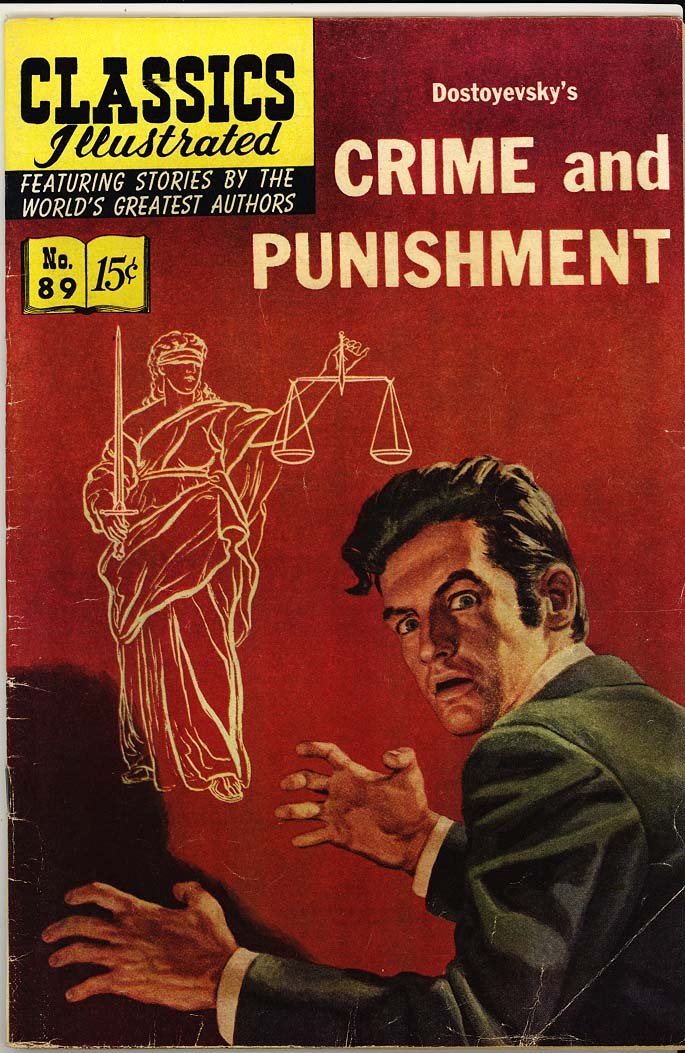
Of course, I know whoever the editor might be will definitely ax “Raskolnikovian closet” because no tween or teen (or typical adult for that matter) has read Crime and Punishment and therefore won’t recognize the allusion to its agoraphobic protagonist pent up in his impoverished toilet stall of a rented room. But, hey, I like the way it sounds.[1] Read it aloud: Rask-KOL-ni-KOV-ian closet.
And to add insult to injury, I don’t dig YA novels, have only read a handful because I taught 7th and 8th grades in my earlier teaching career. Although well-crafted, The House on Mango Street and The Giver aren’t up my alley. I’m not an admirer of To Kill a Mockingbird for that matter.
I’ll admit, though, that Today is difficult to classify. In one sense, it’s historical fiction because it takes place in a real place, Summerville, SC, in the year 1970, which in the Hula Netflix TNT USA Network Apple TV adaptation will require period clothing and vintage automobiles.
In another sense, it’s a souped-up Greek comedy sans chorus: it takes place in one day and essentially in one setting with continuous action.
It’s got a gruesome death, stolen goods, drug use, kung-fu fighting, and a highspeed chase.
So, what are we dealing with here? A historical-romance-Greek Comedy-Mystery-Action Adventure?
If it were up to me, and I was forced to ram into a sub-genre, I’d call it Pulp YA.
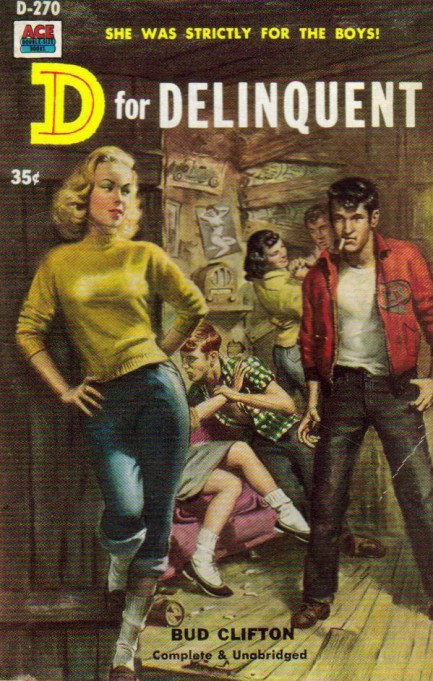
If I had self-published, I could have had full autonomy, but now my brainchild is under the authority of others. They say they’ll work with me, but the contract also makes it clear that they have the final say-so. Chances are Today, Oh Boywon’t be sporting the cover below when you buy it from Amazon, Barnes and Noble, or better yet, from your local independent bookstore.
[1] I did read the Classic Illustrated version of C&P when I was ten or so and didn’t enjoy it.
. . . weeds, in wheels shoot long and lovely and lush


                      		Hot springs’ vented vapors spew skyward
                   		in cloudy swirling images to be carved in wood
								chiseled in stone,
			personified.


				First Gaia,
				then Maia,

Oh God,
	Zeus is on the loose,
		Isis is in crisis,
                                						Noah drunk and Jonah swallowed,
				Jesus, Vishnu, Jah-Jah


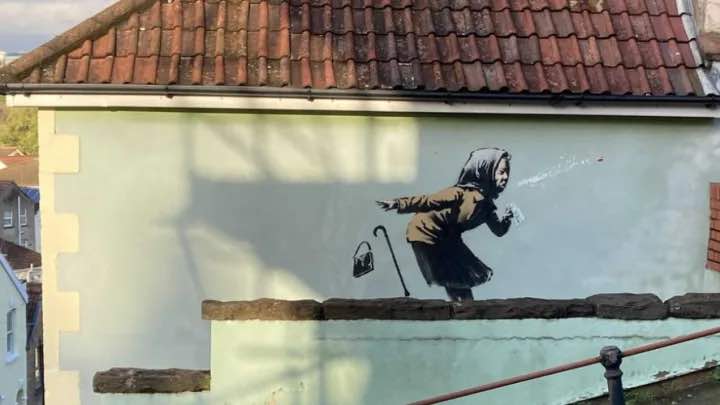
				JAH-CHOO!

				Gesundheit!
In the summer of 1972, I went to work for Flack Jones Lumber because it was one of three establishments in Summerville that hired longhairs. To say I was an unskilled laborer would be an understatement. Driving a nail, much less running a power saw, transcended my meager talents, so I ended up bouncing around the lumberyard on a truck driven by a Black man who went by the name of Hambone. We performed odd jobs like moving stacks of boards and shoveling sawdust. Hambone, who had crinkly cottony hair beneath his green hardhat, was a man of few words, but I do remember his making this pronouncement one blistering June afternoon: “When I was young, I couldn’t wait to knock off work so I could go fishin’. Now I can’t wait to knock off so I can get me a drink of liquor.”
Surprisingly, my White coworkers were cordial, given that the early Seventies were fraught with clashes between blue collar laborers and longhairs, especially in the Deep South. Once a fellow who looked Scots-Irish asked if I thought a man’s hair could grow as long as a woman’s.
My hair was red, so I stood out like a sore thumb WC Fields’ nose.
“I reckon so,” I said.
I recall one particularly irksome task. Armed with a shovel blade, I crawled beneath a power saw and filled a plastic bucket with sawdust and then crawled out to dump the sawdust in a designated pile, and then crawled back under to repeat this labor until all the sawdust had been removed. Shortly thereafter, I decided Flack Jones wasn’t for me, though the hours were all right, Monday through Friday from 7 to 4.
I heard that Red and White, which also hired longhairs, had an opening, so I applied and was hired, joining my friends Joey Brown, David Kaczor, and Jim Collins bagging groceries, though actually Joey and David had worked their way up to stocking shelves.
On my very first day, I got yelled at by the owner’s son for overloading a bag with canned goods, and twelve hours later, when tasked with mopping the floor, the owner’s son chided me for my poor technique and demonstrated how to move the mop head in circles. So, of course, I followed his lead, only to be confronted by the produce man John Henry who told me I was doing it all wrong and modeled for me an alternate technique. moving the mop in S-like patterns. As I’d move up and down the aisles mopping, I’d keep a look out for my two instructors and switch back and forth depending on who was passing my way, though I preferred John Henry’s method.
“Now, that’s more like it,” one or the other would say.
Working at Red and White was less grueling than working at Flack Jones, but the hours sucked – two twelve hour shifts on Fridays and Saturdays and every other Sunday with afternoon shifts on the other weekdays with Mondays and Wednesdays off.
So, I quit to take a pay cut to work at Carolina Home Furnishers, the third place that hired longhairs, where I mostly sat in a recliner and watched daytime TV with my boss Weeza, a benevolent overseer who called me “darling” and sent me to the liquor store around the corner in the afternoons.
It seems that she and Hambone were on the same page.
Yes, I was lazy that summer, not to mention vain, and unaccustomed to working, but my leisure days were over. At USC, I worked at Capstone cafeteria after classes on weekdays and on Saturday mornings and bused tables at the revolving restaurant Top of Carolina during Sunday Brunch. The pay was $1.15 an hour, but I got one free meal. After I graduated and entered grad school, I stopped working at the cafeteria to tend bar at the Golden Spur but continued to bus tables on Sundays until I dropped out to seek my fortune in the Lowcountry.
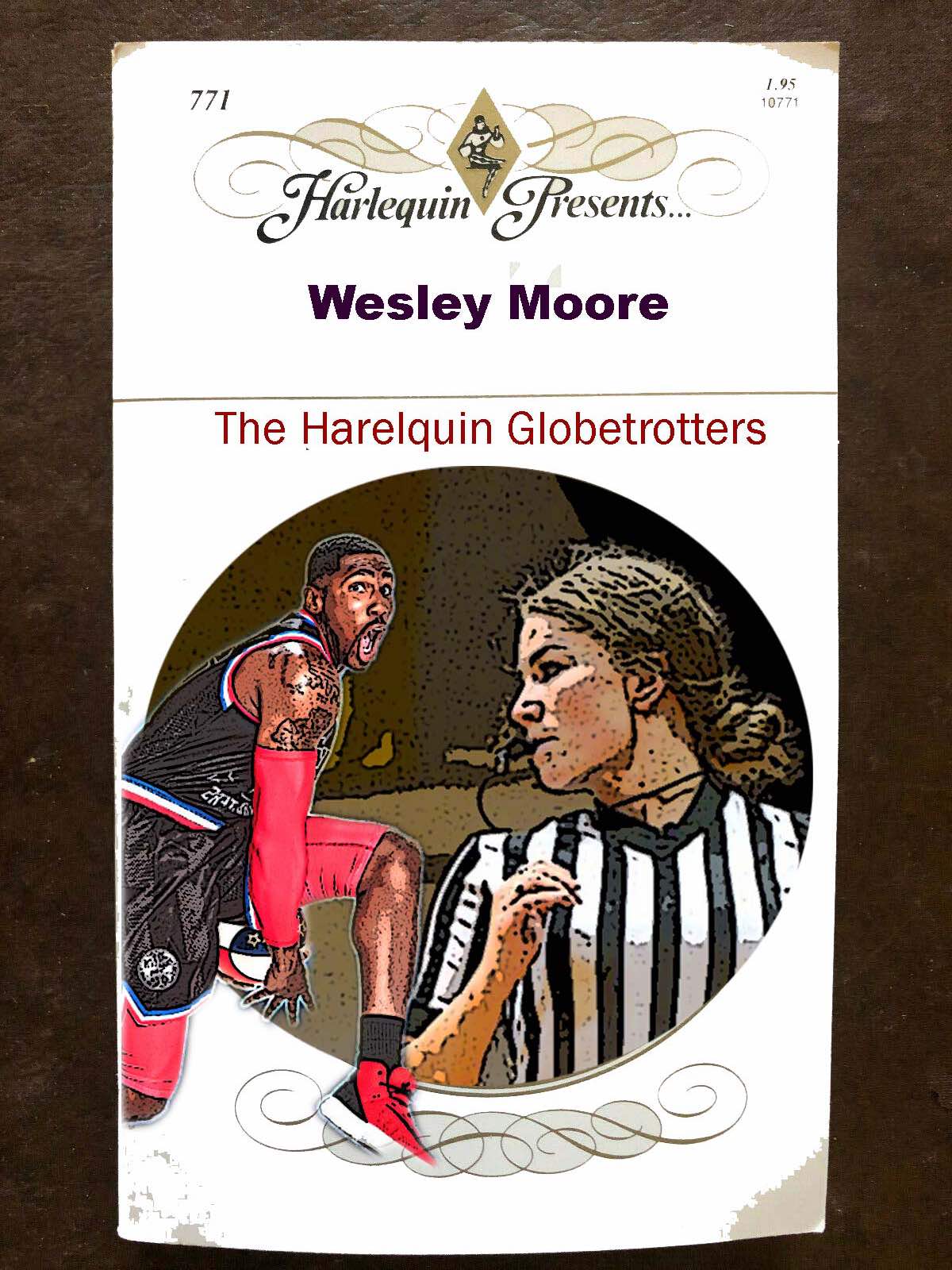
In 1994, I had a short story published in a journal that no longer exists, the fate of virtually all my published works. I’ve decided to reboot it here instead of allowing its yellowing pages to languish unread in my drafty garret’s file cabinet. It’s a silly story, a mash up parody of sports fiction a la Boys Life magazine and Harlequin Romances.
So, as they say, without further ado.
The Harlequin Globetrotters
Although Skylark Keats despised Catrina Piedmont with all the hot fury of his competitive passion, she nevertheless fascinated him by being a devastatingly beautiful woman yet the pickiest basketball official that he had ever encountered. Throughout the first half, as he bounded up and down the court, Skylark could feel her eyes on him, surveying all six feet eleven inches of his muscle-ripped frame, searching eagerly for the slightest infraction so she could blow the whistle on him. In fact, this was the first time all night that he had been at the foul line. The other ref had called the opposing center for delivering a blatant karate chop on Skylark’s right wrist as he lofted a jumper that somehow had found its mark. Catrina had had a clear view of the play, yet her whistle, nestled in her beautiful full lips, remained unblown.
As Skylark’s hand gently cupped the circumference of the ball, his fingertips encountered gooseflesh, the grain of the leather seeming to prickle in anticipation. His brown almond-shaped eyes narrowed as they focused on the hoop that hovered ten feet away. If he could sink this free throw, the Globetrotters would even the score.
“We would be up by ten,” Skylark thought, “if it weren’t for that female ref.”
Determined not to let her rattle him, he cocked his elbows, then catapulted the ball in a soft, graceful arc that culminated in the sweet swish of success, the sound of petticoats rustling. Seconds later, with the score knotted at 69, the buzzer ended what had been a frenetic, high-scoring half of basketball.
As he lumbered towards the locker room, Skylark cursed himself for desiring to feast his eyes on Catrina’s delicious smorgasbord of feminine allure. A trace of her appeared in the outskirts of his legendary peripheral vision, and he felt the muscles of his neck surrender to temptation as he turned to face her, to encounter those intelligent sea-green eyes fringed with sable lashes. Catrina’s petulant mouth quivered as she met his gaze, and as her sensuous lips parted, the whistle they had caressed fell across breasts that heaved, straining against the taut black-and-while stripes of her jersey.
“Ha,” Skylark thought, fighting off the ferocious dogs of desire that hounded him, “she winded. There’s no woman who can keep up this pace for two halves. I’ll pick up the tempo in the second half. She’ll keel over, and we’ll get an alternative ref, a male, someone who isn’t so doggone onery.
Chapter Two
Coach Krings’ kindly but faded blue eyes crinkled concern as the players huddled around the green chalkboard of the locker room. The tapping of the chalk on the slate sounded like an SOS as he furiously scrawled X after O. The Globetrotters had never lost a game. Not ever. And here they were struggling for their life against an unheralded two-bit college team from the Midwest. Obviously, these collegians had cut classes to ogle game films, and Coach Krings was setting up a new offense to throw them a loop. As important as he knew it was, Skylark had a hard time concentrating. He couldn’t get his mind off that female ref. He imagined her in the ladies’ room sponging her hot alabaster flesh with a water-soaked sponge, first daubing the high cliffs of her cheekbones, then down the face of her collarbone, ever so slowly sliding between her pert, rose-tipped-
“Keats, what in the heck is the matter with you. Pay attention!”
The fantasy burst, and Skylark was back in the locker room facing the crumpled brow of a frustrated Coach Krings.
“I don’t know, Coach. It’s that female ref. She’s thrown me off balance. She’s calling every picky ol’ thing.”
“Keats, I’ve noticed, but there’s nothing we can do about that.”
“What if we cranked it up a notch?” Skylark suggested. “I mean what if we were to really go all the way? We’d wear her out. I mean she’d be so exhausted she couldn’t muster enough wind to rattle her whistle.”
“You know,” Coach Krings mused, “you just might have something there.”
Chapter 3
And what a second half it turned out to be. The Globetrotters and the Battling Baptists traded baskets in a frenzied orgy of slam dunks and three pointers. Ten – count ‘em – ten wide-shouldered torsos tapering into flat stomachs, slender hips, and long muscular legs galloping back and forth across the court like gladiators engaged in a life-or-death struggle, and right smack dab in the middle, Catrina Piedmont, matching the men step-for-step, her body bathed in perspiration, her referee’s jersey soaked, clinging seductively to the rise and fall of her luscious curves.
Chapter 4
This was a heart-wrenching game for Katrina. For years she had been in love with Skylark Keats. Ever since he had visited her dying brother at Children’s Hospital. As the years rolled by, she followed Skylark’s career and sought vicariously to be near him by taking up basketball as a hobby, a hobby that soon became an obsession. At college, she got her feet wet reffing intramural games. She loved it – the power and the glamor – but above all, she sought to excel, and that meant being in superb physical shape, concentrating with all her penetrating mental prowess, and above all, being absolutely, incorruptibly impartial.
Quickly, after graduation, she rose to the highest echelon in the ranks of basketball officials nationwide, and now, as fate would have it, she was reffing a Globetrotters’ game. What a tug-of-war of conflicting emotions she had endured. How could she possibly be disinterested in a game in which the man she loved, the only man she would ever love, played? How could she be sure that her abiding devotion wouldn’t mist over her vision and color her split-second decisions? There was only one solution to her dilemma: She would bear down hard on Skylark to compensate for her adoration.
Catrina had prayed for a patented Globetrotter blowout, but no, that was not to be. It was nose to nose, neck and neck, breast and breast, flank and flank as the clock ticked down, from seven minutes, sliding smoothly and expertly over six minutes, down to four minutes, then to two minutes, to the very cusp of 60 seconds. Skylark was burdened with four fouls, so he played tentatively on defense, allowing the opposing point guard to dribble past him for a driving layup to put the Baptists up by one with only 24 seconds remaining.
Coach Krings called a timeout. The Globetrotters would play for the final shot. If they made it, they would win; if they didn’t, they would have lost for the first time in the history of the franchise. No telling what that would do to their revenues, most of which went to charities, to ailing little children across the country.
As Coach Krings mapped out strategy, Skylark flicked a glance Catrina’s way. Where had he seen her before? She was ever so hauntingly familiar. And so, so beautiful, so, so beautiful that he could almost forget those questionable travelling calls, those unforgiving lane violations she had charged him with.
The horn signaled the players back onto the court. Catrina held the ball in her gorgeous, delicate hands, so beautifully proportioned that it seemed a Renaissance master had painted them on the basketball.
She could not escape Skylark’s open frank gaze. She felt herself melting, but suddenly tensed, shaking off the languor. She tossed him the ball and backpedaled to get a more comprehensive view. Certainly, she could hold off for another 24 seconds her mad compulsion to stop play, take him in her arms, and force him to surrender to her throbbingly passionate yet absolutely pure love.
Stalling was something new for the world-renowned Globetrotters, yet they were gifted physical specimens, perhaps fifteen years older than their competitors, but more experienced and still lightening quick. They passed the ball with dizzying speed, whipping it around in the gravitational field of their expertise, as the seconds ticked off 12, 11, ten, nine . . .
With four seconds remaining, Martinique lofted an alley-oop rainbow pass, and Skylark broke for the basket, leaving the floor as he soared gracefully to snatch the ball and stuff it through the awaiting hoop. As he rammed home what might be the winning basket, he knew it must pay for it in a crunching collision with the defender.
He glanced down right before impact, and there she was, too, in their path, striving for the optimum vantage point. The collision produced a swirling kaleidoscope cartwheel of arms, legs, and zebra stripes as their bodies rolled across the padded out-of-bounds.
Somehow, he had ended up on top of her; the other player, knocked cold, lay by their side. Miraculously, the whistle had not been jarred from Catrina’s mouth. Would she call charging on Skylark, negating the winning basket and ending what might be the most phenomenal streak in the history of statistics?
His face hovered mere inches from hers, and as she inhaled, perhaps to blow the whistle, Skylark remembered where he had seen that face.
“You’re that little Piedmont boy’s sister,” he whispered, and no sooner than he had said it, the whistle fell harmlessly from her lips.
“Yes,” she moaned, “and I love you. I have loved you since that day. I shall always love you.”
Skylark studied her face as she uttered those words, and he saw there absolute sincerity, a sincerity that melted his own heart.
Oblivious to the hubbub that surrounded them, they allowed their lips to touch, at first tentatively, a gentle fluttering butterfly of a kiss. He knew he had to get up, but he couldn’t. He could feel her arms encircling his back, her tongue flicking across his earlobe, darting its tip into his ear. He crushed her to him and started to kiss her eagerly, his tongue exploring, then plundering the warm, wet cave of her mouth.
Swept away in absolute abandon, they surrendered to the tidal wave of their pent-up passion as the roar of the crowd surged over them like the sea.
Puttering around in the repository of my computer this morning, I opened a folder labeled “Academics” where I have stored materials I used in my English classes, some of which date back to the previous century. I opened a few quizzes, lecture presentations, essay assignments, etc. and thought to myself, what a waste to have these documents lying dormant, as it were.
When I taught, I often found professional educational materials lacking, so I created my own. One such production was a 15,000-word primer entitled How to Write a Research Paper: A Hermeneutic Tale.
Rather than dryly explaining the process of researching, writing, and documenting sources, I created a narrative featuring two students, Bennington Rhodes and Flip Burger, who take very different approaches in tackling their research projects, which at Porter-Gaud included choosing the primary source.
The primer’s utility lay in its adaptability: I could update the ever-changing MLA protocols and save the school a ton of money in MLA handbooks, which become obsolescent in no time flat.
The primer includes explanations on choosing the primary source, amassing a preliminary bibliography, creating both a topic and sentence outline, and citing sources. I actually ghost-wrote Bennington’s paper on Chronicle of a Death Foretold, attempting to parrot the thinking and prose of a sixteen-year-old.
Obviously, the primer, which I assembled in 2012, is itself obsolescent given the MLA’s ever-evolving (devolving?) citation procedures; however, the basic information stands the test of time in my unhumble opinion.
Reproducing the entire document would be cumbersome in a blog format, but I thought I’d include here the last four pages to offer an idea what the primer was like.
If any of you lit teachers out there would like a complete copy, contact me, and I’ll send a pdf version. By the way, it’s not copyrighted.
So here are the last four pages of the text (the document actually ends with an appendix explaining how to document various sources). I’m critiquing Bennington’s essay, which comes a few pages before.
By following his outline, Bennington insured that his paper would be well unified. He has, as curmudgeonly Dr. Crabapple puts it, “a multi-tiered thesis,” which simply means the thesis is broken into multiple parts that form the sections of his actual paper.
Each section of the thesis – the detective genre aspect, the tragic conventions, etc. reemerge in the topic sentences of the paragraphs devoted to them.
Again, here’s Bennington’s thesis:
In Chronicle of a Death Foretold, Garcia Marquez parodies several different narrative traditions – particularly detective fiction, Greek tragedy, and commercial romance – all the while subverting those genres to underscore the immorality of Macondo’s culture of machismo.
When shifting from paragraph to paragraph, it’s important to create smooth transitions, to refer ever so briefly to an idea expressed in the previous paragraph in the topic sentence of the next paragraph.
For example, Bennington’s second paragraph, the one devoted to the detective genre, ends with this sentence:
“Perhaps Gabriel Marquez is suggesting that the answer to the question of ‘who done it’ is everyone.”
His next paragraph, you’ll remember, is devoted to how Garcia Marquez incorporates elements of Greek Tragedy into Chronicle. Rather than immediately changing the subject from the detective genre to Greek tragedy, Bennington briefly refers to the detective genre as he begins the paragraph on Greek drama”:
“Garcia Marquez adds depth to the detective genre by superimposing upon it characteristics of Greek tragedy, and in doing so, he further underscores the dysfunctionality of machismo.”
Note how each of the emphasized words in the above quote plugs into the thesis. Pretty nifty, Bennington!
Style
A research paper, unlike an informal essay, should be formal in style, which means you should avoid using the second person pronoun “you” to refer to “everyone,” as your omniscient narrator just did, and you should also avoid contractions so that your style is somewhat elevated. It’s a dinner at a snooty restaurant with your Great Aunt Gertrude, not a chilidog gobbled down with Flip at the pay counter at Bert’s on Folly.
Note that this primer is informal. Your beloved omniscient narrator is writing as if he is talking to you. If this were a formal essay, the above might be rendered like this:
A research paper, unlike an informal essay, should be formal in style, which means one should avoid using the second person pronoun “you” to refer to “everyone,” and one should avoid contractions so that one’s style is somewhat elevated.
Nevertheless, you should try to create a style that comes across has “heightened conversation” rather than dry analytical soullessness. For example, the off-putting formality of the above could be softened to this:
A research paper, unlike an informal essay, should be formal in style, which means writers should avoid using the second person pronoun “you” to refer to “everyone,” and should avoid contractions so that the style of the essay is somewhat elevated.
One last note, during your research, you’ll discover some writers refer to themselves in the first person. In other words, they throw around the pronoun “I” a lot. You should avoid doing this yourself because you aren’t a tenured professor sporting a wool blazer with patches on the elbows. In other words, you’re a sixteen-year-old who doesn’t bother to look up the words you don’t know in the dictionary.
A Critique of Bennington’s Paper
As Ms. Newspeak grades Bennington’s essay, she has four tasks to perform. First, she needs to determine how well Bennington’s essay conforms to the dictates of the MLA/ Porter-Gaud process. Then she needs to judge the essay’s content and style. Finally, she needs to subtract any grammatical or mechanical errors Bennington has committed (up to twenty points).
Ms. Newspeak takes Bennington’s process grade 98 and his content grade 90 and divides it by 2, so he ends up with 94. Then she subtracts his grammatical/ mechanical errors. Because Bennington’s a senior and has more or less mastered the mechanics of writing (and also because his fussy conservative Charlestonian bow-tie wearing father proofread the paper), Bennington received no deductions for grammar or mechanics. By the way, Bennington’s father caught a comma splice and a couple of other comma errors saving his son an overall 9-point deduction [5+ (2 x 2)] for you math people.
Nevertheless, Bennington’s essay is far from perfect. Let’s spend just a couple of minutes critiquing it before we bring this primer to a happy close.
Bennington’s title is a bit much; however, it’s better than a bland title. It does grab the reader’s attention.
By far, the weakest paragraph in Bennington’s essay is his introduction. The sentences don’t come together fluidly. He starts with Faulkner, then shifts to magic realism and then to different narrative techniques. There’s little continuity here. It would have been better to begin with a generalization about narrative techniques and to then narrow those generalizations using that one thread.
Also, Bennington’s essay would have been better if he had chosen only one narrative approach instead of three and had gone into more detail about how Garcia Marquez parodied that technique. If Bennington had spent more time on his research, he could have written a richer analysis on any one of the three techniques he discusses rather than touching upon each in a rather cursory fashion.
Bennington’s organization makes essay is somewhat quilt-like. There’s the detective square that’s sewn to the Greek tragedy square that’s sewn to the romance novel square. In addition, his paragraph division is somewhat dubious. For example, rather than including “omens and foreboding” in the paragraph on the classic unities of time and place, Bennington would have been better off creating a separate paragraph on omens and expanding that paragraph to flesh it out more. However, he does “weave” the idea of machismo fairly well throughout the essay, so there’s at least a pattern or motif running through his quilt. The very best essays, however, like valedictorian-in-waiting Connie Cerebrowski’s, interweave their arguments to create a seamless tapestry of quotation and analysis. Her essay on a Freudian reading of D.H. Lawrence’s Sons and Lovers had AP professor Mr. Aridwitt, PhD flipping through “the book and [Thesaurus] of [his] brain” for superlative synonyms.
Bennington is, however, a capable stylist, having dutifully done his Wordly Wise lessons with dictionary in hand and having read his assigned novels word for word. Unfortunately, or fortunately, whichever be the case, a well-honed style can sometimes soften (at least) somewhat the heart of a English essay assessor, even one as gnarled and cynical as Dr. Crabapple.
Springtime
As the research paper rapidly fades into a fond memory in Bennington’s consciousness, he looks forward to his last trimester of high school with a sense of anticipation and freedom. In fact, he’s looking forward to his free period so he and Andrea can perch like a pair of parrots on a bench outside on this mild, sunny day and mimic routines from Monty Python and the Holy Grail, a movie that they’ve seen forty-seven times between them. As he’s headed through the S&T Lobby, Bennington runs into a rather downcast Flip Burger bent like a hobo beneath the burden of his LL Bean bookbag.
“Hey, Flip,” Bennington says, “Andrea and I are headed outside to catch some rays. Wanna join us?”
“Can’t, dude.”
“Why not?”
“Dude, I got study hall.”
“A study hall? Why?”
“Dude, I failed English last term. It’s, like, so unfair.”
“I’ll say.”
“Gotta split, dude. I got old man Crabapple for study hall. If I’m late, he’s liable to make me copy out sentences by Immanuel Kant or something.”
“Okay, later.”
“Later, dude.”
Perhaps, uncompassionately, Bennington has already forgotten poor Flip’s troubles as our hero pushes open the double doors and trots down the stairs to the balmy breezes and melodic birdsong of a glorious spring morning.
Cruel. Her nature. Curious mice never squeal. Seem to like it.
–Mrkrgnao! the cat said loudly.
Joyce, Ulysses
I’ve never been a cat person or a dog person, or to be honest, much of a people person. You can add to that nonfan list hamsters, caged birds, aquarium fish, bunny rabbits, ferrets, mimes . . .
That’s not to say I haven’t liked/loved certain people or dogs; it’s just that I don’t like/love either collectively as a species. In other words, I judge animals and people on an individual basis.
For example, I disliked my grandmother’s and aunt’s Chihuahua Perfidia.[1] They named this rat- resembling canine after the popular mid-century song, probably ignorant of its Spanish denotations – faithlessness, betrayal,treachery.
“Here Faithlessness, come Betrayal, down Treachery. Bad girl, bad girl!”
“Perfidia” is a lovely song, though. You can listen by hitting the audio arrow below.
Andrea Bocelli’s version of “Perdidia”
My grandmother and aunt shared the same bed until my aunt’s teens, and Perfidia – or Fiddie for – made it three. My grandmother chose a Chihuahua because she’d heard the breed somehow helped to ward off asthma, a malady from which she suffered bigtime. Even though I was a mere four or five, I sensed something amiss about the sleeping arrangements. Then again, I’d seen my grandmother wheezily huffing on her aspirator and gasping for air in an oxygen tent, so I can understand her grasping at straws.
On the other hand, I loved my previous dog Saisy, whom I still think about a good bit. I’ll not bore readers who follow Hoodoo by rehashing her backstory, but in short, she was a German long haired pointer, a rescue who had suffered mightily yet possessed remarkable joie de vivre.
Allow me these quotes from a blog post of yore when Saisy was among the quick:
Saisy manifests certain cycles of her own during our ritualistic rectangular jaunts between 5th and 9th Streets along the beach. Whether morning or afternoon, we shuffle/walk/trot towards the sun. Headed east or west, morning or evening, Saisy is sure to engage in the following activities at the same intervals and at approximately the same places.
These activities include:
*Cavorting like a dervish on PCP, becoming even more frenzied in each progressive step of the telltale signs of an impending walk: my crawling out of bed, putting on hat, grabbing a plastic bag. However, as soon as I reach for the leash that hangs on the screen porch, she relaxes into serenity, sits patiently in the posture of the picture below.
* Surveying the river and marsh at the threshold of the first step down from the deck, looking out slowing turning her head, working her nose.
*Urinating to relieve her bladder (rather than to mark her territory) on the edge of the lane about twenty yards past our house. For this elimination she assumes the traditional female canine posture of squatting.
*Stopping at every palm frond along the way to mark it as hers, raising her leg rather than squatting to perform this urinary act.
*Pulling me violently in the direction of some olfactory temptation, whether it be chicken bone, flattened squirrel, or the trace of some recently present animal. If the latter, she points.
*Pulling me towards any other canine she encounters, and if we stop, sniffing – and allowing the other canine to sniff – fore and aft.
*Stopping at each groin[2] on the beach to enjoy what must be a rich array of aromatic pleasures.
*Herding (or attempting to) bicycles and golf carts.
*Corkscrewing into defecation mode.
*Rushing as soon as we reach home to her food dish while she licks her chops.
But guess what?
Counterintuitively, I’ve also fallen in love with our new dog KitKat, a Chihuahua rat terrier mix, even though she possesses the same coloring as Perfidia! I would never have chosen that breed, am not fond of her Perfidian high strung hyper-territorial ear-assaulting desperate-sounding yelping; otherwise, KitKat is smart, full of personality, full of love. She’s much saner than Saisy, less likely to snatch a cookie from a toddler’s hand.
And for cats, I doubt I’ll ever grow attached to one, even to our newly acquired kitten Onyx. As I type, she’s studying squirrels leaping from branch to branch outside the window of my study. Ever since I read that if house cats were big enough, they’d kill their owners, I’ve acquired immunity to their supposed charms.
Still, if I’ve fallen in love with a goddamned Chihuahua mix, who knows?
Onyx staring out of the drafty garret where I write
[1] Of course, I would have liked Fiddie better if she hadn’t been snarlingly territorial, prone to biting, and reeking from a Boschian case of the mange. Petting her would be analogous to patting a shirtless leper on the back.
[2] A long, narrow structure built out into the water from a beach to prevent beach erosion (Britannica.com)
Last week in the wee hours after my perpetual nemesis Ol’ Man Insomnia banged on the bedroom door of my slumbers and roused me yet again, I decided rather than counting sheep, I’d attempt to short circuit my tendency to fret about upcoming responsibilities by seeing how many names of former teachers I could recall.
My academic career began in the school year 1958-59 at Miss Marion’s kindergarten, a one-room schoolhouse in the backyard of her home somewhere near the railroad tracks in downtown Summerville. I don’t remember Miss Marion’s last name, and what I do remember about kindergarten tends to be negative – getting in trouble with John Lang for sailing girls’ tea set dishes like Frisbees, Bert Pearce’s falling off a swing into a mud puddle and having to sit in the bathroom in his underwear until his pants dried, breaking my Davy Crockett thermos by pouring Coca-Cola into it instead of milk, a student telling me that my mother chose a black instead of a bright yellow raincoat for me because she wanted me to be run over by a car. I also remember Miss Marion’s reading bible stories from a gigantic book propped on an easel and my falling in love with nursery rhymes, which would bode poorly for my future employment as I ended up as an English teacher and hack poet.
Yet, as happens so often in life, I didn’t realize how easy I had it at my cloistered middle-class kindergarten until I entered Summerville Elementary with its all white yet economically diverse population of older kids. I got lost before school on day two. Guided by my infallibly fallible sense of direction, I lined up on steps among unfamiliar faces. It was the second-grade entrance. Some kind soul, however, led me to my proper station, but the damage was done. School was a scary place.
Nevertheless, my first-grade teacher, Mrs. Wiggins, was nice and nurturing. If you think about it, first grade teachers provide you with more education than any other teacher of any grade. They teach you to read, to write, to add and to subtract. Back then I was always losing my crayons and books instead of like now when it’s passports and beers that go missing.
The child is the father of the man, as Wordsworth wrote.
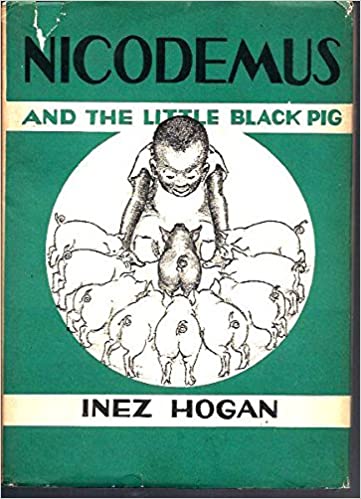
My second-grade teacher Mrs. Jordan was older and gruffer than Mrs. Wiggins. Plump, white-haired, Mrs. Jordan read to us out loud. Some of the books featured an African American boy named Nicodemus. These books, written in dialect, were rife with stereotypes, and Mrs. Jordan sounded very much like an African American when she read them. Meanwhile, actual African American students sat in desks across town at Alston, the so-called separate but equal alternative to Summerville Elementary. I remember that Mrs. Jordan only gave white drawing paper to capable artists; the rest of us got lower grade stock upon which we’d create valentines.
The older I get in school, the less I remember, oddly enough (as the following shrinking paragraphs suggest).
I had Mrs. Montz in third, Mrs. Stall in 4th, and Miss McCue in 5th, perhaps the first pre-menopausal teacher I encountered. Redheaded and perky, she made school interesting. Unlike most years, I didn’t dread going to school in the 5th grade. In fact, I was chosen to be a patrol boy and got to sport a white chest belt with a badge, if I remember correctly.
Mrs. Altman was my 6th grade teacher, and it was in the 6th grade when arithmetic had turned into the new math and my grades began to suffer. Before the 6th grade, I could pretty much get straight As by merely listening, but those days were over, and the horrors of puberty just around the corner, along with Spann Junior High where I would witness an administrator bang two boys’ heads together in the lunch line Three Stooges’ style, but I’ll save that memory until a later bout with insomnia.
I think it was John Woodmansee who made me my first mixed tape, an eclectic collection of avant garde rock, Third World exotica, and jazz. He curated with care, making sure transitions were smooth, the Venn diagram of intersecting genres shaded with similarities, whether in pop-lit theme or in sonic overlapping – the B-52’s “Love Shack” followed by Cannonball Adderley’s “Work Song,” for example. He labored over these productions, devoting hours into the effort of creating a gift both enjoyable and educational.
I, too, started making mixed tapes, mainly for students as rewards for significant achievements, like winning the year-end vocabulary bee or scoring the highest on our cumulative high school literature test. Occasionally, a former student runs across one of these relics and posts a photo on Facebook.
Amy Sexhauer’s award for being crowned Vocabulary Queen
Allison Zachery’s award tape
I also recall that ace student Larry Salley received one loaded with Stax classics, and he later played the tape over the stadium speakers before Porter-Gaud football games in his early days as the Cyclones’ announcer.
Jungle drums and tragic magic!
1-2-3!
“Land of 1,000 Dances!”
“Slip Away!”
“Think!”
“Sitting on the Dock of the Bay!”
“Mustang Sally!”
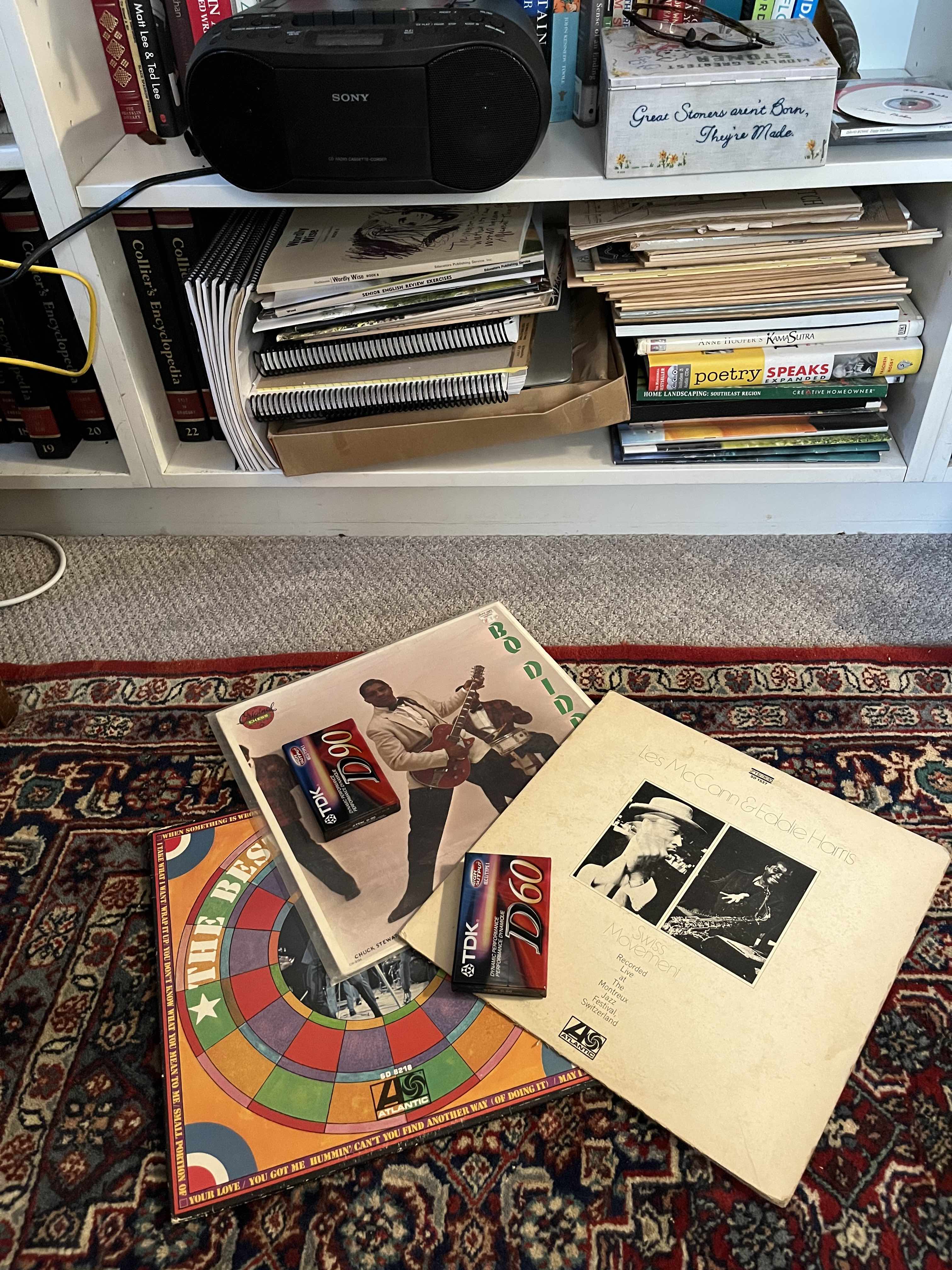
As I became better at producing mixed tapes and eventually mixed CDs, I did my best to match the music to the student’s personality. When I produced compilations for friends or acquaintances, I’d throw in tunes that probably hadn’t heard, cuts like Les McCann’s and Eddie Harris’s “Compared to What” from their Live at Montreux Jazz Festival 1969. It was actually a helluva lot of fun assembling these auditory collages – unlike, I would argue, creating and sharing a set list.
What’s the difference, you ask? Physicality, that’s the difference. You can hold a mixed tape or CD in your hands. The folks at the Oxford American learned this the hard way. I subscribed to the OA last year to receive the CD included in their annual music edition, but when they replaced the CD this year with a playlist available through Spotify, I – and apparently many others – dropped the subscription. Guess what? Now the CD is back.
Furthermore, unlike on a playlist, time and space are finite on a cassette tape or compact disc. On cassettes, which needed to be flipped, I’d arrange the tracks as if they were appearing on an LP, the first songs on Side A and B rockers, the last cuts strong and long, like Warren Zevon’s “Desperados Under the Eaves.” The limitation of space and time lends itself to compression, which enhances meaning, like in good poetry. You’re talking an hour’s drive instead of an open-ended series of songs. Most play lists lack form, resembling a radio broadcast rather than an artifact. They tend to be assembled rapidly – eeny, meeny, miny, moe.
My wife Caroline brought the topic Friday night at Harold’s Cabin as we lamented over Jamesons the sad state of incivility that characterizes post-Trumpian politics. Caroline cited the disappearance of the mixed tape as contributing to the on-going diminishment of cultural exchange. People long for the mixed tape, hence its image has become a meme, its miniature form dangling from charm bracelets and necklaces. I’ve seen it also on t-shirts.
Perhaps, people gravitate towards images of mixed tapes because they represent a simpler, more three-dimensional, more concrete era before screens hypnotized and isolated us. Picking up my stepdaughter Brooks from Porter-Gaud in the afternoons, I see most students, heads bowed, staring down at their phones rather than bopping across the Green with a group of friends.
Streaming music isolates us; mixed tapes and CDs bring us together.
Les McCann and Eddie Harris: “Compared to What?”
[1] Mixed tapes are a great early courtship gift that allows the would-be beloved a peek into the aesthetic inclinations of the CD bearing courtier. Does it feature Rashaan Roland Kirk or Garth Brooks? These things matter.
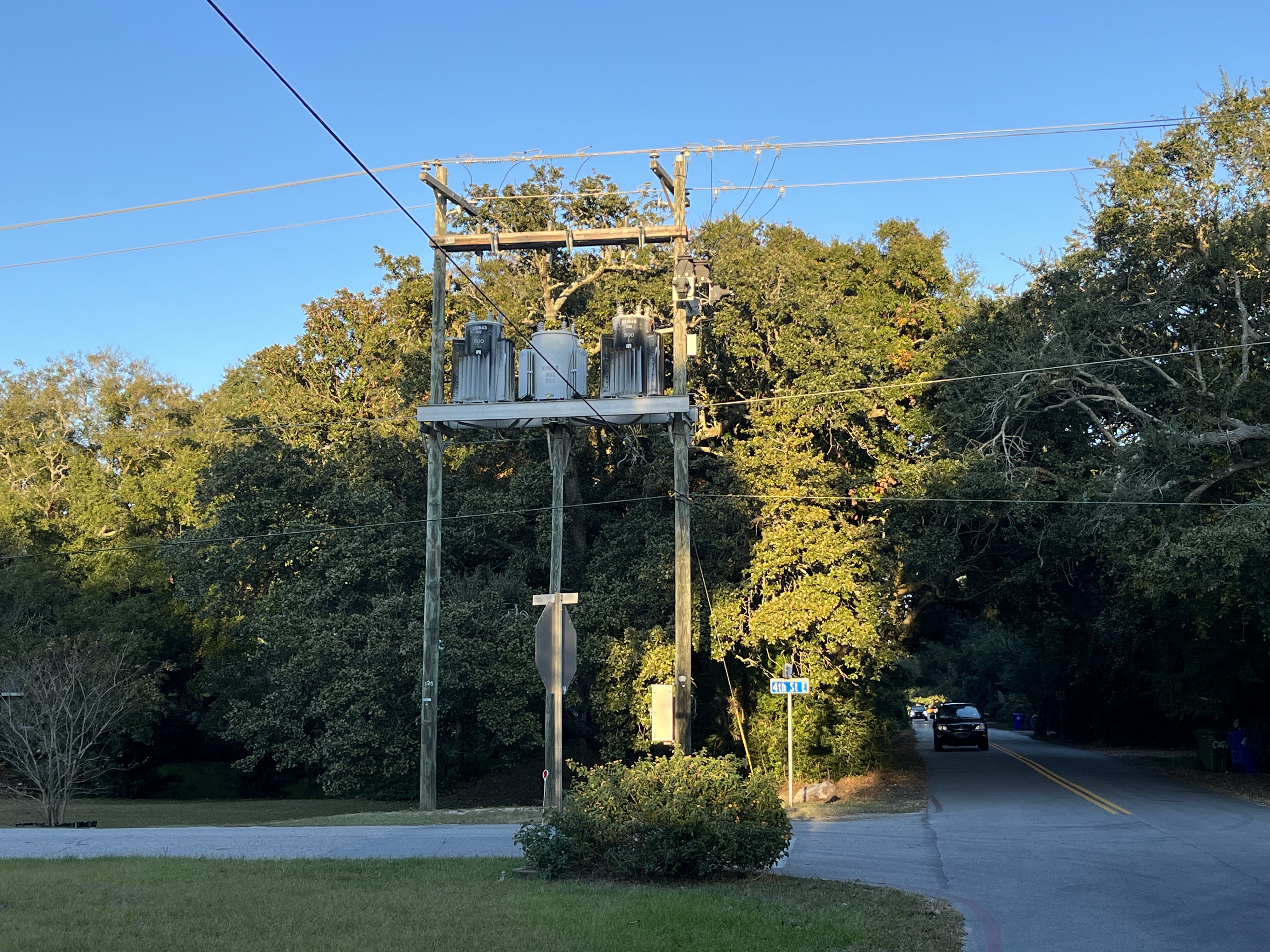
Folly Beach, the corner of 4th Street and East Huron
It’s a melancholy sight as I wend my way to the post office in the mornings, or to Chico Feo in the afternoons, to see Folly Beach’s quaint avenues blocked by tree removal trucks a-blare as they decimate aged oaks and remove palm trees to accommodate drooping electric lines that look as if they might have been strung sometime during the First World War.
C’mon, y’all, this is the 21st Century! We’ve put men on the moon, perfected heart transplantation, and created contraptions that allow us to conjure whatever song or movie we’d like to hear or see right now – presto![1] Seems as if we could come up with some less primitive method of heating and illuminating our domiciles.
As I was watching the Micky Mouse Club in the 50s on my grandparents’ black and white Motorola, I expected that in the year 2021 we’d be zooming around in flying cars, not rumbling along in the diesel stench of city buses that look pretty much as they did during the Eisenhower Administration. I certainly don’t recall the cities of Tomorrow Land crisscrossed with utility poles and rusted out transformers. Thank God HG Wells isn’t alive to witness it.
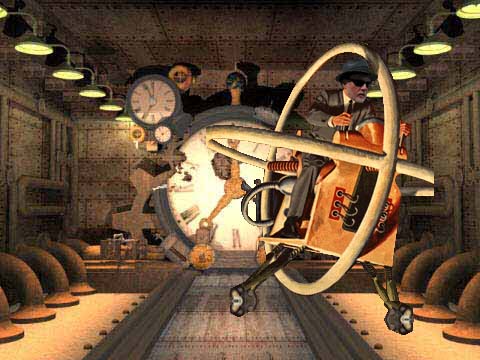
Yours truly, in an alternate future off in my time machine to catch Josephine Baker at Théâtre des Champs-Élysées
When I see one of the tree-cutting vehicles rumble past, I feel like screaming “butcherers,” but, the tree men are not ultimately responsible for the electrical grid, and I suspect in these latter days, most US citizens, if given the choice, would opt for refrigeration over an oxygen producing oak, no matter how majestic.
Utility Poles
I think I’ll never behold
A tree as useful as a utility pole.
A pole whose wires are connected
To power stations carefully selected,
Like hydroelectric plants in the upper state
That provide a reasonable utility rate,
A pole whose wires provide a perch
For winter birds without a birch,
A pole pointing to a godless sky
Where cumulus clouds go scudding by.
O, poems are made by fools like me,
But only power plants can generate electricity.
Like I said, I think I’ll never behold
A tree as useful as a utility pole.
I’m typing this caption right beyond those windows
[1] But we haven’t, damn it, found a cure for baldness (other than the tried-and-true method of pre-pubescent castration).












 You Do Hoodoo