Wouldn’t it be nice if the pleasant moments of our lives passed as slowly as Mac system updates? For example, for the last hour or so, my update bar has been stuck on “about 15 minutes remaining.”
You glide into a warm bath. Rather than cooling, the water remains at a constant soothing temperature, pleasure’s non-existent blue bar stuck, as it were, frozen in time, as you sing on key a melancholy air like “Danny Boy.”
. . . And I will know, though soft you tread above me,
And all my grave will warmer sweeter be,
And you will bend and tell me that you love me
And I rest in peace until you come to me!”
Once, “Danny Boy’s” in its grave, so to speak, you launch into “The Streets of Laredo.”
“Go fetch me a cup, a cup of cold water. To cool my parched lips”, the cowboy then said. Before I returned, his spirit had departed, And gone to the round up – the cowboy was dead.
We beat the drum slowly and played the fife lowly, And bitterly wept as we bore him along. For we loved our comrade, so brave, young and handsome, We all loved our comrade, although he’d done wrong.
The water’s still warm, life affirming.
There’s time for another, “Jeanie With the Light brown Hair.”
I long for Jeanie with a day-dawn smile, Radiant in gladness, warm with winning guile; I hear her melodies, like joys gone by, Sighing round my heart over the fond hopes that die:— Sighing like the night wind and sobbing like the rain,— Wailing for the lost one that comes not again: Oh, I long for Jeanie, and my heart bows low, Never more to find her where the bright waters flow.[1]
OMG, as the young people say, as I typed the above, the bar inched forward to “10 minutes remaining.”
At this rate, the update will be completed by Doomsday!
[1] My father rocked me to sleep while singing these songs, among others. It explains a lot. You can read more about that HERE.
Molenaer, Jan Miense – Battle Between Carnival and Lent
One of the recompenses of old age – and believe me they are few – is that getting rip-roaring, intestine-unloading, word-slurring, sidewalk-reeling drunk has lost its allure.[1]
Oh, Lawd, my geriatric muse, Erratatata has descended:
Dionysius, boon companion of my youth,
has grown so very long in the tooth
that he looks like Nosferatu,
like, like bad, bad juju.
Before
After
Nevertheless, even though my days of dancing-on-tables, driving-MGs-down-parking-garage-steps have long passed, I still enjoy checking out Folly Beach’s party scene, to engage tiara sporting brides-to-be and their uniformed entourages in conversation.[2] I also enjoy making small talk with the young men at Chico Feo or Low Life who share adjacent barstools. I relish shooting the shit, as my father might put it, with many of the bartenders whom I consider more than acquaintances.
But only for an hour or two. Too many Founders Day IPAs makes Wesley a dyspeptic codger.
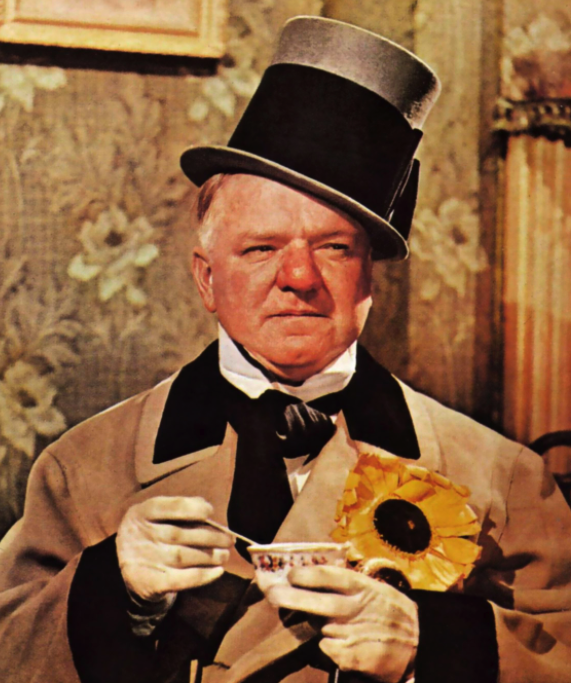
Nevertheless, I tip my fedora to those old sybarites who never forsake the temporary comforts of strong drink, the Sir Toby Belches and T. Frothingill Bellows of the world, who belly up to the bar and have at it until the day they started to drink becomes the morrow or until their livers eventually give out.[3]
the great WC Fields
Yet, ultimately, forgive the cliché, but home is where the heart is. There’s nothing I’d rather do than sit on the deck with Caroline on a gnat-less late afternoon and look out over the river at the light maturing, going golden, and ultimately dying, then sitting down to dinner with Brooks and rehashing the day’s trivial events, which all and all make up most of our lives.
Now, as some of us used to say in the 60s, that is where it’s at.
[1] Of course, the cliché “with age comes wisdom” is somewhat true. I say “somewhat” because the wisdom of perspective, of the long view, i.e., the road map that experience provides, is merely two-dimensional. For example, I’ve learned in my old age that acute intoxication comes at a cost not worth paying, but that revelation isn’t exactly profound – it’s not as if I’ve embraced the Four Noble Truths and eliminated desire from my mental makeup, not as if I have achieved the serenity that a life of virtue provides. I still occasionally slip up and get drunk, though that’s never my goal.
Anyway, if old age provides wisdom, how come so many of my senescent brethren wear scowls instead of sport beatific smiles? I’ll tell you why, because their joints ache, they’re lonely, the world is going to hell in a handbasket as it has been since time immemorial, i.e., since the discovery of agriculture, Eden’s end.
[2] In which I offer sage advice like “monogamy is the cornerstone of a non-violent marriage” and “if you get caught in undertow, swim parallel to the shore.”
[3] Sir Toby of Twelfth Night and T. Frothingill Bellows, the protagonist of WC Fields’s The Big Broadcast of 1938.
Look, I’m vain, love attention.[1] Therefore, there’s no way I’m going to let anyone get in the last word after I have checked out of this Motel 6 of Life.
No, I’m writing my own obituary before I expire, and you should as well. After I succumb, I certainly don’t want my cousin Zilla to compose my obituary. Rather than merely “dying” or “passing away” or “entering eternal rest,” I might have “left the world to be with the Lord,” or worse, “entered the loving embrace of [my] Lord and Savior Jesus Christ.” Though I wouldn’t mind getting a hug from Jesus, I’m agnostic, so I want my obituary to be an accurate reflection of my life.
Don’t trust others to do right by you. Do it yourself!
So, what follows is an easy guide for composing your very own obituary.[2]
Okay, let’s get started.
Rule #1. Know your audience. Chances are the readers of the obit are friends, family, or acquaintances. Most people don’t read strangers’ obits (yours truly being a notable exception), and if they do, you can bet they’re retired, likely former English teachers, and/or grammar Nazis. Therefore, make sure to proofread carefully but address the audience in a familiar fashion.
Rule #2. Sentence one should state the sad fact that Wesley is dead and when and where that regrettable transition took place. Although it’s not necessary to state the cause of death, inquiring minds want to know. In the following I have bracketed words that can be omitted according to your own predilections.
Wesley “Rusty” Moore died Monday [at his home/at a sterile assisted living facility/on the side of the road] [after a short/long illness[3]//months of neglect// stumbling in front of a car outside of Chico Feo].
Rule #3. It’s best to get the bio out of the way first. Make sure to include the occasional introductory subordinate clause; otherwise, these lists of facts are deadly tiresome enough without your bludgeoning the reader with an unrelenting barrage of declarative sentences.
Wesley, the first son of Wesley E Moore, Jr and Sue Blanton Moore, began life on 14 December 1952 in Summerville, South Carolina. After graduating from Summerville High, Wesley attended the University of South Carolina and received a BA in English in 1975.[4] [Because of the post-OPEC oil embargo recession of 1975 and the fact that he didn’t own a car and couldn’t score a job], Wesley immediately entered the English graduate program the fall after his graduation.
Tending bar as a graduate student, Wesley met his first wife, fellow bartender Judy Birdsong. After they decided to marry, Wesley [weary of scaling the mountainous molehills that characterize literary criticism] left the university without a Master’s. After [somehow] getting an adjunct gig at Trident Technical College, Wesley and Judy wed on 4 February 1978 [in Decatur, Georgia.]
[After a short stint of collecting rejection slips,] in 1985, Wesley started teaching at Porter-Gaud. By then, Wesley and Judy had two sons, Harrison and Ned, [who eventually attended Porter-Gaud and rode to school with their father, providing the boys the opportunity to amass quite a quantity of profane and vulgar words as their father battled traffic from the Isle of Palms and later Folly Beach on their way to West Ashley.]
After Judy’s death from lymphoma [on Mother’s Day] in 2017, Wesley fell in love and married Caroline Tigner. Caroline, her daughter Brooks, and Wesley made their home in Folly Beach, a community they treasured [until it was overrun by Airbnb short term rentals that transformed the once funky residential island into a virtual Sodom and Gomorrah/ Myrtle Beach].
Bored yet?
Rule #4. You should follow the bio with a paragraph that humanizes the deceased. I don’t know how many obits I’ve read that have short-changed the not-seemingly-so-dearly departed by expending a scant sentence or two.
For example, Harold enjoyed fishing. That’s it; that’s all it says. Or Mabel enjoying playing with her grandsons.
In mine, I would mention my writing, particularly the novel Today, Oh Boy! and the handful of writing awards I’ve received. I would also mention my collage-making and blog and perhaps my four decades of surfing.
Papa Hemingway, Joyce, and Tom Waits in Wilmington, a collage by Wesley Moore
Rule #5. You should then list survivors and pre-decedents. By the way, if you’re old like me, there’s no need to specify that your parents preceded you in death.
NOT: The great-great-great-great-great grandson of Adam and Eve, Methuselah was predeceased by his parents . . .
Rule #5. Although the time and place of the memorial service/funeral/burial at sea, can be stated at the beginning of the obituary, I prefer it at the end, though it’s completely up to you.
Now, all you have left is to designate where memorial donations should go and perhaps to thank anyone who was especially helpful in the dying process.
So that’s it, have at it, don’t put off until tomorrow because, well, you know why.
[2] I realize that most people (Prince Hamlet being a notable exception), don’t cotton to contemplating their own demise. However, look upon the exercise of auto obituary composition as a fond look back on a life well lived. On the other hand, if you consider your life a tale told by an idiot, full of sound and fury, signifying nothing, you can lash out at your enemies in your obit. It’s up to you! [insert smiley emoji].
[3] For me, the more specific the better. If possible, I’d like to precisely name the illness, for example, “after an acute case of cirrhosis of the liver.” BTW, I hate the trite trope of illness as a martial encounter. Waging heroic battles with Goliath-like adversaries such as inoperable brain cancer is yawn-producing. Certainly, there must be people out there who whined their way to the grave.
[4] Why are red-blooded Americans omitting the “from” in sentences pertaining to graduation, as in “graduated high school or graduated university?”
Anger begins with folly and ends with repentance – Pythagoras
I’m no stranger to anger – I’m not proud of this – but I’ve poured beers over people’s heads, assaulted deaf heaven with bootless cries, smashed my brothers’ model of the human skeleton on a hardwood floor and shoved each individual bone beneath the door of his judiciously locked bedroom.
Even though I was much, much younger than Will Smith when I committed these examples of Deadly Sin Number Six, I can relate to rashness, the fire in the veins that short-circuits the pauser reason, the anger-spawned and awful daring of a moment’s surrender, the explosion, the exhilaration, but also the subsequent miasma of guilt-ridden regret, which, if you’re like me, might suddenly rise to consciousness a half century later and make you cringe as you recall your lack of human decency.
At least, in my case, my acts of assholedom weren’t caught on camera, much less viewed by millions. It’s bad enough reliving grainy reruns in my memory.[1]
Will Smith, on the other hand . . .
At any rate, I find it much easier to forgive the slap than the subsequent speech, which I heard live, a shameful, weepy, entitled, excuse-ridden justification that quoted the Gospels as Smith claimed to aspire to be a “vessel of love.”
No, man, that was some Old Testament smiting shit you were throwing down. For your own good, embrace shame because it serves you right to suffer. Take a month off, read Crime and Punishment or the Brothers Karamazov.
Uh-oh, my prose is starting to rhyme, which means it’s time to shut the-you-know-what up.
Nighty night. Until next time, indulgent readers.
[1] I realize many of my fellow Lefties believe we shouldn’t be talking about Will Smith’s bitch-slapping Chris Rock when there’s more serious badness afoot: to wit, a coup sparked by a President and partly organized by a Supreme Court Justice’s whacko wife, who later cajoled the White House’s chief-of staff to overthrow the election, not to mention the Ukraine horrorshow, tactical nukes, WW3, etc. etc.
But, hey, the Academy Award assault is interesting, worth contemplating, fun to talk about. I’m a big fan of Chris Rock, a fellow South Carolinian who has described our home state as “the dirt road not taken.” I didn’t dig his getting backhanded. Anyway, all existential angst and no schadenfreude makes Wesley/Rusty a dull [mannish] boy. Or, as the Underground Man puts it, “I say let the world go to hell, but I should always have my tea.”
For example, I don’t love a dog merely because it’s a dog, don’t love a baby because it’s merely a baby. Loving something just because in falls into category strikes me as indiscriminate.
Oh, look at baby Putin, he’s so adorable. Coochie Coochie Coo, Vladimir.
On the other hand, I have loved and do love individual dogs like Jack, Sally, Bessie, Saisy, Milo, Cosmo, Daisy, and KitKat because they cool, not because they merely possess four legs, sport fur, and love you unconditionally if you feed them and offer them the scantest attention.[1] I don’t love babies because they’re supposedly innocent or cute or whatever. I love babies with personality, party babies, babies with soul. Like this one:
Grandson Julian
If you don’t like dogs – and some people don’t – it’s probably not a great idea to announce it on your Instagram, Twitter, and LinkedIn profiles.[2] For whatever reason, where I live dogs have risen in status approaching the parental love levels of demi-human.[3] Sometimes. it seems to me that people who bring their dogs to bars consider their dogs alter egos, like the dog is an extension of themselves, a walking scarf, as it were. I suspect that some dog owners work all day and feel obligated to drag their shepherds and Boykins to Chico Feo or Lowlife for a modicum of stimulation and companionship for the dog while the owners seek human contact and alcohol.
Unfortunately, today I had unpleasant encounters with three bar dogs. The first one, one of these ubiquitous poodle mixes (perhaps a waddle waddle doodle doodle) was lying underneath my stool and looked up beseechingly and me, so I addressed him as if he were human, saying something along the lines of, “How you doing, Buddy Roe,” and he immediately growled at me, showing his teeth. His owner, a dour faced woman eating an exotic dish, didn’t chide the dog, so I said to it testily, raising my hands with palms pushing outward, “End of conversation, canine.”
A bit later as I was leaving, my passage was blocked by two straining spaniels on leashes, held by an attractive smiling blonde, and when I tried to slide past them, they barked aggressively.
I stopped and addressed the dogs. “Look,” I said, “I come to this bar practically every day. This is my territory.” Then glanced at the woman and said, “I’m serious.”
A Dear Abby suggestion: If you’re gonna bring belligerent dogs to restaurants, sit in a corner.
On the way home, the light was beautiful as I walked down Cooper to Hudson to take KitKat out to pee, which she did indeed, happy but not overjoyed to see me.
The cat, on the other hand, hangs with me in the study, now asleep he is, curled up like a black, hairy caterpillar. No way I’m ever taking him to a bar.
[1] I’m a slack ass grammarian and lazy to boot, so I omitted the verb here because most of the dogs are dead, though a couple are alive, and I didn’t want to clutter the sentence with the verbs “were” and “are” as in “because they are and were cool.” I could have used “be” as in “they be cool.” But you really don’t need it:
We real cool. We
Left school. We
Lurk late. We
Strike straight. We
Sing sin. We
Thin gin. We
Jazz June. We
Die soon.
[2] Donald Trump isn’t into dogs, not to mention not being into his son Barron, or whatever his name is. Some people consider not liking dogs a character flaw, but I don’t. Not liking your son is a different matter. Trump’s father doesn’t seem to have loved him, which reminds me of these lines from Larkin:
Man hands on misery to man.
It deepens like a coastal shelf.
Get out as early as you can,
And don’t have any kids yourself.
[3] Parental here means ownership. Dogs have become like offspring, especially for single people, which is fine.
Although she doesn’t publish, my wife Caroline Tigner Moore is an elegant, accomplished poet, one who embraces Archibald MacLeish’s dicta in “Ars Poetica.” MacLeish argues that poems should embody abstractions in images rather than merely stating themes.
A poem should be equal to: Not true.
For all the history of grief An empty doorway and a maple leaf.
For love The leaning grasses and two lights above the sea—
A poem should not mean But be.
Archibald MacLeish from “Ars Poetica”
Caroline is a craftsperson, one who eliminates every extraneous word so that her final product is imbued with meaning.
She prefers fixed forms, villanelles, sonnets, even limericks.
So perhaps foolishly, I have attempted to channel her methodology in a sonnet celebrating her birthday.
For Caroline, on Her Birthday
Modern poets eschew silken sonnets, consider them passe, clichéd, old hat – like antiquated Easter bonnets – but Caroline Moore doesn’t buy into that.
When she puts her pen to paper, she seeks to frame her words within a fitting form, to render vaporous thoughts concrete, even as they billow, swirl, and swarm
inside her head ¬– sonnets, villanelles – fixed forms that demand strict cohesion, apt rhymes and rhythmic syllables befitting terrain and season.
Oh, how she has rejuvenated my life, My discerning poet, my word-wielding wife!
photo courtesy of Savannah Morning News via Latitude Margaritaville
When it comes to dead-end hedonism, I’m not one to wag my trembling finger at those Boomers who have opted to spend the twilight of their lives playing pickle ball, riding from bar to bar on golfcarts, or listening to classic rock on what they wished might be a never-ending loop.[1] In other words, I’d be a hypocrite to diss the 55-plus crowd who have decided to purchase expanded dorm suites in the Jimmy Buffet-themed retirement community of Margaritaville.
After all, nearly every afternoon, I shuffle down to Chico Feo to bask in its Caribbean vibe and consume two or three session IPAs (on Monday open mic night maybe six or even seven). I will say, however, that Chico provides much more diversity than Margaritaville (which you can read about in this New Yorker article).
For one thing, Chico offers a range of ages, from minors unsuccessfully trying to pass off fake IDs, to surfer dudes with their bronze tans, bleached hair, and intricate tattoos; to middle-aged Folly denizens; to tourists, who come in all ages, shapes, and sizes; and finally, to codgers like I-and-I with, if not one foot in the grave, a big toe testing the temperature of the down below.[2]
Chico Feo in the Morning, collage by Wesley Moore (for sale to a hip family)
Obviously, Margaritaville also lacks economic diversity, which Chico possesses in spades. Economic diversity, I might add, enriches those of us who hang with the day-to-day strugglers, which for many years I counted myself as one. Dishwashers and house painters don’t share their First World irritations but tend to embrace the swirling eddies of day-to-day existence where the future exists merely as tomorrow’s sunrise.
Blind Willie McTell’s dishwasher never went on the fritz, which brings to mind that American musical culture comes to us from the bottom up, from Mississippi Delta shacks and hillbilly hovels, not from the gated communities where Bennington Rhodes is unsuccessfully attempting to tune his brand-new Stratocaster.
Of course, Margaritaville has its share of house cleaners and maintenance workers, but they’re unlikely to be swapping tales with the parrot-shirted McSweenys, who have forsaken the high taxes of the Delaware for sunny, low-tax Daytona Beach.
Chico also possesses a modicum of racial diversity, and once again, I can’t imagine that many African Americans admire Jimmy Buffett’s meld of country and calypso.[3]
A bright lightbulb just flashed on above my fedora: Some enterprising entrepreneurs should come up with a retirement community based on Willie Dixon’s music. I might seriously consider moving to Wang-Dang-Doodleville:
Tell fats and washboard sam That everybody’s gonna jam Just shake it boxcar joe We got sawdust on the floor Tell chicken head till I die We’re gonna have a time When the fish head fills the air Be snuff juice everywhere We’re gonna pitch a wang dang doodle all night long
[1] I suspect that Eric Burdon and War’s cover of “Mother Earth”: isn’t on the playlist:
Mother Earth is waitin’ for you, yes she is. She is big and she’s round, And it’s cold way down in the ground.
[2] They say teaching high school keeps you young because you spend many of your days with adolescents. I think this is true to an extent. Also, you don’t know how close I came to mixing metaphors with that sentence.
[3] Nor am I fan, except for his early album A-I-A.
I believe that old folks, senior citizens, golden-agers, stooped shufflers – whatever you want to call them – tend to project their mental and bodily decay on the world at large, which leads them to disparage the present and overpraise “the good ol’ days.” Of course, their parents did the same, derided those good ol’ days we fondly look back on as doom-ladened even as they themselves waxed nostalgic about World War II or the Great Depression.[1]
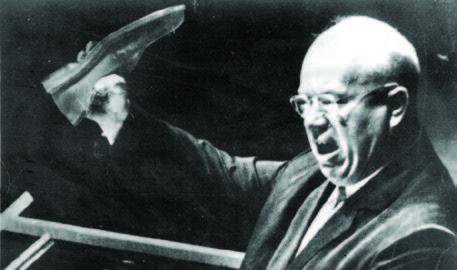
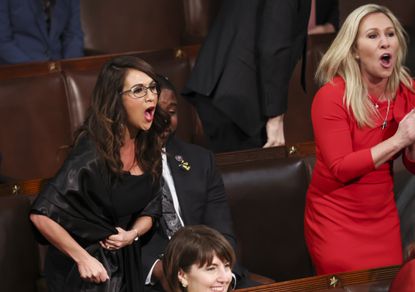
And I can’t help but wonder if this tendency might have something to do with moon-faced Vladimir Putin’s waging war on Ukraine as he nostalgically looks back on the post-Stalinist era of his youth, on good ol’ Nikita banging on a UN desk with his shoe, a lapse of protocol that makes Marjorie Taylor Greene’s and Lauren Boebert’s screeching during Biden’s the State of the Union address seem downright urbane.
The 60s, the good ol’ days
owning the libs
Putin wants to restore the Soviet Empire, a project not unlike restoring the Blade Runner set. Look, I spent twenty-eight days in the Soviet Union in 1989, and I’d never witnessed a population more depressed, especially in Leningrad where virtually every face I encountered was stamped with despair.
If you’d like, you can click HERE for a side trip that offers more specifics on the despair.
Ah, yes, 1989, fun times in the Evil Empire
To be fair, Putin did a fairly good job of fostering a middle class, even in a Kleptocracy, that is, up to now.
At any rate, Putin is suffering from some malady, perhaps Parkinson’s, as his shuffling gate and clenched fist suggest, or perhaps he’s had a stroke. At any rate, he’s obviously on steroids, and some have even suggested his belligerence is rooted in “roid rage.”
What’s the diagnosis? Immunosuppression, metastatic cancer, frontal lobe tumour, steroid abuse, other autoimmune disease, Botox with fillers, Parkinson’s disease, dementia, tertiary syphilis with delusions of grandeur & Hitler fixation, psychosis or simply NFP (Normal For Putin)? pic.twitter.com/MGuuUE8p4T
Given the six-thousand nukes he has at his disposal, it’s pretty damned scary. I remember in the fourth-grade squatting under desks during the Cuban Missile Crisis in duck and cover drills[2].
Now, with my bad back and aching knees, I’m not sure I’m capable of squatting, so let’s pray –if we pray and hope if we don’t – that Putin shows some restraint. He does, I hear, have to daughters via his first wife and four more with a mistress, an Olympic gold medalist gymnast, who, no doubt, is very adept at squatting.
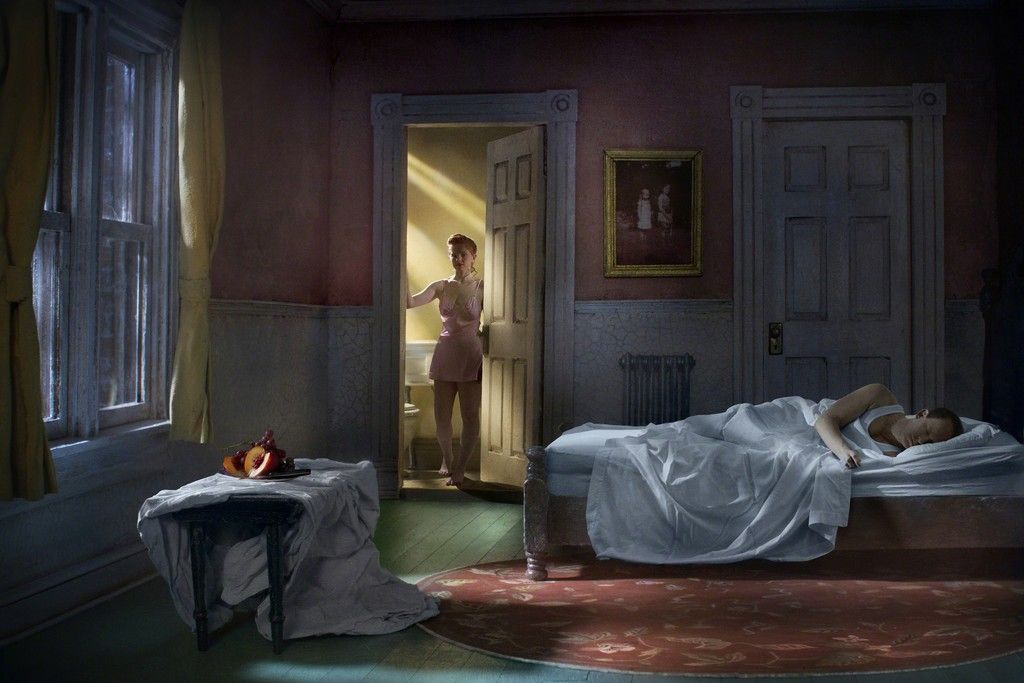
Richard Tuschman, Pink Bedroom (Still Life at Night)
“Sonnet-ish: What Can I do, Dad?” “Nothing, son.”
He quit watching the news, quit his book club, quit shaving. Let the subscriptions lapse.
Sleep became a hum, dreams dubbed like foreign films, the phlegmy rasp of his breathing a cause of concern not broached by Mama or me. He did trudge off to lecture until the dean dismissed him.
Near the end he called out from his bed Mama was out running errands. “Yes sir?” I said, cracking open the door. “Sleep, I need to sleep.” I was fifteen. “My dreams,” he said, “all take place in this room, ghosts, floating above the bed, gossipy whisperers.”
I’ve been devoting un-precious moments of my wee-hour insomnia thinking about Vladimir Vladimirovich Putin.
[Swoosh]
He’s lying on his back in a crib or cradle kicking his little legs and waving his little arms.
Grandmother, Mother, and Baby Putin
[Swoosh]
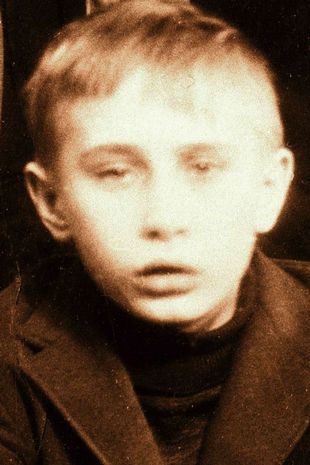
He’s in middle school, pasty and sawed-off[1], targeted by bullies who stink of B.O and Turkish cigarettes.[2]
[Swoosh]
Now, he’s sitting at the end of a table, a fifth of an American football field[3] from his nearest underling.
(Photo by Alexei Nikolsky\TASS via Getty Images)
In a recent NYT op-ed piece. Madeleine Albright, who spent three hours with Putin when she was Clinton’s secretary of state, described him as “reptilian.”
Exhibit A
Exhibit B
Exhibit C
So obviously something went terribly wrong with him somehow, somewhere.
He claims to have revered his parents, so they must have loved him – or maybe not.
A bad seed?
I bet it’s complicated.
Then end product is overcompensation. Why all the overcompensation?
Overcompensation, micro and macro.
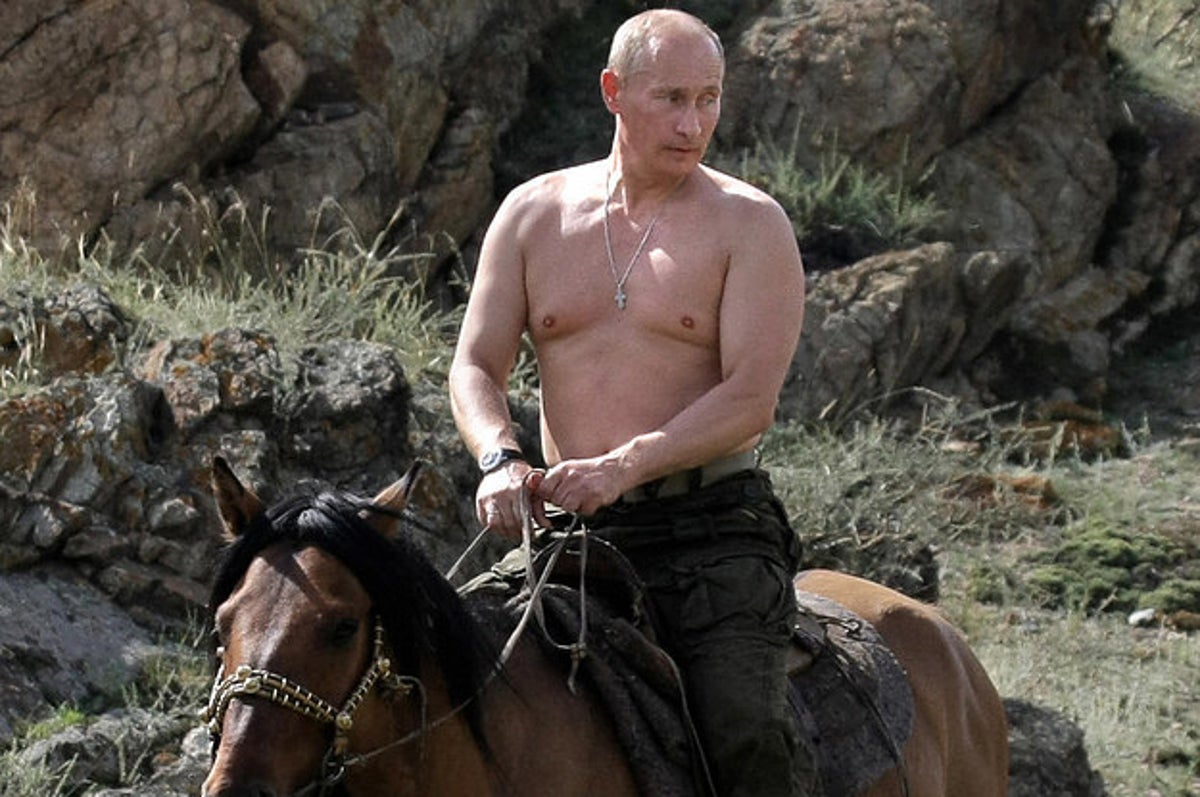
Micro: Judo black belts, bare-chested horsemanship.
Macro: Resurrecting the former Soviet Union.
In the irrational pre-dawn of my depressive sleeplessness, it seems we’re regressing, devolving, that even in the US democracy is disappearing.[4]
Meanwhile, In Ukraine, babies lie on their backs, kick their little legs, wave their little arms.
[2] I spent twenty-eighty days in June of ’89 in the Soviet Union. Anonymous high rises galore, the stench of Turkish cigarettes, shuffling pedestrians everywhere looking down at the sidewalk.
Putin’s citizens are more prosperous, less woebegone. He’s popular, especially among the countryfolk, c.f. Trump
[3] Approx. twenty yards, two first downs, i.e., 18.288 meters, give or take a centimeter or two.
[4] Folk wisdom insists “that just before daylight is the darkest hour.”

















 You Do Hoodoo