Screen-Faced Nation

Megan Posey

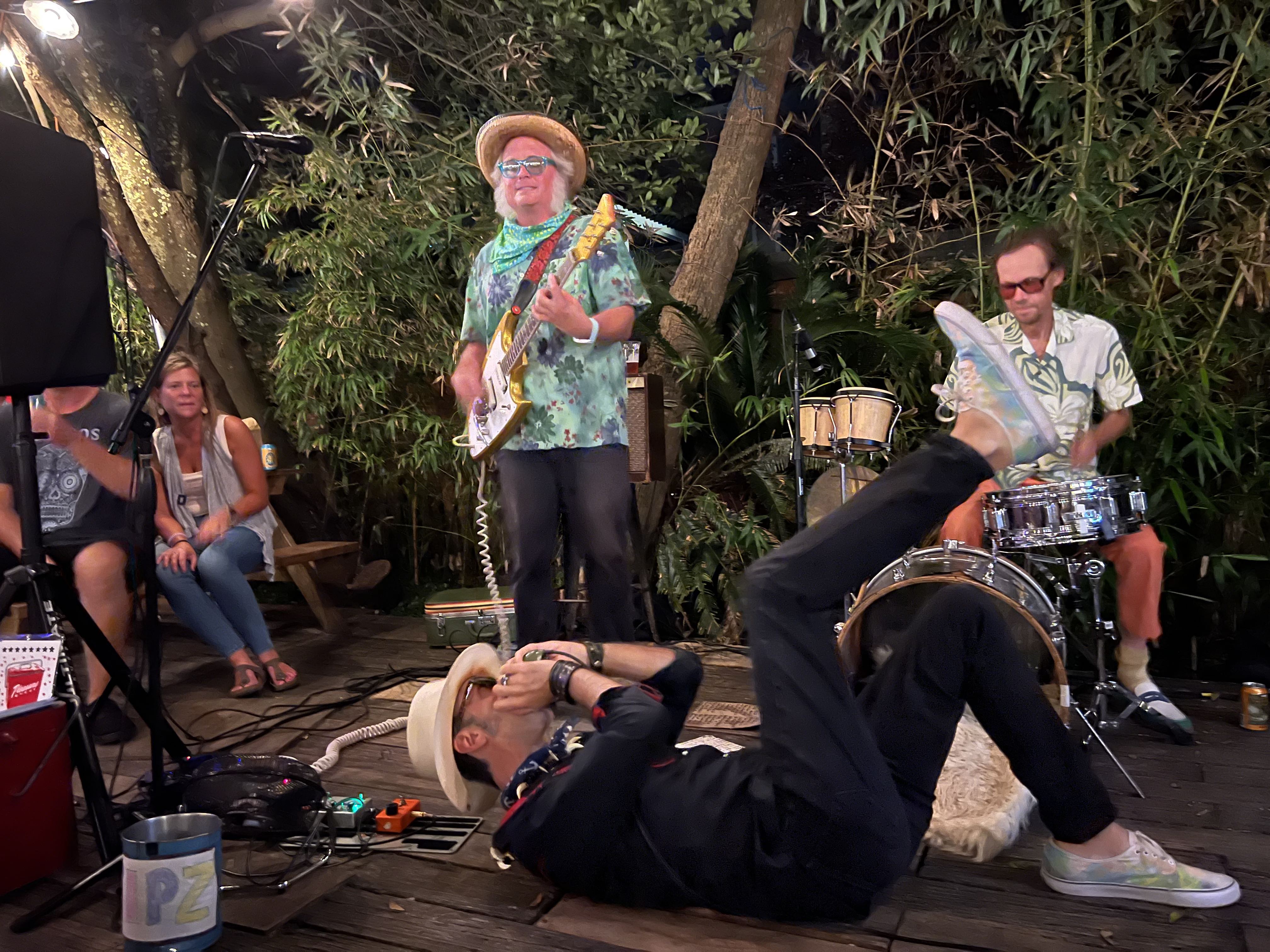
George Fox’s Monday Night extravaganza known as the Singer/Songwriter Soapbox provides local musicians and poets a venue to showcase their original works, and many of them are damned good, like Jason Chambers, Chuck Sullivan, among a host of others.

Last night Megan Posey recited – not read – recited “Screen-Faced Nation,” a performance you can check out in the video below. This twenty-something has some serious chops. Check her out.

Note: the incompetent videographer [embarrassed throat clearing] didn’t start shooting until the fifth line, but you can read the entire poem below the video.

Screen-Faced Nation

by Megan Posey

I’m reporting to you live from Addictionville, USA

Found in the collective mind of humankind

Where substances and behaviors disguised as property investors

Develop land on top of your bulldozed dopamine receptors

Uppers, downers, booze, gambling, sex, shopping and food

Are just some of the towns long established moguls of real estate

The city was historically inhabited by massive huddles of the tired and poor

And though many transients were lured in by the pleasure and escapism that dangled as bait

It was an exit on the interstate that you would probably just ignore

But that is clearly that is no longer the case

We’ve become a needle-armed, powder-nosed, screen-faced nation.

Pundits are puzzled over what led to the gentrification

But I’d like to shift your attention back to 2010

When we had just demolished OxyContin

And nicotine was undergoing renovation

The cigarette was outdated but we hadn’t yet created

A plan to market vaping to the younger generation.

So there was some land available in town

And a growing family looking to settle down

That’s when Social media began to break ground

And construct their now all-encompassing compound

But look beyond the flimsy facade of connection

And you’ll see an opium den filled to the brim with junkies

Fiending for their next self-esteem injection

This just in

Property crime in the area has now reached an all-time high

Your focus, motivation, and creativity are being jacked in broad daylight

But the truth is you hand them over without so much as a fight

See, you were so scared of getting left behind

That you closed your eyes and got in line with the blind

Until one day you woke up with your head pounding on a cold, hard floor

You tried to escape, but what did you find?

The foyer had turned to a labyrinth of corridors

And there was just no easy way out anymore

Even if you could manage to free your mind

These days you still gotta have at least one foot in the door

It’s sad to watch people waste their whole lives in this podunk town

They’re like stillborns in the underbelly who never started to crown

A real individual could have been born and that’s a hefty cost

But so long as you search outside of yourself for the way

It does not matter what turn you take, you will always end up lost

In the unnavigable wasteland of Addictionville, USA

The Hoodoo Honky Tonk

The Hoodoo Honkey Tonk

for Stev Jam*

Taking the backroads from Allendale
to Statesboro, I spotted
a hand painted road sign that read

“Hoodoo Honky Tonk two miles ahead.”

Beneath it, nailed to the same post,
a smaller sign, with two words:

Cold Beer.

It was just now getting dark.
I was about halfway there.
Hey, why not? A couple of beers
might do me good, so I
slowed down so not to hurtle
past and have to turn back around.

There it was, just ahead,
on the right, a tar paper
shack with a rolling sign up front,
a couple of letters missing:
Ho Doo Honk Tonk.

The door was propped open
with a brick and a window
with a lit-up Bud Lite sign.

Dark inside, a roughhewn bar
in the back. Against a wall sat
a conked-out jukebox you could tell
quit working a good whiles back.

One customer on a stool.
A fat boy behind the bar.
The customer a woman
facing out. Couldn’t
of weighed more than eighty pounds.
Something bad wrong
with her, late-stage cancer
I would guess.

“Hello, stranger,” she said.

Her voice – how to describe
her voice? – imagine two sheets
of sandpaper soaked in ‘shine
scarping against one another
rasping raspier than a rasp.

She wore an Atlanta Braves cap,
her stringy grey hair pulled back
into a ponytail, a fashion faux pas
cause you could see her jug ears
sticking out like a satellite dish.

“Good evening, Ma’am,” I said.

“All we gots is beer.
Pabst, Bud Lite, Miller, Miller Lite,
and Schlitz Malt Liquor in a can.”

“A Bud,” I said, “that sounds alright.”

“Lonnie” she rasped, “get this gentleman a Bud.”

“I ain’t deaf.” he snarled.

“You own the place?’ I asked.

“Yep, but not for long. Doc says I got days left,
a week or two at the longest.”

Damn, what do you say to that?

“Damn, sorry to hear,” I said.

“Look, Mister. I need a favor, a huge one.
I wouldn’t ask if
I wasn’t desperate.”

“Oh shit,” I thought, “stopping here was a mistake.”
I could see now she was all drugged out
or drunk or both.

“I need you to make love to me,
a man to make love to me
one last time, to remember
what it feels like. Ain’t no one
come in here no more. I ain’t got
to kin, no friends, just Lonnie
over there who is as sick and tired of me
as I am of him.”

Damn, what do you say to that?

“Um, I wish I could, could accommodate you,
but I have this fiancée. (A better lie
would have been that I was gay,
but I’ve never been too good
at thinking on my feet).

She sort of snarled a smile.
“It would be a saintly act,
but I understand.”

In the long silence,
a couple of trucks swooshed past.

“How much do I owe you,” I asked.

“On the house, baby doll. Money don’t
mean nothing to me no more.
Nothing means nothing
to me no more. No friends,
no kin. In a year my memory
will disappear, nobody will
remember that once I was a pretty
good looking redheaded gal.
No trace of me left.
Nobody will remember me.”

“Wait, a minute,” I said.
“I’m a writer who sometimes
gets shit published. I could write
this story, and in the story
make love to you, pick you up
and carry you like a child
to that trailer across the road.
People would read the story
for years maybe. You’d be
remembered.”

She looked at me long and hard.

“Fuck you,” she said.
“It’s time for you to run along.”

So, I left but halfway wished
I’d given it a try.

“A saintly act” she had said.


  • I.e., the blues guitarist Steve James

A Teacher’s Recommendation for Holden Caulfield

image courtesy of Early Bird Books

Just for the hell of it, since I’m soon to become a YA author, I decided to reread A Catcher in the Rye.[1] Although Salinger wrote the novel for adults, it was until recently a mainstay in high school English curriculums. However, because sixteen-year-old first-person narrator Holden Caulfield frequently spews vulgarities, occasionally references sexual encounters, smokes like a fiend, and uses alcohol to excess, the novel has also been a favorite target of priggish parents demanding it be banned, not only from classrooms, but from libraries as well.[2]

As a teacher, I never explored Catcher in class but did include it on ninth grade independent reading lists. Unfortunately, most of my freshmen didn’t like the book – some even hated it – because they considered Holden too negative, too judgmental.[3] I will add that my former school lacked (and still does) a vibrant counterculture to counterbalance the preppies, jocks, and Jesus followers who dominate social life. Perhaps if we had had a more diverse student body, more hipsters and out-of-the-closet gays, old Holden would have had more admirers.

Hey, I’ll admit Holden can be off-putting. He’s self-centered, whiny, and way too judgmental, but he’s not self-righteous. A frequent target of his own disapprobation, he acknowledges his own immaturity, admitting that although “seventeen,” he “sometimes acts as if [he’s] about thirteen.”  Nevertheless, he’s not, as  Kaitlyn Greenridge, claims, an asshole:

I think it’s a detriment to how that book is taught that so many people feel like [Holden’s assholedom is] somehow a new revelation that nobody has talked about before, when, hopefully, a teacher teaches that book as like, this guy is an a-hole. We’re going to read about him. He’s going to piss you off. And we’re going to talk about how the author made that happen on the page and what are the things that are making you mad about this character. And then, hopefully, the next level is, you’re all the same age as this character, so what are the things that this character is doing that’s similar to what you are doing right now . . .

My go-to guy when it comes to asshole designation is Aaron James, whose book Assholes, a Theory defines an asshole as someone who “systematically allows himself to enjoy special advantages […] out of an entrenched sense of entitlement” and who “is immunized by his sense of entitlement against the complaints of other people.”[4] This definition certainly doesn’t describe Holden, who is rather generous. For example, he lends his coat to his roommate Stradlater and his turtleneck to an unpopular student, a mere acquaintance.[5]  Later, unprompted, he donates ten dollars, a considerable amount of money in those days, to nuns he encounters at a diner.  Also, he’s not at all vindictive. He may be many things, but according to Aaron James (and I-and-I), he’s no asshole.

I950s teenagers hanging out

Okay, what is he then?

He’s a depressed, alienated adolescent grieving for his beloved dead brother; he’s a fallen idealist who treasures childhood innocence but has been pushed beyond the brink of coping – in other words, he’s a crazy, mixed-up kid, literally a crazy mixed-up kid.

When I read the novel as an adolescent, I identified with Holden because I, too, was a lapsed idealist, a developing cynic angry that the “real world” didn’t adhere to the platitudinous blandishments of teachers and coaches who told us the good guys always come out on top. Of course, it was stupid of me to be so naive. After all, I had floated down the Mississippi with Huck and Jim, hung out on an island with Ralph and Piggy, and come to think of it, had sat in a segregated waiting room for my doctor’s appointments.

We don’t know what will become of Holden. Although I don’t find the ending optimistic, I do wish him the very best.

I’ll give him the last paragraph:

“Anyway, I keep picturing all these little kids playing some game in this big field of rye and all. Thousands of little kids, and nobody’s around – nobody big, I mean – except me. And I’m standing on the edge of some crazy cliff. What I have to do, I have to catch everybody if they start to go over the cliff – I mean if they’re running and they don’t look where they’re going I have to come out from somewhere and catch them. That’s all I’d do all day. I’d just be the catcher in the rye and all. I know it’s crazy, but that’s the only thing I’d really like to be. I know it’s crazy.”


[1] Reckless confession. I’m not a fan of YA. One reason I didn’t enjoy teaching seventh grade was having to spend hours in a house on Mango Street and other adolescent haunts.

[2] Ezra Pound’s phrase, “vice crusaders farting through silk” comes to mind.

[3] Most of my students, like Holden, were wealthy, so at least they didn’t complain that he should be thankful for his cushy life.

[4] See Donald Trump.

[5] The acquaintance, James Castle, throws himself out of a dorm window while being mercilessly bated by a gang of dorm-mates, who do qualify as assholes. Although Holden doesn’t try to intervene, he’s sympathetic. He’s no hero and more than once describes himself as “yellow.”

A Certain Girl

Pleasure Chest in action

I’m somewhat embarrassed to admit that until last night I didn’t know that “A Certain Girl” was an Ernie K-Doe tune. I only knew the song from the Warren Zevon cover. Thanks to the killer Asheville band Pleasure Chest for educating my ass.

Here’s a snippet of Pleasure Chest’s cover and the original below that.

Your turn, Ernie.

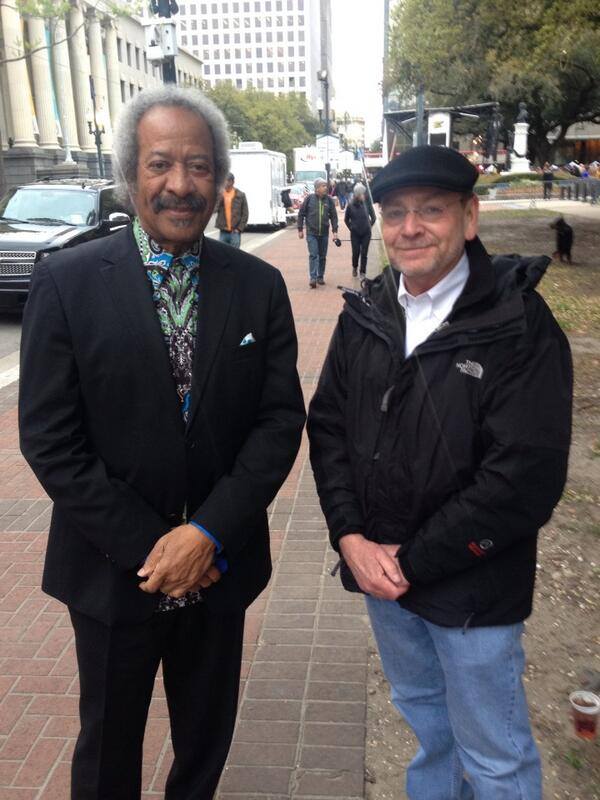
PS. I just got reeducated by my friend Jake. Allen Toussaint wrote the song, not Ernie K-Doe.

BTW, here’s a photo of Jake and Allen himself.

Allen Toussaint and Jake Williams

In Memory of Seamus Heaney

When you get to be my age, i.e., the ol’ “three score and ten” of Psalm 90, the years can seem like a blur, so when I opened Facebook this morning, I was surprised that already nine years have passed since the great Irish poet Seamus Heaney’s death at 74. Although it is commonplace now to hear somebody call 70-something sort young for death, Heaney’s mortal dress was more than a little tattered – he looked frail, every bit of three score and fourteen – and it appears that a mere fall did him in. 

among school children

I first became enamored with Heaney in 1978.  Ashley Brown, a former professor, invited me to dinner at his house on Barnwell Street not long after he had garnered a bit of fame for appearing frequently in The Habit of Being, a collection of Flannery O’Connor’s letters.  It was a memorable evening with Dr. Brown as he hauled out personal photographs of him and O’Connor and also of his dear friend Elizabeth Bishop, whom he had brought to South Carolina for a reading when I was still in graduate school.[1]  During the evening, he asked me if I had heard of Heaney, and when I admitted I hadn’t, he whipped out a couple of poems, so as soon as I returned to Charleston, I purchased Heaney’s second collection, A Door into the Dark.

Of course, the 60’s were the decade of confessional poets like Plath and Lowell, poets whom my teacher James Dickey once referred to in class as “scab pickers,” poets who more often than not wrote in free verse and who demanded from the reader – at least in Lowell’s case – the patience to unravel seemingly random associations, many of which pertained to his private life.[2]  

Heaney’s verse was different – musical, earthy – its subject matter a mixture of the mundane and the political strife of Northern Ireland.   Here he is in “The Outlaw” describing in loose iambic couplets a bull mating with a cow:

Unhurried as an old steam engine shunting.

He circled, snored, and nosed. No hectic panting,

Just the unfussy ease of a good tradesman;

Then an awkward unexpected jump, and

His knobbled forelegs straddling her flank,

He slammed life home, impassive as a tank.

Dropping off like a tipped-up load of sand.

“She‟ll do,‟ said Kelly and tapped his ash-plant

Across her hindquarters. “If not, bring her back.‟

I walked ahead of her, the rope now slack

While Kelly whooped and prodded his outlaw

Who, in his own time, resumed the dark, the straw.

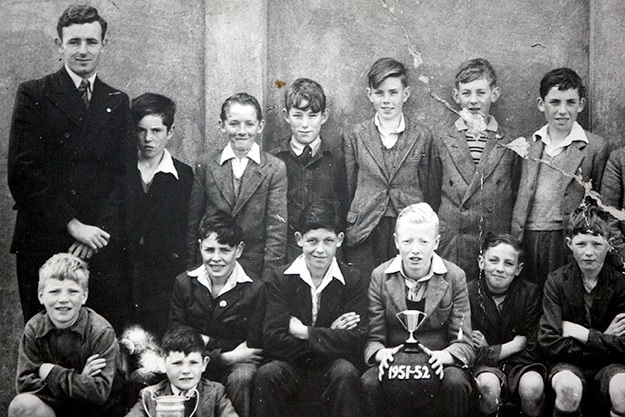
Heaney, standing, fourth from the left

Many of his poems deal with childhood experiences on the family farm right outside of Castledawson in County Londonderry.  Here’s a segment from the title poem of his first collection, “The Death of a Naturalist”:

Then one hot day when fields were rank
With cowdung in the grass the angry frogs
Invaded the flax-dam; I ducked through hedges
To a coarse croaking that I had not heard
Before. The air was thick with a bass chorus.
Right down the dam gross-bellied frogs were cocked
On sods; their loose necks pulsed like sails. Some hopped:
The slap and plop were obscene threats. Some sat
Poised like mud grenades, their blunt heads farting.
I sickened, turned, and ran. The great slime kings
Were gathered there for vengeance and I knew
That if I dipped my hand the spawn would clutch it.

Of course, Yeats is the standard for any Irish poet and an impossible one at that, but it’s certain that Heaney was the greatest Irish poet since Yeats and one who belongs in the same pantheon with the postwar English master Philip Larkin. Heaney is one of the four Irishmen to receive a Nobel prize in literature along with Yeats, Shaw, and Beckett – rare company indeed.   His loss is a great one for poetry and for Ireland – for all of us really – but old men are destined to die as Yeats reminds us on his very tombstone.  

Nevertheless, like his hero Beowulf, Heaney will live on in his verse.

Personal Helicon

for Michael Longley

As a child, they could not keep me from wells 

And old pumps with buckets and windlasses. 

I loved the dark drop, the trapped sky, the smells 

Of waterweed, fungus and dank moss. 

***

One, in a brickyard, with a rotted board top. 

I savoured the rich crash when a bucket 

Plummeted down at the end of a rope. 

So deep you saw no reflection in it. 

***

A shallow one under a dry stone ditch 

Fructified like any aquarium. 

When you dragged out long roots from the soft mulch 

A white face hovered over the bottom. 

***

Others had echoes, gave back your own call 

With a clean new music in it. And one 

Was scaresome, for there, out of ferns and tall 

Foxgloves, a rat slapped across my reflection. 

***

Now, to pry into roots, to finger slime, 

To stare, big-eyed Narcissus, into some spring 

Is beneath all adult dignity. I rhyme 

To see myself, to set the darkness echoing.


[1] Brown had also in his youth visited Ezra Pound at St. Elizabeth’s, so being in Brown’s presence put me a mere two degrees of separation from my heroes Joyce, Eliot, and Hemingway. You can read about Elizabeth Bishop’s visit to USC HERE.

[2] I witnessed a dual reading featuring Dickey and Lowell in 1974. Afterwards, I learned that Lowell detested Dickey, so there’s that.

Guest Post: Post Hoc, Ergo Procter Hoc[1]: Post Dobbs Bralessness


You Do Hoodoo is honored to welcome Archibald Ascot Anderson, Professor of Social Sciences Emeritus of the University of Greenville, who has contributed the following WesTalk. The Editors of Hoodoo (i.e. I-and-I) do not necessarily agree with our guests’ suppositions, but we do take pride providing a wide range of provocative views on newsworthy topics.

So, with no further, ado. Dr. Anderson, you’re on.

[tepid studio applause]

Um, thank you.

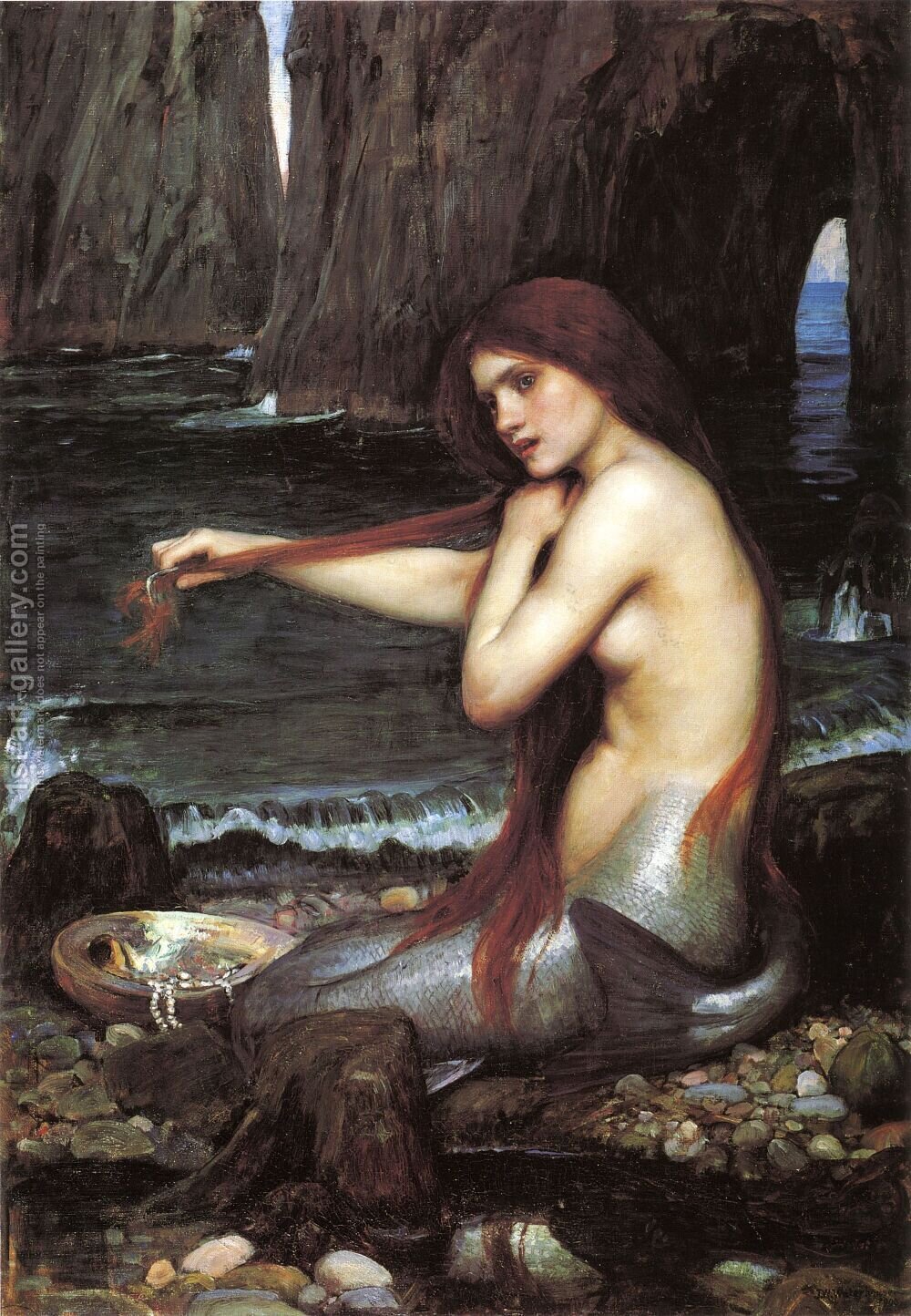
I’ll start this sensitive subject with a confession: Even more than your typical heterosexual male, I –especially in my younger days – suffered an unhealthy obsession with female mamilla. I remember when I was five sitting on the sofa of our roach-infested two-bedroom rental on Laurel Street drawing pictures of mermaids and my mother informing me that once I started kindergarten, I couldn’t draw mermaids anymore, at least not at school. I don’t remember if I asked why or not, but I do remember feeling sort of weird, wondering why it was bad.

Of course, my mother is to blame for my early obsession because, as the story goes, she breastfed me until I was three or so and only began to wean me when I began sliding my hand under her blouse and unhooking her brassiere.[2] Not surprisingly, I associated breasts with comfort, love, food, and my buxom raven-haired bovine Mama. For me, a pacifier offered no succor comfort. I’d spit it out in disgust when they attempted artificially to soothe my anxiety.

Being born in 1950 would turn out to be propitious because in the late 60s during the full bloom of my adolescence, bralessness became a thing with young women sporting halter tops, tube tops, gauzy peasant blouses, etc. And still today, even in my testostretonic-challenged semi-dotage, I find the unfettered soft sway of braless bosoms aesthetically pleasing.[3]

What has prompted me to write about such a potentially touchy sensitive subject is that I’ve noticed a marked increase in bralessness on the barrier island where I live, admittedly a spot more inclined to hedonistic behavior given its sea, salt, sand, and all that jazz.[4] However, I hasten to add, this discarding of foundation undergarments is a recent change. I recall around the 4th of July a bartender friend remarking that if he were an investor, he wouldn’t be buying shares in the Bali or Maidenform corporations. He smiled, I smiled. We’d noticed. We dug.

Last week, a colleague texted from New Orleans and in a postscript added, “I’ve been here 8 hours and haven’t encountered one bra.

Based on these two examples, I think we can say confidently that bralessness is on the rise. But what are the factors that have contributed to this fashionable discarding?

I have a theory. Women shedding the undoubtedly uncomfortable harness is, whether conscious or unconscious, a reaction to the Dobbs-Sayonara-Reproductive Rights decision of 24 June 2022. Women have had it. They’re not going to take it anymore.

It’s possible, no probable, and with that, I bid thee a fond goodnight. I just can’t talk about it anymore.

[tepid studio applause]

Well, thank you, Dr. Anderson, for your fascinating theory. Of course, we welcome your feedback. Do you think overturning Dobbs has prompted an increase in bralessness? Let us know by flinging your two cents worth in the comments box.

And stay tuned for next week’s WesTalk when Congresswoman Nancy Mace will discuss what it’s like standing in line waiting a turn to be photographed with Donald Trump.


[1] “After this, therefore because of this” – an informal fallacy which argues A occurred, then B occurred, so A caused B. E.g., I didn’t wear my lucky Gamecock baseball cap; therefore, USC lost to Clemson 55-10.

[2] BTW, breastfeeding was the opposite of “all the rage” in the early 1950s with Ike and Mamie in the White House. At least in the small provincial Southern town (pardon the redundancy) where I was reared, breast-feeding was for poor people. (Also, c.f., Toni Morrison’s Son of Solomon.)

[3] In, of course, a wholesome, detached non-objectifying way. By the way, since my near fatal pickleball injury in 2018, I have been confined to a wheelchair.

[4] In fact, it ranks second to Nashville as the most popular bachelorette party destination on the East Coast.

Brat Power

image by Wesley Moore

brat, noun

a disparaging CHILD specifically an ill-mannered annoying child, a spoiled brat

b: an ill-mannered immature person

                                                Merriam Webster On-Line Dictionary

the perverts, the perverters of language,

    the perverts, who have set money-lust

Before the pleasures of the senses

                                                Ezra Pound, “Canto XIV”[1]


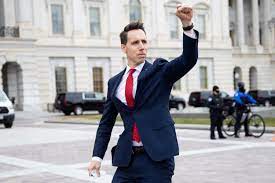
Perhaps modeled on Josh Hawley’s raised fist on 6 January as the Senator from Missouri manfully strode past the soon-to-be insurrectionists, Donald Trump has in recent days been photographed clenching and raising his Pinocchio-sized paws in an obscene appropriation of the Black Power salute of the 1960s.[2]

This gesture has replaced the two-thumbs up pose Trump favored in those halcyon days before the confiscation of classified documents he had stolen from the National Archives, those relatively placid days of mere impeachment, Congressional hearings, attempted election overthrowing, and income tax evasion.

I mean, come on. Trump’s ripping off the iconography of Huey Newton and Bobby Seale is sort of like Vladimir Putin twisting his legs into the lotus position and reciting the Sermon on the Mount.

I mean, you raise your fist to defy the Man, not to spur on a latter-day incarnation of the KKK.

Donald Trump and Josh Hawley are the Man, in favor of teargassing peaceful Black protesters.

“Why can’t you just shoot them? Just shoot them in the legs or something?” Trump asked his Secretary of Defense Mark Esper.

Not Power to the People but Power to the Elite.

Brat Power, not People Power.


[1] The irony is not lost on me that I’m quoting a fascist poet here, doing in a lesser sense what I’m accusing Trump and Hawley of doing.

[2] Of course, Hawley’s jogging exit from the capitol during the riot was not, shall we say, the stuff of the traditional Western hero, not the stuff of Hercules – or Andy of Mayberry for that matter.

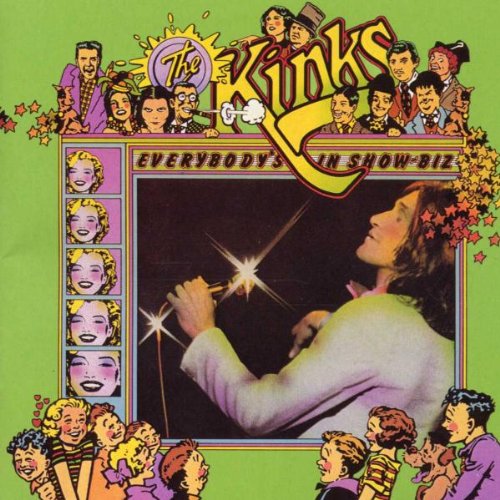
Everybody’s in Showbiz

The democratization of media means that we’re all stars now. Self-styled comedians flood TikTok with their bits, musicians upload videos, retired English teachers with lowly BAs spew cultural observations in blog posts as if they’re social scientists.[1]

You don’t need any talent or expertise to do any of this, only the right software and an internet connection.

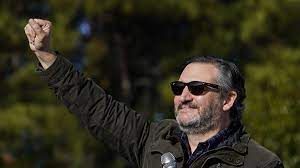
Seems as if everyone, whether it be Marjorie Taylor Greene or Mr. Disgruntled Cattleman from Wyoming, has the infomercial eye-contact, emphatic-hand gesturing down as they look you in the eye from whatever sized screen they appear on.

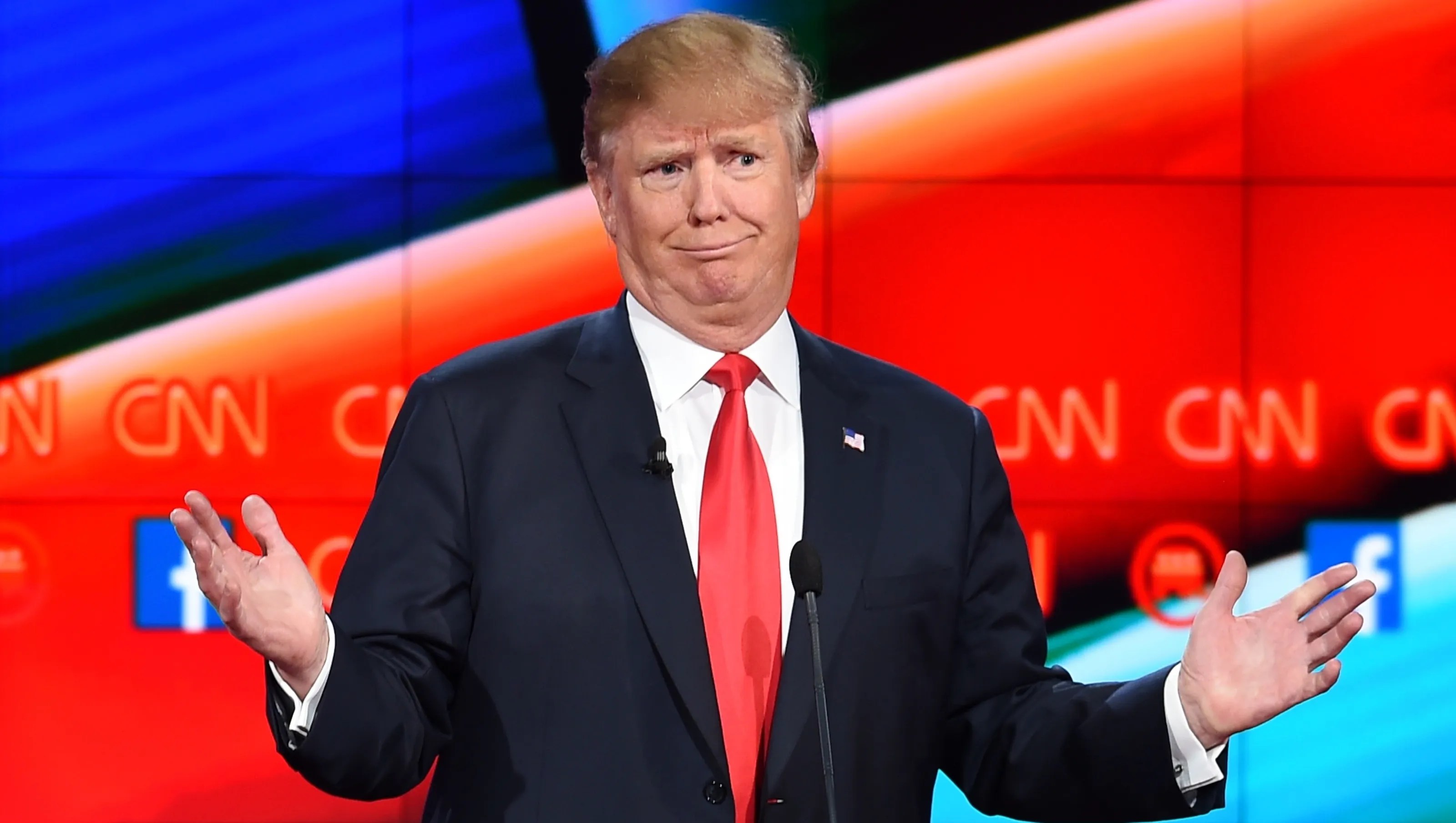
I noticed years ago that Trump himself had incorporated some stand-up body language in his rallies, particularly the [cue New Yorker sarcastic voice] who-would-have-thunk-it shrug.

More than ever, politics has morphed into showbiz. Do the above-referenced MTG and her not-all-that-comical sidekick Laura Boebert ever attend committee meetings, or is all they do is hold mikes and pace back and forth pretending that they’re rightwing incarnations of Paula Poundstone? [2]

Seems like a waste of taxpayers’ money from where I’m scrolling.

Oh, yeah, then there’s this, not to be outdone.


[1] That would be I-and-I, Dear Reader.

[2] Marjorie Taylor Greene has been stripped of her committee assignments, so in her case, the answer is no.

Words, Words, Wordle

Brain Food

Polonius: What are you reading?

Hamlet: Words, words, words.

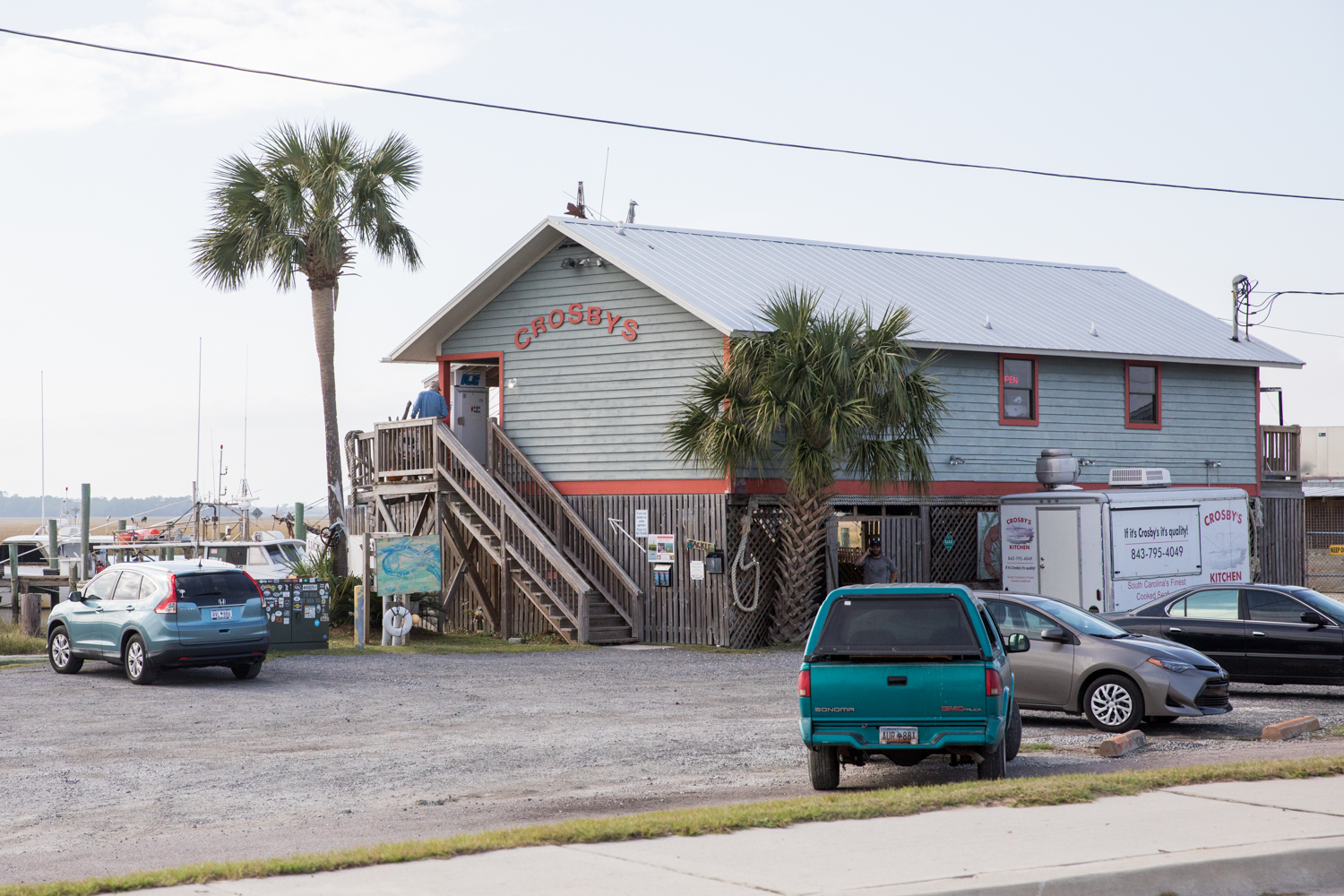
I rationalize my obsession with word games by thinking of them as therapeutic strategies to stave off senility. By working through the NYT, Washington Post, and New Yorker crosswords each day, the reasoning goes, I’m keeping my synapses clean, firing them like sparkplugs, raging, raging against the dimming of the light. A simpler and more truthful explanation is that I enjoy word games, and if I really cared about my cognition, I would replace my daily rounds at Chico Feo with trips to Crosby’s Seafood Market to stock up on salmon, trout, albacore tuna, herring, and sardines.[1]

Anyway, of all the on-line opportunities for etymological engagement, my favorite is the New York Times’s Spelling Bee. And no wonder. I’m literally[2] a genius at it.

See for yourself.

Here’s today’s game. I’m one word short of achieving Queen Bee status and have until 3 AM to find that last, remaining, elusive word (one that I’ve probably never encountered).

A word game I really suck at is Scrabble Grams, a subsidiary of the Scrabble Empire, copy right circled R.  As in Spelling Bee, you must unscramble seven “tiles” into words, the longer the more profitable, a seven-letter word yielding a 50-point bonus.  Essentially, you’re playing a game of Scrabble against Samuel Johnson and Noah Webster, and in that sense, the best you can hope for is a tie.

That I’m good at Spelling Bee but bad at Scrabble Grams lies in the layout. I react to the circular much better than the linear it would seem.[3]

Wordle, which has taken the world by storm, is as much a logic game as it is a word game. You have five chances to unscramble a jumble of five letters, and as you progress down the grid, you can see a dwindling number of letters available, so in essence, you’re engaged in deductive reasoning.

Today I lost, ruining my streak, despite having the first three letters in place by the third row.

Wordle 407 X/6

⬛🟩🟩⬛⬛

⬛🟩🟩⬛⬛

🟩🟩🟩⬛⬛

🟩🟩🟩⬛⬛

🟩🟩🟩⬛⬛

🟩🟩🟩⬛⬛

Oh, woe is me, alack and alas!  How all occasions do inform against me! Fie on it! Fie!

Hey, but there’s always tomorrow and tomorrow and tomorrow . . . but then again one day there won’t be a tomorrow, and then again, that’s a consummation devoutly to be wished, according to Hamlet, who after almost three acts worth of peppering Polonius with barbs, eventually stabs him to death.

So, Hamlet is finally successful in shutting him up.

The sword is mightier than the pen, you might say.

And with that, Adieu!


[1] Oh, but the Little Devil on my shoulder is citing clinical studies that claim that social interaction is beneficial for the elderly.

Here’s a sample, “Results: Qualitative analysis identified eateries, senior centers, and civic groups as key places to socialize. We identified significant positive associations between kernel density of senior centers, civic/social organizations, and cognitive function. Discussion: Specific neighborhood social infrastructures may support cognitive health among older adults aging in place.

BTW, Chico Feo is technically an “eatery” and Hamlet calls Polonius a “fishmonger,” though he’s probably using slang for “procurer” as in “pandar” or “pimp” rather than a merchant of high fatty fish that enhance mental acuity.

[2] A very dangerous adverb, yes, a precarious modifier (though not literally).

[3] By the way, I’m an atrocious speller, as my regular readers have no doubt noticed.

Monsoon Season

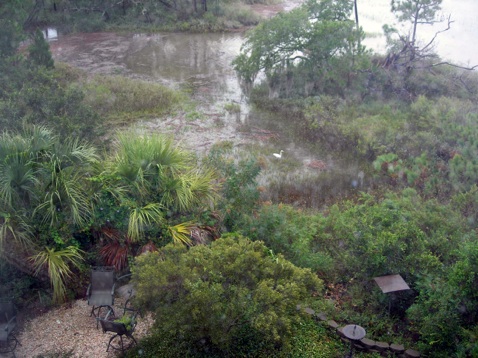
Oh, I say let it rain every day.  Pour.  Flood the Crosstown.  Swell the Edisto.  Let the weeping sky paint the marsh even greener so mosquitos swarm and bats dive and devour and thrive. Out on the deck when I see their zigzagging swoops and hear the frogs croaking, I know that our habitat is healthy.  

the green, green marsh of home

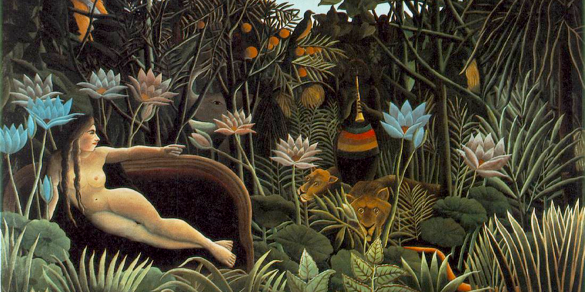
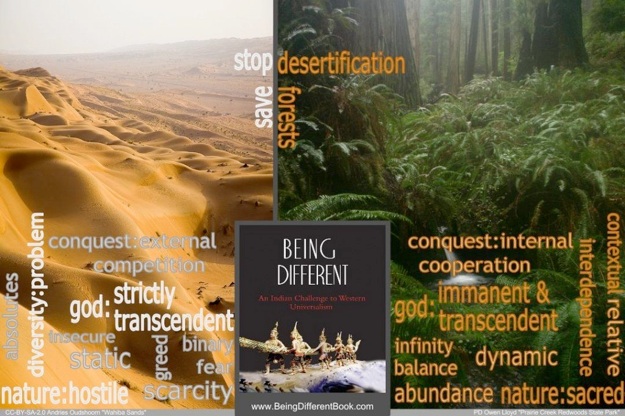
Give me a jungle any day over a desert.  Jungles, which are pro-life/pro-women, give rise to animism and soulful art; deserts, on the other hand, are anti-life/anti-women, give rise to tyrannical patriarchies and edicts against pictorial art.  In the jungle everything has soul; in the desert virtually nothing does.  

A combination photo of the 180-foot-high Buddha statue in Bamian, central Afghanistan on Dec. 18, 1997, left, and after its destruction on March 26, 2001. (Muzammil Pasha, Sayed Salahuddin/Reuters)

Allow me to save a hundred or so words:

Here is Rajiv Malhotra’s take on the difference between jungle and desert cultures:

The difference in attitudes toward order and chaos is one of the chief differences discussed at length in the book [i.e., Malhotra’s Being Different: An Indian Challenge to Western Universalism]. It is worth considering why the Indian religious imagination so unequivocally embraced the notion of diversity and multiplicity while others have not to a similar extent. Since all civilizations have tried to answer such existential questions as who we are, why we are here, what the nature of the Divine and the cosmos are etc., why are some Indian answers so markedly different from the Abrahamic ones?

Sri Aurobindo offers us a clue. In Dharmic traditions, unity is grounded in a sense of the Integral One, and there can be immense multiplicity without fear of “collapse into disintegration and chaos”. He suggests that the “forest” with the “richness and luxuriance of its vegetation” is both an inspiration and metaphor for India’s spiritual outlook. A quick look at world cultures and civilizations reveals how profoundly the geography and the human response to it affected those cultures. So it may well be that the physical features and characteristics of the subcontinent, once lush with tropical forests, also contributed to its deepest spiritual values (in contrast to those that were born, as the Abrahamic religions are, in the milieu of the desert).

The forest has always been a symbol of beneficence in India – a refuge from the heat, and abundant enough to support a life of contemplation without the worries of survival when worldly ties had to be severed for the pursuit of spiritual goals. (The penultimate stage of life advocated for individuals in Dharma traditions is called “vanaprastha” or “the forest stage of life”). Forests support thousands of species that survive interdependently and contain complex life and biology that changes and grows organically. Forest creatures are adaptive; they mutate and fuse into new forms easily. The forest loves to play host; newer life forms migrate to it and are rehabilitated as natives. Forests are ever evolving, their dance never final or complete.

Of course, deserts can possess their own austere beauty, and given their lack of resources, human survival may well have depended on highly competitive survivalists whose creator was jealous and capable of drowning virtually all of his creation for wandering from the steep and stony way, and certainly the Hindu deity Kali isn’t exactly a benign creature herself, a destroyer extraordinaire but forgive me, I’ve wandered from my meteorological focus . . . 

It isn’t raining rain you know/ It’s raining violets.