Bubba, the Redneck Snowman

bubba the redneck snowman

Bubba, the redneck snowman,

had a cherry bomb for a nose,

and if you ever lit it,

you could watch his head explode.


All of the other snowmen

were content to just melt away,

but Bubba, the redneck snowman,

didn’t want to go out that way.


Then one frigid solstice night

when temperatures were in the teens,

some good ol’ boy lit Bubba’s fuse

and blew him to smithereens.


Before he could get well away,

the good ol’ boy slipped on ice,

fractured his fibula in two places

And lost half his hearing for life.


“Live by the sword, die by the sword”

is what my daddy used to say.

Choose a violent lifestyle,

and it’ll bite you on the ass one day.


Bubba, the redneck snowman,

had a cherry bomb for a nose,

and if you ever lit it,

you could watch his head explode.

Dylan Deserves a Nobel Prize in Literature, Damn It!

In my book, Bob Dylan should win the Noble Prize for literature, and before you scholarly snobs start tsk-tsking that Dylan is a mere folk-singer-rock-star- minstrel, not a poet, let me share with you these gems from past Noble-winning poets.

In this world all the flow’rs wither,

The sweet songs of the birds are brief;

I dream of summers that will last

Always!

                         from “In This World” by Sully Prudhomme

Keep dreaming, Sully.  You’ve been dead for 107 years.  Here’s another:

The vase where this verbena is dying

was cracked by a blow from a fan.

It must have barely brushed it,

for it made no sound.

Evening sunshine never

Solace to my window bears,

Morning sunshine elsewhere fares;-

Here are shadows ever.

from “A Sigh” by Bjørnstjerne Bjørnson

No doubt it loses something in translation.

When I bring to you colored toys, my child,

I understand why there is such a play of colors on clouds, on water,

and why flowers are painted in tints

—when I give colored toys to you, my child.

from “Colored Toys” by Rabindranath Tagore

We can’t blame a bad translation on that one; it was originally written in English.

Ah but not the bottle, not the chicken,

Would I touch, however fine and tender;

Nothing but herself, but Fraulein Anna!

Her I’d set upon the pony, clasping

Both my arms around her, and would gallop

All along the street, along the village,

Up the hill, and stop at Friedli’s hostel –

Then we would be married in the autumn.”

from “Puberty” by Carl Spitteler

Compare the above with this:

Darkness at the break of noon

Shadows even the silver spoon

The handmade blade, the child’s balloon

Eclipses both the sun and moon

To understand you know too soon, there is no sense in trying

or this:

Then take me disappearin’ through the smoke rings of my mind

Down the foggy ruins of time, far past the frozen leaves

The haunted, frightened trees, out to the windy beach

Far from the twisted reach of crazy sorrow

Yes, to dance beneath the diamond sky with one hand waving free

Silhouetted by the sea, circled by the circus sands

With all memory and fate driven deep beneath the waves

Let me forget about today until tomorrow.

or this:

When Ruthie says come see her

In her honky-tonk lagoon

Where I can watch her waltz for free

’Neath her Panamanian moon

An’ I say, “Aw come on now

You must know about my debutante”

An’ she says, “Your debutante just knows what you need

But I know what you want”

or this:

It was Rock-a-day Johnny singin’, “Tell Your Ma, Tell Your Pa

Our Love’s A-gonna Grow Ooh-wah, Ooh-wah”

I rest my case!


220px-Bob_Dylan_-_Azkena_Rock_Festival_2010_2

Phas 2, Part 1


“Well this stuff will probably kill you/ Let’s do another line.”

Tom Waits, “Heart Attack and Vine”


On Dummyline Road east of Slidell,

I’m standing at the counter of a dirt-floor,

concrete-block shit-hole of a juke joint

doing shots of shine

with my main man Alphonse DuMar.


There’s a black bluesman sitting on a stool

in the corner blowing bad harp,

and by bad, I mean not-good, shitty, shrieking.

I wish he’d shut the fuck up.


I’m the only white cat in this joint,

the proverbial peanut in the Hershey bar,

as we used to say back in the day

before the PC Police put the nix on colorful language.


The shine burns going down, sears my esophagus.

I shout up to Mr. DuMar,

who stands six-four-and played tight end for Tulane.


“The body ain’t no temple,”

I holler over the harp.

“It’s more like a nation,

with little white blood cell armies

that attack invading viruses,

and if you abuse a territory,

like your esophagus,

it might revolt, attack your capital ass,

rising up in a cancerous insurrection.”


Alphonse shakes his big black shaved head.


“Don’t be talking no shit like that in here, mon.”


Just then, like an answered prayer,

the harp ceases its screech.

Vowel rich intermingled speech instead.


In my head that song by the Box Tops clicks on.


Lonely days are gone

I’m a goin’ home

My baby, she wrote me a letter


Problem is I ain’t got no baby —

or no home for that matter.

Been sleeping in my van for the past six months.


It’s parked outside next to a portable sign on wheels,

one of them signs with removable letters,

a sign that says

PHAS 2

   WED NITE CRA FIS

Some thieving teenager named Willie Horton

maybe made off with the W and H.


“This shine burning a hole in my gut,” I say,

and Alphonse say, “Then just one more.”


The shine is poured,

the glasses raised,

and I brace myself for a slug of fire.


I don’t even hear the pistol go off

but feel the shot rip through my gut,

and scrunch over and howl

like Lee Harvey Oswald

on that day in Dallas.

IMF_Head-Perp_Walk

Mojo Malfunction

mojo bags


An experimental African-Chaucerian doggerel dub


Mojo bag, black cat bone,

my gris-gris ain’t working

on her heart of stone.


Adamantine-hard,

cold as Iceland steel,

it know how to beat

but not how to feel.


So I went to see the hoodoo man

down at the shaman shack.

begging for some conjuration

to launch me a love attack.


A week’s pay he took from me

and handed me a sachet sac.

He claim it reversal be so strong

it could turn Strom Thurmond black.


The very next day when the sun uprose

and I was moaning in bed,

she slid a note beneath my door,

and this is what it said:


“I done slap a ‘straining order

on your obsessive ass.

I’m sick and tired, fool,

of this never-ending harass.


“Get yo ass to the record store

and check out the Marvelettes.

I wouldn’t be your lover, baby,

if you owned 76 Corvettes.


“Listen to that song they sing,

‘Too Many Fish in the Sea.’

Cast yo line in another pond

And for Christ’s sake, let me be.”


I cry: O, what yo gonna do, mama,

when yo problems get like mine?

Take a mouth full of sugar,

drink a bottle of turpentine.


Mojo bag, black cat bone,

my gris-gris ain’t working

on her heart of stone.


Zen Lullaby

Morpheus and Iris, by Pierre-Narcisse Guérin, 1811

Morpheus and Iris, by Pierre-Narcisse Guérin, 1811

Poets for centuries have lauded the serenity that sleep can bring. From Rolfe Humphries’s gorgeous translation of Ovid’s Metamorphoses, here’s Alcyone in Book 11 addressing Morpheus, the God of Sleep:

O mildest of the gods, most gentle Sleep,

Rest of all things, the spirit’s comforter,

Router of care, O soother and restorer . . .

O, to be able to sneak off on a weeknight to Morpheus’s cave where

[ . .] No bird

With clarion cry ever calls out the morning,

Dogs never break the silence with their barking,

Geese never cackle, cattle never low,

No boughs move in the stir of air, no people

Talk in human voices.  Only quiet.

From under the rock’s base a little stream,

A branch of Lethe, trickles, with a murmur

over the shiny pebbles, whispering Sleep!

Before its doors great beds of poppies bloom

And other herbs, whose juices Night distills

To sprinkle slumber over the darkened earth.

There is no door to turn upon its hinge

With jarring sound, no guardian at the gate.

Me rather:

I wake and feel the fell of dark, not day.

We’re talking two the three a.m., brothers and sisters, the illuminated digits of the alarm clock silently progressing towards Morpheus-bereft morn and its traffic-choked slow progression to an awaiting electronic mailbox teeming with emails cajoling, demanding, chuckling, warning, applauding, joking, alerting, reminding.

What we need is a 3 a.m. surefire lullaby for adults that will allow “[t]he kind assassin Sleep” to “draw a bead and blow [our] brains out” (Richard Wilbur, “Walking to Sleep”).

However, brothers and sisters, this ain’t it:

art and lyrics by Wesley Moore

collage and lyrics by Wesley Moore

Zzzzzzzzzzzzzzzzzzzzzzz!

James Dickey and Me

james-l-dickeyIntro

Like hundreds of other po-dunk wannabe poets, I took James Dickey’s verse seminar course when he was poet-in-residence at the University of South Carolina. That semester — the Fall of ’76 – ended up being a significant one for Dickey, who in the course of its 15 weeks became a widower and a bridegroom.

I had first heard of Big Jim Dickey from my high school English teacher Mrs. Clarice Foster, who described him as “a brilliant young poet who had written a fairly good novel.” The novel, of course, was Deliverance, which came out in ’70, my senior year, two years before the release of the movie. Deliverance the movie made Dickey famous, a drinking buddy with Burt Reynolds, but perhaps exacerbated his propensity of making a colossal ass of himself.

Big Jim Dickey (by Robert Fowler)

Who started calling

Big Jim Dickey

Big Jim Dickey?

Big Jim Dickey,

That’s who.

Bobby’s poem summarized what the slumming literary crowd I hung around thought about Dickey. The cat could write dazzling poems, but his my-genius-gives-me-the-license-to-breach-the-customs-of-polite-society got old fast. He could make you feel uncomfortable, embarrassed, like your own father could in your late teens when you started to figure out a lot of what he said was bullshit. I lacked compassion back then, I thought I knew more than I did, and I now rue my lack of respect.

James Dickey was a near great, if not great poet, and I squandered a chance to learn more from him.

From “Cherrylog Road”

We left by separate doors

Into the changed, other bodies

Of cars, she down Cherrylog Road

And I to my motorcycle

Parked like the soul of the junkyard

Restored, a bicycle fleshed

With power, and tore off

Up Highway 106, continually

Drunk on the wind in my mouth,

Wringing the handlebar for speed,

Wild to be wreckage forever.

James Dickey

dickey with hatFall Semester 1976

Smiling, stooped, gregarious, he sat at the head of the seminar table wearing two or three watches on both wrists. Dickey was often – I wouldn’t call it drunk – but more like inebriated – eloquent, narcissistic, rarely bothering to comment on the fixed-form ditties he had us crank out each week.

More typically, he’d talk about himself, famous poets he’d known, the goings-on of the set of Deliverance.   He called the good-looking females in the class “Sugar Face.” One week on Tuesday and Thursday, without providing us the text to see, he read aloud the same essay by Sir Herbert Read.   No one mentioned to him the error on that Thursday when he began reading the piece for the second time – not I-and-I, not the hanger-on poets who attended the class every semester without registering, not his grad assistant.

In short, he was a terrible teacher that semester, that is, until some veins in his wife’s esophagus ruptured, which he described in class with a graphic eloquence that was at once paradoxically impassioned and detached. It was like watching a poem coming to be in 3-D – he at first thinking a burglar had attacked her when he encountered her limp body bleeding profusely on the floor of their house. He held her in his arms there on the floor as she lost half her body’s blood.

Warning: the Following Contains Off-Putting Name Dropping

Several years ago our friend Jo Humphreys, author of Dreams of Sleep and Rich in Love, invited Judy and me to a party in honor of her mentor Reynolds Price. After Jo introduced us, Mr. Price and I got on the subject of James Dickey who had recently died. Price told me he had great affection for “Jim” but that Jim was “insane” in a way that was hard to characterize and that it was impossible to be a woman and to be his friend.   Mr. Price also said that one time at a party, Dickey had picked him up off the ground and said something to the effect of that though he — Dickey — didn’t sleep with men, if he ever were to, he’d want to sleep with him — Price.
Elizabeth Bishop and Robert Lowell

Elizabeth Bishop and Robert Lowell

Fall Semester, continued

Mrs. Maxine Dickey survived that night and hung on for a month or so before she died. While she was in the hospital, Elizabeth Bishop came to campus for a reading. Dickey — or his graduate assistant — arranged for us during our class time to meet Bishop and hear her read a poem or two.   The meeting hadn’t been announced, so we followed Dickey, leading the way down the street from our classroom to a Victorian house a block away.

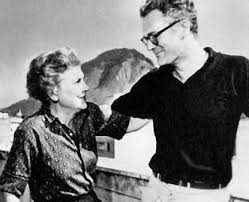
So we met Elizabeth Bishop, I ignorant of what an honor it should be. She looked like an Episcopalian grandmother with her neatly coiffed white hair and  matching plaid blazer and skirt. Her demeanor utterly contrasted with Dickey’s, like George Will versus Screaming Jay Hawkins, to make a crude analogy.

What I didn’t know was that Elizabeth Bishop and her friend Robert Lowell held Dickey in contempt. Later that night after the official reading, Dickey asked Bishop to sign some books and pose for a photograph with him and refused, saying, “Sir, I do not pose for pictures.”

One of the great things about having Dickey on campus was the writers he could summon. During my time in Columbia, in addition to Elizabeth Bishop, I got to hear Robert Penn Warren, Archibald MacLeish, and Robert Lowell.

For the Last Wolverine

They will soon be down

To one, but he still will be

For a little while    still will be stopping

The flakes in the air with a look,

Surrounding himself with the silence

Of whitening snarls. Let him eat

The last red meal of the condemned

To extinction, tearing the guts

From an elk. Yet that is not enough

For me. I would have him eat

The heart, and, from it, have an idea

Stream into his gnawing head

That he no longer has a thing

To lose, and so can walk

Out into the open, in the full

Pale of the sub-Arctic sun

Where a single spruce tree is dying

Higher and higher. Let him climb it

With all his meanness and strength.

Lord, we have come to the end

Of this kind of vision of heaven,

As the sky breaks open

Its fans around him and shimmers

And into its northern gates he rises

Snarling   complete    in the joy of a weasel

With an elk’s horned heart in his stomach

Looking straight into the eternal

Blue, where he hauls his kind. I would have it all

My way: at the top of that tree I place

The New World’s last eagle

Hunched in mangy feathers    giving

Up on the theory of flight.

Dear God of the wildness of poetry, let them mate

To the death in the rotten branches,

Let the tree sway and burst into flame

And mingle them, crackling with feathers,

In crownfire. Let something come

Of it    something gigantic     legendary

Rise beyond reason over hills

Of ice   SCREAMING    that it cannot die,

That it has come back, this time

On wings, and will spare no earthly thing:

That it will hover, made purely of northern

Lights, at dusk    and fall

On men building roads: will perch

On the moose’s horn like a falcon

Riding into battle    into holy war against

Screaming railroad crews: will pull

Whole traplines like fibers from the snow

In the long-jawed night of fur trappers.

But, small, filthy, unwinged,

You will soon be crouching

Alone, with maybe some dim racial notion

Of being the last, but none of how much

Your unnoticed going will mean:

How much the timid poem needs

The mindless explosion of your rage,

The glutton’s internal fire    the elk’s

Heart in the belly, sprouting wings,

The pact of the “blind swallowing

Thing,” with himself, to eat

The world, and not to be driven off it

Until it is gone, even if it takes

Forever. I take you as you are

And make of you what I will,

Skunk-bear, carcajou, bloodthirsty

Non-survivor.

                                        Lord, let me die       but not die


Out.

James Dickey

the author in 1976 photo by Judy Birdsong

the author in 1976 photo by Judy Birdsong

Fall Semester completed

In the other class Dickey was teaching that semester, Dickey had met his soon-to-be new wife.   He married her, one of his students, Deborah Dodsen, two months after Maxine’s death.

I myself had met and fallen in love with my future wife Judy Birdsong that semester.

Later Contact

When I started teaching high school in the mid-Eighties, I called Dickey to ask him if it would be all right if I had a student writing a paper on Deliverance phone and interview him to so he could use the author as a source.

Mr. Dickey — as I addressed him over the phone — couldn’t have been nicer. He asked what year he had taught me, who my friends were, claimed to remember me, and welcomed the student’s call.

The last time I saw Dickey was in ’97. He had selected a poem of mine to be included in anthology of his students’ work published by USC Press. There was a reception for the poets where we could buy books and have him sign them.

He was a changed man, thinner, the combover replaced by a buzz cut;  he was calmer, almost courtly. We chatted as he signed three books I had bought for my parents, my in-laws, and a friend.

I really regret that I didn’t have him sign one for me, but the line was long, and I didn’t want to be that person.

A Teachable Moment Botched

Time is the school in which we learn — John Didion, The Year of Magical Thinking

Yesterday before class, a petite, clear-eyed fifteen year-old announced that she has decided that she doesn’t want to grow old, that she wants to make great contributions to the world, and then die at 60. She added, “Mr. Moore, that means that if that happens, then 25% of my life is over!”

This is what we call in the my business[1] a “teachable” moment, and I botched it. I should have called on Alexander Pope, that four-foot, six-inch[2] colossus:

In fearless Youth we tempt the Heights of Arts,

While from the bounded Level of our Mind,

Short Views we take, nor see the lengths behind,

But more advanc’d, behold with strange Surprize

New, distant Scenes of endless Science rise!

So pleas’d at first, the towring Alps we try,

Mount o’er the Vales, and seem to tread the Sky;

Th’ Eternal Snows appear already past,

And the first Clouds and Mountains seem the last:

But those attain’d, we tremble to survey

The growing Labours of the lengthen’d Way,

Th’ increasing Prospect tires our wandering Eyes,

Hills peep o’er Hills, and Alps on Alps arise!

Although our flowers fade (I too had pretty plumage once!), the world becomes increasingly more interesting as we gain perspective, and as the social preoccupations of adolescence dissipate, the “cool people,” if given the choice, would rather hang with Charles Bukowski than Wink Martindale, with Joan Didion rather than Kim Kardashian.

Kim Kardashian

Kim Kardashian

Joan Ddidion

Joan Didion

But, like I said, I botched it. I turned to of all people Marcus Aurelius and paraphrased the following:

Were you to live a thousand years, or even thirty thousand, remember that the sole life which a man can lose is that which he is living at the moment; and furthermore, that he can have no other life except the one he loses. This means that the longest life and the shortest life amount to the same thing. For the passing minute is every man’s equal possession, but what has gone by is not ours. Our loss, therefore, is limited to that one fleeting instant, since no one can lose what is already past, not yet what is still to come — for how can he be deprived of what he does not possess?

Like, I said, I botched it. I told her and the rest of the students to think lineally only so far ahead that they can salvage more of the present for their enjoyment, in other words, to get that rough draft out of the way early Saturday morning so it won’t be squeaking like a wobbling wheel in the back of your mind all day. But I told them not to think too far into the future, not to dream about their freshman year at Duke or their wedding day or their future contributions to humanity.

I write this as my beloved is receiving a blood transfusion and have come myself to live the advice I gave those students yesterday. It’s always now. The future is not ours. The past is kaput. I hear a bird’s staccato chirp outside my open window on this gorgeous Saturday and wish him or her the best.


[1] Schools, alas, have taken on the corporate model, though they still give lip service to the “family” metaphor.

[2] 1.37 meters for my European readers

A Very Short Plea to Listen to What You Read

I’ve decided to devote the scant few years left of my teaching career attempting to get readers to sound out the music of language.

I hate that multi-taskers register words as mere mute visual signs while some MP3 drowns out the onomatopoetic echoes that very well might make what they’re reading magical. Like, for example, the auditory drop you physically feel when you read Hardy’s lines, “Down their carved names/The rain drop plows.”

Say it outloud. Feel the drop drop from your palette into the empty air.

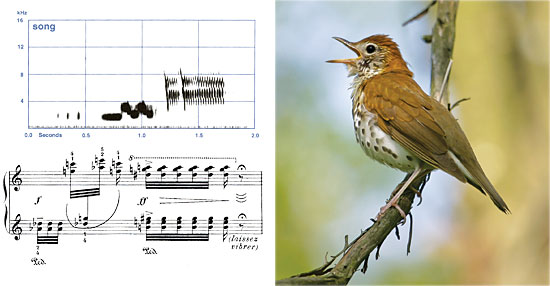
musicOr this from “The Waste Land”: “Drip drop drip drop drop drop drop.”

Say it outloud. Eliot’s mimicking the song of the wood thrush.

I hate the idea of a student sitting on a Green somewhere reading Ishmael’s killer opening riff of Moby Dick, his ears plugged with ear buds streaming Nick Drake into a brain that cognitive scientists claim hasn’t fully formed.

That can’t be good for you.

On the Rocks

photo by Wesley Moore

photo by Wesley Moore


Dost thou think, because thou art virtuous, there shall be no more cakes and ale?

                                            Twelfth Night


“Right now I need a drink.”


“What do you mean by need?”

a concerned citizen asks.


“I mean

I need a drink

the way Yin needs Yang,

Apollo Daphne,

like polio-stricken FDR

after riding six hours

in an open car

through driving rain

needed a stiff bourbon

to buck him up.


“So that’s what I mean

when I say,

‘I need a drink.’


So, kind citizen,

I mean cakes and ale.


Or better yet

a scotch on the rocks.”

Shagging

If you look closely, you can detect the traces

Of teenagers drowned in the puddles of their faces.

Perhaps this is beauty’s curse, the clinging,

King Canute by the seaside singing:

Stop in the name of love. But the aging process

Stops for no one. There’s no recess

In decay’s schoolday, no stopping the seasons,

Even if you’re sockless and sporting Bass Weejuns.

carolineshagging