Too Much Trouble – Sneak Preview

Too Much Trouble

BOOK I

Chapter One: Goings and Comings

Thornwell Dormitory, the University of South Carolina, 22 December 1972 

Crisscrossing his dorm room, Rusty Boykin wads up clothes and shoves them into a sour-smelling duffel bag. He leans over and snatches his two-tone cowboy shirt from the floor, the one with fake pearl snaps, and shoves it in on top of two pairs of faded Levi’s. Turning around, he rifles through the built-in drawers in his closet and crams into the bag the four boxer shorts he owns. After yanking the drawstring tight, he slings the duffel over his shoulder hobo-style and steps out of the room into the suite he shares with three other students. Before leaving, he checks himself out in the mirror above the sink, admiring his Keith Richards–inspired shoulder-length shag that’s sure to give his ol’ man a hemorrhage-and-a-half.

Red on the head like a dick on a dog 

His suitemates, Jersey boys, have already departed for the frigid Northland. Despite going to the University of South Carolina, two-thirds of Rusty’s dormmates hail from the Northeast while the rest come from small in-state towns like Hampton, Seneca, and Sumter. Yesterday was the last day of exams, so most students have already cleared out for the holidays.

Rusty doesn’t own a car, so he’ll get back home the way he usually does—by hitchhiking. With luck, someone will take him straight to the Summerville exit so he won’t have to hitch on the interstate. It’s no fun shivering on the side of the highway, getting wind-whipped in December as 18-wheelers roar past on their way to some soulless Kmart loading dock. Not to mention that hitchhiking on the interstate is illegal.

I-95, Robeson County, North Carolina, 20 December 1972 

Rusty’s pal Alex Jensen, better known as “AJ,” has had a socially successful but academically disastrous first semester at Hampden-Sydney College—three Ds, an F, and a lone A in freshman English. “Frat life ain’t no good life, but it’s my life,” he sometimes jokes, echoing the Willie Nelson song. The good news—if you can call it that—is that AJ’s parents have become inured to being disappointed in their only offspring, a child conceived late in life when his mother Anne was 40 and her husband Thom was 52. So they won’t be shocked when they discover AJ’s abysmal grades and that he’s been lying, having assured them throughout the semester that classes were going great.

Four hours into his drive from Hampden-Sydney, AJ’s hangover has leveled off into a dull headache. He measures his progress to Summerville by the number of miles separating him from South of the Border, a Mexican-themed tourist attraction just below the state line. An absurd number of South of the Border billboards featuring their sombrero-sporting mascot Pedro appear with increasing frequency on the drive north or south on I-95 toward the North Carolina/South Carolina border. Up ahead, AJ spots yet another billboard, this one with a giant red hot dog standing upright above a sign that reads YOU NEVER SAUSAGE SUCH A PLACE!
(YOU’RE ALWAYS A WEINER AT PEDRO’S)
SOUTH OF THE BORDER 10 MI.

He thinks, Hell, why not? I’ll stop there, check it out, maybe get a bite to eat, and take a piss.

Fun ahoy!

506 Farrington Drive, Kings Grant subdivision, Summerville, South Carolina
21 December 1972 

Jill Birdsong, a tall, slender freshman at Davidson College, opens a Christmas card from her high-school boyfriend Ollie Wyborn. A fourth class cadet at the Air Force Academy, Ollie isn’t allowed to come home for Christmas. Jill hasn’t seen him since they broke up in June just before his departure for Colorado Springs. Although fond of Ollie—she admires his intelligence and integrity—Jill has never been “in love” with him, and their make-out sessions were relatively tame—especially for Summerville’s teenage culture, where, at least once every school year, some sophomore or junior or senior suddenly disappears “to stay with her aunt for a while.”

At Davidson, Jill has had a few dates, but nothing has clicked. Just recently, though, she has started drinking socially. In high school, Jill was religious—a member of the national Christian organization Young Life—and never indulged in alcohol; however, gradually, thanks largely to her biology courses, Jill has stopped believing in the Resurrection, a change of heart (and mind) she would never share with her parents, who are devout Episcopalians but not teetotalers.

Ollie, whose lack of playfulness had always been a bit of an impediment in their relationship, has never been a believer. In fact, in high school, when Rusty Boykin once asked Ollie if he believed in God, Ollie explained that the series of events Rusty had mistaken for divine intervention was merely coincidence. Although not friends, they had been thrown together the October of their junior year after some rednecks jumped Ollie outside the pool hall. Rusty and his would-be girlfriend Sandy Welch were slowing down, looking for a parking space when they saw Ollie karate-kick one of his three assailants.  They yelled for him to jump into Sandy’s Mustang to escape—only to have the rednecks tear after them in a high-speed chase through town. The rednecks’ pick-up ended up running off the road at Bacon’s Bridge and crashing into the Ashley River.

In Summerville, fistfights are common, especially among the undereducated white male population. Ollie, originally from Minnesota, was surprised at first by the belligerence and obsessions of small-town Summerville, especially people’s fixation on what they call “the War Between the States.” Ollie has contemplated the differences between the cultures of the Midwest and South with anthropological detachment. A talented academic with a scientific bent, he finds almost everything interesting.

Ollie cares deeply for Jill, but he’s a rationalist, not a romantic, so he understands it made sense for her to nix their high-school romance when college puts two time zones and military restrictions between a couple. Anyway, his boyhood dream of becoming an astronaut is paramount, so he intends to focus his attention on that goal. He could have asked for leave toward the end of the holidays but opted not to because he’s determined to demonstrate his devotion to his duties.

Jill slides the card from the envelope, glances at the glittering snow scene, then opens it and reads Ollie’s neat, efficient cursive:

Happy Holidays, Jill. As always, I wish you the best and hope that if our spring breaks coincide, we can perhaps go to a movie or have lunch and catch up. Your forever friend, Ollie.

Poor Ollie. 

Novels Vis-a-Vis Screenplays

Novels Vis-a-Vis Screenplays

At the request of an actor who’s interested in pitching my novel Today, Oh Boy to producers he’s worked with, I’ve written an adaptation of the novel for the screen.[1] It’s not an official screenplay per se, but a roadmap for the actor to determine what scenes he will use to produce a short “teaser” reel consisting of would-be shots from the would-be movie. I have no idea how this is done. Via AI I suspect.  Anyway, with the final proofs from the novel to the right of my iMac’s screen and a blank Word document on the left, I began writing and cutting and pasting.

The good news is that originally, using present tense and employing crisp visual imagery, I consciously composed Today, Oh Boy to read like a movie progressing. For example, here’s the opening of the novel.

A mango-hued, pockmarked bulletin board hangs on a classroom wall of pale lime green concrete blocks, the bulletin board pencil-stabbed and compass point-gouged. Among the graffiti are the names of the star-crossed lovers: Sandy + Tripp. Tragic Tripp, whose body was found last week tangled in blackberry bushes along the banks of the Ashley River, his skull smashed after falling off Bacons Bridge.

S-A-N-D-Y + T-R-I-P-P.

Rusty Boykin, a skinny, freckled redhead sitting on the bulletin board row in Mrs. Laban’s homeroom, traces his index finger in the depression of Sandy’s name. He supposes it’s Tripp’s work – the letters inartistic, juvenile. Sandy hasn’t been to school since Tripp’s death, four class days ago, and now it’s Monday, and she’s still not here. She should be sitting right in front of Rusty, her honey-colored hair hanging like a curtain to her waist. 

How to adapt this for the screen?  One way, you could have Rusty tracing his finger in Sandy’s name and then suddenly cut to Tripp falling off the bridge, or you could begin with Tripp’s accident. What I did was to begin with Tripp’s last meeting with Sandy, a conversation through her open bedroom window, his leaving in a rage, jumping into his GTO, pealing off, and ultimately driving his car off the road at Bacons Bridge into the Ashley River.

Actually, Tripp’s death is what Hitchcock called a McGuffin, a misleading device that’s irrelevant to the overall narrative.  After all, Today, Oh Boy is a comedy. Its title comes from the Beatles’ song “A Day in the Life.”

I read the news today oh boy

About a lucky man who made the grade

And though the news was rather sad

Well I just had to laugh 

So, by having Tripp drive off the bridge rather than falling off the bridge, what I gain in cinematic excitement, I lose in the comic pairing of his first and last names. As it turns out, Tripp was a bully, a high school version of Trump.  At one point in the book, Alex Jensen, a junior at Summerville high, says to a friend Will, “Your last name is Trotter, you name your son Tripp, and he falls off a bridge to his death. What a surprise.”

In addition, the novel employs a great deal of what critics call “indirect discourse,” a device that allows a narrator to report what someone is thinking without using his exact words. For example, in the above excerpt, the sentence, “She should be sitting right in front of Rusty, her honey-colored hair hanging like a curtain to her waist” is rendered second-hand through Rusty’s consciousness. In a screenplay, you have to “show” rather than tell “tell,” which can lead to really awkward exposition, like you find in bad fiction like “The Most Dangerous Game”:

You’ve good eyes,” said Whitney, with a laugh,” and I’ve seen you pick off a moose moving in the brown fall bush at four hundred yards, but even you can’t see four miles or so through a moonless Caribbean night.”

That I couldn’t use direct narration or indirect discourse meant I had to omit some characters, like Camilla Creel, the impoverished girl who lives in an abandoned school bus with her mother and sister, and Weeza Waring, Will’s mother, who added several comic touches throughout the narrative.

So, overall, the script is much tidier than the novel, much more streamlined, yet not as rich in my attempt to capture the zeitgeist of Summerville, South Carolina in 1970, during integration, the beginning of the counterculture, and during an influx of Northerners moving to what at the time was a staid, conservative community.

Then again, I’m sure a professional screenwriter could do a much better job.


[1] By the way, it’s on sale at Amazon for a mere $10. 

Deus ex Machina

I been called a prodigy, but the people what call me that teach in a middle school in South Carolina, the state of the union what comes up bottom in S.A.T. scores. They ain’t used to no 640 verbal SAT scores from no twelve-year-old. They ain’t used to twelve-year-old stylists as slick as EB White, as peppery as a Wendy’s Hot Creole Chicken Sandwich. Not only can I write standard English with flair, I can speak it, too, and I mean fluent. But biologicalwise, I’m immature:

            pubic hairs creeping

            on we unripe cracker balls

            like blonde kiwi fuzz

            Shocked?

            Don’t be: it ain’t nothing but the truth dressed up in art. My current state of the biological done up like a haiku. And in my art I mean to tell the truth. And I ain’t gone to avoid the biological, which oftimes is vomitsome. I’m gone to try to take writing to a new level by making it as popular as TV.

            I know to do anything first class you got to work hard, prepare yourself, like Mighty John Milton who read everything ancient and modern, memorized the Bible from Genesis 1.1 to Revelation 22.21 with every gotdam begoted polyslab Semite name in between, It made him go blind, yes sir, but then again, I bet his dreams was something, the whole Bible saga flashing on the silverscreens of his curvy brain passages: rivers of blood, idolatry, harlots galore, battleslaughter.

Then go multiple that by Greek mythology.

            All that geography.

            Ancient geography.

            Colorful Bible maps stored in his mind like slides in a filmstrip.

            He warmed up for Paradise Lost doing his touching-toes sonnet and elegy exercises before springing off and nailing that Mount Olympus epic dive, the tens flashing down the row of critics stretching out through the centuries. Milton’s my personal hero, I’m following his path. Learning geography and learning every work in the Cliff Notes and beyond set forth by my mentor, Mr. Winfred Parsley, who teaches up at the Marlboro Day School. He’s also supplementing my education by making me learn how to dive, which he calls pay-ee; read short poems and fiction in the anthologies; watch movies, old timey movies; and listen to music, old timey music he plays on record machines.

            He’s got me reading James Joyce’s Ulysses right now, so I done read the OdysseyParadise Lost, and part of the Ulysses under his tutelage but tons more on my own before. The movies is them jumpy silent ones, boresome, German monster flicks like The Cabinet of Dr. Caligari. I like the records, though, hollering Bukka White afra-moans and jazz that bubbles up like a stew. Also this here journal he’s got me writing. He says write it like I’m talking to an “idealized self” who ain’t really me but a me like when I’m grown up and likely embarrassed by podunk pup sentiments. He says to make it “conversational,” make it sound like it’s me yapping, not to worry about the spelling or making it standard English but also to record images and memories and poems and writing exercises and that he ain’t never gone to read it, so I can be upfront honest. He says that good imaginations scare booje-wahs and you got to write for yourself and not worry bout what booje-wahs might think about you, and the only way to do that is to keep a personal journal onliest for your eyes and then after you is dead, the critics can decide if you was crazy or avant garde.

            This Mr. Parsley is just as high on me as my own teachers at McColl Middle, one of the most ineptest schools in the domains of the United States. I can’t imagine schools in Guam being more inepter. That’s my only doubt about myself, that these not necessarily setting the world on fire teachers’ confidence in me is based on them spending their lives trying to teach hundreds, maybe thousands, of Homer Jo Mizells and LaShanna Browns, crackhahs and afras, respectfully. That’s all there is at my school, so my language arts teacher Ms Hays was trying to get Marlboro Day to give me a scholarship, but it ain’t nothing but a lowrent white flight pretend prep school maybe bout to go belly up with bacca being our number one crop, so they couldn’t afford to, but Mr. Parsley taken me on and become my mentor and give me his own typewriter to keep forever that I got right here on my pallet upon which I am typing at this very moment in time – yo yo yo yo yo yo yo yo yo yo!

            But this mumbo-jumbo Ulysses ain’t no confidence builder neither. Mr. Parsley takes me sometimes to Mexicano restaurants started by migrants that ain’t nothing but a shack. But he speaks espanol fluent, and they treat him like a hermano, and he takes me there so I can hear espanol in a real life setting spoke by real Mexicanos instead of “drawling rednecks with suspect B.A.s” as he calls Mr. Postell, who roams from school to school teaching both English as a second language and Espanol. And he says that’s the way I ought to read Ulysses, like I’m listening to jazz, listening to the  migrants’ riffs of rolled rrrrrrrrrrrs, and he claims that though I don’t know what Mr. Joyce or them Mexicanos is saying, that unbeknownst to me I’m picking it up. This is gone to take me beyond my poor white trash prejudgings, like me calling afras neegrahs and Mexicanos wetbacks. 

            Mr. Parsley thinks one reason I got so much going for me is that me and Daddy never had no TV. My Mama taught me how to read when I was three cause she was dying of cancer and was afraid I’d never learn otherwise, Daddy married mobile upward, married him an Old Bennettsville girl in the Beta Club. My daddy was a dashing Croytan who could play the mandolin and sing heartbreaking songs in a high lonesome voice that got recorded by the son of Mr. Alan Lomax though they never gave him no money. By high school, Mama’d got all romanticized up on books and irrationalized so much she became a rebel, so went out and married a troubadour what drank Mabel’s Black Label and ended up joining the army. All book sense, no commonsense, my mama married him. That’s how my mama got to end up dying in s VA hospital in Charleston instead of a county one. Her dying wish was that he’d never have no TV to stunt my growth.

            My Daddy is a man of his word. He’s a loner what lives with me out in this cabin way past the bacca fields next to nowhere. And my mama’s people didn’t want nothing to do with us, cause not only because was we poor but we is what people call Croytan injuns, above the afras, but lower than crackhahs, and her class being the vanilla topping on top of crackhah culture, as far as poordunk hierarchies go; that is, they is boje-wah. Episcopalians ain’t enarmored of no mixed breeds.

            Alas?

            Un-uh. The truth of the matter is that I don’t hardly remember my mama. My daddy and me bonded early. He’d rock me to sleep every night  singing out on the porch singing. Mostly cowboy songs. Songs about getting buried on the lone prairie, little doggies, doomed women drownded and falling off horses with their light brown hair floating like a vapor in the soft summer air, and he made up his own songs, too, with my name in them sometimes. He home school me till last year when the govment made me go the McColl Middle. He keep his mandolin under his bed but can’t teach me to learn it worth nothing. All my musical talent gone into the verbmaking machine. Yippi-eye-yo-tie-yay!

            But wait a minute. What’s all this commotion outside? A UFO? I’m right now looking out the window of our cabin and there’s this – ­ you ain’t gone to believe this – an old man coming down from the sky on a swing.

            “Yessah?”

            “Open up that window, boy!

            “Yessah.”

            “I AM I AM come to demand that thou give up thy writing and take my mild yoke of becoming a Pentecostal preacher.”

            He’s sitting on that swing looking like a Santy Claus in a choir robe.

            I’m awestruck, but the biological’s tugging at me like a rivercurrent. “Sorry, sir, but I can’t be no Pentecostal Preacher. I’m gone to make writing more popular than TV and save the world from the govement.

            “You dare defy me?”

            “Yes sir-ree-bob tai. The mind is it’s own place. Can make a hell of heaven, a heaven of hell.”

2003, Folly Beach                  

A Reading from “Today, Oh Boy!”

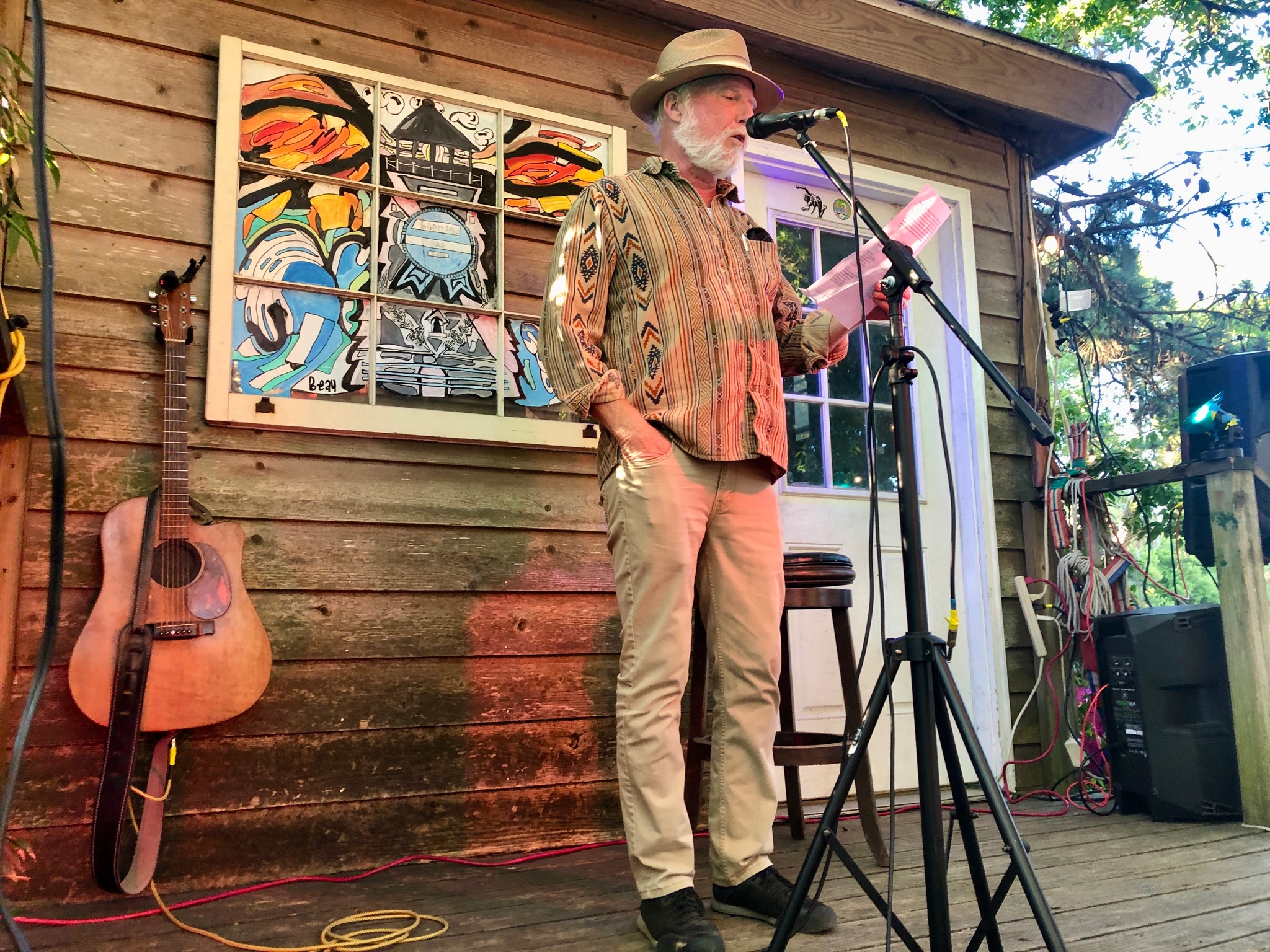
Photo credit, George Fox

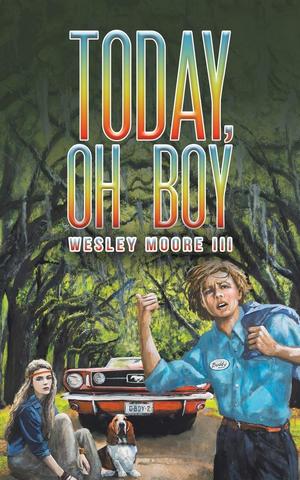
Here’s a snippet from a reading from Today, Oh Boy! at Chico Feo’s Singer/Songwriter’s Soapbox. The novel is coming out this fall via Austin Macauley Publishers.

A Bit of background: Over the intercom, Summerville High School Principal Paul Pushcart is interrupting art class by summoning Rusty Boykin to the office on a Monday in October 1970.

Dreading an upcoming midterm because he hasn’t opened a book, Rusty is drawing a model of the human digestive system in a ruse to sneakily study for the exam.

The Ol’ Pearly Gates Ain’t What They Used to Be

Stubborn Denial

Bill ignored the early symptoms of the major coronary event that did him in. After all, he was only in his early 50s[1].

Yet, the googleable telltale signs were there, both in his body and on WebMD: cold night sweats, stentorian snoring, tightness in his chest, and then, on the day of his departure, a horrifying feeling of impending doom, like a star collapsing, sucking life’s light into a black hole of sudden despair.

He had hoped for the best, had ignored a week’s worth of symptoms, but as he pressed the button to engage the garage door opener on a clear, crisp late April Monday, two of his heart’s arteries slammed their doors, the pain Psycho-shower-scene stabbing horror show.

Clutching his chest, he thought of his children.[2]

Neither his biological offspring nor stepchild would mourn his death because he had been an aloof inconsiderate cigar-puffing malcontent who thought of his sons and daughters, which was rarely, only as abstract extensions of himself.

Jesus Christ!

The two last words screamed silently in his skull as he fell against the BMW and onto the concrete.

Interlude: A Short, Contrarian Meditation on Birth and Death

After it is all said and done, if atheism is correct, death is cessation from pain, both mental and physical, whereas birth is the commencement of suffering, of fardel bearing, of grunting and sweating, etc.

Unlike Bill, many decedents pass quietly, transitioning gently from a room of loved ones into that good night.[3]

On the other hand, no successfully born baby has ever come into being quietly, whether he or she was born in a hovel or a mahogany paneled birthing room.

Nestled in the uterus, lulled by a maternal heartbeat ­– bump-bump, bump-bump – a fetus enjoys womb-service, as it were, but with its mother’s water, all hell breaks loose.  An excruciating passage through a way too tiny portal transpires. The fetus experiences pain for the first time as it is smushed through a fleshy wringer.  Finally, when the head emerges, it encounters blinding light, sudden cold, unpleasant odors.[4]

Like a turd, the baby plops out, suffers a slap, and wails in abject horror.

The horror, the horror!

Post Death

For Bill, there was no tunnel of light with loved ones reaching down but a sudden transition, as if God had suddenly shut the venetian blinds, then immediately opened them.

Just like that he found himself alone on a cloudy plain dressed in his Tommy Bahama resort casual get-up: loud parrot-printed party shirt, cargo shorts, tasseled loafers without socks, in other words, what he had been wearing when he pressed the garage door opener and met his doom.

He looked down, and, as in a cartoon, he found himself standing on a cloud. He took a step on the soft mushy surface of what appeared to be congealed water vapor, and spritzy mist plumed upwards around his loafer. He took another step and then another.

Looking up, he saw twenty or so meters ahead a woman wearing nothing but a hospital gown, walking in the same direction, her plump exposed buttocks jiggling with each soft step. Back in the beforelife, this sight would have excited him, altered his metabolism, but here and now, here and now, here and now, it didn’t matter, and now, now, very now he could see up ahead a white walled edifice glowing beneath the blank azure of the deepest of skies, and now he could discern others walking ahead and behind, dressed in various guises, many in hospital gowns. He continued moving forward, his footprints disappearing after each step.

The Pearly Gates

It was like the heaven of a New Yorker cartoon, complete with a Northern European St. Peter with a Santa-like beard and white robe. He was running his index finger up and down a prodigious tome propped open on a golden, downright gaudy, rococo easel.

Avoiding direct eye contact, nodding quickly, St. Pete waved him through, and Bill sighed a sigh of profound relief. Despite his sloth, those hungover sabbaths in the hammock, despite his serial adulteries, his envy, greed, anger, and pride, he had somehow made it into heaven, had escaped the fiery furnace of pain everlasting.

Woo-hoo!

A Gospel Jamboree Meets O Henry Meets Jean-Paul Sartre (or Wasting Away in the Opposite of Margaritaville)

A native of Trenton New Jersey who had spent most of his adult life in central Florida, Bill had never acquired a taste for gospel music, especially hillbilly gospel, but now without transition he stood among a sea of hayseeds in white robes wearing crowns listening to a praise band plucking banjos and yodeling hallelujahs.

Good God, how long would he have to listen to this shit? [5]


[1]Although “coronary event” is effete, I thought I’d avoid triggering readers who may have lost a loved one via heartattack.

Oops, never mind.

[2]I.e., to the two sets of children from his first two failed marriages and the one stepchild from his third marriage.

[3] Or, to keep the motif going, “that undiscovered country from whose bourne no traveler returns.”

[4] My apologies to homeopathic midwives and Third World babies.

[5] A business major, Bill rarely read literature assignments, but instead opted for CliffsNotes summaries. He remembered nothing about No Exit, so had no clue of the concept of an existential hell, that his hell could be the hillbilly’s heaven whereas a never-ending Jimmy Buffett concert would be hell for these teetotaling worshipers who surrounded him.

Jean-Paul Sarte

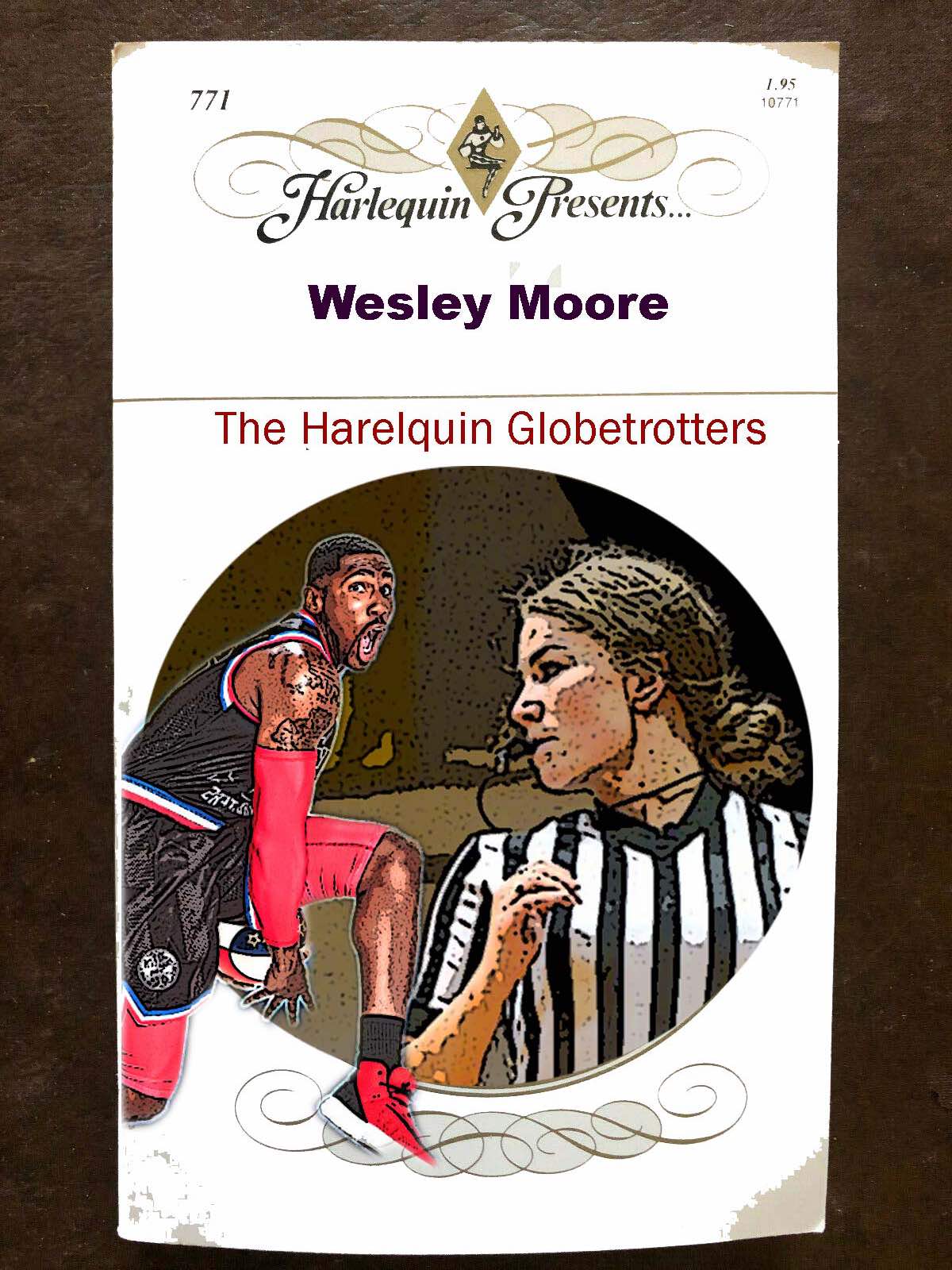
The Harlequin Globetrotters

In 1994, I had a short story published in a journal that no longer exists, the fate of virtually all my published works. I’ve decided to reboot it here instead of allowing its yellowing pages to languish unread in my drafty garret’s file cabinet. It’s a silly story, a mash up parody of sports fiction a la Boys Life magazine and Harlequin Romances. 

So, as they say, without further ado.

The Harlequin Globetrotters

Although Skylark Keats despised Catrina Piedmont with all the hot fury of his competitive passion, she nevertheless fascinated him by being a devastatingly beautiful woman yet the pickiest basketball official that he had ever encountered. Throughout the first half, as he bounded up and down the court, Skylark could feel her eyes on him, surveying all six feet eleven inches of his muscle-ripped frame, searching eagerly for the slightest infraction so she could blow the whistle on him. In fact, this was the first time all night that he had been at the foul line. The other ref had called the opposing center for delivering a blatant karate chop on Skylark’s right wrist as he lofted a jumper that somehow had found its mark. Catrina had had a clear view of the play, yet her whistle, nestled in her beautiful full lips, remained unblown.

As Skylark’s hand gently cupped the circumference of the ball, his fingertips encountered gooseflesh, the grain of the leather seeming to prickle in anticipation. His brown almond-shaped eyes narrowed as they focused on the hoop that hovered ten feet away. If he could sink this free throw, the Globetrotters would even the score.

“We would be up by ten,” Skylark thought, “if it weren’t for that female ref.”

Determined not to let her rattle him, he cocked his elbows, then catapulted the ball in a soft, graceful arc that culminated in the sweet swish of success, the sound of petticoats rustling. Seconds later, with the score knotted at 69, the buzzer ended what had been a frenetic, high-scoring half of basketball. 

As he lumbered towards the locker room, Skylark cursed himself for desiring to feast his eyes on Catrina’s delicious smorgasbord of feminine allure. A trace of her appeared in the outskirts of his legendary peripheral vision, and he felt the muscles of his neck surrender to temptation as he turned to face her, to encounter those intelligent sea-green eyes fringed with sable lashes. Catrina’s petulant mouth quivered as she met his gaze, and as her sensuous lips parted, the whistle they had caressed fell across breasts that heaved, straining against the taut black-and-while stripes of her jersey. 

“Ha,” Skylark thought, fighting off the ferocious dogs of desire that hounded him, “she winded. There’s no woman who can keep up this pace for two halves. I’ll pick up the tempo in the second half. She’ll keel over, and we’ll get an alternative ref, a male, someone who isn’t so doggone onery.

Chapter Two 

Coach Krings’ kindly but faded blue eyes crinkled concern as the players huddled around the green chalkboard of the locker room. The tapping of the chalk on the slate sounded like an SOS as he furiously scrawled X after O. The Globetrotters had never lost a game. Not ever. And here they were struggling for their life against an unheralded two-bit college team from the Midwest. Obviously, these collegians had cut classes to ogle game films, and Coach Krings was setting up a new offense to throw them a loop. As important as he knew it was, Skylark had a hard time concentrating. He couldn’t get his mind off that female ref. He imagined her in the ladies’ room sponging her hot alabaster flesh with a water-soaked sponge, first daubing the high cliffs of her cheekbones, then down the face of her collarbone, ever so slowly sliding between her pert, rose-tipped-

“Keats, what in the heck is the matter with you. Pay attention!”

The fantasy burst, and Skylark was back in the locker room facing the crumpled brow of a frustrated Coach Krings.

“I don’t know, Coach. It’s that female ref. She’s thrown me off balance. She’s calling every picky ol’ thing.”

“Keats, I’ve noticed, but there’s nothing we can do about that.”

“What if we cranked it up a notch?” Skylark suggested. “I mean what if we were to really go all the way? We’d wear her out.  I mean she’d be so exhausted she couldn’t muster enough wind to rattle her whistle.”

“You know,” Coach Krings mused, “you just might have something there.”

Chapter 3

And what a second half it turned out to be. The Globetrotters and the Battling Baptists traded baskets in a frenzied orgy of slam dunks and three pointers. Ten – count ‘em – ten wide-shouldered torsos tapering into flat stomachs, slender hips, and long muscular legs galloping back and forth across the court like gladiators engaged in a life-or-death struggle, and right smack dab in the middle, Catrina Piedmont, matching the men step-for-step, her body bathed in perspiration, her referee’s jersey soaked, clinging seductively to the rise and fall of her luscious curves.

Chapter 4

This was a heart-wrenching game for Katrina. For years she had been in love with Skylark Keats. Ever since he had visited her dying brother at Children’s Hospital. As the years rolled by, she followed Skylark’s career and sought vicariously to be near him by taking up basketball as a hobby, a hobby that soon became an obsession. At college, she got her feet wet reffing intramural games. She loved it – the power and the glamor – but above all, she sought to excel, and that meant being in superb physical shape, concentrating with all her penetrating mental prowess, and above all, being absolutely, incorruptibly impartial.

Quickly, after graduation, she rose to the highest echelon in the ranks of basketball officials nationwide, and now, as fate would have it, she was reffing a Globetrotters’ game. What a tug-of-war of conflicting emotions she had endured. How could she possibly be disinterested in a game in which the man she loved, the only man she would ever love, played? How could she be sure that her abiding devotion wouldn’t mist over her vision and color her split-second decisions? There was only one solution to her dilemma: She would bear down hard on Skylark to compensate for her adoration.

Catrina had prayed for a patented Globetrotter blowout, but no, that was not to be. It was nose to nose, neck and neck, breast and breast, flank and flank as the clock ticked down, from seven minutes, sliding smoothly and expertly over six minutes, down to four minutes, then to two minutes, to the very cusp of 60 seconds. Skylark was burdened with four fouls, so he played tentatively on defense, allowing the opposing point guard to dribble past him for a driving layup to put the Baptists up by one with only 24 seconds remaining. 

Coach Krings called a timeout. The Globetrotters would play for the final shot. If they made it, they would win; if they didn’t, they would have lost for the first time in the history of the franchise. No telling what that would do to their revenues, most of which went to charities, to ailing little children across the country. 

As Coach Krings mapped out strategy, Skylark flicked a glance Catrina’s way. Where had he seen her before? She was ever so hauntingly familiar. And so, so beautiful, so, so beautiful that he could almost forget those questionable travelling calls, those unforgiving lane violations she had charged him with.

The horn signaled the players back onto the court. Catrina held the ball in her gorgeous, delicate hands, so beautifully proportioned that it seemed a Renaissance master had painted them on the basketball.

She could not escape Skylark’s open frank gaze. She felt herself melting, but suddenly tensed, shaking off the languor. She tossed him the ball and backpedaled to get a more comprehensive view. Certainly, she could hold off for another 24 seconds her mad compulsion to stop play, take him in her arms, and force him to surrender to her throbbingly passionate yet absolutely pure love.

Stalling was something new for the world-renowned Globetrotters, yet they were gifted physical specimens, perhaps fifteen years older than their competitors, but more experienced and still lightening quick. They passed the ball with dizzying speed, whipping it around in the gravitational field of their expertise, as the seconds ticked off 12, 11, ten, nine . . . 

With four seconds remaining, Martinique lofted an alley-oop rainbow pass, and Skylark broke for the basket, leaving the floor as he soared gracefully to snatch the ball and stuff it through the awaiting hoop. As he rammed home what might be the winning basket, he knew it must pay for it in a crunching collision with the defender.

He glanced down right before impact, and there she was, too, in their path, striving for the optimum vantage point. The collision produced a swirling kaleidoscope cartwheel of arms, legs, and zebra stripes as their bodies rolled across the padded out-of-bounds.

Somehow, he had ended up on top of her; the other player, knocked cold, lay by their side. Miraculously, the whistle had not been jarred from Catrina’s mouth. Would she call charging on Skylark, negating the winning basket and ending what might be the most phenomenal streak in the history of statistics?

His face hovered mere inches from hers, and as she inhaled, perhaps to blow the whistle, Skylark remembered where he had seen that face.

“You’re that little Piedmont boy’s sister,” he whispered, and no sooner than he had said it, the whistle fell harmlessly from her lips. 

“Yes,” she moaned, “and I love you. I have loved you since that day. I shall always love you.”

Skylark studied her face as she uttered those words, and he saw there absolute sincerity, a sincerity that melted his own heart.

Oblivious to the hubbub that surrounded them, they allowed their lips to touch, at first tentatively, a gentle fluttering butterfly of a kiss. He knew he had to get up, but he couldn’t. He could feel her arms encircling his back, her tongue flicking across his earlobe, darting its tip into his ear. He crushed her to him and started to kiss her eagerly, his tongue exploring, then plundering the warm, wet cave of her mouth. 

Swept away in absolute abandon, they surrendered to the tidal wave of their pent-up passion as the roar of the crowd surged over them like the sea.

The Philistines Are Coming! The Philistines Are Coming!

“At pettiness that plays so rough”

Bob Dylan, “It’s Alright Ma, (I’m Only Bleeding)”

an illustration from Farhenheit 451

Man, oh man – or should I say, woman, oh woman – the culture wars are heating up bigtime in this fractured nation of ours. 

For example, in Virginia, Nobel Laureate Toni Morrison’s Pulitzer-winning novel Beloved has become an issue in the governor’s race. Last Monday, Republican candidate Glenn Youngkin ran an ad featuring a conservative mother complaining that the novel gave her son, a senior at the time, nightmares.

As a former chair of an English Department, I’m not unfamiliar with over-protective parents shoving their noses into reading curricula. In fact, I faced a very similar complaint about Margaret Atwood’s The Hand Maid’s Tale, that reading the novel had depressed another high school senior, in this case a star of the football team.

Here’s an excerpt from an email I wrote to the parent.

I think that it is understandable that you are concerned that students, after so much sorrow last year, might react negatively to the novel.  However, given that the ending of The Hand Maid’s Tale offers a more upbeat conclusion than that of the 8th and 9th grade summer books, Of Mice and Men and 1984 respectively, I am confident that rising seniors will be ultimately encouraged by the novel rather than depressed by it. After all, some less-sheltered eighteen-year-olds might very well encounter the real thing in war-torn Afghanistan if they enlist in the armed services.

Come on, if high school seniors are so delicate that they can’t vicariously deal with fictive unpleasantness, perhaps we should consider sending them to military school in Tunisia to toughen them up a bit. 

Meanwhile, over in Texas, state legislator Matt Krause has compiled a list of 850 books that “might make students feel discomfort, guilt, anguish, or any other form of psychological distress because of their race or sex.”

Titles include John Irving’s The Cider House Rules and William Styron’s The Confessions of Nat Turner.

Matt Krause reading from Ezra Pound’s “Canto XIV,” “The stench of wet coal, politicians . . .”

On the plus side, I see an opportunity for authors who gaze at the human condition through rose-tinted glasses to crank out novels that, rather than challenging students to confront our history or to experience the travails of others, provide them with the stress-free experience of having their narrow world views celebrated.

Humbly, in the tradition of Jonathan Swift, I offer this excerpt from a novel in progress:


Yippee-Ki-Yay

Chapter One: Awakening (in which our hero greets a brand new, God-given day)

Like two tightly strung window shades, Justin Odessa’s eyes popped open precisely at 6:29 a.m. 

Blinking, he retrieved his phone, fully charged, from his bedside table and disengaged the alarm, which had been set for 6:35. Now he had six or so minutes to lie quietly and think about the upcoming morning, which featured a school bus ride, a history and AP chemistry test, and a chance to interact with Margo, his current infatuation. 

How fortunate, he mused, to live in the greatest country the world had ever known, the land of the free and home of the brave, a nation where anyone could succeed if they just worked hard and did what they were supposed to do. And what he was supposed to do was to get up, walk to the bathroom, take a shower, brush his teeth, run a comb through his tawny hair, and get dressed, which he did. 

Already from downstairs he could smell the pancakes and bacon his stay-at-home mom was preparing in the kitchen whose bay window looked out over the plain where pioneer ancestors had traveled via cover wagons and created a true civilization based on cattle breeding, oil extraction, and the Word of God Almighty.

Clad in his school uniform – a purple polo shirt emblazoned with the Midland Senior High Bulldog and a pair of khakis – he greeted his aproned mom with a cherry good-morning, and her glittery smile proclaimed the benefits of rigorous dental hygiene as her teeth fairly sparkled in the October morning sun that streamed into a bright kitchen and illuminated metallic appliances that shone like mica.

As he ate his breakfast, Justin glanced at the sports page and saw that his beloved Astros had triumphed over the Atlanta Braves, the way that civilized Europeans had triumphed over the savage Indians, which reminded him that he should glance over his history notes during the twenty-minute bus to school. He had spent most of his weekend studying chemistry, which he found challenging. Nevertheless, he had been brought up not to shy away from challenges, but to confront them head on.

Once he had cleaned his plate, he bussed the dishes to the sink, rinsed them off, and arranged them in the dishwasher. 

“Bye, Mom,” he said, grabbing his bookbag, which had been packed the night before and hung on the pegs next to the door.

“Bye-Bye, sweetie. Good luck on your tests today.”

“I’m ready, I think.”

“Of course, you are,” she said, drying her hands on her apron. “Dad and I are so proud of you!”

So out the side door he went and over to the road to wait on the bus where nothing stressful at all would occur because people in Midlands, Texas, are brought up right. 


Anyway, I’ll end with another excerpt from my letter:

It is a legitimate question to ask why so much of modern literature is so negative.  After all, looking towards Hollywood, one rarely ever encounters an unhappy ending.  However, unlike most movies, great literature provides students with a realistic portrait of the world and endows them with the vicarious experience that comes with experiencing the struggles, triumphs, and, yes, defeats of its characters.  For example, Hamlet – about as tragic a work of literature you’ll ever encounter – provides a realistic picture of the mourning of a fallen father, a mother’s obscenely hasty remarriage a month after her husband’s death, the dissolution of an adolescent love affair, and about as many corpses as will fit onto a stage.  Yet, when we finish reading (or seeing) the play, we’re not depressed but can share in the nobility of a person’s battle against “a sea of troubles” and say with Hamlet “what a piece of a work is man, how noble in reason.”  Moreover, we can perhaps learn from Hamlet’s mistakes.  They have become a part of our experience because Hamlet to us is a fellow human being.

Excerpt from Today, Oh Boy – in the Principal’s Office

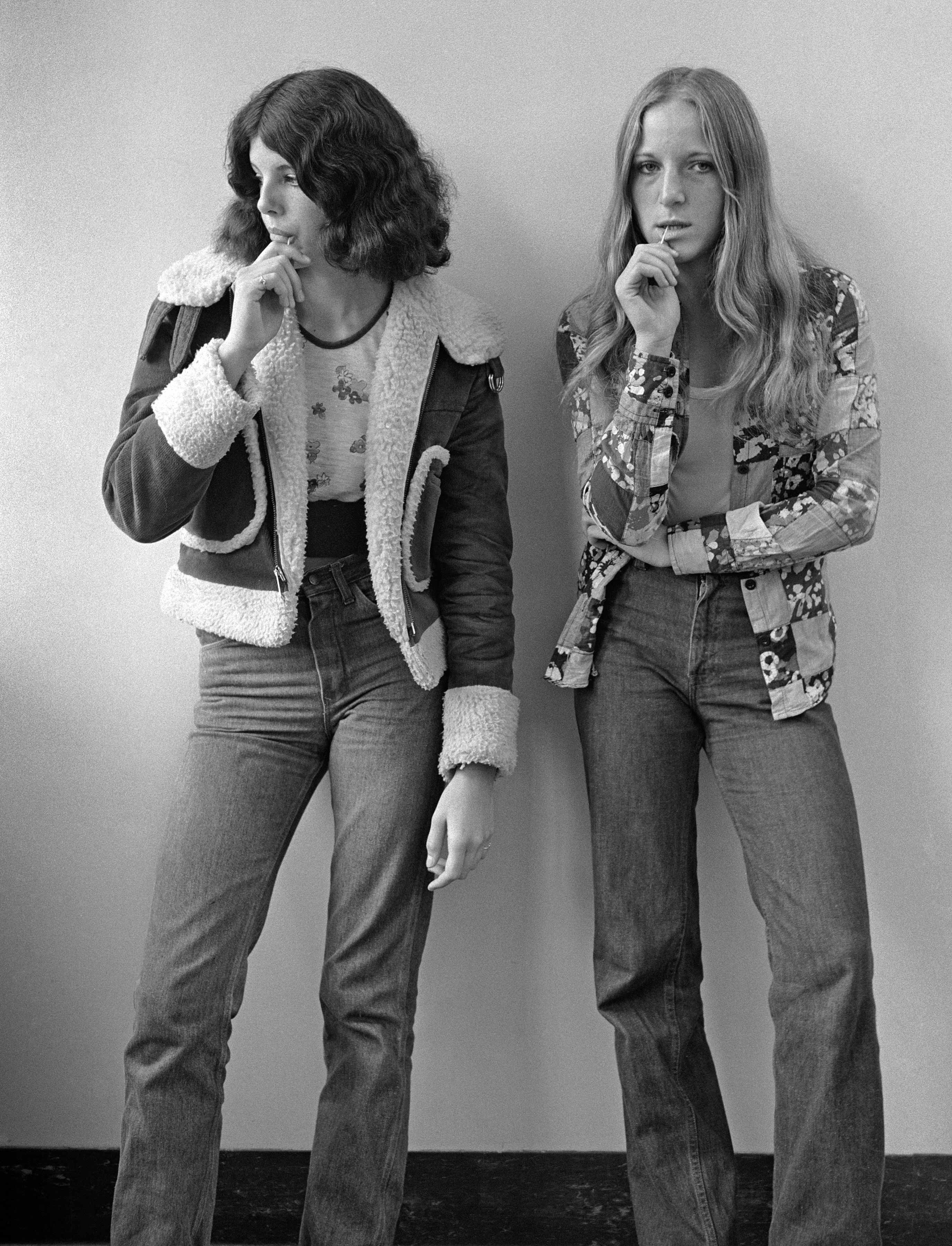
photograph by Joseph Szabo

A loud electronic crackling.  The red light of the intercom has flashed on. Never a good sign.  Every class has one, a rectangular speaker box mounted somewhere on the wall.  Another crackle. 

Speakerbox: (crackle) Miss Turlock, Principal Pushcart. Is Alex Jensen in your class?

Miss Turlock: (looking up at the intercom, addressing it as if a person) No sir. It was my understanding that he was there with you.

Speakerbox: Who told you that?

Miss Turlock: Althea Anderson.

Speakerbox: By any chance is Rusty Boykin in your class?

Miss Turlock (still looking up, still addressing the intercom): Yes sir. He’s sitting right here working on a drawing.

Speakerbox: Send him to me. Stat!

Miss Turlock: Yes sir.

Speakerbox: (crackle)

All pencils, brushes, kneading hands have halted. Rusty’s on his feet, a look of panic stamped on his freckled face. James Hopper glances at Althea, who is frowning. Rusty casts a rueful glance at his crude rendering of the digestive tract lying next to his open Biology II notebook with its hurried, smudged, barely decipherable and misspelled anatomical terms. Then he looks up and encounters Miss Turlock’s sympathetic, blunt, open features. 

“Run along, Rusty. You can leave your things here for now. “

“Okay,” he says, oblivious to the students’ staring faces, oblivious to the clay torsos, oblivious to the smell of paint, oblivious to the splattered tile, oblivious to the silence.  He’s pushing open the door and stepping into the cool autumn air, oblivious to the yellow disc of morning sun suspended above distant loblolly pines. He’s deep, deep, deep inside the auditory darkness of a cave of dread where an echoing voice catalogs his various crimes and misdemeanors: smoking marijuana; drinking beer; mocking (though behind their backs) administrators, teachers, students, the Mighty Green Wave, Congressmen, Senators, Vice Presidents, Presidents, television shows, movies, Judeo-Christian Deities; purchasing and hiding Playboy magazines as visual aids in acts of self-pollution; masterminding a high stakes scheme to run away from home; receiving stolen goods in accordance with the above-mentioned scheme; not living up to his potential . . .

As an elementary student, if he had been called to the office, Rusty might have feared that someone in his family had died or that he was being summoned to receive an award, but his name in conjunction with the initials AJ can only mean trouble. He’s forgotten his signature walk, the freak flag flop, and leans forward, head down, oblivious to the pebbly paving beneath his high-top Converse All-Stars.  In the thin cavity of his chest, his heart pounds like timpani as he reaches for the cold handle of the main building’s outer double doors. The hall is virtually void, the only sound clacking heels, out of sight, dopplering into the distance.  His hand shaking, he grips the handle of the glass doors of the administrative offices, pulling outward. 

In the bright florescent light of the outer administrative office, he recognizes immediately that the employees are in an everyday mode. No one has died. No uniformed policeman with badge, billyclub, and handcuffs glowers in a corner waiting for him. Rusty clears his dry throat and approaches Miss Cartwright sitting at a desk next to Principal Pushcart’s door. As he nears her desk, a tiny pink bubble puffs out from her lips, then pops.

 “Mizz Cartwright,” he says, his voice unsteady, “I think Principal Pushcart wants to see me.”

“Now that’s an interesting shirt,” she says coyly, snapping the gum. “Where’d you get that?”  She’s dressed in a yellow alpaca V-neck sweater and a kelly green skirt, the official school colors.                 

Rusty had forgotten all about his shirt, a new acquisition, part of a service station uniform with the name “Buddy” stitched in an oval on its breast. It’s sure to exacerbate whatever vitriol’s brewing in Pushcart. Rusty realizes he’s left his Mr. Zig Zag denim jacket back in the art room, which is probably a good thing.

 “Uh, I got it from Buddy.”

  “Good ol’ Buddy,” she says smiling. “Mr. Pushcart and Mrs. Laban are expecting you.”

  She gets up and cracks open the door. “Mr. Boykin is here,” she says into the crack.

  The muffled bark of a drill sergeant.

  “Go on in,” she says.

The door creaks open squeakily like a coffin lid in a Christopher Lee movie. Sitting, leaning forward with his palms down on the surface of his desk, Principal Pushcart looks as if he might be on the verge of doing a hundred or so push-ups. Sitting across from him, looking over her shoulder, a frowning Mrs. Laban pumps her crossed leg like crazy.

“Yes, sir?”  

“Have a seat, son.”

There is an empty chair next to Mrs. Laban, a wooden chair, upholstered in some sort of dark green leather-like synthetic something-or-other, the kind of fabric (maybe fabric) that sticks to the back of your thighs when you’re wearing shorts in the summer. Principal Pushcart removes his right palm from the desk like some gangster in an old movie and positions it palm-up, sweeping it in a downward motion towards the chair as he nods his head in mock gentility. Across his pink scalp strands of brownish gray flimsily stretch to feebly hide his encroaching baldness. Rusty, dropping into the chair, sighs audibly in tune with the upholstery, which also sighs.

 “Now, Blanton,” he says, using Rusty’s baptismal nomenclature. “I want you to promise to tell me the truth.” The intonation isn’t all that unfriendly.

 “Yes sir,” Rusty says automatically. He’s a terribly inept liar anyway. 

 “You know,” Pushcart says, “that AJ was dismissed from homeroom to come to my office.”

 This is an easy one. “Yes sir, I was in homeroom this morning.”

 “Tell me. What did you think of the events of this morning?”

 “Think, sir? I’m not sure I thought anything.”

 “You didn’t think it was funny?”

 “I wasn’t paying all that much attention. I was sort of preoccupied. I have this really big Anatomy test today.” He looks over at Mrs. Laban for encouragement, but her features have hardened into a Madame Tussaud’s mask of unalterable unhappiness: Lucretia Borgia displeased with the consistency of her soft-boiled egg.

“Did you know that AJ hadn’t come to the office?”

 “No, sir.  Not till the announcement over the intercom.”

  “Any idea where he’s at?”

Rusty successfully stifles the impulse to say, “Behind the preposition.”

  “I dunno,” he says instead.  “Home, I’d guess. His daddy’s office maybe. I dunno.”

  Pushcart can see the little son-of-a-bitch is telling the truth. “Son,” he says, “are you aware that you’re out of dress code?”

  “It wouldn’t surprise me. I guess my hair might be.”

  “Where’s your pride, son?”

Rusty doesn’t begin to know how to answer this.  A trick question?  Of course, he possesses pride, that doom-laden quality that they talk about in English class every year, the moral failing that forces Antigone to break the burial edict, Ahab to pursue the great white whale, Macbeth to go all Charlie Manson on his kinsman Duncan.  

“I dunno, sir,” he says. “Yes and no. You know Alexander Pope called pride ‘the never-failing vice of fools.”’

As soon as the words are out of his mouth, he wants them back.  

“What!?”

“Nothing.”

“What did you say?”

“I meant sometimes pride can be a bad thing, so I was hesitant to admit I had some.”

“Well, Mr. Philosopher, I’m sending you home to get a haircut and to change that shirt. The dress code is rules, son. Not suggestions. Rules. When you look presentable, you come back here to report to me before you resume your education here at Summerville High. Consider it a suspension. Zeroes on all work missed.”  

“Yes, sir,” Rusty says. 

“I suggest you hurry.”

“Yes sir.”

 When he’s out the door, Paul looks over at Eula Lynne and asks, “What period is his anatomy test?”

 “Fourth.”

 “Well, then,” he chuckles. “I wish him God’s speed.”

“That secretary of yours is almost as bad as the kids. Out there chewing gum.  I don’t know about that, Paul.  It sets a bad example. . . ”

Poolroom except from “Today, Oh Boy”

Here’s a very short excerpt from my novel-in-progress, Today, Oh Boy.[1]

An accident in the chemistry lab the period before lunch at Summerville High School on a Monday in October of 1970 has required that the entire student body be released early. Ollie Wyborn, a brainy, super rational, and dutiful transplant from the north who has yet become acclimated to the ways of the South, is on an errand to fetch poolroom hotdogs for three girls who have offered to give him a ride home. Ollie has a crush on one of the girls, Jill Birdsong. For weeks he’s been trying to summon the courage to ask to the homecoming dance, though he’s never been on a date and doesn’t know how to dance.


Like his parents, Ollie is a Doubting Thomas. To him, fire and brimstone are natural phenomena, not the elements of an infernal furnace. Yet when Ollie steps into the smoky gloom of the pool hall, he finds himself thinking of illustrations he’s seen of Hell. It smells weird in here, sour and sweet, body odor mixed with fryer grease, stale beer, and cigarette smoke.  Some of these people look damaged. Now he understands why girls won’t come inside.

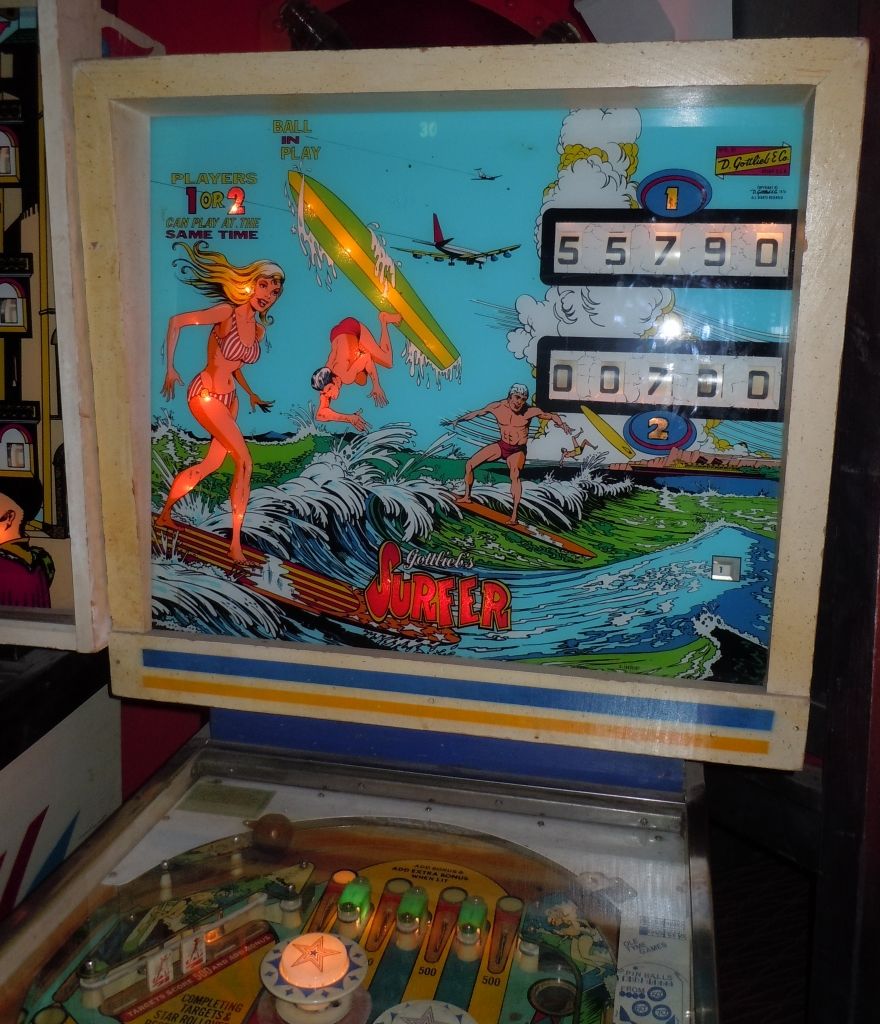
There’s a cacophony of too-loud raucous voices with those strange vowel-rich inflections –  Whatyousaybo, a greeting sounding more like Swahili than English. An older man with sergeant stripes on his uniform talks to and rocks a pinball machine plastered with curvaceous cartoon women. Lights blink on and off – ding ding ding ding ding.  The metal ball rolls up the incline but now down again.  Flippers flip.  Up the incline and down again. Beneath the ding, ding ding ding dinging, the din of clacking pool balls, laughter, blended conversations. Recorded music blares from a jukebox, a familiar song spelling out a girl’s name: G-L-O-R-I-A. Someone hollers “Rack!,” and a young black boy around ten or so, scurries past Ollie with a wooden triangle in is hand.

About fifteen red swivel stools line a bar/lunch counter, every stool occupied by a male. There’s that old, grizzled character with a white cane and seeing-eye German shepherd, the Old Blind Man Ollie’s seen a couple of times at football games. Next to him in paint-splattered overalls sits a middle-aged fellow with a cigarette dangling from his mouth moving up and down as he talks. Others, all strangers, push their way between the stools to get a server’s attention.

Ollie might as well be in Mozambique as far as knowing the etiquette involved with ordering. There doesn’t seem to be a pattern. Only two people taking and cooking orders for twenty.  They should have a line where customers receive numbers like in a deli instead of this dog-eat-dog, survival of the fittest. Ollie spots four guys wearing SHS shop overalls sitting adjacent to one another, so he decides to lean between two of them to place his order.

Who this is here sticking his head here?  Gotdamn round ol’ timey hippie glasses.

“Excuse me, excuse me.”

Ain’t his turn sumbitch. Gotdamn round ol’ timey hippie glasses.

Ollie tries to make eye contact with the older server.  Why the dimness?  Behind the bar a tin sign in fading red capital letters warns NO PROFANITY. There are carved coconut head monkey faces staring vacant-eyed from shelves next to a large jar of rubberized eggs suspended in a murky solution, also prints of dogs smoking cigarettes and playing poker.

“Well, X-cuse you,” a shop boy growls.

“Sorry, but it’s crowded in here.”

“Kiss my ass, Yankee.”

Circumspection.  Circum = around; spec = to look, as in spectacles.

Looking down the bar, Ollie sees a perhaps more convenient place to order, not as close to the door.

He thinks maybe he could dance to this song.  G-L-O-R- eye-eye-eye-eye A!

  J-I-Double L   B-I-R-D-S-O-N-G    

 Jukebox:     Knock on my door

                        Come in my room

                        Make me feel alright . . . 


[1] You can read other excerpts here and here.

My Very Brief Membership in Carlos Castaneda’s Church of the Shamanistic Upward Flight of Liberation

OLYMPUS DIGITAL CAMERA

Peyote consumption, dear readers, was the central ritual of the religion I practiced for at least 12 hours.  Yes, for the first time ever, I publicly acknowledge that for a day-and-a-half, I was a member of  Carlos Castaneda’s Church of the Shamanistic Upward Flight of Liberation.

It’s a long story, one ill-suited for this genre.  Perhaps an epic poem would be too grandiose, but certainly a blog post in no way could do justice to the hero’s journey Johnny Dryer and I took across this great country of ours in search of Carlos Castaneda.

However, now, that I’ve let it out, I guess I do owe my reader(s) a bare bones narrative.

LA street

LA circa 1973

In the spring of ’73 my good friend Johnny Dryer and I decided that after a harrowing semester of cutting classes, attending keg parties, and watching pretentious foreign films, that we deserved a sabbatical, so we skipped the spring semester to hitch across the country to California to see if we could find the famous anthropologist/would-be shaman Carlos Castaneda, who recently had slipped out of public view and moved into a large house somewhere in L.A.

I’ll spare you the details of the memorable rides we hitched, e.g., our sitting in the back of rig of an eighteen-wheeler with a trucker’s wife (Janelle) as we witnessed the driver go through can after can of the Old Milwaukee he had stowed in a cooler on the passenger’s side.  (After finishing a beer, he would smash the can with the palm of his hand as if it were a Dixie Cup and fling it out of the window, sometimes while passing slow-moving vehicles at night on the downslope of foothills). [1]

Or the time we were picked up by a bus transporting a professional female roller derby team.

Let’s just say that it was a cross continental zig zag that took us from Tijuana to Denver but that eventually we arrived at the City of Angels alive but thinner.

I have to give Johnny 100% of the credit (and the blame) for not only turning me on to the mind-expanding philosophy of Carlos Castaneda and his mentor Don Juan, but also for the brilliant detective work in our eventual successful tracking down Castaneda’s house (Think The Big Sleep meets Easy Rider).  No, by the time we hit L.A., I was one lovesick puppy, moping around like a latter-day Troilus, missing my beloved girlfriend, Cressida  Debbie.  Johnny is the protagonist of this tale, I merely the comic morose sidekick.

We did at last get to meet the Master, the Manson-lite entourage that surrounded him, and found him to be a very short, charismatic narcissist whose megalomania didn’t quite jive with the shamanistic attributes that Don Juan projected in The Teachings of Don Juan: A Yaqui Way of Knowledge.

And though I fully expected for my initiation to the sacrament of peyote to ignite spirit-spawned visions of totemistic reality (an albino aardvark, say, speaking truths to me in an ancient Yaqui tongue that I could mysteriously understand), the truth is that I became paranoid and dared not open my mouth for fear that I might sound as idiotic as the rest of drug-crazed groupies surrounding Carlos.

peyote sofa

From left to right, yours truly, Johnny Dreyer, unknown dude, unknown chick, Carlos unknown chick, unknown dude having a bad trip.

Perhaps Gringo idiots like us co-opting sincere Native American religious rites and transforming them into New Age bacchanalia played a role in the Supreme Court’s 1990 decision to bar Native religions from using peyote, a sacred plant that had been part of their ceremonies for centuries; nevertheless, Oregon v. Smith represents a bone fide assault against an individual’s right freely to practice religion, a decision reached by a majority of conservative justices, who later would claim it’s okay for Hobby Lobby not to provide employees with birth control because it contradicted the owners’ religious beliefs.

It’s enough to drive you to drugs.


[1] Hat tip, Furman Langley. Please note, reader, that this post is classified as fiction.