Failed Poems, Fake Art, and Commerce 

I subscribe to an internet entity called “Poem of the Day,” which provides me each a.m. with a dollop of verse to go along with a cup of whatever ground coffee is on sale at Harris Teeter on the previous Senior Citizen Discount Thursday.

This morning’s poem, Copyright © 2025 by Jessica Abughattas, has a title guaranteed to perk the interest of anyone interested in verse. It’s called “Failed Poems.” It’s one of those works where the title serves as the subject of the first sentence. To wit:

            Failed Poems

            will crawl out of the drain and try to kill you
            like some 80s horror flick.[1]

I like the poem, its witty catalogue of unpleasant analogies. Bad poems are like “a black widow creeping/from the mound of linens still warm from our bodies.”  They “steal your breath/ when you wake parched, hungover, emptied,” etc.

What really caught my attention, being a fake artist and all, were these lines describing another, much more successful fake artist:

Once, in Zurich, we were served rabbit paella at a party 
celebrating an exhibition of an artist from Venice Beach 
who used to be homeless but drinks $25 Erewhon smoothies and paints 
hundreds maybe thousands of happy faces with his feet. His canvasses 
go for $25,000. Toe paintings are better or at least significantly 
more profitable than failed poems.

This really hit home because the day before yesterday I got a text from a number I didn’t recognize with this message:

“Found some ‘fake’ art at goodwill today. I’m going to buy it as an investment.”

I responded, “Who in his right mind would give a masterpiece like that away?”

But to be honest, I did know. It was the fellow who won it at Chico Feo’s annual Canine Halloween Costume Contest. Harlan, the organizer, asked if I would donate a print, and I thought it was one of the better prizes, but as luck would have it, the winner is an actual artist who upon receiving it asked me if I’d seen any of his works.  

I hadn’t.

But I’ll also admit it would take a certain, rare art lover with a funkadelic sensibility maximus to want to hang the print above the mantle.

Anyway, the poet nails it when she whines about the unprofitability of writing poems vis-à-vis creating pictural art. In fact, believe it or not, despite receiving a rave review from Kirkus Reviews and having appeared on a local television show and several national podcasts, my novel Today, Oh Boy has provided me with less income than my fake paintings.[2]

Already this month, I’ve received two commissions and sold another print, not including the secondhand Good Will purchase. 

Anyway, I’d say that creating these canvases is more fun that writing fiction and certainly more fun that going over the “corrected proofs” of a manuscript that soon will be bound and sold in bookstores and online, which I have been doing of late.

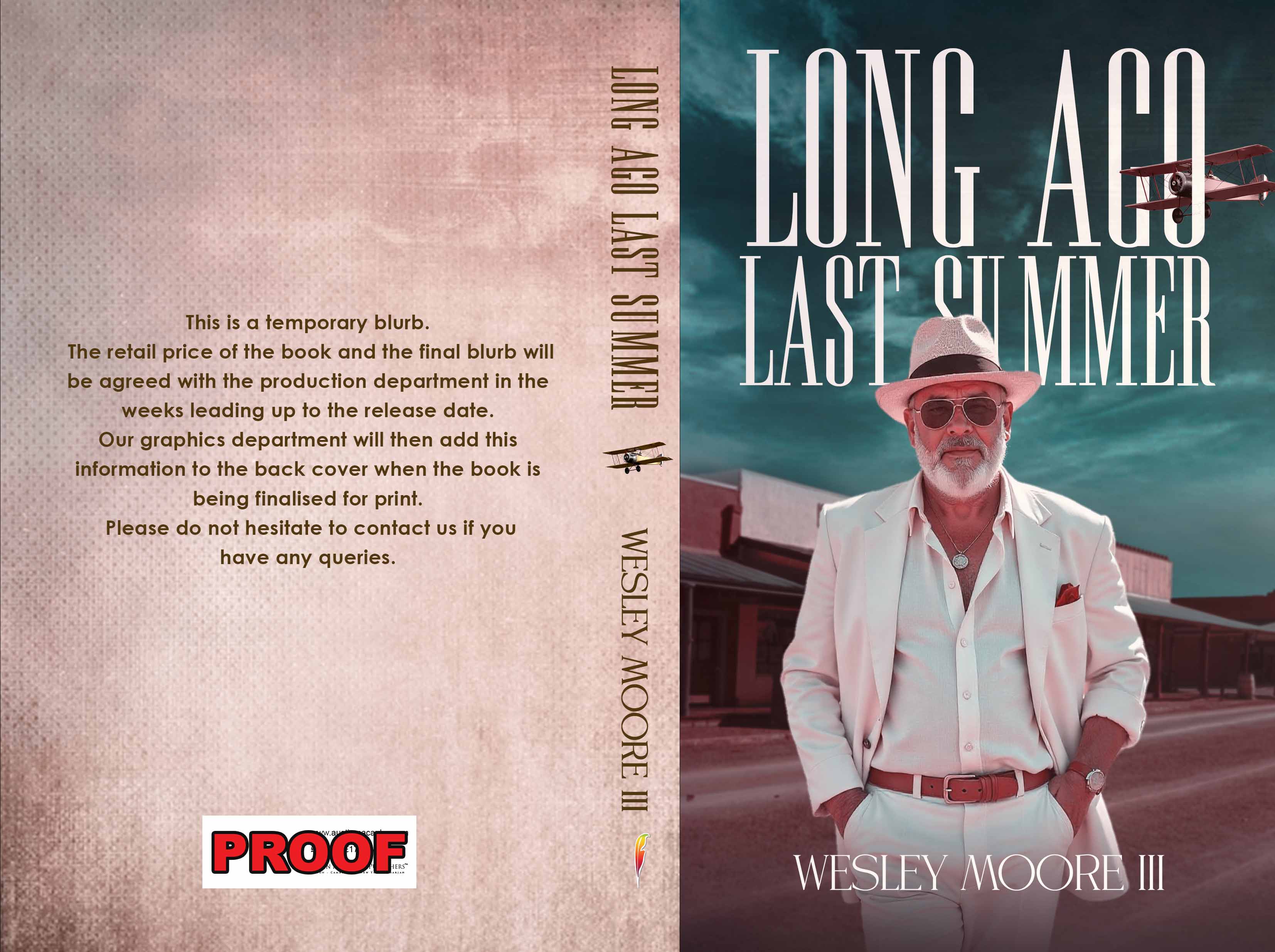
I don’t  have a pub date yet for Long Ago Last Summer, but I’m guessing late spring or early summer.

PS. Speaking of commissions, Caroline and I have commissioned the unfake funkadelic artist Thom Piragnoli to create a sign for our driveway to alert visitors where our hidden house hides. 

You can check out Thom’s art at Chico Feo. The one above is called Galaxy Gals. Check out this LINK for more on Thom. 


[1] Rather than cutting and pasting the entire poem, I’ll provide a link because non-poetry lovers, i.e., 99.97% of people, would abandon this post for the greener pastures of a TikTok video. Here’s the LINK. You can read along while Jessica Abughattas reads it in a rather pleasant regionless accent.

[2] To be honest, this was not the case in 2023, the year Today, Oh Boy was published.
AI Has Its Place But It Ain’t Above My Mantle

The other day on Facebook, every septuagenarian’s favorite social media platform, I posted this confession:

“I’ve just come to the terrible realization that I’m a professional dilettante!”

I meant the quip, of course, to be humorous given the oxymoronic pairing of professional, denoting lucrative compensation for someone who can claim to be an expert, and dilettante, which describes a poser, an amateur who dabbles in the arts.[1]

A few kind responders begged to differ, claiming that I was the real deal, which I appreciate, but don’t buy, especially when it comes to what I have come to call my “fake paintings,” which are essentially photocollages filtered to look like paintings and printed on canvases. Not that they’re not eye-catching in a good way. My friend the painter and filmmaker David Boatwright ­ — the antithesis of a dilletante — finds them amusing.[2] So even though I call them “fake,” I do think they qualify as “art,” but it’s amateur art. When in a groove, I can crank one out in a couple of hours.[3] David, on the other hand, toils over his canvases and murals for months, not ceasing until every last miniscule detail is right.

Which brings me to the central subject of these ramblings — AI generated illustrations. 

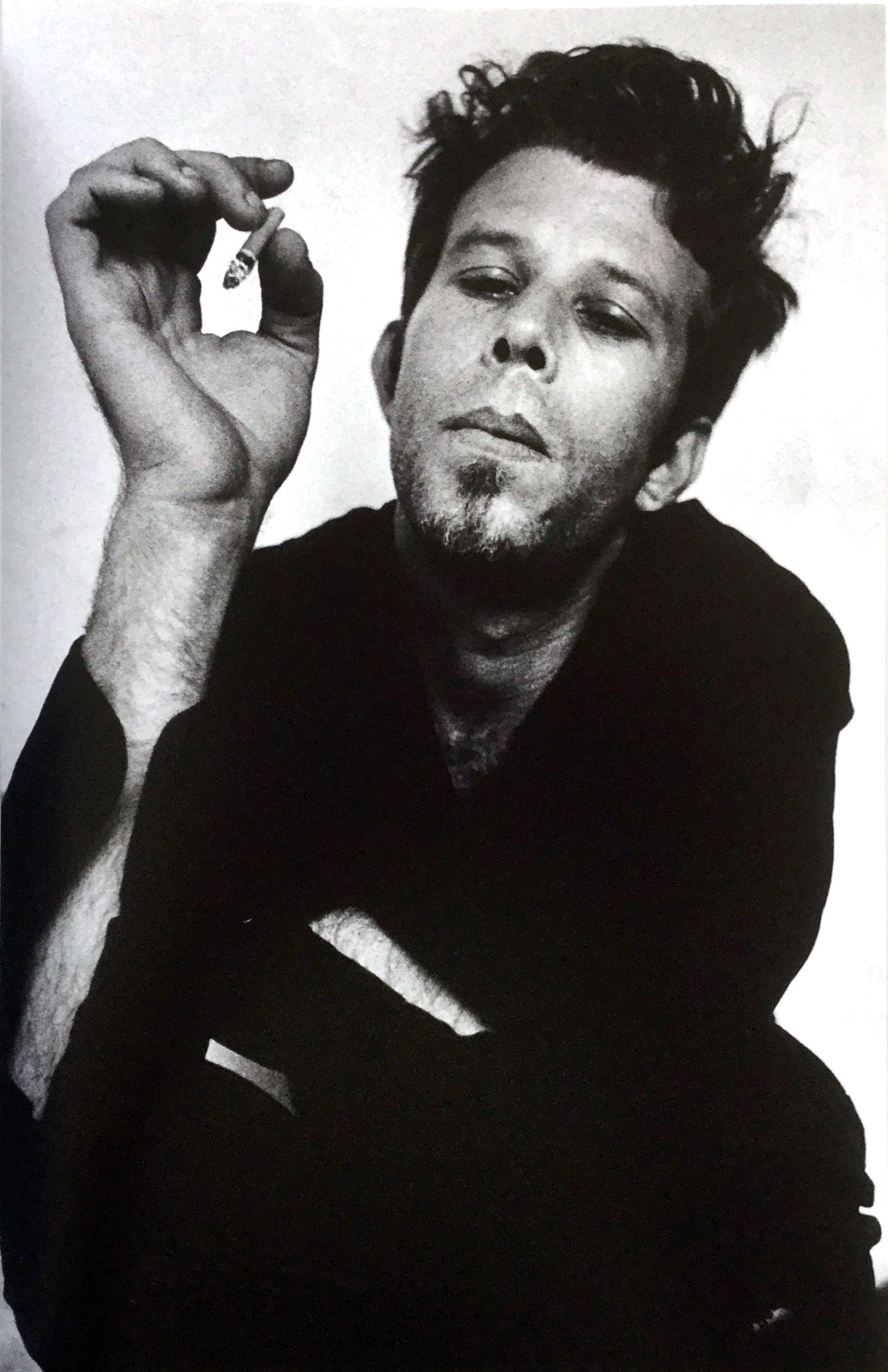
A while back a Facebook friend lamented that AI-generated “art” was going to put people like me out of business, but I begged to differ. “AI hasn’t listened to Tom Waits while smoking Thai sticks,” I responded. It can’t, by its very essence, be original. It ain’t got soul. 
Last night my wife Caroline and I were looking at my two latest canvases, and I said, “There’s no way AI could come up with either one of these.”

“Let’s do a little experiment and see what AI comes up with,” she said. 

So we did, prompting the software to create something similar. 

Before we begin the comparison, I’ll explain briefly how I go about making a fake painting. 

I start with a high resolution photograph. In my latest (see below) TGIF Chico Feo, I took a photo of the bar area when I was the only customer in the establishment. 

I upload the photograph to Photoshop and add an artistic filter, in this case, the “Dry Brush” filter.

Almost always, I have no preconceived notions about what I’m looking to create. In this case, I googled “pulp cover paperbacks bar scenes” and scored the couple kissing from a novel entitled Divorce. Of course, the man wasn’t leaning over a bar to kiss his lover, but I determined I might be able to cut the couple out and paste them into the photo, and, damn, it worked. Next, I found the woman sitting to the couple’s left and did likewise, and once again, I was successful.

I thought it might be amusing to have an organ grinder in the foreground, but I couldn’t find any illustrations that suited; however, I did find the begging monkey with the cup and tried him in various locations until I hit upon placing him on the bar, interrupting the passionate kiss. 

I decided to place a large figure in the foreground and went Screaming-Jay-Hawkins hunting. I experimented with various Hawkins iterations, but the vibe wasn’t right, and then the proverbial cartoon light bulb went off above my fedora. Louis Armstrong, Satchmo!

And boom![4]

So here are my TGIF Chico Feo and AI’s response to the prompt “create a picture of Louis Armstrong playing at a beach bar.”

See what I mean.

One more example. 

Two of my favorite artists are Bruegel the Elder and Hironimus Bosch. 

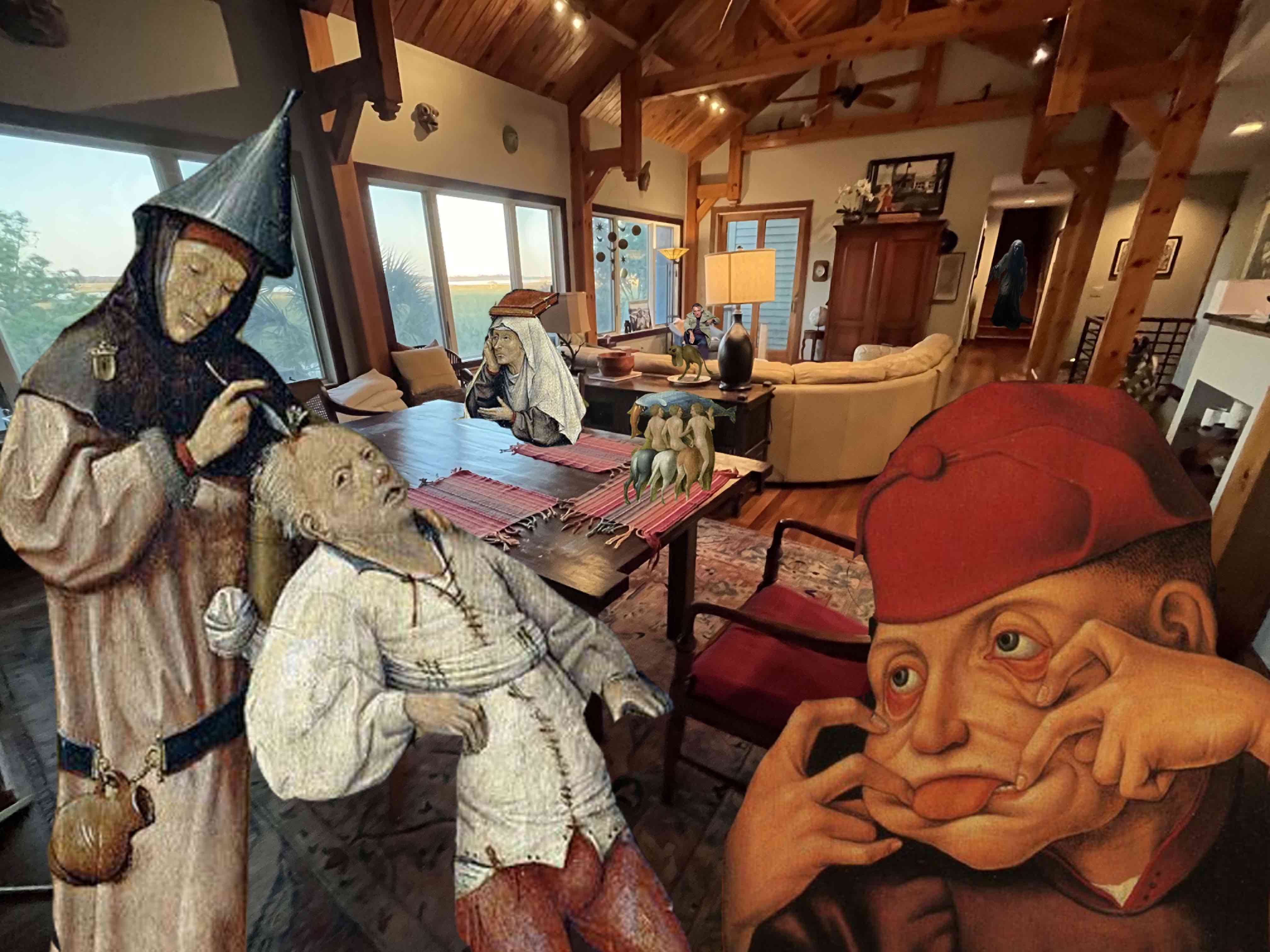
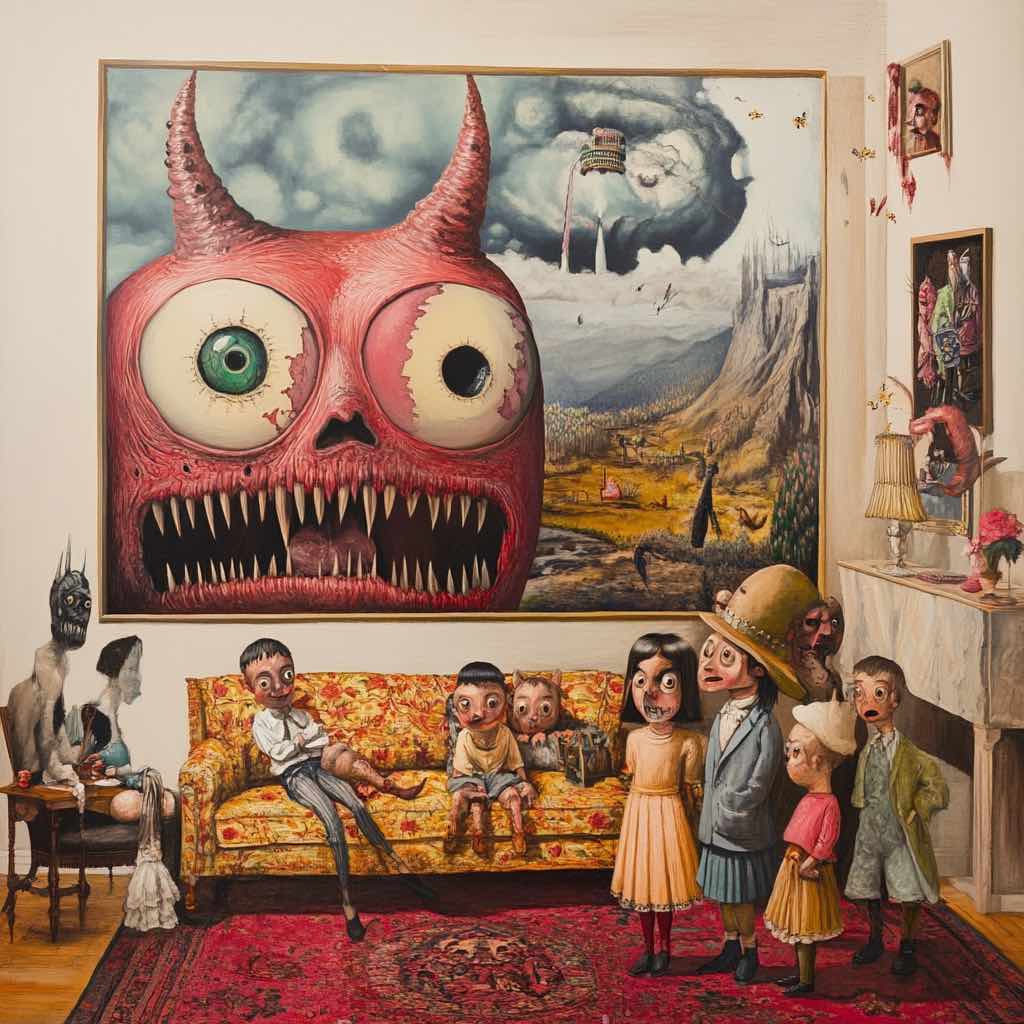
I took a photo of our living room, which struck me as sort of Flemish-looking so I peopled it with Bosch figures, being in a mocking post-election funk. 

Here’s the final product.

And here’s what AI came up with when prompted “Boschian style weird people and one Boschian monster in a regular modern beach house living room.”

Of course, AI is likely to put some illustrators out of business. In fact, because Caroline subscribes to AI software, I might ask her to provide me images to illustrate some of my blog posts. However, for book covers, I always prefer scruffy over slick. 

Which cover would you guess Caroline and I chose?


[1] The awkwardly phrased sentence this footnote references is proof in and of itself of my dilettantism. A professional, a true wordsmith, would devote time to express these ideas in a more cogent fashion, spending perhaps an hour or so insuring that every word was in its proper place and that the clauses melded in pleasant fluidity. but [cue Bob Dylan]. “[That] ain’t me, babe. 

[2] BTW, David has written a screenplay for a 15-minute film based on the poolroom chapter of my novel Today, Oh Boy and is just 50K short of having the funds to start production, so if you happen to be wealthy and want to be an art patron and contribute to making a really cool indie film, contact me, and I’ll forward your info to David. 

[3] I have had a one-man show at Studio Open and have sold a couple of dozen, two of which went for $500, so there’s that.

[4] I also Hitchcock like, try to make a cameo appearance in the “paintings.” In this case, it’s the cover photo of my next book Long Ago Last Summer. Can you find it?

AI Don’t Scare Me (Yet)

Blind Girl Walking by Wesley Moore III

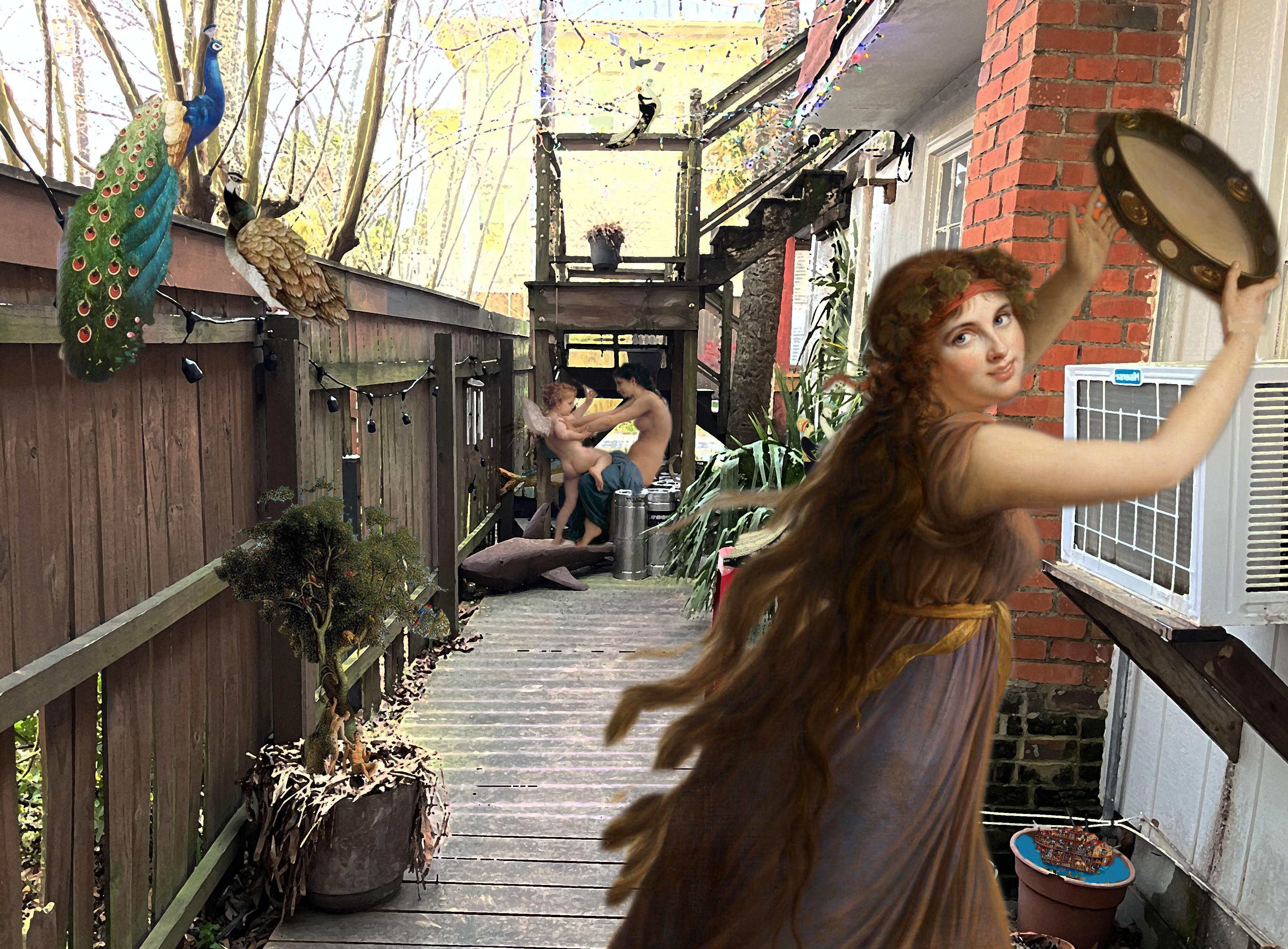
As my regular readers know, I entertain myself by creating what I facetiously call “fake paintings,” which others have described as “photo collages.”  I guess that’s more accurate, or at least more precise; however, when I think of a collage, I imagine a proliferation of cutouts that create sort of visual mosaic whereas my “pieces” attempt to blend the cutouts into a dramatic scene so that the viewer isn’t aware that images have been swiped from somewhere else and inserted into the “painting.”

Here are four examples in order of their compositions from oldest to latest.[1]:

I occasionally post some of these on Facebook, and recently someone commented that AI was going to put me out of business to which I replied, “AI ain’t never listened to a Tom Waits song or changed a flat tire. It ain’t know.”

Of course, AI has probably already put traditional illustrators out of business, but to me, the visuals all look alike, smacking of early Soviet propaganda.

The same goes for AI generated prose. I can identify it fairly easily because it reads like Strunk and White on steroids with all those active verbs “clambering” to “propel” well-varied clauses that are the equivalent of the Trump Kim poster above. 

It’s soulless.

Of course, AI is no doubt going to become more sophisticated, but I’d like to think it could never come up with this:

Well, it’s Ninth and Hennepin
All the doughnuts have names that sound like prostitutes
And the moon’s teeth marks are on the sky
Like a tarp thrown all over this
And the broken umbrellas like dead birds
And the steam comes out of the grill like the whole goddamn town’s ready to blow
And the bricks are all scarred with jailhouse tattoos
And everyone is behaving like dogs
And the horses are coming down Violin Road and Dutch is dead on his feet
And all the rooms they smell like diesel
And you take on the dreams of the ones who have slept here
And I’m lost in the window, and I hide in the stairway
And I hang in the curtain, and I sleep in your hat
And no one brings anything small into a bar around here
They all started out with bad directions
And the girl behind the counter has a tattooed tear
One for every year he’s away, she said
Such a crumbling beauty
Ah, there’s nothing wrong with her that a hundred dollars won’t fix
She has that razor sadness that only gets worse
With the clang and the thunder of the Southern Pacific going by
And the clock ticks out like a dripping faucet
Till you’re full of rag water and bitters and blue ruin
And you spill out over the side to anyone who will listen
And I’ve seen it all
I’ve seen it all through the yellow windows of the evening train


[1] These are printed on canvas so to the careless eye they appear to be “paintings.”

The Pleasures of Street Art, Atlanta Edition

My interest in street art commenced in 1975-7 when I lived next door to the artist Blue Sky. I can’t claim that Blue Sky and I were even acquaintances—don’t recall any conversations I had with him, meaningful or otherwise. We merely nodded and smiled as we passed, coming and going.

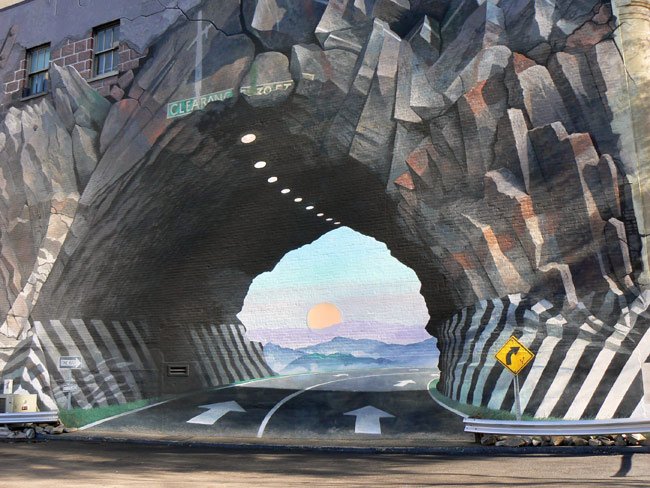
To me he was just another old hippie stubbornly clinging the ‘60s zeitgeist at the dawn of the disco age. Even though we were neighbors, I wasn’t aware that he was in the process of creating the iconic[1] mural Tunnelvision on the Federal Land Bank until shortly before its unveiling, which I attended with a few of my friends.[2]

What a contrast in worlds! I wanted to pass through that tunnel out of the otherwise soulless streets of Columbia into the wide-open spaces of that setting sun.

A quarter of a century later, visiting my son Harrison who was studying at Humboldt University, I once again encountered graffiti that blew my mind. The building, originally a department store, stood in the Old Jewish quarter in East Berlin on Oranienburger Straße.  After reunification, a group of artists moved into the building as squatters. Harrison frequented a bar in the building that once held French prisoners during WW2. For whatever reason, the mural, with its marching African army or conga line and smiling spermatozoa, thrilled me.

photo by me

Of course, the remaining sections of the wall that had not been torn down also became media for graffiti artists.

a 4 second video I took during the Berlin trip

So, I became interested in street art, in commissioned murals as well in the renegade productions of spray-can-wielding night painters like SEEN, the so-called Godfather of Graffiti. Whenever we visit an urban area, my wife Caroline, who wrote her master’s dissertation on outsider art, seeks out graffiti and murals, and I am more than happy to tag along.

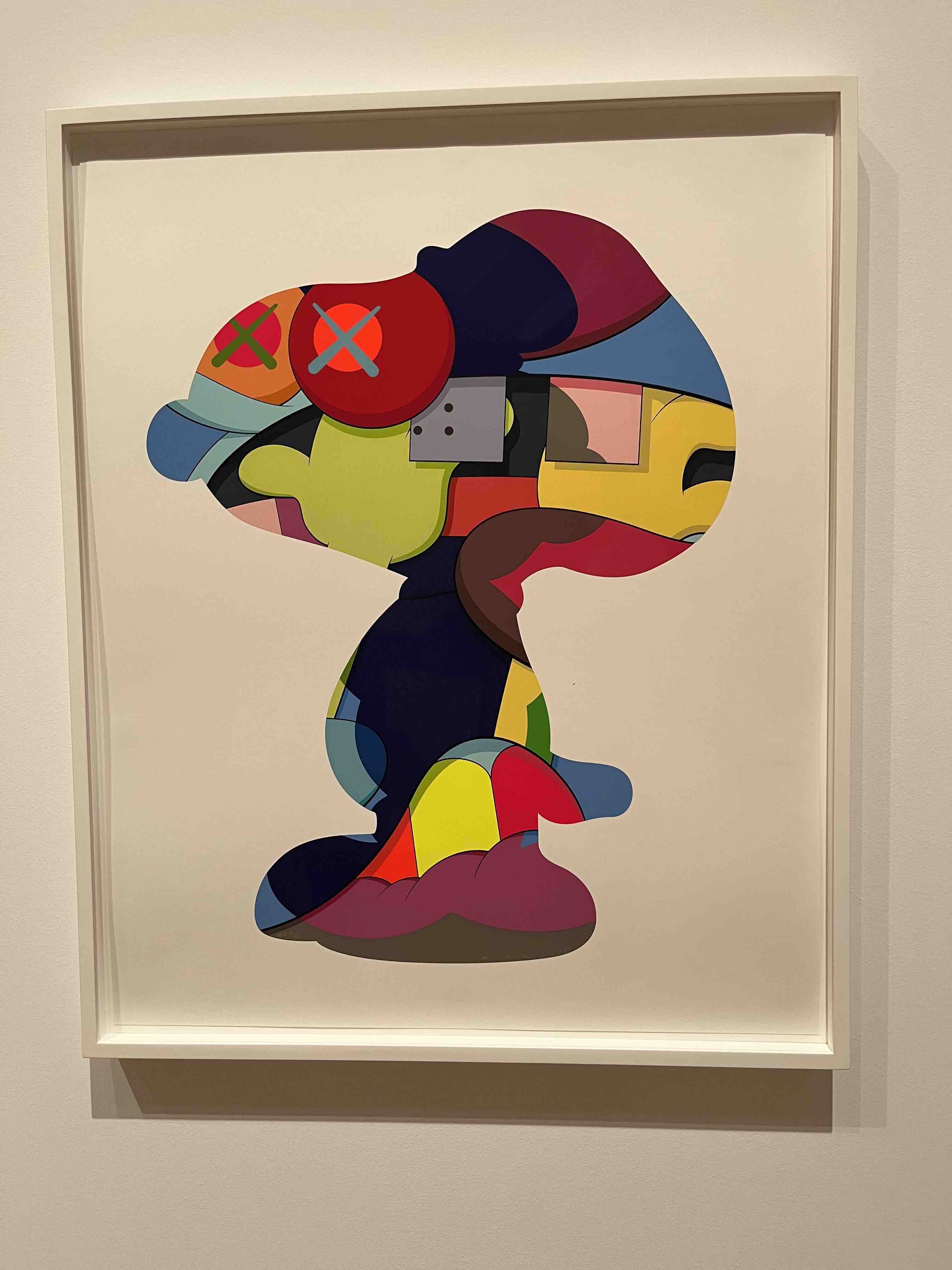
Thus,[3] over a long weekend in Atlanta celebrating stepdaughter Brooks’ thirteenth birthday, we wandered over to the High Museum to check out the KAWS exhibition, which Caroline enthusiastically embraced, pointing out to her less visually astute husband the ways in which KAWS’ work, a crown jewel of the genre, illuminates the work of all graffiti artists.

photo by me

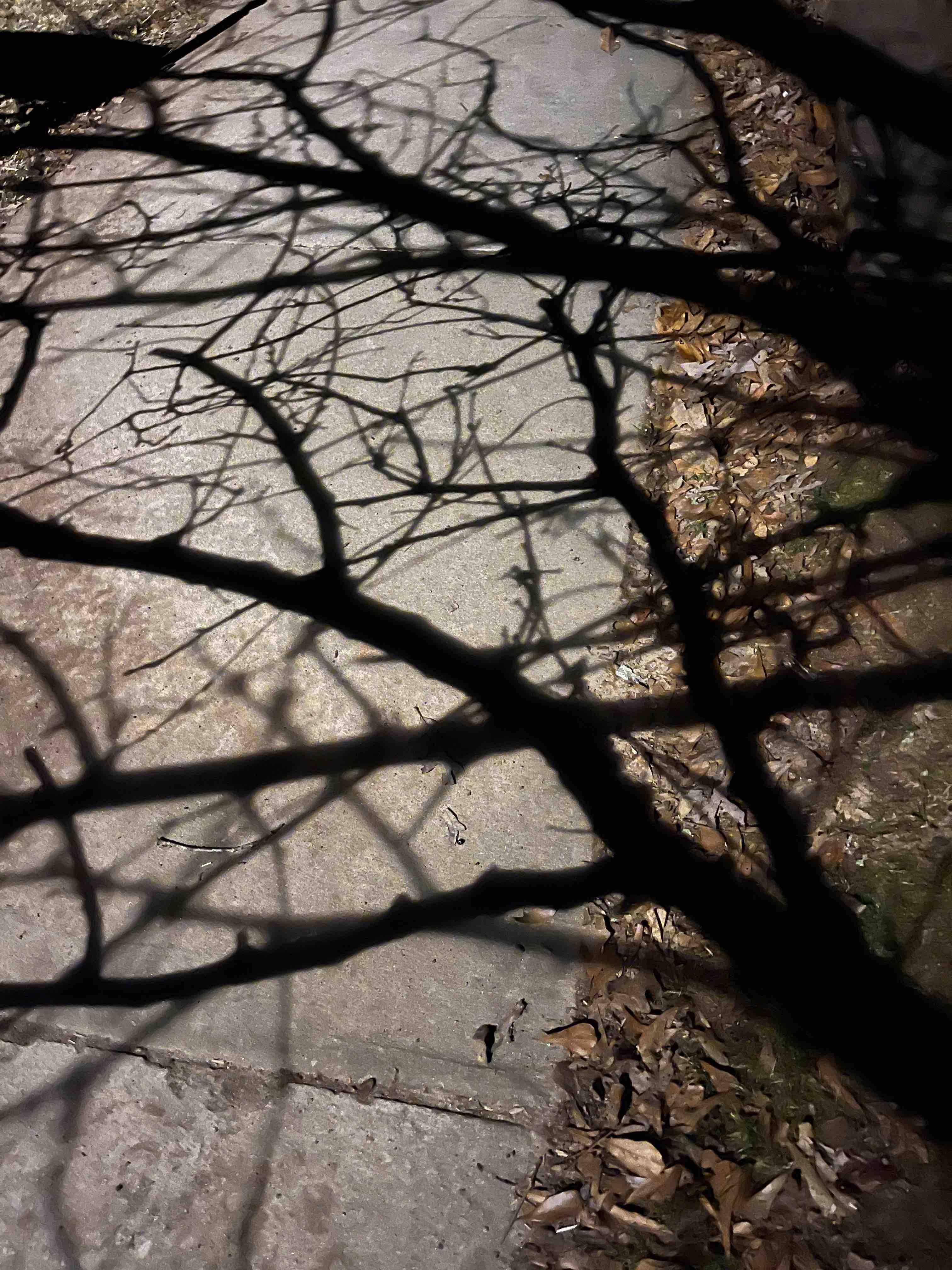
After seeing the exhibit, immediately I started paying closer attention to my physical surroundings, noting especially the shadows of trees on the sidewalks of Decatur, where we were staying. Even at night, these shadows created beautiful, life-enhancing patterns.

photo by me at night

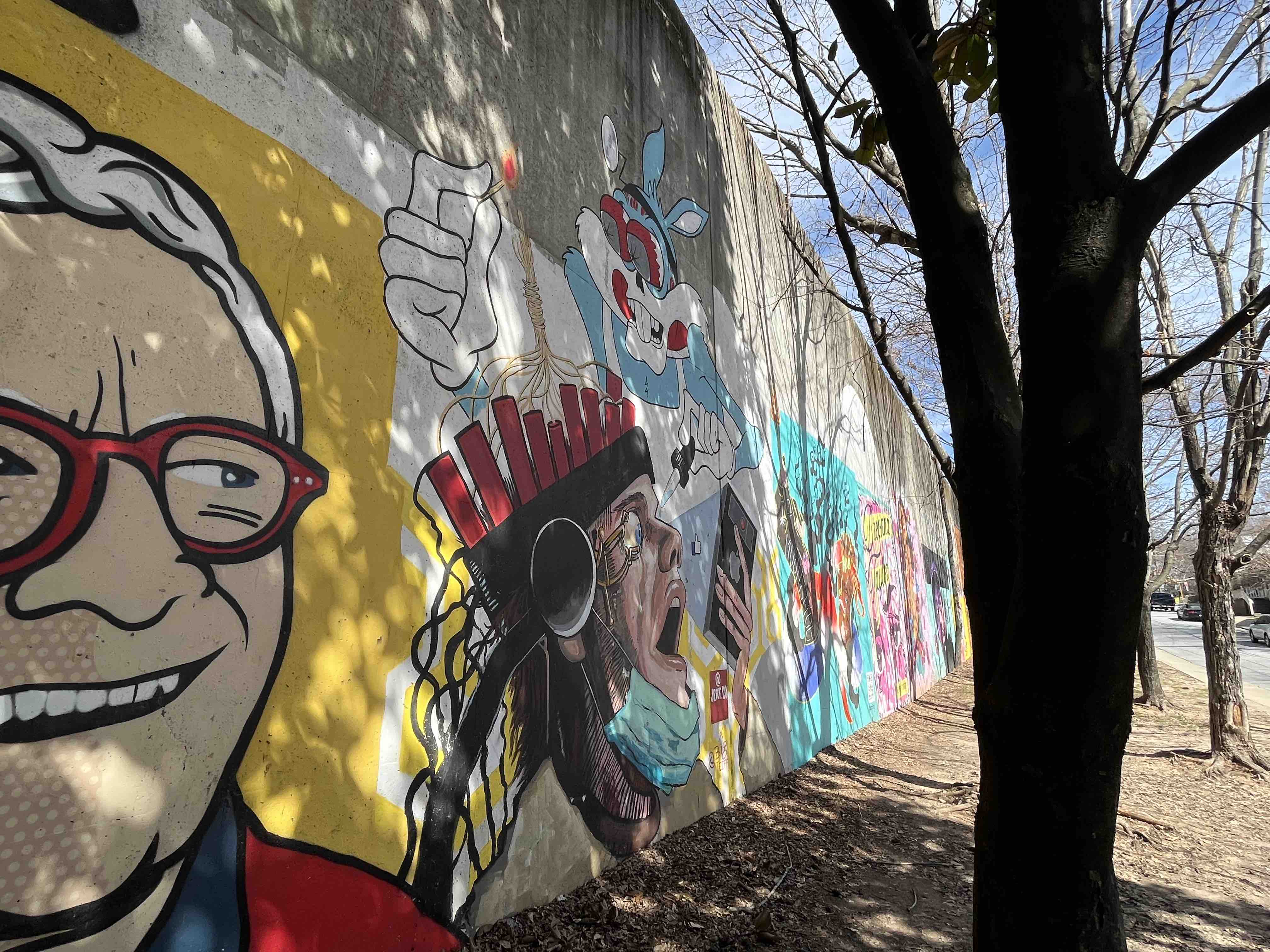
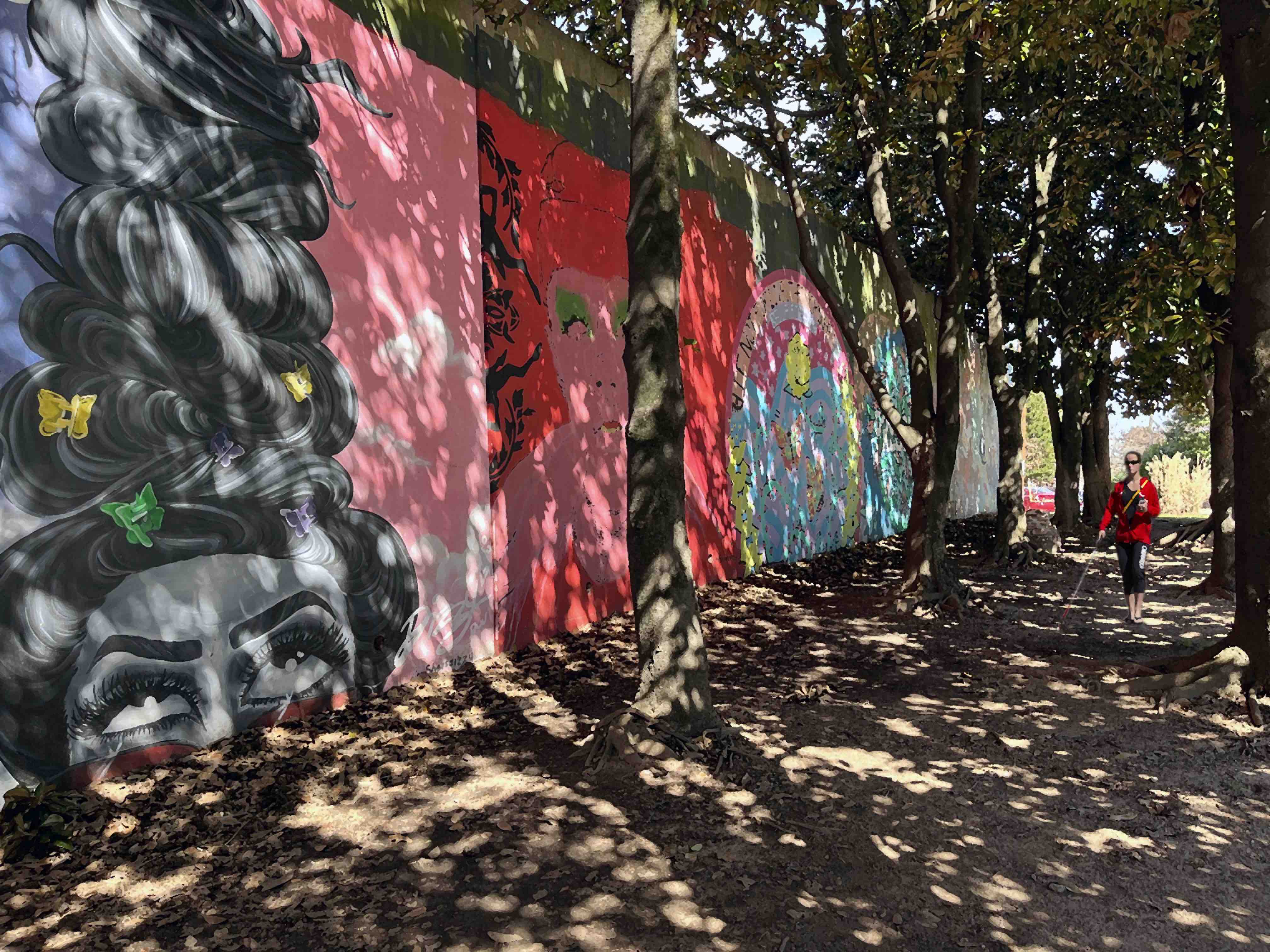
The next day, Caroline suggested we Uber to Cabbagetown, a funky Atlanta enclave with some of the finest street art in the city. Cabbagetown was originally a mill town east of Atlanta, and the ruins of the high wall of the mill span a half mile along Wylie and Tennelle Streets in an electrifying, eclectic array of divergent styles.[4]   

Here are a couple of examples:

photo by me

As we Ubered back to the house, we traversed the incredible Krog Street Tunnel, a place so spooky few people attended a Halloween festival staged there. 

me again

Obviously, visiting both the museum and Cabbagetown inspired me. I couldn’t wait to come home and create one of my collages.

Ta da!

Blind Woman in Cabbagetown

So hail, museums, hail street art!


[1] I hate the overused word “iconic: however, in this context, I can’t think of a more accurate adjective. 

[2] Although the Federal Land Bank refused to fund the project, they did grant Blue Sky permission to use the side of the building, that is, if he swore he wasn’t a communist (Wikipedia).

[3] A creaky looking old word that when uttered out loud sounds so cool, a sibilant hiss of a transition. 

[4] Check out Day Trip Queen’s excellent overview of Cabbagetown art: https://daytripqueen.com/cabbagetown-street-art/

Jasper Johns, Owen Lee, and I-and-I

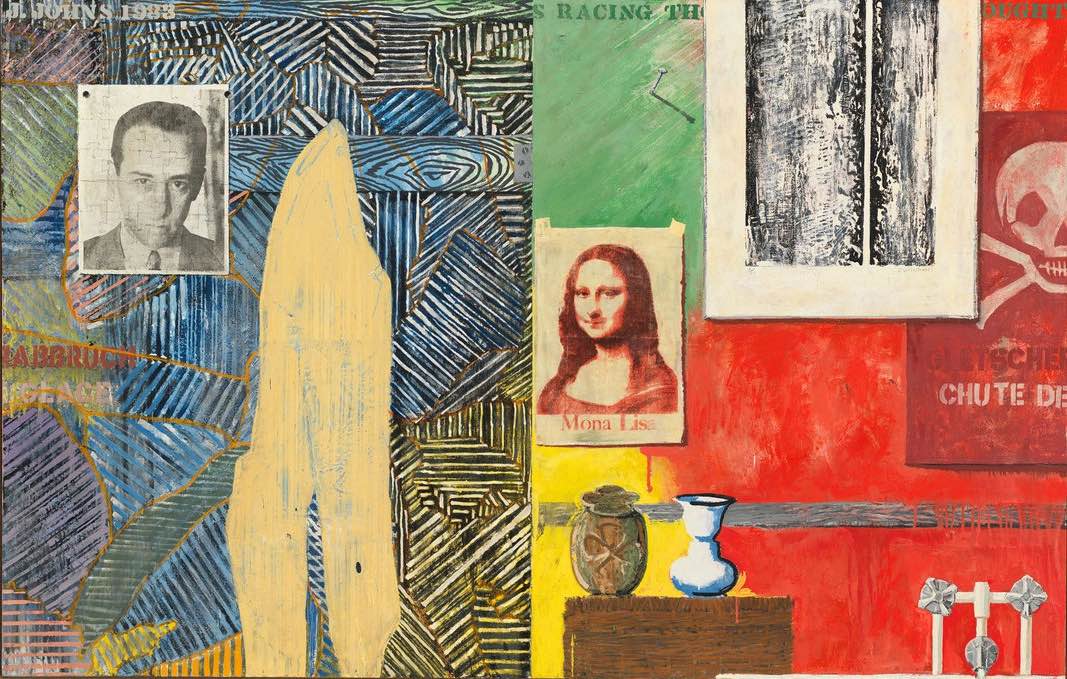
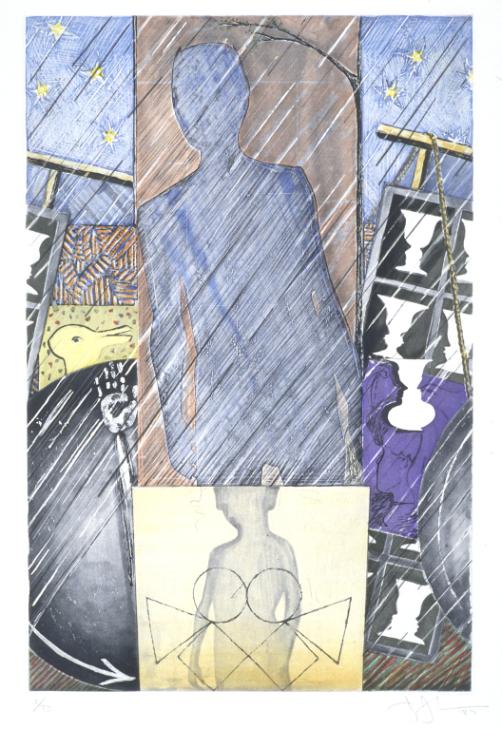
Racing Thoughts by Jasper Johns, 1983

Jasper Johns’ half-sister, Owen Lee, and I were acquaintances, not quite friends, in the very late 70s or very early 80s. We both taught Developmental Studies English[1] at Trident Technical College in North Charleston, South Carolina. Between classes, we’d yuk it up and trade cynical witticisms like a couple of podunk Dorothy Parkers and HL Menckens.  

One night after classes, she invited me to join her at the Garden and Gun, a gay bar that had recently opened to cater to the Spoleto crowd. Weeks earlier, she had dropped her famous semi-sibling’s name, but the sad truth is all I knew of Johns’ work were the targets and flags, and in keeping with my late-twenties ignorance, I was not overly impressed. [2]Anyway, Owen invited me to her place for a nightcap and showed me some original Johns works hanging in her apartment. After the drink, I headed home to Limehouse Street.

Fastforward thirty-five years. The week of my son Harrison’s marriage in DC, the Hirshhorn was staging an exhibition of Johns’ work, so we hopped the Metro to check it out. Now, I was duly impressed. Of course, we saw the iconic flags, targets, and maps, but also large arresting canvases with strings and flatware and shadows, works that I found emotionally moving.

However, it wasn’t until last week until I really came to appreciate Johns more fully after taking in his current exhibition (October 2021 through February 2022) at the Whitney. Thanks to my brand-new hearing aids paired with my iPhone, a website dedicated to the exhibition guided me through eleven gallery rooms. Chief curator Scott Rothkopf and others talked about the paintings and sculptures. John Cage read Jasper’s words excerpted from a documentary. He said early in his career he attempted to create impersonal works but that ultimately “was a losing battle.”[3] Nevertheless, he remains reticent about his art because he believes that the viewer must bring his or her own life experiences into the mix.

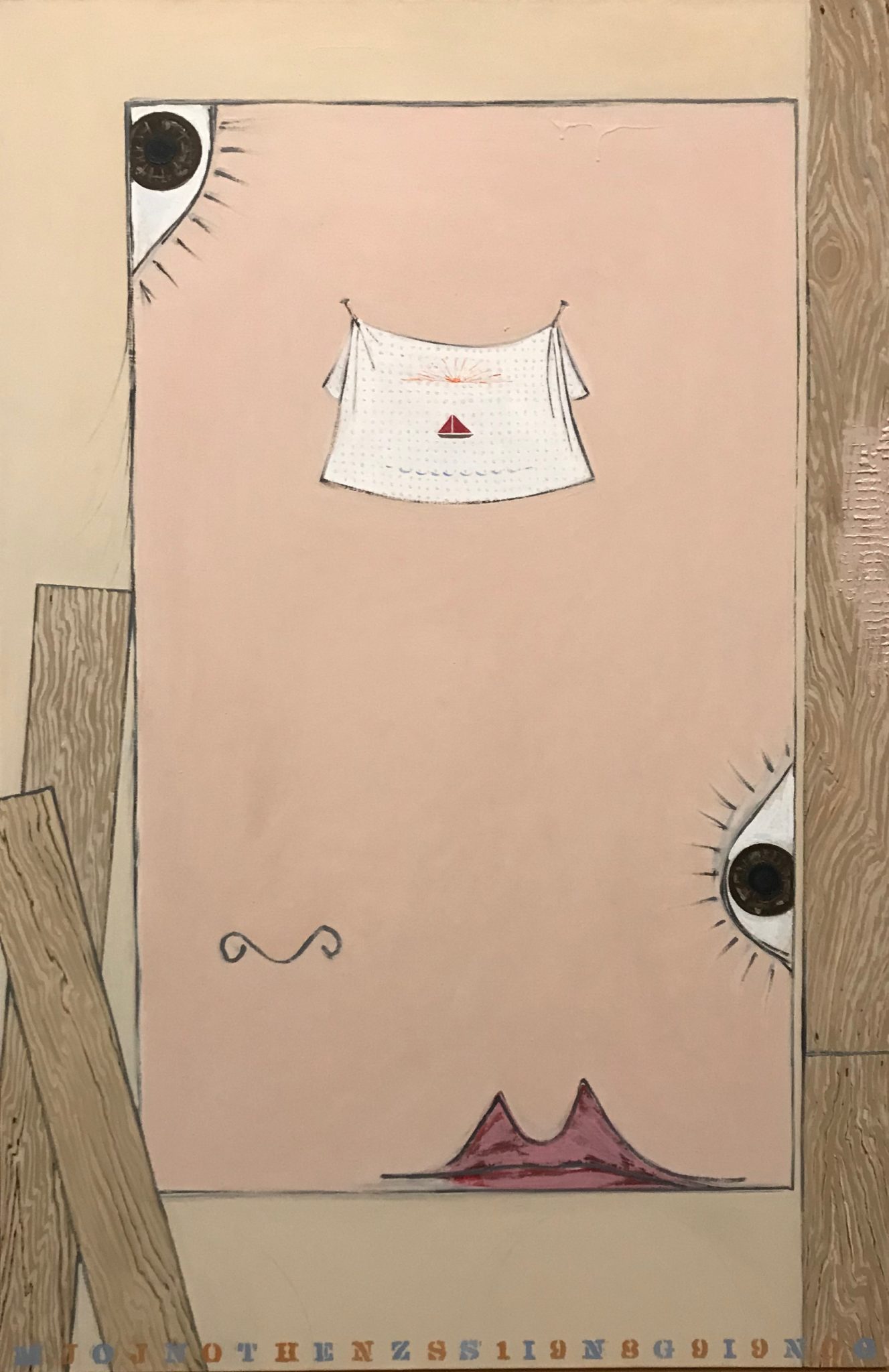
The thematic division entitled South Carolina particularly interested me. Johns, like Truman Capote, spent much of his childhood being shuttled off to various aunts and cousins. How disorienting it must be to be passed around without a permanent home. Here’s a painting based on his childhood called Montez Singing.

Montez was Johns’ step grandmother, and the song she sings is entitled “Red Sails.” The web-based tour guide notes the red ship and offers interpretations on the Picasso-like cubist body parts.

Another of my favorites is “Spring” where we encounter Johns’ shadow and the rigid arm that appears in many of his paintings. Also note the child’s shadow, below the adult’s shadow. How remarkable to produce such stunning objective correlatives to your vaporous memories.

The Seasons (Spring) 1987 Jasper Johns born 1930 Presented by the American Fund for the Tate Gallery, courtesy of Judy and Kenneth Dayton 2004 http://www.tate.org.uk/art/work/P12997

Owen Lee ended up moving away after a stint in Edisto.[4]  Around the turn of the century, out of nowhere, I received a message on my voice mail on my landline. She had moved back in Charleston to a downtown apartment and suggested we get together, which never came about. I did see her one last time at our friend Ted Phillips’ funeral. We sat together in a back pew, and because she had walked to the service, I gave her a ride to her apartment when it was over. She poured me a scotch and reminisced about a period when she worked for Jasper and Andy Warhol. This apartment had originals as well, and I worried a bit because Owen repeated stories, lost her way in conversation a couple of times, and explained these lapses by claiming that she had received a blow to the head as a child. 

She was still a lovely person, fascinating to listen to, despite having entered an early stage of dementia. 

Here’s a link to her obituary: Owen Riley Lee.


[1] Known as “remedial English” in a previous, less sensitive era.

[2] I wouldn’t go so far as call myself a philistine. For example, unlike the babysitter in Flannery O’Connor’s “The River,” I wouldn’t say, “I wouldn’t have paid for that,” [the babysitter] said, nodding at the painting, “I would have drew it myself.” 

[3] Actually, it was John Cage reading Johns’ words.

[4] The voice on the guided tour pronounces it ed-DEES-toe

With Her Myriad and Sunken Face Lifted to the Weather

Here’s Faulkner’s physical description of Dilsey Gibson from The Sound and the Fury, Dilsey, the Black caretaker of the fucked-up[1] Compson clan, as dysfunctional a collection of kin you’ll find this side of the House of Cadmus. 

She had been a big woman once but now her skeleton rose, draped loosely in unpadded skin that tightened again upon a paunch almost dropsical, as though muscle and tissue had been courage or fortitude which the days or the years had consumed until only the indomitable skeleton was left rising like a ruin or a landmark above the somnolent and impervious guts, and above that the collapsed face that gave the impression of the bones themselves being outside the flesh, lifted into the driving day with an expression at once fatalistic and of a child’s astonished disappointment, until she turned and entered the house again and closed the door.

A remarkable human being, Dilsey, transcendent in her morality. She stoically endures subjugation, poverty, and the day-to-day depredation of having to tend to the Compsons[2], all the while doing her best to raise her own grandchildren and by proxy provide damaged teen Quentin Compson some desperately needed love. Dilsey’s just passing through this vale of tears, her degradation a temporary burden before the everlasting glory commences. She’s seen the first and the last, she says.

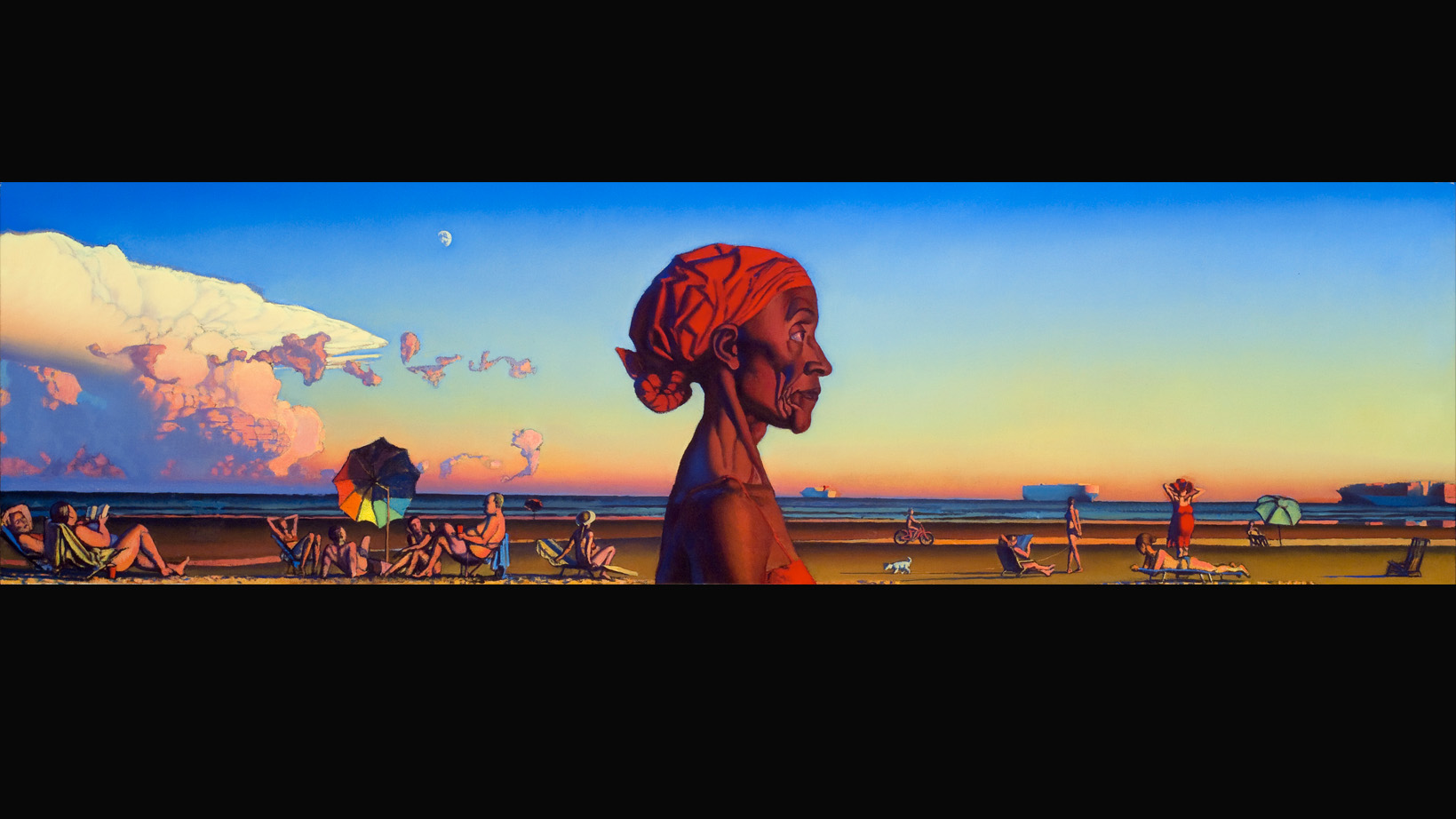
Like the woman in Douglas Balentine’s painting Cargo II.

Cargo II

When I saw the painting for the “first time in the flesh” at Douglas’s home last Saturday night, I thought immediately of Dilsey. There she is in the center of the canvas, transplanted from Yoknapatawpha, Mississippi, to Sullivan’s Island, South Carolina. She’s traded her Mississippi ratty Easter Sunday purple for something more African, but the expression is hers, Dilsey’s, “with her myriad and sunken face lifted to the weather.”  She, too, has seen the first and the last.

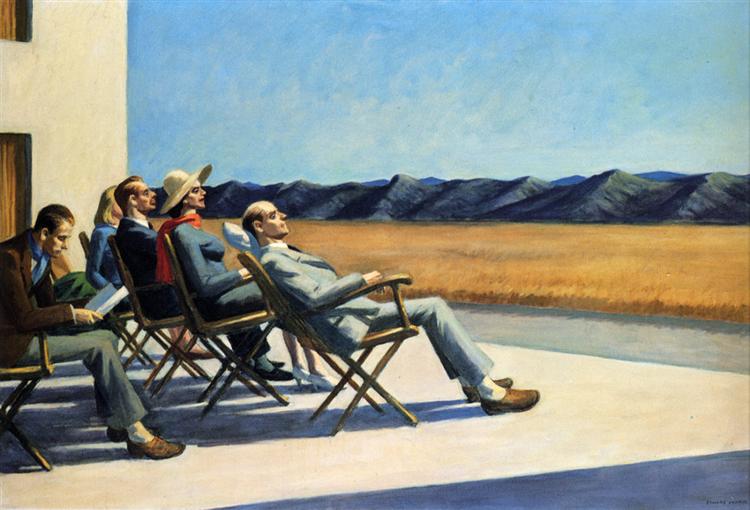
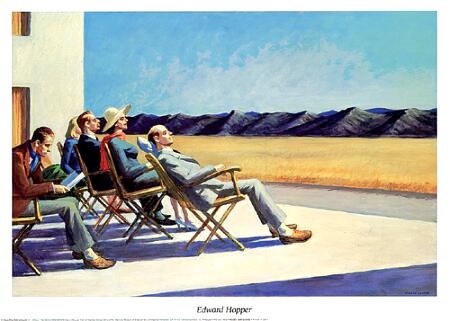
The freighters on the right side of the canvas heading to the harbor follow the path that brought Dilsey’s ancestors to Charleston as beachcombers loll about, attempting to darken their skin. The woman lying on her stomach between the two freighters seems to be developing a sunburn. These folks remind me somewhat of Edward Hopper’s People in the Sun, though they’re much more rigid than Balentine’s more relaxed and fleshy beachgoers. 

Cargo II is truly a beautiful, thought-provoking painting. I absolutely love it.


[1] Generally I’m not one to lob f-bombs, but the phrase “the fucked up Compson clan” sounds so right you can almost dance to it, and I can’t think of a more apt word to describe their situation. . 

[2] Okay, let’s start with Benjy, the thirty-three-year-old castrato with an IQ in the teens; then there’s his banished sister Caddie and her neglected way-damaged teenaged daughter Quentin, named for the Compson son who drowned himself at Harvard. The youngest brother Jason makes Bull Connor look broadminded. And, lastly, maybe the worst mother in American literature, the matriarch Caroline Compson, lying in dark rooms huffing on camphor day and night in a wallow of self-pity.

Different Planets

Someone who goes by the appellation “arsidubu” has finally answered the graphical question, “What do you get when you cross Norman Rockwell with Edward Hopper?”

Ta Da!

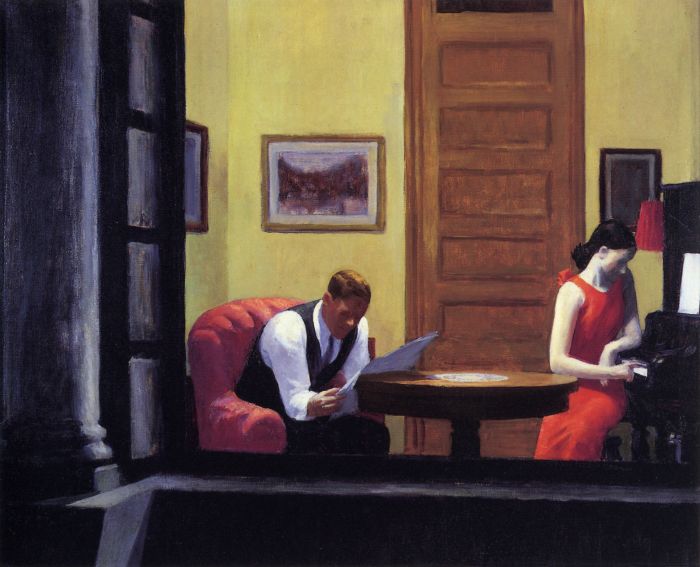
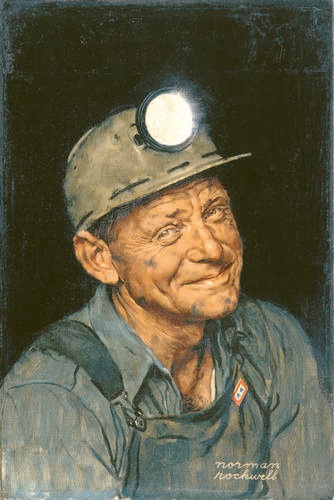
Certainly, the two artists share a comic book illustrator aesthetic in their depiction of the life in mid-20th-Century America, and both cast their paintings in similar venues; however, their denizens inhabit different planets – at least when it comes to mood and human interaction.

Paying the Bills


Room in New York

In Rockwell, a Protestant deity smiles upon a beloved middle class who in turn smile and wink their way from cradle to grave.  Even coal miners seem bemused by their lot in life.

Conversely, in Hopper’s world God is dead, and as poet Victor Enyutin has observed, the people’s shadows seem more alive than they do.


Here’s Enyutin’s take on the painting People in the Sun:

People depicted here by Hopper cannot just relax in the sun. Instead, they project to the situation of taking sun their rigidities and stresses, and their business oriented energies over-stimulated by science fiction – poetry of entrepreneurial world. In their solemnly frozen poses we feel their unconscious intention of taking trip… to the sun – we see that they are as though physically moving/traveling towards the sun while sitting in a kind of starship (may be, with a dream of starting a business there of getting some of the sun’s “natural resources”).

Both artists hailed from New York and enjoyed prosperous childhoods, though Edward Hopper grew up in a strict Baptist household, i.e., in a fallen world.  Both embarked upon their careers early, worked for magazines, employed their wives as models, and enjoyed public affirmation.

The first Mrs. Rockwell

Mrs. Hopper

On the other hand – and given the mood of their paintings/illustrations, the following statement seems profoundly counterintuitive – Hopper’s biography seems the saner of the two.  Thrice married, Rockwell’s second wife spent time in a psychiatric hospital and Rockwell himself received psychiatric care from Eric Erikson, who once told Rockwell that “you paint your happiness but don’t live it.”

Though much more restless and slower to gain recognition than Rockwell, Hopper enjoyed 44 years of a happy marriage, despite possessing the temperament of a curmudgeon.

Given the sunshine and shadow of their paintings, guess which one of these artists voted for Roosevelt and which for Hoover.

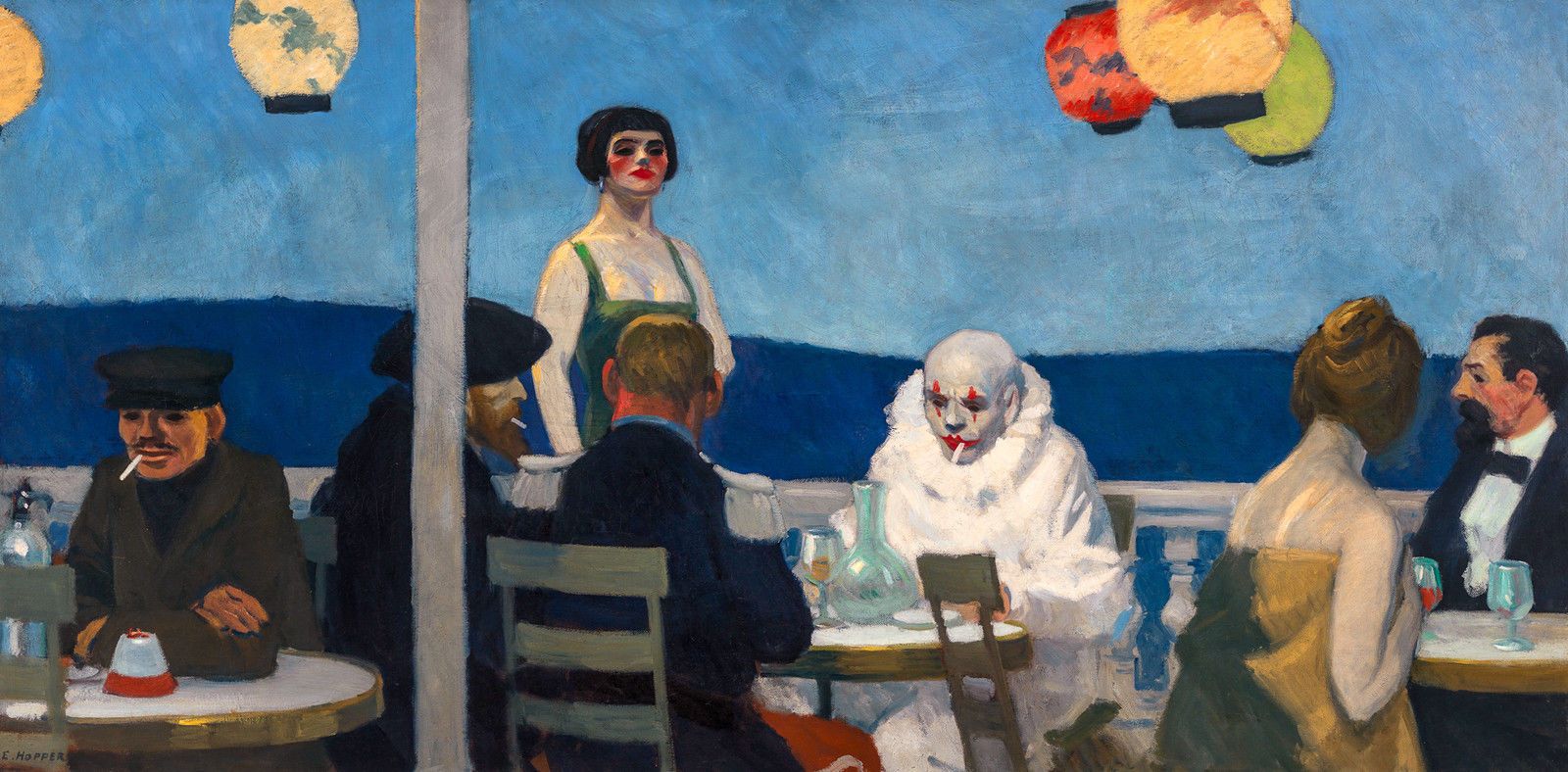
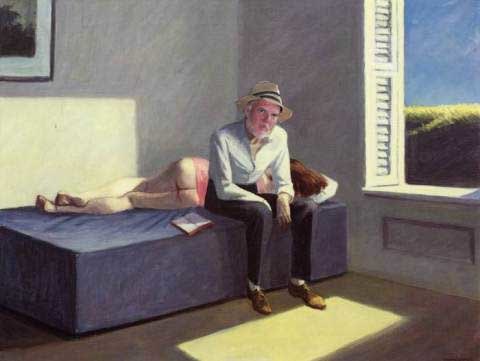
That’s right.  It’s a trick question.  The lefty painted this clown:

And the righty painted this one:

Perhaps we have forgotten that traditionally conservatives like Swift, Pope, and Johnson have been the world-weary gloomsters and liberals the naive optimists.  Whatever the case, I feel much more at home in Edward Hopper’s world.